Media and conflict

Category

Year

Author / Contributor

Region

Sort by

Showing 1-10 of 206 stories

Logo2018-Green-1
Lund, Sweden – April 14, 2018 Statement by Associates of TFF – The Transnational Foundation for Peace and Future Research Summary The US-British-French attack is a clear and indisputable case of aggression according to international law, and to the UN Charter in particular. And it lacks, like many unilateral wars before it, a UN Security Council mandate. It comes as a consequence of interventionist impulses and militarism and lacks every element of a comprehensive conflict analysis, or diagnosis. Even if one assumes that the government and president of Syria are the main/only culprits and the worst violaters of human rights on earth, the way that the Syrian conflict has been handled by Western governments over the past seven years has been outrageously wrong and counterproductive. It’s been deliberate conflict-mismanagement combined with peace-prevention. Conspicuously, this aggression on Syria takes place before there is a shred of evidence of what chemical weapons...
cropped-david6
    By David Swanson April 9, 2018 Back in the 1890s those who believed conquering a continent was killing enough (without taking over Hawaii, the Philippines, Cuba, Puerto Rico, etc.) included Speaker of the House Thomas Reed. He clipped an article out of a newspaper about a lynching in South Carolina. He clipped a headline about “Another Outrage in Cuba.” He pasted the two together (fake news!) and gave them to a Congressman from South Carolina who was pushing for a war on Cuba. The Congressman eagerly read the article, then stopped, looked puzzled, and remarked “Why, this isn’t Cuba.” Originally published on David Swanson’s Lets’ Try Democracy here I recommend trying this trick. Clip an article about Israelis murdering Palestinians, or some outrage in a U.S. prison or a Saudi square or under the rain of humanitarian bombs in Afghanistan, Pakistan, Syria, Yemen, Somalia, Iraq, Libya, or elsewhere;...

StephenFCohen
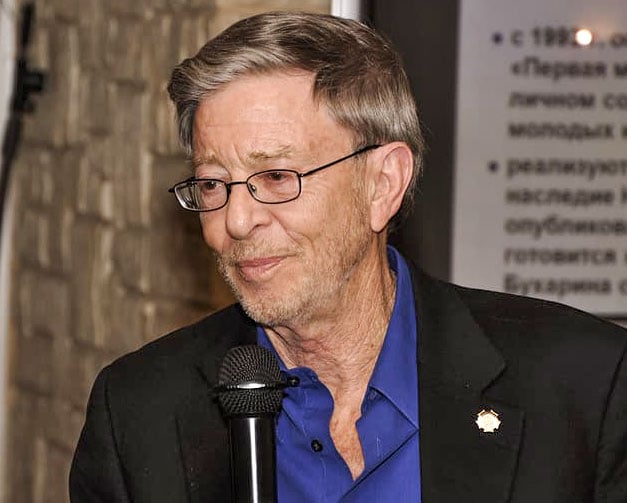
Several factors make this US-Russian Cold War more dangerous than its predecessor – is “Russo-madness” one of them?   By Stephen F. Cohen April 4, 2018 Stephen F. Cohen, professor emeritus of Russian Studies and Politics at NYU and Princeton, and John Batchelor continue their (usually) weekly discussions of the new US-Russian Cold War. (Previous installments, now in their fourth year, are at TheNation.com.) Originally published by The Nation here   Cohen has previously explained why the new Cold War is potentially even more dangerous than was its 40-year predecessor, citing factors such as the political epicenter’s now being on Russia’s borders, lack of a mutual code of conduct, and the unprecedented demonization of the Kremlin leader. He had not much considered the role of Russophobia because he thought it had not been a large causal factor, unlike anti-Communism, in the preceding one, recalling an episode in his own family...
1-1
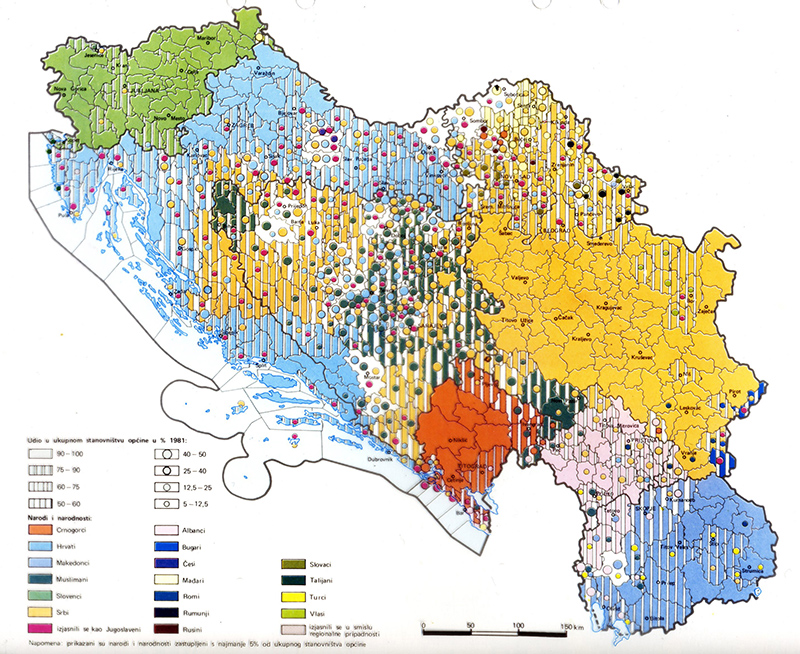
The ethnic map few understood. Should make it clear that cutting up Yugoslavia in independent republics could not be done without bloodshed. (1) Yellow = Serbs, Dark Green = Muslims, Light Blue = Croats,  Light Green = Slovenes, Orange = Montenegrins, Pink = Albanians, Darker Blue = Macedonians   , marks the 19th anniversary of NATO illegal and illegitimate bombing of Yugoslavia, Serbia and its Kosovo, province during 78 days. It has – one is tempted to say: of course – been conveniently forgotten by the West itself. It was masterminded by the United States under Bill Clinton and Secretary of State Madeleine Albright after the so-called negotiations between Serbs and Albanians in Rambouillet outside Paris (the parties never met face-to-face) While Clinton may be best remembered for his relations with Monica Lewinsky and his wife, Hillary Clinton, some of us also remember him (and Albright) for bombing Afghanistan, Sudan,...
Screenshot
    On March 17, 2018, New York Times posted “How Trump Consultants Exploited the Facebook Data of Millions.” Here is the background as covered by Washington Post. Here is an in-depth undercover investigation by Channel 4 News that reveals how Cambridge Analytica secretly campaigns in elections across the world. Bosses are filmed talking about using bribes, ex-spies, fake IDs and sex workers.     Jan Oberg comments We’ve heard a lot about Russian meddling in the US Presidential election process. We hear daily media stories of just how brilliant Russia’s performance is in the ongoing media/propaganda war. This documentary is deeply disturbing because it reveals the utter decay in business and political ethics that now influence elections processes in what was supposed to be democracies. It seems plausible to me that the pointing of fingers at Russia – which of course also use media manipulations – is a kind...
johangaltung
* Today marks the 15th Anniversary of the US invasion of Iraq. Neither solid analyses, moral reasoning and decent argument nor history’s probably largest pre-war, anti-war demonstrations worldwide had any discernible impact on the Bush and Blair Administrations’ decision to go to war and do so on a false pretext. Neither could major allies like France and Germany by their opposition to the war on Iraq persuade Washington and London to first try a peaceful resolution in accordance with the UN Charter provisions. TFF was deeply engaged in preventing this war – also by being on the ground in Iraq – and wants to a) document the research we did and how we argued back then and b) contribute to this tragedy never being forgotten. We also want to place our analyses and debate articles at the disposal – in one place – of the students, researchers, concerned citizens and...
052316-Facebook-Dislike
  Intro This short article documents how Facebook – in a non-dialoguing way – practices censorship. This and many other cases was a major reason that TFF launched The Transnational – a new multidimensional peace platform and try to push the debate about our issues out of Facebook and over to our own platform (hosted by WordPress.com) so that Facebook cannot influence over and above our heads, what it wants to disseminate and what not.    I come across an article that I find both worrying and trustworthy, “Google is helping Pentagon building AI for drones” in the Gizmodo online magazine. Like I do several times a day, I post it to Facebook (my profile, public figure page and TFF’s page), to Google+ and to Twitter. In one go, via a service called Sendible. About 30 minutes later this arrives:       I of course click “This isn’t Spam”...
papadopoulos
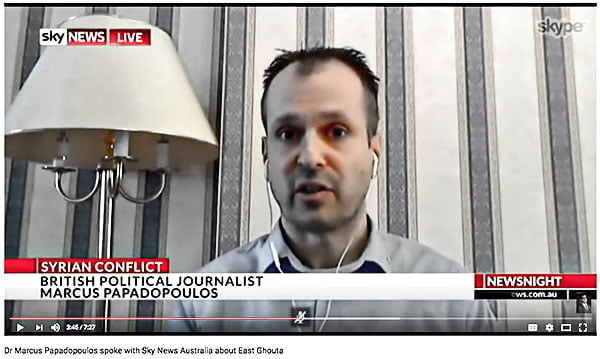
  By Jan Oberg Right after the very heavy fighting about East Ghouta and the UN Security Council’s ceasefire resolution, Dr. Marcus Papadopoulos is given what must be perceived as a very rare opportunity by a mainstream media  – skyNews Australia – to present a completely different perspective. You do not have to agree with every word, the important thing is that you listen carefully to an obviously knowledgeable person who makes an interesting analysis totally different from the one you are usually presented with. In a few minutes he basically undermines, in a superbly clear and eloquent manner, the Western manufactured narrative that has been repeated to such an extent that, fortunately, more and more people begin to ask two set of questions: 1. Why is it that Western mainstream media’s coverage is so uniform – same angles, same words, same accusations, same images, same videos, same human stories?...
sharon-at-podium
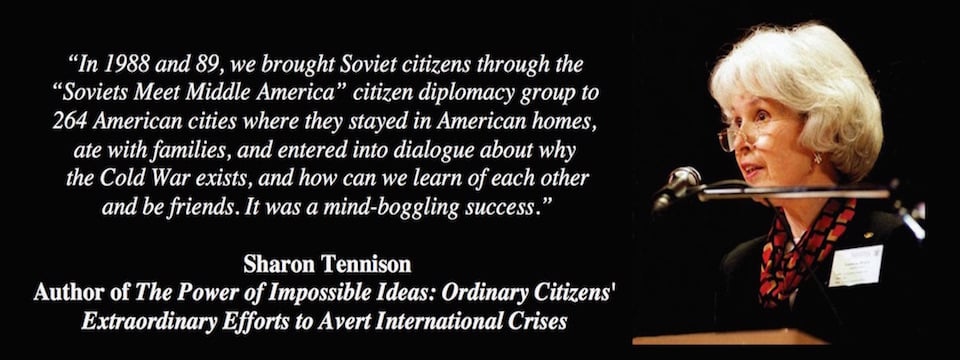
    By Sharon Tennison February 7, 2018 Friends and colleagues, As the Ukraine situation has worsened, unconscionable misinformation and hype is being poured on Russia and Vladimir Putin. Journalists and pundits must scour the Internet and thesauruses to come up with fiendish new epithets to describe both. Wherever I make presentations across America, the first question ominously asked during Q&A is always, “What about Putin?”. It’s time to share my thoughts which follow: Putin obviously has his faults and makes mistakes. Based on my earlier experience with him, and the experiences of trusted people, including U.S. officials who have worked closely with him over a period of years, Putin most likely is a straight, reliable and exceptionally inventive man. He is obviously a long-term thinker and planner and has proven to be an excellent analyst and strategist. He is a leader who can quietly work toward his goals under mounds of accusations and myths that have been steadily...
Admiral_Kuznetsov_aircraft_carrier
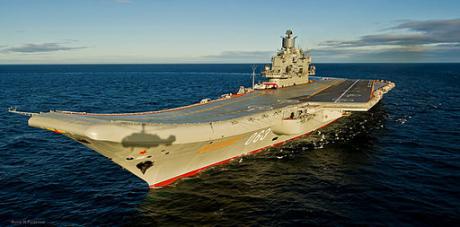
Fearology and medialised threat perception management that serves militarism   By Paul Rogers February 22, 2018 Is Russia a military threat to the west? A larger past and closer detail offer fresh light. Most analysts blame Vladimir Putin’s aggressive political stance for the renewed hostility between Russia and the western states of the North Atlantic Treaty Organisation (Nato). The deteriorating relationship has been evident for a decade and more. The fallout from Moscow’s interventions in Georgia / South Ossetia (2008), Ukraine / Crimea (2014), and Syria (2015), as well as its reported disruption in the United States presidential election (2016), are but the main episodes. Lesser ones include displays of military strength that attract wide coverage in the western media. Originally published by OpenDemocracy here. Before looking in more detail at the latter, it is worth offering a touch of historical perspective on great-power interference. In particular, at a time...
AFP_7Z62S
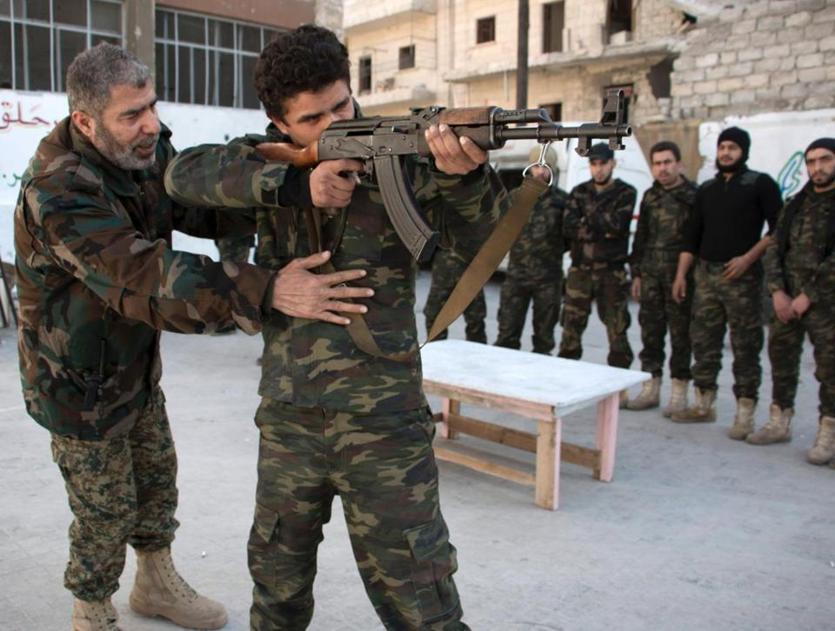
  By Stephen Kinzer February 18, 2016 The coverage of the Syrian war will be remembered as one of the most shameful episodes in the history of the American press. Reporting about carnage in the ancient city of Aleppo is the latest reason why.   Originally published by the Boston Globe here   For three years, violent militants have run Aleppo. Their rule began with a wave of repression. They posted notices warning residents: “Don’t send your children to school. If you do, we will get the backpack and you will get the coffin.” Then they destroyed factories, hoping that unemployed workers would have no recourse other than to become fighters. They trucked looted machinery to Turkey and sold it. This month, people in Aleppo have finally seen glimmers of hope. The Syrian army and its allies have been pushing militants out of the city. Last week they reclaimed the...
Gregory-Shupak-262x264
  Reuters, Vice and LA Times write about Israeli “retaliation.”   By Gregory Shupak February 21, 2018   Originally published by FAIR – Fairness And Accuracy In Reporting here Israel claimed that it intercepted an Iranian drone in Israeli airspace on Saturday, February 10; Iran denied that it had a drone there. Israel then bombed a Syrian airbase, saying it was the command-and-control center from which Iran had launched the drone. The Syrian government shot down an Israeli jet that had bombed the base, and Israel subsequently launched more airstrikes against Syria. Reuters (2/13/18) described the latter airstrikes as Israel having “retaliated” for the downing of its aircraft. Vice (2/13/18) too characterized them as “retaliatory”; the Los Angeles Times (2/11/18) did the same three times. These word choices wrongly imply that Israel was acting defensively, when it was Israel who fired the first shots in the weekend’s exchanges: These outlets...
Categories

Year

Author / Contributor

Region