Media and conflict

Category

Year

Author / Contributor

Region

Sort by

Showing 1-10 of 206 stories

cropped-Journalism-is4-e1373668581362
A map of the Korean Peninsula showing the 38th Parallel where the DMZ was established in 1953. (Wikipedia) “Do not demonise North Korea. Demons do not negotiate. If there are no negotiations, there will be war.” The words of Chung-in Moon to journalists who gathered for the Korea Press Foundation journalism conference in Seoul, last October, as diplomatic efforts were being stepped up for a second summit meeting between Kim Jong Un and President Donald Trump. Moon is a sage old hand of arms control talks. A current member of the South Korean government’s advisory committee on diplomatic strategy, he previously served as Ambassador for International Security, combining these posts with his career in universities. His advice was timely, given the findings of new research on Australian media and how they refer to the Democratic People’s Republic [i]. In coverage from two major newspapers and the public broadcaster, the ABC,...
cropped-Bloomberg-Iran-Tanker-1
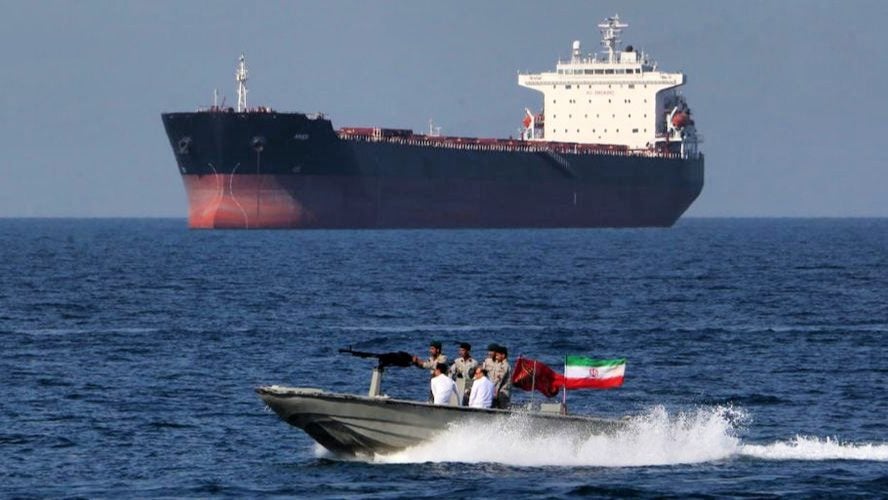
By Gregory Shupak Media outlets are creating a climate for a US military attack on Iran by hyping the idea that Iran is an imminent threat to peace, by failing to offer evidence that calls the US’s accusations against Iran into question, by amplifying warmongers’ voices and by naturalizing America’s supposed right to spy on every country on earth. Headlines are breathlessly suggesting to readers that Iranians are going to kill Americans if Americans don’t kill Iranians first. Originally published by FAIR on July 2, 2019 here A Hill article (6/7/19) told readers “Why Congress Needs Accurate Intelligence on the Iran Threat”; Fox (6/14/19) explained “The Trump Administration’s Strategy to Meet Threat from Iran.” A New York Times article (6/17/19) by David E. Sanger called Iran one of the “nuclear crises” facing the US, even though the International Atomic Energy Agency has said that Iran does not have a nuclear...
Screen_Shot_2014-06-23_at_5.07.38_PM2-1
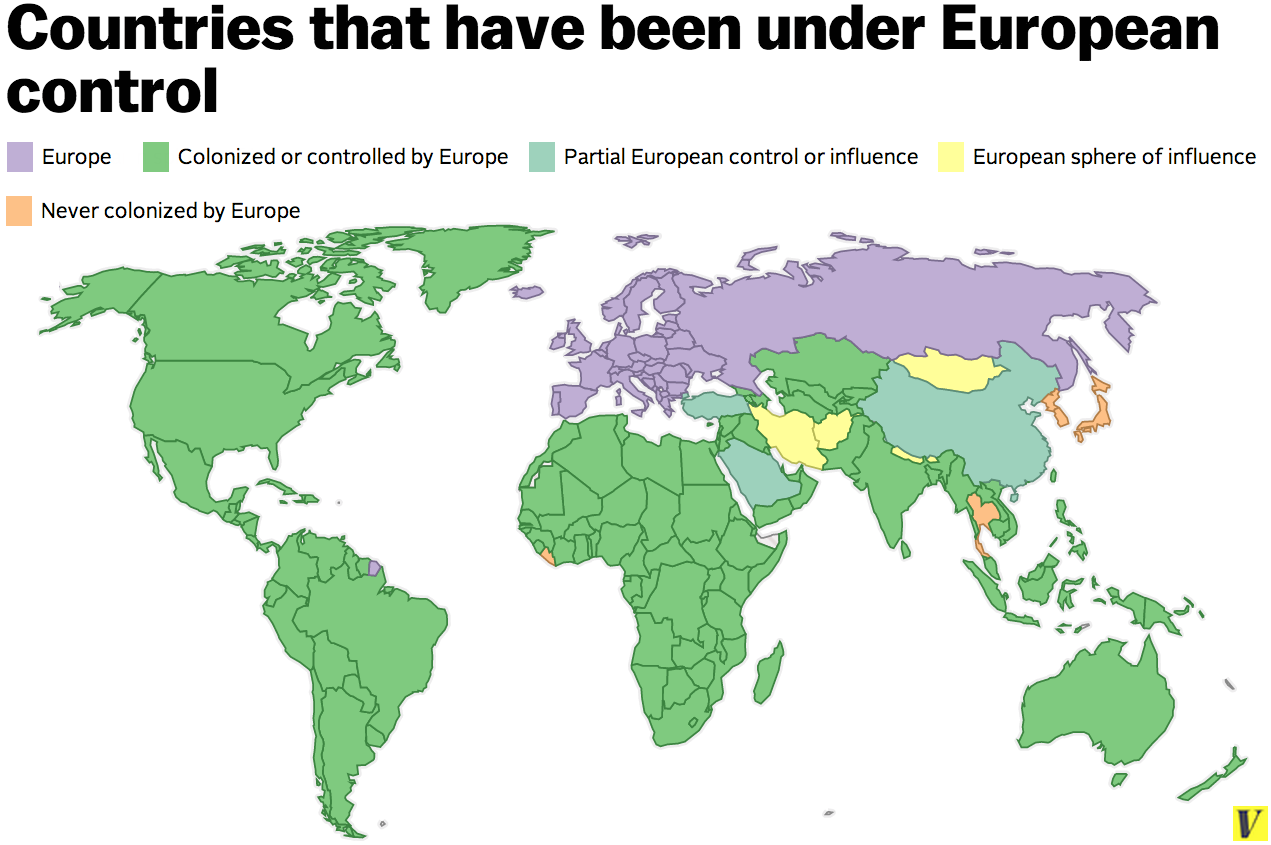
Av Erni & Ola Friholt 18:e juni 2019 Vid upprepade tillfällen de senaste åren hör vi ledande politiker i USA och EU-länder tala om ”Våra intressen”. Märkligt nog gäller intressena inte hemma i USA eller England eller Frankrike. Nej det gäller Libyen, Venezuela, Iran, Irak, Afghanistan, Nordkorea, Syrien, Arabemiraten, Bahrein, Qatar, Kuwait m fl… Ännu tror många människor i vår världsdel att kolonialismens övergrepp mot världens folk upphörde stegvis under 1950- och 60-talen. En massiv desinformation lydigt återgiven i media lär oss att det är våra kristna och humana värderingar som kränks av ociviliserade råa regimer i de forna kolonierna. När kolonialmakterna insåg att det skulle bli kostsamt att behålla kontrollen av kolonierna med direkt militär och administrativ närvaro, gavs kolonierna ”fria” och erbjöds istället lån till sin kommande återuppbyggnad. Snabbt gav dessa lån och tillhörande miljardräntor kontroll över de nya staternas politik, som anpassades till kolonialstaternas ekonomiska behov. I...
Info
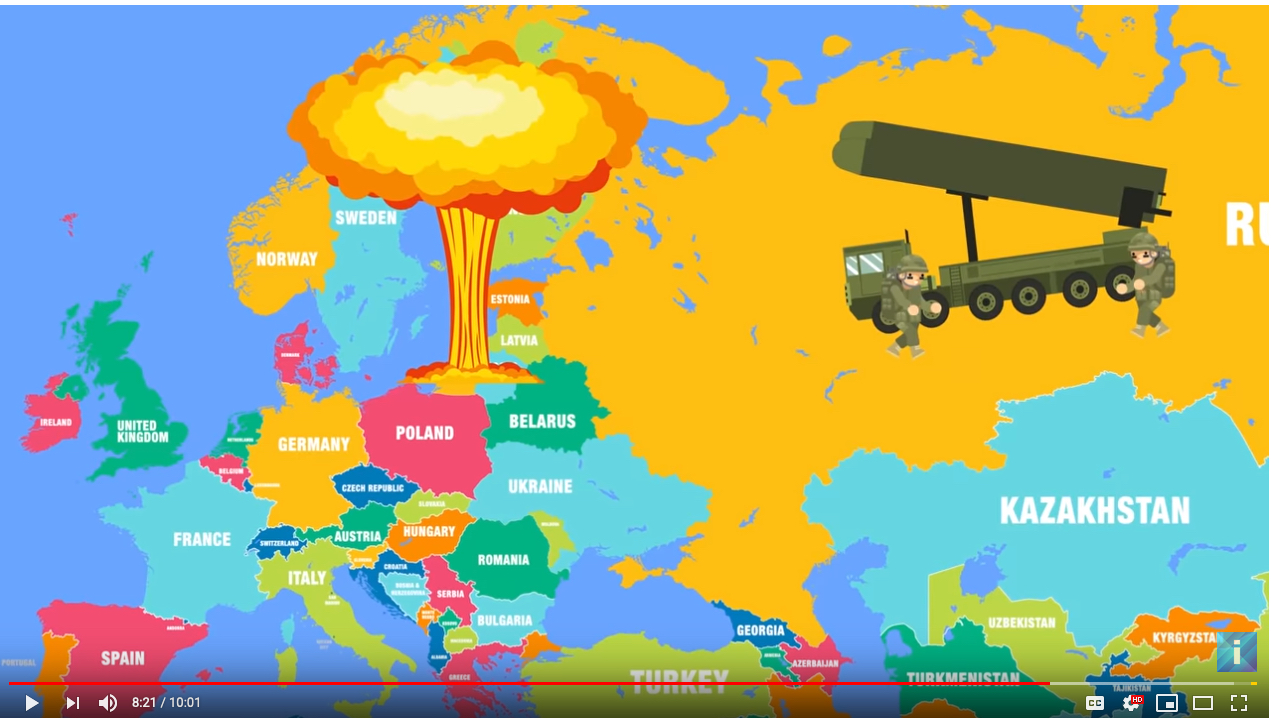
Oh yes! It can and it is ready to. And perhaps it even will. To tell you the truth, although NATO is the strongest, it could well fall apart thanks to Russia’s – Putin’s – cunning schemes. See here is how and why – in a video from The Infographics Show – and you’ll understand it all. You fear will increase and you’ll be more to pay more to your national military. Looked at from a professional conflict analytical perspective, one may mention a few problematic aspects of this piece of propaganda: • There is no conflict analysis. Russia is treated as the independent variable (active), the US/NATO the dependent (re-active). • Almost no mention of history (except that Russia was weak before but strong now). No mention, for instance, of NATO’s expansion in spite of promises given to then president Gorbachev. • Security and peace is about military matters...
Imagen-thumbnail-The-Transnational
Immediate action is needed to save the future The central problem which the world faces in its attempts to avoid catastrophic climate change is a contrast of time scales. In order to save human civilization and the biosphere from the most disastrous effects of climate change, we need to act immediately. But it is difficult to mobilize public opinion behind urgently needed action because the most severe effects of global warming belong to the long-term future. However, the Intergovernmental Panel on Climate Change, in their October 2018 report, used strong enough language to wake up at least part of the public: the children whose future is at stake. Here is an excerpt from a speech which 16-year-old Swedish climate activist Greta Thunberg made at the Davos Economic Forum in January 2019: “Our house is on fire. I am here to say our house is on fire. According to the IPCC...
CCTiMmwWgAEA2l6
By Jonathan Cook June 3, 2019 By any reckoning, the claim made this week by al-Qaeda-linked fighters that they were targeted with chemical weapons by the Syrian government in Idlib province - their final holdout in Syria - should have been treated by the western media with a high degree of scepticism. That the US and other western governments enthusiastically picked up those claims should not have made them any more credible. Originally published on Counter Punch.org on May 29th, 2019 here Scepticism was all the more warranted from the media given that no physical evidence has yet been produced to corroborate the jihadists’ claims. And the media should have been warier still given that the Syrian government was already poised to defeat these al-Qaeda groups without resort to chemical weapons — and without provoking the predictable ire (yet again) of the west. But most of all scepticism was required because these latest claims arrive just as we...
image
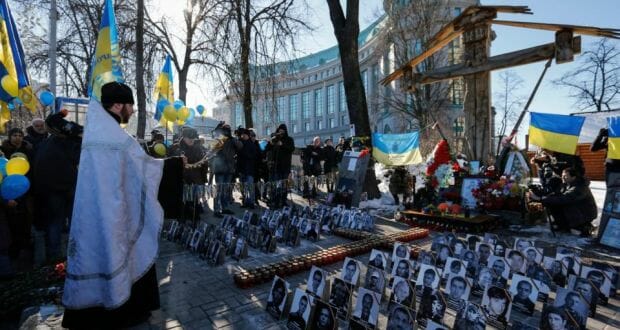
Ukrainian priests lead a commemoration ceremony for Maidan activists or “Heroes of the Heavenly Hundred” killed during anti-government protests in Kiev this time last year. Photograph: Roman Pilipey/EPA By  Ivan Katchanovski May 24, 2019 The new Ukrainian government is faced with reopening an inquiry into evidence of an organized mass killing in Kiev that Poroshenko stonewalled. Ivan Katchanovski investigates. Five years ago, the Maidan massacre in Kiev, Ukraine, of Feb. 18-20, 2014, was a watershed event, not only for the politics and history of Ukraine but also for world politics generally. This mass killing in downtown Kyiv set the stage for the violent overthrow of the pro-Russian government in Ukraine and a new Cold War between Washington and Moscow. Therefore, it is remarkable that five years after this massacre shook the world, no one has been sentenced for any of the Maidan killings. This was the best-documented case of mass...
ChatGPT Image 9 jun 2026, 11_11_33
They hadn’t realized they were living in a world, as Barack Obama once said, is the best time to be alive in human history. Yet the bits and pieces of this information had been around for a long time and I’ve drawn on them in many of my columns. But the fact is that human beings have what Oxford Professor Dominic Johnson and Dominic Tierney call a “negativity bias”- “A subconscious predisposition that humans exhibit whether or not they are aware of it”. Their thesis explains a lot, especially in international relations- threat inflation, the outbreak and persistence of war, the neglect of opportunities for cooperation, and the prominence of failure in institutional memory and learning. In modern times the worst example of this was the threat inflation launched by President George W. Bush in tandem with Prime Minister Tony Blair on the danger posed by Iraq’s Saddam Hussein. They...
IranFlood
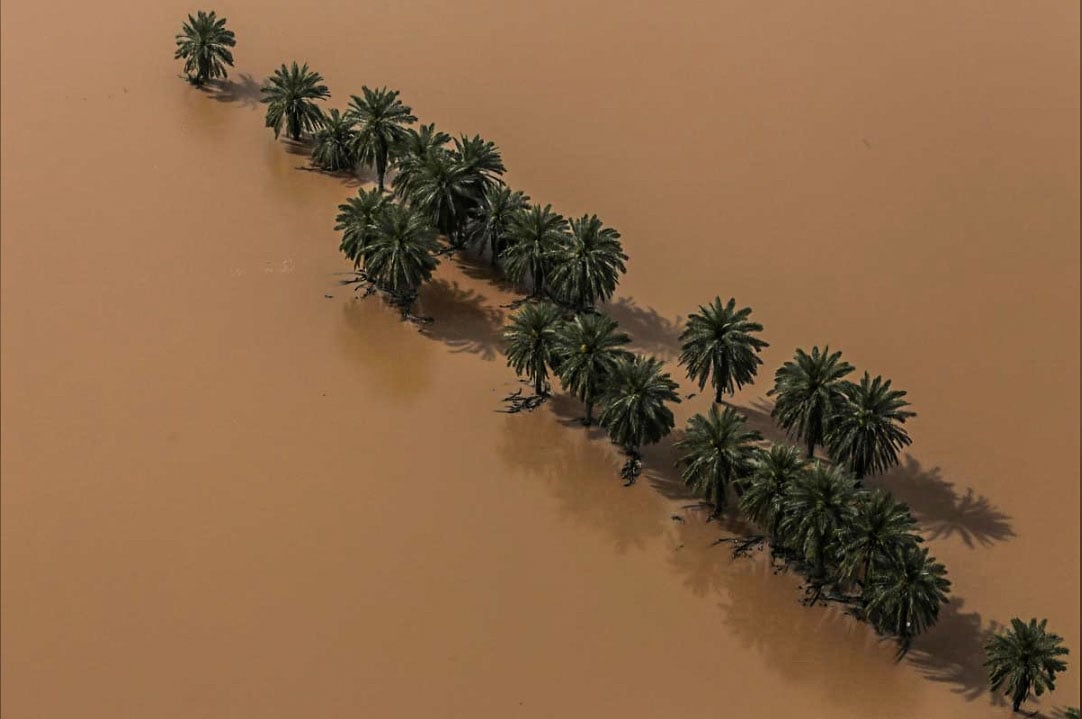
You have certainly not heard much about this in the West. And it didn’t get a fraction of the media attention (and none of the hundreds of millions of Euro pledges by the perversely rich) that the Notre Dame fire did. However, if disastrous floods had hit 28 out of 31 provinces and affected 10 million people in some European country or in the US, I believe you would have heard about it from Day One. But now it is Iran. Only the Iranians. The situation is disastrous but not so much because thousands have died. Rather, because floods of this magnitude are likely to have terrible long-term consequences for agricultural and other production, infrastructure, energy production, transport and daily lives (see pictures below and on the links). The basic facts about 3 weeks into the disaster are: 28 of 31 provinces affected, the area around Shiraz the most. 78...
D330EBzXsAAJpWh
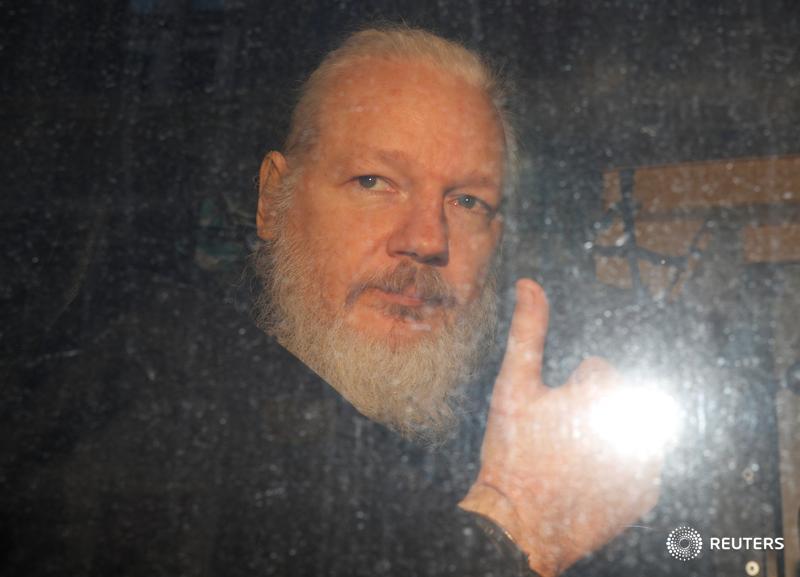
Nobel Laureate and TFF Associate Mairead Maguire requests UK Home Office permission to visit her friend Julian Assange whom this year she has nominated for the Nobel Peace Prize ‘I want to visit Julian to see he is receiving medical care and to let him know that there are many people around the world who admire him and are grateful for his courage in trying to stop the wars and end the suffering of others’ Thursday 11th April, will go down in history as a dark day for the Rights of humanity, when Julian Assange, a brave and good man, was arrested, by British Metropolitan Police, forcibly removed without prior warning, in a style befitting of a war criminal, from the Ecuadorian Embassy, and bundled into a police van. It is a sad time when the UK Government at the behest of the United States Government, arrested Julian Assange, a...
SkavlanScene
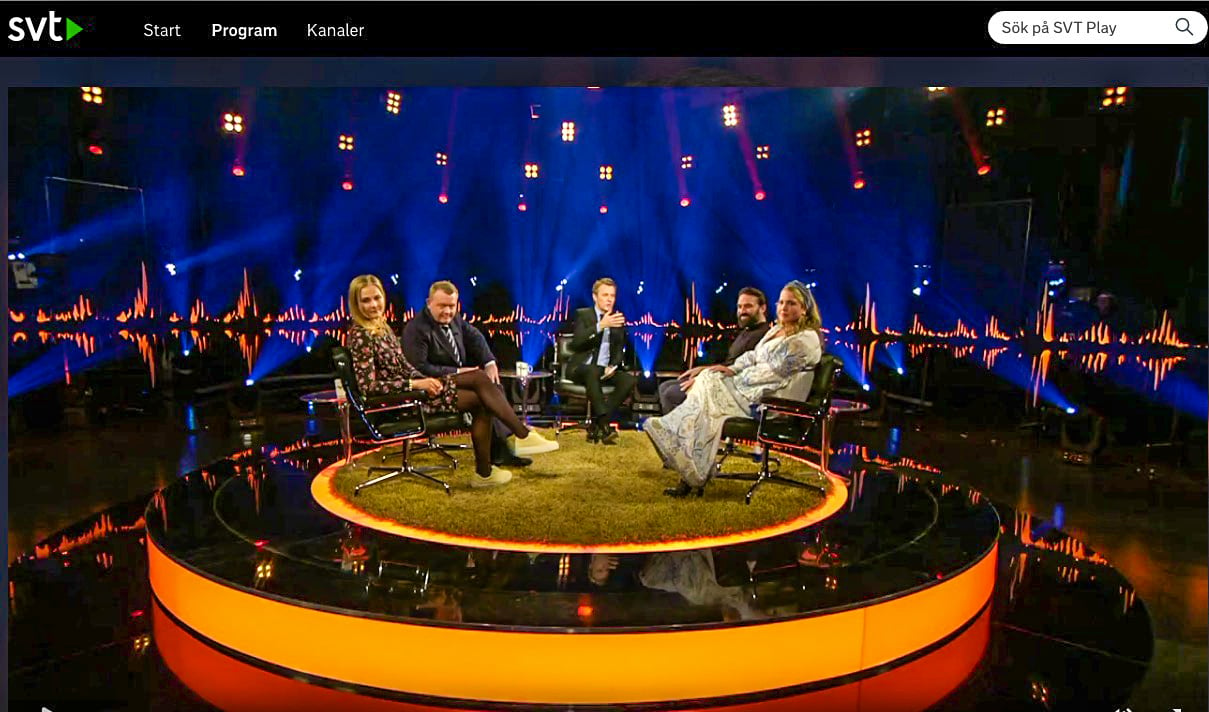
It’s Friday, April 5, 2019, at 9 PM. An entertaining talk show, “Skavlan”. A dialogue between a prime minister and a special forces soldier who has no regret having kicked in doors and “killed a lot” in Afghanistan. He justifies himself by the most primitive and long-ago debunked theory about Good and Evil in this world. And then the listening prime minister expresses his admiration. Something roamed around in my mind hours after the event and I had to check: Did he really say what I think I heard? It made me think about theories and worldviews on which political decisions can be founded. About the general, normalized fascination of war and killing, and about the soldier as hero and the victim as invisible, non-existent. It made me think about the sophisticated, almost imperceptible, media methods by which perpetrators of law violations and war crimes are turned (and turn themselves)...
Social-Media-2_small
TFF’s changing publishing policy – Why we reduce social media presence and what we’ll do instead For more than a decade, I’ve been enthusiastic about social media as a new, potentially more people-powered phenomenon that could serve change for the common good of humankind. Not so today. Sadly, social media have come to resemble fast-food chain restaurants – no taste, no joy, no quality, unhealthy, unsophisticated and boringly predictive. Homepages and blogs, on the contrary, still hold a potential resembling gourmet restaurants with lots of joys, health, innovation and sophistication as well as delicious surprises (and good wines instead of Coca Cola). TFF – the peace and future research foundation I am co-founder and director of – still reach thousands of people every day on social media but what does that mean? Too many have cared far too much about quantities of friends, followers, likes and shares – and far...

Categories

Year

Author / Contributor

Region