Global

Mainstream and alternative news sites with an emphasis on media outside of or with different perspectives from the Western world, e.g. NATO and EU countries, on regional organisations and the emerging world order.

We do not pretend to know the validity of every corner in each of those, but we have found interesting and well-researched/written articles in all of them at some point.

It’s by no means even a fraction of all. Missing an important link? Tell us!

Find your own dailies, magazine and news sites in the amazing global W3 directory

African Union

AlJazeera

All Africa

Almasdarnews – AMN

Al-Monitor

American Herald Tribune

APEC

Arab News (Saudi Arabia)

ASEAN News

Asia Times

Beijing News

Beijing Review

BRICS Information Centre

BRICS Post

CTGN America • LiveNews

CTGN Europe

China Daily

China Org.cn

Christian Science Monitor

Daily News and Analyses, DNA

Defense News

Democracy Now

EurasiaNet

EurasiaReview.com

Eurasia News Online

Euronews

Foreign Affairs (US)

Foreign Policy In Focus

France 24

Gallup Polls News

Global Times

G20

Haaretz

High North News

Huffington Post

Inter Press Service – IPS

InDepthNews – International Press Syndicate (IPS)

International Affairs, Russia

International New York Times

Johnson’s Russia List

Japan Times

Liveuamap

Mail & Guardian Africa

Military Times

Middle East Online

NK – North Korea News – independent

OCHA

Open Democracy

Organisation of Islamic Cooperation

OSCE

Outlook India

People’s Daily

Pressenza – peace and nonviolence journalism

PressTV

Reuters News

Russia Insider

RT Russia Today

Russian media –  a list created after Western censorship was introduced
SAARC News

Shanghai Cooperation Organisation, SCO News

South China Morning Post

Sputnik News

TASS

Tehran Times

Telesur English

The Christian Science Monitor

The Hindu

The Korea Times (Seoul)

The New Arab

The Pyongyangtimes

The Real News Network

Times of India

UN News Centre

UNHCR

Unz Review

Utne Reader

XinhuaNet

Category

Year

Author / Contributor

Region

Sort by

Showing 1-10 of 435 stories

FOREIGN201809041714000403314906740
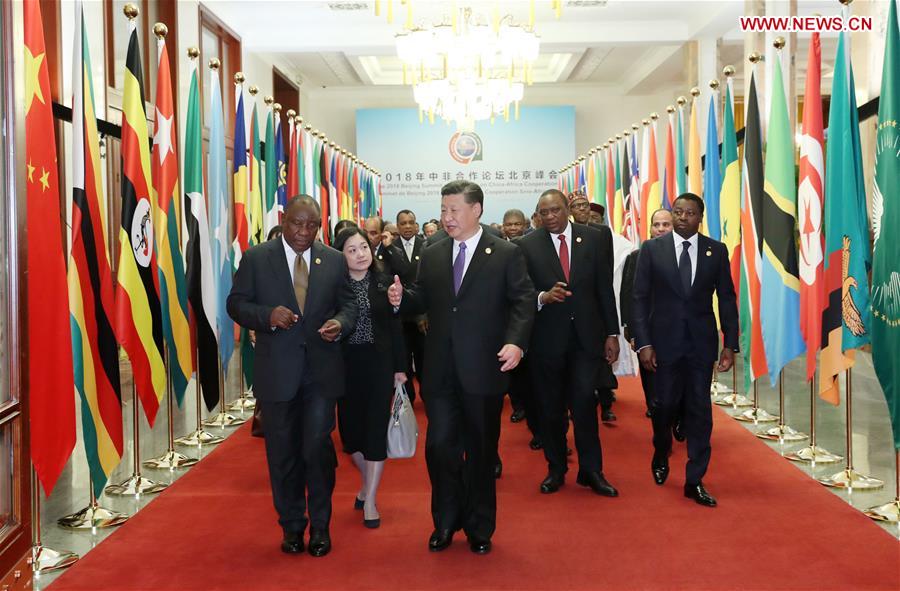
Chinese President Xi Jinping and foreign leaders attending the Beijing Summit of the Forum on China-Africa Cooperation (FOCAC) head for the venue of the summit’s opening ceremony at the Great Hall of the People in Beijing, capital of China, Sept. 3, 2018. (Xinhua/Pang Xinglei)   By Curtis Stone People’s Daily Online September 4, 2018   The 2018 Beijing Summit of the Forum on China-Africa Cooperation kicked off on Monday. At the opening ceremony, President Xi Jinping delivered an important speech that drew a warm round of applause from the audience. Xi said China will implement eight major initiatives with African countries in the next three years and beyond, covering fields such as industrial promotion, infrastructure connectivity, trade facilitation, and green development.   Originally published by The People’s Daily Online on September 4, 2018, here   In his speech, President Xi said China values sincerity, friendship, and equality in pursuing cooperation,...
China-US
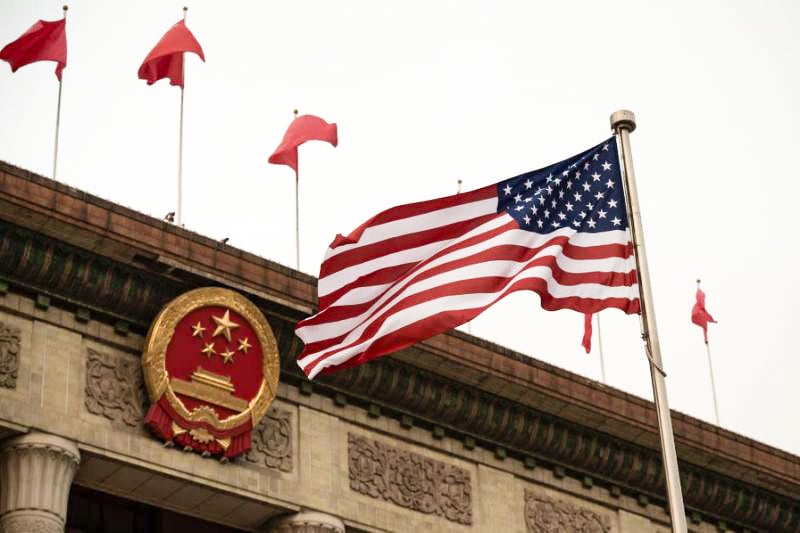
  Thwarting the anti-dollar coalition should be Washington’s top national priority   By Gal Luft August 30, 2018   The United States is currently waging economic warfare against one tenth of the world’s countries with cumulative population of nearly 2 billion people and combined gross domestic product (GDP) of more than $15 trillion. These include Russia, Iran, Venezuela, Cuba, Sudan, Zimbabwe, Myanmar, the Democratic Republic of Congo, North Korea and others on which Washington has imposed sanctions over the years, but also countries like China, Pakistan and Turkey which are not under full sanctions but rather targets of other punitive economic measures. In addition, thousands of individuals from scores of countries are included in the Treasury Department’s list of Specially Designated Nationals who are effectively blocked from the U.S.-dominated global financial system. Many of those designated are either part of or closely linked to their countries’ leadership. Published by Yahoo...
immigration
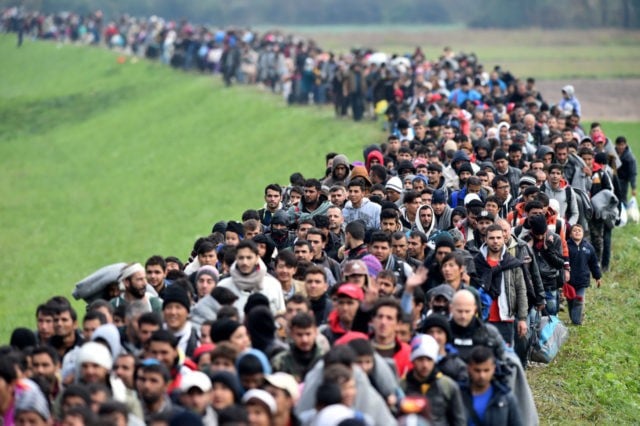
  By Roberto Savio* August 1, 2018 • According to the latest statistics, the total flow of immigrants so far in 2018 is 50.000 people, compared with 186,768 last year, 1,259,955 in 2016 and 1,327,825 in 2015. The difference between reality and perceptions is so astonishing, we are clearly witnessing one of the most brilliant manipulations in history. The latest survey carried out of 23,000 citizens of France, Germany, Italy, Sweden, the United Kingdom and the United States shows an enormous level of disinformation. In five of those countries, people believe that immigrants are three times higher than they actually are. Italians believe they account for 30% of the population when the figure is actually 10%, an average which is lower than the media of the European Union. Swedes are those closest to reality: they believe immigrants account for 30%, when in fact the figure is 20%. Italians also believe...
od960_logo@2x
By Edmund Fawcett Originally published by Open Democracy on April 7, 2018 here on   Unlike the hard right I have not conjured up an imaginary Other, but identified a genuine adversary in a struggle over democratic liberalism that is already engaged.   28 March 2018, Germany, Berlin: Olaf Scholz, Federal Minister of Finance (SPD), and German Chancellor Angela Merkel (CDU) attend a cabinet meeting at the Federal Chancellery. Gregor Fischer/Press Association. All rights reserved. To fix the topic, recall 18 months of recent electoral shocks, in reverse order. Last autumn in Germany’s national elections, the Alternative für Deutschland broke out from the fringes and won 94 seats in the federal parliament, a seventh of the total. Not since the early 1950s has Germany’s hard right won national representation and never in such strength. A year ago, Marine Le Pen at the head of the National Front advanced to the...
Russia-Saudi-meet-630x378
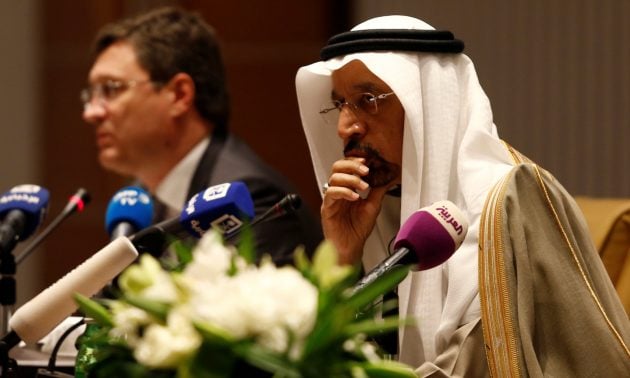
Hardly 10 months after honoring the visiting US president, the Saudis are open to a Russian-Chinese consortium investing in the upcoming Aramco IPO*   By M. K. Bhadrakumar February 16, 2018 In the slideshow that is Middle Eastern politics, the series of still images seldom add up to make an enduring narrative. And the probability is high that when an indelible image appears, it might go unnoticed – such as Russia and Saudi Arabia wrapping up huge energy deals on Wednesday underscoring a new narrative in regional and international security. Originally published by Asia Times here The ebb and flow of events in Syria – Turkey’s campaign in Afrin and its threat to administer an “Ottoman slap” to the United States, and the shooting down of an Israeli F-16 jet – hogged the attention. But something of far greater importance was unfolding in Riyadh, as Saudi and Russian officials met...
1-1
Most bankers, economists and investors after a couple of drinks, will admit that money is not wealth. Money is a metric, like inches and centimeters, for tracking real wealth: human ingenuity and technological productivity interacting with natural resources and biodiversity undergirding all human societies along with the daily free photons from our Sun, as described in “Valuing Today’s Circular Services Information Economies”. So brainwashed are we by the false money meme of “money as wealth” that whenever anyone proposes needed infrastructure maintenance, better schools and healthcare or any public goods, we are intimidated by some defunct economist who says “Where’s the money coming from?” They ought to know better, since, of course money is not scarce, it’s just information as I pointed out in 2001 at the annual meeting of the Inter-American Development Bank in an invited talk “Information, The World’s Real Currency, Is Not Scarce “(see World Affairs, April-June, Vol. 5, 2001, Delhi,...
famine
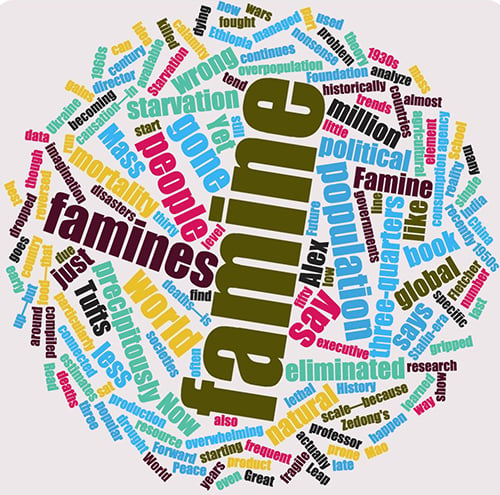
  January 27, 2018 Mass starvation killed more than three million people in Stalin-era Ukraine in the 1930s and more than 18 million in China during Mao Zedong’s Great Leap Forward in the late 1950s and early 1960s. Yet by the start of this century, famines like those were all but eliminated, Alex de Waal says in his new book, Mass Starvation: The History and Future of Famine. The number of people dying in famines around the world has dropped precipitously, particularly over the last thirty to fifty years. Via phys.org Those gains, though, are fragile, and could be starting to be reversed, says de Waal, who is the executive director of the World Peace Foundation and a research professor at the Fletcher School. For his book, he compiled the best available estimates of global famine deaths from 1870 to 2010, and used that data to analyze trends. Tufts Now...
earth-as-an-exploding-bomb-720x510
By William Bowles • Before I began this essay I read through some of my past forays that mentioned climate change and capitalism, the first I think, being in 2006 where I opined in a piece on the ‘War on Terror’: Perhaps the impending climate catastrophe as well as the genocidal actions of the US will force us to finally start thinking and acting ‘outside of the box’ but without a clear idea of where we are heading or how to get there, currently the situation looks dire. — WOT is to be done? 2 November, 2006 In the intervening years, things have gotten even more dire on pretty much every front. It appears that the world’s political and business elite are even more entrenched inside their box. Except, we do know what has to be done, so why, in the face of the obvious, do we not act to forestall catastrophe? Original posted...
RichardFalk
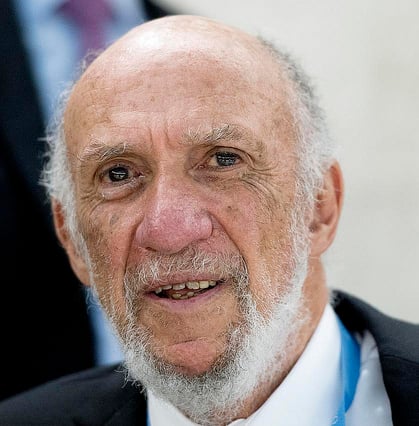
By Richard Falk • Prefatory Note -This post addresses the need for dialogue with the political, economic, and cultural ‘other,’ that is, those multitudes acutely alienated from and angry with secular globalism and the Enlightenment legacy often equated with ‘modernity’ and ‘modernization.’ At the core is a search for closure on the nature of reality as well as feelings about equity (given many dimensions of inequality) and ethical innovation (revisionist approaches to gender, sexuality, marriage). Does reason or faith or tradition provide greater closure? Can the Thomistic grand synthesis of the 13th Century be repeated under 21st Century condition in the rough waters of controversy generated by Trump and Trumpism? Is this too Western a way of putting the problem? I write as an American, but there are many parallels in other countries. The first step is to admit being out of touch with the ferment below the surface. A...
share-world-population-in-extreme-poverty-absolute-1-696x464
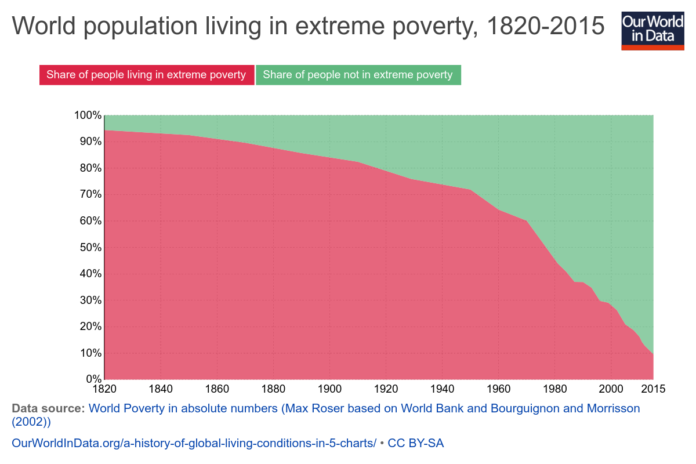
By Justin Brown December 31, 2016 As 2016 comes to a close, many people are welcoming the new year with trepidation after a number of incredibly transformative and surprising events during the year. We saw the people of the United Kingdom decide to leave Europe in the Brexit vote. The USA went to the polls in November after a bitter presidential campaign to vote into power former reality television star Donald Trump. 2016 also seems to be the year the music died. In addition to Bowie, Prince, Glenn Frey, Leonard Cohen, Rick Parfitt and George Michael also passed away. Via ideapod.com Towards the end of 2016, President-elect Trump alarmed many by seemingly advocating for a further nuclear arms build up. The United States must greatly strengthen and expand its nuclear capability until such time as the world comes to its senses regarding nukes Donald J. Trump (@realDonaldTrump) December 22, 2016...
John-Scales-Avery-2
Portrait of a TFF Associate • John Scales Avery is a theoretical chemist at the University of Copenhagen. He is noted for his books and research publications in quantum chemistry, thermodynamics, evolution, and history of science. His 2003 book Information Theory and Evolution set forth the view that the phenomenon of life, including its origin, evolution, as well as human cultural evolution, has its background situated in the fields of thermodynamics, statistical mechanics, and information theory. Since 1990 he has been the Chairman of the Danish National Group of Pugwash Conferences on Science and World Affairs. Between 2004 and 2015 he also served as Chairman of the Danish Peace Academy. He founded the Journal of Bioenergetics and Biomembranes, and was for many years its Managing Editor. He also served as Technical Advisor to the World Health Organization, Regional Office for Europe (1988-1997). A complete list of books and many of...
GettyImages-513157188
By Jonathan Haidt • And how moral psychology can help explain and reduce tensions between the two. What on earth is going on in the Western democracies? From the rise of Donald Trump in the United States and an assortment of right-wing parties across Europe through the June 23 Brexit vote, many on the Left have the sense that something dangerous and ugly is spreading: right-wing populism, seen as the Zika virus of politics. Something has gotten into “those people” that makes them vote in ways that seem—to their critics—likely to harm their own material interests, at least if their leaders follow through in implementing isolationist policies that slow economic growth. Most analyses published since the Brexit vote focus on economic factors and some version of the “left behind” thesis—globalization has raised prosperity all over the world, with the striking exception of the working classes in Western societies. These less educated...
Categories

Year

Author / Contributor

Region