Development

Category

Year

Author / Contributor

Region

Sort by

Showing 1-10 of 191 stories

3943
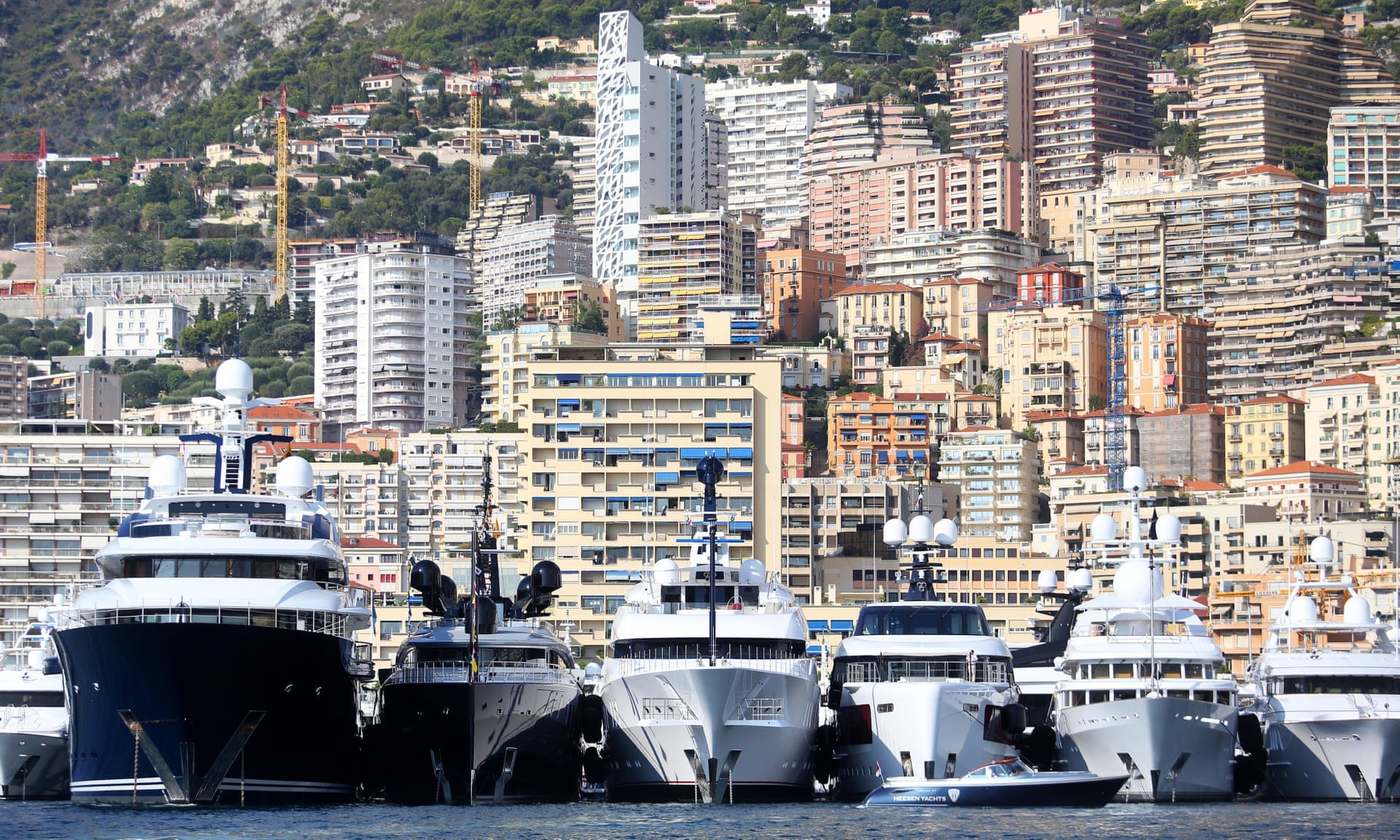
Photograph: Bloomberg via Getty Images The world’s 26 richest people now own as much as poorest 50%. It creates huge problems, misery and conflicts. And it is caused by the West’s version of capitalism and is neither sustainable nor morally defensible, says Jan Oberg. By Oxfam  21 January 2019 Billionaire fortunes increased by 12 percent last year – or $2.5 billion a day – while the 3.8 billion people who make up the poorest half of humanity saw their wealth decline by 11 percent, reveals a new report from Oxfam today. The report is being launched as political and business leaders gather for the World Economic Forum in Davos, Switzerland. ‘Public Good or Private Wealth’ shows the growing gap between rich and poor is undermining the fight against poverty, damaging our economies and fuelling public anger across the globe.  It reveals how governments are exacerbating inequality by underfunding public services, such as healthcare and...
brain-evolution-information-explosion-sanjoy-sanyal-5-638
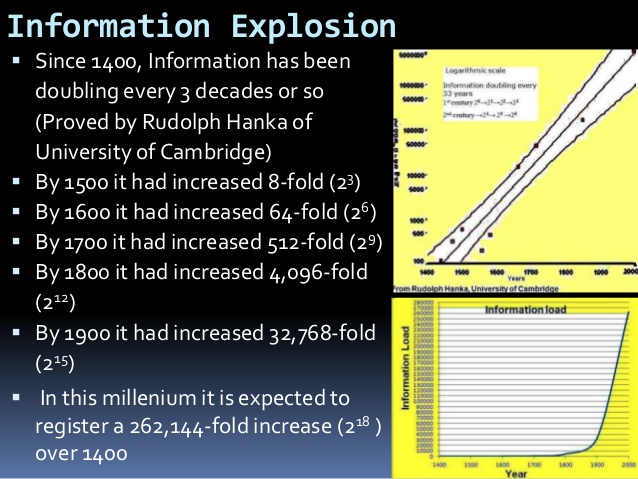
I would like to announce the publication of my new book entitled “The Information Explosion”. This book discusses the role of information in evolution, and especially in the evolution of human culture. Articles and book chapters that I have previously written on this subject are incorporated in the text in modified forms, but more than half of the material is new. The book may be freely downloaded and circulated from this link. Reformed teaching of history Human nature has two sides: It has a dark side, to which nationalism and militarism appeal; but our species also has a genius for cooperation, which we can see in the growth of culture. Our modern civilization has been built up by means of a worldwide exchange of ideas and inventions. It is built on the achievements of many ancient cultures. China, Japan, India, Mesopotamia, Egypt, Greece, the Islamic world, Christian Europe, and the...
1-1
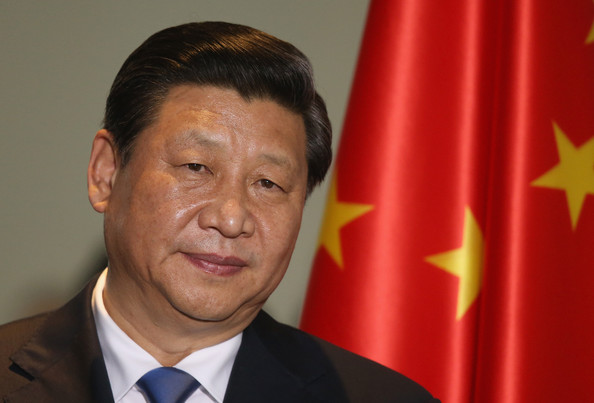
  The United States can’t sit back and watch as China quietly colonizes the West.   By Michael McCaul Chinese President Xi Jinping is leading a Maoist Long March to achieve his dream of global power. Instead of retreating from Chiang Kai-shek’s forces, as Mao Zedong did, Xi is instead retreating from the Chinese people’s hopes for democratic reform, freedom of expression, protection of human rights, and economic liberalization. Xi is exporting his brand of colonialism with Chinese characteristics through soft power means, on a road toward achieving his hard power ends. Originally published by Foreign Policy on April 5, 2018 This was clear in Xi’s recent address at the National People’s Congress. “We are resolved to fight the bloody battle against our enemies,” he declared on March 20, “… with a strong determination to take our place in the world.” And as he embarks on a march toward lifelong...
1-1
Most bankers, economists and investors after a couple of drinks, will admit that money is not wealth. Money is a metric, like inches and centimeters, for tracking real wealth: human ingenuity and technological productivity interacting with natural resources and biodiversity undergirding all human societies along with the daily free photons from our Sun, as described in “Valuing Today’s Circular Services Information Economies”. So brainwashed are we by the false money meme of “money as wealth” that whenever anyone proposes needed infrastructure maintenance, better schools and healthcare or any public goods, we are intimidated by some defunct economist who says “Where’s the money coming from?” They ought to know better, since, of course money is not scarce, it’s just information as I pointed out in 2001 at the annual meeting of the Inter-American Development Bank in an invited talk “Information, The World’s Real Currency, Is Not Scarce “(see World Affairs, April-June, Vol. 5, 2001, Delhi,...
famine
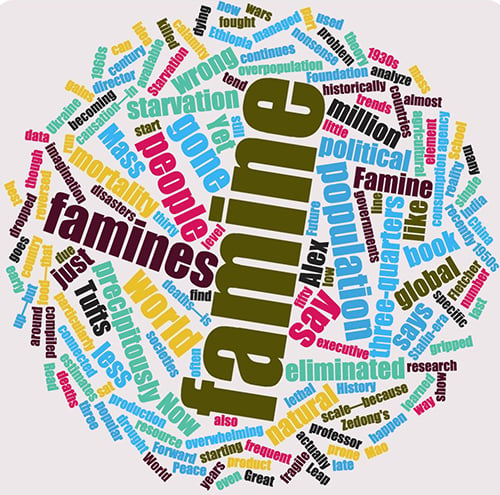
  January 27, 2018 Mass starvation killed more than three million people in Stalin-era Ukraine in the 1930s and more than 18 million in China during Mao Zedong’s Great Leap Forward in the late 1950s and early 1960s. Yet by the start of this century, famines like those were all but eliminated, Alex de Waal says in his new book, Mass Starvation: The History and Future of Famine. The number of people dying in famines around the world has dropped precipitously, particularly over the last thirty to fifty years. Via phys.org Those gains, though, are fragile, and could be starting to be reversed, says de Waal, who is the executive director of the World Peace Foundation and a research professor at the Fletcher School. For his book, he compiled the best available estimates of global famine deaths from 1870 to 2010, and used that data to analyze trends. Tufts Now...
johangaltung
• Keynote, World Futures Studies Federation Conference – Jondal, Norway 7 Jun 2017 West of Jondal is Torsnes, named after the Nordic war god Thor with his Hammer, a center of the Viking era from 800 to 1050, only 250 years. Why so short? Successful with raids and colonization–Gardarike in Russia, Iceland, Greenland, Vineland in Canada. And then: fini. Why? Because they had no future. Evil Lóki had killed Good Baldur – next to Torsnes is Belsnes=Baldursnes. They were doomed. Enters Christianity with Evil Satan and Good God, restoring hope. The end. The Soviet Union Empire had no future: Communism was undefined. Enters Orthodox Christianity – Putin is a true believer – hope restored. The United States Empire has no future: “Allies” refuse to fight US wars and US capitalism increases inequality with reduced growth. Enter Campaigner Trump ‘Making America Great Again’ by buying-hiring American; President Trump making America isolated,...
5184
  • The UN’s Philip Alston is an expert on deprivation – and he wants to know why 41m Americans are living in poverty. The Guardian joined him on a special two-week mission into the dark heart of the world’s richest nation. By Ed Pilkington “You got a choice to make, man. You could go straight on to heaven. Or you could turn right, into that.” We are in Los Angeles, in the heart of one of America’s wealthiest cities, and General Dogon, dressed in black, is our tour guide. Alongside him strolls another tall man, grey-haired and sprucely decked out in jeans and suit jacket. Professor Philip Alston is an Australian academic with a formal title: UN special rapporteur on extreme poverty and human rights. His fact-finding mission into the richest nation the world has ever known has led him to investigate the tragedy at its core: the 41...
E_SDG_Icons-01
• On September 25th 2015, countries adopted a set of goals to end poverty, protect the planet and ensure prosperity for all as part of a new sustainable development agenda. Each goal has specific targets to be achieved over the next 15 years. For the goals to be reached, everyone needs to do their part: governments, the private sector, civil society and people like you. Do you want to get involved? You can start by telling everyone about them. We’ve also put together a list of actions that you can take in your everyday life to contribute to a sustainable future. What are the #globalgoals? The full list is here. Read more…  
http-www.globalissues
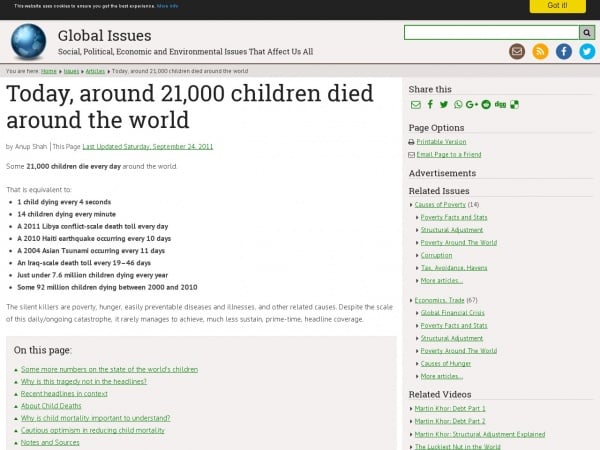
Via globalissues.org By Anup Shah • Every minute, some 15 children die around the world, from poverty, easily preventable diseases, illnesses, and related causes. This rarely makes the headline news that one might expect such a tragedy to do. Some 21,000 children die every day around the world (data from 2010). The silent killers are poverty, hunger, easily preventable diseases and illnesses, and other related causes. Despite the scale of this daily/ongoing catastrophe, it rarely manages to achieve, much less sustain, prime-time, headline coverage. Unfortunately, it seems that the world still does not notice. It might be reasonable to expect that death and tragedy on this scale should be prime time headlines news. Yet, these issues only surface when there are global meetings or concerts (such as the various G8 summits, the Make Poverty History campaign in 2005, etc). Furthermore, year after year, we witness that when those campaigns end...

ChatGPT Image 9 jun 2026, 11_11_33
Recent reports estimate that India’s annual economic growth rate is now down to 5.5%. The government of Narendra Modi which until recently seemed to be on a public opinion roll could fall off its log – but that depends on the Indian electorate ending its self-deceit. Three years ago Modi at the helm of his Hindu nationalist party, the BJP, gave Congress a thumping defeat. Suave and persuasive on the podium, Modi rammed home a simple message – that in the state of Gujarat where he was the chief minister more had been achieved in a short space of time than anywhere else in India. It was industrializing fast, building more roads, modernizing its ports and communications and helping the poor. There was some element of truth in this and few doubt that Modi is an effective administrator who is strong on productivity and hard on corruption. Nevertheless, when it...
RichardFalk20141
We are living amid contradictions whether we like it or not, driving expectations about the future toward opposite extremes. Increasingly plausible are fears that the ‘sixth extinction’ will encompass the human species, or at least, throw human society back to a technology of sticks and stones, with a habitat limited to caves and forests. This dark vision is countered by gene-editing designer promises of virtual immortality and super-wise beings programming super-intelligent machines, enabling a life of leisure, luxury, and security for all. Whether the reality of such a scientistic future would be also dark is a matter of conjecture, but from a survival perspective, it offers an optimistic scenario. On political levels, a similar set of polar scenarios are gaining ground in the moral imagination, producing national leaders who seem comfortable embracing an apocalyptic telos without a second thought. The peoples of the world, entrapped in a predatory phase of...
ObergPhoto2cmB-W-3
or 10/7, a date no one remembers like 9/11. And Afghanistan had nothing to do with the terrible attack on September 11, but had to be punished anyhow. Out of proportion, no proportionality. Now there are discussions about increasing the troop level again. What if someone reasonable intellectual asked the questions: What is it we are doing wrong? So, I ask for heuristic – provocative – purpose: What would be left of US foreign policy if that country did not have weapons? And I offer a short answer.
Categories

Year

Author / Contributor

Region