Archive 1986 – 2017

Category

Year

Author / Contributor

Region

Sort by

Showing 1-10 of 3510 stories

Imagen-thumbnail-The-Transnational-1
Av Lena SanverLänderkommittén för F.d. Jugoslavien February 6, 2004 Trehundrasjuttioniotusenetthundratrettiofem. Så många flyktingar finns det i Serbien och Montenegro. Merparten av dem kommer ursprungligen från Kroatien eller Bosnien-Hercegovina och har serbisk etnicitet. 379 135 personer är väldigt många människor. Merparten av alla dessa människor lever i total misär på kollektiva center eller i eget boende i s.k. hus som borde ha varit rivna för länge sedan. Bortsett från den lilla hjälp de får från internationella hjälporganisationer får de klara sig bäst de kan. Det handlar nog inte om en ovilja från de serbiska myndigheternas sida att hjälpa dem utan mer om en total brist på resurser. Efter många års sanktioner, diverse krig och NATO:s bombhärjningar mot bl.a den serbiska infrastrukturen då många tiotusentals arbeten strök med, är det kanske inte helt svårt att förstå. Det finns flyktingar från Kroatien och Bosnien-Hercegovina i Sverige också. Men här kallas de för asylsökare...
Imagen-thumbnail-The-Transnational-1
6 februari 2004 Styrelsen för Jugoslavienkommittén, besökte nyligen en totalt förstörd serbisk by vid namn Belo Polje, i Kosovo. Vi kom dit med militäreskort. En FN-stridsvagn vaktade området från den högsta punkten, den vandaliserade kyrkogården, där bara rester av murarna fanns kvar av den kristna kyrkan. De kolsvarta resterna av inredningen visade att kyrkan både bränts och sprängts. I byn hade det funnits 300 bostadshus, ladugårdar, skola och kulturhus. Betydligt mer än hundra ortodoxa, kristna kyrkor och kloster, i Kosovo Methoija har förstörts under tiden Nato haft ansvaret för området. Vi träffade en grupp serbiska män, som bodde i tält vid kyrkogården. De hade bott i byn och var nu där för att försöka återställa de vandaliserade familjegravarna. De berättade att Natosoldater kommit till byn och meddelat innevånarna, att de inte kunde skydda dem. De var tvungna att ge sig av därifrån och flydde, till släktingar och vänner, på säkert...
Imagen-thumbnail-The-Transnational-1
Director of Peace Information Center, Foundation for Democracy and Development StudiesFaculty of Political Science, Thammasat University TFF associate On January 22, 2004, two men on a motorcycle used a long knife to slit the throat of a 64 year-old Buddhist monk to death. The monk just returned from his early morning round of alms-begging. Then on January 24, three more monks were attacked, two were dead. A young novice aged only 13 died in a hospital after being attacked in the head by a youth wielding a machete on a motorcycle while another 65-year-old monk was killed in the same manner. A third machete attack put another 25 year-old monk in a hospital with serious injuries. The January 22 incident occurred in Bacho, Narathiwat while the other took place in different areas of Yala, both are Thailand’s Southernmost provinces. On the very same day, there were other killings in Yala...
Imagen-thumbnail-The-Transnational-1
In a lecture in late 1967 over the Canadian Broadcasting Company, Martin Luther King, Jr. addressed the subject of “Conscience and the Vietnam War.” His conscience was clearly telling him that this was a war that made no sense and must be stopped.  “Somehow this madness must cease,” King said. “We must stop now. I speak as a child of God and brother to the suffering poor of Vietnam. I speak for those whose land is being laid waste, whose homes are being destroyed, whose culture is being subverted. I speak for the poor of America who are paying the double price of smashed hopes at home and death and corruption in Vietnam. I speak as a citizen of the world, for the world as it stands aghast at the path we have taken. I speak as an American to the leaders of my own nation. The great initiative of...
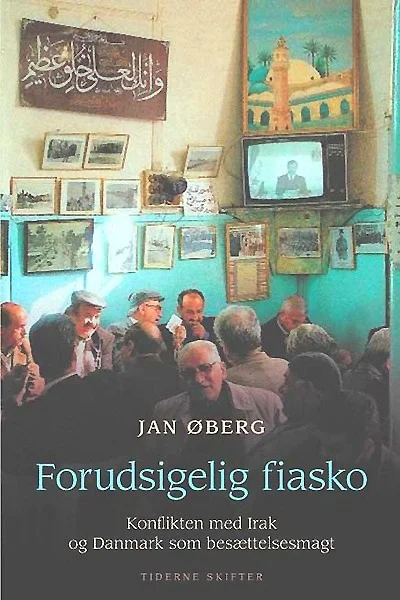
Forudsigelig_fors_S
Lidt om bogen Bogens indhold Bestil bogen her Anmeldelser Siden den kolde krigs afslutning har dansk udenrigs- og sikkerhedspolitik bevæget sig langt ind i en politisk og moralsk blindgyde. Men det tjener hverken os eller verden at Danmark er blevet en krigs- og besættelsesmagt, viser den internationalt respekterede danske freds- og fremtidsforsker, Jan Øberg i denne bog. Tværtimod mindsker det vores og andres sikkerhed og bidrager til at øge, snarere end at mindske, terrortruslen. Forudsigelig fiasko – der udkommer 4. juni 2004 – sætter fokus på det irakiske samfund og Vestens måde at betragte og behandle Irak på. Jan Øberg kombinerer konkret konfliktanalyse med et personligt engagement, og underbygger overbevisende og konsekvent det synspunkt, at Vestens mangelfulde konfliktforståelse og ukyndige konflikthåndtering måtte ende med den ulykkelige krig. Det er en krig, som efter forfatterens opfattelse hverken kan fremme ædle motiver – etablere et demokratisk Irak – eller økonomisk-kulturelle interesser, men tværtimod kan blive...
Imagen-thumbnail-The-Transnational-1
The Political Gandhi and the Whole Gandhi Our knowledge of the life of Mahatma Gandhi, when it does not come from Attenborough’s landmark film, is generally provided by popular biographies. The biographies, especially the most recent and best known ones, such as those by Fischer and Nanda, tend to be political biographies. Gandhi is the main player in India’s freedom struggle, the eventual “father of the nation.” His fight for the rights of Indians in South Africa and his struggle for India’s independence are generally the main focus of the story. The central narrative of the India phase of his life focuses on the three main political campaigns that he led: the 1921-22 Noncooperation Movement, the 1930-33 Civil Disobedience Movement and the 1942-43 Quit India Movement. The lengthy periods between these campaigns spent on self-discovery or anti-untouchability and other social work are glossed over, seen as lulls in Gandhi’s life....
Imagen-thumbnail-The-Transnational-1
January 28, 2004 Gandhi’s Call As early as 1931 Gandhi articulated his view that change, to be beneficial, needed to be achieved by nonviolent struggle: “I personally, would wait, if need be, for ages rather than to seek the freedom of my country through bloody means.” Gandhi added some optimistic words, declaring, “I feel in the innermost recesses of my heart that the world is sick unto death of blood-spilling. The world is seeking a way out, and I flatter myself with the belief that perhaps it will be the privilege of the ancient land of India to show the way out to the hungering world.” (1) Of course, from the perspective of 2003 this would seem to be a prime instance of false prophesy. This essay argues that although Gandhi’s literal coordinates of time and place were mistaken, we may yet be approaching a Gandhian Moment where there occurs...
Imagen-thumbnail-The-Transnational-1
On 14 December 2003, the Turkish Cypriots went to the polls to elect new deputies to the unicameral 50-seat legislature of the Turkish Republic of Northern Cyprus, TRNC. Political developments, elections and the comings and goings of governments in the non-recognised mini-state (est. population 200,000) tend to go largely unnoticed by the rest of the world, including its Greek Cypriot neighbours (est. 650,000) for whom the overriding concern remains the presence in the Turkish Cypriot-controlled north of a large contingent (est. 35,000) of Turkish troops. The December 2003 elections however took place under unprecedented international attention. The outcome was seen as having the potential to break the impasse of the intercommunal peace process and to enable the accession of a reunited Cyprus to the European Union on 1 May 2004. The pre-election agenda was dominated by disagreements between government and opposition parties pertaining to the merits of a November 2002...
johangaltung
1. Definitions and Hypotheses: An Overview Definition: An empire is a transborder Center-Periphery system, in macro-space and in macro-time, with a culture legitimizing a structure of unequal exchange between center and periphery: economically, between exploiters and exploited, as inequity; militarily, between killers and victims, as enforcement; politically, between dominators and dominated, as repression; culturally, between alienators and alienated, as conditioning. Empires have different profiles. The US Empire has a complete configuration, articulated in a statement by a Pentagon planner: “The de facto role of the United States Armed Forces will be to keep the world safe for our economy and open to our cultural assault. To those ends, we will do a fair amount of killing”. In other words, direct violence to protect structural violence legitimized by cultural violence. The Center is continental USA and the Periphery much of the world. Like any system it has a life-cycle reminiscent of...
Imagen-thumbnail-The-Transnational-1
Since its founding moments, the United States has been bedeviled by a morally self-congratulatory image of American exceptionalism, despite engaging in practices that violate the most fundamental precepts of human decency. This dualism, constituted by dynamics of denial and myth-making, has achieved a public posture of innocence throughout a national history that includes slavery, racism, dispossession and destruction of native peoples, continuous interventions in weaker countries, war-making and exploitative economic arrangements with autocratic Third World elites. A dramatic instance of this contradictory reality was the celebration of victory over fascism as a just war coupled with the mega-terrorist use of atomic bombs against the civilian populations of Hiroshima and Nagasaki in 1945. In some notable respects, the disappointments of the 1990s represented a parallel disconnect, due to US preeminence, between impressive achievements on the level of global justice and immobility, or worse, on the level of existential human suffering, when...

ChatGPT Image 9 jun 2026, 11_11_33
LONDON – Prime Minister Tony Blair is the type of man who will go to his grave insisting that he was right. Only a leader of his moral certitude could have revamped the riven Labor party into the disciplined vote winning machine it has become. Whatever happens in British politics this week- and his resignation is a distinct possibility- and however much he is criticized in the report of judge Lord James Hutton on the suicide of David Kelly, Britain’s top expert on Iraq’s chemical and biological weapons, Blair will insist that he was right to have backed President George Bush in his decision to go to war with Iraq. If Margaret Thatcher was, in her own words, a “lady not for turning”, Blair is a politician who says to himself “je ne regret rien” and, grey faced and exhausted though he looks according to intimates, believes he has done the...
Categories

Year

Author / Contributor

Region