

I have long believed that prospects for a hopeful human future depend on radical and visionary feelings, thought, and action. Such an outlook reflects my view that the major challenges of our time cannot be met by thinking within the box, or implementing the realist agenda of doing what it is feasible while disregarding what is necessary and desirable. For instance, with respect to climate change such a conventional approach avoids asking what needs to be done to give future generations positive life prospects, but seeks, at best, to do what seems politically feasible at the moment, that is, far too little.

This means not putting a cap on energy or water use, not limiting carbon emissions or prohibiting fracking, continuing to encourage economic growth, and refusing to question consumerism. In effect, this conventional approach does not meet challenges, but at most seeks to defer and mitigate harmful effects to the extent possible. In effect, it opts for a worse human future, and remains in bondage to the deformities wrought by clearly deficient neoliberal prescriptions for human fulfillment.

Against this background, it was a personal breakthrough to meet Jeff Wilson who is,

of all things, a dean of the arts college and faculty member in environmental and biological sciences at Huston-Tillotson University in Austin. This is a small mainly undergraduate university with about 900 students, and is what is called a ‘historically black’ college, established in 1881 by some Christian initiatives, with the specific mission of providing higher educational opportunities for former slaves freed in the course of the Civil War.

What makes Jeff charismatic is his radical sensibility that has crafted a most unlikely project that has been receiving increasing media attention — converting a trash dumpster into a place of residence, not in the name of austerity, but all in the name of promoting a vision of sustainable living. For those like me unfamiliar with dumpsters, other than as an annoyance if driving behind a garbage pickup vehicle in a crowded city, the idea of living in a 33 square foot enclosure that must be climbed to enter or leave struck me as a kind of ecological stunt when I first heard about it. Like many first impressions this one was quickly superseded by a sense of awe almost at the point of contact.

That is, until visiting the site, which is on the campus, and actually a project of a student group, intriguingly named “Green is the New Black,” and part of a vision, appropriately radical, to make black colleges take a national lead in the years ahead in producing green campuses throughout the country in every black school.

Getting back to Wilson, it is obvious from appearance and style that he strikes his own pose: he is unusual in dress and deeply engaging and infectionously friendly when it comes to sociability, with lively wit and a robust sense of self-irony. He did not come to this experiment in sustainable living overnight. He had earned a PhD at the University of Canterbury and did post-doctoral work at Harvard, he has written numerous papers published in scientific journals on environmental and biological issues, and won an award as the outstanding teacher in all of Texas when he was still an assistant professor. Through it all, he realized that the academic career of a typical scholar, however dedicated, was not going to get done the job of sustainability given the obstacles.

As his girlfriend, Clara Benson, a writer by trade, remembers her first impression of Jeff, “This guy was trouble of the best variety.” And speaking of their affinity transcending differing personalities and vocations, she writes, “We live for the unexpected, the experimental, and the subtly disruptive.” My only skeptical reaction is the use of the word ‘subtly’!

Jeff and Clara, as is increasingly customary in our digitized era met in cyberspace, via social media, and before long embarked on a most usual ice-breaking three week adventure journey through the Middle East and Europe with no luggage or even a change of clothing. Obviously, the idea of reinventing how we live together happily on the planet has been gestating in Jeff’s restless mind for some time. Clara’s wonderfully witty and lucid narrative of their trip together was published on November 11, 2013 by Salon.com, and won such a huge audience that a book and film are presently in the works.

The Dumpster Project is, first of all, a vivid reminder of unsustainability. It is also a carefully conceived way of showing that there are other alternative ways to organize society.

Jeff started living in the dumpster on February 4, 2013, and he and students will continue to camp out there in sleeping bags for a year, relying on solar light and water hauled and then filtered from a nearby river, subsisting without any normal links to water or electric supply. This phase will be followed by adapting the dumpster to the energy and water use of the average American, getting all the appliances to be found in the average home, and measuring their environmental footprints in relation to energy and water use, with the expressed intent of dramatizing the gap between what is possible and what is necessary.

And there is the third phase described as the ‘Ultimate Dumpster Home,’ which will incorporate the best of design and innovation to show that life can be fulfilling within drastically scaled down proportions, with the goal being one of creating a net-zero energy home that still manages to enjoy the comforts of a normal home. For further exposition I recommend Jeff’s website <dumpsterproject.org/team/dr-jeff-wilson>

The overall focus, and inspiring imagery, is captured by Jeff’s slogan, “We are the new 1%!” The dumpster takes up 1% of the living space used by the average American family. Further, the energy/water regime is shaped by getting along on 1% or less of what is currently the fashion in America. At a deeper level the new 1% is based on a different kind of leadership — toward a sustainable and hopeful future — that contrasts with the old 1% that feasts on a hyper-consumptive life style, portrayed as decadent and dehumanizing in the recent film, The Wolf of Wall Street.

It is a matter of repudiating the elites of wealth while celebrating emergent elites of sustainability, worthy ecological pilgrims of our time. As well, the activist challenges posed by the Occupy Movement’s claim in 2012 that “we are 99%” resonates with the conviction that change comes from the people, and not from governments and bureaucracies. Despite the smallness of the dumpster, the scope of the message is as large as the planet, or perhaps, even the universe.

I was drawn to the inspirational value of this brave trust in the power of imagination once it is made actual! In the past, I have written about the importance of engaged citizenship to heal the wounds of the planet, and praised particularly, ‘the citizen pilgrim,’ those who have embarked on a life journey in search of a better future. Citizenship, then, becomes enacted in time and is not conceived only as a dimension of space as, for instance, in opting to be ‘a world citizen.’ It is in this spirit that I acknowledge Jeff Wilson as an exemplary citizen pilgrim!
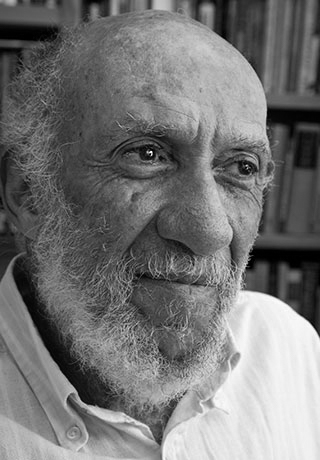

Professor Falk became an adviser to TFF when it was established in 1985.

Related Posts

Jan Oberg TFF director October 13, 2026 According to Alfred Nobel’s will, the Nobel Peace Prize shall be awarded: ”to the person who has done the most or best to advance fellowship among nations, the abolition or reduction of standing armies, and the establishment and promotion of peace congresses.” Further down, he also expresses how the prize for the “champions of peace” shall be decided: “that for champions of peace by a committee of five persons to be selected by the Norwegian Storting. Alfred Nobel’s will is remarkably short and clear. But few seem to have read it. Nobel did not say that the committee itself should consist of members of parliament. He entrusted the Storting with appointing five persons. In principle, it could have selected diplomats, mediators, peace researchers, conflict-resolution specialists, or other individuals with recognised expertise in matters of peace from around the world. Instead, the Storting gradually...
Advocates of nuclear disarmament are regularly dismissed by the champions of nuclear deterrence as naïve and unrealistic, utopian or even irresponsible. Yet this ‘doctrine’ of deterrence, regarded by France as the ‘cornerstone’ of its national security, is based on quasi-religious beliefs, a theory that cannot be proven, risky gambles and fragile assumptions. So much so that one might legitimately ask which side the ‘Care Bears’ are on. Marc FinaudVice-President of Initiatives for Nuclear Disarmament (IDN) October 9, 2026 This article was originally published on Pressenza When it comes to these things being treated as religious concepts, look here. Idealists and realists It was Hubert Védrine, François Mitterrand’s former Foreign Minister, who repeatedly coined the phrase: ‘Europeans are a sort of Care Bears who don’t realise they’re living in Jurassic Park’. He applies this reference to the cartoon for well-behaved children not only to what he regards as weakness or idealism...
What the West Borrowed from Asia and What It Left Behind Jan Krikke October 8, 2026 The article was originally published here In the late 1960s, the musical Hair announced that the Age of Aquarius was dawning. Its opening anthem promised a transformation of human consciousness: an era of peace, harmony and understanding. Half a century later, a familiar echo of that promise is a meditation app offered by your employer. You can find it in the same list of benefits as the pension plan and the gym discount. How did a spiritual revolution become an employee benefit? The answer lies in the history of the movement known as New Age: where it came from, what it borrowed from Asia, and why the meaning of what it borrowed changed in the process. Two definitions will help. New Age is a loose label for a wide range of spiritual practices and...

Recent Articles

Below are TFF-related media mentions, comments, videos and social media posts published elsewhere but not on this homepage. We happen to catch and list only a fraction. Regarding video comments and debates, we recommend that you go to the TFF Video Channel on Substack where many of them are reproduced. Jan Oberg is a contributor to China Daily – 52 million daily clicks – and Global Times, CGTN and CCTV (the national television), China Investment, Xinhua News Agency and several others. Articles and videos on these media very often multiply into countless Chinese (and Western media) that re-post them from these main media. Thanks to The China Academy, his analyses, interviews and comments are frequently posted on YouTube channels such as Thinkers Forum and Wave Media. These videos are often re-posted on Bilibili (China’s YouTube), the China Content Center on TikTok, and on the Chinese edition of TikTok, Douyin.com. This means reaching hundreds of millions of viewers worldwide over a year. While there are too many to catch on all these...
Jan Oberg TFF director October 13, 2026 According to Alfred Nobel’s will, the Nobel Peace Prize shall be awarded: ”to the person who has done the most or best to advance fellowship among nations, the abolition or reduction of standing armies, and the establishment and promotion of peace congresses.” Further down, he also expresses how the prize for the “champions of peace” shall be decided: “that for champions of peace by a committee of five persons to be selected by the Norwegian Storting. Alfred Nobel’s will is remarkably short and clear. But few seem to have read it. Nobel did not say that the committee itself should consist of members of parliament. He entrusted the Storting with appointing five persons. In principle, it could have selected diplomats, mediators, peace researchers, conflict-resolution specialists, or other individuals with recognised expertise in matters of peace from around the world. Instead, the Storting gradually...
The Quest for Humane Survival Richard Falk Professor emeritus, Princeton UniversityTFF Associate since 1986October 12, 2026 After decades of teaching and writing about international law in academic frameworks that were not institutionally situated within law school environments—at Princeton and the University of California, Santa Barbara—I found myself most receptive to the TWAIL outlook. It has been especially illuminating in clarifying the extent to which international law evolved as a dialogical critique of Europe’s efforts to legitimize its colonial undertakings. In particular, TWAIL has exposed how international law has functioned to legalize the subjugation of Third World peoples, securing conditions for exploitative investment and trade relations, the coercive enforcement of public debts, and an ideology of cultural superiority. TWAIL’s exposure of these economic legacies of colonialism has influenced my understanding of the history and development of international law, broadly conceived, as an ideological project of the Western sub-system of the world...

TFF on Substack

Discover and subscribe to more peace materials on TFF Substack

Most Popular

Below are TFF-related media mentions, comments, videos and social media posts published elsewhere but not on this homepage. We happen to catch and list only a fraction. Regarding video comments and debates, we recommend that you go to the TFF Video Channel on Substack where many of them are reproduced. Jan Oberg is a contributor to China Daily – 52 million daily clicks – and Global Times, CGTN and CCTV (the national television), China Investment, Xinhua News Agency and several others. Articles and videos on these media very often multiply into countless Chinese (and Western media) that re-post them from these main media. Thanks to The China Academy, his analyses, interviews and comments are frequently posted on YouTube channels such as Thinkers Forum and Wave Media. These videos are often re-posted on Bilibili (China’s YouTube), the China Content Center on TikTok, and on the Chinese edition of TikTok, Douyin.com. This means reaching hundreds of millions of viewers worldwide over a year. While there are too many to catch on all these...
Jan Oberg TFF director October 13, 2026 According to Alfred Nobel’s will, the Nobel Peace Prize shall be awarded: ”to the person who has done the most or best to advance fellowship among nations, the abolition or reduction of standing armies, and the establishment and promotion of peace congresses.” Further down, he also expresses how the prize for the “champions of peace” shall be decided: “that for champions of peace by a committee of five persons to be selected by the Norwegian Storting. Alfred Nobel’s will is remarkably short and clear. But few seem to have read it. Nobel did not say that the committee itself should consist of members of parliament. He entrusted the Storting with appointing five persons. In principle, it could have selected diplomats, mediators, peace researchers, conflict-resolution specialists, or other individuals with recognised expertise in matters of peace from around the world. Instead, the Storting gradually...
The Quest for Humane Survival Richard Falk Professor emeritus, Princeton UniversityTFF Associate since 1986October 12, 2026 After decades of teaching and writing about international law in academic frameworks that were not institutionally situated within law school environments—at Princeton and the University of California, Santa Barbara—I found myself most receptive to the TWAIL outlook. It has been especially illuminating in clarifying the extent to which international law evolved as a dialogical critique of Europe’s efforts to legitimize its colonial undertakings. In particular, TWAIL has exposed how international law has functioned to legalize the subjugation of Third World peoples, securing conditions for exploitative investment and trade relations, the coercive enforcement of public debts, and an ideology of cultural superiority. TWAIL’s exposure of these economic legacies of colonialism has influenced my understanding of the history and development of international law, broadly conceived, as an ideological project of the Western sub-system of the world...
Read More
girl-5894831_1280
Below are TFF-related media mentions, comments, videos and social media posts published elsewhere but not on this homepage. We happen to catch and list only a fraction. Regarding video comments and debates, we recommend that you go to the TFF Video Channel on Substack where many of them are reproduced. Jan Oberg is a contributor to China Daily – 52 million daily clicks – and Global Times, CGTN and CCTV (the national television), China Investment, Xinhua News Agency and several others. Articles and videos on these media very often multiply into countless Chinese (and Western media) that re-post them from these main media. Thanks to The China Academy, his analyses, interviews and comments are frequently posted on YouTube channels such as Thinkers Forum and Wave Media. These videos are often re-posted on Bilibili (China’s YouTube), the China Content Center on TikTok, and on the Chinese edition of TikTok, Douyin.com. This means reaching hundreds of millions of viewers worldwide over a year. While there are too many to catch on all these...
Nobel-Prize-Plaque
Jan Oberg TFF director October 13, 2026 According to Alfred Nobel’s will, the Nobel Peace Prize shall be awarded: ”to the person who has done the most or best to advance fellowship among nations, the abolition or reduction of standing armies, and the establishment and promotion of peace congresses.” Further down, he also expresses how the prize for the “champions of peace” shall be decided: “that for champions of peace by a committee of five persons to be selected by the Norwegian Storting. Alfred Nobel’s will is remarkably short and clear. But few seem to have read it. Nobel did not say that the committee itself should consist of members of parliament. He entrusted the Storting with appointing five persons. In principle, it could have selected diplomats, mediators, peace researchers, conflict-resolution specialists, or other individuals with recognised expertise in matters of peace from around the world. Instead, the Storting gradually...
law-419057_1280
The Quest for Humane Survival Richard Falk Professor emeritus, Princeton UniversityTFF Associate since 1986October 12, 2026 After decades of teaching and writing about international law in academic frameworks that were not institutionally situated within law school environments—at Princeton and the University of California, Santa Barbara—I found myself most receptive to the TWAIL outlook. It has been especially illuminating in clarifying the extent to which international law evolved as a dialogical critique of Europe’s efforts to legitimize its colonial undertakings. In particular, TWAIL has exposed how international law has functioned to legalize the subjugation of Third World peoples, securing conditions for exploitative investment and trade relations, the coercive enforcement of public debts, and an ideology of cultural superiority. TWAIL’s exposure of these economic legacies of colonialism has influenced my understanding of the history and development of international law, broadly conceived, as an ideological project of the Western sub-system of the world...
images-2
Advocates of nuclear disarmament are regularly dismissed by the champions of nuclear deterrence as naïve and unrealistic, utopian or even irresponsible. Yet this ‘doctrine’ of deterrence, regarded by France as the ‘cornerstone’ of its national security, is based on quasi-religious beliefs, a theory that cannot be proven, risky gambles and fragile assumptions. So much so that one might legitimately ask which side the ‘Care Bears’ are on. Marc FinaudVice-President of Initiatives for Nuclear Disarmament (IDN) October 9, 2026 This article was originally published on Pressenza When it comes to these things being treated as religious concepts, look here. Idealists and realists It was Hubert Védrine, François Mitterrand’s former Foreign Minister, who repeatedly coined the phrase: ‘Europeans are a sort of Care Bears who don’t realise they’re living in Jurassic Park’. He applies this reference to the cartoon for well-behaved children not only to what he regards as weakness or idealism...
8824b09f-33a5-43f9-9fd0-550f28cda24d_1536x1024
What the West Borrowed from Asia and What It Left Behind Jan Krikke October 8, 2026 The article was originally published here In the late 1960s, the musical Hair announced that the Age of Aquarius was dawning. Its opening anthem promised a transformation of human consciousness: an era of peace, harmony and understanding. Half a century later, a familiar echo of that promise is a meditation app offered by your employer. You can find it in the same list of benefits as the pension plan and the gym discount. How did a spiritual revolution become an employee benefit? The answer lies in the history of the movement known as New Age: where it came from, what it borrowed from Asia, and why the meaning of what it borrowed changed in the process. Two definitions will help. New Age is a loose label for a wide range of spiritual practices and...
Screenshot 2026-10-04 210142
Small and different + among the 10% most active + 9,000 texts + 150 Associates + 60 000 a day — and a stubborn belief that peace is smarter and must be secured by peaceful means. In 2026, the Transnational Foundation for Peace and Future Research (TFF) turns 40. On Monday, October 5, 2026, a new TFF homepage will go live — a new gateway to more than 9,000 articles, analyses, research papers and other contributions produced over four decades of independent peace research. But this is not simply a new website. For four decades, TFF has worked from a simple conviction: peace is smarter than militarism and can be brought about by peaceful means. This is not merely an aspiration. It is the principle expressed in the UN Charter and the Gandhian tradition that has guided our work from the beginning. TFF is a research-based, independent and people-financed foundation....




