

During this apprentice period as a blogger I have learned and relearned how difficult it is to reconcile my interest in constructive dialogue on highly contested subject-matters with sustaining a tone of civility. Especially with respect to the Palestine/Israel struggle I have periodically failed, angering especially those who feel that their support of Israel is either inappropriately rejected or ignored. This anger is turned in the direction of personal insults directed either at me or at writers of comments, which induces those at the receiving end to reply in kind, and the result is a loss of civility, which alienates many other readers who tire of such futile and mean-spirited arguments.

By way of clarification, let me acknowledge that I regards two types of interaction as satisfying my goal of ‘constructive dialogue’: conversations between like-minded on matters of shared interest; exchange of views between those who adopt antagonistic positions on an array of concerns ranging from cultural assessment to political analysis. To favor conversations with like-minded means favoring those who share my convictions with respect to the themes addressed in posts, and is viewed as ‘bias’ by those who do not share these convictions. I feel unapologetic about this encouragement of conversation among the like-minded.

Some of my harshest critics complain that I am one-sided or stifle the freedom of expression of those whose comments I exclude on grounds of civility, the avoidance of hate speech, and the rejection of serial submissions of views. It is true that I have decided against an open comments section in which anything goes, and seek to avoid having the debate on attitudes toward Israel dominate the blog, although it is admittedly my own recurring preoccupation and commitment. It is also the case that I feel a need to be protective toward the Palestinians who are massively victimized by their prolonged conditions of displacement, occupation, statelessness, and acute insecurity, a historical circumstance that combines tragedy and injustice.

And I will not hide my solidarity with the struggle of the Palestinians to realize their rights under international law, which has been my overriding commitment during the past five years while having serving in the position of Special Rapporteur for Occupied Palestine on behalf of the UN Human Rights Council. My attempt to be an honest witness has from the outset prompted accusations of bias by defenders of Israel. Such accusations have been substantiated by my detractors through distorted presentations of my views on an array of unrelated issues including 9/11, American foreign policy, the Iranian Revolution.

I mention this personal embattlement only because these personal attacks use as evidence statements from my posts that are taken out of context and given inflammatory interpretations, especially by the NGO, UN Watch. What has been most disturbing for me is the extent to which such a defamatory campaign, broadly centered on allegations that I am an anti-Semitic and a self-hating Jew, has led to calls for my resignation or dismissal by highly placed individuals at the UN or in leading governments. In my view, a toxic political environment has been deliberately generated, which pepper sprays anyone, especially if in a formal position of some influence, who dares to offer strong criticisms of Israel’s behavior or shows clear support for the Palestinian struggle.

Perhaps, in the end, there is no way around monitoring the flow of comments, seeking to make difficult choices as to which seem to inform or usefully challenge and those that are merely arguing from fixed positions or submitting a comment that demeans others. Often comments contain a mixture of what is usefully substantive and what I find destructively mean-spirited, and it necessitates a choice.

One of the difficulties I have found is that there is a genuine disagreement as to the scope of ‘anti-Semitism.’ The maximalist Zionist position, that has proved very influential in North America and Western Europe, is that harsh criticism of Israel, given that Israel is a self-proclaimed Jewish state and a reality shaped by the experience of the Holocaust, is properly classified as a hateful form of ‘anti-Semitism.’ In effect, such a broad view of anti-Semitism, provides an all-purpose shield of impunity, which has allowed Israel to defy international law in the most flagrant ways (2004 World Court Advisory Opinion on the Separation Wall; 2006 attacks on Lebanon; Gaza military operations of 2008-09, 2012—Goldstone Report; Mavi Marmara incident of 2010; settlement expansion) without enduring any serious adverse diplomatic consequences.

I reject this broad conception of anti-Semitism, and limit this term of extreme opprobrium to hatred of Jews as an ethnicity and religion, expressed by opinions and hostile behavior. I recommend reading Jean-Paul Sartre’s excellent essay “Portrait of an Anti-Semite” to obtain a deep psycho-philosophical understanding of the mentality that has led to the persecution of the Jewish people over the centuries. To obscure this core sense of ethnic and religious hatred by merging it with political attitudes that are critical of the behavior of a sovereign state or of some aspects of cultural and religious tradition embodied in the Jewish experience (‘chosen people’; biblical treatment of enemies) is, in my view, intellectually, politically, and morally regressive. In addition, it is harmful to the Palestinian people, unlawfully victimized for more than six decades by Israel’s state policies.

Does such an outlook imply that moral purity is exclusively on the Palestinian side and all wrongdoing attributable to Israel? Of course, not. Yet what is true is that Israel has been the aggressor throughout the struggle, and Palestine the outgunned defender that has constantly lost ground.

I believe it is misleading to create a false symmetry between the two sides based on the claim of pursuing ‘a balanced approach,’ which seems to be the general position of most moderates and liberals. When the reality is so unbalanced, apportioning blame to both sides equally for the persistence of the struggle is profoundly misleading, and unwittingly supportive of the unjust and exploitative status quo.

I have dwelled on the Palestine/Israel agenda because it is what has provoked most of these blog concerns about tone and substance, the constituents of dialogue. I suppose it is the test of my approach, generating objections associated from some about ‘freedom of expression’ and from others about ‘an unhealthy polemical atmosphere.’ In my view, the domain of a blog is a quasi-private space that can set its desired limits on permissible expression that may be far narrower than what should be allowed in public spaces. The blog space may legitimately choose to be one-sided.

Also, the objective is often different. I am not seeking to establish a marketplace of ideas, but a setting designed to encourage an exchange of views, opinions, and proposals in the spirit of civil conversation and dialogue, embedding a commitment of respect for ‘the other.’ And yet I have come to realize that the abstraction is difficult to apply concretely, especially if objectionable views are dogmatically stated and repeated. I will do my best to promote constructive dialogue, but I know that some will be disappointed along the way, especially those who disagree with me on substance, and therefore are put off by conversations among the like-minded.
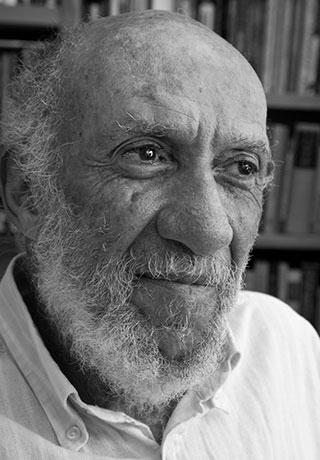

Professor Falk became an adviser to TFF when it was established in 1985.

Related Posts

Tony Robinson October 4, 2026 Violence is easy to recognise when someone is being beaten, shot or killed. It becomes more difficult when nobody is holding a weapon. Poverty, discrimination, exploitation and repression can restrict a human life just as effectively, although they do so in very different ways and with very different consequences. Simply adding more categories to an ever-growing list of forms of violence does not really solve the problem. The more interesting question is what all these different situations have in common and why it makes sense to describe them using the same word. Human beings do not simply react to what happens around them. They remember the past, imagine things that do not yet exist, make plans and undertake projects. Workers organise because they imagine different working conditions; people migrate because they imagine another life somewhere else; social movements emerge because people refuse to accept the...
It’s a matter of principles, courage, vision and pulling together – while the militarist world is falling apart… Peter Langille October 3, 2026 “Here, then, is the problem which we present to you, stark and dreadful and inescapable: Shall we put an end to the human race; or shall mankind renounce war?”The Bertrand Russell—Albert Einstein Manifesto, July 9, 1955 ⁕ The forecast for what’s ahead is worrisome. The sharp rise in armed conflicts over the past three years is adding to what was already the highest level in over seventy years. Genocides, which should be prevented are supported. A shared climate emergency that jeopardises survival is ignored. Diverse polls now suggest that people are war-weary, worried and interested in a more effective United Nations. And, there are viable policy options for a more secure world! Yet governments are doubling-down, betting on more war and investing heavily. If current trends persist,...
Johan Galtung 1930-2024October 2015 Published here on October 3, 2026 Let us focus on Civilization for conflict analysis and remedies. Major forms of disorder use violence; war is state organized violence. The most belligerent states are the United States of America and Israel, both with civilization roots. National Evangelism, the US Protestant Christian civilization– more national than evangelical–justifies US warfare as exceptionalism of a people chosen by God, with a manifest destiny to run the world. Orthodox Judaism justifies Israeli warfare to conquer and expand from Nile to Euphrates as a religious right and duty to the Eternal One. The third most belligerent country, the UK, no longer believes it is God-chosen but chosen by the USA; not quite the same but something. But the root cause of global disorder lies in the Occident–with Islam–seeing itself as the single, universal civilization valid for all at all times, all others being...

Recent Articles

Tony Robinson October 4, 2026 Violence is easy to recognise when someone is being beaten, shot or killed. It becomes more difficult when nobody is holding a weapon. Poverty, discrimination, exploitation and repression can restrict a human life just as effectively, although they do so in very different ways and with very different consequences. Simply adding more categories to an ever-growing list of forms of violence does not really solve the problem. The more interesting question is what all these different situations have in common and why it makes sense to describe them using the same word. Human beings do not simply react to what happens around them. They remember the past, imagine things that do not yet exist, make plans and undertake projects. Workers organise because they imagine different working conditions; people migrate because they imagine another life somewhere else; social movements emerge because people refuse to accept the...
It’s a matter of principles, courage, vision and pulling together – while the militarist world is falling apart… Peter Langille October 3, 2026 “Here, then, is the problem which we present to you, stark and dreadful and inescapable: Shall we put an end to the human race; or shall mankind renounce war?”The Bertrand Russell—Albert Einstein Manifesto, July 9, 1955 ⁕ The forecast for what’s ahead is worrisome. The sharp rise in armed conflicts over the past three years is adding to what was already the highest level in over seventy years. Genocides, which should be prevented are supported. A shared climate emergency that jeopardises survival is ignored. Diverse polls now suggest that people are war-weary, worried and interested in a more effective United Nations. And, there are viable policy options for a more secure world! Yet governments are doubling-down, betting on more war and investing heavily. If current trends persist,...
Johan Galtung 1930-2024October 2015 Published here on October 3, 2026 Let us focus on Civilization for conflict analysis and remedies. Major forms of disorder use violence; war is state organized violence. The most belligerent states are the United States of America and Israel, both with civilization roots. National Evangelism, the US Protestant Christian civilization– more national than evangelical–justifies US warfare as exceptionalism of a people chosen by God, with a manifest destiny to run the world. Orthodox Judaism justifies Israeli warfare to conquer and expand from Nile to Euphrates as a religious right and duty to the Eternal One. The third most belligerent country, the UK, no longer believes it is God-chosen but chosen by the USA; not quite the same but something. But the root cause of global disorder lies in the Occident–with Islam–seeing itself as the single, universal civilization valid for all at all times, all others being...

TFF on Substack

Discover and subscribe to more peace materials on TFF Substack

Most Popular

Tony Robinson October 4, 2026 Violence is easy to recognise when someone is being beaten, shot or killed. It becomes more difficult when nobody is holding a weapon. Poverty, discrimination, exploitation and repression can restrict a human life just as effectively, although they do so in very different ways and with very different consequences. Simply adding more categories to an ever-growing list of forms of violence does not really solve the problem. The more interesting question is what all these different situations have in common and why it makes sense to describe them using the same word. Human beings do not simply react to what happens around them. They remember the past, imagine things that do not yet exist, make plans and undertake projects. Workers organise because they imagine different working conditions; people migrate because they imagine another life somewhere else; social movements emerge because people refuse to accept the...
It’s a matter of principles, courage, vision and pulling together – while the militarist world is falling apart… Peter Langille October 3, 2026 “Here, then, is the problem which we present to you, stark and dreadful and inescapable: Shall we put an end to the human race; or shall mankind renounce war?”The Bertrand Russell—Albert Einstein Manifesto, July 9, 1955 ⁕ The forecast for what’s ahead is worrisome. The sharp rise in armed conflicts over the past three years is adding to what was already the highest level in over seventy years. Genocides, which should be prevented are supported. A shared climate emergency that jeopardises survival is ignored. Diverse polls now suggest that people are war-weary, worried and interested in a more effective United Nations. And, there are viable policy options for a more secure world! Yet governments are doubling-down, betting on more war and investing heavily. If current trends persist,...
Johan Galtung 1930-2024October 2015 Published here on October 3, 2026 Let us focus on Civilization for conflict analysis and remedies. Major forms of disorder use violence; war is state organized violence. The most belligerent states are the United States of America and Israel, both with civilization roots. National Evangelism, the US Protestant Christian civilization– more national than evangelical–justifies US warfare as exceptionalism of a people chosen by God, with a manifest destiny to run the world. Orthodox Judaism justifies Israeli warfare to conquer and expand from Nile to Euphrates as a religious right and duty to the Eternal One. The third most belligerent country, the UK, no longer believes it is God-chosen but chosen by the USA; not quite the same but something. But the root cause of global disorder lies in the Occident–with Islam–seeing itself as the single, universal civilization valid for all at all times, all others being...
Read More
Living-Peace-Sign-Budapest-copy
Tony Robinson October 4, 2026 Violence is easy to recognise when someone is being beaten, shot or killed. It becomes more difficult when nobody is holding a weapon. Poverty, discrimination, exploitation and repression can restrict a human life just as effectively, although they do so in very different ways and with very different consequences. Simply adding more categories to an ever-growing list of forms of violence does not really solve the problem. The more interesting question is what all these different situations have in common and why it makes sense to describe them using the same word. Human beings do not simply react to what happens around them. They remember the past, imagine things that do not yet exist, make plans and undertake projects. Workers organise because they imagine different working conditions; people migrate because they imagine another life somewhere else; social movements emerge because people refuse to accept the...
b54a1f10-8c65-4f0b-9dd5-4abc0a7d04cc_2659x2659
It’s a matter of principles, courage, vision and pulling together – while the militarist world is falling apart… Peter Langille October 3, 2026 “Here, then, is the problem which we present to you, stark and dreadful and inescapable: Shall we put an end to the human race; or shall mankind renounce war?”The Bertrand Russell—Albert Einstein Manifesto, July 9, 1955 ⁕ The forecast for what’s ahead is worrisome. The sharp rise in armed conflicts over the past three years is adding to what was already the highest level in over seventy years. Genocides, which should be prevented are supported. A shared climate emergency that jeopardises survival is ignored. Diverse polls now suggest that people are war-weary, worried and interested in a more effective United Nations. And, there are viable policy options for a more secure world! Yet governments are doubling-down, betting on more war and investing heavily. If current trends persist,...
010
Johan Galtung 1930-2024October 2015 Published here on October 3, 2026 Let us focus on Civilization for conflict analysis and remedies. Major forms of disorder use violence; war is state organized violence. The most belligerent states are the United States of America and Israel, both with civilization roots. National Evangelism, the US Protestant Christian civilization– more national than evangelical–justifies US warfare as exceptionalism of a people chosen by God, with a manifest destiny to run the world. Orthodox Judaism justifies Israeli warfare to conquer and expand from Nile to Euphrates as a religious right and duty to the Eternal One. The third most belligerent country, the UK, no longer believes it is God-chosen but chosen by the USA; not quite the same but something. But the root cause of global disorder lies in the Occident–with Islam–seeing itself as the single, universal civilization valid for all at all times, all others being...
Screenshot 2026-10-02 011738
Jan ObergPhD, director, The Transnational Foundation for Peace and Future Research, TFFLund, Sweden October 2, 2026 This is my full original manuscript. The Chinese Academy of Social Science, CASS, makes two publications out if it. 1. China’s Five-year plan emphasized the capabilities of basic research and original innovation. It is regarded as the goal of the future social development, which, as required, should be significantly enhanced. Can you comment on the importance of original innovation in research and academic study? I believe it is easier to define “original innovation” in the natural sciences than in social sciences. The breaking points of what constitutes something new, or innovative, are not quite as sharp in the latter. But in both fields it is about opening up something that was closed, unseen, unexplored before – making manifest what was earlier latent. Innovations come in many forms and shapes – naming something that was not...
arctic-circle-map
The agreement is catastrophic both because of what it says and what it doesn’t mention. It reduces further the major asset of security policies: Freedom of action. Jan Oberg TFF director September 25, 2026 A couple of hours before the agreement was signed on September 22, 2026, I published the following 13 hypotheses about what it would most likely contain on TFF Substack (in English). I was wrong on only the first point. Contrary to what Trump had written on his Truth Social platform, it does not appear to come into force immediately. In fact, it turned out to be worse than even I had anticipated. After these hypotheses now come a number of reflections in light of what the agreement actually contains, and does not contain, as well as the way in which it has generally been presented by major media outlets and by the public-service broadcaster DR. My...
girl-5894831_1280
Below are TFF-related media mentions, comments, videos and social media posts published elsewhere but not on this homepage. We happen to catch and list only a fraction. Regarding video comments and debates, we recommend that you go to the TFF Video Channel on Substack where many of them are reproduced. Jan Oberg is a contributor to China Daily – 52 million daily clicks – and Global Times, CGTN and CCTV (the national television), China Investment, Xinhua News Agency and several others. Articles and videos on these media very often multiply into countless Chinese (and Western media) that re-post them from these main media. Thanks to The China Academy, his analyses, interviews and comments are frequently posted on YouTube channels such as Thinkers Forum and Wave Media. These videos are often re-posted on Bilibili (China’s YouTube), the China Content Center on TikTok, and on the Chinese edition of TikTok, Douyin.com. This means reaching hundreds of millions of viewers worldwide over a year. While there are too many to catch on all these...




