

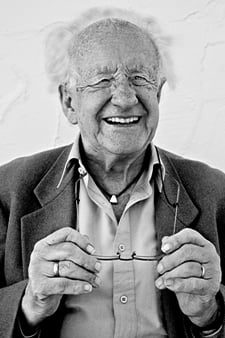
johangaltung

Speech given in Oslo on January 27, 2012

Norway’s by any comparison greatest philosopher was born one hundred years ago today, and died close to the age of 97. A world philosopher, a human being with an incredible radiation. Nobody who came close to him remained the same.
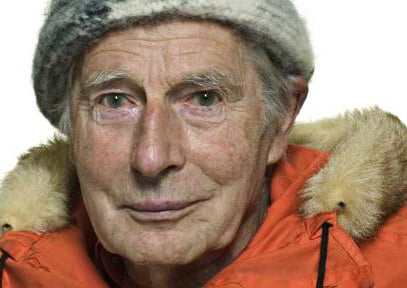
Arne Næss 27 January 1912 – 12 January 2009

What was his basic theme? In one word: nonviolence, but in a broader and deeper sense than most approaching demanding idea.

Arne Næss was very sensitive to verbal violence in debates; his answer was objectivity. He identified physical violence in political struggle; his answer was Gandhian nonviolence, strongly inspired as a student in Paris early 1930s by Indian students strongly convinced that nonviolence was the way.

He identified violence against nature, inspired by Rachel Carson’s Silent Spring and his own closeness to nature as a mountaineer; his answer was deep ecology.

He identified violence to reality through the logico-empirical straitjacket of positivism, a philosophy he shared as a younger man but gradually left in favor of what he called possibilism, the diversity of the world inspired by Duhem-Poincaré’s thesis of theory manifold.

And he identified violence to philosophy by reducing it to Western philosophy, starting with a Geek and ending with a French or German philosopher. His answer was a world philosophy at least open to Indian and Chinese thought.

A theme in Norway is “Anglo-American vs continental”, the latter in practice meaning Germany or France. Much too narrow for Næss. He had a yearning eastward, at home in Greek, Latin and mathematics, but when we drove together by car from Oslo to a Gandhi conference in Varanasi in January 1969 he examined himself in Sanskrit. Næss worked hard, deeply, broadly.

His philosophy history included Gandhi and general Chinese thought, under the heading “The Masses Philosophize”. This was an early theme in Næss’ research, with questionnaires and interview guides, social science methods, not only analysis of philosophers’ texts and, thus, exploring “Truth as Conceived of by –” Norwegian housewives and students.

He found that housewives had in them the key interpretations of “truth”: correspondence with empirical reality, valid deduction from axioms, and a pragmatic truth as means to higher goals. But housewives did not write down their thoughts.

Philosophy is pluralistic, like the world. He wanted diverse images of the world, and also many possible worlds, in symbiosis.

Næss was a moralist. He expressed his ideas analytically, but also normatively, as Thou shalt.

His deep ecology was summarized in eight normative propositions:

1. That human and other forms of life unfold on earth has a value in its own right regardless of the use value for narrow human purposes;

2. The diversity and richness of all forms of life has a value in its own right;

3. Human beings have no right to reduce this diversity which in no way limits the satisfaction of their needs;

4. The complete realization of the potentials of individual human beings and the diversity of cultures is compatible with a reduction of the size of the human population; the preservation and further development of the diversity and richness of forms of life presuppose that reduction unless, alternatively, we change our style of life fundamentally, which seems improbable;

5. The human intervention in nature at the present time is indefensible and the deterioration of the situation accelerates;

6. Basic improvement presupposes fundamental change of economic, technical and ideological structures to a joyful experience of how “everything hangs together”, the so-called struggle against nature becomes meaningless;

7. The ideological change will be in terms of search for quality of life rather than standard of living, and a concern for goals rather than means for their own sake;

8. Those who accept these points have a responsibility to try to contribute directly or indirectly to create the necessary changes.

His six theses about objectivity in debates were:

1) Avoid ad hominem, characteristics of personalities and motives, stick to the issue, the arguments;

2) Avoid biased presentation of your opponent’s arguments;

3) Avoid attributing to your opponent views he has not himself expressed;

4) Avoid presentations that are untrue, incomplete, biased, withholding relevant information;

5) Avoid irony, sarcasms, negative epithets, exaggerations, threats.

6) You serve common human interest and enrich yourself by taking in the strongest argument of your opponent against your own views, not the weakest. And you may conclude that you both have valid points to offer, that neither you nor he has monopoly on truth.

And then the norms he extracted from Gandhi’s life and teachings, like: Struggle against the antagonism, not the antagonist; be willing to compromise; admit when you are in the wrong; convert, don’t coerce your opponent.[i]

A challenging vision to what happens today in his native Norway: more biased, ad hominem debate than ever in the name of freedom of expression, even anonymous on the web-site of the Norwegian state broadcasting corporation; instead of deep ecology Norway buys eco-quotas abroad so as to proceed as before; Norway joins one US-led war after the other – Serbia, Afghanistan, Iraq, Libya; Norway propagates itself as a world norm, not diversity; and textbooks are back to normal, Western regional philosophy.

So the message for the coming hundred years emanating from this giant would be: time has come for practice. He will be rediscovered. And his vision will enlighten our inner selves, and guide us toward better, less violent, societies.

Note

[i]. Typical of his ability to make much younger researchers parties to his work I was invited to be his assistant on Gandhi’s Political Ethics, Oslo: Tanum 1955. By Johan Galtung and Arne Næss (though out by Arne, written by Johan). Taken to task by one who has propagated and used gandhian nonviolence all over the world, Jörgen Johansen, for not having a translation into English the answer could be that we tried five English publishing companies at the time. But the doors were closed. Maybe not that enthusiastic about a book trying to elevate the political ethics of the man who brought down not only the British rule in India but the whole British empire? Well, never too late!

Related Posts

A Message from Jan Oberg November 6, 2026 Over the past fifty years, I have devoted roughly 175,000 hours to research and public education for a more peaceful world: thinking, researching, writing, organising, publishing, debating, maintaining websites, corresponding, reaching out, leading a foundation, work in conflict and war zones, professorships, teaching courses and giving public lectures and doing media work. In short, ten hours a day, seven days a week, for half a century. The focus was on international political peace – analysing and trying to stop wars, address underlying conflicts and making alternative peace plans – at the desk and on the ground. Important as that has been and remains, it is only one kind of peace and it is now in a tragic militarist state compared with what it could have been.  Lately, however, I have found myself thinking about a concept from economics as well as everyday...
Photo above: Carl Fredrik Reuterswärd’s Non-Violence outside UN Headquarters in New York. Kirill Levin, CC BY-NC-SA 2. Jan Oberg November 3, 2026 I am happy to be published in Horizons which is produced by the Center for International Relations and Sustainable Development, CIRSD, in Belgrade. My contribution brings out a radical re-thinking of what concepts such as defence, security, deterrence – and peace – may mean if we want to create a more peaceful world. It also summarises a few things I have been working with the last few decades. Please read it here Og her er den på dansk, takket være Johnny Baltzersens lynhurtige oversættelse
UNITE-tillid, DREAM-velstand og andre konstruktive komponenter Normally we publish articles in English here. But this is a translation of a very important TFF document that should reach as many as possible in Denmark since this country’s government has been one of the most hardline in Europe and, up till now at least, has refused to use diplomacy and, instead, spent tremendous sums on arming Ukraine with the express goal of defeating Russia. Thus this – unique – article is in Danish. Vi er Johnny Baltzersen og hans Fælles Sikkerhed – Fælles Fremtid på Substack overmåde taknemmelige for at have oversat og publiceret TFF’s 2025-portfølje for fredsidéer med henblik på Ukraines fremtid. Vi håber den nu kan nå mange flere danskere – som også vil sprede den og skabe debat – nu den danske regerings og folketingspartiernes politik på dette område siden 2022 står nu – forudsigeligt – ved vejs ende....

Recent Articles

A Message from Jan Oberg November 6, 2026 Over the past fifty years, I have devoted roughly 175,000 hours to research and public education for a more peaceful world: thinking, researching, writing, organising, publishing, debating, maintaining websites, corresponding, reaching out, leading a foundation, work in conflict and war zones, professorships, teaching courses and giving public lectures and doing media work. In short, ten hours a day, seven days a week, for half a century. The focus was on international political peace – analysing and trying to stop wars, address underlying conflicts and making alternative peace plans – at the desk and on the ground. Important as that has been and remains, it is only one kind of peace and it is now in a tragic militarist state compared with what it could have been.  Lately, however, I have found myself thinking about a concept from economics as well as everyday...
Photo above: Carl Fredrik Reuterswärd’s Non-Violence outside UN Headquarters in New York. Kirill Levin, CC BY-NC-SA 2. Jan Oberg November 3, 2026 I am happy to be published in Horizons which is produced by the Center for International Relations and Sustainable Development, CIRSD, in Belgrade. My contribution brings out a radical re-thinking of what concepts such as defence, security, deterrence – and peace – may mean if we want to create a more peaceful world. It also summarises a few things I have been working with the last few decades. Please read it here Og her er den på dansk, takket være Johnny Baltzersens lynhurtige oversættelse
UNITE-tillid, DREAM-velstand og andre konstruktive komponenter Normally we publish articles in English here. But this is a translation of a very important TFF document that should reach as many as possible in Denmark since this country’s government has been one of the most hardline in Europe and, up till now at least, has refused to use diplomacy and, instead, spent tremendous sums on arming Ukraine with the express goal of defeating Russia. Thus this – unique – article is in Danish. Vi er Johnny Baltzersen og hans Fælles Sikkerhed – Fælles Fremtid på Substack overmåde taknemmelige for at have oversat og publiceret TFF’s 2025-portfølje for fredsidéer med henblik på Ukraines fremtid. Vi håber den nu kan nå mange flere danskere – som også vil sprede den og skabe debat – nu den danske regerings og folketingspartiernes politik på dette område siden 2022 står nu – forudsigeligt – ved vejs ende....

TFF on Substack

Discover and subscribe to more peace materials on TFF Substack

Most Popular

A Message from Jan Oberg November 6, 2026 Over the past fifty years, I have devoted roughly 175,000 hours to research and public education for a more peaceful world: thinking, researching, writing, organising, publishing, debating, maintaining websites, corresponding, reaching out, leading a foundation, work in conflict and war zones, professorships, teaching courses and giving public lectures and doing media work. In short, ten hours a day, seven days a week, for half a century. The focus was on international political peace – analysing and trying to stop wars, address underlying conflicts and making alternative peace plans – at the desk and on the ground. Important as that has been and remains, it is only one kind of peace and it is now in a tragic militarist state compared with what it could have been.  Lately, however, I have found myself thinking about a concept from economics as well as everyday...
Photo above: Carl Fredrik Reuterswärd’s Non-Violence outside UN Headquarters in New York. Kirill Levin, CC BY-NC-SA 2. Jan Oberg November 3, 2026 I am happy to be published in Horizons which is produced by the Center for International Relations and Sustainable Development, CIRSD, in Belgrade. My contribution brings out a radical re-thinking of what concepts such as defence, security, deterrence – and peace – may mean if we want to create a more peaceful world. It also summarises a few things I have been working with the last few decades. Please read it here Og her er den på dansk, takket være Johnny Baltzersens lynhurtige oversættelse
UNITE-tillid, DREAM-velstand og andre konstruktive komponenter Normally we publish articles in English here. But this is a translation of a very important TFF document that should reach as many as possible in Denmark since this country’s government has been one of the most hardline in Europe and, up till now at least, has refused to use diplomacy and, instead, spent tremendous sums on arming Ukraine with the express goal of defeating Russia. Thus this – unique – article is in Danish. Vi er Johnny Baltzersen og hans Fælles Sikkerhed – Fælles Fremtid på Substack overmåde taknemmelige for at have oversat og publiceret TFF’s 2025-portfølje for fredsidéer med henblik på Ukraines fremtid. Vi håber den nu kan nå mange flere danskere – som også vil sprede den og skabe debat – nu den danske regerings og folketingspartiernes politik på dette område siden 2022 står nu – forudsigeligt – ved vejs ende....
Read More
AbstractVision_2017_#1_800 (kopia)
A Message from Jan Oberg November 6, 2026 Over the past fifty years, I have devoted roughly 175,000 hours to research and public education for a more peaceful world: thinking, researching, writing, organising, publishing, debating, maintaining websites, corresponding, reaching out, leading a foundation, work in conflict and war zones, professorships, teaching courses and giving public lectures and doing media work. In short, ten hours a day, seven days a week, for half a century. The focus was on international political peace – analysing and trying to stop wars, address underlying conflicts and making alternative peace plans – at the desk and on the ground. Important as that has been and remains, it is only one kind of peace and it is now in a tragic militarist state compared with what it could have been.  Lately, however, I have found myself thinking about a concept from economics as well as everyday...
knotted gun
Photo above: Carl Fredrik Reuterswärd’s Non-Violence outside UN Headquarters in New York. Kirill Levin, CC BY-NC-SA 2. Jan Oberg November 3, 2026 I am happy to be published in Horizons which is produced by the Center for International Relations and Sustainable Development, CIRSD, in Belgrade. My contribution brings out a radical re-thinking of what concepts such as defence, security, deterrence – and peace – may mean if we want to create a more peaceful world. It also summarises a few things I have been working with the last few decades. Please read it here Og her er den på dansk, takket være Johnny Baltzersens lynhurtige oversættelse
TFFPortfolioVign
UNITE-tillid, DREAM-velstand og andre konstruktive komponenter Normally we publish articles in English here. But this is a translation of a very important TFF document that should reach as many as possible in Denmark since this country’s government has been one of the most hardline in Europe and, up till now at least, has refused to use diplomacy and, instead, spent tremendous sums on arming Ukraine with the express goal of defeating Russia. Thus this – unique – article is in Danish. Vi er Johnny Baltzersen og hans Fælles Sikkerhed – Fælles Fremtid på Substack overmåde taknemmelige for at have oversat og publiceret TFF’s 2025-portfølje for fredsidéer med henblik på Ukraines fremtid. Vi håber den nu kan nå mange flere danskere – som også vil sprede den og skabe debat – nu den danske regerings og folketingspartiernes politik på dette område siden 2022 står nu – forudsigeligt – ved vejs ende....
JoGSS-Silent
Jan Oberg TFF director October 28, 2026 Exactly one month has now passed since I published my criticism of the introduction to the special issue on Johan Galtung published by the Journal of Global Security Studies, JoGSS, and of Tor Egil Førland’s chapter about Galtung which serves as a preview to his forthcoming biography of Galtung to be published by PRIO. See the original on The Transnational here and the same article on TFF Substack with many general and critical comments and, in particular, the people who decided to withdraw from the biography project in protest. The special issue itself was extraordinary. It was devoted to the intellectual legacy of one of the founders of peace research and contained a number of strong assessments of his personality, scholarship, intellectual trajectory, and public role. Such assessments are, of course, entirely legitimate. No scholar is beyond criticism, and neither was Johan Galtung....
Screenshot 2026-10-26 115647
An aspect of Iran’s culture and civilisation you’ve probably never heard about. Don’t be surprised if the US and Israel also try to bomb them. Jan ObergTFF director October 26, 2026 Today – under the “USraeli” threat of new “annihilating” bombings – opens the 7th International Conference on Peace and Conflict Resolution at Tehran’s University. As far as I can tell, this is the only permanent, advanced peace research institution in West Asia/the Middle East. Perhaps more countries in that region could be inspired? I mean, how many military “security” institutes and military academies do they have? Many peace research institutes and university departments have been established since the 1950s in the West. They are now all under attack; some have closed down, some have gone mainstream, yet others kept the name but do nothing to research peace and disseminate results or advice; instead, they cooperate with militarism’s platforms such...
Screenshot 2026-10-15 141837
Let’s discuss using AI to create peace – in contrast to boring geopolitics devoid of creative healing and visions. Jan Oberg TFF director October 15, 2026 I asked VEED to create a short video exemplifying how peace is preferable to war, then chose the lady as a template. Simple as that. In less than a minute, it produced this video, which any peace-loving person would appreciate. The only problem is that human intelligence (HI), at least the one that exists among Western decision-makers, isn’t half as moral or smart as AI. I have used AI to dialogue about peace and peace plans, creative conflict resolution and visions of a better future for humankind. It so happens that I am having more stimulating, intelligent, creative and moral discussions with AI than I could possibly have with any EU or NATO leader today. Yes, AI has very problematic and dangerous aspects; used...




