
Are Europe’s Leaders Ignorant — or Are They Lying?

Jan Oberg

July 6, 2026

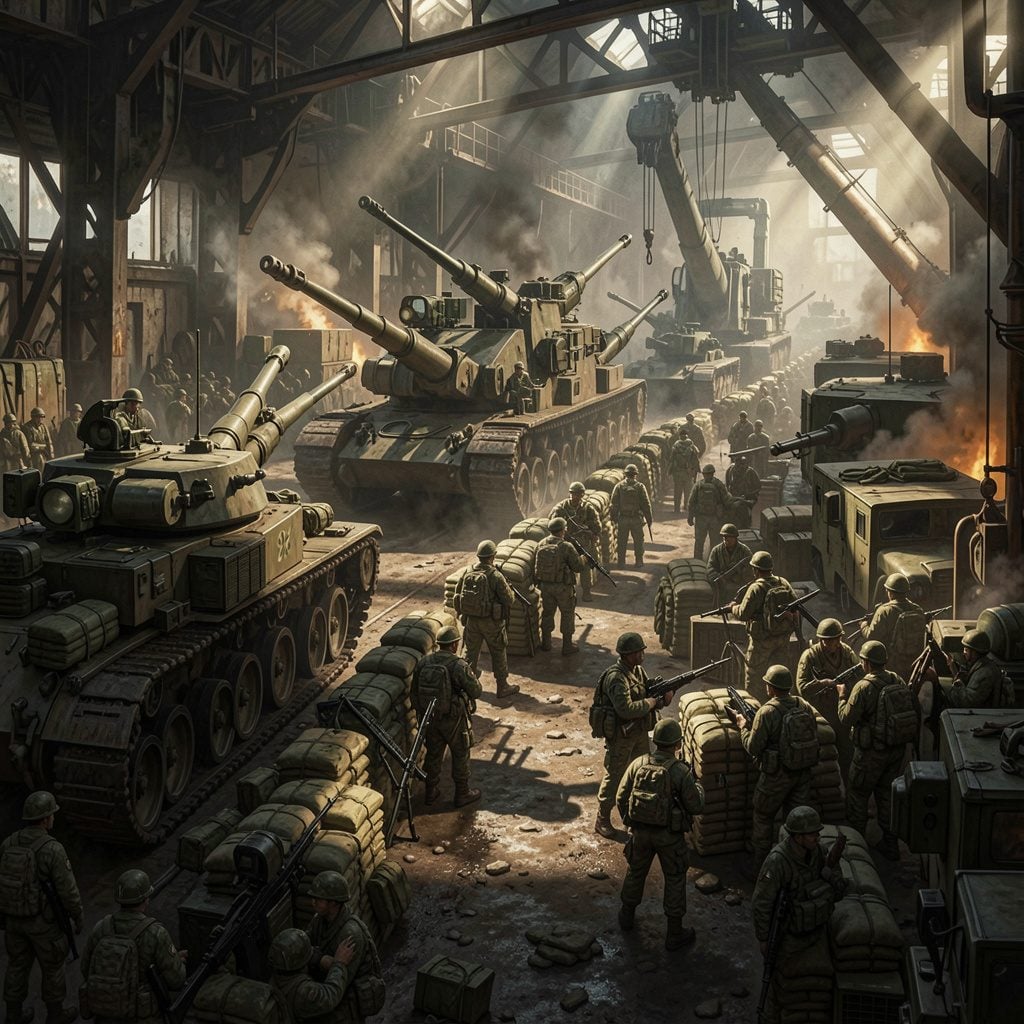
European leaders now speak openly about transforming Europe’s economy into a war economy. This is not a metaphor. It is the stated ambition of governments, EU commissioners, and NATO officials. Denmark’s DIIS writes explicitly that Europe must “prepare for a wartime economy,” and similar language appears in speeches from Paris, Berlin, Warsaw, Helsinki, and Brussels. The political narrative is clear: rearmament is not only necessary for security, it is also good for jobs, innovation, and growth.

But when we examine this through the lens of economics rather than geopolitics, this narrative collapses immediately.

For more than fifty years, peace‑economics researchers such as Seymour Melman, Emile Benoit, Mary Kaldor, and Lloyd J. Dumas demonstrated that military spending delivers lower economic returns than civilian investment. Their work showed that weapons production is structurally low‑employment, low‑consumption, and low‑multiplier. A euro spent on health care, education, infrastructure, culture, or green transition produces more jobs, more income, and more domestic demand than a euro spent on weapons. This was not controversial among economists; it was simply inconvenient for politicians.

Half a century later, the empirical picture is even clearer. The most rigorous modern analyses of defence spending come not from defence ministries or security think tanks, but from central banks and commercial banks. The European Central Bank warns that defence spending has “modest short‑term output effects” and that high import content reduces domestic impact. The IMF finds that military expenditure stimulates activity only under narrow conditions that civilian sectors meet far more easily. Nordic banks — Nordea, SEB, Danske Bank — all note the same pattern: defence spending is capital‑intensive, import‑heavy, and dominated by large corporate actors, with limited spillovers to the broader economy.

In other words: the economic verdict is unchanged. Civilian investment outperforms military spending every time.

Yet Europe is now undertaking the largest rearmament since 1945. Defence budgets are rising to 2 percent of GDP as a minimum, 3 percent by 2028, 3.5 percent by 2030, and NATO’s new long‑term target of 5 percent by 2035. This is the biggest reallocation of public resources in modern European history. And still, there is no serious economic debate about what this means — no discussion of opportunity costs, no modelling of long‑term productivity losses, no assessment of welfare impacts, no analysis of who benefits and who pays.

The silence is striking. Across Europe, not a single major research institute has produced a study comparing the economic multipliers of military and civilian spending. Not FOI in Sweden, DIIS in Denmark, NUPI or FFI in Norway. Not PRIO in Oslo, despite its long tradition of peace research. Not SIPRI in Stockholm, despite its global reputation for defence‑industry analysis. Not DIW Berlin, Ifo Munich, or the Kiel Institute. Not France Stratégie or CEPII. Not Bruegel in Brussels, CPB in the Netherlands, Chatham House in the UK, or IAI in Italy. Even the European Commission, the European Defence Agency, the European Investment Bank, and the European Court of Auditors have never examined whether military spending is economically inferior to civilian investment.

Europe produces threat assessments, capability roadmaps, and geopolitical narratives — but not the basic economic analysis required to justify the largest shift in public spending in decades. The absence is not accidental. It is structural.

Meanwhile, the market structure of weapons production makes the economic picture even worse. Arms manufacturing operates as a monopoly, with the state as the sole buyer. This eliminates normal market mechanisms such as price competition and consumer choice. Cost overruns become routine, because manufacturers know governments cannot walk away once a project has begun. The F‑35, the Eurofighter, the Patriot system, and nearly every naval vessel built in recent decades have ended up costing multiples of their original estimates. In economic terms, the arms market is designed to produce inflated prices and inefficient production — all paid for by taxpayers.

Even more troubling is the forgotten history of conversion. In the 1980s, serious studies — including a major UN project led by Sweden’s Inga Thorsson — demonstrated that military industries could be converted to civilian production with far greater economic and social returns. Conversion was technically feasible and economically rational. Today, Europe is doing the opposite: converting civilian production into military production. Yet no government, no EU body, and no economics institute has studied what this reverse conversion requires or what it will cost.

Europe is drifting toward a war economy without analysing the economic consequences. The political will to militarise is strong. The economic analysis of militarisation is absent.

So we return to the question that frames this entire debate: Are Europe’s leaders ignorant — or are they lying? Do they genuinely not understand the economics of military spending, or do they understand it perfectly and choose to mislead their citizens, taxpayers, and voters?

Either answer is deeply troubling. But one of them must be true.

A full two‑part report examining these issues in depth will be published shortly. It presents the evidence behind every claim made here — and the economic reality Europe’s leaders refuse to confront.


Read Part 1 here

Read Part 2 here

PhD, Peace & future researcher + ‌Art Photographer, Professor Emeritus and media commentator

One Response

  1. Can it be that EUs politicians cannot admit defeat in Ukraine, therefore introduce warlike repressive mesures (either friend or foe – nothing in between) to stunn criticism and protests and rearmament af the dynamic perspective to stop EUs disintegration (the external ennemy) as long as Trump is president? But still no rational motive…

Related Posts

Jan Oberg TFF director October 13, 2026 According to Alfred Nobel’s will, the Nobel Peace Prize shall be awarded: ”to the person who has done the most or best to advance fellowship among nations, the abolition or reduction of standing armies, and the establishment and promotion of peace congresses.” Further down, he also expresses how the prize for the “champions of peace” shall be decided: “that for champions of peace by a committee of five persons to be selected by the Norwegian Storting. Alfred Nobel’s will is remarkably short and clear. But few seem to have read it. Nobel did not say that the committee itself should consist of members of parliament. He entrusted the Storting with appointing five persons. In principle, it could have selected diplomats, mediators, peace researchers, conflict-resolution specialists, or other individuals with recognised expertise in matters of peace from around the world. Instead, the Storting gradually...
Small and different + among the 10% most active + 9,000 texts + 150 Associates + 60 000 a day — and a stubborn belief that peace is smarter and must be secured by peaceful means. In 2026, the Transnational Foundation for Peace and Future Research (TFF) turns 40. On Monday, October 5, 2026, a new TFF homepage will go live — a new gateway to more than 9,000 articles, analyses, research papers and other contributions produced over four decades of independent peace research. But this is not simply a new website. For four decades, TFF has worked from a simple conviction: peace is smarter than militarism and can be brought about by peaceful means. This is not merely an aspiration. It is the principle expressed in the UN Charter and the Gandhian tradition that has guided our work from the beginning. TFF is a research-based, independent and people-financed foundation....
It’s a matter of principles, courage, vision and pulling together – while the militarist world is falling apart… Peter Langille October 3, 2026 “Here, then, is the problem which we present to you, stark and dreadful and inescapable: Shall we put an end to the human race; or shall mankind renounce war?”The Bertrand Russell—Albert Einstein Manifesto, July 9, 1955 ⁕ The forecast for what’s ahead is worrisome. The sharp rise in armed conflicts over the past three years is adding to what was already the highest level in over seventy years. Genocides, which should be prevented are supported. A shared climate emergency that jeopardises survival is ignored. Diverse polls now suggest that people are war-weary, worried and interested in a more effective United Nations. And, there are viable policy options for a more secure world! Yet governments are doubling-down, betting on more war and investing heavily. If current trends persist,...

Recent Articles

Photo above: Carl Fredrik Reuterswärd’s Non-Violence outside UN Headquarters in New York. Kirill Levin, CC BY-NC-SA 2. Jan Oberg November 3, 2026 I am happy to be published in Horizons which is produced by the Center for International Relations and Sustainable Development, CIRSD, in Belgrade. My contribution brings out a radical re-thinking of what concepts such as defence, security, deterrence – and peace – may mean if we want to create a more peaceful world. It also summarises a few things I have been working with the last few decades. Please read it here Og her er den på dansk, takket være Johnny Baltzersens lynhurtige oversættelse
UNITE-tillid, DREAM-velstand og andre konstruktive komponenter Normally we publish articles in English here. But this is a translation of a very important TFF document that should reach as many as possible in Denmark since this country’s government has been one of the most hardline in Europe and, up till now at least, has refused to use diplomacy and, instead, spent tremendous sums on arming Ukraine with the express goal of defeating Russia. Thus this – unique – article is in Danish. Vi er Johnny Baltzersen og hans Fælles Sikkerhed – Fælles Fremtid på Substack overmåde taknemmelige for at have oversat og publiceret TFF’s 2025-portfølje for fredsidéer med henblik på Ukraines fremtid. Vi håber den nu kan nå mange flere danskere – som også vil sprede den og skabe debat – nu den danske regerings og folketingspartiernes politik på dette område siden 2022 står nu – forudsigeligt – ved vejs ende....
Jan Oberg TFF director October 28, 2026 Exactly one month has now passed since I published my criticism of the introduction to the special issue on Johan Galtung published by the Journal of Global Security Studies, JoGSS, and of Tor Egil Førland’s chapter about Galtung which serves as a preview to his forthcoming biography of Galtung to be published by PRIO. See the original on The Transnational here and the same article on TFF Substack with many general and critical comments and, in particular, the people who decided to withdraw from the biography project in protest. The special issue itself was extraordinary. It was devoted to the intellectual legacy of one of the founders of peace research and contained a number of strong assessments of his personality, scholarship, intellectual trajectory, and public role. Such assessments are, of course, entirely legitimate. No scholar is beyond criticism, and neither was Johan Galtung....

TFF on Substack

Discover and subscribe to more peace materials on TFF Substack

Most Popular

Photo above: Carl Fredrik Reuterswärd’s Non-Violence outside UN Headquarters in New York. Kirill Levin, CC BY-NC-SA 2. Jan Oberg November 3, 2026 I am happy to be published in Horizons which is produced by the Center for International Relations and Sustainable Development, CIRSD, in Belgrade. My contribution brings out a radical re-thinking of what concepts such as defence, security, deterrence – and peace – may mean if we want to create a more peaceful world. It also summarises a few things I have been working with the last few decades. Please read it here Og her er den på dansk, takket være Johnny Baltzersens lynhurtige oversættelse
UNITE-tillid, DREAM-velstand og andre konstruktive komponenter Normally we publish articles in English here. But this is a translation of a very important TFF document that should reach as many as possible in Denmark since this country’s government has been one of the most hardline in Europe and, up till now at least, has refused to use diplomacy and, instead, spent tremendous sums on arming Ukraine with the express goal of defeating Russia. Thus this – unique – article is in Danish. Vi er Johnny Baltzersen og hans Fælles Sikkerhed – Fælles Fremtid på Substack overmåde taknemmelige for at have oversat og publiceret TFF’s 2025-portfølje for fredsidéer med henblik på Ukraines fremtid. Vi håber den nu kan nå mange flere danskere – som også vil sprede den og skabe debat – nu den danske regerings og folketingspartiernes politik på dette område siden 2022 står nu – forudsigeligt – ved vejs ende....
Jan Oberg TFF director October 28, 2026 Exactly one month has now passed since I published my criticism of the introduction to the special issue on Johan Galtung published by the Journal of Global Security Studies, JoGSS, and of Tor Egil Førland’s chapter about Galtung which serves as a preview to his forthcoming biography of Galtung to be published by PRIO. See the original on The Transnational here and the same article on TFF Substack with many general and critical comments and, in particular, the people who decided to withdraw from the biography project in protest. The special issue itself was extraordinary. It was devoted to the intellectual legacy of one of the founders of peace research and contained a number of strong assessments of his personality, scholarship, intellectual trajectory, and public role. Such assessments are, of course, entirely legitimate. No scholar is beyond criticism, and neither was Johan Galtung....
Read More
knotted gun
Photo above: Carl Fredrik Reuterswärd’s Non-Violence outside UN Headquarters in New York. Kirill Levin, CC BY-NC-SA 2. Jan Oberg November 3, 2026 I am happy to be published in Horizons which is produced by the Center for International Relations and Sustainable Development, CIRSD, in Belgrade. My contribution brings out a radical re-thinking of what concepts such as defence, security, deterrence – and peace – may mean if we want to create a more peaceful world. It also summarises a few things I have been working with the last few decades. Please read it here Og her er den på dansk, takket være Johnny Baltzersens lynhurtige oversættelse
TFFPortfolioVign
UNITE-tillid, DREAM-velstand og andre konstruktive komponenter Normally we publish articles in English here. But this is a translation of a very important TFF document that should reach as many as possible in Denmark since this country’s government has been one of the most hardline in Europe and, up till now at least, has refused to use diplomacy and, instead, spent tremendous sums on arming Ukraine with the express goal of defeating Russia. Thus this – unique – article is in Danish. Vi er Johnny Baltzersen og hans Fælles Sikkerhed – Fælles Fremtid på Substack overmåde taknemmelige for at have oversat og publiceret TFF’s 2025-portfølje for fredsidéer med henblik på Ukraines fremtid. Vi håber den nu kan nå mange flere danskere – som også vil sprede den og skabe debat – nu den danske regerings og folketingspartiernes politik på dette område siden 2022 står nu – forudsigeligt – ved vejs ende....
JoGSS-Silent
Jan Oberg TFF director October 28, 2026 Exactly one month has now passed since I published my criticism of the introduction to the special issue on Johan Galtung published by the Journal of Global Security Studies, JoGSS, and of Tor Egil Førland’s chapter about Galtung which serves as a preview to his forthcoming biography of Galtung to be published by PRIO. See the original on The Transnational here and the same article on TFF Substack with many general and critical comments and, in particular, the people who decided to withdraw from the biography project in protest. The special issue itself was extraordinary. It was devoted to the intellectual legacy of one of the founders of peace research and contained a number of strong assessments of his personality, scholarship, intellectual trajectory, and public role. Such assessments are, of course, entirely legitimate. No scholar is beyond criticism, and neither was Johan Galtung....
Screenshot 2026-10-26 115647
An aspect of Iran’s culture and civilisation you’ve probably never heard about. Don’t be surprised if the US and Israel also try to bomb them. Jan ObergTFF director October 26, 2026 Today – under the “USraeli” threat of new “annihilating” bombings – opens the 7th International Conference on Peace and Conflict Resolution at Tehran’s University. As far as I can tell, this is the only permanent, advanced peace research institution in West Asia/the Middle East. Perhaps more countries in that region could be inspired? I mean, how many military “security” institutes and military academies do they have? Many peace research institutes and university departments have been established since the 1950s in the West. They are now all under attack; some have closed down, some have gone mainstream, yet others kept the name but do nothing to research peace and disseminate results or advice; instead, they cooperate with militarism’s platforms such...
Screenshot 2026-10-15 141837
Let’s discuss using AI to create peace – in contrast to boring geopolitics devoid of creative healing and visions. Jan Oberg TFF director October 15, 2026 I asked VEED to create a short video exemplifying how peace is preferable to war, then chose the lady as a template. Simple as that. In less than a minute, it produced this video, which any peace-loving person would appreciate. The only problem is that human intelligence (HI), at least the one that exists among Western decision-makers, isn’t half as moral or smart as AI. I have used AI to dialogue about peace and peace plans, creative conflict resolution and visions of a better future for humankind. It so happens that I am having more stimulating, intelligent, creative and moral discussions with AI than I could possibly have with any EU or NATO leader today. Yes, AI has very problematic and dangerous aspects; used...
girl-5894831_1280
Below are TFF-related media mentions, comments, videos and social media posts published elsewhere but not on this homepage. We happen to catch and list only a fraction. Regarding video comments and debates, we recommend that you go to the TFF Video Channel on Substack where many of them are reproduced. Jan Oberg is a contributor to China Daily – 52 million daily clicks – and Global Times, CGTN and CCTV (the national television), China Investment, Xinhua News Agency and several others. Articles and videos on these media very often multiply into countless Chinese (and Western media) that re-post them from these main media. Thanks to The China Academy, his analyses, interviews and comments are frequently posted on YouTube channels such as Thinkers Forum and Wave Media. These videos are often re-posted on Bilibili (China’s YouTube), the China Content Center on TikTok, and on the Chinese edition of TikTok, Douyin.com. This means reaching hundreds of millions of viewers worldwide over a year. While there are too many to catch on all these...




