

Arab revolutions and the power of nonviolent action

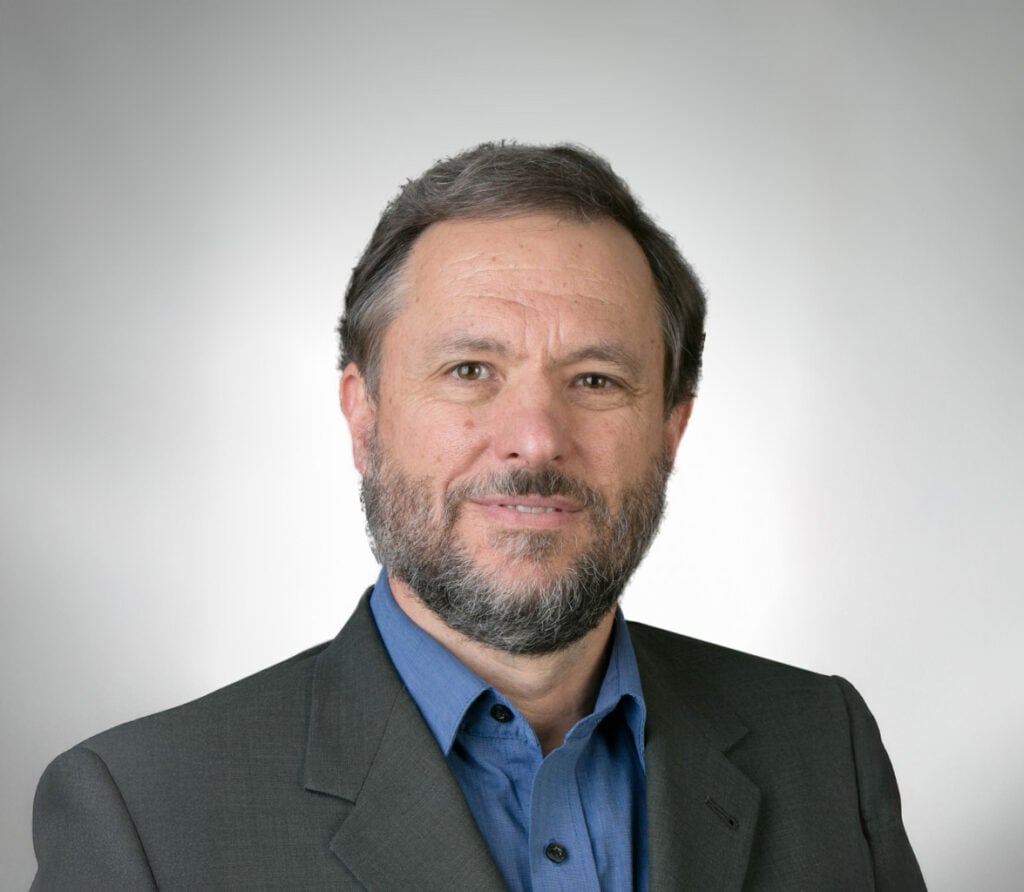
By Stephen Zunes

While sitting in a Cairo café just a couple blocks from Tahrir Square recently, I couldn’t help but notice the television in the corner broadcasting the evening news. Traditionally, TV news in Egypt and other Arab countries has consisted of the president (or king) giving a speech, greeting a foreign visitor, visiting a factory, or engaging in some other official function. This evening, however, the news was about a labor strike in Alexandria, relatives of those killed during the February revolution protesting outside the Interior Ministry, and ongoing developments in the pro-democracy struggles in Yemen and Syria.

Nothing could better illustrate the profound change in the Arab world over the past year: It is no longer simply the leaders who were the newsmakers. It is Arab peoples themselves.

The initial optimism that unarmed civil insurrections, like those that ousted the Tunisian and Egyptian dictators earlier this year, would soon sweep the Arab world in a manner that brought down Eastern Europe’s communist regimes in 1989 has faded. The ongoing repression by the U.S.-backed military junta in Egypt serves as a reminder that overthrowing a dictator is only the first step a transition to democracy. And the NATO-backed armed revolution in Libya and subsequent extrajudicial killings of Muammar al-Qaddafi and his supporters has cast a pall on what had been a largely nonviolent regional phenomenon.

However, there are still reasons to be hopeful that the so-called “Arab Spring” will transform the Middle East for the better.

Major political change takes time. It took nearly a decade between the first strikes in the Gdansk Shipyard and the fall of communism in Poland. Chile’s democratic struggle against the Pinochet regime took three years between the first major protests and the referendum that forced the dictator from power. The 1986 People Power movement that overthrew Ferdinand Marcos in the Philippines was a culmination of several years of popular struggle against the martial law regime. Even reform movements within industrialized democracies can take years of struggle, such as the civil rights movement in the U.S. South.

Indeed, being right and having the majority of the population on your side is not enough. There needs to be long-range strategic planning, a logical sequencing of tactics, and an ability to take advantage of one’s strengths and target the opponent’s weaknesses. In countries where civil society has traditionally been weak and the repressive apparatus of the state is strong, quick victories are rare.

Yet the dramatic events of this past year have served as a reminder of where power ultimately rests: Even if a government has a monopoly of military force and the support of the world’s one remaining superpower, it is still ultimately powerless if the people refuse to recognize its authority. Through general strikes, filling the streets, mass refusal to obey official orders, and other forms of nonviolent resistance, even the most autocratic regime cannot survive.

Freedom House, in its 2005 study “How Freedom Is Won: From Civic Resistance to Durable Democracy,” observed that, of the nearly 70 countries that had made the transition from dictatorship to varying degrees of democracy in the previous 30 years, only a small minority did so through armed struggle from below or reform instigated from above. Hardly any new democracies resulted from foreign invasion. In nearly three-quarters of the transitions, change was rooted in democratic civil-society organizations that employed nonviolent methods.

Similarly, in the recently released book Why Civil Resistance Works: The Strategic Logic of Nonviolent Conflict, authors Erica Chenoweth and Maria Stephan use an expanded database analyzing 323 major insurrections in support of self-determination and democratic rule since 1900. They found that violent resistance was successful only 26 percent of the time, whereas nonviolent campaigns had a 53 percent rate of success.

From the poorest nations of Africa to the relatively affluent countries of Eastern Europe; from communist regimes to right-wing military dictatorships; from across the cultural, geographic and ideological spectrum, democratic and progressive forces have recognized the power of nonviolent action to free them from oppression. This has not come, in most cases, from a moral or spiritual commitment to nonviolence per se, but simply because it works.

There is a long history of nonviolent resistance in the Middle East, from Egypt’s 1919 independence struggle against the British to the 2006 Cedar Revolution in Lebanon that ended years of Syrian domination of that country. Iran has a long history of such uprisings, including the Tobacco Strike of the 1890s, the Constitutional Revolution of 1906, the overthrow of the Shah in 1979, and the aborted Green Revolution of 2009. Palestine has witnessed the general strike of the 1930s, the first intifada in the late 1980s, and more recent campaigns against Israel’s separation wall and settlement expansion in the West Bank. In Sudan, unarmed insurrections ousted military dictatorships in both 1964 and 1985 (though the democratic governments that followed were eventually overthrown in military coups). There has also been an ongoing nonviolent resistance campaign in the nation of Western Sahara against the illegal Moroccan occupation.

The dramatic events of the past year mark a new and exciting escalation of a phenomenon that has been growing throughout the region and across the globe in recent decades. It is a reminder that, for democracy to come to the Arab world, it will not be through armed struggle, foreign intervention or sanctimonious statements from Washington, but from Arab peoples utilizing the power of strategic nonviolent action.

[Stephen Zunes is a professor of politics and coordinator of the Middle Eastern studies program at the University of San Francisco.]

Related Posts

Photos © TFF 2000 Read PressInfo 90 “Lift the Sanctions and Bring More Aid to Yugoslavia” See Pictures from Belgrade © TFF 2000 Please reprint, copy, archive, quote or re-post this item, but please retain the source.
By Jan ObergTFF co-founder and director February 11, 2026 PART 3 — ECONOMICS, TRADE & FINANCIAL SOVEREIGNTY A. Trade Measures & Market Signaling Economic pressure can be applied instantly and scaled without violence. Immediate Measures (within a week) Government boycott US goods and services  A very powerful signal which over time will be felt. Targeted tariffs on selected U.S. goods Symbolic but high-visibility sectors send a clear message. Suspend trade facilitation talks A peaceful pause that signals deep concern. Freeze U.S. participation in public procurement – military procurement in particular A nonviolent way to reduce influence. Competition law review of U.S. corporations A legal tool to scrutinise market dominance. Longer-Term Measures EU–Asia–Africa trade corridors Reducing reliance on U.S. markets. European supply chains for critical minerals Strategic autonomy in resource access. European Strategic Trade Authority Monitoring coercive practices globally. Euro-denominated commodity markets Weakening the dollar’s pricing monopoly. The EU must resume contacts and negotiations with Russia, focusing on energy cooperation To...
PART 2 — Diplomacy, Law and Nonviolent Power By Jan ObergTFF co-founder and director January 26, 2026 This is the second of four TFF-created idea portfolios designed to curb the global reach of the United States and, in both the short and long term, help catalyse a worldwide nonviolent resistance to what many observers describe as the Trump administration’s uniquely confrontational, destructive and world-threatening policies. These portfolios outline what governments and citizens across the world can do through dynamic diplomacy, creative initiatives, and strictly nonviolent means. They are typical TFF works in that we do not only tell what the problem is and how bad it will go – as 90+% of all commentators, experts and scholars do – we tell what we think can be done, inviting you to think of what you think you can do. It seems painfully clear to me that the current political dynamics in Washington increasingly resemble the most dangerous...

Recent Articles

Jan Oberg TFF director October 28, 2026 Exactly one month has now passed since I published my criticism of the introduction to the special issue on Johan Galtung published by the Journal of Global Security Studies, JoGSS, and of Tor Egil Førland’s chapter about Galtung which serves as a preview to his forthcoming biography of Galtung to be published by PRIO. See the original on The Transnational here and the same article on TFF Substack with many general and critical comments and, in particular, the people who decided to withdraw from the biography project in protest. The special issue itself was extraordinary. It was devoted to the intellectual legacy of one of the founders of peace research and contained a number of strong assessments of his personality, scholarship, intellectual trajectory, and public role. Such assessments are, of course, entirely legitimate. No scholar is beyond criticism, and neither was Johan Galtung....
An aspect of Iran’s culture and civilisation you’ve probably never heard about. Don’t be surprised if the US and Israel also try to bomb them. Jan ObergTFF director October 26, 2026 Today – under the “USraeli” threat of new “annihilating” bombings – opens the 7th International Conference on Peace and Conflict Resolution at Tehran’s University. As far as I can tell, this is the only permanent, advanced peace research institution in West Asia/the Middle East. Perhaps more countries in that region could be inspired? I mean, how many military “security” institutes and military academies do they have? Many peace research institutes and university departments have been established since the 1950s in the West. They are now all under attack; some have closed down, some have gone mainstream, yet others kept the name but do nothing to research peace and disseminate results or advice; instead, they cooperate with militarism’s platforms such...
Let’s discuss using AI to create peace – in contrast to boring geopolitics devoid of creative healing and visions. Jan Oberg TFF director October 15, 2026 I asked VEED to create a short video exemplifying how peace is preferable to war, then chose the lady as a template. Simple as that. In less than a minute, it produced this video, which any peace-loving person would appreciate. The only problem is that human intelligence (HI), at least the one that exists among Western decision-makers, isn’t half as moral or smart as AI. I have used AI to dialogue about peace and peace plans, creative conflict resolution and visions of a better future for humankind. It so happens that I am having more stimulating, intelligent, creative and moral discussions with AI than I could possibly have with any EU or NATO leader today. Yes, AI has very problematic and dangerous aspects; used...

TFF on Substack

Discover and subscribe to more peace materials on TFF Substack

Most Popular

Jan Oberg TFF director October 28, 2026 Exactly one month has now passed since I published my criticism of the introduction to the special issue on Johan Galtung published by the Journal of Global Security Studies, JoGSS, and of Tor Egil Førland’s chapter about Galtung which serves as a preview to his forthcoming biography of Galtung to be published by PRIO. See the original on The Transnational here and the same article on TFF Substack with many general and critical comments and, in particular, the people who decided to withdraw from the biography project in protest. The special issue itself was extraordinary. It was devoted to the intellectual legacy of one of the founders of peace research and contained a number of strong assessments of his personality, scholarship, intellectual trajectory, and public role. Such assessments are, of course, entirely legitimate. No scholar is beyond criticism, and neither was Johan Galtung....
An aspect of Iran’s culture and civilisation you’ve probably never heard about. Don’t be surprised if the US and Israel also try to bomb them. Jan ObergTFF director October 26, 2026 Today – under the “USraeli” threat of new “annihilating” bombings – opens the 7th International Conference on Peace and Conflict Resolution at Tehran’s University. As far as I can tell, this is the only permanent, advanced peace research institution in West Asia/the Middle East. Perhaps more countries in that region could be inspired? I mean, how many military “security” institutes and military academies do they have? Many peace research institutes and university departments have been established since the 1950s in the West. They are now all under attack; some have closed down, some have gone mainstream, yet others kept the name but do nothing to research peace and disseminate results or advice; instead, they cooperate with militarism’s platforms such...
Let’s discuss using AI to create peace – in contrast to boring geopolitics devoid of creative healing and visions. Jan Oberg TFF director October 15, 2026 I asked VEED to create a short video exemplifying how peace is preferable to war, then chose the lady as a template. Simple as that. In less than a minute, it produced this video, which any peace-loving person would appreciate. The only problem is that human intelligence (HI), at least the one that exists among Western decision-makers, isn’t half as moral or smart as AI. I have used AI to dialogue about peace and peace plans, creative conflict resolution and visions of a better future for humankind. It so happens that I am having more stimulating, intelligent, creative and moral discussions with AI than I could possibly have with any EU or NATO leader today. Yes, AI has very problematic and dangerous aspects; used...
Read More
JoGSS-Silent
Jan Oberg TFF director October 28, 2026 Exactly one month has now passed since I published my criticism of the introduction to the special issue on Johan Galtung published by the Journal of Global Security Studies, JoGSS, and of Tor Egil Førland’s chapter about Galtung which serves as a preview to his forthcoming biography of Galtung to be published by PRIO. See the original on The Transnational here and the same article on TFF Substack with many general and critical comments and, in particular, the people who decided to withdraw from the biography project in protest. The special issue itself was extraordinary. It was devoted to the intellectual legacy of one of the founders of peace research and contained a number of strong assessments of his personality, scholarship, intellectual trajectory, and public role. Such assessments are, of course, entirely legitimate. No scholar is beyond criticism, and neither was Johan Galtung....
Screenshot 2026-10-26 115647
An aspect of Iran’s culture and civilisation you’ve probably never heard about. Don’t be surprised if the US and Israel also try to bomb them. Jan ObergTFF director October 26, 2026 Today – under the “USraeli” threat of new “annihilating” bombings – opens the 7th International Conference on Peace and Conflict Resolution at Tehran’s University. As far as I can tell, this is the only permanent, advanced peace research institution in West Asia/the Middle East. Perhaps more countries in that region could be inspired? I mean, how many military “security” institutes and military academies do they have? Many peace research institutes and university departments have been established since the 1950s in the West. They are now all under attack; some have closed down, some have gone mainstream, yet others kept the name but do nothing to research peace and disseminate results or advice; instead, they cooperate with militarism’s platforms such...
Screenshot 2026-10-15 141837
Let’s discuss using AI to create peace – in contrast to boring geopolitics devoid of creative healing and visions. Jan Oberg TFF director October 15, 2026 I asked VEED to create a short video exemplifying how peace is preferable to war, then chose the lady as a template. Simple as that. In less than a minute, it produced this video, which any peace-loving person would appreciate. The only problem is that human intelligence (HI), at least the one that exists among Western decision-makers, isn’t half as moral or smart as AI. I have used AI to dialogue about peace and peace plans, creative conflict resolution and visions of a better future for humankind. It so happens that I am having more stimulating, intelligent, creative and moral discussions with AI than I could possibly have with any EU or NATO leader today. Yes, AI has very problematic and dangerous aspects; used...
girl-5894831_1280
Below are TFF-related media mentions, comments, videos and social media posts published elsewhere but not on this homepage. We happen to catch and list only a fraction. Regarding video comments and debates, we recommend that you go to the TFF Video Channel on Substack where many of them are reproduced. Jan Oberg is a contributor to China Daily – 52 million daily clicks – and Global Times, CGTN and CCTV (the national television), China Investment, Xinhua News Agency and several others. Articles and videos on these media very often multiply into countless Chinese (and Western media) that re-post them from these main media. Thanks to The China Academy, his analyses, interviews and comments are frequently posted on YouTube channels such as Thinkers Forum and Wave Media. These videos are often re-posted on Bilibili (China’s YouTube), the China Content Center on TikTok, and on the Chinese edition of TikTok, Douyin.com. This means reaching hundreds of millions of viewers worldwide over a year. While there are too many to catch on all these...
Nobel-Prize-Plaque
Jan Oberg TFF director October 13, 2026 According to Alfred Nobel’s will, the Nobel Peace Prize shall be awarded: ”to the person who has done the most or best to advance fellowship among nations, the abolition or reduction of standing armies, and the establishment and promotion of peace congresses.” Further down, he also expresses how the prize for the “champions of peace” shall be decided: “that for champions of peace by a committee of five persons to be selected by the Norwegian Storting. Alfred Nobel’s will is remarkably short and clear. But few seem to have read it. Nobel did not say that the committee itself should consist of members of parliament. He entrusted the Storting with appointing five persons. In principle, it could have selected diplomats, mediators, peace researchers, conflict-resolution specialists, or other individuals with recognised expertise in matters of peace from around the world. Instead, the Storting gradually...
law-419057_1280
The Quest for Humane Survival Richard Falk Professor emeritus, Princeton UniversityTFF Associate since 1986October 12, 2026 After decades of teaching and writing about international law in academic frameworks that were not institutionally situated within law school environments—at Princeton and the University of California, Santa Barbara—I found myself most receptive to the TWAIL outlook. It has been especially illuminating in clarifying the extent to which international law evolved as a dialogical critique of Europe’s efforts to legitimize its colonial undertakings. In particular, TWAIL has exposed how international law has functioned to legalize the subjugation of Third World peoples, securing conditions for exploitative investment and trade relations, the coercive enforcement of public debts, and an ideology of cultural superiority. TWAIL’s exposure of these economic legacies of colonialism has influenced my understanding of the history and development of international law, broadly conceived, as an ideological project of the Western sub-system of the world...




