
Amnesty International reaches deep into Africa’s people

LONDON – We arrived at the king’s palace – not much more that a dilapidated corrugated iron-built structure- on the edge of the small town of Oyo, capital of the Yoruba kingdom that used to extend in pre-British days half way across the width of southern Nigeria and into Benin. Today, although it contains over 30 million people, it is a poor shadow of its former glory- power and wealth passed long ago to the bourgeoisie and- for a long period- to the army.

There was a salute by toothless old men, dressed in black, firing home made muskets. A succession of elderly men and women came and prostrated themselves full length before the king. A child dressed as an African carved doll danced. Pierre Sane, Amnesty International’s Secretary-General, dressed in the russet red robes of an honoury chief, knelt before the king who called him “one of the illustrious sons of Africa”. Then it was Sane’s turn to speak. The crowd of about 2,000 pressed closer to hear. “Amnesty International has reached deep into the heart of Africa”, he said, “deep beyond the cities of Africa, deep beyond the politicians of Africa, deep into the people of Africa.”

That indeed is the conclusion I’ve reached myself. An organization begun only 40 years ago by a Catholic English lawyer now has a million members around the world and is known- and appreciated- even in the back of beyond in darkest Africa.

For a week I have been accompanying around Nigeria a high level mission of Amnesty led by Mr Sane. Two days before, we arrived in Kaduna, the capital of the northern state of the same name. We drove along the burnt out streets- homes, small workshops, mosques and churches, almost side by side, gutted and charred. We climbed the steps up to the top floor of an old ramshackle building housing the Kaduna branch of Amnesty. Outside in the limp heat hung a banner with the Pepsi slogan affixed. “Kaduna Amnesty welcomes Pierre Sane”, it read. An elderly lady walked me to the balcony. “You see those large patches of discoloured tar on the road. That’s where they built bonfires and burnt people alive.” Christians and Muslims rioted in February and May over the planned introduction of traditional Islamic Sharia law. Perhaps as many as 1,000 people died.

Sane addressed a meeting of the local non-governmental organizations. The room was crowded and everyone wanted the chance to speak. Amazingly, nearly everyone was brief and to the point.

“The purpose of this meeting is quite enormous ” intoned the chairman in the heavy cadences of Nigerian English. “People have been burnt out and don’t have the where-with-all to rebuild. The state should compensate them”, said the first speaker. A Muslim from the Inter-Faith Mediation Centre said, “We Nigerians are notoriously religious. For most of the time, however, we respect each other. A few people used this freedom we have under democracy to stir things up.” “Why doesn’t the governor sweep the town for arms?” asked another. “After the Biafran war they went house to house and confiscated every gun and every bullet.”

We headed for the governor’s office. He is a Muslim, of course, and perhaps a tolerant man- there had been no effort to erase the graffiti scribbled on the outside of his office wall: “Sir, sorry to say, “NO” to Sharia”. We were ushered into a large conference room with microphones. Sane did a succinct job of summarising the criticisms of the non-governmental organisations and the governor an equally effective and swift job of rebutting them. “I was glad to see no nation, large as well as small, escaped criticism in your annual report- I saw it discussed on CNN”, the governor began. “We are introducing a form of neighborhood watch- drawn from various interest groups in each neighborhood. We’ll investigate that the nominees are responsible characters and then we’ll give them a monthly allowance. But we want them to be responsible not just for security but for the environment too.” Then he went on down through Sane’s check list: compensation- no but assistance; arms- we are looking for them; sharia- we can’t solve problems by fighting. We have to have a civilized dialogue.”

A couple of days before we had been in the office of President Olusegun Obasanjo, elected in a hotly contested election sixteen months ago. Obasanjo had been jailed by the military dictator, Sani Abacha, and Amnesty had campaigned vigorously for his release. In London he had paid a visit to Amnesty’s offices to say thank you. Yet, for all the warmth, it was not an easy meeting. Sane and his associates from the Nigerian branch of Amnesty had some tough things to say: “Why did the soldiers open fire during a protest in the Niger Delta? Why are women so dreadfully abused in prison. Why do the police still engage in extra-judicial executions of suspected criminals? Why is the death penalty still enforced?” Then for an hour Obasanjo took the bat and the ball, he ran, hit, ducked, lowered his voice, raised it, told anecdotes, knocked away any suggestions the Amnesty team made for review, reprimand or change, although, to be fair, he told them if they hear of any prisons where they practice torture to pass the information on to him.

On the crucial issue of the behaviour of the army he was, as Sane told him, “thinking as a soldier. You have to think of the morale of the army, yes, but you also have to think about the wrong things the army does.” “Have you ever been shot at, Pierre?”, countered the president, who in the war in Biafra thirty years ago was shot at many times. Sane shook his head modestly, although I know his life has been threatened a number of times. “Unfortunately”, joshed Obasanjo”, there’s nowhere here where we can send Pierre to be shot!”

The truth is the change for the better under Obasanjo is the difference between night and day. People feel free. Political discourse is open and vigorously so. No one is incarcerated for their political opinions. Amnesty has been an important part of that change and remains an important player in the changes that have to come if Nigeria is going to take its place, as Obasanjo desires, at the top table of the world’s most important democracies.

I can be reached by phone on +44385 351172 or by e-mail:JonatPower@aol.com
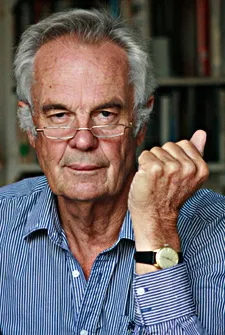
Foreign affairs columnist, film-maker and author

Related Posts

LONDON – So far so good, at least on the wider level. While internally Iraq seems on the edge of chaos, the much heralded clash of civilizations between the Muslim and Judaeo-Christian worlds has yet to become apparent. We have anger and despair aplenty in the Arab and Muslim worlds. But very little rushing to the standard and there was no great pilgrimage of warriors to join the fight, as happened when the Soviet Union invaded Afghanistan twenty years ago, and then, having driven the Red Army out, were left to ferment in that mountainous redoubt. With the armaments supplied by the CIA the mujahidin were transformed into Al Qaeda that became, for a relatively brief moment as these things go, ‘the greatest threat to the homeland that America has ever known.’ Nevertheless a ‘Cold War’ between much of the Muslim world and the West is certainly in full swing. Winston...
The Challenge of Nuclear Weaponsin the Twenty-first CenturyA Path Forward The peoples and governments of the world face an urgent challenge relating to weaponry of mass destruction and particularly to nuclear weaponry.  At the crossroads of technology, terrorism, geopolitical ambition, and policies of preemption are new and potent dangers for humanity. Despite ending the nuclear standoff of the Cold War era, nuclear weaponry is again menacing the peoples of the world with catastrophic possibilities.  We recognize the need for any government to pursue its security interests in accordance with international law; and further, we recognize that distinctive threats to these interests now exist as a result of an active international terrorist network having declared war on the United States and its allies. Nonetheless, we reject the assessment of the current US administration that upgrading a reliance on nuclear weapons is in any sense justified as a response. We find it...
By Karin Wegestal MP, the Social Democratic Partyon behalf of the Swedish Committee for Solidarity with the Yugoslav People During the last decade, the Federal Republic of Yugoslavia has received more than 500,000 refugees from Croatia and Bosnia, and another 300,000 internally displaced persons, mainly from the province Kosovo and Metohia. For a country with about ten million inhabitants, such an influx of homeless people is obviously a very heavy burden – even under peaceful conditions. But in addition to that, the Federal Republic of Yugoslavia has been the subject to sanctions from the western powers for close to ten years and its infrastructure was badly hurt through Nato’s intense bombardment during 78 days in 1999. The result of all this is that Yugoslavia, once the most developed industrial country in Eastern Europe, is today the poorest country in Europe. In Serbia excluding Kosovo, with about ten million inhabitants and...

Recent Articles

Tony Robinson October 4, 2026 Violence is easy to recognise when someone is being beaten, shot or killed. It becomes more difficult when nobody is holding a weapon. Poverty, discrimination, exploitation and repression can restrict a human life just as effectively, although they do so in very different ways and with very different consequences. Simply adding more categories to an ever-growing list of forms of violence does not really solve the problem. The more interesting question is what all these different situations have in common and why it makes sense to describe them using the same word. Human beings do not simply react to what happens around them. They remember the past, imagine things that do not yet exist, make plans and undertake projects. Workers organise because they imagine different working conditions; people migrate because they imagine another life somewhere else; social movements emerge because people refuse to accept the...
It’s a matter of principles, courage, vision and pulling together – while the militarist world is falling apart… Peter Langille October 3, 2026 “Here, then, is the problem which we present to you, stark and dreadful and inescapable: Shall we put an end to the human race; or shall mankind renounce war?”The Bertrand Russell—Albert Einstein Manifesto, July 9, 1955 ⁕ The forecast for what’s ahead is worrisome. The sharp rise in armed conflicts over the past three years is adding to what was already the highest level in over seventy years. Genocides, which should be prevented are supported. A shared climate emergency that jeopardises survival is ignored. Diverse polls now suggest that people are war-weary, worried and interested in a more effective United Nations. And, there are viable policy options for a more secure world! Yet governments are doubling-down, betting on more war and investing heavily. If current trends persist,...
Johan Galtung 1930-2024October 2015 Published here on October 3, 2026 Let us focus on Civilization for conflict analysis and remedies. Major forms of disorder use violence; war is state organized violence. The most belligerent states are the United States of America and Israel, both with civilization roots. National Evangelism, the US Protestant Christian civilization– more national than evangelical–justifies US warfare as exceptionalism of a people chosen by God, with a manifest destiny to run the world. Orthodox Judaism justifies Israeli warfare to conquer and expand from Nile to Euphrates as a religious right and duty to the Eternal One. The third most belligerent country, the UK, no longer believes it is God-chosen but chosen by the USA; not quite the same but something. But the root cause of global disorder lies in the Occident–with Islam–seeing itself as the single, universal civilization valid for all at all times, all others being...

TFF on Substack

Discover and subscribe to more peace materials on TFF Substack

Most Popular

Tony Robinson October 4, 2026 Violence is easy to recognise when someone is being beaten, shot or killed. It becomes more difficult when nobody is holding a weapon. Poverty, discrimination, exploitation and repression can restrict a human life just as effectively, although they do so in very different ways and with very different consequences. Simply adding more categories to an ever-growing list of forms of violence does not really solve the problem. The more interesting question is what all these different situations have in common and why it makes sense to describe them using the same word. Human beings do not simply react to what happens around them. They remember the past, imagine things that do not yet exist, make plans and undertake projects. Workers organise because they imagine different working conditions; people migrate because they imagine another life somewhere else; social movements emerge because people refuse to accept the...
It’s a matter of principles, courage, vision and pulling together – while the militarist world is falling apart… Peter Langille October 3, 2026 “Here, then, is the problem which we present to you, stark and dreadful and inescapable: Shall we put an end to the human race; or shall mankind renounce war?”The Bertrand Russell—Albert Einstein Manifesto, July 9, 1955 ⁕ The forecast for what’s ahead is worrisome. The sharp rise in armed conflicts over the past three years is adding to what was already the highest level in over seventy years. Genocides, which should be prevented are supported. A shared climate emergency that jeopardises survival is ignored. Diverse polls now suggest that people are war-weary, worried and interested in a more effective United Nations. And, there are viable policy options for a more secure world! Yet governments are doubling-down, betting on more war and investing heavily. If current trends persist,...
Johan Galtung 1930-2024October 2015 Published here on October 3, 2026 Let us focus on Civilization for conflict analysis and remedies. Major forms of disorder use violence; war is state organized violence. The most belligerent states are the United States of America and Israel, both with civilization roots. National Evangelism, the US Protestant Christian civilization– more national than evangelical–justifies US warfare as exceptionalism of a people chosen by God, with a manifest destiny to run the world. Orthodox Judaism justifies Israeli warfare to conquer and expand from Nile to Euphrates as a religious right and duty to the Eternal One. The third most belligerent country, the UK, no longer believes it is God-chosen but chosen by the USA; not quite the same but something. But the root cause of global disorder lies in the Occident–with Islam–seeing itself as the single, universal civilization valid for all at all times, all others being...
Read More
Living-Peace-Sign-Budapest-copy
Tony Robinson October 4, 2026 Violence is easy to recognise when someone is being beaten, shot or killed. It becomes more difficult when nobody is holding a weapon. Poverty, discrimination, exploitation and repression can restrict a human life just as effectively, although they do so in very different ways and with very different consequences. Simply adding more categories to an ever-growing list of forms of violence does not really solve the problem. The more interesting question is what all these different situations have in common and why it makes sense to describe them using the same word. Human beings do not simply react to what happens around them. They remember the past, imagine things that do not yet exist, make plans and undertake projects. Workers organise because they imagine different working conditions; people migrate because they imagine another life somewhere else; social movements emerge because people refuse to accept the...
b54a1f10-8c65-4f0b-9dd5-4abc0a7d04cc_2659x2659
It’s a matter of principles, courage, vision and pulling together – while the militarist world is falling apart… Peter Langille October 3, 2026 “Here, then, is the problem which we present to you, stark and dreadful and inescapable: Shall we put an end to the human race; or shall mankind renounce war?”The Bertrand Russell—Albert Einstein Manifesto, July 9, 1955 ⁕ The forecast for what’s ahead is worrisome. The sharp rise in armed conflicts over the past three years is adding to what was already the highest level in over seventy years. Genocides, which should be prevented are supported. A shared climate emergency that jeopardises survival is ignored. Diverse polls now suggest that people are war-weary, worried and interested in a more effective United Nations. And, there are viable policy options for a more secure world! Yet governments are doubling-down, betting on more war and investing heavily. If current trends persist,...
010
Johan Galtung 1930-2024October 2015 Published here on October 3, 2026 Let us focus on Civilization for conflict analysis and remedies. Major forms of disorder use violence; war is state organized violence. The most belligerent states are the United States of America and Israel, both with civilization roots. National Evangelism, the US Protestant Christian civilization– more national than evangelical–justifies US warfare as exceptionalism of a people chosen by God, with a manifest destiny to run the world. Orthodox Judaism justifies Israeli warfare to conquer and expand from Nile to Euphrates as a religious right and duty to the Eternal One. The third most belligerent country, the UK, no longer believes it is God-chosen but chosen by the USA; not quite the same but something. But the root cause of global disorder lies in the Occident–with Islam–seeing itself as the single, universal civilization valid for all at all times, all others being...
Screenshot 2026-10-02 011738
Jan ObergPhD, director, The Transnational Foundation for Peace and Future Research, TFFLund, Sweden October 2, 2026 This is my full original manuscript. The Chinese Academy of Social Science, CASS, makes two publications out if it. 1. China’s Five-year plan emphasized the capabilities of basic research and original innovation. It is regarded as the goal of the future social development, which, as required, should be significantly enhanced. Can you comment on the importance of original innovation in research and academic study? I believe it is easier to define “original innovation” in the natural sciences than in social sciences. The breaking points of what constitutes something new, or innovative, are not quite as sharp in the latter. But in both fields it is about opening up something that was closed, unseen, unexplored before – making manifest what was earlier latent. Innovations come in many forms and shapes – naming something that was not...
arctic-circle-map
The agreement is catastrophic both because of what it says and what it doesn’t mention. It reduces further the major asset of security policies: Freedom of action. Jan Oberg TFF director September 25, 2026 A couple of hours before the agreement was signed on September 22, 2026, I published the following 13 hypotheses about what it would most likely contain on TFF Substack (in English). I was wrong on only the first point. Contrary to what Trump had written on his Truth Social platform, it does not appear to come into force immediately. In fact, it turned out to be worse than even I had anticipated. After these hypotheses now come a number of reflections in light of what the agreement actually contains, and does not contain, as well as the way in which it has generally been presented by major media outlets and by the public-service broadcaster DR. My...
girl-5894831_1280
Below are TFF-related media mentions, comments, videos and social media posts published elsewhere but not on this homepage. We happen to catch and list only a fraction. Regarding video comments and debates, we recommend that you go to the TFF Video Channel on Substack where many of them are reproduced. Jan Oberg is a contributor to China Daily – 52 million daily clicks – and Global Times, CGTN and CCTV (the national television), China Investment, Xinhua News Agency and several others. Articles and videos on these media very often multiply into countless Chinese (and Western media) that re-post them from these main media. Thanks to The China Academy, his analyses, interviews and comments are frequently posted on YouTube channels such as Thinkers Forum and Wave Media. These videos are often re-posted on Bilibili (China’s YouTube), the China Content Center on TikTok, and on the Chinese edition of TikTok, Douyin.com. This means reaching hundreds of millions of viewers worldwide over a year. While there are too many to catch on all these...





