Prefatory Note
I am posting some reflections on Gerry Spence’s Police State, an ominous book, finely wrought, that we should all read. Besides being my close friend, Gerry is a lawyer par excellence, as well as being someone possessed of deeply artistic, humanistic, and ethical disposition. The book pertains to the situation here in America, but as recent events in Paris, San Bernidino, and Colorado Springs confirm, we are in danger of moving without realizing it toward some kind of ‘global police state,’ all in the name of security, trampling on the rights and self-esteem of billions of people and extinguishing the freedom of all. Such a devastating scenario cannot be separated from the predatory features of global capitalism in its present neoliberal phase.

Gerry Spence
Police State: How America’s Cops Get Away with Murder
New York: St. Martin’s Press, 2015
$27.99 hardcover
Amazon $19.43; Kindle $14.99.

In an America gripped by one story after another of culpable police violence, it is hard to imagine a more timely book than Police State. Not only is the topic of urgent relevance, the author is supremely qualified by a long life of experience and reflection to give us an authoritative bird’s eye view.

Gerry Spence, a trial lawyer par excellence, with the extraordinary credential of never having lost a criminal case, which is some achievement, considering that he has been practicing law for well over half a century. Here on the West Coast, splitting his residence between native Wyoming and California, Spence is as close to being a celebrity as a lawyer can get.

He was a nightly TV commentator of the notorious O. J. Simpson trial and has been the lead lawyer in a whole series of high profile criminal cases whose vivid style of oratory creates unforgettable impressions on the part of those lucky enough to have Spence on their side or those so unfortunate as to have him as their adversary.

Somehow, Spence also finds time to write novels, publish books of superb photographs, compose poems, and even paint pictures and photomontages that no art gallery would be ashamed to display. Additionally, he founded a Trial Lawyers College in Wyoming that has over the years trained hundreds of criminal defense lawyers to become more effective in judicial settings, not primarily by knowing the law better, but by learning how to win the battle of hearts and minds of juries and judges.

It is Spence’s strong conviction that gaining the psychological edge in judicial cases decides many more cases than what is learned in even the best law schools.

In short, Spence is a remarkable polymath who both defies the imperative of specialization that haunts our age and dispenses wisdom in a manner that only a modern folk hero from Wyoming can do. And this is not all. Spence’s personality (and ego) overflows any container, whether it be geographic borders or the walls of a courtroom.

Such a vivid and fascinating presence creates a temptation to talk endlessly about this exceptional man rather than the compelling story he is telling in Police State. While struggling to resist the temptation, I should disclose that Gerry Spence is a cherished friend, we share intimacies over lunch whenever we both happen to be in Santa Barbara at the same time, which unhappily for me is not often enough.

We agree on most core issues, and fight about how to interpret the trivial ones, which is I think which is what always allows deep friendship to flourish.

Now to the book Police State. And in this 6 min video Spence talks about the book.

It consists of detailed and engagingly described narratives of eight cases, several of national prominence, in which Spence served as the lead lawyer of a high powered defense team.

The cases are framed by a more general introductory discussion of the national setting that produces abuses of power by the apparatus of state law enforcement, and especially the police. Particular attention is given to the injustices experienced by those marginalized by the color of their skin, heretical life style and beliefs, and lowly class standing.

So great are his persuasive skills that he credibly casts Imelda Marcos, the notorious widow of the Filipino autocrat Fernando Marcos, among those whose innocence has been violated by spurious criminal charges of stealing public funds. I have to admit that reading the Marcos chapter made me aware that brilliant lawyering can sometimes come at the expense of criminal justice!

Every defendant deserves a competent legal defense, yet not one that successfully whitewashes the fully documented cruel criminal record of the Marcos years of shared rulership in the Philippines, a record exposed in a museum in Manila that I have visited. A more general question is raised. Spence makes clear that a gifted trial lawyer can make the difference between winning and losing a case, but does that seems to mean that the guilty as well as the innocent get the benefits.

Actually, the Marcos case is an outlier in the book, and its removal would hardly be noticed. Spence’s preoccupation and primary knowledge is associated with how those accused of crime in this country are treated by the police, in courtrooms, and prisons, and it is these various facets of their (mis)treatment that is the subject-matter of the other seven cases.

What gives coherence to these widely disparate attempts to counteract the worst features of the system is Spence’s double vision: on the one side, he exposes the deep roots of injustice by way of police and governmental action and on the other, he depicts the capacity of determined and capable lawyering to overcome the biases of the system by rendering verdicts responsive to the dictates of justice. After all, Spence won all these cases, and so something must be working right.

In truly authoritarian states, the outcomes are known before the trial begins, contains no surprises, and accords with the wishes of the government as made known through the tenor and content of the prosecution.

In effect, in true police states the quality of the criminal defense is irrelevant, which it is not, at least not yet, in the United States. This raises a question as to whether Spence’s characterization of the U.S. as a police state is hyperbolic, and if so, whether this is useful in alerting Americans to a mounting danger.

Although written pre-Trump what Spence has to say about crime, law, and justice in America is deeply troubling, yet in the end he proposes recognizing the challenge, a program of reform, and hope for the future. His indictment of present trends is deep, and resonates with recent disclosures confirming racially motivated police killings, and their cover up, in several American cities:

“The police belong to a culture separate from ours. Police departments are often like the gangs they encounter—both strive to keep their crimes secret.” (9) More ominous is the link noted between what the police do and what the state wants done: “What I will show is that police brutality and killings are the product of the system, the specter of an enslaving police state is clearly visible on the horizon.” (page 9)

In the end, Spence challenges us as citizens to act to avoid this destiny: “This dismal prophesy will prevail, as indeed it always has, and always will, unless we, the people have the courage to take up this critical challenge and bring about a new police culture for the safety and well-being of we, the people who still wait patiently to enjoy the promise of America.” (10)

Spence connects police brutality and contrived prosecutions with what he calls “the rotten underbelly of Power.” (63) By capitalizing ‘power’ Spence is expressing his conviction that what is responsible for police behavior should be traced to those in control of governmental institutions who act in connivance with those who control money. After encountering this pattern in many of his cases, Spence believes that “the Constitution can be set aside by Power at its whim, that the FBI could, and did, change the law as if it, not the people, created the laws of the land.”

In this spirit, he asks, “Should we provide a name for such Power? Are we on the outer edges of the cliff looking down into the depths of a totalitarian state from which there is no return.” (63)

At another point in the book Spence poses some underlying rhetorical questions: “Are we capable of distinguishing between our fantasy, our hope, yes, our faith that we are free on the one hand, from the alarming approach of a police state on the other? And if we discover the truth, can we bear it? Will we confront it?” (238)

As a Jeffersonian populist, Spence unabashedly situates his hopes for change on the unpredictable energies of ‘the people,’ exhibiting no trust whatsoever in either government or political parties as both are presumably presently disabled by being rendered deferential to the whims and priorities of that mysterious force, the Power.’

Most of Spence’s cases do not focus on race as the explanation for or atmosphere of police abuse, but his defense of Dennis Williams who spent 17 agonizing years on death row after being framed by Cook County police in Illinois involved a mixture of racist abuse and institutional corruption of the worst sort.

Spence exhibits his keen awareness that racism compounds the problems, infecting our attitudes and behavior as if a poison we didn’t realize was circulating in the body politics. As Spence puts it, “I know that racism is alive and throbbing beneath the surface throughout America…Our personal racism is never acknowledged, not even to our closest friends, not to our spouses, not even to ourselves.” (237)

This is the message conveyed by the recently formed Black Lives Matter, and also articulated with subtlety and passion in the best-selling book, Between The World and Me by Ta-Nehisi Coates, and in the compelling poetic rendering of Claudia Rankine in Citizen: An American Lyric.

At the end, Spence argues that whether it is framing a witness, coercing a confession, shooting defenseless and innocent persons, there is a depraved unity of purpose being displayed. The separate stories “are essentially the same story: a story about the same perverse incentive of Power – the uncontrolled psychotic urge to dominate and intimidate the helpless in response to Power’s compulsion to serve itself.” (309)

Even more darkly, “Power has one purpose: to satisfy itself. In doing so Power kills, wrongfully persecutes, and criminally imposes itself on the innocent. (311) We all know the devil lives in the details, and so it is important to read through these cases to grasp the specifics that lends credence to this dire assessment.

And yet, Spence is far from one-dimensional even if we limit our concern to law and the American political scene. His hopeful side, although not easily escaping from the dark shadows cast by his overwhelmingly disconcerting experience over the decades, is not as revolutionary as one would expect given his diagnosis of where we are and where we are heading.

After the narratives of the cases, Spence offers a sensible 12-step program for law enforcement reform (an odd and suggestive echo of the famous AA formula for overcoming alcohol addiction), which if implemented would make police better trained, more accountable, and operating in an atmosphere where prosecutors and judges were more sensitized to the rights of the accused.

It is troublesome that this humane and sensible set of recommendations presupposes what is most lacking, that is, a political will among elites that is driven by integrity and a commitment to fairness rather than beholden to what Spence calls ‘the Power,’ money and status.

In other words, if the political will were realigned toward criminal justice such a transformed criminal justice system would be spontaneously generated and reforms superfluous, but if the existing established order is being so challenged it will resist vigorously for all the reasons that Spence delineates.

Here Spence allows us to drift on our own, not giving us much of a hint as to how to discredit the prevailing political will that he so vigorously deplores.

The most we are told is that during Spence’s long lifetime some good things have happened to women and minorities, and thus it is not a fool’s dream to suppose that a similar dynamic will make positive change happen so that those who are currently most abused by police and law enforcement will find themselves better protected. Maybe the furor generated by the Ferguson killing of Michael Brown and several related incidents of police homicide will produce the kind of political energy that will produce the results that Spence advocates and justice demands. Time will tell.

Gerry Spence brings his fine book, with its urgent message, to a fitting close: “One thing I know: An honestly informed nation can be trusted to eventually do right. Justice is the petulant child of truth.” (326)

We will have to wait and see, and more actively, do all we can to make these ugly truths known, and counteracted. There is no better place to begin than by reading this compelling book by Gerry Spence that tells us all we need to know if we want to renew our vows of citizenship by action and engagement.

As long as we stay quiet in the gated communities of our imaginations, we will regress even further from being citizens of a free society to becoming subjects of a police state.
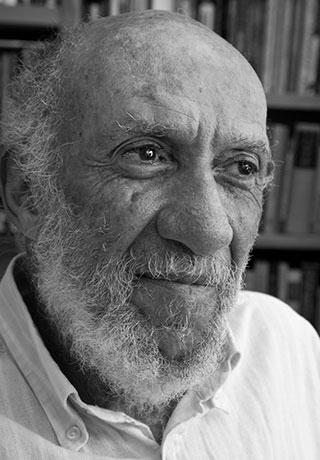

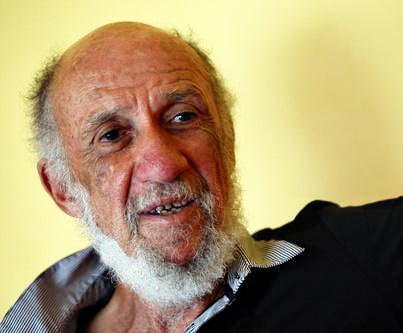
Professor Falk became an adviser to TFF when it was established in 1985.

Related Posts

Photos © TFF 2000 Read PressInfo 90 “Lift the Sanctions and Bring More Aid to Yugoslavia” See Pictures from Belgrade © TFF 2000 Please reprint, copy, archive, quote or re-post this item, but please retain the source.
By Jan ObergTFF co-founder and director February 11, 2026 PART 3 — ECONOMICS, TRADE & FINANCIAL SOVEREIGNTY A. Trade Measures & Market Signaling Economic pressure can be applied instantly and scaled without violence. Immediate Measures (within a week) Government boycott US goods and services  A very powerful signal which over time will be felt. Targeted tariffs on selected U.S. goods Symbolic but high-visibility sectors send a clear message. Suspend trade facilitation talks A peaceful pause that signals deep concern. Freeze U.S. participation in public procurement – military procurement in particular A nonviolent way to reduce influence. Competition law review of U.S. corporations A legal tool to scrutinise market dominance. Longer-Term Measures EU–Asia–Africa trade corridors Reducing reliance on U.S. markets. European supply chains for critical minerals Strategic autonomy in resource access. European Strategic Trade Authority Monitoring coercive practices globally. Euro-denominated commodity markets Weakening the dollar’s pricing monopoly. The EU must resume contacts and negotiations with Russia, focusing on energy cooperation To...
Background and CV Dr Pascal Lottaz joined TFF as an Associate in May 2025. Very short bio Dr. Pascal Lottaz is an Associate Professor at Kyoto University’s Graduate School of Law and Hakubi Center (Japan). He researches neutrality in international relations and directs the network neutralitystudies.com. Short bio Dr. Pascal Lottaz is an Associate Professor at Kyoto University, where he investigates neutrality in international relations and directs the research network neutralitystudies.com. He received his MA and PhD from the National Graduate Institute for Policy Studies (GRIPS) and previously researched and taught at Waseda University and Temple University (Japan Campus). His recent books include Sweden, Japan, and the Long Second World War (Routledge, 2022), Neutral Beyond the Cold: Neutral States and the Post-Cold War International System (Lexington Books, 2022), and Notions of Neutralities (Lexington Books, 2019). He also wrote articles on “Neutrality Studies” for Oxford Encyclopedia and “The Politics and Diplomacy of Neutrality”...

Recent Articles

Tony Robinson October 4, 2026 Violence is easy to recognise when someone is being beaten, shot or killed. It becomes more difficult when nobody is holding a weapon. Poverty, discrimination, exploitation and repression can restrict a human life just as effectively, although they do so in very different ways and with very different consequences. Simply adding more categories to an ever-growing list of forms of violence does not really solve the problem. The more interesting question is what all these different situations have in common and why it makes sense to describe them using the same word. Human beings do not simply react to what happens around them. They remember the past, imagine things that do not yet exist, make plans and undertake projects. Workers organise because they imagine different working conditions; people migrate because they imagine another life somewhere else; social movements emerge because people refuse to accept the...
It’s a matter of principles, courage, vision and pulling together – while the militarist world is falling apart… Peter Langille October 3, 2026 “Here, then, is the problem which we present to you, stark and dreadful and inescapable: Shall we put an end to the human race; or shall mankind renounce war?”The Bertrand Russell—Albert Einstein Manifesto, July 9, 1955 ⁕ The forecast for what’s ahead is worrisome. The sharp rise in armed conflicts over the past three years is adding to what was already the highest level in over seventy years. Genocides, which should be prevented are supported. A shared climate emergency that jeopardises survival is ignored. Diverse polls now suggest that people are war-weary, worried and interested in a more effective United Nations. And, there are viable policy options for a more secure world! Yet governments are doubling-down, betting on more war and investing heavily. If current trends persist,...
Johan Galtung 1930-2024October 2015 Published here on October 3, 2026 Let us focus on Civilization for conflict analysis and remedies. Major forms of disorder use violence; war is state organized violence. The most belligerent states are the United States of America and Israel, both with civilization roots. National Evangelism, the US Protestant Christian civilization– more national than evangelical–justifies US warfare as exceptionalism of a people chosen by God, with a manifest destiny to run the world. Orthodox Judaism justifies Israeli warfare to conquer and expand from Nile to Euphrates as a religious right and duty to the Eternal One. The third most belligerent country, the UK, no longer believes it is God-chosen but chosen by the USA; not quite the same but something. But the root cause of global disorder lies in the Occident–with Islam–seeing itself as the single, universal civilization valid for all at all times, all others being...

TFF on Substack

Discover and subscribe to more peace materials on TFF Substack

Most Popular

Tony Robinson October 4, 2026 Violence is easy to recognise when someone is being beaten, shot or killed. It becomes more difficult when nobody is holding a weapon. Poverty, discrimination, exploitation and repression can restrict a human life just as effectively, although they do so in very different ways and with very different consequences. Simply adding more categories to an ever-growing list of forms of violence does not really solve the problem. The more interesting question is what all these different situations have in common and why it makes sense to describe them using the same word. Human beings do not simply react to what happens around them. They remember the past, imagine things that do not yet exist, make plans and undertake projects. Workers organise because they imagine different working conditions; people migrate because they imagine another life somewhere else; social movements emerge because people refuse to accept the...
It’s a matter of principles, courage, vision and pulling together – while the militarist world is falling apart… Peter Langille October 3, 2026 “Here, then, is the problem which we present to you, stark and dreadful and inescapable: Shall we put an end to the human race; or shall mankind renounce war?”The Bertrand Russell—Albert Einstein Manifesto, July 9, 1955 ⁕ The forecast for what’s ahead is worrisome. The sharp rise in armed conflicts over the past three years is adding to what was already the highest level in over seventy years. Genocides, which should be prevented are supported. A shared climate emergency that jeopardises survival is ignored. Diverse polls now suggest that people are war-weary, worried and interested in a more effective United Nations. And, there are viable policy options for a more secure world! Yet governments are doubling-down, betting on more war and investing heavily. If current trends persist,...
Johan Galtung 1930-2024October 2015 Published here on October 3, 2026 Let us focus on Civilization for conflict analysis and remedies. Major forms of disorder use violence; war is state organized violence. The most belligerent states are the United States of America and Israel, both with civilization roots. National Evangelism, the US Protestant Christian civilization– more national than evangelical–justifies US warfare as exceptionalism of a people chosen by God, with a manifest destiny to run the world. Orthodox Judaism justifies Israeli warfare to conquer and expand from Nile to Euphrates as a religious right and duty to the Eternal One. The third most belligerent country, the UK, no longer believes it is God-chosen but chosen by the USA; not quite the same but something. But the root cause of global disorder lies in the Occident–with Islam–seeing itself as the single, universal civilization valid for all at all times, all others being...
Read More
Living-Peace-Sign-Budapest-copy
Tony Robinson October 4, 2026 Violence is easy to recognise when someone is being beaten, shot or killed. It becomes more difficult when nobody is holding a weapon. Poverty, discrimination, exploitation and repression can restrict a human life just as effectively, although they do so in very different ways and with very different consequences. Simply adding more categories to an ever-growing list of forms of violence does not really solve the problem. The more interesting question is what all these different situations have in common and why it makes sense to describe them using the same word. Human beings do not simply react to what happens around them. They remember the past, imagine things that do not yet exist, make plans and undertake projects. Workers organise because they imagine different working conditions; people migrate because they imagine another life somewhere else; social movements emerge because people refuse to accept the...
b54a1f10-8c65-4f0b-9dd5-4abc0a7d04cc_2659x2659
It’s a matter of principles, courage, vision and pulling together – while the militarist world is falling apart… Peter Langille October 3, 2026 “Here, then, is the problem which we present to you, stark and dreadful and inescapable: Shall we put an end to the human race; or shall mankind renounce war?”The Bertrand Russell—Albert Einstein Manifesto, July 9, 1955 ⁕ The forecast for what’s ahead is worrisome. The sharp rise in armed conflicts over the past three years is adding to what was already the highest level in over seventy years. Genocides, which should be prevented are supported. A shared climate emergency that jeopardises survival is ignored. Diverse polls now suggest that people are war-weary, worried and interested in a more effective United Nations. And, there are viable policy options for a more secure world! Yet governments are doubling-down, betting on more war and investing heavily. If current trends persist,...
010
Johan Galtung 1930-2024October 2015 Published here on October 3, 2026 Let us focus on Civilization for conflict analysis and remedies. Major forms of disorder use violence; war is state organized violence. The most belligerent states are the United States of America and Israel, both with civilization roots. National Evangelism, the US Protestant Christian civilization– more national than evangelical–justifies US warfare as exceptionalism of a people chosen by God, with a manifest destiny to run the world. Orthodox Judaism justifies Israeli warfare to conquer and expand from Nile to Euphrates as a religious right and duty to the Eternal One. The third most belligerent country, the UK, no longer believes it is God-chosen but chosen by the USA; not quite the same but something. But the root cause of global disorder lies in the Occident–with Islam–seeing itself as the single, universal civilization valid for all at all times, all others being...
Screenshot 2026-10-02 011738
Jan ObergPhD, director, The Transnational Foundation for Peace and Future Research, TFFLund, Sweden October 2, 2026 This is my full original manuscript. The Chinese Academy of Social Science, CASS, makes two publications out if it. 1. China’s Five-year plan emphasized the capabilities of basic research and original innovation. It is regarded as the goal of the future social development, which, as required, should be significantly enhanced. Can you comment on the importance of original innovation in research and academic study? I believe it is easier to define “original innovation” in the natural sciences than in social sciences. The breaking points of what constitutes something new, or innovative, are not quite as sharp in the latter. But in both fields it is about opening up something that was closed, unseen, unexplored before – making manifest what was earlier latent. Innovations come in many forms and shapes – naming something that was not...
arctic-circle-map
The agreement is catastrophic both because of what it says and what it doesn’t mention. It reduces further the major asset of security policies: Freedom of action. Jan Oberg TFF director September 25, 2026 A couple of hours before the agreement was signed on September 22, 2026, I published the following 13 hypotheses about what it would most likely contain on TFF Substack (in English). I was wrong on only the first point. Contrary to what Trump had written on his Truth Social platform, it does not appear to come into force immediately. In fact, it turned out to be worse than even I had anticipated. After these hypotheses now come a number of reflections in light of what the agreement actually contains, and does not contain, as well as the way in which it has generally been presented by major media outlets and by the public-service broadcaster DR. My...
girl-5894831_1280
Below are TFF-related media mentions, comments, videos and social media posts published elsewhere but not on this homepage. We happen to catch and list only a fraction. Regarding video comments and debates, we recommend that you go to the TFF Video Channel on Substack where many of them are reproduced. Jan Oberg is a contributor to China Daily – 52 million daily clicks – and Global Times, CGTN and CCTV (the national television), China Investment, Xinhua News Agency and several others. Articles and videos on these media very often multiply into countless Chinese (and Western media) that re-post them from these main media. Thanks to The China Academy, his analyses, interviews and comments are frequently posted on YouTube channels such as Thinkers Forum and Wave Media. These videos are often re-posted on Bilibili (China’s YouTube), the China Content Center on TikTok, and on the Chinese edition of TikTok, Douyin.com. This means reaching hundreds of millions of viewers worldwide over a year. While there are too many to catch on all these...