
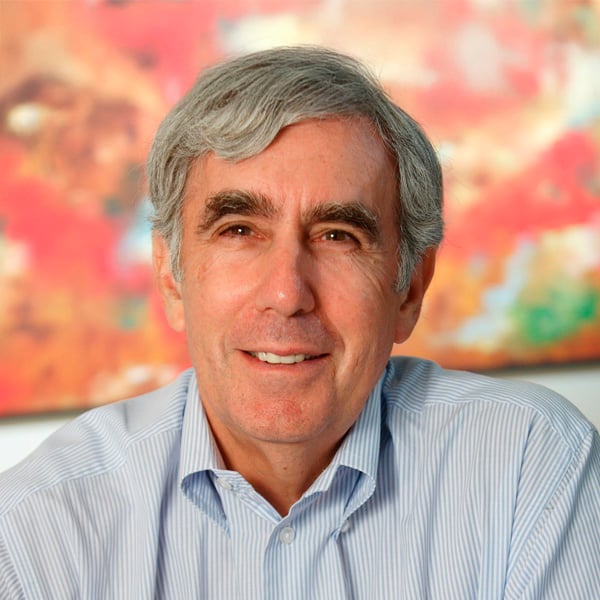
Abolition 2000 is rapidly approaching the year 2000, a moment of truth for the global Network. General Lee Butler, a powerful advocate of abolition, offered these observations:
“Turning specifically to the agenda, tactics and timetable of the abolition community, I see a widening gulf between its aspirations and their prospects, especially in the near term. That disparity is most immediately obvious in the disjunction between the name of the umbrella organization, Abolition 2000, and the self-evident reality that its implied goal is not yet in sight, much less in hand. That is a real Y2K problem that must be addressed to ensure that the vitality of the ongoing work of the organization is not diminished by the intimations of a failed strategic objective.”

When Abolition 2000 was initiated in 1995, it seemed reasonable to set as our primary goal a treaty by the year 2000 calling for the phased elimination of nuclear weapons. The goal was never to achieve the total elimination of nuclear weapons by the year 2000, but rather to achieve an international treaty leading to the total elimination of these weapons by early in the 21st Century.

Abolition 2000 was born at the 1995 Non-Proliferation Treaty (NPT) Review and Extension Conference. It came about as a result of disappointment by many NGOs with the apparent blank check given to the nuclear weapons states when the treaty was extended indefinitely. The extension was given without regard for the widely perceived failure of the nuclear weapons states to act on their Article VI obligations for good faith negotiations on nuclear disarmament. Abolition 2000 sought in some respects to be the conscience of the international community by demanding that Article VI obligations be upheld in the aftermath of the indefinite extension.

Abolition 2000 began with the drafting of a common Statement by some 60 peace and disarmament NGOs at the 1995 NPT Conference. Supporters of the Statement quickly expanded to about 300 NGOs. Over the past nearly five years, the number of supporters has expanded to 1,358 organizations in 88 countries. As the year 2000 approaches, questions arise as to what will become of Abolition 2000 and its global Network. If an international treaty to ban nuclear weapons is not achieved by the end of the year 2000, will the Network have failed? Will it lose its credibility? Will the Network continue after the year 2000?

The Network made a bold decision at the outset by adopting the name Abolition 2000. It was prepared to press the issue of moving forward with a nuclear weapons abolition agenda, setting a timeframe for tangible progress. It was not content to leave the timeframe open-ended. It refused to accept vague declarations by the nuclear weapons states that they were for the ìultimateî goal of eliminating their nuclear arsenals. While it may be perceived that it would have been safer for the Network to choose a name that did not force a timeframe for success, the choice of the name serves an important function by making clear that an agreement to abolish nuclear weapons is a matter of urgency. Abolition cannot be put off to some indefinite future time whenever the nuclear weapons states decide they are ready to act.

Inherent in the name Abolition 2000 is the understanding that we should not cross the threshold into a new century and millennium without a clear commitment to the global elimination of nuclear weapons. Abolition 2000 has taken a stand on the side of morality, legality, and democracy, and has given a voice to the opinion of most of the worldís nations. Abolition 2000 has spoken truth to power.

The problem is that power, in the form of the governments of the nuclear weapons states, have responded by stonewalling and a continuation of business as usual. These governments seem locked into a Cold War mentality based on the theory of deterrence, despite the fact they can no longer identify who it is they are deterring or from what they are deterring them.

Since the initiation of Abolition 2000, the Network has opposed continued nuclear testing of all kinds, including sub-critical and laboratory testing. It has called for ending the nuclear threat by taking specific steps such as de-alerting nuclear forces and agreeing to policies of No First Use. It has not only called for a treaty to ban nuclear weapons, but has participated in drafting a Model Nuclear Weapons Convention which Costa Rica has introduced in the United Nations. Abolition 2000 has also mobilized citizen actions throughout the world in favor of abolishing nuclear arms, including the gathering of over 13 million signatures in Japan alone. The Network has also encouraged prominent individuals and municipalities to declare themselves committed to the abolition of nuclear weapons.

After nearly five years, Abolition 2000 remains committed to the only outcome that can safeguard humanityís future. But it faces powerful opposing forces in the form of the governments of the nuclear weapons states, the wall of secrecy that surrounds their nuclear policies, and the wall of complacency that engulfs large segments of the public throughout the world.

Abolition 2000 can help to remind the people of the world that they have choices. They don’t need to leave the fate of humanity in the hands of a small number of leaders of nuclear weapons states. They do not need to sit by while countries such as India and Pakistan test and deploy nuclear weapons, repeating the mistakes made by the five declared nuclear weapons states. They do not need to continue to feed the defense contractors and politicians that remain eager to develop and deploy the Ballistic Missile Defenses ñ defenses that have little likelihood of working and will actually make the world far more dangerous as other nuclear armed countries respond with stronger offensive capabilities.

With such dangers as the deployment of Ballistic Missile Defenses on the horizon in the United States, Abolition 2000 is needed more than ever. The year 2000 will be a year of focused actions for the Network throughout the world. The Network has set as goals for itself to grow to 2000 organizations; to identify 2000 prominent supporters of abolishing nuclear weapons; to engage in a week of education and advocacy from March 1-8, 2000; to have a strong and vocal presence at the 2000 Non-Proliferation Treaty Review Conference; and to join in millennial events throughout the world.

Abolition 2000 will not simply fade away. Its international symbol is the sunflower. Like the sunflower, it has given birth to a thousand seeds of peace, which will be carried by the wind, take root and grow in many places. These seeds will be borne by the winds of change. They will cross boundaries and will be carried over walls of indifference. Abolition 2000 may not fulfill its goal of a treaty to ban nuclear weapons in the year 2000. But it is critical that this grassroots movement stay the course and continue to grow until its goal is achieved.

Related Posts

The Challenge of Nuclear Weaponsin the Twenty-first CenturyA Path Forward The peoples and governments of the world face an urgent challenge relating to weaponry of mass destruction and particularly to nuclear weaponry.  At the crossroads of technology, terrorism, geopolitical ambition, and policies of preemption are new and potent dangers for humanity. Despite ending the nuclear standoff of the Cold War era, nuclear weaponry is again menacing the peoples of the world with catastrophic possibilities.  We recognize the need for any government to pursue its security interests in accordance with international law; and further, we recognize that distinctive threats to these interests now exist as a result of an active international terrorist network having declared war on the United States and its allies. Nonetheless, we reject the assessment of the current US administration that upgrading a reliance on nuclear weapons is in any sense justified as a response. We find it...
LONDON – I walk up Sonia Gandhi’s drive way, past  guards with Uzi machine guns, and can’t help thinking that when I came to interview Mrs. Indira Gandhi (Sonia’s mother-in-law) on the eve of her great comeback and massive electoral win, I walked up to her front door and knocked. There were no guards and only one servant to let me in. I am ushered into Sonia G’s office. She barely acknowledges my presence. “Buon giorno”, I say. There is no reply. I have been warned that she’s cold and she doesn’t offer me a hand. She walks over to me and asks me to sit down. I look her in the eye and ask my first question to the Italian widow of Prime Minister Rajiv Gandhi, who was cruelly blown to smithereens by a female Tamil terrorist, a member of the now defeated Tamil independence struggle in neighbouring Sri...
Om Afghanistan Af Ulla Fasting,TFF Ven og medlem af Det Radikale Venstre Læs også Ulla Fastings “Indtryk fra Afghanistan” Dag 1 Afghanistan ved en ny tids begyndelse I denne uge tager vi til Afghanistan, som jeg har besøgt to gange i sommer og hvor jeg samtidig læste Khaled Hosseinis bog* om sin barndoms Afghanistan. En barndom, hvor drengen Amir vinder den store drageturnering og sin fars anerkendelse, men samtidig svigter sin bedste ven Hassan. Det er dette svigt og vejen til soning, bogen handler om, men den fortæller også om det Afghanistan, som var før den russiske besættelse og før Taleban kom til magten.Det er det Afghanistan, som i dag skyder op hist og her og som mange afghanere forsøger at bygge en fremtid på. Bogen er god at have med sig, for i manges bevidsthed er Afghanistan kun det 6. fattigste land i verden, talebansk mørke, kvinder i burka,...

Recent Articles

Tony Robinson October 4, 2026 Violence is easy to recognise when someone is being beaten, shot or killed. It becomes more difficult when nobody is holding a weapon. Poverty, discrimination, exploitation and repression can restrict a human life just as effectively, although they do so in very different ways and with very different consequences. Simply adding more categories to an ever-growing list of forms of violence does not really solve the problem. The more interesting question is what all these different situations have in common and why it makes sense to describe them using the same word. Human beings do not simply react to what happens around them. They remember the past, imagine things that do not yet exist, make plans and undertake projects. Workers organise because they imagine different working conditions; people migrate because they imagine another life somewhere else; social movements emerge because people refuse to accept the...
It’s a matter of principles, courage, vision and pulling together – while the militarist world is falling apart… Peter Langille October 3, 2026 “Here, then, is the problem which we present to you, stark and dreadful and inescapable: Shall we put an end to the human race; or shall mankind renounce war?”The Bertrand Russell—Albert Einstein Manifesto, July 9, 1955 ⁕ The forecast for what’s ahead is worrisome. The sharp rise in armed conflicts over the past three years is adding to what was already the highest level in over seventy years. Genocides, which should be prevented are supported. A shared climate emergency that jeopardises survival is ignored. Diverse polls now suggest that people are war-weary, worried and interested in a more effective United Nations. And, there are viable policy options for a more secure world! Yet governments are doubling-down, betting on more war and investing heavily. If current trends persist,...
Johan Galtung 1930-2024October 2015 Published here on October 3, 2026 Let us focus on Civilization for conflict analysis and remedies. Major forms of disorder use violence; war is state organized violence. The most belligerent states are the United States of America and Israel, both with civilization roots. National Evangelism, the US Protestant Christian civilization– more national than evangelical–justifies US warfare as exceptionalism of a people chosen by God, with a manifest destiny to run the world. Orthodox Judaism justifies Israeli warfare to conquer and expand from Nile to Euphrates as a religious right and duty to the Eternal One. The third most belligerent country, the UK, no longer believes it is God-chosen but chosen by the USA; not quite the same but something. But the root cause of global disorder lies in the Occident–with Islam–seeing itself as the single, universal civilization valid for all at all times, all others being...

TFF on Substack

Discover and subscribe to more peace materials on TFF Substack

Most Popular

Tony Robinson October 4, 2026 Violence is easy to recognise when someone is being beaten, shot or killed. It becomes more difficult when nobody is holding a weapon. Poverty, discrimination, exploitation and repression can restrict a human life just as effectively, although they do so in very different ways and with very different consequences. Simply adding more categories to an ever-growing list of forms of violence does not really solve the problem. The more interesting question is what all these different situations have in common and why it makes sense to describe them using the same word. Human beings do not simply react to what happens around them. They remember the past, imagine things that do not yet exist, make plans and undertake projects. Workers organise because they imagine different working conditions; people migrate because they imagine another life somewhere else; social movements emerge because people refuse to accept the...
It’s a matter of principles, courage, vision and pulling together – while the militarist world is falling apart… Peter Langille October 3, 2026 “Here, then, is the problem which we present to you, stark and dreadful and inescapable: Shall we put an end to the human race; or shall mankind renounce war?”The Bertrand Russell—Albert Einstein Manifesto, July 9, 1955 ⁕ The forecast for what’s ahead is worrisome. The sharp rise in armed conflicts over the past three years is adding to what was already the highest level in over seventy years. Genocides, which should be prevented are supported. A shared climate emergency that jeopardises survival is ignored. Diverse polls now suggest that people are war-weary, worried and interested in a more effective United Nations. And, there are viable policy options for a more secure world! Yet governments are doubling-down, betting on more war and investing heavily. If current trends persist,...
Johan Galtung 1930-2024October 2015 Published here on October 3, 2026 Let us focus on Civilization for conflict analysis and remedies. Major forms of disorder use violence; war is state organized violence. The most belligerent states are the United States of America and Israel, both with civilization roots. National Evangelism, the US Protestant Christian civilization– more national than evangelical–justifies US warfare as exceptionalism of a people chosen by God, with a manifest destiny to run the world. Orthodox Judaism justifies Israeli warfare to conquer and expand from Nile to Euphrates as a religious right and duty to the Eternal One. The third most belligerent country, the UK, no longer believes it is God-chosen but chosen by the USA; not quite the same but something. But the root cause of global disorder lies in the Occident–with Islam–seeing itself as the single, universal civilization valid for all at all times, all others being...
Read More
Living-Peace-Sign-Budapest-copy
Tony Robinson October 4, 2026 Violence is easy to recognise when someone is being beaten, shot or killed. It becomes more difficult when nobody is holding a weapon. Poverty, discrimination, exploitation and repression can restrict a human life just as effectively, although they do so in very different ways and with very different consequences. Simply adding more categories to an ever-growing list of forms of violence does not really solve the problem. The more interesting question is what all these different situations have in common and why it makes sense to describe them using the same word. Human beings do not simply react to what happens around them. They remember the past, imagine things that do not yet exist, make plans and undertake projects. Workers organise because they imagine different working conditions; people migrate because they imagine another life somewhere else; social movements emerge because people refuse to accept the...
b54a1f10-8c65-4f0b-9dd5-4abc0a7d04cc_2659x2659
It’s a matter of principles, courage, vision and pulling together – while the militarist world is falling apart… Peter Langille October 3, 2026 “Here, then, is the problem which we present to you, stark and dreadful and inescapable: Shall we put an end to the human race; or shall mankind renounce war?”The Bertrand Russell—Albert Einstein Manifesto, July 9, 1955 ⁕ The forecast for what’s ahead is worrisome. The sharp rise in armed conflicts over the past three years is adding to what was already the highest level in over seventy years. Genocides, which should be prevented are supported. A shared climate emergency that jeopardises survival is ignored. Diverse polls now suggest that people are war-weary, worried and interested in a more effective United Nations. And, there are viable policy options for a more secure world! Yet governments are doubling-down, betting on more war and investing heavily. If current trends persist,...
010
Johan Galtung 1930-2024October 2015 Published here on October 3, 2026 Let us focus on Civilization for conflict analysis and remedies. Major forms of disorder use violence; war is state organized violence. The most belligerent states are the United States of America and Israel, both with civilization roots. National Evangelism, the US Protestant Christian civilization– more national than evangelical–justifies US warfare as exceptionalism of a people chosen by God, with a manifest destiny to run the world. Orthodox Judaism justifies Israeli warfare to conquer and expand from Nile to Euphrates as a religious right and duty to the Eternal One. The third most belligerent country, the UK, no longer believes it is God-chosen but chosen by the USA; not quite the same but something. But the root cause of global disorder lies in the Occident–with Islam–seeing itself as the single, universal civilization valid for all at all times, all others being...
Screenshot 2026-10-02 011738
Jan ObergPhD, director, The Transnational Foundation for Peace and Future Research, TFFLund, Sweden October 2, 2026 This is my full original manuscript. The Chinese Academy of Social Science, CASS, makes two publications out if it. 1. China’s Five-year plan emphasized the capabilities of basic research and original innovation. It is regarded as the goal of the future social development, which, as required, should be significantly enhanced. Can you comment on the importance of original innovation in research and academic study? I believe it is easier to define “original innovation” in the natural sciences than in social sciences. The breaking points of what constitutes something new, or innovative, are not quite as sharp in the latter. But in both fields it is about opening up something that was closed, unseen, unexplored before – making manifest what was earlier latent. Innovations come in many forms and shapes – naming something that was not...
arctic-circle-map
The agreement is catastrophic both because of what it says and what it doesn’t mention. It reduces further the major asset of security policies: Freedom of action. Jan Oberg TFF director September 25, 2026 A couple of hours before the agreement was signed on September 22, 2026, I published the following 13 hypotheses about what it would most likely contain on TFF Substack (in English). I was wrong on only the first point. Contrary to what Trump had written on his Truth Social platform, it does not appear to come into force immediately. In fact, it turned out to be worse than even I had anticipated. After these hypotheses now come a number of reflections in light of what the agreement actually contains, and does not contain, as well as the way in which it has generally been presented by major media outlets and by the public-service broadcaster DR. My...
girl-5894831_1280
Below are TFF-related media mentions, comments, videos and social media posts published elsewhere but not on this homepage. We happen to catch and list only a fraction. Regarding video comments and debates, we recommend that you go to the TFF Video Channel on Substack where many of them are reproduced. Jan Oberg is a contributor to China Daily – 52 million daily clicks – and Global Times, CGTN and CCTV (the national television), China Investment, Xinhua News Agency and several others. Articles and videos on these media very often multiply into countless Chinese (and Western media) that re-post them from these main media. Thanks to The China Academy, his analyses, interviews and comments are frequently posted on YouTube channels such as Thinkers Forum and Wave Media. These videos are often re-posted on Bilibili (China’s YouTube), the China Content Center on TikTok, and on the Chinese edition of TikTok, Douyin.com. This means reaching hundreds of millions of viewers worldwide over a year. While there are too many to catch on all these...




