

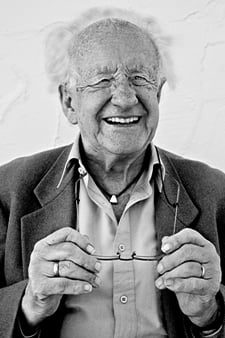
johangaltung

Yes, go beyond, transcend! That is our message, New Year or not.

Take the US school shootings. The National Rifle Association’s vice president on TV: “the only person who can stop a bad person with a gun is a good person with a gun”. That statement struck many cords.

There is the deep US culture of Dualism – two kinds of people – and Manicheism – one bad, one good. There is Armageddon in the class room, the teacher or resident police pulling out the gun–bigger, better, more accurate–for the final battle, for the final and only solution. The NRA is riding on this DMA (Dualism/Manicheism/Armageddon) ground swell from below, and so are millions of others. It is concrete, feasible, and could start January 2013.

There is confirmation from above: this is US foreign policy. The only way to stop a bad country with arms is a good country with arms; the only way to stop evil terrorism from below is good state terrorism from above. Balance of power, countless bases, search and destroy.

We agree about the critical focus: school shootings–the USA committing suicide! – must not happen. But what do we know empirically to be constructive, creative? The answer is wrapped in ambiguity.

Of course deterrence sometimes works. So does incapacitation by violent means, including killing, obliteration. Or at least it may look so; at least for some time. Particularly for the untrained eye.

The trained eye sees other things going on. Deterrence is a stage; then the arms race sets in, within and between countries. The NRA escalates by arming the schools, to the considerable profits of the gun manufacturers and shops with NRA as publicity front. And the bad persons? The step from hand guns to assault rifles has already been taken. Next step: putting schools on fire? Bombs? 9/11? Ominous.

The trained eye also sees killing as a stage; then revenge sets in. The mass murderers committing these atrocities may not know each other; but the shared interests may lead to joint revenge. Ominous.

The NRA’s concrete gun proposal may be very destructive in practice. But the statement opens for two constructive ideas:

– Deprive bad persons of guns
– Make bad persons better persons

A “war on arms” means US domestic disarmament. One “war” has been quite successful: the war on smoking, even if still a major cause of death. Enlightened self-interest was involved. Engrave “Arms are dangerous to your and your family’s health”, ban publicity of any kind, and as a first step ban the NRA from interfering with the US political process. Quit smoking, quit arms. Launch a culture where having arms, and making a living on arms, is as immoral as slavery, human trafficking.

So much for capability, access to arms in USA and in Germany, in Finland (some school shootings) and Norway (Breivik), using hunting licenses and online shopping. How about the intent of bad persons?

The sad long list of school tragedies in the US from a beginning in 1764 to 8 in the 1970s, 18 in the 1980s, 16 in the 1990s, 21 in the 2000s – the 2010s on the way – indicates three factors: some minority background, some conflict with the school, some mental disorder. Many Americans would meet those criteria. But they point beyond negative peace through balance of power and disarmament to a positive peace with constructive protection through mutuality and equality.

To start with the obvious: The NRA, like many, blames TV-video games violence. No doubt both normalize violence in general and shooting in particular. So do news over-reporting violence, domestic or global. And news glorifying US military interventions–fiascos or not–take the step from normalization to legitimation. “If my country can do it so can I” went through the head of a Timothy McVeigh, possibly also an Anders Breivik; but neither the USA nor Norway want any focus on that.

However, this approach is still only within negative peace. Limit TV-videogame-news violence to reduce violence: good, but not good enough. We need constructive approaches beyond reducing the destructive elements.

Here is the wish for 2013, for the decade, the century:
Fill TV and video-games with the true-to-life dramas of conflict resolution and trauma reconciliation without violence!

Authors, where are you?–lost in the aristotelian drama=tragedy+comedy? Show how we humans usually muddle through–in the family, at school, at work–and could do better inspired by visions and skills!

Journalists, where are you? – lost in the idea that only bad news are news, that peace is normal, not worthy of reporting, including the struggle for peace?

Art and TV fare so incredibly badly that even small steps forward could make a big difference. There is optimism in that! The SABONA Project in elementary schools and kindergartens in Norway shows that so much can be gained by training the kids in conflict handling – not only teaching “good manners”. It is almost unbelievable, but TV channels that pick up anything to portray “reality” fail on this one. There is Dr Phil on US TV, fine, but limited to inter-personal conflicts.

There is some state logic at work: states are addicted to violent options and the idea of “necessary wars”; solving underlying conflicts to the benefit of all would undermine that doctrine.

There is some capital logic at work: bad news sell. Maybe, but good news might sell even better among women, the young, the old.

Imagine good conflict resolution stories becoming the talking point of nations: how about trying it on what we saw last week on TV? Or asking a prime minister how he will handle the underlying conflicts?

Including school conflicts, the key focus. Super-competitive schools produce winners, losers, hatred, violence, bullying. Shootings are bullying US style. Make schools cooperative, let students compete with themselves to improve. Make everybody a winner. Not fail-proof: Finland[i] also uses that constructive, concrete and creative approach. Students might even become interested in the content, not only in their grades. And even small steps may pay off quickly.

NOTE:
[i]. See Paul Sahlberg, Finnish Lessons: What Can the World Learn from Educational Change in Finland, NYC: Teachers College Press, 2011. Diane Ravitch in The New York Review of Books (8 March 2012): “The central aim of Finnish education is the development of each child as a thinking, active, creative person, not the attainment of higher test scores, and the primary strategy of Finnish education is cooperation, not competition”. In addition, “Finnish schools have the least variation in quality, meaning that they come closest to achieving educational opportunity-an American ideal”.

The same actually applies to economics, as argued in much detail in my book Peace Economics, TRANSCEND University Press, 2012, now available.

Originally published here.

Related Posts

What the West Borrowed from Asia and What It Left Behind Jan Krikke October 8, 2026 The article was originally published here In the late 1960s, the musical Hair announced that the Age of Aquarius was dawning. Its opening anthem promised a transformation of human consciousness: an era of peace, harmony and understanding. Half a century later, a familiar echo of that promise is a meditation app offered by your employer. You can find it in the same list of benefits as the pension plan and the gym discount. How did a spiritual revolution become an employee benefit? The answer lies in the history of the movement known as New Age: where it came from, what it borrowed from Asia, and why the meaning of what it borrowed changed in the process. Two definitions will help. New Age is a loose label for a wide range of spiritual practices and...
Lena Petrova of “World Affairs In Context” with more than half a million subscribers on YouTube wanted to explore what a peace researcher like me has to say about, among other things, the First and the Second Cold War and why eethics has disappeared from politics. I am particularly happy about this conversation that also yielded an amazing number of very appreciative comments on YouTube. No doubt, people are longing for alternatives, including peace perspectives.
Jan Oberg, TFF director April 28, 2026 In this third TFF Peace Pulse, I make the important distinction between the violence and the conflict that violence is a symptom of. If you want peace, focus on the underlying conflict because that is the key to resolution, peacemaking, and a better future for the parties. The West is obsessed with violence, just look around you – and 90+ per cent of the public debate is about military issues and other violence – totally wasted for peace. These Peace Pulses will only be published here a few times. You will also not find them on YouTube and Vimeo because both platforms have blocked TFF and me; you know, peace is dangerous these days. Most TFF’s videos since 2007 are now on Rumble.

Recent Articles

Photo above: Carl Fredrik Reuterswärd’s Non-Violence outside UN Headquarters in New York. Kirill Levin, CC BY-NC-SA 2. Jan Oberg November 3, 2026 I am happy to be published in Horizons which is produced by the Center for International Relations and Sustainable Development, CIRSD, in Belgrade. My contribution brings out a radical re-thinking of what concepts such as defence, security, deterrence – and peace – may mean if we want to create a more peaceful world. It also summarises a few things I have been working with the last few decades. Please read it here Og her er den på dansk, takket være Johnny Baltzersens lynhurtige oversættelse
UNITE-tillid, DREAM-velstand og andre konstruktive komponenter Normally we publish articles in English here. But this is a translation of a very important TFF document that should reach as many as possible in Denmark since this country’s government has been one of the most hardline in Europe and, up till now at least, has refused to use diplomacy and, instead, spent tremendous sums on arming Ukraine with the express goal of defeating Russia. Thus this – unique – article is in Danish. Vi er Johnny Baltzersen og hans Fælles Sikkerhed – Fælles Fremtid på Substack overmåde taknemmelige for at have oversat og publiceret TFF’s 2025-portfølje for fredsidéer med henblik på Ukraines fremtid. Vi håber den nu kan nå mange flere danskere – som også vil sprede den og skabe debat – nu den danske regerings og folketingspartiernes politik på dette område siden 2022 står nu – forudsigeligt – ved vejs ende....
Jan Oberg TFF director October 28, 2026 Exactly one month has now passed since I published my criticism of the introduction to the special issue on Johan Galtung published by the Journal of Global Security Studies, JoGSS, and of Tor Egil Førland’s chapter about Galtung which serves as a preview to his forthcoming biography of Galtung to be published by PRIO. See the original on The Transnational here and the same article on TFF Substack with many general and critical comments and, in particular, the people who decided to withdraw from the biography project in protest. The special issue itself was extraordinary. It was devoted to the intellectual legacy of one of the founders of peace research and contained a number of strong assessments of his personality, scholarship, intellectual trajectory, and public role. Such assessments are, of course, entirely legitimate. No scholar is beyond criticism, and neither was Johan Galtung....

TFF on Substack

Discover and subscribe to more peace materials on TFF Substack

Most Popular

Photo above: Carl Fredrik Reuterswärd’s Non-Violence outside UN Headquarters in New York. Kirill Levin, CC BY-NC-SA 2. Jan Oberg November 3, 2026 I am happy to be published in Horizons which is produced by the Center for International Relations and Sustainable Development, CIRSD, in Belgrade. My contribution brings out a radical re-thinking of what concepts such as defence, security, deterrence – and peace – may mean if we want to create a more peaceful world. It also summarises a few things I have been working with the last few decades. Please read it here Og her er den på dansk, takket være Johnny Baltzersens lynhurtige oversættelse
UNITE-tillid, DREAM-velstand og andre konstruktive komponenter Normally we publish articles in English here. But this is a translation of a very important TFF document that should reach as many as possible in Denmark since this country’s government has been one of the most hardline in Europe and, up till now at least, has refused to use diplomacy and, instead, spent tremendous sums on arming Ukraine with the express goal of defeating Russia. Thus this – unique – article is in Danish. Vi er Johnny Baltzersen og hans Fælles Sikkerhed – Fælles Fremtid på Substack overmåde taknemmelige for at have oversat og publiceret TFF’s 2025-portfølje for fredsidéer med henblik på Ukraines fremtid. Vi håber den nu kan nå mange flere danskere – som også vil sprede den og skabe debat – nu den danske regerings og folketingspartiernes politik på dette område siden 2022 står nu – forudsigeligt – ved vejs ende....
Jan Oberg TFF director October 28, 2026 Exactly one month has now passed since I published my criticism of the introduction to the special issue on Johan Galtung published by the Journal of Global Security Studies, JoGSS, and of Tor Egil Førland’s chapter about Galtung which serves as a preview to his forthcoming biography of Galtung to be published by PRIO. See the original on The Transnational here and the same article on TFF Substack with many general and critical comments and, in particular, the people who decided to withdraw from the biography project in protest. The special issue itself was extraordinary. It was devoted to the intellectual legacy of one of the founders of peace research and contained a number of strong assessments of his personality, scholarship, intellectual trajectory, and public role. Such assessments are, of course, entirely legitimate. No scholar is beyond criticism, and neither was Johan Galtung....
Read More
knotted gun
Photo above: Carl Fredrik Reuterswärd’s Non-Violence outside UN Headquarters in New York. Kirill Levin, CC BY-NC-SA 2. Jan Oberg November 3, 2026 I am happy to be published in Horizons which is produced by the Center for International Relations and Sustainable Development, CIRSD, in Belgrade. My contribution brings out a radical re-thinking of what concepts such as defence, security, deterrence – and peace – may mean if we want to create a more peaceful world. It also summarises a few things I have been working with the last few decades. Please read it here Og her er den på dansk, takket være Johnny Baltzersens lynhurtige oversættelse
TFFPortfolioVign
UNITE-tillid, DREAM-velstand og andre konstruktive komponenter Normally we publish articles in English here. But this is a translation of a very important TFF document that should reach as many as possible in Denmark since this country’s government has been one of the most hardline in Europe and, up till now at least, has refused to use diplomacy and, instead, spent tremendous sums on arming Ukraine with the express goal of defeating Russia. Thus this – unique – article is in Danish. Vi er Johnny Baltzersen og hans Fælles Sikkerhed – Fælles Fremtid på Substack overmåde taknemmelige for at have oversat og publiceret TFF’s 2025-portfølje for fredsidéer med henblik på Ukraines fremtid. Vi håber den nu kan nå mange flere danskere – som også vil sprede den og skabe debat – nu den danske regerings og folketingspartiernes politik på dette område siden 2022 står nu – forudsigeligt – ved vejs ende....
JoGSS-Silent
Jan Oberg TFF director October 28, 2026 Exactly one month has now passed since I published my criticism of the introduction to the special issue on Johan Galtung published by the Journal of Global Security Studies, JoGSS, and of Tor Egil Førland’s chapter about Galtung which serves as a preview to his forthcoming biography of Galtung to be published by PRIO. See the original on The Transnational here and the same article on TFF Substack with many general and critical comments and, in particular, the people who decided to withdraw from the biography project in protest. The special issue itself was extraordinary. It was devoted to the intellectual legacy of one of the founders of peace research and contained a number of strong assessments of his personality, scholarship, intellectual trajectory, and public role. Such assessments are, of course, entirely legitimate. No scholar is beyond criticism, and neither was Johan Galtung....
Screenshot 2026-10-26 115647
An aspect of Iran’s culture and civilisation you’ve probably never heard about. Don’t be surprised if the US and Israel also try to bomb them. Jan ObergTFF director October 26, 2026 Today – under the “USraeli” threat of new “annihilating” bombings – opens the 7th International Conference on Peace and Conflict Resolution at Tehran’s University. As far as I can tell, this is the only permanent, advanced peace research institution in West Asia/the Middle East. Perhaps more countries in that region could be inspired? I mean, how many military “security” institutes and military academies do they have? Many peace research institutes and university departments have been established since the 1950s in the West. They are now all under attack; some have closed down, some have gone mainstream, yet others kept the name but do nothing to research peace and disseminate results or advice; instead, they cooperate with militarism’s platforms such...
Screenshot 2026-10-15 141837
Let’s discuss using AI to create peace – in contrast to boring geopolitics devoid of creative healing and visions. Jan Oberg TFF director October 15, 2026 I asked VEED to create a short video exemplifying how peace is preferable to war, then chose the lady as a template. Simple as that. In less than a minute, it produced this video, which any peace-loving person would appreciate. The only problem is that human intelligence (HI), at least the one that exists among Western decision-makers, isn’t half as moral or smart as AI. I have used AI to dialogue about peace and peace plans, creative conflict resolution and visions of a better future for humankind. It so happens that I am having more stimulating, intelligent, creative and moral discussions with AI than I could possibly have with any EU or NATO leader today. Yes, AI has very problematic and dangerous aspects; used...
girl-5894831_1280
Below are TFF-related media mentions, comments, videos and social media posts published elsewhere but not on this homepage. We happen to catch and list only a fraction. Regarding video comments and debates, we recommend that you go to the TFF Video Channel on Substack where many of them are reproduced. Jan Oberg is a contributor to China Daily – 52 million daily clicks – and Global Times, CGTN and CCTV (the national television), China Investment, Xinhua News Agency and several others. Articles and videos on these media very often multiply into countless Chinese (and Western media) that re-post them from these main media. Thanks to The China Academy, his analyses, interviews and comments are frequently posted on YouTube channels such as Thinkers Forum and Wave Media. These videos are often re-posted on Bilibili (China’s YouTube), the China Content Center on TikTok, and on the Chinese edition of TikTok, Douyin.com. This means reaching hundreds of millions of viewers worldwide over a year. While there are too many to catch on all these...





