October 24 marks United Nations Day. But which UN? I would say there are two, or perhaps there are three.

The First UN is what happens in the UN building on Manhattan, New York: the diplomats of member governments around the table in the Security Council and in the General Assembly making statements they have prepared on behalf of their countries and going about a business that can be characterised by and large by concepts such as power – including the power to save or destroy human lives around the world – Realpolitik and rhetoric. They play power games with each other; they play with the future of the world.

Everything there is not power or powerful. Many – particularly first-timers – in that building are also motivated by idealism, visions of a better world including a globalised democracy that is a founding idea of the UN itself but still seems to belong to a distant future. And much of what is produced is intellectually and politically quite powerless: in the best of cases great goal formulations combined with woefully inadequate political will and ability back home in member states to move politics in the direction of their realization. Bad yes – but to be noted in passing: the goal formulations are important as norms in the sense that they express what everyone knows we ought to be doing.

Truth is that this UN which should be, and perhaps still can become, humanity’s most important force for the common good has been made quite powerless because of three “external” things – there are also internal things such as mismanagement, incompetence and bureaucracy –  namely lack of even a minimum of funding, lack of legitimacy of priority of the UN by members and, third, deliberate destruction of the UN by member states.

All of the UN’s activities cost less than 2 per cent of the world combined military expenditures. How can anyone expect it to create peace?

So, many people and much of the media debate tell us that the UN is inefficient, corrupt, unable to do what it is asked to do, etc – and those who say that seldom think of the simple fact pointed out by its first Secretary-General Tryggve Lie: that the UN will never become stronger or better than the members want to make it.

Around the world political nationalism and self-centered images of the world flourish – my state, our citizens, our rights and needs, right or wrong and no matter what the consequences for the rest of humanity!
The duty to integrate a global common interest in day-to-day affairs in the world’s parliaments is non-existing. While we have economic and military globalization, we have no democratic-political, social or cultural globalization – not to mention normative or ethical globalization.

So that’s the First UN, UN the power house, which for good or for bad, is not very powerful. That’s the one most people see in the media, some have visited on a guided tour and that forceful governments sometimes make reference to but mostly ignore. Cynics think we could just as well close it down. But we shouldn’t.

Then there’s The Second UN

That is the one you meet around the world and never in New York. I’ve seen and sometimes worked with this UN in operations at many places around the world, e.g. UN peacekeeping soldiers, UN Police and Civil Affairs people in places such as Pakrac, Daruvar, Topushko, Knin, Sarajevo, Banja Luka, Skopje, Belgrade, Baghdad, Gaza and Bujumbura.

In spite of inefficiency and what not, I am totally convinced that they are more of a force for good in our world than the opposite! (Right, I did not mention UNMIK in Kosovo because it was and remains a deliberate Mission Impossible that the S-G should have had the guts to refuse to do back in 1999).

And they are not only peacekeeping Blue Helmets of course, they are UNDP, WHO, WFP, UNESCO, etc. I remember how all over former Yugoslavia they rented rooms and apartments by the locals, spent time with them sharing a meal, etc. Those were the good times when they mixed with and learned from the people’s histories and got a deeper understanding of the conflicts they were supposed to help solve. But then came September 11 and even the UN went security obsessed and fenced in its staff, barbed wire, walkie-talkies, armoured cars, curfews and more. In short, the end of interaction and, thus, of public acceptance and mutual understanding.

The enigmatic relations between the First and the Second UN all came together in Iraq before the war. The First UN’s Security Council had decided to install history’s most cruel sanctions on the Iraqi people. Rightly, in many people’s eyes a genocide was committed in the name of the UN; remember, people tend to mix up the UN with its Security Council, the permanent five members of which are not exactly the best of the earth.

The Second UN on the ground did its utmost to limit the damage of that terrible Security Council’s decisions. I will never forget the extremely hard-working, dedicated, people-respecting – even people-loving – and deeply humane Head of Missions and their staff I met in Iraq 2002 and 2003, and I met all the missions for hours of interviewing as part of TFF’s fact finding. Many of them worked at least 80 hours a week to the benefit of the suffering Iraqis and many would tell you squarely how counterproductive and destructive their own governments’ policies were and how little interest they took in listening to what these people on the ground knew.

Presumably, the attack on the UN in Baghdad was the destruction of the Second UN because of the First UN’s cruel sanctions – not having the means to destroy the HQ in New York. The madmen who killed Sergio de Mello and colleagues did not want the good UN to survive. And the US did not want the excellent UN mission on the border between Iraq and Kuwait to exist since its troops destroyed it, chased out the UN staff and rolled into Iraq in March 2003. Perhaps there was a connection between the two? In any case, it is no wonder these events have been so deeply traumatising to the UN, the people as well as the organisation.
 
Only few seem to be aware of how much it meant for the local populations in various parts of former Yugoslavia to have internationals nearby who cared and did their best to provide them with some basic human security in times of chaos and killing. The UNPREDEP Mission in Macedonia, remarkably, was established before violence broke out, did a marvellous job against all odds and was destroyed party by members of the Security Council and their short-sighted, nationalistic policies and partly by the bombing of Serbia-Kosovo.

And, lastly, I’ve experienced the determination and wisdom with which the UN has supported the peace process in Burundi. It would take another article to describe why but – with due respect for the Burundi people’s own will to peace and the remarkable peace process at governmental level – I don’t think Burundi would have come as far as it has in the direction of sustainable peace had it not been for the UN as a modest, determined and caring peacebuilder. But did you ever see a news article or a documentary about that or any other successful UN mission? 

Of course not! This Second UN has no media attention and is never discussed in parliaments. To most people in the rich parts of the world, the UN is the power house in New York. I for one must say that the UN I celebrate is this Second UN. And should the ignorant and the cynics one day manage to have “the UN” destroyed completely or force it to close down, the world will become so much more cruel and hopeless, so much less human. For the real UN is the one you never see and hear about – and the one that matters to millions of underprivileged people who are victims of both structural and direct violence on an everyday basis.

Is there then a Third UN?

Well, there are lots of ideas and reform proposals around. The way I see it, it would have to be much more expressive of the “we, the peoples” and less of governments. To the extent that governments should be there, their representatives should be elected in their respective member states like any parliamentarian. It would be a UN with much more financial resources and there would be UN embassies in all member states – not only members feeding their nationalist views into the UN as today but UN ambassadors feeding global common good thinking into members. And it would not have one headquarter and none would be in the US.

And there would be a leadership that really cared about global civil society. It would not, as the present one of Ban Ki-moon, leave well-intentioned proposals and support like TFF’s Open Letter unanswered and thereby show that not only does it not honour courtesy and protocol, it also doesn’t really bother about “we, the peoples”.

But the main point is this: The Third or Any Other Future UN will have to be a UN that grows out of completely new policies and priorities in member states. We must recognise that the UN as such has not failed; its member states have failed in realising the dreams, visions and moral values embedded in its – their own – Charter and its – their own – Declarations. There will be no better UN in the future unless many more member states learn to discuss and outline a global policy and recognise their own role and responsibility in it when they conduct everyday policies. At the end of the day, the ideals of the UN can only be realised on the ground out there, by the member countries’ governments and citizens.

So before you say – or accept someone else saying it – that the UN is useless and could just as well be scrapped, please think twice, think of the Second UN and future possible UNs. A world without the Second UN and the norms of the UN Charter will make the jungle look like a peaceful, orderly place.

In spite of all its deficiencies, we simply can’t do without the United Nations – but, to make the point, the world would be a better place if some member governments could be scrapped!

So, let’s honour and celebrate the Second UN and work for the Third or Fourth – hopefully they can then, eventually, replace the First UN.
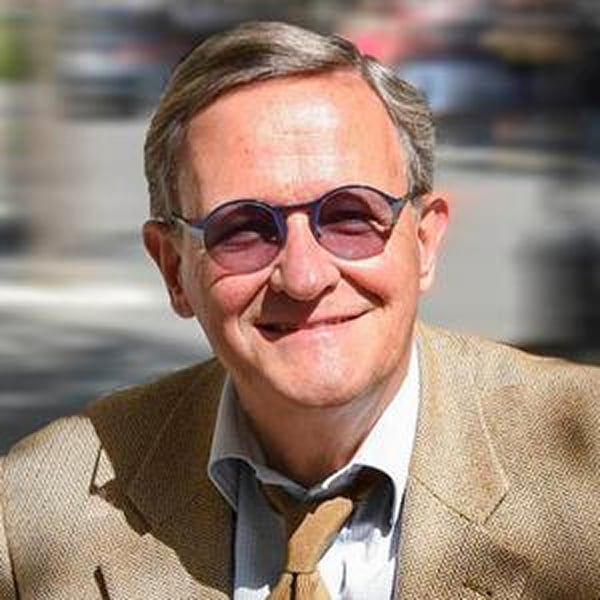

Peace & future researcher + ‌Art Photographer

Related Posts

LONDON – So far so good, at least on the wider level. While internally Iraq seems on the edge of chaos, the much heralded clash of civilizations between the Muslim and Judaeo-Christian worlds has yet to become apparent. We have anger and despair aplenty in the Arab and Muslim worlds. But very little rushing to the standard and there was no great pilgrimage of warriors to join the fight, as happened when the Soviet Union invaded Afghanistan twenty years ago, and then, having driven the Red Army out, were left to ferment in that mountainous redoubt. With the armaments supplied by the CIA the mujahidin were transformed into Al Qaeda that became, for a relatively brief moment as these things go, ‘the greatest threat to the homeland that America has ever known.’ Nevertheless a ‘Cold War’ between much of the Muslim world and the West is certainly in full swing. Winston...
The Challenge of Nuclear Weaponsin the Twenty-first CenturyA Path Forward The peoples and governments of the world face an urgent challenge relating to weaponry of mass destruction and particularly to nuclear weaponry.  At the crossroads of technology, terrorism, geopolitical ambition, and policies of preemption are new and potent dangers for humanity. Despite ending the nuclear standoff of the Cold War era, nuclear weaponry is again menacing the peoples of the world with catastrophic possibilities.  We recognize the need for any government to pursue its security interests in accordance with international law; and further, we recognize that distinctive threats to these interests now exist as a result of an active international terrorist network having declared war on the United States and its allies. Nonetheless, we reject the assessment of the current US administration that upgrading a reliance on nuclear weapons is in any sense justified as a response. We find it...
By Karin Wegestal MP, the Social Democratic Partyon behalf of the Swedish Committee for Solidarity with the Yugoslav People During the last decade, the Federal Republic of Yugoslavia has received more than 500,000 refugees from Croatia and Bosnia, and another 300,000 internally displaced persons, mainly from the province Kosovo and Metohia. For a country with about ten million inhabitants, such an influx of homeless people is obviously a very heavy burden – even under peaceful conditions. But in addition to that, the Federal Republic of Yugoslavia has been the subject to sanctions from the western powers for close to ten years and its infrastructure was badly hurt through Nato’s intense bombardment during 78 days in 1999. The result of all this is that Yugoslavia, once the most developed industrial country in Eastern Europe, is today the poorest country in Europe. In Serbia excluding Kosovo, with about ten million inhabitants and...

Recent Articles

Below are TFF-related media mentions, comments, videos and social media posts published elsewhere but not on this homepage. We happen to catch and list only a fraction. Regarding video comments and debates, we recommend that you go to the TFF Video Channel on Substack where many of them are reproduced. Jan Oberg is a contributor to China Daily – 52 million daily clicks – and Global Times, CGTN and CCTV (the national television), China Investment, Xinhua News Agency and several others. Articles and videos on these media very often multiply into countless Chinese (and Western media) that re-post them from these main media. Thanks to The China Academy, his analyses, interviews and comments are frequently posted on YouTube channels such as Thinkers Forum and Wave Media. These videos are often re-posted on Bilibili (China’s YouTube), the China Content Center on TikTok, and on the Chinese edition of TikTok, Douyin.com. This means reaching hundreds of millions of viewers worldwide over a year. While there are too many to catch on all these...
Jan Oberg TFF director October 13, 2026 According to Alfred Nobel’s will, the Nobel Peace Prize shall be awarded: ”to the person who has done the most or best to advance fellowship among nations, the abolition or reduction of standing armies, and the establishment and promotion of peace congresses.” Further down, he also expresses how the prize for the “champions of peace” shall be decided: “that for champions of peace by a committee of five persons to be selected by the Norwegian Storting. Alfred Nobel’s will is remarkably short and clear. But few seem to have read it. Nobel did not say that the committee itself should consist of members of parliament. He entrusted the Storting with appointing five persons. In principle, it could have selected diplomats, mediators, peace researchers, conflict-resolution specialists, or other individuals with recognised expertise in matters of peace from around the world. Instead, the Storting gradually...
The Quest for Humane Survival Richard Falk Professor emeritus, Princeton UniversityTFF Associate since 1986October 12, 2026 After decades of teaching and writing about international law in academic frameworks that were not institutionally situated within law school environments—at Princeton and the University of California, Santa Barbara—I found myself most receptive to the TWAIL outlook. It has been especially illuminating in clarifying the extent to which international law evolved as a dialogical critique of Europe’s efforts to legitimize its colonial undertakings. In particular, TWAIL has exposed how international law has functioned to legalize the subjugation of Third World peoples, securing conditions for exploitative investment and trade relations, the coercive enforcement of public debts, and an ideology of cultural superiority. TWAIL’s exposure of these economic legacies of colonialism has influenced my understanding of the history and development of international law, broadly conceived, as an ideological project of the Western sub-system of the world...

TFF on Substack

Discover and subscribe to more peace materials on TFF Substack

Most Popular

Below are TFF-related media mentions, comments, videos and social media posts published elsewhere but not on this homepage. We happen to catch and list only a fraction. Regarding video comments and debates, we recommend that you go to the TFF Video Channel on Substack where many of them are reproduced. Jan Oberg is a contributor to China Daily – 52 million daily clicks – and Global Times, CGTN and CCTV (the national television), China Investment, Xinhua News Agency and several others. Articles and videos on these media very often multiply into countless Chinese (and Western media) that re-post them from these main media. Thanks to The China Academy, his analyses, interviews and comments are frequently posted on YouTube channels such as Thinkers Forum and Wave Media. These videos are often re-posted on Bilibili (China’s YouTube), the China Content Center on TikTok, and on the Chinese edition of TikTok, Douyin.com. This means reaching hundreds of millions of viewers worldwide over a year. While there are too many to catch on all these...
Jan Oberg TFF director October 13, 2026 According to Alfred Nobel’s will, the Nobel Peace Prize shall be awarded: ”to the person who has done the most or best to advance fellowship among nations, the abolition or reduction of standing armies, and the establishment and promotion of peace congresses.” Further down, he also expresses how the prize for the “champions of peace” shall be decided: “that for champions of peace by a committee of five persons to be selected by the Norwegian Storting. Alfred Nobel’s will is remarkably short and clear. But few seem to have read it. Nobel did not say that the committee itself should consist of members of parliament. He entrusted the Storting with appointing five persons. In principle, it could have selected diplomats, mediators, peace researchers, conflict-resolution specialists, or other individuals with recognised expertise in matters of peace from around the world. Instead, the Storting gradually...
The Quest for Humane Survival Richard Falk Professor emeritus, Princeton UniversityTFF Associate since 1986October 12, 2026 After decades of teaching and writing about international law in academic frameworks that were not institutionally situated within law school environments—at Princeton and the University of California, Santa Barbara—I found myself most receptive to the TWAIL outlook. It has been especially illuminating in clarifying the extent to which international law evolved as a dialogical critique of Europe’s efforts to legitimize its colonial undertakings. In particular, TWAIL has exposed how international law has functioned to legalize the subjugation of Third World peoples, securing conditions for exploitative investment and trade relations, the coercive enforcement of public debts, and an ideology of cultural superiority. TWAIL’s exposure of these economic legacies of colonialism has influenced my understanding of the history and development of international law, broadly conceived, as an ideological project of the Western sub-system of the world...
Read More
girl-5894831_1280
Below are TFF-related media mentions, comments, videos and social media posts published elsewhere but not on this homepage. We happen to catch and list only a fraction. Regarding video comments and debates, we recommend that you go to the TFF Video Channel on Substack where many of them are reproduced. Jan Oberg is a contributor to China Daily – 52 million daily clicks – and Global Times, CGTN and CCTV (the national television), China Investment, Xinhua News Agency and several others. Articles and videos on these media very often multiply into countless Chinese (and Western media) that re-post them from these main media. Thanks to The China Academy, his analyses, interviews and comments are frequently posted on YouTube channels such as Thinkers Forum and Wave Media. These videos are often re-posted on Bilibili (China’s YouTube), the China Content Center on TikTok, and on the Chinese edition of TikTok, Douyin.com. This means reaching hundreds of millions of viewers worldwide over a year. While there are too many to catch on all these...
Nobel-Prize-Plaque
Jan Oberg TFF director October 13, 2026 According to Alfred Nobel’s will, the Nobel Peace Prize shall be awarded: ”to the person who has done the most or best to advance fellowship among nations, the abolition or reduction of standing armies, and the establishment and promotion of peace congresses.” Further down, he also expresses how the prize for the “champions of peace” shall be decided: “that for champions of peace by a committee of five persons to be selected by the Norwegian Storting. Alfred Nobel’s will is remarkably short and clear. But few seem to have read it. Nobel did not say that the committee itself should consist of members of parliament. He entrusted the Storting with appointing five persons. In principle, it could have selected diplomats, mediators, peace researchers, conflict-resolution specialists, or other individuals with recognised expertise in matters of peace from around the world. Instead, the Storting gradually...
law-419057_1280
The Quest for Humane Survival Richard Falk Professor emeritus, Princeton UniversityTFF Associate since 1986October 12, 2026 After decades of teaching and writing about international law in academic frameworks that were not institutionally situated within law school environments—at Princeton and the University of California, Santa Barbara—I found myself most receptive to the TWAIL outlook. It has been especially illuminating in clarifying the extent to which international law evolved as a dialogical critique of Europe’s efforts to legitimize its colonial undertakings. In particular, TWAIL has exposed how international law has functioned to legalize the subjugation of Third World peoples, securing conditions for exploitative investment and trade relations, the coercive enforcement of public debts, and an ideology of cultural superiority. TWAIL’s exposure of these economic legacies of colonialism has influenced my understanding of the history and development of international law, broadly conceived, as an ideological project of the Western sub-system of the world...
images-2
Advocates of nuclear disarmament are regularly dismissed by the champions of nuclear deterrence as naïve and unrealistic, utopian or even irresponsible. Yet this ‘doctrine’ of deterrence, regarded by France as the ‘cornerstone’ of its national security, is based on quasi-religious beliefs, a theory that cannot be proven, risky gambles and fragile assumptions. So much so that one might legitimately ask which side the ‘Care Bears’ are on. Marc FinaudVice-President of Initiatives for Nuclear Disarmament (IDN) October 9, 2026 This article was originally published on Pressenza When it comes to these things being treated as religious concepts, look here. Idealists and realists It was Hubert Védrine, François Mitterrand’s former Foreign Minister, who repeatedly coined the phrase: ‘Europeans are a sort of Care Bears who don’t realise they’re living in Jurassic Park’. He applies this reference to the cartoon for well-behaved children not only to what he regards as weakness or idealism...
8824b09f-33a5-43f9-9fd0-550f28cda24d_1536x1024
What the West Borrowed from Asia and What It Left Behind Jan Krikke October 8, 2026 The article was originally published here In the late 1960s, the musical Hair announced that the Age of Aquarius was dawning. Its opening anthem promised a transformation of human consciousness: an era of peace, harmony and understanding. Half a century later, a familiar echo of that promise is a meditation app offered by your employer. You can find it in the same list of benefits as the pension plan and the gym discount. How did a spiritual revolution become an employee benefit? The answer lies in the history of the movement known as New Age: where it came from, what it borrowed from Asia, and why the meaning of what it borrowed changed in the process. Two definitions will help. New Age is a loose label for a wide range of spiritual practices and...
Screenshot 2026-10-04 210142
Small and different + among the 10% most active + 9,000 texts + 150 Associates + 60 000 a day — and a stubborn belief that peace is smarter and must be secured by peaceful means. In 2026, the Transnational Foundation for Peace and Future Research (TFF) turns 40. On Monday, October 5, 2026, a new TFF homepage will go live — a new gateway to more than 9,000 articles, analyses, research papers and other contributions produced over four decades of independent peace research. But this is not simply a new website. For four decades, TFF has worked from a simple conviction: peace is smarter than militarism and can be brought about by peaceful means. This is not merely an aspiration. It is the principle expressed in the UN Charter and the Gandhian tradition that has guided our work from the beginning. TFF is a research-based, independent and people-financed foundation....