
The World Is a Sphere, But It Needs Zones of Peace

Biljana Vankovska

Professor emerita, TFF Board member

November 13, 2025

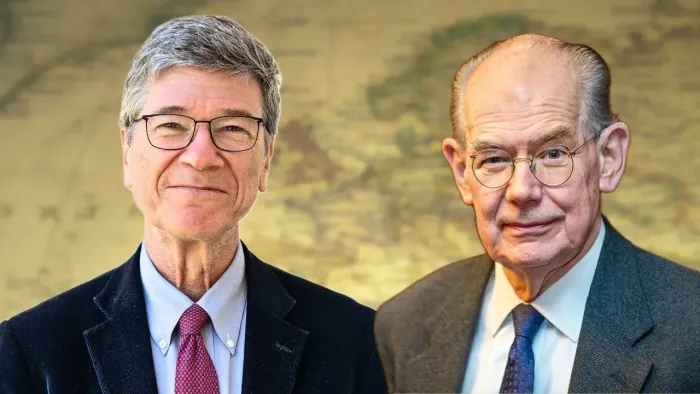
As members of a global intellectual public, concerned not merely with knowledge but with humanity’s survival, we hunger for debates that are as rigorous as transformative, i.e. debates capable of imagining a fundamentally different world order. The latest exchange between two most distinguished US professors, Jeffrey Sachs and John Mearsheimer, has proven highly attractive and necessary. Yet, in my opinion, it does not transcend existing paradigms (despite the introduction of the concept of “spheres of security”) and offers no solutions for the structural and deep-rooted problems.

As promised, albeit with some delay, here I am, stepping into the arena of intellectual giants in international relations and political economy. My intention is not to challenge their brilliance or integrity but to advocate for a pluralization of voices and perspectives. The small states and postcolonial peripheries continue to bear the costs of “great power politics”; perhaps, then, thinkers from the margins also have the right—and indeed the duty—to think aloud, to disrupt, and to contribute their insights to this debate.

We urgently need to insert the small-state perspective into this grand theoretical conversation. The binary framework of “spheres of influence or security” effectively erases the agency of small states, reducing them to passive safety buffers rather than moral and political actors in their own right. Moreover, the debate remains conspicuously silent on the question of morality, while leftist perspectives and critical theory are too often excluded from mainstream IR discourse.

Let us recall Robert Cox’s enduring dictum: “Theory is always for someone and for some purpose.” No theory, however benevolent its intent, is ever truly neutral. Each is born of a particular historical context and serves certain interests—explicitly or implicitly.

With that in mind, I offer the following critical reflections and remarks:

First, for all its analytical rigor, the debate remains trapped within the grammar of state-centric realism. Both thinkers, despite their differences, accept the hierarchy of states as fixed and inevitable. The unequal distribution of power—hard and soft—is treated as a given. In other words, power (military, economic, or cultural) is treated as an exogenous fact, not a social construction. The principle of sovereign equality, enshrined in the UN Charter, is quietly sidelined in favor of a hierarchy of “legitimate” powers’ security concerns and interests. The systemic inequality between “those who decide” and “those who must adapt” remains intact. Thus, the debate reproduces the same geopolitical determinism it seeks to explain. Any critique that does not elevate to the deepest layer — the systemic base – is hollow. Hence the real debate should not be “influence vs. security” but “power vs. justice,” or in Galtung’s terms, “negative vs. positive peace.”

Second, their state-centric lens also overlooks the true roots and engines of global power. The realist orthodoxy blinds us to the true centers of power in the 21st century. States are no longer autonomous actors; they operate within what can be termed the Military-Industrial-Media-Academia Complex (MIMAC), a vast machinery that fuses inequality, coercion, ideology, production, and spectacle. MIMAC not only manufactures consent and controls narratives but also predetermines the boundaries of political imagination and action. It shapes public opinion, militarizes knowledge, and commodifies both war and peace. Even if great powers adopted ostensibly “benign” spheres of security, MIMAC ensures that exploitation, regime change, and the commodification of human suffering remain the system’s lifeblood. The political economy of the Gaza genocide stands as a self-evident indictment of this order. Today’s world can no longer be understood merely as an interaction among sovereign states. It must be conceived as a totality of intertwined capitalist structures and a privatized state apparatus that perpetuates inequality, dependency, and systemic violence under ever-changing ideological banners. What Johan Galtung once called structural violence is not only alive; it has been refined, globalized, and aestheticized through the mechanisms of modern power.

Third, the very idea of drawing spheres is conceptually obsolete and morally dangerous. It presupposes that the globe can be partitioned according to power, as if people, cultures, and ecosystems were negotiable assets. How, for instance, would “spheres of security” accommodate the relations between Russia and China, or India and its neighbors? What about rogue states like Israel, or stateless peoples like Palestinians? In all cases, the “legitimate interests” of the strong are prioritized over the existential rights of the weak. Multipolarity, framed in this way, risks becoming a modernized version of the old “West and the Rest” paradigm, only now replaced by “Great Powers and the Rest.” Hierarchies remain; the names change.

Fourth, from a leftist perspective, the real issue is not about which powers dominate the world but why domination persists at all. The fundamental choice before humanity is the one Rosa Luxemburg identified more than a century ago: socialism or barbarism. Either we democratize global power and reorganize production, global governance, and knowledge production around justice and equality or we descend further into the barbarism of endless war, ecological collapse, and dehumanized society. What Sachs and Mearsheimer treat as a “strategic dilemma” is, in truth, a civilizational one.

Johan Galtung’s concept of positive peace, emphasizing equality, social justice, and the absence of structural violence, offers a framework for moving beyond the deterministic logic of great-power realism or liberalism. Galtung’s vision does not seek to refresh past balances of power, but to create new, forward-looking forms of cooperation that empower societies rather than subjugate them.

To move beyond this impasse, we must reclaim and expand the tradition of creative peace thinking. Another important thing is that positive peace has both internal and international dimensions; more importantly, it offers a foundation for an emancipatory politics and international order. Such peace requires dismantling the machinery of militarized turbo capitalism and replacing it with cooperative systems rooted in social solidarity, environmental stewardship, and participatory local and global governance. It is not about “balancing” powers, but about transforming the very logic of power itself.

Fifth, there are precedents for this vision. The ASEAN model, with all its imperfections, demonstrates that consensus and dialogue can ensure stability without coercion. Nuclear-weapon-free zones and regional disarmament frameworks reveal that states can voluntarily limit their own capacity for destruction in the name of collective safety. Even small and vulnerable nations have innovated with ideas of neutrality and regional cooperation that defy the dictates of great powers. These examples illuminate a path forward: peace and security as shared human projects, not strategic bargains or demarcations. The intellectual giants probably cannot see well from the heights of empire that for small and vulnerable societies, both “spheres of influence” and “spheres of security” look the same: external domination justified by new vocabulary. In my part of the world, we speak from the epistemology of the margins. And that is a legitimate position in today’s world, even maybe a dominant one if we take into account the Global South’s concerns. We need to deconstruct Western epistemic privilege and reassert moral universality.

The far-left critique also exposes the moral bankruptcy of contemporary geopolitical discourse. The suffering of millions—under occupation, sanctions, or ecological devastation—remains invisible, yet the grand debate framework remains fixated on safeguarding the “legitimate” interests of powerful states. The global South, the dispossessed, the precarious—these are not footnotes to history; they are its conscience. A truly transformative multipolar debate must center on human security, dismantle the privatization of power and challenge structural inequalities.

Sixth, to achieve this, we need a radical re-foundation of global governance. Strengthening the UN must mean not only procedural reform, but moral and structural renewal—restoring its role as a guardian of collective peace rather than a tool of the powerful. Neutrality and non-alignment must once again become expressions of democratic agency, not imposed dependencies. Emerging powers must not reproduce Western imperial patterns but forge a post-imperial multipolarity—one grounded in justice, not in domination.

In conclusion, the Sachs–Mearsheimer debate reminds us not of how much we know, but of how little we dare to imagine. The realism may explain the world, but it can hardly transform it. As the socialist tradition insists, explanation without transformation is complicity with the hyper-imperialism decadence. The decisive question is not how to manage spheres of influence/interest/security, but how to build zones of genuine peace and cooperation.

We indeed live on a shared sphere. The challenge is not to draw lines upon it, but to ensure it remains habitable, just, and free. To reach that harmonious shared sphere of living, we need debates about the future—not nostalgic returns to models that predate the United Nations. My friend Jan Øberg is absolutely right when he insists that we need dialogues about possible futures (in plural) as the only path to jointly create a better one.

Geopolitical debates, in contrast, are deeply deficient: they focus on the current events (and status quo), they offer no vision for a different future, no pathways toward structural solutions. They are confined to negotiating minimal compromises to avoid nuclear catastrophe, even if that means accepting a world that is utterly alienated, impoverished, and soulless.

Peace & future researcher + ‌Art Photographer

One Response

  1. Truncated means shortened by cutting off a part or element, often resulting in something that is incomplete or lacking. Biljana Vankovska identifies the truncated aspect(s) of Jeffrey Sachs’ and John Mearsheimer’s views of the world.

Related Posts

Tony Robinson October 4, 2026 Violence is easy to recognise when someone is being beaten, shot or killed. It becomes more difficult when nobody is holding a weapon. Poverty, discrimination, exploitation and repression can restrict a human life just as effectively, although they do so in very different ways and with very different consequences. Simply adding more categories to an ever-growing list of forms of violence does not really solve the problem. The more interesting question is what all these different situations have in common and why it makes sense to describe them using the same word. Human beings do not simply react to what happens around them. They remember the past, imagine things that do not yet exist, make plans and undertake projects. Workers organise because they imagine different working conditions; people migrate because they imagine another life somewhere else; social movements emerge because people refuse to accept the...
It’s a matter of principles, courage, vision and pulling together – while the militarist world is falling apart… Peter Langille October 3, 2026 “Here, then, is the problem which we present to you, stark and dreadful and inescapable: Shall we put an end to the human race; or shall mankind renounce war?”The Bertrand Russell—Albert Einstein Manifesto, July 9, 1955 ⁕ The forecast for what’s ahead is worrisome. The sharp rise in armed conflicts over the past three years is adding to what was already the highest level in over seventy years. Genocides, which should be prevented are supported. A shared climate emergency that jeopardises survival is ignored. Diverse polls now suggest that people are war-weary, worried and interested in a more effective United Nations. And, there are viable policy options for a more secure world! Yet governments are doubling-down, betting on more war and investing heavily. If current trends persist,...
Johan Galtung 1930-2024October 2015 Published here on October 3, 2026 Let us focus on Civilization for conflict analysis and remedies. Major forms of disorder use violence; war is state organized violence. The most belligerent states are the United States of America and Israel, both with civilization roots. National Evangelism, the US Protestant Christian civilization– more national than evangelical–justifies US warfare as exceptionalism of a people chosen by God, with a manifest destiny to run the world. Orthodox Judaism justifies Israeli warfare to conquer and expand from Nile to Euphrates as a religious right and duty to the Eternal One. The third most belligerent country, the UK, no longer believes it is God-chosen but chosen by the USA; not quite the same but something. But the root cause of global disorder lies in the Occident–with Islam–seeing itself as the single, universal civilization valid for all at all times, all others being...

Recent Articles

Tony Robinson October 4, 2026 Violence is easy to recognise when someone is being beaten, shot or killed. It becomes more difficult when nobody is holding a weapon. Poverty, discrimination, exploitation and repression can restrict a human life just as effectively, although they do so in very different ways and with very different consequences. Simply adding more categories to an ever-growing list of forms of violence does not really solve the problem. The more interesting question is what all these different situations have in common and why it makes sense to describe them using the same word. Human beings do not simply react to what happens around them. They remember the past, imagine things that do not yet exist, make plans and undertake projects. Workers organise because they imagine different working conditions; people migrate because they imagine another life somewhere else; social movements emerge because people refuse to accept the...
It’s a matter of principles, courage, vision and pulling together – while the militarist world is falling apart… Peter Langille October 3, 2026 “Here, then, is the problem which we present to you, stark and dreadful and inescapable: Shall we put an end to the human race; or shall mankind renounce war?”The Bertrand Russell—Albert Einstein Manifesto, July 9, 1955 ⁕ The forecast for what’s ahead is worrisome. The sharp rise in armed conflicts over the past three years is adding to what was already the highest level in over seventy years. Genocides, which should be prevented are supported. A shared climate emergency that jeopardises survival is ignored. Diverse polls now suggest that people are war-weary, worried and interested in a more effective United Nations. And, there are viable policy options for a more secure world! Yet governments are doubling-down, betting on more war and investing heavily. If current trends persist,...
Johan Galtung 1930-2024October 2015 Published here on October 3, 2026 Let us focus on Civilization for conflict analysis and remedies. Major forms of disorder use violence; war is state organized violence. The most belligerent states are the United States of America and Israel, both with civilization roots. National Evangelism, the US Protestant Christian civilization– more national than evangelical–justifies US warfare as exceptionalism of a people chosen by God, with a manifest destiny to run the world. Orthodox Judaism justifies Israeli warfare to conquer and expand from Nile to Euphrates as a religious right and duty to the Eternal One. The third most belligerent country, the UK, no longer believes it is God-chosen but chosen by the USA; not quite the same but something. But the root cause of global disorder lies in the Occident–with Islam–seeing itself as the single, universal civilization valid for all at all times, all others being...

TFF on Substack

Discover and subscribe to more peace materials on TFF Substack

Most Popular

Tony Robinson October 4, 2026 Violence is easy to recognise when someone is being beaten, shot or killed. It becomes more difficult when nobody is holding a weapon. Poverty, discrimination, exploitation and repression can restrict a human life just as effectively, although they do so in very different ways and with very different consequences. Simply adding more categories to an ever-growing list of forms of violence does not really solve the problem. The more interesting question is what all these different situations have in common and why it makes sense to describe them using the same word. Human beings do not simply react to what happens around them. They remember the past, imagine things that do not yet exist, make plans and undertake projects. Workers organise because they imagine different working conditions; people migrate because they imagine another life somewhere else; social movements emerge because people refuse to accept the...
It’s a matter of principles, courage, vision and pulling together – while the militarist world is falling apart… Peter Langille October 3, 2026 “Here, then, is the problem which we present to you, stark and dreadful and inescapable: Shall we put an end to the human race; or shall mankind renounce war?”The Bertrand Russell—Albert Einstein Manifesto, July 9, 1955 ⁕ The forecast for what’s ahead is worrisome. The sharp rise in armed conflicts over the past three years is adding to what was already the highest level in over seventy years. Genocides, which should be prevented are supported. A shared climate emergency that jeopardises survival is ignored. Diverse polls now suggest that people are war-weary, worried and interested in a more effective United Nations. And, there are viable policy options for a more secure world! Yet governments are doubling-down, betting on more war and investing heavily. If current trends persist,...
Johan Galtung 1930-2024October 2015 Published here on October 3, 2026 Let us focus on Civilization for conflict analysis and remedies. Major forms of disorder use violence; war is state organized violence. The most belligerent states are the United States of America and Israel, both with civilization roots. National Evangelism, the US Protestant Christian civilization– more national than evangelical–justifies US warfare as exceptionalism of a people chosen by God, with a manifest destiny to run the world. Orthodox Judaism justifies Israeli warfare to conquer and expand from Nile to Euphrates as a religious right and duty to the Eternal One. The third most belligerent country, the UK, no longer believes it is God-chosen but chosen by the USA; not quite the same but something. But the root cause of global disorder lies in the Occident–with Islam–seeing itself as the single, universal civilization valid for all at all times, all others being...
Read More
Living-Peace-Sign-Budapest-copy
Tony Robinson October 4, 2026 Violence is easy to recognise when someone is being beaten, shot or killed. It becomes more difficult when nobody is holding a weapon. Poverty, discrimination, exploitation and repression can restrict a human life just as effectively, although they do so in very different ways and with very different consequences. Simply adding more categories to an ever-growing list of forms of violence does not really solve the problem. The more interesting question is what all these different situations have in common and why it makes sense to describe them using the same word. Human beings do not simply react to what happens around them. They remember the past, imagine things that do not yet exist, make plans and undertake projects. Workers organise because they imagine different working conditions; people migrate because they imagine another life somewhere else; social movements emerge because people refuse to accept the...
b54a1f10-8c65-4f0b-9dd5-4abc0a7d04cc_2659x2659
It’s a matter of principles, courage, vision and pulling together – while the militarist world is falling apart… Peter Langille October 3, 2026 “Here, then, is the problem which we present to you, stark and dreadful and inescapable: Shall we put an end to the human race; or shall mankind renounce war?”The Bertrand Russell—Albert Einstein Manifesto, July 9, 1955 ⁕ The forecast for what’s ahead is worrisome. The sharp rise in armed conflicts over the past three years is adding to what was already the highest level in over seventy years. Genocides, which should be prevented are supported. A shared climate emergency that jeopardises survival is ignored. Diverse polls now suggest that people are war-weary, worried and interested in a more effective United Nations. And, there are viable policy options for a more secure world! Yet governments are doubling-down, betting on more war and investing heavily. If current trends persist,...
010
Johan Galtung 1930-2024October 2015 Published here on October 3, 2026 Let us focus on Civilization for conflict analysis and remedies. Major forms of disorder use violence; war is state organized violence. The most belligerent states are the United States of America and Israel, both with civilization roots. National Evangelism, the US Protestant Christian civilization– more national than evangelical–justifies US warfare as exceptionalism of a people chosen by God, with a manifest destiny to run the world. Orthodox Judaism justifies Israeli warfare to conquer and expand from Nile to Euphrates as a religious right and duty to the Eternal One. The third most belligerent country, the UK, no longer believes it is God-chosen but chosen by the USA; not quite the same but something. But the root cause of global disorder lies in the Occident–with Islam–seeing itself as the single, universal civilization valid for all at all times, all others being...
Screenshot 2026-10-02 011738
Jan ObergPhD, director, The Transnational Foundation for Peace and Future Research, TFFLund, Sweden October 2, 2026 This is my full original manuscript. The Chinese Academy of Social Science, CASS, makes two publications out if it. 1. China’s Five-year plan emphasized the capabilities of basic research and original innovation. It is regarded as the goal of the future social development, which, as required, should be significantly enhanced. Can you comment on the importance of original innovation in research and academic study? I believe it is easier to define “original innovation” in the natural sciences than in social sciences. The breaking points of what constitutes something new, or innovative, are not quite as sharp in the latter. But in both fields it is about opening up something that was closed, unseen, unexplored before – making manifest what was earlier latent. Innovations come in many forms and shapes – naming something that was not...
arctic-circle-map
The agreement is catastrophic both because of what it says and what it doesn’t mention. It reduces further the major asset of security policies: Freedom of action. Jan Oberg TFF director September 25, 2026 A couple of hours before the agreement was signed on September 22, 2026, I published the following 13 hypotheses about what it would most likely contain on TFF Substack (in English). I was wrong on only the first point. Contrary to what Trump had written on his Truth Social platform, it does not appear to come into force immediately. In fact, it turned out to be worse than even I had anticipated. After these hypotheses now come a number of reflections in light of what the agreement actually contains, and does not contain, as well as the way in which it has generally been presented by major media outlets and by the public-service broadcaster DR. My...
girl-5894831_1280
Below are TFF-related media mentions, comments, videos and social media posts published elsewhere but not on this homepage. We happen to catch and list only a fraction. Regarding video comments and debates, we recommend that you go to the TFF Video Channel on Substack where many of them are reproduced. Jan Oberg is a contributor to China Daily – 52 million daily clicks – and Global Times, CGTN and CCTV (the national television), China Investment, Xinhua News Agency and several others. Articles and videos on these media very often multiply into countless Chinese (and Western media) that re-post them from these main media. Thanks to The China Academy, his analyses, interviews and comments are frequently posted on YouTube channels such as Thinkers Forum and Wave Media. These videos are often re-posted on Bilibili (China’s YouTube), the China Content Center on TikTok, and on the Chinese edition of TikTok, Douyin.com. This means reaching hundreds of millions of viewers worldwide over a year. While there are too many to catch on all these...




