
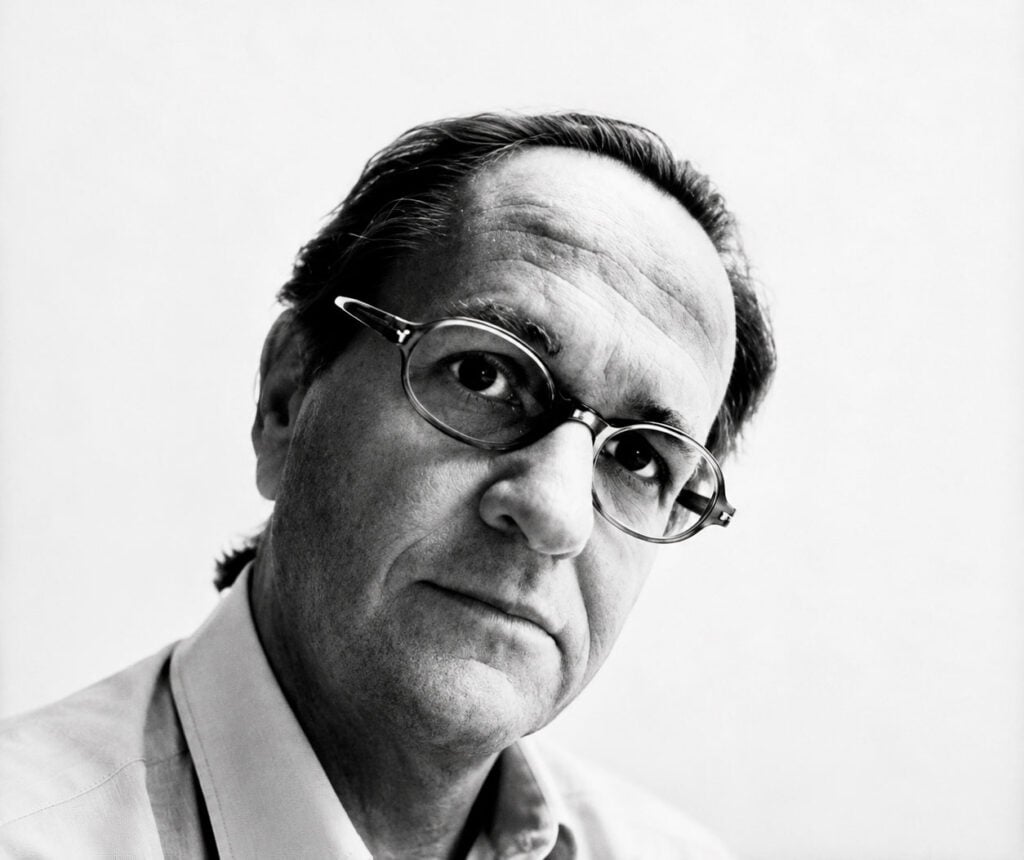
PressInfo #140 – Ibrahim Rugova’s decade-long leadership in Kosovo

Ten years ago it was not impossible to see…

Ten years ago, TFF’s conflict-mitigation team started working with Dr. Ibrahim Rugova and LDK people in the belief that a) they were the best dialogue partners Belgrade could hope to get, and b) they were the only political leadership in ex-Yugoslavia that advocated non-violence, albeit pragmatic. I have no evidence that they have ever read a line by, say, Gandhi.

We participated in formulating characteristics of the independent Kosova they aimed at: it should be a region with no military, open border to all sides and politically neutral. We helped devise negotiation strategies and facilitated the only written dialogue between them and governments in Belgrade between 1992 and 1996. The foundation produced a concrete plan for a negotiated solution. See Preventing war in Kosovo (1992) and UNTANS (1996).

Our team quickly learned to respect the complexity and difficulties of the Kosovo conflict. We were privileged to repeatedly listen to the deep-held views and animosities among various Albanians, Serbs and other ethnic groups in Kosovo as well as to many and different parties in Belgrade. We knew that the international community played with fire by not attending to this conflict and tried to alert it.

This shaped the basis for our later scepticism about the faked ‘negotiations’ in Rambouillet and NATO’s bombing of Yugoslavia including Kosovo. A committed, impartial and competent international civil-political intervention could have mitigated the conflict in the early 1990s. And even if this opportunity was missed, bombings would not produce peace, trust, tolerance, reconciliation or a willingness to live and work together.

The West chose Kosovo’s militants as allies instead

Already ten years ago, Dr. Rugova was the undisputed leader of the Kosovo-Albanians. He received a lot of lip-service during missions to Western capitals. Reality was that Western governments in typical ‘covert operations’ from 1992-93 helped create, equip and train hard-liners behind his back, who became the later Kosovo Liberation Army, KLA or UCK. Dr. Rugova was marginalised and the U.S. in particular played with the KLA, which at the time was officially categorised by U.S. diplomats as “a terrorist organisation.” Later on, NATO performed the role of KLA’s airforce and the civilian UN mission (UNMIK) and the military KFOR-NATO missions were set up.

These missions officially declared UCK disbanded and illegal but let it continue operating partly as UCK/KLA and partly as the civilian Kosovo Protection Corps, KPC. The internationals consistently kept on allying themselves more with the leaders of the KLA, (Hacim Thaci, for instance) and KPC (Agim Ceku,for instance) whilst de facto accepting the illegal violence and mafia-based power structure established by them immediately after the war throughout the province.

In other words, Rugova and LDK were marginalised during the period when a negotiated solution could have been found, then during the Rambouillet process, then after the bombing and, finally, after the municipal elections when LDK won a landslide victory but did not get proportional backing by the international administration. As the standard response runs among the internationals: “we want to control and democratise the hardliners and keep them in the process, therefore we cannot also antagonise them.” Dr. Kouchner, the former head of the UN mission (UNMIK) was instrumental in institutionalising this cosy Western relationship with warlords and mafia leaders.

Since July 1999, this policy has yielded absolutely no results, except ethnic cleansing, destruction of democratic potentials, more mafia economy and criminality, and two KLA incursions, one into Southern Serbia and one into Macedonia.

UNMIK must now stop its vain courting of warlords

In this perspective, Ibrahim Rugova is an extraordinary figure in Balkan politics. He has survived Western and Albanian extremist attacks as a credible, however somewhat weak, political leader who has no blood on his hands like all the rest, including the international community.

Although Rugova’s LDK party got less support than in the local elections and did not achieve a majority of its own in the elections to the new Assembly a couple of weeks ago, it is, beyond all doubt, the leading and most experienced political force in today’s Kosovo. Compared with other Albanian political leaders such as Hacim Thaci and Rasmush Haradinaj, Rugova is in a class of his own, and he has moral integrity.

What does this imply? It implies that the UN and NATO-KFOR must now, finally, respect the will of the people and give proportional support to the man who is most popular, a decent intellectual and who remains an advocate of nonviolence. It’s time for the head of the UN mission, Mr. Haekkerup, and other internationals to stop the vain courting of former warlords as democratic peace-makers. They are not. The US and the EU must finally recognise the simple truth that they consistently made the wrong choices during the 1990s and caused much of the hurt, harm and hatred in today’s Kosovo/a.

Interview with Dr. Rugova

I last met Dr. Rugova in July at his home. He is deeply grateful to NATO of course and wants some kind of KFOR force to remain for quite a while in Kosovo, but with a different mandate than that of US SC 1244. He puts the historical blame on the Serbs and Milosevic and is happy that the province is no longer run from Belgrade.

Rugova repeatedly emphasises that independence for Kosova should come sooner rather than later; he believes it will make it easier to build institutions, create law and order and open a faster road to membership in the EU and other international organisations. He merely thinks that he and the international community differ in terms of timing. Admittedly, he has devoted his life to it but I also feel that the insistence on ‘independence now’ is a somewhat tired program statement.

When we leave the question of status aside, Dr. Rugova is highly aware of all that needs to be done in the province – whether independent or not. We talk at length about the need for economic development, institution-building, local security and police, psychological healing, and finding an identity as a society, as a potential future country. Rugova knows that corruption and the mafia must be eradicated and points out that there is better border control now than before. This July morning he hopes that LDK will get 60-70 per cent of the votes in November. He is fully aware that there are other players coming up and that democracy is by no means around the corner in Kosovo.

Reconciliation and the future of Kosovo

What about reconciliation? I ask him. “I want the Serbs to come back, for sure, but it cannot happen before there is security. There has to be in an environment of safety. I am glad there are Serbs in the Transitional Council, I want them to live and move freely in Kosovo. But we must also get our (Albanian) prisoners of war back from Belgrade and we do not want criminals to come back here, of course. I do see multi-ethnicity coming, but it will have to take time.”

Here he points out that Albanians know about reconciliation, not the least because they stopped the tradition of blood revenge among themselves in 1990. He also tells me that he would consider any proposal for an international truth and reconciliation commission.

Finally, I ask him whether his independent Kosova shall still be non-military, neutral and have an open border to all sides? “Well, after all we have been through I think we either have to have a small military force – perhaps – or some kind of international protection.”

Dr. Rugova is pretty uncompromising when it comes to the long-range goal: independence. He is a moderate, however, when choosing his means. During my many meetings over the last 9 years I have never seen hate in his eyes or heard aggressive talk. He is a nationalist but too much of a humanist to have chauvinist leanings. His career in Balkan politics is unique, and he would rather think and wait until tomorrow than hastily do something that later will be regretted.

To learn anything we should ask: what if…?

I can’t help wondering about the answers to the obvious “what if…” questions: What would have happened if the West had supported him and the parallel non-violent civil society he and LDK spearheaded ten years ago? What if Western governments had allied themselves with the comparatively most democratic political structure, instead of boosting the militants, extremists and economic criminals? How much suffering would the locals have escaped? What would Macedonia look like today? How much less hatred would there be between Serbs and Albanians?

And how would arms-exporting governments and private arms profiteers have felt if non-violence had led to a solution and even an independent Kosovo? Could the United States have built the biggest military base since the Vietnam War in Kosovo if the whole issue had been solved by political and other non-violent means?

We shall never know the answer but one thing is crystal clear – and totally missed by Western leaders and media: ten years of non-violence has proven to be stronger and has a broader base among the large majority of Kosovo than violence.  

 © TFF 2001
Peace & future researcher + ‌Art Photographer

Related Posts

The agreement is catastrophic both because of what it says and what it doesn’t mention. It reduces further the major asset of security policies: Freedom of action. Jan Oberg TFF director September 25, 2026 A couple of hours before the agreement was signed on September 22, 2026, I published the following 13 hypotheses about what it would most likely contain on TFF Substack (in English). I was wrong on only the first point. Contrary to what Trump had written on his Truth Social platform, it does not appear to come into force immediately. In fact, it turned out to be worse than even I had anticipated. After these hypotheses now come a number of reflections in light of what the agreement actually contains, and does not contain, as well as the way in which it has generally been presented by major media outlets and by the public-service broadcaster DR. My...
Below are TFF-related media mentions, comments, videos and social media posts published elsewhere but not on this homepage. We happen to catch and list only a fraction. Regarding video comments and debates, we recommend that you go to the TFF Video Channel on Substack where many of them are reproduced. Jan Oberg is a contributor to China Daily – 52 million daily clicks – and Global Times, CGTN and CCTV (the national television), China Investment, Xinhua News Agency and several others. Articles and videos on these media very often multiply into countless Chinese (and Western media) that re-post them from these main media. Thanks to The China Academy, his analyses, interviews and comments are frequently posted on YouTube channels such as Thinkers Forum and Wave Media. These videos are often re-posted on Bilibili (China’s YouTube), the China Content Center on TikTok, and on the Chinese edition of TikTok, Douyin.com. This means reaching hundreds of millions of viewers worldwide over a year. While there are too many to catch on all these...
Jan Oberg May 15, 2026 Go to this Fox News page and scroll the whole way down: President Donald Trump tells the world that his meeting with President Xi Jinping yielded a lot of very concrete political and economic results – of course, only where the Chinese side, according to him, agreed with him. He does not mention the Taiwan issue, but Secretary of State, Marco Rubio, says that it did not feature prominently in their talks and that the US policy on Taiwan has not changed. Then go to China Daily – or Global Times – and you will see that for the Chinese it is framework, principles, structure of cooperation etc. that matters – all embedded in the overall idea of “constructive bilateral relationship of strategic stability.” Nowhere is any concrete agreement or deal – all that Trump refers to – mentioned. At the general level, this gives you insights into the very different social...

Recent Articles

Tony Robinson October 4, 2026 Violence is easy to recognise when someone is being beaten, shot or killed. It becomes more difficult when nobody is holding a weapon. Poverty, discrimination, exploitation and repression can restrict a human life just as effectively, although they do so in very different ways and with very different consequences. Simply adding more categories to an ever-growing list of forms of violence does not really solve the problem. The more interesting question is what all these different situations have in common and why it makes sense to describe them using the same word. Human beings do not simply react to what happens around them. They remember the past, imagine things that do not yet exist, make plans and undertake projects. Workers organise because they imagine different working conditions; people migrate because they imagine another life somewhere else; social movements emerge because people refuse to accept the...
It’s a matter of principles, courage, vision and pulling together – while the militarist world is falling apart… Peter Langille October 3, 2026 “Here, then, is the problem which we present to you, stark and dreadful and inescapable: Shall we put an end to the human race; or shall mankind renounce war?”The Bertrand Russell—Albert Einstein Manifesto, July 9, 1955 ⁕ The forecast for what’s ahead is worrisome. The sharp rise in armed conflicts over the past three years is adding to what was already the highest level in over seventy years. Genocides, which should be prevented are supported. A shared climate emergency that jeopardises survival is ignored. Diverse polls now suggest that people are war-weary, worried and interested in a more effective United Nations. And, there are viable policy options for a more secure world! Yet governments are doubling-down, betting on more war and investing heavily. If current trends persist,...
Johan Galtung 1930-2024October 2015 Published here on October 3, 2026 Let us focus on Civilization for conflict analysis and remedies. Major forms of disorder use violence; war is state organized violence. The most belligerent states are the United States of America and Israel, both with civilization roots. National Evangelism, the US Protestant Christian civilization– more national than evangelical–justifies US warfare as exceptionalism of a people chosen by God, with a manifest destiny to run the world. Orthodox Judaism justifies Israeli warfare to conquer and expand from Nile to Euphrates as a religious right and duty to the Eternal One. The third most belligerent country, the UK, no longer believes it is God-chosen but chosen by the USA; not quite the same but something. But the root cause of global disorder lies in the Occident–with Islam–seeing itself as the single, universal civilization valid for all at all times, all others being...

TFF on Substack

Discover and subscribe to more peace materials on TFF Substack

Most Popular

Tony Robinson October 4, 2026 Violence is easy to recognise when someone is being beaten, shot or killed. It becomes more difficult when nobody is holding a weapon. Poverty, discrimination, exploitation and repression can restrict a human life just as effectively, although they do so in very different ways and with very different consequences. Simply adding more categories to an ever-growing list of forms of violence does not really solve the problem. The more interesting question is what all these different situations have in common and why it makes sense to describe them using the same word. Human beings do not simply react to what happens around them. They remember the past, imagine things that do not yet exist, make plans and undertake projects. Workers organise because they imagine different working conditions; people migrate because they imagine another life somewhere else; social movements emerge because people refuse to accept the...
It’s a matter of principles, courage, vision and pulling together – while the militarist world is falling apart… Peter Langille October 3, 2026 “Here, then, is the problem which we present to you, stark and dreadful and inescapable: Shall we put an end to the human race; or shall mankind renounce war?”The Bertrand Russell—Albert Einstein Manifesto, July 9, 1955 ⁕ The forecast for what’s ahead is worrisome. The sharp rise in armed conflicts over the past three years is adding to what was already the highest level in over seventy years. Genocides, which should be prevented are supported. A shared climate emergency that jeopardises survival is ignored. Diverse polls now suggest that people are war-weary, worried and interested in a more effective United Nations. And, there are viable policy options for a more secure world! Yet governments are doubling-down, betting on more war and investing heavily. If current trends persist,...
Johan Galtung 1930-2024October 2015 Published here on October 3, 2026 Let us focus on Civilization for conflict analysis and remedies. Major forms of disorder use violence; war is state organized violence. The most belligerent states are the United States of America and Israel, both with civilization roots. National Evangelism, the US Protestant Christian civilization– more national than evangelical–justifies US warfare as exceptionalism of a people chosen by God, with a manifest destiny to run the world. Orthodox Judaism justifies Israeli warfare to conquer and expand from Nile to Euphrates as a religious right and duty to the Eternal One. The third most belligerent country, the UK, no longer believes it is God-chosen but chosen by the USA; not quite the same but something. But the root cause of global disorder lies in the Occident–with Islam–seeing itself as the single, universal civilization valid for all at all times, all others being...
Read More
Living-Peace-Sign-Budapest-copy
Tony Robinson October 4, 2026 Violence is easy to recognise when someone is being beaten, shot or killed. It becomes more difficult when nobody is holding a weapon. Poverty, discrimination, exploitation and repression can restrict a human life just as effectively, although they do so in very different ways and with very different consequences. Simply adding more categories to an ever-growing list of forms of violence does not really solve the problem. The more interesting question is what all these different situations have in common and why it makes sense to describe them using the same word. Human beings do not simply react to what happens around them. They remember the past, imagine things that do not yet exist, make plans and undertake projects. Workers organise because they imagine different working conditions; people migrate because they imagine another life somewhere else; social movements emerge because people refuse to accept the...
b54a1f10-8c65-4f0b-9dd5-4abc0a7d04cc_2659x2659
It’s a matter of principles, courage, vision and pulling together – while the militarist world is falling apart… Peter Langille October 3, 2026 “Here, then, is the problem which we present to you, stark and dreadful and inescapable: Shall we put an end to the human race; or shall mankind renounce war?”The Bertrand Russell—Albert Einstein Manifesto, July 9, 1955 ⁕ The forecast for what’s ahead is worrisome. The sharp rise in armed conflicts over the past three years is adding to what was already the highest level in over seventy years. Genocides, which should be prevented are supported. A shared climate emergency that jeopardises survival is ignored. Diverse polls now suggest that people are war-weary, worried and interested in a more effective United Nations. And, there are viable policy options for a more secure world! Yet governments are doubling-down, betting on more war and investing heavily. If current trends persist,...
010
Johan Galtung 1930-2024October 2015 Published here on October 3, 2026 Let us focus on Civilization for conflict analysis and remedies. Major forms of disorder use violence; war is state organized violence. The most belligerent states are the United States of America and Israel, both with civilization roots. National Evangelism, the US Protestant Christian civilization– more national than evangelical–justifies US warfare as exceptionalism of a people chosen by God, with a manifest destiny to run the world. Orthodox Judaism justifies Israeli warfare to conquer and expand from Nile to Euphrates as a religious right and duty to the Eternal One. The third most belligerent country, the UK, no longer believes it is God-chosen but chosen by the USA; not quite the same but something. But the root cause of global disorder lies in the Occident–with Islam–seeing itself as the single, universal civilization valid for all at all times, all others being...
Screenshot 2026-10-02 011738
Jan ObergPhD, director, The Transnational Foundation for Peace and Future Research, TFFLund, Sweden October 2, 2026 This is my full original manuscript. The Chinese Academy of Social Science, CASS, makes two publications out if it. 1. China’s Five-year plan emphasized the capabilities of basic research and original innovation. It is regarded as the goal of the future social development, which, as required, should be significantly enhanced. Can you comment on the importance of original innovation in research and academic study? I believe it is easier to define “original innovation” in the natural sciences than in social sciences. The breaking points of what constitutes something new, or innovative, are not quite as sharp in the latter. But in both fields it is about opening up something that was closed, unseen, unexplored before – making manifest what was earlier latent. Innovations come in many forms and shapes – naming something that was not...
arctic-circle-map
The agreement is catastrophic both because of what it says and what it doesn’t mention. It reduces further the major asset of security policies: Freedom of action. Jan Oberg TFF director September 25, 2026 A couple of hours before the agreement was signed on September 22, 2026, I published the following 13 hypotheses about what it would most likely contain on TFF Substack (in English). I was wrong on only the first point. Contrary to what Trump had written on his Truth Social platform, it does not appear to come into force immediately. In fact, it turned out to be worse than even I had anticipated. After these hypotheses now come a number of reflections in light of what the agreement actually contains, and does not contain, as well as the way in which it has generally been presented by major media outlets and by the public-service broadcaster DR. My...
girl-5894831_1280
Below are TFF-related media mentions, comments, videos and social media posts published elsewhere but not on this homepage. We happen to catch and list only a fraction. Regarding video comments and debates, we recommend that you go to the TFF Video Channel on Substack where many of them are reproduced. Jan Oberg is a contributor to China Daily – 52 million daily clicks – and Global Times, CGTN and CCTV (the national television), China Investment, Xinhua News Agency and several others. Articles and videos on these media very often multiply into countless Chinese (and Western media) that re-post them from these main media. Thanks to The China Academy, his analyses, interviews and comments are frequently posted on YouTube channels such as Thinkers Forum and Wave Media. These videos are often re-posted on Bilibili (China’s YouTube), the China Content Center on TikTok, and on the Chinese edition of TikTok, Douyin.com. This means reaching hundreds of millions of viewers worldwide over a year. While there are too many to catch on all these...





