Interview # 2 of 4
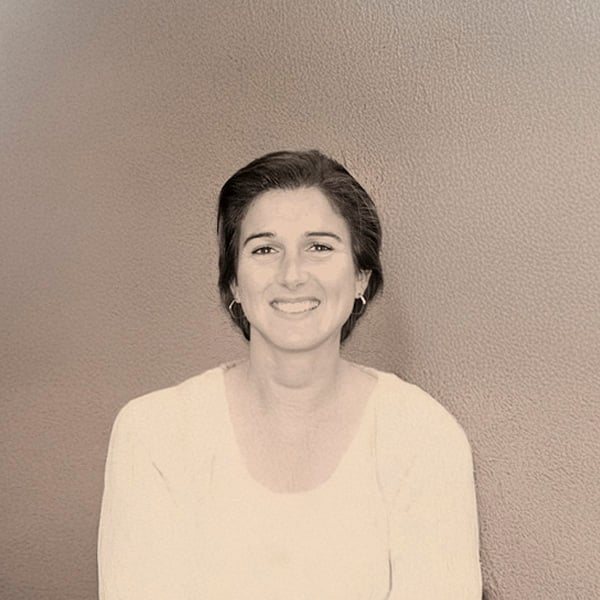
Inam Wahidi
Programme coordinator, Centri Rousseau,
The Shufat Refugee Camp, close to JerusalemThe Shufat refugee camp is located 4 km from Jerusalem. This camp was originally founded in 1965-66 by the United Nations Relief and Works Agency for Palestine Refugees in the Near East (UNRWA). Shufat camp is 1 square kilometre and is home to around 22,000 people. It is surrounded by Jewish settlements. After the war in 1967 many new refugees came to the camp putting added pressure on the already precarious social and sanitary conditions there.
Inam Wahidi works in the Shufat refugee camp as a programme coordinator for Centri Rousseau. Since 2002, Centri Rousseau – an Italian NGO with headquarters in Milan – has been developing an international cooperation project in the Shufat camp with the aim of promoting a network of Palestinian, Israeli and Italian associations that can work together to implement social and educational programmes for children. The organisation works on three projects within the camp: a women’s group, a people’s community group and a group for disabled persons.
Vicky Rossi: Inam, you are doing a lot of work with the young people in the Shufat refugee camp, what is life like for these children and adolescents?
Inam Wahidi: In the entire camp there are only two schools – one for boys and one for girls – there are no places for the children to play and there is a growing drug problem amongst young people.
Vicky Rossi: So only 2 schools for the children of 22,000 inhabitants?
Inam Wahidi: Yes. There are around 2,000 children that go to school so there are 2 shifts – one in the morning and one in the afternoon. It is just primary and secondary education because for high school they must go to Jerusalem. My organisation arranges activities for the children in the camp because they don’t have anywhere to play. Many children die because of car accidents in the street.
Vicky Rossi: They die because of car accidents? Why is that exactly?
Inam Wahidi: Because there is no place for them to play so they play in the street all the time: football, on bicycles and so on, and as a result there are accidents.
Vicky Rossi: What about the home life of these children?
Inam Wahidi: Their homes are small and their families are big. Sometimes in a two bed roomed house, you will find 15 persons living there: father, mother, grandfather, grandmother and children, for example. Sometimes when one of the sons gets married, he can’t get a new house so he and his wife continue to live with his family. When I see the situation in some of these homes, I think it’s a big disaster.
Vicky Rossi: Centri Rousseau is in active partnership with the Shufat Camp United Committee, which is made up of a Women’s Centre, the Local Committee for the Disabled, and the Popular Service Committee. What kinds of projects are being jointly implemented?
Inam Wahidi: We conduct activities from 1-6 p.m. in the centre where these groups meet because in the morning there are some people working there but in the afternoon it is empty so we can use it. We use this centre to provide the children with activities, for example, we help them with their studies in English, Arabic, mathematics and so on. Some children can’t read or write even though they are in school, so we try to help them with their literacy. We also run courses in such things as Capoeira, theatre, handicrafts. We do these courses in shifts – every hour and a half we take a new group because we have to cater for the 6-7,000 children in the camp. One child might take part in the handicraft course but then other children in the street see what (s)he has been doing and they want to do it too. So then it starts – one child brings a group, then another child brings another group.
Vicky Rossi: Is there now more demand than you can cater for then?
Inam Wahidi: Every hour or hour and a half we take on groups. We do this up until 5, 6 or even 7 p.m. Sometimes there are still children waiting, wanting to do something or to learn something, so you try to do what you can to help them.
Vicky Rossi: And the funding for these activities comes from Centri Rousseau?
Inam Wahidi: Yes.
Vicky Rossi: You mentioned to me the difficulties you have in traveling to and from the camp for your work. Can you explain that further to me?
Inam Wahidi: This is a very big problem because the Wall now surrounds the camp and there is only one big door through which you can enter. At the door there is a checkpoint guarded by Israeli soldiers. Sometimes they allow you to pass, sometimes not. Sometimes when you want to go home from the camp or when you are arriving in the morning at the camp, they say “Sorry, today we are closed.” Sometimes I wait 5 minutes, 10 minutes, sometimes hours.
Vicky Rossi: What’s the reason for the closures?
Inam Wahidi: They close if they think that there will be an explosion in Jerusalem or if there is a demonstration or if they want to take some houses or arrest somebody.
Vicky Rossi: What do you mean “take some houses”
Inam Wahidi: They say to the persons living there, “Go out, go out”, or they come in the night and they carry those who are in the houses out and they take the houses from them.
Vicky Rossi: And that is in Jerusalem or in the camp?
Inam Wahidi: Both in Jerusalem and in the camp, wherever they want. It is not a problem for them. They bring many soldiers. Sometimes they give you your things from the house, sometimes not.
Vicky Rossi: Then what happens to the house?
Inam Wahidi: In Jerusalem, they bring some Jewish people, who have just arrived in Israel, and they move them into the house. The soldiers then act as their body guards and that’s it. The house is now for the newcomers.
Vicky Rossi: And there is no opportunity for the people who have been evicted to protest?
Inam Wahidi: Well, they can go to the court and there are also many demonstrations, but all the same the house is taken. If they go through the courts, it will take 3-5 years for a verdict and it’s expensive. In the meantime somebody else is living in the house and the things belonging to those who have been made to leave is still in the house. Some of those evicted go and stand in front of their homes, but after a while they go away. They can’t remain standing there with their children.
Vicky Rossi: Where do they go then?
Inam Wahidi: They go to a rented home. Some foundations/organisations rent houses for them because they cannot remain in the street, especially in the winter and if they have young children and babies.
Vicky Rossi: In the camp there are 22,000 people, is there sufficient employment for them? How many people have jobs they can go to every day?
Inam Wahidi: Let me give you an example of what has happened since the building of the Wall. It could be that the father has an identity card from the Palestinian Authority (West Bank), but the mother has an identity card for Jerusalem. Before the Wall was built, they were both living in the camp, but now the father cannot go to work unless he has an identity card for Jerusalem.
Vicky Rossi: So, he can’t work in Jerusalem unless he has an identity card for Jerusalem?
Inam Wahidi: That’s right. If he wants to get an identity card for Jerusalem then his wife needs to help him to hire a lawyer and find the money to pay the lawyer’s fees. The whole process could take 5 years.
Vicky Rossi: Five years to get an identity card?
Inam Wahidi: Five years, even ten years. I know the story of a man who applied for an identity card, but he waited so long that the card was only issued 2 years after he had died!
Vicky Rossi: With your Jerusalem identity card, can you travel to the West Bank?
Inam Wahidi: Yes, I can go but there are lots of questions at the checkpoint about where I am going and what I am doing in the West Bank. If people have been killed in Bethlehem or Ramallah, or there has been an incident at the checkpoint, or there is a demonstration, or some gunfire between the Israelis and Arabs, then the checkpoint is immediately closed and you are not allowed to pass. It is not every day that you can pass. You must ask before travelling. From Jerusalem to Ramallah it is 15 minutes, but now with the Wall and the checkpoints it can take 2-3 hours.
Vicky Rossi: Going back to the children in the camp. You say there is a primary and secondary school in the camp. What about the children’s education after that.
Inam Wahidi: The children – boys and girls – must go to high school in Jerusalem. They must everyday – morning and afternoon – pass this checkpoint. This means, first, that students must leave home very, very early because if they can’t cross the checkpoint they will lose a day of school. Normally to go to Jerusalem from the camp takes only 10 minutes, but because of the checkpoint the students must leave home at 5 a.m. or even earlier at 4.30 a.m. so that they can be assured of getting to school when it starts at 8 a.m. Second, because you are a student, the guards at the checkpoint open your bag, check your lunchbox, ask you what you’re doing. If they see a beautiful girl, the guards start to tease her and ask her why she is wearing a headscarf. Just to laugh about her.
Vicky Rossi: So that is the case for high school students. How about for university students?
Inam Wahidi: It’s the same. The university students have to answer the same questions each day at the checkpoint: where are you studying, what are you studying, why aren’t you carrying any books? Sometimes they want to find students who will collaborate with the Israeli investigation services.
Vicky Rossi: The “Israeli investigation services”?
Inam Wahidi: Yes, that’s what we call it. It is a group within the Israeli military. They want students to collaborate with them by informing them about the people in the camp: who has guns, who works with Hamas, who is planning an attack? So when the checkpoint guards question the students, they might also try to bribe them to work for them by offering to buy them a car, to give them money or to send them on a trip to Europe. They know the students are poor.
Vicky Rossi: What is the impact on the community of this move to recruit informants? Do people become suspicious of their neighbours?
Inam Wahidi: People can immediately see who has been informing the guards because everybody in the camp is poor so if somebody suddenly gets wealthy or suddenly owns a car, then it is obvious what has happened. When the informants get found out, they move from the camp and go to live somewhere in the West Bank.
Vicky Rossi: What is morale like in the camp? How do people feel? They have been living there around since 1967 after all. Do they have any hope or do they still feel angry?
Inam Wahidi: They have been in the camp for a generation. The old people, they remember the houses, they remember where they lived before they came to the camp. Some of them still have the keys to their homes. Most of them came from the old city of Jerusalem. When you go every day to Jerusalem and pass in front of your former house, you can imagine how you feel. You were removed from your house and often you weren’t even given any of your possessions.
Vicky Rossi: So everything remained in the houses? The furniture as well?
Inam Wahidi: Well, sometimes they threw the furniture in the rubbish after the families were made to move out.
Vicky Rossi: So that’s the older generation, who still remember where they lived and what happened to them. How about the young generation?
Inam Wahidi: Many of the new generation want peace. They want to know the people who have occupied their land, who made them move from their homes and who took everything from them. Others do not want peace. They want to kill Israelis precisely because they took everything from them. Through my projects, I try to teach the children peace. We invite people from outside to help us – university students, people who teach peace education, nonviolence trainers or social workers from a foundation in Jerusalem.
Vicky Rossi: Is that a Jewish foundation in Jerusalem?
Inam Wahidi: No, it’s Arab, Christian and Catholic. It’s a big problem if you bring any Jewish Israelis into the refugee camp. But within my work I have started to take some children from the camp to some Israeli places to speak to Jewish people. This is important so that when Jewish people come to the camp, the children don’t throw stones but instead speak to the people because they know them. I try to take the children out of the camp because this camp is a disaster for the children.
Vicky Rossi: In what way is it a disaster?
Inam Wahidi: Because it is closed. If the father of a child has an identity card from the West Bank, he cannot take the child into Jerusalem, so the child has to stay in the camp. Once the child has finished secondary school, (s)he can perhaps go alone into Jerusalem.
Vicky Rossi: So unless people have an identity card for Jerusalem, they cannot go into Jerusalem? They are stuck in the camp, is that it?
Inam Wahidi: In the camp, it’s OK. Out of the camp, this is the problem. If they want to go to Bethlehem or Ramallah, there is another way but it is a very long way. One day a woman from the camp wanted to go to Ramallah. The checkpoint was open so she went. That day it was the birthday of her daughter. When she had finished doing what she was doing in Ramallah she bought a birthday cake for her daughter. She thought it would only take her half an hour to get back to the camp. Sometimes it can take an hour, but that would still be OK. However, on her way back she was stopped at the checkpoint for 4-5 hours and, well, the cake just melted and made a mess over her clothes. She started to cry.
I asked her later why she cried, was it because of the cake. She answered that she felt very sad because it was her daughter’s birthday and she had wanted to celebrate with the cake, which had cost quite a lot of money. When you hear these stories it makes you feel very upset.
Just a week ago there was a young man who died at the checkpoint. I think he was around 32 years old. In the camp there is no hospital so there was no help for him. They wanted to get an ambulance from the hospital in Jerusalem, but at the checkpoint they didn’t allow the ambulance to pass. His family carried him to the checkpoint, but before they could carry him over the guards started asking them all sorts of questions about their identity. In the meantime the man died. And he was young. You see so many of such cases that you simply cannot believe that as human beings we can do something like this.
Vicky Rossi: Where do you see the hope? Where do you see the way forward? Is it through teaching nonviolence at the grassroots level? Or does it have to come from the government? Obviously you can’t give up so you must look for ways forward. Where do you place your hope then?
Inam Wahidi: I think it is important to speak with many Jewish Israelis, especially young Jews. Two months ago we sat with a group of young boys and girls who in six months time will go into the Israeli army.
Vicky Rossi: When you say “we”, is that you and your work colleagues or the children from the camp?
Inam Wahidi: Both my work colleagues and children from the camp. We sat with this group of Jewish Israelis and we translated for the children what they said. And vice-versa, we translated for the Jewish youngsters what our children said. Even though they were young, these boys and girls asked many questions. One girl, for example, whose name was Regula, was very beautiful. She said to me, “Inam, if you see me at the checkpoint, will you say hello to me?” I said to her, “I cannot forget your beautiful face and what is more important you are not my enemy.” She looked at me and said, “Oh shit! Why am I going into the army?” I said to her, “I don’t know. You must ask yourself.” She came and hugged me and kissed me and then she left.
Vicky Rossi: Will you continue with this kind of dialogue work?
Inam Wahidi: Yes, I like doing it. I like to speak with these young people. For me it gives me hope and I think it brings hope to the children. They can sit and listen and ask questions and speak together. It is important for me that I use my work in the camp to teach the children peace. For this to happen there must be dialogue with the outside community and not only amongst ourselves. For example, I take a group of children to a place in Haifa every month to learn how to make carpets. The lady who teaches the children is Jewish. She runs a disabled centre for Jews in Haifa. We take some children from the camp to learn there. It’s only one time in the month because it is very expensive.
It is not that I just want the children to learn how to make carpets. I want them to know that there are some disabled people not just in their own camp, but outside and that these people are Jewish. I love it when the children sit in the garden with the people there and speak and form relationships. Now if the children know that somebody is travelling to Haifa, they write letters to give to the people at the centre there. I like this very much. Then there is the work that we do in the summer camp in Italy. This is important because the children from the camp don’t even know that there are other people in the world beyond Palestinian and Israelis.
Vicky Rossi: Is the summer camp with Italian children and a group of Palestinian children from the refugee camp?
Inam Wahidi: Yes.
Vicky Rossi: Is this an annual event?
Inam Wahidi: Yes. Every year in July. The children in the camp think that every nationality that comes to the camp is Jewish. When they see people from outside coming to the camp they don’t know that they are speaking another language. They start to say “Shalom” to the visitors. They think they are Jewish because they believe that whoever comes to the camp who is not Palestinian must be Jewish. Through the summer camp in Italy we want the children to know that other people exist and that these people support us. We want the children to understand that there are not just Palestinians and Jews on this earth, that there are other people too and that there are other things happening in this world.
Vicky Rossi: Are there not televisions, radios or newspapers in the camp for the children to find out what is going on in the world?
Inam Wahidi: There are some televisions, but many days the electricity, which comes from Jewish power stations, is cut. In the summer it might even happen that there is no water in the camp for a week. You either have to fetch the water from somewhere else or some big cars bring water into the camp. Anyway, the piping in the camp is very old. There is even the case that some people in the camp, who are on drugs, steal the telephone cables to sell them to buy drugs. Six hundred telephones were disconnected recently because people stole the telephone cables. From where do these young people get the drugs? The answer is the occupation. There are some places by the checkpoint where people come to buy or sell drugs. The soldiers push these people to bring them information about other persons in the camp and in exchange they give them drugs.
*This transcript represents an accurate but non-verbatim representation of the original interview.
For further information, please contact:
Inam Wahidi
Email: inam8642@yahoo.com
Centri Rousseau
Via S.Vincenzo, 15
20123 Milan
Italy
Tel: 00-39-02-89400425
Email: rousseau@tiscalinet.it
Website: http://www.centrirousseau.it
The 4 interviews