Kosovo självständigt?Kanske men inte likgiltigt hur

Den internationella Kosovo-kommissionen föreslår i sin rapport att Kosovo bör bli en oberoende stat men bara på vissa betingelser (“conditional independence”). Det kan tyckas förnuftigt, men kommissionens argument för denna lösning bygger på bristande analys och betingelserna framstår i det närmsta som fromma önskningar.

Låt mig genast säga att mina medarbetare och jag vid Transnationella Stiftelsen, mellan 1992 och 1996 förde många och långa samtal med den kosovo-albanska ledningen under Dr. Rugova just med tanke på att precisera hur en sådan självständighet skulle kunna bli möjlig – samtidigt som vi arbetade med ett antal regeringar och ministrar i Belgrad. En anledning till att jag personligen engagerade mig i frågan var att Rugova och albanerna i Kosovo – som han var och är den enda legitima ledaren för – var den enda i det forna Jugoslavien som var klart för ickevåld, för att uppnå en ickevåldslig stat.

Den idé vi förde dialoger om var en självständig stat men enbart genom ickevåldsliga medel och genom att utveckla ett parallellt samhälle. Denna stat skulle vara neutral, den skulle ha öppna gränser och vara utan militär. Alltså en stat som en fredsforskar bara kunde ha sympati för, inte minst i den balkanska miljön. Vare sig Rugova själv eller hans medarbetare var “gandhianer” &endash; de hade förmodligen aldrig läst Gandhi eller studerat ickevåld &endash; men de var välutbildade, genuina humanister som inte önskade att uppnå sina mål genom blodspillan.

Vi på TFF såg det som vår uppgift att försöka att förklara för ledningen i Belgrad att en sådan stat under klart definierade betingelser och etablerad genom förhandling och en internationellt övervakad process över åtskilliga år också var ett intressant alternativ för serberna. Vi förklarade också för Rugova att med den maximalistiska målsättningen – oberoende stat, inget mindre – var den mest realistiska strategin att definiera denna statens karaktär på ett sådant sätt att den var acceptabel för Serbien och serberna och alla andra icke-albaner i Kosovo/a. Inte någon lätt ekvation!

I Kosovo kränkte serbiska myndigheter å det grövsta albanernas mänskliga rättigheter. Å andra sidan fruktade kosovo-serberna en långsam förlust av Kosovo (Kosmet i Metohija); för 30 år sedan hade serberna utgjort 30% av befolkningen i Kosovo/a, mot slutet av 90-talet bara 9%. Serberna hade ett dominanskomplex och ser Kosovo som sin vagga (som kroaterna ser på Krajina) och de minns var albanerna stod under kriget. Albanerna å sin sida har och hade ett offerkomplex, som har givit betydande energi och legitimitet åt vissa gruppers stor-albanska drömmar. Serberna fruktade med andra ord inte bara ett självständigt Kosovo men också att detta snabbt skulle slås ihop med Albanien.

Så ungefär tänkte parterna. Mycket fruktan på bägge sidor. Mycket polariserat, mycket olika grupper, kultur, livsstil, religioner – tveklöst den svåraste konflikten i det forna Jugoslavien.

Den diskussion Kommissionens rapport borde ge upphov till, som jag ser det, är:

1) Kan man, som rapporten gör, utesluta varje analys av bakgrunden och enbart påpeka att albanerna har varit utsatta för så mycket förtryck att de är berättigade till självständighet? Jag menar nej. Det krävs mer, också empati, för att genomföra en ordentlig konfliktanalys.

2) Kan man ignorera fruktan, hatet och olikheterna och enbart föreslå att parterna bör kunna acceptera kommissionens förslag – och hoppas på att de efter förtrycket (riktat emot albanerna), bombningarna (riktat emot serberna) och ömsesidig etnisk rensning ska kunna förstå och skydda varandra? Jag menar nej, jag anser t o m det är omoraliskt och uttryck för en sorts intellektuell populism.

3) 3) Är det rimligt att utlänningar som varit några få dagar i området väljer en enda lösning i stället för att göra en brainstorm och dialogisera med parterna om vilka möjligheter och kombinationer som i högsta grad tillfredsställer deras behov? Jag menar återigen nej. Hur kan man föreslå en lösning när man inte har talat med icke-oppositionella eller andra på den serbiska sidan som skulle kunnat framställa den sidans perspektiv – t ex f d ministrar, rådgivare eller intellektuella, som vare sig är Milosevic-anhängare eller kritiska till allt Serbien har gjort? Det finns inget försök på att vara rättvis, lyssna till alla sidor eller respektera det indiskutabla historiska lidandet på alla sidor.

4) Kan man föreslå lösningar för Kosovo utan att se på hur Kosovo är intimt förknippat med andra nationalitets- och minoritetsfrågor som i t ex Kroatien, Bosnien eller Montenegro? Jag är tämligen säker på att kommissionen inte skulle få för sig att föreslå att serberna i Kroatien bör ha – eller borde haft – en självständig stat med anledning av det den kroatiska statens historiska och aktuella förtryck av dem. I en tid där det talas i oändlighet om konfliktförebyggande, preventiv diplomati och civil krishantering &endash; inte minst inför Sveriges ordförandeskap i EU &endash; hade det varit bra om rapporten hade gjort en ordentlig konfliktanalys och understrukit nödvändigheten av en principfast konflikthantering där samma värden och regler gäller för likartade problem och för alla parter, inte bara för somliga.

Det konkreta förslaget, då? Oberoende är som sagt en möjlig lösning. Tyvärr går kommissionen så långt i sin politiska korrekthet att den fråntar även en ny demokratisk ledning i Belgrad varje inflytande på konfliktens lösning (s. 271 & 275): jugoslavisk suveränitet över provinsen är oförenlig med albanernas önskemål och krav och Belgrad (under Milosevic) har uppfört sig på ett sådant sätt att inte ens en ny regering har rätt till att delta i diskussionerna om en lösning. Punkt! Det är väl ändå att göra det hela lite väl lätt för sig? I vilka andra motsvarande konflikter i världen har en liknande argumentation och lösning accepterats? Den frågar inte heller varför det i Voivodina, med samma status som Kosovo och vars autonomi reducerades samtidigt som Kosovos, inte har funnits en rörelse som den kosovo-albanska för självständighet till varje pris.

Här är några “betingelser:” det ska hållas en folkomröstning &endash; vilken kommer att leda till oberoende i och med att det kanske är högst 100.000 icke-albaner kvar. Då ska albaner, serber och andra i Kosovo förhandla med varandra och FN om en “konstitutionell regim,” som ska skydda minoriteter, garantera framtida internationell militär och administrativ kontroll för att efterhand överlåta staten till albanerna själva &endash; förutsett att de uppför sig ordentligt. I övrigt ska alla parter lära att respektera varandra. Här, kan man lugnt säga, ersätter fromma förhoppningar bra idéer och politisk realism.

Låt oss slutligen se på vad som skulle kunna ske om det internationella samfundet faktiskt gör Kosovo oberoende utan att ens konsultera Belgrad.

En tänkbar konsekvens skulle bli att serberna i Bosnien säger adjö till Dayton-processen och slår ihop sig med Serbien/Jugoslavien. Varför inte? Som minoritet önskar de lika lite att leva i Bosnien som albanerna önskar att leva i Serbien. En ännu mer säker konsekvens skulle vara att de kvarvarande serberna, romerna och judarna m fl lämnar Kosovo. Kommissionen som bryr sig så mycket om det vidriga förtrycket av albanerna har – när allt kommer omkring – inte mycket sym- eller empati med andra folkslag.

Möjligen kan det också på sikt bli slutet för staten Makedonien (25-40% albaner) och för idéen om ett självständigt Montenegro (7% albaner): Varför skulle albanerna där inte kunna få vad kosovo-albanerna får &endash; de är redan rätt missnöjda med sin situation.

Kommissionen är själv uppmärksam på att den indirekt ger grönt ljus för i praktiken alla minoriteter att få sin egen stat – i praktiken kanske flera hundra. Dess försvar är att man inte kan förvänta sig att Kosovos albaner någonsin igen ska acceptera att leva som del av Serbien. De måste alltså vara världens mest förtryckta minoritet, vilket är rent nonsens. Den hoppas också att Kosovos självständighet inte skulle leda andra till att tänka i liknande banor &endash; att palestinierna eller 23 miljoner kurder, som trakasserats vida mer än albanerna, inte ska fortsätta sin kamp och den ger indirekt intryck av att Serbien har uppfört sig värre än Turkiet och Israel.

Jag är rädd att alla möjligheter till fredliga lösningar egentligen har uttömts efter tio års brist på konfliktanalys och förebyggande åtgärder – möjligheter som också Sverige ignorerade. Efter NATO:s bomber har varenda oskyldiga serb minst lika god grund till att avvisa samexistens och förslag ifrån EU, NATO eller USA, som fortfarande vägrar lyssna på den sidan.

Rapporten vittnar om bristande kunskaper om såväl konfliktanalys som Balkan. Den är politisk godtrogen. Åtminstone vad angår förslaget om betingat oberoende och ett upphävande av FN:s Resolution 1244 kan den ses som ett missförstått försök på att vara politisk korrekt i USA:s ögon. USA gick i samma vecka ut med självständighet och arbetar med en ny-tolkning av FN-resolutionen. Det var den svenska statsministern som fick idéen till utredningen. Man undrar vad han i dag vill med denna lågtflygande provballong?
Peace & future researcher + ‌Art Photographer

Related Posts

LONDON – So far so good, at least on the wider level. While internally Iraq seems on the edge of chaos, the much heralded clash of civilizations between the Muslim and Judaeo-Christian worlds has yet to become apparent. We have anger and despair aplenty in the Arab and Muslim worlds. But very little rushing to the standard and there was no great pilgrimage of warriors to join the fight, as happened when the Soviet Union invaded Afghanistan twenty years ago, and then, having driven the Red Army out, were left to ferment in that mountainous redoubt. With the armaments supplied by the CIA the mujahidin were transformed into Al Qaeda that became, for a relatively brief moment as these things go, ‘the greatest threat to the homeland that America has ever known.’ Nevertheless a ‘Cold War’ between much of the Muslim world and the West is certainly in full swing. Winston...
The Challenge of Nuclear Weaponsin the Twenty-first CenturyA Path Forward The peoples and governments of the world face an urgent challenge relating to weaponry of mass destruction and particularly to nuclear weaponry.  At the crossroads of technology, terrorism, geopolitical ambition, and policies of preemption are new and potent dangers for humanity. Despite ending the nuclear standoff of the Cold War era, nuclear weaponry is again menacing the peoples of the world with catastrophic possibilities.  We recognize the need for any government to pursue its security interests in accordance with international law; and further, we recognize that distinctive threats to these interests now exist as a result of an active international terrorist network having declared war on the United States and its allies. Nonetheless, we reject the assessment of the current US administration that upgrading a reliance on nuclear weapons is in any sense justified as a response. We find it...
By Karin Wegestal MP, the Social Democratic Partyon behalf of the Swedish Committee for Solidarity with the Yugoslav People During the last decade, the Federal Republic of Yugoslavia has received more than 500,000 refugees from Croatia and Bosnia, and another 300,000 internally displaced persons, mainly from the province Kosovo and Metohia. For a country with about ten million inhabitants, such an influx of homeless people is obviously a very heavy burden – even under peaceful conditions. But in addition to that, the Federal Republic of Yugoslavia has been the subject to sanctions from the western powers for close to ten years and its infrastructure was badly hurt through Nato’s intense bombardment during 78 days in 1999. The result of all this is that Yugoslavia, once the most developed industrial country in Eastern Europe, is today the poorest country in Europe. In Serbia excluding Kosovo, with about ten million inhabitants and...

Recent Articles

Tony Robinson October 4, 2026 Violence is easy to recognise when someone is being beaten, shot or killed. It becomes more difficult when nobody is holding a weapon. Poverty, discrimination, exploitation and repression can restrict a human life just as effectively, although they do so in very different ways and with very different consequences. Simply adding more categories to an ever-growing list of forms of violence does not really solve the problem. The more interesting question is what all these different situations have in common and why it makes sense to describe them using the same word. Human beings do not simply react to what happens around them. They remember the past, imagine things that do not yet exist, make plans and undertake projects. Workers organise because they imagine different working conditions; people migrate because they imagine another life somewhere else; social movements emerge because people refuse to accept the...
It’s a matter of principles, courage, vision and pulling together – while the militarist world is falling apart… Peter Langille October 3, 2026 “Here, then, is the problem which we present to you, stark and dreadful and inescapable: Shall we put an end to the human race; or shall mankind renounce war?”The Bertrand Russell—Albert Einstein Manifesto, July 9, 1955 ⁕ The forecast for what’s ahead is worrisome. The sharp rise in armed conflicts over the past three years is adding to what was already the highest level in over seventy years. Genocides, which should be prevented are supported. A shared climate emergency that jeopardises survival is ignored. Diverse polls now suggest that people are war-weary, worried and interested in a more effective United Nations. And, there are viable policy options for a more secure world! Yet governments are doubling-down, betting on more war and investing heavily. If current trends persist,...
Johan Galtung 1930-2024October 2015 Published here on October 3, 2026 Let us focus on Civilization for conflict analysis and remedies. Major forms of disorder use violence; war is state organized violence. The most belligerent states are the United States of America and Israel, both with civilization roots. National Evangelism, the US Protestant Christian civilization– more national than evangelical–justifies US warfare as exceptionalism of a people chosen by God, with a manifest destiny to run the world. Orthodox Judaism justifies Israeli warfare to conquer and expand from Nile to Euphrates as a religious right and duty to the Eternal One. The third most belligerent country, the UK, no longer believes it is God-chosen but chosen by the USA; not quite the same but something. But the root cause of global disorder lies in the Occident–with Islam–seeing itself as the single, universal civilization valid for all at all times, all others being...

TFF on Substack

Discover and subscribe to more peace materials on TFF Substack

Most Popular

Tony Robinson October 4, 2026 Violence is easy to recognise when someone is being beaten, shot or killed. It becomes more difficult when nobody is holding a weapon. Poverty, discrimination, exploitation and repression can restrict a human life just as effectively, although they do so in very different ways and with very different consequences. Simply adding more categories to an ever-growing list of forms of violence does not really solve the problem. The more interesting question is what all these different situations have in common and why it makes sense to describe them using the same word. Human beings do not simply react to what happens around them. They remember the past, imagine things that do not yet exist, make plans and undertake projects. Workers organise because they imagine different working conditions; people migrate because they imagine another life somewhere else; social movements emerge because people refuse to accept the...
It’s a matter of principles, courage, vision and pulling together – while the militarist world is falling apart… Peter Langille October 3, 2026 “Here, then, is the problem which we present to you, stark and dreadful and inescapable: Shall we put an end to the human race; or shall mankind renounce war?”The Bertrand Russell—Albert Einstein Manifesto, July 9, 1955 ⁕ The forecast for what’s ahead is worrisome. The sharp rise in armed conflicts over the past three years is adding to what was already the highest level in over seventy years. Genocides, which should be prevented are supported. A shared climate emergency that jeopardises survival is ignored. Diverse polls now suggest that people are war-weary, worried and interested in a more effective United Nations. And, there are viable policy options for a more secure world! Yet governments are doubling-down, betting on more war and investing heavily. If current trends persist,...
Johan Galtung 1930-2024October 2015 Published here on October 3, 2026 Let us focus on Civilization for conflict analysis and remedies. Major forms of disorder use violence; war is state organized violence. The most belligerent states are the United States of America and Israel, both with civilization roots. National Evangelism, the US Protestant Christian civilization– more national than evangelical–justifies US warfare as exceptionalism of a people chosen by God, with a manifest destiny to run the world. Orthodox Judaism justifies Israeli warfare to conquer and expand from Nile to Euphrates as a religious right and duty to the Eternal One. The third most belligerent country, the UK, no longer believes it is God-chosen but chosen by the USA; not quite the same but something. But the root cause of global disorder lies in the Occident–with Islam–seeing itself as the single, universal civilization valid for all at all times, all others being...
Read More
Living-Peace-Sign-Budapest-copy
Tony Robinson October 4, 2026 Violence is easy to recognise when someone is being beaten, shot or killed. It becomes more difficult when nobody is holding a weapon. Poverty, discrimination, exploitation and repression can restrict a human life just as effectively, although they do so in very different ways and with very different consequences. Simply adding more categories to an ever-growing list of forms of violence does not really solve the problem. The more interesting question is what all these different situations have in common and why it makes sense to describe them using the same word. Human beings do not simply react to what happens around them. They remember the past, imagine things that do not yet exist, make plans and undertake projects. Workers organise because they imagine different working conditions; people migrate because they imagine another life somewhere else; social movements emerge because people refuse to accept the...
b54a1f10-8c65-4f0b-9dd5-4abc0a7d04cc_2659x2659
It’s a matter of principles, courage, vision and pulling together – while the militarist world is falling apart… Peter Langille October 3, 2026 “Here, then, is the problem which we present to you, stark and dreadful and inescapable: Shall we put an end to the human race; or shall mankind renounce war?”The Bertrand Russell—Albert Einstein Manifesto, July 9, 1955 ⁕ The forecast for what’s ahead is worrisome. The sharp rise in armed conflicts over the past three years is adding to what was already the highest level in over seventy years. Genocides, which should be prevented are supported. A shared climate emergency that jeopardises survival is ignored. Diverse polls now suggest that people are war-weary, worried and interested in a more effective United Nations. And, there are viable policy options for a more secure world! Yet governments are doubling-down, betting on more war and investing heavily. If current trends persist,...
010
Johan Galtung 1930-2024October 2015 Published here on October 3, 2026 Let us focus on Civilization for conflict analysis and remedies. Major forms of disorder use violence; war is state organized violence. The most belligerent states are the United States of America and Israel, both with civilization roots. National Evangelism, the US Protestant Christian civilization– more national than evangelical–justifies US warfare as exceptionalism of a people chosen by God, with a manifest destiny to run the world. Orthodox Judaism justifies Israeli warfare to conquer and expand from Nile to Euphrates as a religious right and duty to the Eternal One. The third most belligerent country, the UK, no longer believes it is God-chosen but chosen by the USA; not quite the same but something. But the root cause of global disorder lies in the Occident–with Islam–seeing itself as the single, universal civilization valid for all at all times, all others being...
Screenshot 2026-10-02 011738
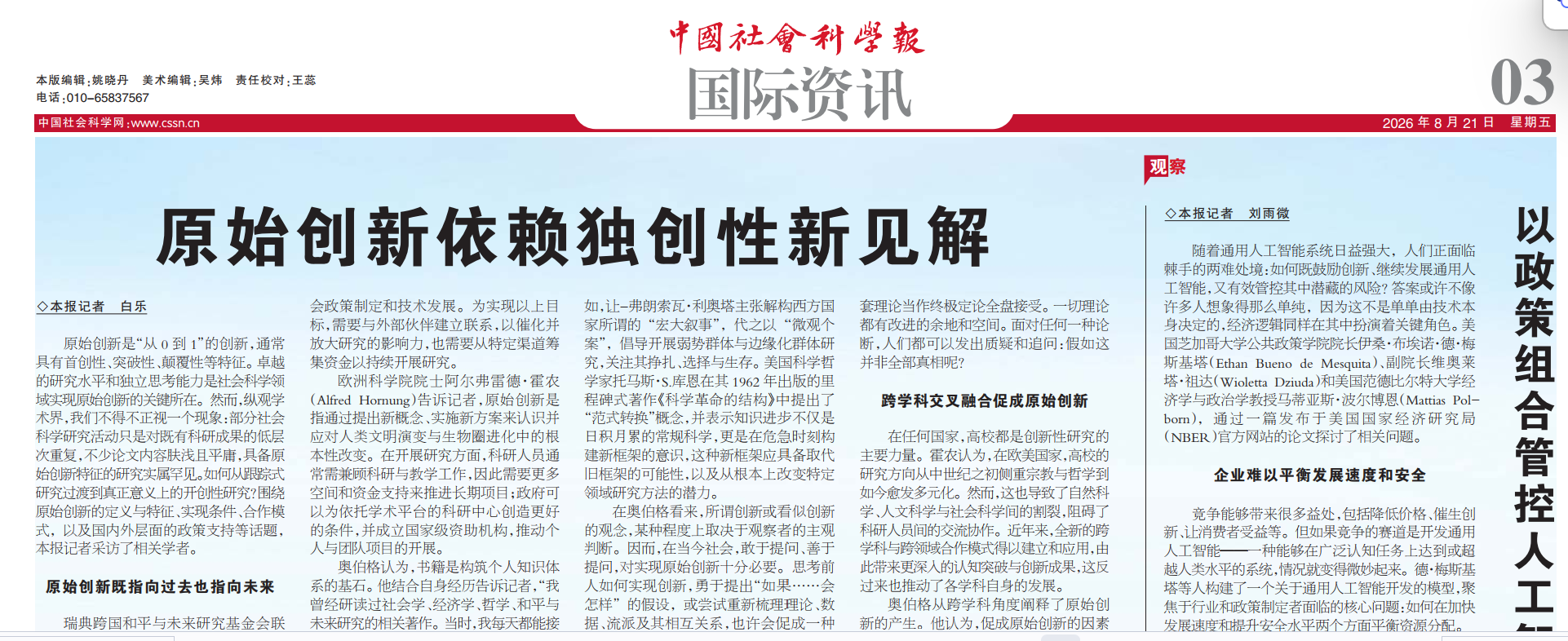
Jan ObergPhD, director, The Transnational Foundation for Peace and Future Research, TFFLund, Sweden October 2, 2026 This is my full original manuscript. The Chinese Academy of Social Science, CASS, makes two publications out if it. 1. China’s Five-year plan emphasized the capabilities of basic research and original innovation. It is regarded as the goal of the future social development, which, as required, should be significantly enhanced. Can you comment on the importance of original innovation in research and academic study? I believe it is easier to define “original innovation” in the natural sciences than in social sciences. The breaking points of what constitutes something new, or innovative, are not quite as sharp in the latter. But in both fields it is about opening up something that was closed, unseen, unexplored before – making manifest what was earlier latent. Innovations come in many forms and shapes – naming something that was not...
arctic-circle-map
The agreement is catastrophic both because of what it says and what it doesn’t mention. It reduces further the major asset of security policies: Freedom of action. Jan Oberg TFF director September 25, 2026 A couple of hours before the agreement was signed on September 22, 2026, I published the following 13 hypotheses about what it would most likely contain on TFF Substack (in English). I was wrong on only the first point. Contrary to what Trump had written on his Truth Social platform, it does not appear to come into force immediately. In fact, it turned out to be worse than even I had anticipated. After these hypotheses now come a number of reflections in light of what the agreement actually contains, and does not contain, as well as the way in which it has generally been presented by major media outlets and by the public-service broadcaster DR. My...
girl-5894831_1280
Below are TFF-related media mentions, comments, videos and social media posts published elsewhere but not on this homepage. We happen to catch and list only a fraction. Regarding video comments and debates, we recommend that you go to the TFF Video Channel on Substack where many of them are reproduced. Jan Oberg is a contributor to China Daily – 52 million daily clicks – and Global Times, CGTN and CCTV (the national television), China Investment, Xinhua News Agency and several others. Articles and videos on these media very often multiply into countless Chinese (and Western media) that re-post them from these main media. Thanks to The China Academy, his analyses, interviews and comments are frequently posted on YouTube channels such as Thinkers Forum and Wave Media. These videos are often re-posted on Bilibili (China’s YouTube), the China Content Center on TikTok, and on the Chinese edition of TikTok, Douyin.com. This means reaching hundreds of millions of viewers worldwide over a year. While there are too many to catch on all these...