
PressInfo #154 – Sanktionerne mod Irak og konsekvenserne afmad-for-olie-programmet

2 uger i Irak giver ikke tilstrækkelig kundskab til at kunne give en gennemgribende analyse af forholdene der. Men det er tilstrækkeligt længe til at kunne bekræfte det billede som fremføres med kraft af de individer og organisationer, som dagligt oplever og kæmper med menneskelige problemer, som man ellers finder i de mest tilsidesatte u-lande. Det er heller ikke min hensigt at forsøge at påvirke opinionen med følelsesladede udtryk, men bare at formidle nogen af de kendsgerninger, der foreligger.

Lidt sanktionshistorie

I mere end 10 år har FN fastholdt sanktioner mod Irak. I løbet af de sidste år har 3 af FNs højeste repræsentanter i Irak forladt deres post som protest mod urimelighederne i sanktionsprogrammet. Samtlige organisationer (FNorganisationer og andre), som er involverede i det såkaldte Mad-for-Olie-program har på forskellig vis tilkendegivet deres negative indstilling til sanktionerne og krævet, at de snarest ophæves eller udformes på en anden måde. Hvorfor ?

På baggrund af Iraks invasion af Kuwait besluttede FNs sikkerhedsråd at indføre sanktioner mod Irak i henhold til FN-pagtens kapitel VII. Dette indebærer principielt afbrydelse af alle økonomiske og diplomatiske forbindelser og af al trafik (vand-, land-, luft- og teletrafik). Betingelsen for sanktionernes ophør, i.h.t. Sikkerhedsrådets beslutning i 1991 (UNSCR 687) er i kort gengivelse: uskadeliggørelse af masseødelæggelsesvåben, et løfte om ikke i fremtiden at udvikle eller anskaffe sådanne våben og gennem samarbejde med FNs våbeninspektionsprogram at bevise, at disse våben ikke findes og heller ikke udvikles. Dertil kommer at Irak skal forpligte sig til at anerkende den internationale grænseaftale med Kuwait af 1963, ikke at støtte eller udføre international terrorisme, at sende alle kuwaitere og andre landes borgere hjem, at tilbagelevere al kuwaitisk ejendom og at kompensere de, der har lidt tab og skader på grund af invasionen.

Mad-for-Olie-programmet giver ikke Irak nogen indkomst

Selvom FN allerede i to resolutioner i 1991 foreslog et hjælpeprogram, accepterede Irak først i 1996 igangsættelsen af et sådant baseret på foregående års Sikkerhedsrådsbeslutning (UNSCR 986). Resolutionen bygger på, at Irak tillades at eksportere en vis mængde olie og for indkomsterne fra salget tillades at indkøbe mad og andre “humanitære fornødenheder”. For den første 6 måneders mandatperiode beløb denne eksport sig til 2000 millioner USD og i 2001 (2 mandatperioder) beløb den sig til ca. 11000 millioner USD.

Desværre er dette ikke hele sandheden. Af “indkomsten” for den solgte olie går kun 53 % til den del af Irak, som står under regeringens kontrol, d.v.s. til ca 20 millioner indbyggere, mens resten er reserveret til kompensation til de, der led tab og skader under Iraks invasion af Kuwait (30 %), til de 3 nordlige provinser med 3,5 millioner kurdere (13 %) og de resterende 4 % til FNs driftsomkostninger til Mad-for-Olie-programmet (OFFP). Irak kunne altså i 2001 disponere over ca. 6000 millioner USD (300 USD/person/år) til indkøb af levnedsmidler og andre væsentlige fornødenheder.

Med andre ord: for en fjerdedel af den svenske stats årlige udgift til sociale udgifter, skal Iraks regering ernære og sørge for velfærden for en befolkning, der er dobbelt så stor som den svenske.

Indkomsten for den irakiske olie indsættes på en særlig FN-konto. Herfra betaler FN udenlandske leverandører af varer og tjenester. Irak disponerer således ikke over indkomsten i rede penge men handelen kan sammenlignes med tidligere tiders byttehandel. Irak leverer olie og FN leverer mad m.m. (Oil-for-Food).

Listen over varer, som Irak ikke kan få er uendelig

I henhold til det rådende system laver Irak en liste, som sendes til FN, med en opgørelse over det samlede behov for den kommende 6 måneders periode. FNs sanktionskomite gennemgår listen for at kontrollere, at de varer Irak har angivet som behov ikke strider mod sanktionernes indhold, d.v.s. at varerne ikke må kunne udnyttes til militære formål. Problemet er, at et normalt samfund har behov for højteknologisk udstyr for at der kan blive økonomisk tilvækst og anden udvikling. De fleste lande anvender en del sådan udrustning både i den civile og i den militære sektor – men den slags må Irak ikke importere.

Listen over materiel, som ikke må importeres fordi det eventuelt kunne anvendes militært er uendelig og håbløs i sin tekniske detaljeringsgrad. Og den fastholdes stift, således at klor – det stof som WHO anbefaler til sundhedssikring af drikkevand – ikke må importeres, med begrundelsen, at det evt. kunne misbruges til kemiske våben. Når man gennemlæser listen over de tusindvis af artikler, tvinges man til at spørge sig selv om meningen er at forhindre en militær anvendelse af sagerne eller snarere at forhindre en suveræn stats udvikling – eller måske endnu være – dens overlevelse.

Et velfærdssamfund under afvikling

Den største del af det, der skaber et lands velstand og konkurrenceevne, nægtes således Irak. Man kan desværre bare konstatere, at vi er vidner til en afvikling og tilbageskruning af et samfund, som for 15 år siden regnedes som et af mest fremskredne med gratis sundheds- og sygehusvæsen og en blomstrende industri.

For det enkelte menneske har sanktionerne været ødelæggende, hvilket samstemmende afspejles i det store antal af rapporter. Selvom visse (som altid i forbudssituationer) lever forholdsvis godt, så lever hovedparten under uacceptable forhold – men ikke således at der mangler kilokalorier. Gennem et omfattende madfordelingsprogram får hver familie det antal kalorier, der kræver for at overleve (2472 Kcal/dag/person og 60,2 gram protein/dag/person !!) FN har således gennem den nuværende udformning af Mad-for-Olie-programmet skabt en fuldstændig enestående afhængighed.

Dette skal ses på baggrund af, at Verdensfødevareprogrammet (WFP) mellem 1991 og 1998 uddelte totalt 500.000 ton levnedsmidler, mens FNs uddeling i Irak idag omfatter 300.000 ton pr måned. Med andre ord – i et land, der ejer verdens næststørste oliereserve, er man næsten totalt afhængig af en tildeling af levnedsmidler, som ellers er forbeholdt de mest nødstedte u-land. I sandhed absurd.

Resultatet for almindelige mennesker

For en person med en mellemindkomst (hvis man overhovedet kan tale om en sådan gruppe i dag) udgør denne madpakke 83 % af den månedlige indkomst. Lønnen for en lærer er 30 USD/måned, hvoraf de 25 USD udgøres af tildelt mad. Resultatet er bl.a. en sortbørshandel, emigration og beklageligvis også prostitution. Eftersom FN sørger for, at den enkelte borger får det tilstrækkelige antal kilokalorier og regeringen distribuerer maden, overlever individet, men en tidligere veluddannet middelklasse er skrumpet ind i en sådan grad, at det kommer til at påvirke samfundet i generationer.

Det hænger sammen med, at penge kun findes i meget begrænset udstrækning. Mad-for-Olie-programmet er som tidligere nævnt en naturalhandel og selv om det indeholder en kontantdel, så er denne af politiske grunde aldrig realiseret. På grund af den irakiske dinars fald fra 1 ID for 3 USD i 1985 til 2000 ID for 1 USD i dag og p.g.a. manglen på likvide midler forekommer der knapt løn i sædvanlig betydning af ordet. Arbejdsløsheden har også taget helt urimeligt til og udgør 40 – 50 %.

Sanktionernes værste konsekvenser er “skjulte”

Der kan ikke udbetales løn til lærere – og elever har ikke mulighed for at betale for studier (der tidligere var gratis). Således er undervisningen målt i antal elever sunket drastisk, både den almene og den på universiteterne. Man taler i dag om en allerede tabt generation. Konsekvenserne heraf kommer til at påvirke hele samfundet i de næste 20 – 30 år.

Rapporterne fra forskellige FNorganer, menneskerettighedsorganisationer, hjælpeorganisationer, parlamentarikere og forskere taler alle samme sprog: sanktionsprogrammet er aldeles ødelæggende. Underernæring og ubehandlet drikkevand har forringet den almindelige sundhedstilstand. Sammen med manglende ressourcer i sygehusvæsenet har det resulteret i en øget dødelighed og mindsket antallet af fødsler; specielt taler den dramatiske stigning i børnedødeligheden sit tydelige sprog. Antallet af elever er mindsket ved samtlige læreanstalter og specielt er faldet stort for kvinder. Øget kønsadskillelse og mindsket sekularisering er andre synlige tegn på en ændret samfundsstruktur. Samtidig sker der en intellektuel forarmning, dels p.g.a. mangel på undervisningsmidler og lærere, dels den emigration af middelklassen, der er sket og stadig sker. Dertil kommer manglen på økonomiske og materielle ressourcer som umuliggør opretholdelsen af den industrielle, økonomiske og sociale infrastruktur.

Som middelalderens sult- og krigspolitik

Kort sagt har FNs sanktioner mod Irak gennem 10 år forvandlet et næsten fuldt udviklet industriland til et udviklingsland. Mad-for-Olie-programmet er ikke blevet løsningen på et problem – det er blevet et problem.

Frit at spekulere om fremtiden er en fornøjelse forbeholdt politikere og økonomer. Man kunne mene at for Irak var spørgsmålet om en eventuel krig afgørende. Sådan er det ikke – ikke for den enkelte borger. Han/hun har nok med sin hverdag – med at overleve – at finde en udvej. Med den totale afhængighed af de 350.000 ton mad pr måned overlever man netop, men med en krig, hvor FNs og de irakiske myndigheders særdeles effektive fordelingsmekanisme slås i stykker, bliver det en helt anden sag.

I et historisk perspektiv er Irak et interessant studie. For at opnå sine mål, morede middelalderens fyrster sig med at omringe og belejre fæstninger. Når sulten og forarmningen var nået tilstrækkelig langt, angreb man, slog det i stykker, der var tilbage og delte byttet med sine allierede. Er vi ikke nået længere i udviklingen ?
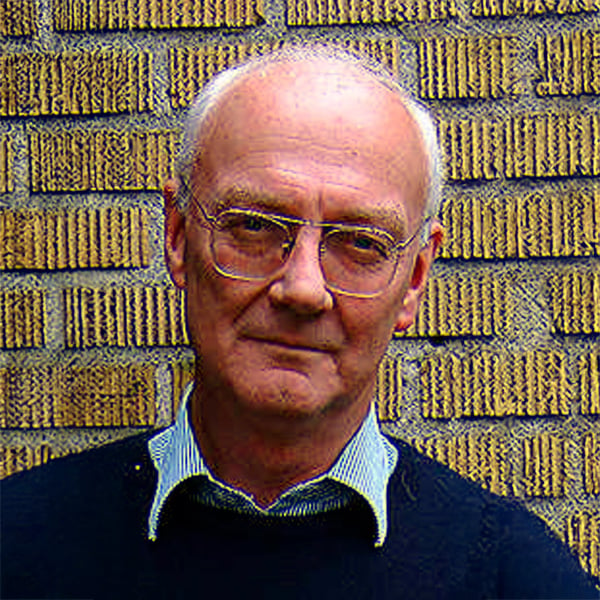

© TFF 2002

Related Posts

The agreement is catastrophic both because of what it says and what it doesn’t mention. It reduces further the major asset of security policies: Freedom of action. Jan Oberg TFF director September 25, 2026 A couple of hours before the agreement was signed on September 22, 2026, I published the following 13 hypotheses about what it would most likely contain on TFF Substack (in English). I was wrong on only the first point. Contrary to what Trump had written on his Truth Social platform, it does not appear to come into force immediately. In fact, it turned out to be worse than even I had anticipated. After these hypotheses now come a number of reflections in light of what the agreement actually contains, and does not contain, as well as the way in which it has generally been presented by major media outlets and by the public-service broadcaster DR. My...
Below are TFF-related media mentions, comments, videos and social media posts published elsewhere but not on this homepage. We happen to catch and list only a fraction. Regarding video comments and debates, we recommend that you go to the TFF Video Channel on Substack where many of them are reproduced. Jan Oberg is a contributor to China Daily – 52 million daily clicks – and Global Times, CGTN and CCTV (the national television), China Investment, Xinhua News Agency and several others. Articles and videos on these media very often multiply into countless Chinese (and Western media) that re-post them from these main media. Thanks to The China Academy, his analyses, interviews and comments are frequently posted on YouTube channels such as Thinkers Forum and Wave Media. These videos are often re-posted on Bilibili (China’s YouTube), the China Content Center on TikTok, and on the Chinese edition of TikTok, Douyin.com. This means reaching hundreds of millions of viewers worldwide over a year. While there are too many to catch on all these...
Jan Oberg May 15, 2026 Go to this Fox News page and scroll the whole way down: President Donald Trump tells the world that his meeting with President Xi Jinping yielded a lot of very concrete political and economic results – of course, only where the Chinese side, according to him, agreed with him. He does not mention the Taiwan issue, but Secretary of State, Marco Rubio, says that it did not feature prominently in their talks and that the US policy on Taiwan has not changed. Then go to China Daily – or Global Times – and you will see that for the Chinese it is framework, principles, structure of cooperation etc. that matters – all embedded in the overall idea of “constructive bilateral relationship of strategic stability.” Nowhere is any concrete agreement or deal – all that Trump refers to – mentioned. At the general level, this gives you insights into the very different social...

Recent Articles

Tony Robinson October 4, 2026 Violence is easy to recognise when someone is being beaten, shot or killed. It becomes more difficult when nobody is holding a weapon. Poverty, discrimination, exploitation and repression can restrict a human life just as effectively, although they do so in very different ways and with very different consequences. Simply adding more categories to an ever-growing list of forms of violence does not really solve the problem. The more interesting question is what all these different situations have in common and why it makes sense to describe them using the same word. Human beings do not simply react to what happens around them. They remember the past, imagine things that do not yet exist, make plans and undertake projects. Workers organise because they imagine different working conditions; people migrate because they imagine another life somewhere else; social movements emerge because people refuse to accept the...
It’s a matter of principles, courage, vision and pulling together – while the militarist world is falling apart… Peter Langille October 3, 2026 “Here, then, is the problem which we present to you, stark and dreadful and inescapable: Shall we put an end to the human race; or shall mankind renounce war?”The Bertrand Russell—Albert Einstein Manifesto, July 9, 1955 ⁕ The forecast for what’s ahead is worrisome. The sharp rise in armed conflicts over the past three years is adding to what was already the highest level in over seventy years. Genocides, which should be prevented are supported. A shared climate emergency that jeopardises survival is ignored. Diverse polls now suggest that people are war-weary, worried and interested in a more effective United Nations. And, there are viable policy options for a more secure world! Yet governments are doubling-down, betting on more war and investing heavily. If current trends persist,...
Johan Galtung 1930-2024October 2015 Published here on October 3, 2026 Let us focus on Civilization for conflict analysis and remedies. Major forms of disorder use violence; war is state organized violence. The most belligerent states are the United States of America and Israel, both with civilization roots. National Evangelism, the US Protestant Christian civilization– more national than evangelical–justifies US warfare as exceptionalism of a people chosen by God, with a manifest destiny to run the world. Orthodox Judaism justifies Israeli warfare to conquer and expand from Nile to Euphrates as a religious right and duty to the Eternal One. The third most belligerent country, the UK, no longer believes it is God-chosen but chosen by the USA; not quite the same but something. But the root cause of global disorder lies in the Occident–with Islam–seeing itself as the single, universal civilization valid for all at all times, all others being...

TFF on Substack

Discover and subscribe to more peace materials on TFF Substack

Most Popular

Tony Robinson October 4, 2026 Violence is easy to recognise when someone is being beaten, shot or killed. It becomes more difficult when nobody is holding a weapon. Poverty, discrimination, exploitation and repression can restrict a human life just as effectively, although they do so in very different ways and with very different consequences. Simply adding more categories to an ever-growing list of forms of violence does not really solve the problem. The more interesting question is what all these different situations have in common and why it makes sense to describe them using the same word. Human beings do not simply react to what happens around them. They remember the past, imagine things that do not yet exist, make plans and undertake projects. Workers organise because they imagine different working conditions; people migrate because they imagine another life somewhere else; social movements emerge because people refuse to accept the...
It’s a matter of principles, courage, vision and pulling together – while the militarist world is falling apart… Peter Langille October 3, 2026 “Here, then, is the problem which we present to you, stark and dreadful and inescapable: Shall we put an end to the human race; or shall mankind renounce war?”The Bertrand Russell—Albert Einstein Manifesto, July 9, 1955 ⁕ The forecast for what’s ahead is worrisome. The sharp rise in armed conflicts over the past three years is adding to what was already the highest level in over seventy years. Genocides, which should be prevented are supported. A shared climate emergency that jeopardises survival is ignored. Diverse polls now suggest that people are war-weary, worried and interested in a more effective United Nations. And, there are viable policy options for a more secure world! Yet governments are doubling-down, betting on more war and investing heavily. If current trends persist,...
Johan Galtung 1930-2024October 2015 Published here on October 3, 2026 Let us focus on Civilization for conflict analysis and remedies. Major forms of disorder use violence; war is state organized violence. The most belligerent states are the United States of America and Israel, both with civilization roots. National Evangelism, the US Protestant Christian civilization– more national than evangelical–justifies US warfare as exceptionalism of a people chosen by God, with a manifest destiny to run the world. Orthodox Judaism justifies Israeli warfare to conquer and expand from Nile to Euphrates as a religious right and duty to the Eternal One. The third most belligerent country, the UK, no longer believes it is God-chosen but chosen by the USA; not quite the same but something. But the root cause of global disorder lies in the Occident–with Islam–seeing itself as the single, universal civilization valid for all at all times, all others being...
Read More
Living-Peace-Sign-Budapest-copy
Tony Robinson October 4, 2026 Violence is easy to recognise when someone is being beaten, shot or killed. It becomes more difficult when nobody is holding a weapon. Poverty, discrimination, exploitation and repression can restrict a human life just as effectively, although they do so in very different ways and with very different consequences. Simply adding more categories to an ever-growing list of forms of violence does not really solve the problem. The more interesting question is what all these different situations have in common and why it makes sense to describe them using the same word. Human beings do not simply react to what happens around them. They remember the past, imagine things that do not yet exist, make plans and undertake projects. Workers organise because they imagine different working conditions; people migrate because they imagine another life somewhere else; social movements emerge because people refuse to accept the...
b54a1f10-8c65-4f0b-9dd5-4abc0a7d04cc_2659x2659
It’s a matter of principles, courage, vision and pulling together – while the militarist world is falling apart… Peter Langille October 3, 2026 “Here, then, is the problem which we present to you, stark and dreadful and inescapable: Shall we put an end to the human race; or shall mankind renounce war?”The Bertrand Russell—Albert Einstein Manifesto, July 9, 1955 ⁕ The forecast for what’s ahead is worrisome. The sharp rise in armed conflicts over the past three years is adding to what was already the highest level in over seventy years. Genocides, which should be prevented are supported. A shared climate emergency that jeopardises survival is ignored. Diverse polls now suggest that people are war-weary, worried and interested in a more effective United Nations. And, there are viable policy options for a more secure world! Yet governments are doubling-down, betting on more war and investing heavily. If current trends persist,...
010
Johan Galtung 1930-2024October 2015 Published here on October 3, 2026 Let us focus on Civilization for conflict analysis and remedies. Major forms of disorder use violence; war is state organized violence. The most belligerent states are the United States of America and Israel, both with civilization roots. National Evangelism, the US Protestant Christian civilization– more national than evangelical–justifies US warfare as exceptionalism of a people chosen by God, with a manifest destiny to run the world. Orthodox Judaism justifies Israeli warfare to conquer and expand from Nile to Euphrates as a religious right and duty to the Eternal One. The third most belligerent country, the UK, no longer believes it is God-chosen but chosen by the USA; not quite the same but something. But the root cause of global disorder lies in the Occident–with Islam–seeing itself as the single, universal civilization valid for all at all times, all others being...
Screenshot 2026-10-02 011738
Jan ObergPhD, director, The Transnational Foundation for Peace and Future Research, TFFLund, Sweden October 2, 2026 This is my full original manuscript. The Chinese Academy of Social Science, CASS, makes two publications out if it. 1. China’s Five-year plan emphasized the capabilities of basic research and original innovation. It is regarded as the goal of the future social development, which, as required, should be significantly enhanced. Can you comment on the importance of original innovation in research and academic study? I believe it is easier to define “original innovation” in the natural sciences than in social sciences. The breaking points of what constitutes something new, or innovative, are not quite as sharp in the latter. But in both fields it is about opening up something that was closed, unseen, unexplored before – making manifest what was earlier latent. Innovations come in many forms and shapes – naming something that was not...
arctic-circle-map
The agreement is catastrophic both because of what it says and what it doesn’t mention. It reduces further the major asset of security policies: Freedom of action. Jan Oberg TFF director September 25, 2026 A couple of hours before the agreement was signed on September 22, 2026, I published the following 13 hypotheses about what it would most likely contain on TFF Substack (in English). I was wrong on only the first point. Contrary to what Trump had written on his Truth Social platform, it does not appear to come into force immediately. In fact, it turned out to be worse than even I had anticipated. After these hypotheses now come a number of reflections in light of what the agreement actually contains, and does not contain, as well as the way in which it has generally been presented by major media outlets and by the public-service broadcaster DR. My...
girl-5894831_1280
Below are TFF-related media mentions, comments, videos and social media posts published elsewhere but not on this homepage. We happen to catch and list only a fraction. Regarding video comments and debates, we recommend that you go to the TFF Video Channel on Substack where many of them are reproduced. Jan Oberg is a contributor to China Daily – 52 million daily clicks – and Global Times, CGTN and CCTV (the national television), China Investment, Xinhua News Agency and several others. Articles and videos on these media very often multiply into countless Chinese (and Western media) that re-post them from these main media. Thanks to The China Academy, his analyses, interviews and comments are frequently posted on YouTube channels such as Thinkers Forum and Wave Media. These videos are often re-posted on Bilibili (China’s YouTube), the China Content Center on TikTok, and on the Chinese edition of TikTok, Douyin.com. This means reaching hundreds of millions of viewers worldwide over a year. While there are too many to catch on all these...




