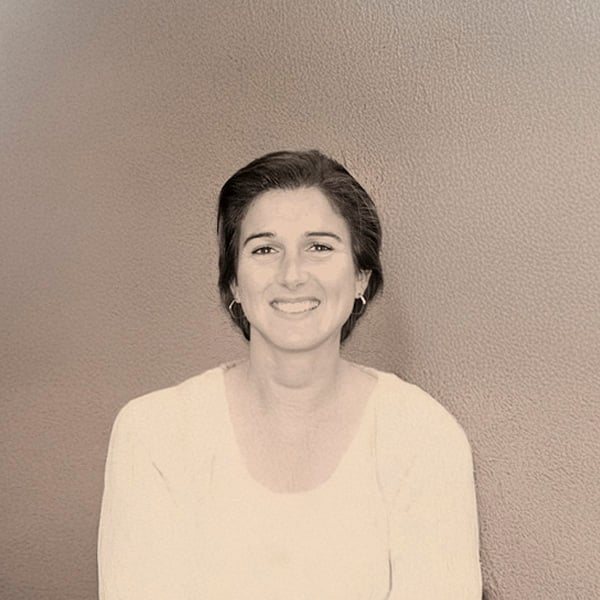
Interview # 3 of 4
I would like to thank Lisa and Asher for having the courage to talk to me openly about their thoughts and feelings as Jewish Israeli citizens. The following transcript offers a valuable perspective on the part of two persons who are naturally proud to be citizens of the State of Israel, but who also show the maturity to question the ongoing struggle between their nation and the Palestinian population.
Vicky Rossi: Lisa, were you born in Israel and did you grow up there?
Lisa: No, I was born in South Africa and my family emigrated to Israel when I was eleven years old. They emigrated to a city just north of Tel Aviv and I grew up and went to school there, although I have travelled abroad a lot since then.
Vicky Rossi: What kind of stereotypical ideas of Jewish Israelis have you found that people you have met on your travels have had?
Lisa: They have stereotypical images of the soldiers and their rude, bad behaviour. Although I can’t really justify the soldiers’ behaviour, if I have to find something to explain a little bit then I would say that young 18 year olds find themselves having to go straight into the army, having to face the situation of suddenly wearing a uniform, suddenly having to hold guns and having to do what they have to do in the Occupied Territories. It is very few who have the courage to go against the whole system of going into the army and to refuse. It’s a small percentage because to go so much against the flow of Israeli society is not easy at all.
Vicky Rossi: That’s military service for girls and boys then? How long does it last?
Lisa: For girls it is 2 years, maybea little bit less now. In my time it was 2 years. And the boys do 3 years.
Vicky Rossi: So you did your military service as well?
Lisa: Yeah.
Vicky Rossi: Is military service done away from home or can the soldiers go home at night?
Lisa: Well, for my personal military service I put in a special request so that I could be close to home to continue with my dance practice. I got a job in an army dental clinic in Tel Aviv, but after a year I decided that I should take advantage of the time in the army because the army service in Israel – not during times like this [referring to war in Lebanon] – is a social time. You get to meet people from all over Israel. So in my 2nd year I got a job on a mobile dental clinic that moved along the army posts on the border with Lebanon and in the Golan Heights. Every 2 weeks I was at a different army base.
Vicky Rossi: During your time with the mobile clinic did you ever sense that any of the soldiers were unhappy with the work they had to do? Did you ever come across anybody who had decided, “I can’t do this anymore?”
Lisa: In the first year when I was in a base close to home the soldiers would do their work and go back home at night. It was a whole different atmosphere. In the army they call them the “jobniks”. The jobniks come and do their job and then go back home in the evening. But in infantry units up north, in the 2nd year that I was in the army, they were difficult conditions and it was difficult what they were doing. At that time there were ambushes…
Vicky Rossi: Which year was this?
Lisa: 1985-87. It was difficult…difficult…it was difficult.
Vicky Rossi: In the West we are told that the Israelis need such a large army for security purposes. Where does that urgent need for security come? Is this fear and sense of vulnerability something which existed prior to the Second World War? Is it a really deep rooted cultural thing?
Lisa: I think it is very deep rooted and of course after the Holocaust even more so. I think the Jews have always isolated themselves and been different. In their sacred knowledge of the Torah they have kept together as a people over hundreds of years, but in keeping to this they have isolated themselves. Then with the Holocaust the fear of survival has become even more deep rooted. It is a real fear. From the very moment the state of Israel was created, the Jews were – from the Jewish perspective – attacked by the Arabs. From the beginning they were attacked – in the 1948 war. So there is this constant fear and the knowledge that we also want to be on this land.
Vicky Rossi: And it was as if this fear was confirmed in 1948?
Lisa: I think even before ’48 when Jews started coming to Palestine and there was objection from the Arab people. Then there was of course also the fear of the Arab people that the Jews would come and take over the land. If back then we could have found a way to reconcile and build a peace culture it might have saved a lot of suffering, but we didn’t manage to do that. It was fear. Since the first Intifada, it has been like separating the people even more because you didn’t know if you could trust an Arab person or not. You never know.
My personal experience was that when I was in the 2nd year of the army with all the infantry soldiers who were fighting the enemy, I was on the side of Israel and we had to defend ourselves against the enemy. It was the enemy.
After the army I went travelling and for the first time, at the age of 21, when I was travelling in Europe I met Arab people and saw the human being in the Arab people, which for me was such a revelation. That’s how I started to open up more and more. When I started travelling and meeting internationals, I began to put things more in perspective. Prior to that I was living in my little bubble in Eilat, teaching children, doing a lot of good work but I tried to keep my own personal energy field positive so that when the first Intifada happened, for example, I didn’t want to get involved.
I was like an ostrich with its head in the sand and I was happy like that. When I returned to Israel after my travels I was clear that I wanted to do something for peace. I knew that I had to do something because I knew that something was very, very wrong.
Vicky Rossi: What were the events that followed and that helped you on your way?
Lisa: Firstly, it was defining that my vision was to co-create a peace village. Two months later I discovered the Grace Pilgrimage led by Sabine Lichtenfels [This pilgrimage went through Israel and the West Bank in November 2005 (1)]. This pilgrimage was a huge transformation for me. For the first time I faced the Israeli-Palestinian conflict and saw with my own eyes and heard with my own ears the Palestinian perspective on the situation, which was something that I have never ever even thought of.
First of all, I was a new immigrant to Israel so the history I learnt at school was to pass the exams. On the pilgrimage it was the first time, at the tender age of 39, that I opened my eyes to the political and historical realities of the conflict. The pilgrimage was a huge transformation for me. It opened my eyes to the enormous injustice that Israel had done and is doing. It’s a conflict situation because on the one hand I know it is unjust, it’s terrible injustice, especially now with Lebanon it is hard to absorb that Israel is doing this.
On the other hand as an Israeli living in my home and being attacked by Hizbollah and hearing Iran say they want to destroy Israel, feeling suddenly again that this is a threat as well. They are confusing feelings. But regarding the Palestinian conflict, Israel has a lot of work to do.
Vicky Rossi: Focusing then on the Israeli-Palestinian issue as opposed to the current war in Lebanon, are there groups working locally to promote peace initiatives and reconciliation? If so how have they have been able to overcome their fear and sense of insecurity in order to be able to do this?
Lisa: They have seen the truth of what Israel is doing. They have dared to want to know and to open their eyes. When I came back from the West Bank, on the Grace Pilgrimage, I meet a friend who told me, “You must take care of your own people first”. She couldn’t understand what I was doing at all. What I feel I need to do is to formulate a really simple way of getting behind people’s fears and showing them what Israel has done and is doing. It’s hard to face so nobody faces it. You know life in Israel is not easy, unless you are part of the top echelons. Most people are struggling to survive, to buy petrol, to pay the rent. It’s not easy to survive. People are so involved in trying to survive in their own lives that they don’t have a space to open their minds.
Vicky Rossi: That’s interesting when you say that people are struggling to survive because the image I get from outside is that all Israelis enjoy a good standard of life.
Lisa: Well you know what, it is all relative: maybe not struggling to survive like the Palestinian people are struggling to survive. Struggling to survive maybe compared to the Europeans.
Vicky Rossi: You said earlier that through your travels you were able to see the human side of the Arab people. Do you think that this is the key then?
Lisa: Yes. Over the last months since the pilgrimage, I have been going to listening circles – Arabs and Jews talking and expressing their views – conferences, dialogue through the arts, all different types of peace work that is going on in Israel, trying to build bridges and get people to meet. I come from a non-political family, so I felt totally ignorant to this whole awareness thing. During the pilgrimage I could, for the first time, talk to and be friends with the Arab people. That’s what needs to be done. We need to meet and talk and be friends. We need to build bridges and do projects together. At the grassroots level that’s what needs to happen. For example, it’s beginning to happen on a small level in the Sulha. Have you heard of the Sulha?
Vicky Rossi: No
Lisa: Sulha is an Arab word meaning reconciliation. When you have people fighting you first decide on a houdna – a ceasefire – and you negotiate and you talk and then you have a sulha, which is like reconciliation. There is an association called On the Way to Sulha. Once a year they hold an enormous, 3 day event. For the last few years 4,000-5,000 people have come: Arabs and Jews, Palestinians from the Territories who have managed to get permission to enter Israel, Palestinian Israelis coming together for a meeting. They have it also on the religious level in that they bring together Christian priests, Jewish rabbis and imams. They have a religious ceremony of reconciliation between the religions. They have all kinds of workshops – music workshops, listening circles, a women’s tent, children’s events. It’s like a whole festival of Arabs and Jews meeting. They call it On the Way to Sulha because there is a long way to go.
Vicky Rossi: This is an annual event then?
Lisa: Yes, they have the big annual event but they also have smaller events during the year like a children’s what they call “sulhita”, which is a children’s sulha with Arab and Jewish youth. When the war started just now the organisation held a gathering to unite Arabs and Jews – well no Palestinians managed to come [they were not given permission to travel] – in mercy and compassion for all victims in Lebanon, Gaza, the West Bank and the north and south of Israel. Just uniting together in prayer, in listening circles, lighting candles and singing songs together. That was just a little event. They have little events like that throughout the year. If they had more budget they could do it on a larger scale.
Vicky Rossi: On that point, where do they get their funding from?
Lisa: They have some sponsorship from the United States. If only their work could be done on a large scale! Especially amongst Israelis there is so much unawareness. It would be important for those Israelis who aren’t aware to come into a listening circle and “hear”, hear with their own ears because there is a big separation. There are a few areas in Israel like Jerusalem, Haifa and Jaffa where Arabs and Jews live together, but there’s separation even there. Amongst all the peacework that needs to be done is the bridging, the bringing together and the befriending of each other, the getting to knowing each other. The only Palestinians I know are through the pilgrimage. I wouldn’t have met them otherwise and I can’t see them now when I am at home.
Vicky Rossi: Is that because you need a permit to travel to Palestine?
Lisa: They can’t come into Israel. I went into the West Bank on the pilgrimage, but at the moment, I mean, I wouldn’t go there. It needs to be quite a peaceful time to go there peacefully, in trust.
Vicky Rossi: When you go back to Israel after this conference do you think you will try to collaborate with the On the Way to Sulha organisation you mentioned? Or do you see another channel through which you would like to work for peace?
Lisa: I’d like to be part of the Sulha as well. I helped them with telephoning and emailing for the annual event this year. If I had been in Israel right now I would also have participated in the recent event they held. Then there’s another organisation called the Middle Way. It started off as a Buddhist meditation group – inside meditation. They decided that the development of inner peace through meditation was not enough and that you had to send it out so they started doing these silent meditation peace walks through Arab villages. Up until today they continue to do these walks every once in a while. A lot of them also do humanitarian work inside Palestine.
Vicky Rossi: Once again, do those kinds of movements get their financing from outside?
Lisa: I think they are self-financed. Then there is the peace movement Bat Shalom. The Peace Now movement is like a political movement. I also went to a conference for dialogue through the arts and a seminar held for Jews and Arabs by Byron Katie. She is a spiritual teacher who promotes the process of self-enquiry. She would say that everything is in your mind. If you ask yourself questions you can change the thoughts you have in your mind.
Vicky Rossi: What has struck me here in Tamera is how Palestinians and Jews can get on so well together, laughing together and enjoying each other’s company. There seems to be no sense of animosity between the two groups. Is that because I have met “unusual” Jews and Palestinians here? Or is that rapprochement possible on a larger scale through, for example, the kind of meetings you mentioned?
Lisa: Personally I overcame a lot of my obstacles through talking to the Palestinians who took part in the Grace pilgrimage. Before that I had done silent retreats and things, but nothing was as intense as the pilgrimage. It was intense as I was just talking and talking with the Palestinians all day long, understanding, overcoming and crying. But there is still so much that I don’t understand because the conflict goes very deep. I think the Palestinians who took part on the pilgrimage and who are here in Tamera also have a deeper and higher perspective of the conflict. They seem to understand the Israeli mentality, but I think there is still a lot of work to be done to change the conditioned way of thinking of both Jews and Palestinians.
Vicky Rossi: On the subject of conditioned thinking, what’s the schooling like in Israel? Children only learn what they are taught after all. Is the education system pretty open or do you feel that it also is instrumental in propagating the negative attitudes between Jews and Palestinians?
Lisa: Maybe Asher can answer that better because I can see only now that when I studied the history of the conflict I was told only parts of the truth. I wasn’t told the whole truth and I am sure that on the Palestinian side they were also told only parts of the truth. I think these ongoing misunderstandings are also part of the ongoing conflict.
Asher: Basically I think the problem is not formal education but the emotions resulting from the traumatic events that people experience. It’s not so much the formal study and the curriculum. It’s the emotions experienced on both sides. Perhaps the mission is to help the people on both sides to break through their fears. A lot of Israeli politics is influenced by emotions. In the past none of the governments were able to go a long way towards peace because of events, fears, public pressure due to events and terrorism.
Vicky Rossi: What channels would you see as being instrumental in helping Jews and Palestinians to break down their fears?
Asher: I think the question is not only through which channels, but how you change the reality in which those peaceful actions and peaceful movements are actually taking place because it’s enough to have one major terror attack within Israel or one major offensive in Gaza to bring back all the fears. It’s a very fragile, emotional environment. Even for peace activists it is a test of trust when they are faced with emotional events of such intensity.
Vicky Rossi: Do you find it easier to view events with more clarity when you are outside Israel?
Asher: Yes, but that’s true of life generally. You have to step out a little bit from your torment of emotions to see what is consciously happening. Definitely for me when I am outside I feel relatively isolated from the general anger and feel more of an ability to work for peace with a long term perspective. I have listened to the talks given at the Summer University here in Tamera and I think there is a major gap between the ability to give birth to ideas, morals, hopes with regard Israel/Palestine when it is here in a fairly effective bubble than to do these peace activities over there in Israel or in Palestine. It is much more of a challenging task to be what they call a peace worker over there. I listen to what is said here and I try to be non-judgemental, but I do find it sometimes to be a bit detached from reality.
Vicky Rossi: Have you found the personal experiences with Palestinians here to have been of value to you?
Asher: For me that is my field of action in this life. Peace through personal encounter. Not so much through talking, but by doing. I live in the Harduf Kibbutz, which is surrounded by Bedouin villages, the native Palestinian villages in Israel. I do have to admit that before I aspire for a solution with the Palestinians in the Occupied Territories, I am asking myself how much do I do with my neighbours, who live just a few hundred metres away from me? I think it starts from there. About a month ago I invited a group of kids from the neighbouring Bedouin village and their teachers to the kibbutz and we had an exciting day. We went to see the beehives that I have and they helped me to extract the honey. It brought me much joy. I think that’s the thing. We need to find a way to bring joy. There has to be a way to do things in a lighter way. When you go there only for the purpose of talking, there is always something which is a barrier. If you don’t know the person, you are inclined to see the mask, not the real person himself or herself. But by doing things together the mask is partly removed and you can really see the person. And yes you are still a Palestinian or you are still an Israeli, but there is something more of a personal connection. Then the exchange is often much more honest and much deeper.
Vicky Rossi: It seems from both you and Lisa that the key is the personal contact, meeting people and doing things together.
Lisa: Recently I went into Nazareth to give a yoga class to a woman. For me besides spreading yoga, which is a good thing for everyone, it was the personal contact that was most valuable.
Vicky Rossi: She was Palestinian?
Lisa: It was a group of Arab women from Nazareth. You have a Jewish part of Nazareth and an Arab part of Nazareth. They are separated by a road and there is no connection between them. It is really like two different worlds. After teaching just one class I befriended one of the women and she invited me to her home. So through my work I was able to reach out and make a connection. I think this is what we need to do more of – reaching out and making a connection – because we all want to live on this land so we need to start building a culture of peace. We are so used to thinking of each other as enemies and thinking of war that we are cultivating the opposite of a culture of peace. I think there must be some kind of simple formula, or simple statements, which would make people understand what the situation is and what needs to be done without making them cringing in defence.
Vicky Rossi: Maybe that kind of formula, those kinds of statements, would come out when, like you were saying Asher, people are working or doing something together because at the same time they are talking and perhaps those kinds of ideas would come out more easily and spontaneously that way? This is in contrast to when people are just sitting around a table having a formal dialogue, in which case people feel more on the spot to say something perhaps.
Asher: Yes, but having said that there is still a gap between this kind of work and the political reality, especially among the Palestinians there’s a lot of frustration. So for me it is quite clear that it is not enough. Both sides must realise that they have to take full responsibility for the actions of their extremists. Even though those extremists are minorities, one action by a minority group is enough to destroy the efforts of many, many people of goodwill. That’s the sad reality over there that the minorities, the extremes, act out of despair mostly. They know that despair feeds fear, fear feeds hate, hate feeds violence. It is a closed circle. These emotions dictate behaviour in any situation. It is just more intensified in Israel and Palestine. It’s a very hard test for both sides to take responsibility for the extremists. The situation needs to change.
The source of what is happening in this conflict between Israel and Palestine is the same as what is happening in the daily life of all of us. They are the same seeds of violence that exist in our relations with our neighbours, with our partners, with ourselves in our daily lives. Human psychology is what lies at the root of this conflict. I think we need to see the conflict less in terms of being between Israelis and Palestinians and more in terms of something that represents our daily life just more intensified. This is why for me it is very important that what we call the international community is involved not only in a diplomatic capacity, but that people come and really make an effort to be involved for the long term in the area. To be there physically.
Vicky Rossi: In what capacity? With what role?
Asher: They don’t have to do anything in particular.
Vicky Rossi: Just witnessing? Just to be there?
Asher: Yes, just to be there.
Lisa: And to understand, to facilitate, to help bridge. This can transform lives.
Asher: Just the presence of neutral parties enables people on both sides to really open their hearts and speak. A lot of suffering is released when you speak out. Quite often though there isn’t enough trust in the other person on the other side of the conflict to do this. In a way the international community could make a huge contribution there by taking a neutral position.
1. See http://www.igf-online.org/index.php?id=194
*This transcript represents an accurate but non-verbatim representation of the original interview.
The 4 interviews