

Europe Should Stop Trump from Starting Another War in the Middle East

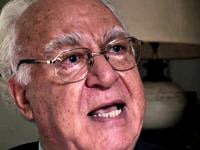
By Farhang Jahanpour*

As was expected, President Trump has decertified Iran’s compliance with the nuclear deal or, to give it its full name, the Joint Comprehensive Plan of Action (JCPOA), despite the fact that he certified it twice before. As recently as 14 September 2017, Trump also waived certain sanctions against Iran as required under the terms of the deal.

Yet, in an extremely belligerent and hostile speech, he put out his new policy towards Iran.

The certification of the deal is not part of the agreement, but as anti-Iranian hawks in both parties wanted to undermine President Barrack Obama and create obstacles on the path of the deal they required the president to recertify every 90 days that Iran was still in compliance with the provisions of the deal. That certification has no international validity.

Trump provided a long list of contentious issues about Iran’s alleged malign influences in the region and her presumed violation of the JCPOA, while totally ignoring America’s long record of unilateral wars and war crimes and initial support for terrorist groups, such as Al Qaeda, the Taliban and other terrorist groups in the Middle East and beyond.

By law, Congress has 60 days to reimpose sanctions on Iran, which would violate the provisions of the JCPOA, or leave matters as they are. Given the predominance of hawks in Congress, it is likely that they will follow Trump’s lead and will try to kill the deal.

During the campaign, Trump often criticized the deal as the worst agreement in history and promised that he would tear it up. In his inaugural address to the UN General Assembly, Trump proclaimed that the Iran deal “was one of the worst and most one-sided transactions the United States had ever entered into,” even declaring it “an embarrassment to the United States.” He ominously warned that the world had not “heard the last of it, believe me.”

Now, by decertifying Iran’s compliance with the deal, Trump has lived up to his hyperbolic rhetoric about the agreement that was regarded as one of the most remarkable diplomatic achievements since the end of the Cold War.

He is doing this at a time when his administration is in disarray, when none of his major bills has been ratified by Congress, when the threat of terrorism in the Middle East has not yet ended, when US-supported Saudi Arabia’s disastrous war against Yemen is still continuing killing and wounding scores of people in that poverty-stricken country every day, and above all when Trump’s threat of “fire and fury the like of which the world has never seen” against North Korea has not worked and that dangerous standoff still continues.

In the midst of all this, he has decided to add yet another completely unnecessary conflict to the list and to isolate the United States further in the world.

First of all, it is important to point out that the JCPOA is not a bilateral agreement between Iran and the United States that can be unilaterally abrogated by a U.S. president. It was an agreement reached between Iran and all the five permanent members of the Security Council (Britain, China, France, Russia and the United States) plus Germany.

As the result of that landmark deal, Iran has removed two-thirds of its centrifuges and has stopped building more advanced centrifuges that she had started installing. She has altered its heavy-water nuclear reactor to remove its capacity to produce weapons-grade plutonium, has surrendered 98 percent of its nuclear material, has joined the Additional Protocol, and has submitted to intrusive inspections by the IAEA to verify compliance.

Since the implementation of the agreement, on eight different occasions, the International Atomic Energy Agency, IAEA, has certified Iran’s full compliance with her commitments under the deal. After the so-called sunset clauses expire, Iran as a member of the NPT and the Additional Protocol will continue to remain under IAEA inspection and will be prevented from building a nuclear weapon.

In return for that major compromise in her nuclear program, all nuclear-related sanctions were supposed to be lifted, enabling Iran to have normal economic and banking relations with the rest of the world. This landmark non-proliferation deal was achieved without a shot being fired and without another devastating war in the Middle East.

The fact that Trump has probably not even bothered to read or understand the agreement, which was the result of many years of intense and painstaking discussion and debate by the best experts from seven countries, including the U.S. Energy Secretary who is a nuclear expert, is beside the point. Some of those who surround him and write his speeches, and most notably his mentor, the right-wing Israeli Prime Minister Netanyahu, have told him that it was a bad deal and that is enough for him.

Trump’s decision goes against the other five leading global powers, which according to Wolfgang Ischinger, the former German ambassador to the United States, “will show total disrespect for America’s allies.” (1)

It also goes against the entire EU that sponsored that deal and that has been united in its support for the JCPOA. EU High Representative Federica Mogherini has repeatedly stressed that the deal is delivering and will be implemented as agreed.

Only a day before Trump’s decertification, Ms. Mogherini stressed that the deal was working and the EU would remain faithful to it (2). Trump’s action is also in violation of the U.N. Security Council that unanimously endorsed the deal with Resolution 2231 in 2015.

It is interesting to note that while all European countries and the vast majority of the rest of the world have condemned Trump’s belligerent speech, Israel and Saudi Arabia have been the only two countries that have praised it. Netanyahu congratulated Trump for his “courageous decision”, while Saudi Arabia’s support has been more muted.

When Trump chose Saudi Arabia as the first country to visit after his inauguration to take part in a lavish reception and sign a $400 billion deal on arms and other American goods, and then flew directly to Israel to lavish praise upon Israeli prime minister, it was clear what direction he would take during his presidency.

He has consistently sided with autocrats and regimes that wage wars against their neighbours and has tried to undermine all the democratic achievements of his predecessor.

Iranian President Hassan Rouhani has put a brave face on Trump’s outburst, saying: “Today the United States is more than ever isolated in its opposition to the nuclear deal and in its plots against the Iranian people. What was heard today was nothing but the repetition of baseless accusations and swear words that they have repeated for years.”

He said of Trump: “He has not studied international law. Can a president annul a multilateral international treaty on his own? Apparently, he does not know that this agreement is not a bilateral agreement solely between Iran and the United States.”

However, the speech has definitely strengthened the hardliners in Iran who see Trump’s hostility to Iran as a vindication of their warnings that America could not be trusted. It has also harmed relations between the two countries and has made the Middle East less secure.

As Mohamed ElBaradei, the former head of the IAEA, has tweeted “Trump ignoring IAEA inspection findings re Iran’s compliance w/ nuclear deal brings to mind run up to Iraq war. Will we ever learn?”

This is not the first of President Obama’s major achievements that Trump has tried to undermine.

He scrapped the critical health care subsidies to hit Obamacare, while the bill that he sent to Congress was not approved. He has taken America out of the Paris Climate Accord, which is an agreement within the United Nations Framework Convention on Climate Change, which 195 members have signed and 168 members have already ratified.

He has taken the United States out of the Trans-Pacific Partnership, and on 11 October he announced that the US would drop out of the North American Free Trade Agreement.

The United States and Israel announced that they would withdraw from UNESCO because of its alleged anti-Israeli bias.

Domestically, Trump has fallen out with American intelligence, comparing them to the Nazis. He has attacked most of the media as “being the greatest enemy of the people” and producing fake news.

He has attacked “the so-called judges” for trying to block his unconstitutional executive order banning Muslim refugees or immigrants from seven Muslim-majority countries.

However, we should not lump Trump’s latest decision on Iran with all his other wild policies at home and abroad, because by decertifying the nuclear deal Trump is posing a major threat to international peace and security and violating a Security Council resolution.

There are many people, including many Iranians, who wish to see a change in Iranian policies, especially in its poor human rights record. However, the only meaningful change in Iran will be one brought about by Iranians themselves, not imposed from outside by those with malign intentions and on the basis of concocted excuses.

Nobody wants to see a repetition of US policies in Iraq, Afghanistan, Somalia, Libya, Yemen and Syria that have resulted in horrendous bloodshed and have given rise to the terrorist scourge and the refugee problem in Europe.

It is interesting to note that the United States has kept itself immune from the outcome of her violent policies by banning any immigrants from the Middle East, while Europe and the countries in the Middle East have had to bear the brunt of the problem.

The renegotiation of the Iran deal is only a ruse by those who wish to pave the way for war with Iran.

Iranian officials have repeatedly stressed that while they are ready to discuss other issues with the international community, the nuclear deal will not be renegotiated. President Rouhani told NBC News in September: “Every word was analyzed many times by countries involved before its ratification, so if the United States were to not adhere to the commitments and trample upon this agreement, this will mean that it will carry with it the lack of subsequent trust from countries towards the United States.”

There is no doubt that Trump’s new policy towards Iran bears the hallmark of Netanyahu and his supporters in the White House who write Trump’s speeches for him.

There are three main issues at stake.

The first question is whether U.S. politicians are finally prepared to overcome their 40-year hostility towards Iran and resolve their differences through negotiations, as was done with the Iran deal, or whether they persevere with the dream of toppling the Iranian government by violent means.

The second is whether European countries and the rest of the world allow themselves to be held hostage to U.S. and Israeli policies or will they stand up to Trump and safeguard their national interests.

The third and a more fundamental point is whether – for the sake of appeasing Israel’s ultra-rightwing prime minister and his U.S. supporters – they are prepared to drag the Middle East through another devastating war and perhaps start a global conflict, or whether the time has finally come to tell Israel to resolve the Palestinian issue and put an end to this long-simmering conflict, which is at the root of all the other conflicts in the Middle East.

Let us not make a mistake, war is the inevitable logic of Trump’s and Israeli policies, and they will be solely responsible if another conflict breaks out in the Middle East.

Footnotes
1- Roger Cohen, “Trump’s Iran Derangement” New York Times, Oct 11, 2017.
2- Mogherini’s interview with PBS, “Iran deal will remain valid regardless of U.S. decision”

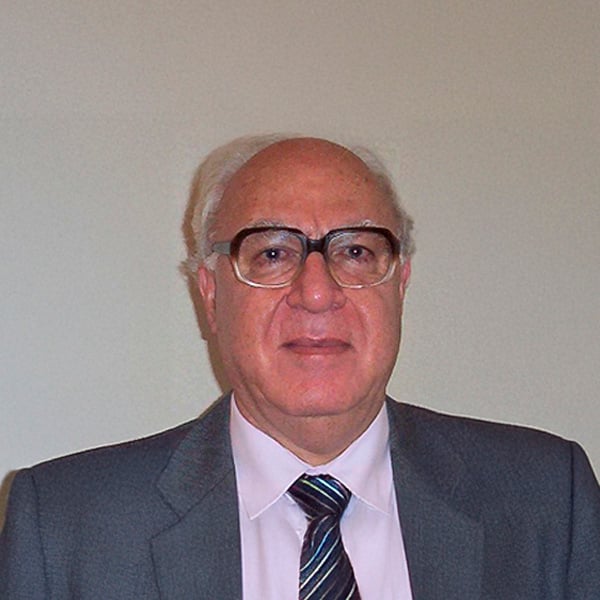
* Farhang Jahanpour is a British national of Iranian origin. He was a former Professor and Dean of the Faculty of Languages at the University of Isfahan. He spent a year as a Senior Fulbright Research Scholar at Harvard and also taught five years at the University of Cambridge. He has been a part-time tutor at the Department of Continuing Education and a member of Kellogg College at the University of Oxford since 1985, teaching courses on Middle East history and politics. Jahanpour is a TFF board member.

Related Posts

The agreement is catastrophic both because of what it says and what it doesn’t mention. It reduces further the major asset of security policies: Freedom of action. Jan Oberg TFF director September 25, 2026 A couple of hours before the agreement was signed on September 22, 2026, I published the following 13 hypotheses about what it would most likely contain on TFF Substack (in English). I was wrong on only the first point. Contrary to what Trump had written on his Truth Social platform, it does not appear to come into force immediately. In fact, it turned out to be worse than even I had anticipated. After these hypotheses now come a number of reflections in light of what the agreement actually contains, and does not contain, as well as the way in which it has generally been presented by major media outlets and by the public-service broadcaster DR. My...
This is not another geopolitical commentary on the Arctic. It is a visionary peace proposal that can save the region from militarised rivalry and ecological ruin. A blueprint for shared security, sustainable development, and human dignity — benefitting Greenland, the Arctic, and the rest of us. Jan Oberg TFF director Lund, Sweden, February 17, 2026 I. Four Principles for a New Arctic Vision The Arctic is often framed as a cold arena of rivalry — a place where great powers test each other’s resolve. But this worldview is outdated, unimaginative, and ultimately self‑defeating. The Arctic is not a vacuum waiting to be militarised; it is a living region, a climate stabiliser, and a cultural homeland whose future will shape the future of humanity. If we begin from that understanding, a far more rational Arctic order becomes possible — one that is peaceful, cooperative, and centred on the people who actually live there. This vision rests...
Photos © TFF 2000 Read PressInfo 90 “Lift the Sanctions and Bring More Aid to Yugoslavia” See Pictures from Belgrade © TFF 2000 Please reprint, copy, archive, quote or re-post this item, but please retain the source.

Recent Articles

Tony Robinson October 4, 2026 Violence is easy to recognise when someone is being beaten, shot or killed. It becomes more difficult when nobody is holding a weapon. Poverty, discrimination, exploitation and repression can restrict a human life just as effectively, although they do so in very different ways and with very different consequences. Simply adding more categories to an ever-growing list of forms of violence does not really solve the problem. The more interesting question is what all these different situations have in common and why it makes sense to describe them using the same word. Human beings do not simply react to what happens around them. They remember the past, imagine things that do not yet exist, make plans and undertake projects. Workers organise because they imagine different working conditions; people migrate because they imagine another life somewhere else; social movements emerge because people refuse to accept the...
It’s a matter of principles, courage, vision and pulling together – while the militarist world is falling apart… Peter Langille October 3, 2026 “Here, then, is the problem which we present to you, stark and dreadful and inescapable: Shall we put an end to the human race; or shall mankind renounce war?”The Bertrand Russell—Albert Einstein Manifesto, July 9, 1955 ⁕ The forecast for what’s ahead is worrisome. The sharp rise in armed conflicts over the past three years is adding to what was already the highest level in over seventy years. Genocides, which should be prevented are supported. A shared climate emergency that jeopardises survival is ignored. Diverse polls now suggest that people are war-weary, worried and interested in a more effective United Nations. And, there are viable policy options for a more secure world! Yet governments are doubling-down, betting on more war and investing heavily. If current trends persist,...
Johan Galtung 1930-2024October 2015 Published here on October 3, 2026 Let us focus on Civilization for conflict analysis and remedies. Major forms of disorder use violence; war is state organized violence. The most belligerent states are the United States of America and Israel, both with civilization roots. National Evangelism, the US Protestant Christian civilization– more national than evangelical–justifies US warfare as exceptionalism of a people chosen by God, with a manifest destiny to run the world. Orthodox Judaism justifies Israeli warfare to conquer and expand from Nile to Euphrates as a religious right and duty to the Eternal One. The third most belligerent country, the UK, no longer believes it is God-chosen but chosen by the USA; not quite the same but something. But the root cause of global disorder lies in the Occident–with Islam–seeing itself as the single, universal civilization valid for all at all times, all others being...

TFF on Substack

Discover and subscribe to more peace materials on TFF Substack

Most Popular

Tony Robinson October 4, 2026 Violence is easy to recognise when someone is being beaten, shot or killed. It becomes more difficult when nobody is holding a weapon. Poverty, discrimination, exploitation and repression can restrict a human life just as effectively, although they do so in very different ways and with very different consequences. Simply adding more categories to an ever-growing list of forms of violence does not really solve the problem. The more interesting question is what all these different situations have in common and why it makes sense to describe them using the same word. Human beings do not simply react to what happens around them. They remember the past, imagine things that do not yet exist, make plans and undertake projects. Workers organise because they imagine different working conditions; people migrate because they imagine another life somewhere else; social movements emerge because people refuse to accept the...
It’s a matter of principles, courage, vision and pulling together – while the militarist world is falling apart… Peter Langille October 3, 2026 “Here, then, is the problem which we present to you, stark and dreadful and inescapable: Shall we put an end to the human race; or shall mankind renounce war?”The Bertrand Russell—Albert Einstein Manifesto, July 9, 1955 ⁕ The forecast for what’s ahead is worrisome. The sharp rise in armed conflicts over the past three years is adding to what was already the highest level in over seventy years. Genocides, which should be prevented are supported. A shared climate emergency that jeopardises survival is ignored. Diverse polls now suggest that people are war-weary, worried and interested in a more effective United Nations. And, there are viable policy options for a more secure world! Yet governments are doubling-down, betting on more war and investing heavily. If current trends persist,...
Johan Galtung 1930-2024October 2015 Published here on October 3, 2026 Let us focus on Civilization for conflict analysis and remedies. Major forms of disorder use violence; war is state organized violence. The most belligerent states are the United States of America and Israel, both with civilization roots. National Evangelism, the US Protestant Christian civilization– more national than evangelical–justifies US warfare as exceptionalism of a people chosen by God, with a manifest destiny to run the world. Orthodox Judaism justifies Israeli warfare to conquer and expand from Nile to Euphrates as a religious right and duty to the Eternal One. The third most belligerent country, the UK, no longer believes it is God-chosen but chosen by the USA; not quite the same but something. But the root cause of global disorder lies in the Occident–with Islam–seeing itself as the single, universal civilization valid for all at all times, all others being...
Read More
Living-Peace-Sign-Budapest-copy
Tony Robinson October 4, 2026 Violence is easy to recognise when someone is being beaten, shot or killed. It becomes more difficult when nobody is holding a weapon. Poverty, discrimination, exploitation and repression can restrict a human life just as effectively, although they do so in very different ways and with very different consequences. Simply adding more categories to an ever-growing list of forms of violence does not really solve the problem. The more interesting question is what all these different situations have in common and why it makes sense to describe them using the same word. Human beings do not simply react to what happens around them. They remember the past, imagine things that do not yet exist, make plans and undertake projects. Workers organise because they imagine different working conditions; people migrate because they imagine another life somewhere else; social movements emerge because people refuse to accept the...
b54a1f10-8c65-4f0b-9dd5-4abc0a7d04cc_2659x2659
It’s a matter of principles, courage, vision and pulling together – while the militarist world is falling apart… Peter Langille October 3, 2026 “Here, then, is the problem which we present to you, stark and dreadful and inescapable: Shall we put an end to the human race; or shall mankind renounce war?”The Bertrand Russell—Albert Einstein Manifesto, July 9, 1955 ⁕ The forecast for what’s ahead is worrisome. The sharp rise in armed conflicts over the past three years is adding to what was already the highest level in over seventy years. Genocides, which should be prevented are supported. A shared climate emergency that jeopardises survival is ignored. Diverse polls now suggest that people are war-weary, worried and interested in a more effective United Nations. And, there are viable policy options for a more secure world! Yet governments are doubling-down, betting on more war and investing heavily. If current trends persist,...
010
Johan Galtung 1930-2024October 2015 Published here on October 3, 2026 Let us focus on Civilization for conflict analysis and remedies. Major forms of disorder use violence; war is state organized violence. The most belligerent states are the United States of America and Israel, both with civilization roots. National Evangelism, the US Protestant Christian civilization– more national than evangelical–justifies US warfare as exceptionalism of a people chosen by God, with a manifest destiny to run the world. Orthodox Judaism justifies Israeli warfare to conquer and expand from Nile to Euphrates as a religious right and duty to the Eternal One. The third most belligerent country, the UK, no longer believes it is God-chosen but chosen by the USA; not quite the same but something. But the root cause of global disorder lies in the Occident–with Islam–seeing itself as the single, universal civilization valid for all at all times, all others being...
Screenshot 2026-10-02 011738
Jan ObergPhD, director, The Transnational Foundation for Peace and Future Research, TFFLund, Sweden October 2, 2026 This is my full original manuscript. The Chinese Academy of Social Science, CASS, makes two publications out if it. 1. China’s Five-year plan emphasized the capabilities of basic research and original innovation. It is regarded as the goal of the future social development, which, as required, should be significantly enhanced. Can you comment on the importance of original innovation in research and academic study? I believe it is easier to define “original innovation” in the natural sciences than in social sciences. The breaking points of what constitutes something new, or innovative, are not quite as sharp in the latter. But in both fields it is about opening up something that was closed, unseen, unexplored before – making manifest what was earlier latent. Innovations come in many forms and shapes – naming something that was not...
arctic-circle-map
The agreement is catastrophic both because of what it says and what it doesn’t mention. It reduces further the major asset of security policies: Freedom of action. Jan Oberg TFF director September 25, 2026 A couple of hours before the agreement was signed on September 22, 2026, I published the following 13 hypotheses about what it would most likely contain on TFF Substack (in English). I was wrong on only the first point. Contrary to what Trump had written on his Truth Social platform, it does not appear to come into force immediately. In fact, it turned out to be worse than even I had anticipated. After these hypotheses now come a number of reflections in light of what the agreement actually contains, and does not contain, as well as the way in which it has generally been presented by major media outlets and by the public-service broadcaster DR. My...
girl-5894831_1280
Below are TFF-related media mentions, comments, videos and social media posts published elsewhere but not on this homepage. We happen to catch and list only a fraction. Regarding video comments and debates, we recommend that you go to the TFF Video Channel on Substack where many of them are reproduced. Jan Oberg is a contributor to China Daily – 52 million daily clicks – and Global Times, CGTN and CCTV (the national television), China Investment, Xinhua News Agency and several others. Articles and videos on these media very often multiply into countless Chinese (and Western media) that re-post them from these main media. Thanks to The China Academy, his analyses, interviews and comments are frequently posted on YouTube channels such as Thinkers Forum and Wave Media. These videos are often re-posted on Bilibili (China’s YouTube), the China Content Center on TikTok, and on the Chinese edition of TikTok, Douyin.com. This means reaching hundreds of millions of viewers worldwide over a year. While there are too many to catch on all these...




