
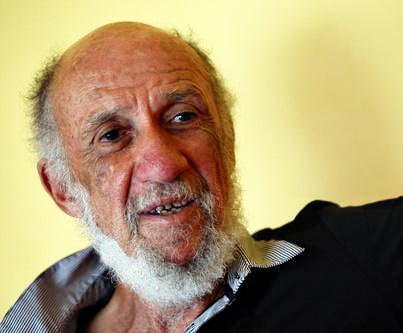
Wibisono, UN Special Rapporteur on Occupied Palestine, resigns

This post appeared on January 5th under a different title in the Electronic Intifada. It is published here in a slightly modified and extended form.

Makarim Wibisono announced his resignation as UN Special Rapporteur on Occupied Palestine, to take effect on March 31, 2016. This is position I held for six years, completing my second term in June 2014.

The prominent Indonesian diplomat says that he could not fulfill his mandate because Israel has adamantly refused to give him access to the Palestinian people living under its military occupation in the West Bank and Gaza Strip.

“Unfortunately, my efforts to help improve the lives of Palestinian victims of violations under the Israeli occupation have been frustrated every step of the way,” Wibisono explains.

His resignation reminds me in a strange way of Richard Goldstone’s retraction a few years ago of the main finding in the UN-commissioned Goldstone report, that Israel intentionally targeted civilians in the course of Operation Cast Lead, its massive attack on Gaza at the end of 2008.

At the time I responded to media inquiries by saying that I was shocked, but not surprised. Shocked because the evidence was overwhelming and the other three distinguished members of the UN fact-finding commission stuck by the finding. Yet I was not surprised because I knew Goldstone – a former judge of the South African constitutional court – to be a man of strong ambition and weak character, a terrible mix for public figures who wander into controversial territory.

In Wibisono’s case I am surprised, but not shocked. Surprised because he should have known from the outset that he was faced with a dilemma between doing the job properly of reporting on Israel’s crimes and human rights abuses and gaining Israel’s cooperation in the course of gathering this evidence. Not shocked, indeed grateful, as it illuminates the difficulty confronting anyone charged with truthful reporting on the Palestinian ordeal under occupation, and by his principled resignation Wibisono doesn’t allow Israel to get away with neutering the position of special rapporteur.

It is worth recalling that when Wibisono was selected as my successor, several more qualified candidates were passed over. Although the selection guidelines stress expert knowledge of the subject matter of the mandate, Wibisono apparently gained the upper hand along with the acquiescence of Israel and the United States precisely because of his lack of any relevant background.

I can only hope that now the UN Human Rights Council (HRC) will redeem its mistake by reviving the candidacies of Professor Christine Chinkin and Phyllis Bennis, both of whom possess the credentials, motivation and strength of character to become an effective special rapporteur.

The Palestinians deserve nothing less.

Honesty

When I met with Makarim Wibisono in Geneva shortly after his appointment as Special Rapporteur was announced, he told me confidently that he had been assured that if he accepted the appointment the Israeli government would allow him entry, a reassurance that he repeated in his resignation announcement. On his side, he pledged objectivity and balance, and an absence of preconceptions.

I warned him then that even someone who leaned far to the Israeli side politically would find it impossible to avoid reaching the conclusion that Israel was guilty of severe violations of international humanitarian law and of human rights standards, and this kind of honesty was sure to anger the Israelis.

I also told him that he was making a big mistake if he thought he could please both sides, given the reality of prolonged denial of fundamental Palestinian rights. At the time he smiled, apparently feeling confident that his diplomatic skills would allow him to please the Israelis even while he was compiling reports detailing their criminality. He told me that he was seeking to do what I did but to do so more effectively by securing Israel’s cooperation, and thus short circuiting their objections. It was then my turn to smile.

It is correct that the mandate itself is vulnerable to criticism as it does include an assessment of the responsibility of Palestinian administering authorities for violations of human rights, and only looks at Israeli violations. I tried to persuade the HRC unsuccessfully to have the mandate enlarged to encompass wrongdoing by the Palestinian Authority and Hamas.

The arguments against doing so was that it had been difficult to get agreement to establish the mandate, and opening up the issue of its scope was risky, and also, that the overwhelming evidence of Palestinian victimization resulting from the occupation resulted from Israel’s policies and practices.

Hence, it was argued by several delegations at the HRC that attention to the Palestinian violations would be diversionary, and give Israel a way to deflect criticism directed at the occupation.

Facing the heat

What I discovered during my six years as special rapporteur is that you can make a difference, but only if you are willing to put up with the heat.

You can make a difference in several ways. Above all, by giving foreign ministries around the world the most authoritative account available of the daily realities facing the Palestinian people. Also important is the ability to shift the discourse in more illuminating directions, instead of limiting discussion to ‘the occupation,’ address issues of de facto annexation, ethnic cleansing, and apartheid, as well as give some support within the UN for such civil society initiatives as BDS and the Freedom Flotilla.

By so doing you have to expect ultra-Zionist organizations and those managing the ‘special relationship’ between Israel and the United States to react harshly, including by launching a continuous defamatory campaign that seeks by all means to discredit your voice and will mount inflammatory accusations of anti-Semitism and, in my case, of being a “self-hating Jew.”

What both shocked and surprised me was the willingness of both the UN Secretary General and US diplomatic representatives (Susan Rice, Samantha Power) at the UN to bend in Israel’s direction and join the chorus making these irresponsible denunciations focused on a demand for my resignation.

Although periodically tempted to resign, I am glad that I didn’t. Given the pro-Israel bias of the mainstream media in the United States and Europe, it is particularly important, however embattled the position, to preserve this source of truth telling, and not to give in to the pressures mounted.

My hope is that the Human Rights Council will learn from the Wibisono experience and appoint someone who can both stand the heat and report the realities for what they are.

It is hampering the performance of a Special Rapporteur to be denied Israeli cooperation with official UN functions, which is itself a violation of Israel’s obligations as a member of the UN. At the same time, Israel’s behavior that flaunts international law is so manifest and reliable information easily available that I found it possible to compile reports that covered the main elements of the Palestinian ordeal.

Of course, direct contact with people living under occupation would have added a dimension of validation and witnessing, as well as giving some tangible expression of UN concern for the abuses being committed under conditions of an untenably prolonged occupation with no end in sight.

Until the day that Palestinian self-determination arrives, the least that UN can do is to keep open this window of observation and appraisal.

After all, it is the UN that undertook back in 1947 to find a solution to the Israel/Palestinian struggle that acknowledged the equal claims of both peoples. Although such an approach was colonialist and interventionist in 1947, it has plausibility in 2016 given the developments in the intervening years.

The UN may not be guilty in relation to what went wrong, but it certainly has failed to discharge its responsibilities with regard to Palestinian fundamental rights.

Until these rights are realized, the UN should give this remnant of the colonial era as much attention as possible.
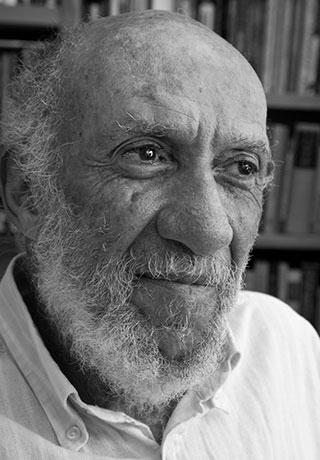

Professor Falk became an adviser to TFF when it was established in 1985.

Related Posts

PART 2 — Diplomacy, Law and Nonviolent Power By Jan ObergTFF co-founder and director January 26, 2026 This is the second of four TFF-created idea portfolios designed to curb the global reach of the United States and, in both the short and long term, help catalyse a worldwide nonviolent resistance to what many observers describe as the Trump administration’s uniquely confrontational, destructive and world-threatening policies. These portfolios outline what governments and citizens across the world can do through dynamic diplomacy, creative initiatives, and strictly nonviolent means. They are typical TFF works in that we do not only tell what the problem is and how bad it will go – as 90+% of all commentators, experts and scholars do – we tell what we think can be done, inviting you to think of what you think you can do. It seems painfully clear to me that the current political dynamics in Washington increasingly resemble the most dangerous...
TFF’s comprehensive proposal for dialogue about true peace in Ukraine is due in a day or two Jan Oberg November 20, 2025 What is being whispered through diplomatic corridors today is not peace, but quackery. The alleged 28‑point plan drafted in Washington and Moscow is mentioned as a solution to the Ukraine war. It is being negotiated by US businessman, real estate developer and Trump ally, Steve Witkoff, and by Kirill Dmitriev, who is CEO of the Russian Direct Investment Fund and a close ally of Putin, according to India’s Economic Times. For presumably good reasons, their education, qualifications and experience in international conflict analysis and peace-making remain untold. They look like surgeons who have never opened a medical textbook. It is nothing more than a mirage: a framework of concessions imposed on Ukraine’s citizens, negotiated without Kyiv, and excluding Europe. Like Gaza, it promises “peace” while institutionalising injustice. If half of what is available about...
PRESS RELEASE – 6 OCTOBER 2025 LAY DOWN YOUR ARMSPEACE PRIZE FOR 2025 is awarded Francesca Albanese The United Nations Special Rapporteur on the occupied Palestinian territories – as the person who, in accordance with Alfred Nobel’s will, has “done the most or the best work for fraternity between nations and for the abolition or reduction of standing armies as well as for the holding and promotion of peace congresses.” Francesca Albanese has forcefully and unwaveringly worked against Israel’s full-scale war on the occupied Palestinian territories, in particular Israel´s ongoing genocide against the Palestinian people. She has confronted Israel’s systematic war crimes and crimes against humanity in a truly global outreach. Further, she has brought governments, international organisations and people’s groups together to underline the responsibility of the world at large to act and to stop arming, enabling, and profiting from Israel’s ongoing criminal actions. But first of all, Albanese...

Recent Articles

Tony Robinson October 4, 2026 Violence is easy to recognise when someone is being beaten, shot or killed. It becomes more difficult when nobody is holding a weapon. Poverty, discrimination, exploitation and repression can restrict a human life just as effectively, although they do so in very different ways and with very different consequences. Simply adding more categories to an ever-growing list of forms of violence does not really solve the problem. The more interesting question is what all these different situations have in common and why it makes sense to describe them using the same word. Human beings do not simply react to what happens around them. They remember the past, imagine things that do not yet exist, make plans and undertake projects. Workers organise because they imagine different working conditions; people migrate because they imagine another life somewhere else; social movements emerge because people refuse to accept the...
It’s a matter of principles, courage, vision and pulling together – while the militarist world is falling apart… Peter Langille October 3, 2026 “Here, then, is the problem which we present to you, stark and dreadful and inescapable: Shall we put an end to the human race; or shall mankind renounce war?”The Bertrand Russell—Albert Einstein Manifesto, July 9, 1955 ⁕ The forecast for what’s ahead is worrisome. The sharp rise in armed conflicts over the past three years is adding to what was already the highest level in over seventy years. Genocides, which should be prevented are supported. A shared climate emergency that jeopardises survival is ignored. Diverse polls now suggest that people are war-weary, worried and interested in a more effective United Nations. And, there are viable policy options for a more secure world! Yet governments are doubling-down, betting on more war and investing heavily. If current trends persist,...
Johan Galtung 1930-2024October 2015 Published here on October 3, 2026 Let us focus on Civilization for conflict analysis and remedies. Major forms of disorder use violence; war is state organized violence. The most belligerent states are the United States of America and Israel, both with civilization roots. National Evangelism, the US Protestant Christian civilization– more national than evangelical–justifies US warfare as exceptionalism of a people chosen by God, with a manifest destiny to run the world. Orthodox Judaism justifies Israeli warfare to conquer and expand from Nile to Euphrates as a religious right and duty to the Eternal One. The third most belligerent country, the UK, no longer believes it is God-chosen but chosen by the USA; not quite the same but something. But the root cause of global disorder lies in the Occident–with Islam–seeing itself as the single, universal civilization valid for all at all times, all others being...

TFF on Substack

Discover and subscribe to more peace materials on TFF Substack

Most Popular

Tony Robinson October 4, 2026 Violence is easy to recognise when someone is being beaten, shot or killed. It becomes more difficult when nobody is holding a weapon. Poverty, discrimination, exploitation and repression can restrict a human life just as effectively, although they do so in very different ways and with very different consequences. Simply adding more categories to an ever-growing list of forms of violence does not really solve the problem. The more interesting question is what all these different situations have in common and why it makes sense to describe them using the same word. Human beings do not simply react to what happens around them. They remember the past, imagine things that do not yet exist, make plans and undertake projects. Workers organise because they imagine different working conditions; people migrate because they imagine another life somewhere else; social movements emerge because people refuse to accept the...
It’s a matter of principles, courage, vision and pulling together – while the militarist world is falling apart… Peter Langille October 3, 2026 “Here, then, is the problem which we present to you, stark and dreadful and inescapable: Shall we put an end to the human race; or shall mankind renounce war?”The Bertrand Russell—Albert Einstein Manifesto, July 9, 1955 ⁕ The forecast for what’s ahead is worrisome. The sharp rise in armed conflicts over the past three years is adding to what was already the highest level in over seventy years. Genocides, which should be prevented are supported. A shared climate emergency that jeopardises survival is ignored. Diverse polls now suggest that people are war-weary, worried and interested in a more effective United Nations. And, there are viable policy options for a more secure world! Yet governments are doubling-down, betting on more war and investing heavily. If current trends persist,...
Johan Galtung 1930-2024October 2015 Published here on October 3, 2026 Let us focus on Civilization for conflict analysis and remedies. Major forms of disorder use violence; war is state organized violence. The most belligerent states are the United States of America and Israel, both with civilization roots. National Evangelism, the US Protestant Christian civilization– more national than evangelical–justifies US warfare as exceptionalism of a people chosen by God, with a manifest destiny to run the world. Orthodox Judaism justifies Israeli warfare to conquer and expand from Nile to Euphrates as a religious right and duty to the Eternal One. The third most belligerent country, the UK, no longer believes it is God-chosen but chosen by the USA; not quite the same but something. But the root cause of global disorder lies in the Occident–with Islam–seeing itself as the single, universal civilization valid for all at all times, all others being...
Read More
Living-Peace-Sign-Budapest-copy
Tony Robinson October 4, 2026 Violence is easy to recognise when someone is being beaten, shot or killed. It becomes more difficult when nobody is holding a weapon. Poverty, discrimination, exploitation and repression can restrict a human life just as effectively, although they do so in very different ways and with very different consequences. Simply adding more categories to an ever-growing list of forms of violence does not really solve the problem. The more interesting question is what all these different situations have in common and why it makes sense to describe them using the same word. Human beings do not simply react to what happens around them. They remember the past, imagine things that do not yet exist, make plans and undertake projects. Workers organise because they imagine different working conditions; people migrate because they imagine another life somewhere else; social movements emerge because people refuse to accept the...
b54a1f10-8c65-4f0b-9dd5-4abc0a7d04cc_2659x2659
It’s a matter of principles, courage, vision and pulling together – while the militarist world is falling apart… Peter Langille October 3, 2026 “Here, then, is the problem which we present to you, stark and dreadful and inescapable: Shall we put an end to the human race; or shall mankind renounce war?”The Bertrand Russell—Albert Einstein Manifesto, July 9, 1955 ⁕ The forecast for what’s ahead is worrisome. The sharp rise in armed conflicts over the past three years is adding to what was already the highest level in over seventy years. Genocides, which should be prevented are supported. A shared climate emergency that jeopardises survival is ignored. Diverse polls now suggest that people are war-weary, worried and interested in a more effective United Nations. And, there are viable policy options for a more secure world! Yet governments are doubling-down, betting on more war and investing heavily. If current trends persist,...
010
Johan Galtung 1930-2024October 2015 Published here on October 3, 2026 Let us focus on Civilization for conflict analysis and remedies. Major forms of disorder use violence; war is state organized violence. The most belligerent states are the United States of America and Israel, both with civilization roots. National Evangelism, the US Protestant Christian civilization– more national than evangelical–justifies US warfare as exceptionalism of a people chosen by God, with a manifest destiny to run the world. Orthodox Judaism justifies Israeli warfare to conquer and expand from Nile to Euphrates as a religious right and duty to the Eternal One. The third most belligerent country, the UK, no longer believes it is God-chosen but chosen by the USA; not quite the same but something. But the root cause of global disorder lies in the Occident–with Islam–seeing itself as the single, universal civilization valid for all at all times, all others being...
Screenshot 2026-10-02 011738
Jan ObergPhD, director, The Transnational Foundation for Peace and Future Research, TFFLund, Sweden October 2, 2026 This is my full original manuscript. The Chinese Academy of Social Science, CASS, makes two publications out if it. 1. China’s Five-year plan emphasized the capabilities of basic research and original innovation. It is regarded as the goal of the future social development, which, as required, should be significantly enhanced. Can you comment on the importance of original innovation in research and academic study? I believe it is easier to define “original innovation” in the natural sciences than in social sciences. The breaking points of what constitutes something new, or innovative, are not quite as sharp in the latter. But in both fields it is about opening up something that was closed, unseen, unexplored before – making manifest what was earlier latent. Innovations come in many forms and shapes – naming something that was not...
arctic-circle-map
The agreement is catastrophic both because of what it says and what it doesn’t mention. It reduces further the major asset of security policies: Freedom of action. Jan Oberg TFF director September 25, 2026 A couple of hours before the agreement was signed on September 22, 2026, I published the following 13 hypotheses about what it would most likely contain on TFF Substack (in English). I was wrong on only the first point. Contrary to what Trump had written on his Truth Social platform, it does not appear to come into force immediately. In fact, it turned out to be worse than even I had anticipated. After these hypotheses now come a number of reflections in light of what the agreement actually contains, and does not contain, as well as the way in which it has generally been presented by major media outlets and by the public-service broadcaster DR. My...
girl-5894831_1280
Below are TFF-related media mentions, comments, videos and social media posts published elsewhere but not on this homepage. We happen to catch and list only a fraction. Regarding video comments and debates, we recommend that you go to the TFF Video Channel on Substack where many of them are reproduced. Jan Oberg is a contributor to China Daily – 52 million daily clicks – and Global Times, CGTN and CCTV (the national television), China Investment, Xinhua News Agency and several others. Articles and videos on these media very often multiply into countless Chinese (and Western media) that re-post them from these main media. Thanks to The China Academy, his analyses, interviews and comments are frequently posted on YouTube channels such as Thinkers Forum and Wave Media. These videos are often re-posted on Bilibili (China’s YouTube), the China Content Center on TikTok, and on the Chinese edition of TikTok, Douyin.com. This means reaching hundreds of millions of viewers worldwide over a year. While there are too many to catch on all these...




