
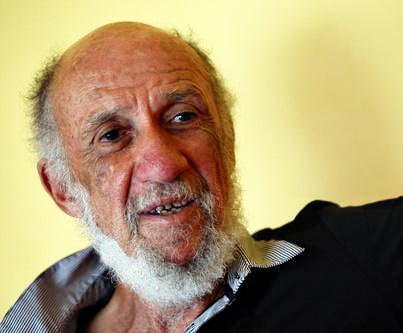
Is the Middle East something America owns and can lose?

I was appalled by the embedded colonialism of a recent issue of The Economist [June 6-12, 2015], boldly proclaiming its mood of geopolitical angst on its cover titling its featured story “Losing the Middle East.” Any glimmer of doubt about the intent of the magazine’s editors is removed by displaying a somewhat bedraggled American flag on the cover accompanied by the sub-title “Why American must not abandon the region.”

The rationale offered for this political imperative within this most revered journal of intelligent establishment guidance strikes me as even more appalling than this provocative packaging giving the plot away before we even begin reading the story.

What The Economist proposes

The argument set forth rests on the colonialist assumption that the Middle East is America’s to lose, although not quite, as the lead editorial ends with an enigmatic distinction:

“The idea has taken root that America no longer has what it takes to run the Middle East. That it ever could was an illusion. But America has a vital part to play. If it continues to stand back, everyone will be worse of — including the Americans.”

We are never told whether the catchall ‘everyone’ includes the people of the region, and whether they even matter in the calculations of this organ of elite opinion primarily concerned with the wellbeing of the West, which is linked seamlessly to the operations of the neoliberal world economy.

The strong implication of this lead editorial, never adequately explained, is that America should intervene more throughout the Middle East to reverse, or at least contain, present disruptive trends. Why this is so is never really explored beyond the misleading supposition that American military capabilities can improve the situation if brought more directly to bear and without explaining why, insisting that existing alignments with political actors in the region, regardless of their character, should be reinforced and strengthened.

The pragmatic side of what The Economist seems to be proposing is two-fold:

First, a militarist prescription for the pursuit of America’s regional interests, which are identified as counter-terrorism, oil, and preventing nuclear proliferation; secondly, a willingness to accept contradictions in protecting these interests, such as siding with Iran against IS [Islamic State] in Iran and opposing Iran in Syria.

It is within this framing that “[t]he Middle East desperately needs a new, invigorated engagement from America. That would not only be within America’s power, it would also be in America’s interest.”

Its central critique is that President Obama’s policy is too weak and wavering to be effective, which is clarified by the insistence that “[h]e must be ready to use force. Mr. Obama’s taboo about deploying American soldiers against IS in Iraq has led to a self-defeating shortage of special forces to guide air strikes to their targets.”

In their view, Obama’s approach has created a ‘vacuum’ that has “exacerbated the strife and disorder.” The fuller story in the body of the magazine also welcomes the prospect that either Hilary Clinton or any of the Republican presidential hopefuls seem determined to be far readier than Obama to intervene forcibly throughout the region.

Behind this scathing criticism of Obama is the evident belief that America’s geopolitical muscle if applied with skill, militarily and diplomatically, could have lessened the chaos and violence that now pervades the region.

Such an argument seems deeply flawed. To begin with, it is hardly accurate to portray Obama as standing aloof from the struggles going on in the Middle East. It is actively militarily engaged against IS and Syria and is in the process of becoming militarily reengaged in Iraq at the present time. It was a strong advocate of the regime changing NATO intervention against Qaddafi’s dictatorial rule in Libya, and it has quietly gone along with the counter-revolutionary shift in Egypt that destroyed the hopes of humane governance, at least temporarily, that surfaced with such excitement in early 2011 throughout the region.

My own view is that this degree of American military and diplomatic engagement brought more, not less, chaos to the Middle East. And now, as if to take the critique of The Economist immediately to heart the U.S. Government has announced plans to pre-position heavy weaponry and military personnel in several points in the region so as to be in a better position to intervene rapidly should further crises emerge.

Criticizing the Obama Approach

In my view, the burden of persuasion should always be upon those who favor greater reliance on military force whether in the Middle East or elsewhere. Without acknowledging any inconsistency, The Economist concedes that the Bush invasion of 2003 and subsequent occupation of Iraq was a disaster, illustrative of imprudently intervening in a massive fashion.

As every major effort at intervention by the United States has revealed, upping the ante by intervening a bit more, is a slippery slope that has eventually led to defeat after defeat, most vividly evident in the trajectory and outcome of the Vietnam War. This unquestioning militarization of the political imagination, which is what comes through in this sharp criticism of Obama’s approach, does not even pause to consider the benefits of allowing the dynamics of self-determination to control political outcomes in the 21st century.

An unlearned lesson of geopolitics in the post-colonial world is that the power balance has decisively shifted as between intervention by the West and national forces of resistance.

These forces have learned to be more effective in their combat tactics, but above all, have come to understand that time is on their side, that a foreign intervener will give up the quest at some point implicitly acknowledging that military dominance is not able to impose a political outcome at acceptable costs.

This is not just a matter of democratic societies becoming impatient in the face of a drawn out distant wars with questionable justifications, which causes death and injury to its young citizens, but the deeper realization that the post-colonial politics of resistance over time subverts the will and morale of the intervener. This happened as clearly to the Soviet Union in Afghanistan as it did to the United States in Vietnam, or later in Afghanistan and Iraq, and is more of a reflection of the structure of shifting power relations than of a weakening of ideological resolve.

The central metaphor of ‘losing the Middle East’ presupposes that it was America’s to lose rather than an acknowledgement of the empowerment of the peoples of the region and their governments with respect to the control of national and regional destinies. The metaphor of winning and losing is a colonialist framing of geopolitics that amorally vindicates hegemonic ambitions, especially the virtues of Western control. It gives priority to Western interests in a non-Western geographic domain, and pretends that such an orientation conveniently also happens to be an expression of fidelity to Western values, including democracy and human rights, and of benefit to the affected societies.

Nowhere in the extensive article are doubts raised about the unconditionality of support for Saudi Arabia and the other Gulf monarchies that oppress their populations and subject women to humiliating social constraints or to Israel that has dispossessed most Palestinians from their own homeland, and held the rest captive.

The Economist has the temerity to couple its sharp criticism of Obama’s allegedly soft diplomacy by anticipating what is misleadingly described as a “return to the center” that is expected to occur after the U.S. presidential elections in 2016: “The next American president may well be warmer towards Israel, and more willing to turn a blind eye to new settlements in the occupied territories. He or she might do more to reassure Gulf monarchies and speak more sternly to Iran.”

What a strange set of hopeful expectations!

Obama turned a pretty blind eye to Israeli settlement expansion during the last several years, even instructing his representatives to vote in isolation to shield Israel from UN censure over settlement expansion. His administration has also gone along with the basic approach of the Gulf monarchies, although timidly voicing some recent doubts about the wisdom of respected Saudi air strikes directed against the Houthis in Yemen.

And it is astonishing to note that the Obama presidency is situated by The Economist in the political spectrum as left of center? The idea of returning to the center implies that American regional policy these last six years had somehow veered toward the left. And therefore, for me what The Economist calls the center would more accurately be described as the right, or even the hard right.

In most respects, including policy toward Iran, Iraq, and Israel, Obama’s essential approach has been to sustain continuity with the policies of the George W. Bush presidency. There was the same willingness to threaten Iran with a military attack if seen to be crossing the nuclear threshold, a similar stance toward supporting the Shia governing process in Iraq, and the same endorsement of Israel’s defiance of international law, as well as insulating its nuclear weapons capability from even a whispered challenge.

There are more fundamental deficiencies in this analysis by The Economist of what has gone wrong in the region and what to do about it.

There is a seemingly blind eye toward the relevance of the history of Western responsibilities for the unfolding political ordeal that is being enacted throughout the Middle East. This perspective overlooks such defining antecedents as the playing out of British and French overt colonial ambitions in the aftermath of World War I and of the statist goals of the Zionist Movement as abetted by British policies during its period of mandate administration.

Imposing arbitrary boundaries on the region by Europe meant establishing unnatural political communities that could be held together (or broken apart) only by violence from above (or below). In a revealing respect Lebanon is a poster child of this era of Sykes-Picot diplomacy, having been carved out of Ottoman Syria to satisfy France’s egocentric craving at the time for a colonial possession in the region with a Christian majority.

The Economist’s policy prescriptions are also notable for their failure even to mention international law or the United Nation.

These normative sources of authority and constraint are evidently seen as of utterly no concern to the geopolitical optic through which the magazine’s august editors perceive policy options for the region. But if China were to assess its approach to the sovereignty disputes involving the Spratly Islands with the same cavalier attitudes toward the relevance of normative authority, the West would be up in arms, persuasively contending that such behavior is dangerously destructive of a moderate political order in the Pacific.

The Old Geopolitics versus the New Geopolitics

Even when it comes to the pragmatic level of analysis, I find that The Economist’s sense of editorial guidance is woefully shortsighted. Let’s accept their focus on terrorism, oil, and nuclear proliferation even accepting as accurate their portrayal of American interests.

Surely, the best way to combat jihadism is a measured withdrawal from the region. As for oil, the Arab producers in the region have shown through the years that their policies are market-driven with scant attention to ideology as shown by their readiness to throw the Palestinians under the bus. Most persuasive of all, nuclear proliferation would be best prevented by establishing a nuclear free zone in the Middle East, which all governments except Israel favor, and have done so for several years. In other words, the idea of trying to fill the so-called vacuum following the European retreat, which began during World War II and was consummated by the 1956 Suez War, with American military power and diplomatic muscle epitomizes the ‘old geopolitics’ of Western hegemony rather than relying on a potential ‘new geopolitics’ of self-determination.

There is, of course, little assurance that the outcome of the interplay of domestic and regional forces in the Middle East will be ethically satisfying or politically stable, but there is at least some likelihood that going with the post-colonial historical flow will produce better results than further reliance on the United States to continue battling the strong currents of nationalism.

This clarion call for enhanced trust in the nostalgic imaginary of the old geopolitics seems historically tone deaf. It represents a reliance on the old geopolitics of militarism that should have been discredited long ago by its record of failure and its incredibly high opportunity costs. At the very least, adopting this new geopolitics of self-determination might enable the politicians and citizenry of the United States to take a much needed and long overdue look within its own borders, and devote much more of its imaginative and material resources to creating a humane society at home, starting with its physical and moral infrastructure.

One good starting point for such a program is with the language of political discourse. This idea of the West ‘losing’ a country or, as with The Economist’s cover story, losing a whole region, should be banished from the 21st century political imaginary, and with it the realization that such a concept of winning and losing is worse than anachronistic, it is obsolete.

It might be helpful to recall that for many years the American political right accused the U.S. Government of ‘losing China’ only to discover later in the Cold War that China had become a valuable geopolitical ally in the core struggle with the Soviet Union, and still later, that China as much as any country, keeps the world economy from unraveling.
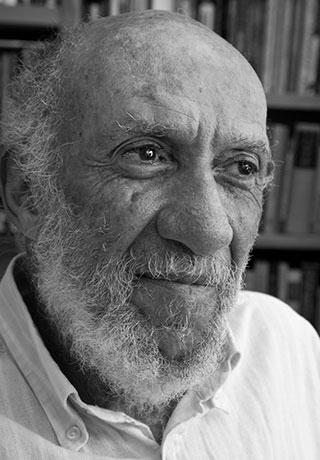

Professor Falk became an adviser to TFF when it was established in 1985.

Related Posts

Jan ObergPhD, director, The Transnational Foundation for Peace and Future Research, TFFLund, Sweden October 2, 2026 This is my full original manuscript. The Chinese Academy of Social Science, CASS, makes two publications out if it. 1. China’s Five-year plan emphasized the capabilities of basic research and original innovation. It is regarded as the goal of the future social development, which, as required, should be significantly enhanced. Can you comment on the importance of original innovation in research and academic study? I believe it is easier to define “original innovation” in the natural sciences than in social sciences. The breaking points of what constitutes something new, or innovative, are not quite as sharp in the latter. But in both fields it is about opening up something that was closed, unseen, unexplored before – making manifest what was earlier latent. Innovations come in many forms and shapes – naming something that was not...
The agreement is catastrophic both because of what it says and what it doesn’t mention. It reduces further the major asset of security policies: Freedom of action. Jan Oberg TFF director September 25, 2026 A couple of hours before the agreement was signed on September 22, 2026, I published the following 13 hypotheses about what it would most likely contain on TFF Substack (in English). I was wrong on only the first point. Contrary to what Trump had written on his Truth Social platform, it does not appear to come into force immediately. In fact, it turned out to be worse than even I had anticipated. After these hypotheses now come a number of reflections in light of what the agreement actually contains, and does not contain, as well as the way in which it has generally been presented by major media outlets and by the public-service broadcaster DR. My...
Below are TFF-related media mentions, comments, videos and social media posts published elsewhere but not on this homepage. We happen to catch and list only a fraction. Regarding video comments and debates, we recommend that you go to the TFF Video Channel on Substack where many of them are reproduced. Jan Oberg is a contributor to China Daily – 52 million daily clicks – and Global Times, CGTN and CCTV (the national television), China Investment, Xinhua News Agency and several others. Articles and videos on these media very often multiply into countless Chinese (and Western media) that re-post them from these main media. Thanks to The China Academy, his analyses, interviews and comments are frequently posted on YouTube channels such as Thinkers Forum and Wave Media. These videos are often re-posted on Bilibili (China’s YouTube), the China Content Center on TikTok, and on the Chinese edition of TikTok, Douyin.com. This means reaching hundreds of millions of viewers worldwide over a year. While there are too many to catch on all these...

Recent Articles

Tony Robinson October 4, 2026 Violence is easy to recognise when someone is being beaten, shot or killed. It becomes more difficult when nobody is holding a weapon. Poverty, discrimination, exploitation and repression can restrict a human life just as effectively, although they do so in very different ways and with very different consequences. Simply adding more categories to an ever-growing list of forms of violence does not really solve the problem. The more interesting question is what all these different situations have in common and why it makes sense to describe them using the same word. Human beings do not simply react to what happens around them. They remember the past, imagine things that do not yet exist, make plans and undertake projects. Workers organise because they imagine different working conditions; people migrate because they imagine another life somewhere else; social movements emerge because people refuse to accept the...
It’s a matter of principles, courage, vision and pulling together – while the militarist world is falling apart… Peter Langille October 3, 2026 “Here, then, is the problem which we present to you, stark and dreadful and inescapable: Shall we put an end to the human race; or shall mankind renounce war?”The Bertrand Russell—Albert Einstein Manifesto, July 9, 1955 ⁕ The forecast for what’s ahead is worrisome. The sharp rise in armed conflicts over the past three years is adding to what was already the highest level in over seventy years. Genocides, which should be prevented are supported. A shared climate emergency that jeopardises survival is ignored. Diverse polls now suggest that people are war-weary, worried and interested in a more effective United Nations. And, there are viable policy options for a more secure world! Yet governments are doubling-down, betting on more war and investing heavily. If current trends persist,...
Johan Galtung 1930-2024October 2015 Published here on October 3, 2026 Let us focus on Civilization for conflict analysis and remedies. Major forms of disorder use violence; war is state organized violence. The most belligerent states are the United States of America and Israel, both with civilization roots. National Evangelism, the US Protestant Christian civilization– more national than evangelical–justifies US warfare as exceptionalism of a people chosen by God, with a manifest destiny to run the world. Orthodox Judaism justifies Israeli warfare to conquer and expand from Nile to Euphrates as a religious right and duty to the Eternal One. The third most belligerent country, the UK, no longer believes it is God-chosen but chosen by the USA; not quite the same but something. But the root cause of global disorder lies in the Occident–with Islam–seeing itself as the single, universal civilization valid for all at all times, all others being...

TFF on Substack

Discover and subscribe to more peace materials on TFF Substack

Most Popular

Tony Robinson October 4, 2026 Violence is easy to recognise when someone is being beaten, shot or killed. It becomes more difficult when nobody is holding a weapon. Poverty, discrimination, exploitation and repression can restrict a human life just as effectively, although they do so in very different ways and with very different consequences. Simply adding more categories to an ever-growing list of forms of violence does not really solve the problem. The more interesting question is what all these different situations have in common and why it makes sense to describe them using the same word. Human beings do not simply react to what happens around them. They remember the past, imagine things that do not yet exist, make plans and undertake projects. Workers organise because they imagine different working conditions; people migrate because they imagine another life somewhere else; social movements emerge because people refuse to accept the...
It’s a matter of principles, courage, vision and pulling together – while the militarist world is falling apart… Peter Langille October 3, 2026 “Here, then, is the problem which we present to you, stark and dreadful and inescapable: Shall we put an end to the human race; or shall mankind renounce war?”The Bertrand Russell—Albert Einstein Manifesto, July 9, 1955 ⁕ The forecast for what’s ahead is worrisome. The sharp rise in armed conflicts over the past three years is adding to what was already the highest level in over seventy years. Genocides, which should be prevented are supported. A shared climate emergency that jeopardises survival is ignored. Diverse polls now suggest that people are war-weary, worried and interested in a more effective United Nations. And, there are viable policy options for a more secure world! Yet governments are doubling-down, betting on more war and investing heavily. If current trends persist,...
Johan Galtung 1930-2024October 2015 Published here on October 3, 2026 Let us focus on Civilization for conflict analysis and remedies. Major forms of disorder use violence; war is state organized violence. The most belligerent states are the United States of America and Israel, both with civilization roots. National Evangelism, the US Protestant Christian civilization– more national than evangelical–justifies US warfare as exceptionalism of a people chosen by God, with a manifest destiny to run the world. Orthodox Judaism justifies Israeli warfare to conquer and expand from Nile to Euphrates as a religious right and duty to the Eternal One. The third most belligerent country, the UK, no longer believes it is God-chosen but chosen by the USA; not quite the same but something. But the root cause of global disorder lies in the Occident–with Islam–seeing itself as the single, universal civilization valid for all at all times, all others being...
Read More
Living-Peace-Sign-Budapest-copy
Tony Robinson October 4, 2026 Violence is easy to recognise when someone is being beaten, shot or killed. It becomes more difficult when nobody is holding a weapon. Poverty, discrimination, exploitation and repression can restrict a human life just as effectively, although they do so in very different ways and with very different consequences. Simply adding more categories to an ever-growing list of forms of violence does not really solve the problem. The more interesting question is what all these different situations have in common and why it makes sense to describe them using the same word. Human beings do not simply react to what happens around them. They remember the past, imagine things that do not yet exist, make plans and undertake projects. Workers organise because they imagine different working conditions; people migrate because they imagine another life somewhere else; social movements emerge because people refuse to accept the...
b54a1f10-8c65-4f0b-9dd5-4abc0a7d04cc_2659x2659
It’s a matter of principles, courage, vision and pulling together – while the militarist world is falling apart… Peter Langille October 3, 2026 “Here, then, is the problem which we present to you, stark and dreadful and inescapable: Shall we put an end to the human race; or shall mankind renounce war?”The Bertrand Russell—Albert Einstein Manifesto, July 9, 1955 ⁕ The forecast for what’s ahead is worrisome. The sharp rise in armed conflicts over the past three years is adding to what was already the highest level in over seventy years. Genocides, which should be prevented are supported. A shared climate emergency that jeopardises survival is ignored. Diverse polls now suggest that people are war-weary, worried and interested in a more effective United Nations. And, there are viable policy options for a more secure world! Yet governments are doubling-down, betting on more war and investing heavily. If current trends persist,...
010
Johan Galtung 1930-2024October 2015 Published here on October 3, 2026 Let us focus on Civilization for conflict analysis and remedies. Major forms of disorder use violence; war is state organized violence. The most belligerent states are the United States of America and Israel, both with civilization roots. National Evangelism, the US Protestant Christian civilization– more national than evangelical–justifies US warfare as exceptionalism of a people chosen by God, with a manifest destiny to run the world. Orthodox Judaism justifies Israeli warfare to conquer and expand from Nile to Euphrates as a religious right and duty to the Eternal One. The third most belligerent country, the UK, no longer believes it is God-chosen but chosen by the USA; not quite the same but something. But the root cause of global disorder lies in the Occident–with Islam–seeing itself as the single, universal civilization valid for all at all times, all others being...
Screenshot 2026-10-02 011738
Jan ObergPhD, director, The Transnational Foundation for Peace and Future Research, TFFLund, Sweden October 2, 2026 This is my full original manuscript. The Chinese Academy of Social Science, CASS, makes two publications out if it. 1. China’s Five-year plan emphasized the capabilities of basic research and original innovation. It is regarded as the goal of the future social development, which, as required, should be significantly enhanced. Can you comment on the importance of original innovation in research and academic study? I believe it is easier to define “original innovation” in the natural sciences than in social sciences. The breaking points of what constitutes something new, or innovative, are not quite as sharp in the latter. But in both fields it is about opening up something that was closed, unseen, unexplored before – making manifest what was earlier latent. Innovations come in many forms and shapes – naming something that was not...
arctic-circle-map
The agreement is catastrophic both because of what it says and what it doesn’t mention. It reduces further the major asset of security policies: Freedom of action. Jan Oberg TFF director September 25, 2026 A couple of hours before the agreement was signed on September 22, 2026, I published the following 13 hypotheses about what it would most likely contain on TFF Substack (in English). I was wrong on only the first point. Contrary to what Trump had written on his Truth Social platform, it does not appear to come into force immediately. In fact, it turned out to be worse than even I had anticipated. After these hypotheses now come a number of reflections in light of what the agreement actually contains, and does not contain, as well as the way in which it has generally been presented by major media outlets and by the public-service broadcaster DR. My...
girl-5894831_1280
Below are TFF-related media mentions, comments, videos and social media posts published elsewhere but not on this homepage. We happen to catch and list only a fraction. Regarding video comments and debates, we recommend that you go to the TFF Video Channel on Substack where many of them are reproduced. Jan Oberg is a contributor to China Daily – 52 million daily clicks – and Global Times, CGTN and CCTV (the national television), China Investment, Xinhua News Agency and several others. Articles and videos on these media very often multiply into countless Chinese (and Western media) that re-post them from these main media. Thanks to The China Academy, his analyses, interviews and comments are frequently posted on YouTube channels such as Thinkers Forum and Wave Media. These videos are often re-posted on Bilibili (China’s YouTube), the China Content Center on TikTok, and on the Chinese edition of TikTok, Douyin.com. This means reaching hundreds of millions of viewers worldwide over a year. While there are too many to catch on all these...




