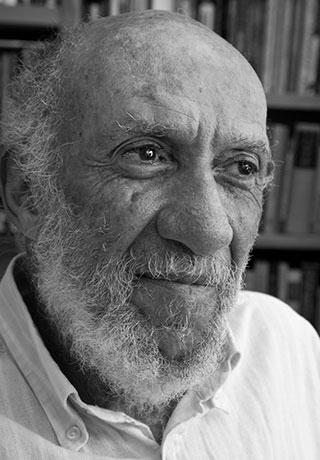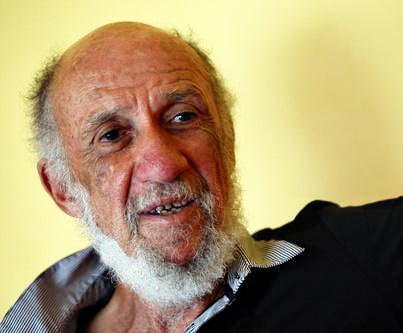
Responding to intense pressure from the usual sources William Schabas, a prominent and respected expert on international criminal law, recently resigned as Chair of the UN expert commission of inquiry into war crimes allegations arising from the massive Israeli military operations in Gaza during July and August of 2014.
These issues relating to international criminal accountability have also received recent prominence due to Palestine’s adherence to the Rome Treaty making it a party to the International Criminal Court, an initiative that generated an enraged punitive reaction on the part of Israel as well as an angry denunciation by Washington. On display in these instances is the struggle between extending the rule of law to international state crimes and the geopolitical resistance to such an effort whenever accountability to law is in tension with the pursuit of strategic interests.
Imposing international criminal responsibility upon political leaders and military commanders that occur in the aftermath of wars possesses a dual character from a geopolitical perspective: to vindicate major military undertakings of liberal democratic states and to ensure impunity for the leaders of these same states in the event that their behavior or that of their allies are alleged to be international crimes.
These efforts at vindication are associated with strengthening the global rule of law and validating the established order, while impunity is invoked to insulate powerful individuals and their governments from criminal accountability. The resulting pattern in international life is one of double standards at the level of implementation and hypocritical rhetoric about the importance of a global rule of law based on its universal applicability.
Contemporary experience with these issues is grounded in the aftermath of World War II.
In 1945 with great fanfare after World War II, especially at Nuremberg in the legal prosecution of surviving Nazi leaders, as well as at Toyko where a series of prominent Japanese personalities who had headed the imperial government and commanded its military forces were accused and convicted of international crimes. These sophisticated ‘show trials’ were generally endorsed in the West as a civilized alternative to the favored Soviet and British approaches, which would have been to arrange summary mass executions of all Germans deemed responsible for international crimes without making any effort to assess the gravity or accuracy of the charges directed at specific individuals.
What was done at Nuremberg in 1945 was for prosecutors to prepare carefully evidence of alleged wrongdoing of each defendant under indictment as well as developing arguments about the legal relevance of the international crimes at stake while giving those accused an almost free hand to offer legal defenses and mitigating evidence as prepared by competent lawyers appointed to render them assistance.
In most respects, Nuremberg in particular continues to be viewed as a landmark success in the annals of the progressive development of international law. It is also significant that the outcomes of parallel Tokyo prosecutions of Japanese leaders are virtually unknown except in Japan where they are decried as ‘victors’ justice’ and throughout the world among a few specialists in international criminal law.
There are several reasons for the prominence of Nuremberg.
First of all, the disclosures of the Holocaust at Nuremberg were so ghastly that some sort of punishment of those responsible seemed to be a moral imperative at the time.
Although the crime of genocide did not yet exist in law, the revelations of the Nuremberg proceedings documented as never before the systematic extermination of Jews and others in Europe. Beyond this, the war was widely believed to have been a just and necessary response to the menace of Naziism and Japanese imperialism, and their embrace of aggressive war. The Allied victory was viewed as decisive in overcoming the fascist challenge to liberal democracy, with the Nuremberg Judgment providing an authoritative rationale for waging a defensive war so costly in lives, devastation, and resources.
Finally, the claim to be establishing a structure of legal accountability that took precedence over national law seemed integral to the postwar resolve to keep the peace in the future and deter aggression by reminding all leaders of the possibility of criminal accountability for initiating a war or abusing people under their control. The advent of nuclear weaponry reinforced the moral and political conviction that major wars must now be prevented by all available means, including this warning to leaders and military commanders that their actions could become the subject of criminal prosecution.
At the same time, this Nuremberg/Tokyo experiment was tainted from the outset.
It was clearly victors’ justice that incorporated double standards. The evident crimes of the winners in the war were not even investigated, including the atomic bombings of two Japanese cities, which were viewed around the world as perhaps the worst single acts of wrongdoing throughout the course of the entire war, and only the Nazi death camps were in some way equivalent in relation to legality and morality.
There were official statements made at Nuremberg that those who sat in judgment of the Germans would in the future be subject to similar procedures of accountability if they committed acts that seemed to be crimes under international law implying that the rule of law would replace victors’ justice.
In effect, the claim made on behalf of moral credibility and political fairness was that this Nuremberg/Tokyo approach would assume the attributes of the rule of law by treating equals equally in future conflicts. Such expectations, if scrutinized, seemed to reflect the hopes of ‘liberal legalists’ in universal legal standards, but were never realistic goals given the structure and nature of world politics.
As is well-known, this Nuremberg promise could not be kept because geopolitical primacy continues to set the limits of legal accountability. Although there has existed an International Criminal Court since 2002, and ample grounds for believing that some major sovereign states have committed international crimes, there have been zero prosecutions directed at dominant political actors, and not even investigations into possible criminality have been launched.
Such a pattern results from a normative gap in world order that is not likely to be closed soon. It is a gap that is most visibly expressed by reference to the right of veto possessed as a matter of law by the five permanent members of the UN Security Council.
This right of veto amounts to an institutional grant of exemption from the legal obligation to comply with the UN Charter on matters of peace and security. For these five states and their friends and allies, compliance is discretionary, and non-compliance is in effect ‘a right.’
In this regard, the UN Charter is itself a product of what might be called ‘geopolitical realism,’ which takes precedence over the apolitical aspirations of ‘liberal legalists.’
And yet, the impulse to hold accountable those who commit crimes against the peace, war crimes, and crimes against humanity remains strong among moderate democratic governments and in some sectors of global civil society. As a result there is some further development of the Nuremberg idea, although the fundamental tensions between hard power and establishing a credible rule of law with general applicability remains.
During the 1990s the UN Security Council established ad hoc international tribunals to assess criminal responsibility associated with the breakup of former Yugoslavia and in relation to the genocidal massacres in Rwanda. In these North/South settings, there was more willingness to allow all sides to bring forth their arguments about the criminal behavior of their adversary since there were no allegations directed at geopolitical heavyweights. That is, the approach of liberal legalists became practical in these situations where no high profile geopolitical actor is being accused of an international crime.
The International Criminal Court was itself brought into being in 2002 by an unusual coalition of forces, joining governments with a great many NGOs drawn from around the world in a joint project. What came into being is an international institution with a mandate to investigate and prosecute, but lacking the participation and support of the dominant states, and operating within a framework that up to now has been deferential to the sensitivities of sovereign states in the West.
Operating in such a limited way has led the ICC in its first decade to focus its attention almost entirely on African leaders, while looking the other way with respect to geopolitical actors.
Liberals conceive of this as progress, doing what can be done, and beneficial to the extent that it apprehends some persons who have been responsible for atrocities and crimes against humanity. Critics of the ICC view it as another venue for the administration of ‘victors’ justice’ and an inscription of Western moral hegemony that entails a cynical expression of double standards. Both interpretations are plausible.
The ICC is currently facing an identity test as to whether it will undertake investigations of alleged Israeli criminality made at the request of Palestine. Its institutional weight is being demonstrated by the degree to which the Israeli leadership reacts with fury, punitive policies, and intense anger directed at the Palestinian Authority for raising such a possibility. It should surprise few that Israel’s backlash against the ICC is supported by the United States.
For centuries the capacity of national courts to act as agents of law enforcement in relation to international wrongdoing has been recognized. Such a judicial role was long exercised in Western countries in relation to international piracy, which was viewed as a crime against the whole world and hence could be prosecuted anywhere. Such an extension of international criminal law is based on ideas of ‘universal jurisdiction,’ strengthening the capacity of international society to address serious crimes of state.
This kind of approach receive great attention in relation to allegations of torture made against the former Chilean dictator, Augusto Pinochet, after he was detained by Britain in response to a 1998 request for extradition by Spain where a court stood ready to prosecute on the basis of indictments already made. After a series of legal proceedings in Britain the House of Lords acting as the country’s highest judicial body decided that Pinochet should be extradited, but only for torture charges relating to a period after torture became an international crime within Britain.
In theory, national courts could become much more active in relation to universal jurisdiction if so empowered by parliamentary mandate, but again doing so without challenging geopolitical red lines. When Belgian courts threatened to proceed against Donald Rumsfeld because of his alleged authorization of torture in Iraq, political pressures were mounted by Washington, including even threats to move NATO. In the end, Belgium backed down by revising its national criminal code so as to make it much more difficult to prosecute international crimes that occurred outside of Belgium and for which Belgians were not victims or perpetrators.
Civil society has also acted to close the normative gap created by patterns of geopolitical impunity.
In the midst of the Vietnam War, motivated by a sense of moral outrage and the paralysis of official institutions when it came to challenging American behavior, Bertrand Russell organized a symbolic legal proceeding that investigated charges of criminality in 1966 and 1967. Prominent intellectuals from around the world were invited to serve as a jury of conscience, heard evidence, issuing their opinion as to law and facts at the end.
Inspired by this Russell Tribunal experience, the Permanent Peoples Tribunal was established a decade later by citizens, operating out of Rome, holding sessions on issues where there existed moral outrage, legal prohibitions, and institutional paralysis, symbolically challenging geopolitical impunity. In 2005 there was organized in Istanbul by a dedicated group of female activists an independent tribunal to investigate war crimes charges against British and American political and military leaders, as well as corporate actors associated with the Iraq War.
The Iraq War Tribunal relied upon a jury of conscience chaired by Arundhati Roy to pronounce upon the evidence. Of course, such a tribunal can only challenge impunity symbolically by influencing public opinion, and possibly through encouraging boycotts and other moves that delegitimize the claimants of power and possibly alter the political climate. Nevertheless, it plays a role in the legitimacy war dimensions of international conflicts, providing an alternative narrative to the discourse disseminated by geopolitical forces and giving encouragement to civil society activism by providing a convincing rationale for concluding that contested behavior violates fundamental norms of international law and morality.
In summary, it is still accurate to observe that geopolitical primacy inhibits the implementation of international criminal law from the perspective of a global rule of law regime that treats equals equally. At the same time, ever since Nuremberg there have been efforts to end the impunity of those guilty of international crimes in war/peace situations and national settings of oppressive rule.
These efforts have taken several main forms:
(1) the establishment by the UN of ad hoc tribunals with a specific mandate as with former Yugoslavia and Rwanda;
(2) the establishment of a treaty based international institution, the International Criminal Court, with limited participation and disappointing results to date;
(3) reliance on universal jurisdiction to activate national courts to act as agents on behalf of international society with respect to enforcing international criminal law;
(4) the formation of civil society tribunals to assess criminal responsibility of leaders in situations of moral outrage and global settings that render unavailable either inter-governmental or governmental procedures of accountability.
(1)-(3) are projects of liberal legality, while (4) draws on more progressive jurisprudential energies outside the statist paradigm.
In the end, there is posed a choice.
One possibility is go along with the one-eyed efforts of liberal legalists, most notably mainstream NGOs such as Human Rights Watch, silently acknowledging that the rule of law cannot be expected to function in relation to many serious international crimes due to the hierarchical and hegemonic structure of international society. The other possibility is to insist there can be no international justice so long as there exists a regime of ‘geopolitical impunity.’
In both instances, the contributions of civil society tribunals are needed, both for the sake of symbolic indictment and documentation of wrongdoing, and to acknowledge civil society as the moral and legal conscience of humanity. It must be admitted that only among liberal democracies are such self-critical initiatives of civil society tolerated, although such undertakings are derided and marginalized by mainstream media as the work of a ‘kangaroo court.’
Obama’s refusal to look back at the international crimes alleged against leading members of the Bush presidency is one awkward admission of the limits on legal accountability; such reasoning if generalized would invalidate any concern with all forms of past behavior, and hence any notion of accountability for all crimes.
In such a dysutopia criminal law might exist, but by habit and expectation it would never be implemented, however severe the crime and dangerous the criminal.
In the world we inhabit, without kangaroo courts international criminal law would continue with its limited writ, and there would no tribunals whatsoever to assess the criminality of the most powerful political actors on the world stage that menace many vulnerable peoples in the world.