
Pope Francis, Salman Rusdie, and Charlie Hebdo

Prefatory NoteThis post is a much modified piece published a few days ago in AlJazeera English, and republished elsewhere on line. As many have now done it tries to enlarge the context in which the Charlie Hebdo events are understood beyond a highlight film clip in ‘the war on terror.’ The alleged link between the Chouachi brothers and Al Qaeda of the Arabian Peninsula (AQAP) allows the attack on Charlie Hebdo to be experienced as the French 9/11, and with this a return of France to a status of post-colonial geopolitical relevance.
Without grasping the relevance of how the dominant treat the dominated within our societies and throughout the world, we are consigning ourselves to many repetitions of the private and public horrors experienced in France on January 7, 2015.

There is some common ground, but not much. The killings in Paris last week were horrifying crimes that expose the vulnerability of democratic societies to lethal vigilante violence, whether facilitated from outside or as a spontaneous expression of homegrown psychopathic alienation. Beyond this naked, morbid reality associated with the murder of the Charlie Hebdo cartoonists, police officers, and the supermarket hostages there is nothing but darkness, and in that darkness some dangerous monsters lurk.

We can be again thankful for the moral clarity of Pope Francis who a few days ago in the impromptu setting of a plane taking him from Sri Lanka to Manila shined a light upon the darkness. Unlike those who so ardently wielded the slogan “Je suis Charlie” the Pope understood that free speech without limits is an invitation to indulge the worst negative impulses that will then operate as viruses destroying the vital organs of the body politic.

What Pope Francis underscored was the impossibility of reconciling dignity with hurtful insults, especially as directed toward the already marginalize and socially vulnerable. He illustrated his view by saying that if one of his companions on the plane, Dr. Alberto Gazparri a Vatican official, hurled obscene insults at his mother Gazparri could expect to receive a punch. The pope called such a physical response normal: “It’s normal. It’s normal. You cannot provoke. You cannot insult the faith of others. You cannot make fun of the faith of others.”

Perhaps, this is too strong an expression of limits, but it does indirectly raise the Derrida urgent question of how and whether we can ever learn to ‘live together’ in peace, with respect within globalizing social space, while swallowing differences of race, class, religion, ethnicity, gender.

Francis went on to say the obvious, that to kill in response to any provocation, however severe, hurtful, and lewd, is not compatible with religion properly understood. If it claims a religious motivation, such behavior is an expression of “deviant forms of religion.” He goes on to say “To kill in the name of God is an aberration.”

At the same time, how lines are drawn with respect to acceptable and unacceptable forms of provocation is highly political, changeable, and culturally influenced and even constructed.

In one respect France and other governments understand both sides of this argument, but twist it for political purposes. The popular African comedian Dieudonné has been repeatedly charged with criminal offenses because his humorous routines deeply offend Jews, Zionists, and Israel. He is being currently prosecuted in France for ‘defending terrorism’. It turns out that there are no less than 54 pending cases in the country associated with ‘condoning terrorism’ by way of speech.

The Associated Press reports that despite present tensions and the public celebration of free speech the government in Paris has “ordered prosecutors around the country to crack down on hate speech, anti-Semitism, and glorifying terrorism.” But note no message by the French government is sent mentioning ‘hate cartooning’ or addressing the surge of ‘Islamophobia’ in the country in the days following the January 7th attack on the Charlie Hebdo editorial offices.

A large number of mosques in France and elsewhere in Europe have been desecrated in the last week. There are numerous reports of harassment of Muslims as they walk the streets of the country, and indeed throughout Europe. It is understandable that the Muslim community as a whole feels on edge given the ambiguity of the ‘Je suis Charlie’ fervor that includes a new press run of 5 million, compared to the former figure of 60,000, that features a cover demeaning the prophet Mohamed.

The ambiguity arises because there is a merger of solidarity with the victims and their families after such a shocking attack and an endorsement of their depiction of the Muslim religion as depraved and degrading.

This kind of double standards toward these two kinds of hate speech performs a variety of insidious functions for the French state. It uses the language of ‘terrorism’ or ‘anti-Semitism’ to demonize its political enemies and ‘freedom of expression’ to insulate its political allies from any adverse consequences.

It blends the criminalization of terrorist advocacy and anti-Semitism with public action taken in the face of strong criticisms of Israel, especially if proposes concrete nonviolent action as is the case for the boycott, divestment, and sanctions (BDS) campaign. And it makes it even clearer to Muslims that they are fair game for Islamophobes and xenophobes.

In effect, a French political community is being upheld that seeks to include Jews as valued and protected members while reinforcing the Muslim understanding that their residences and social standing can be fully understood by reference to the negatively imaged banilieus of the country depicted by the corrupted custodians of public virtue as virtual no-go zones for ordinary Frenchmen, and hazardous neighborhoods even for public officials and the police.

In the wake of these events, there is in the West the mainstream media has given a renewed prominence and sympathetic look back at the ordeals that Salman Rushdie endured after the publication of his satirical novel The Satanic Verses in 1988. Rushdie, appearing as a guest on Bill Maher’s talk show and delivering a lecture at the University of Vermont, understandably defended freedom of expression as an absolute right.

His words, deeply felt, are worth heeding as the counterpoint to the views expressed by Pope Francis: “And so artists who to that edge and push outwards often find very powerful forces pushing back. They find the forces of silence opposing the forces of speech. The forces of censorship against the forces of utterance… At that boundary is that push-and-pull between more and less. And that push and pull can be very dangerous to the artist. And many artists have suffered terribly for that.” To speak as an ‘artist’ is not a warrant for hate speech that is directed at a group where there needs to be a balance struck between opposed societal values.

The context of Rushdie’s recent remarks was the Charlie Hebdo incident, but his outlook was intended to be sweeping in its generality as applicable to Islam in general. And yet he did not, nor did Bill Maher, pause to take note of those powerful forces in the West that have tried to shut down critics of Israel by shouting ‘anti-Semite’ at the top of their lungs.

Some sensitivity to Jews is certainly appropriate as a social value in our post-Holocaust world, but such sensitivity should not be coupled with insensitivity to the victimization of the Palestinian people by the state of Israel. Without some degree of consistency it is difficult to consider clearly how societal balance should be struck in a given situation. The intermingling of East and West has given rise to deep grievances among many Muslims throughout the world, and calls attention to exploitative structures of political, economic, and cultural life within our world that link the domineering to the dominated, giving rise to desperate forms of resistance in response to despicable forms of domination by the powerful and rich.

It should not be surprising that the killers in Paris were moved to action by Abu Ghraib pictures portraying the torture and humiliations of Muslims held in American run Iraqi jails. In 2007 Chérif Kouachi said these words in a French court: “I was ready to go and die in battle. I got this idea when I saw injustices shown by television on what was going on over there. I am speaking about the torture that the Americans were inflicting on the Iraqi.”

Was it wrong for Kouachi to be appalled? Was it wrong for him to want to act in support of his beliefs? What were his real life options? Of course, it was wrong to do what he did. As W.H. Auden wrote in a famous poem: “Those to whom evil is done do evil in return.” This is essence of blowback, a kind of warning to the rich and powerful to act justly. Yet we find the rich and powerful in denial, and so the vicious cycles of blowback persist in their fury.

What makes this confrontation so difficult to resolve is that it engages at least two truths, not the single one that has dominated public space. The essential beginning of ethical credibility is an insistence upon consistency. Either Rushdie and France have to uphold the freedoms of Dieudonné whose humor they find abhorrent as well as safeguard the publication of Charlie Hebdo discriminating as between various ethnicities and religions in its midst when it comes to drawing lines between protecting the freedom of expression and punishing hate speech.

The U.S. Supreme Court long ago decided that free speech does not entitle someone to yell ‘fire’ in a crowded theater. This is what courts are for, to draw these lines in specific cases, balancing opposing truths in the light of practicality and the evolving values of the community.

What a judicial body had to say about race or homosexuality a century ago is different than what is says today. And as we in American know too well, the prevailing ideology among the justices is often of greater relevance in determining how such lines are drawn than are the legislative, constitutional enactment, and cultural norms being interpreted. In some respects, then, such determinations are more part of the problem than of the solution.

I find myself siding with the abstract sentiments of Pope Francis, but in sympathy with Rushdie’s view of minimizing the role of law and the state. In this respect, if we impose limits by way of government we are entering the domain of censorship. At the same time, we need to protect individuals and groups against malicious forms of defamation and hateful attacks on identities without confusing such protection with efforts to channel public awareness in certain prescribed directions.

My own experience suggests that ‘freedom’ of this sort has been used by some pro-Zionist and pro-Israeli organizations to discredit and deter and criticism of Israel, and especially of Israeli state crimes victimizing the Palestinian people. In Rushdie’s case we need to protect his right to publish The Satanic Verses, while condemning the fatwa imposing a death sentence for blasphemy and apostasy, yet respecting the right, and possibly the duty, of non-Western political communities to prohibit distribution of such a book due to its provocative nature in certain civilizational settings.

Obviously, there are no cookie cutter answers. The proper limits are a matter of history, ethics, cultural priorities, political leadership, societal circumstances, and most of all, spiritual sensitivity. I feel that the central question is raised by Derrida’s inquiry into how we can learn to live together as well as possible, or at least better.

For me living together, given the originality of our historical moment, involves the construction of overlapping communities of destiny — from family to world, with a major focus on national and sub-national political communities without forgetting the wholeness of humanity, our too often suppressed or distorted species identity.

Such an undertaking needs to be combined with a greater effort to establish a global political community so that challenges posed by climate change, nuclear weaponry, infectious disease, religious and ethnic intolerance, world poverty, and societal marginalization can be addressed more effectively and humanely.
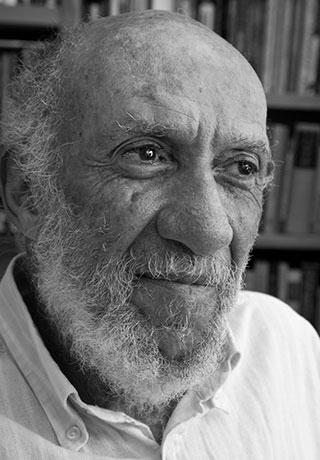

Professor Falk became an adviser to TFF when it was established in 1985.

Related Posts

The agreement is catastrophic both because of what it says and what it doesn’t mention. It reduces further the major asset of security policies: Freedom of action. Jan Oberg TFF director September 25, 2026 A couple of hours before the agreement was signed on September 22, 2026, I published the following 13 hypotheses about what it would most likely contain on TFF Substack (in English). I was wrong on only the first point. Contrary to what Trump had written on his Truth Social platform, it does not appear to come into force immediately. In fact, it turned out to be worse than even I had anticipated. After these hypotheses now come a number of reflections in light of what the agreement actually contains, and does not contain, as well as the way in which it has generally been presented by major media outlets and by the public-service broadcaster DR. My...
Lena Petrova of “World Affairs In Context” with more than half a million subscribers on YouTube wanted to explore what a peace researcher like me has to say about, among other things, the First and the Second Cold War and why eethics has disappeared from politics. I am particularly happy about this conversation that also yielded an amazing number of very appreciative comments on YouTube. No doubt, people are longing for alternatives, including peace perspectives.
This is not another geopolitical commentary on the Arctic. It is a visionary peace proposal that can save the region from militarised rivalry and ecological ruin. A blueprint for shared security, sustainable development, and human dignity — benefitting Greenland, the Arctic, and the rest of us. Jan Oberg TFF director Lund, Sweden, February 17, 2026 I. Four Principles for a New Arctic Vision The Arctic is often framed as a cold arena of rivalry — a place where great powers test each other’s resolve. But this worldview is outdated, unimaginative, and ultimately self‑defeating. The Arctic is not a vacuum waiting to be militarised; it is a living region, a climate stabiliser, and a cultural homeland whose future will shape the future of humanity. If we begin from that understanding, a far more rational Arctic order becomes possible — one that is peaceful, cooperative, and centred on the people who actually live there. This vision rests...

Recent Articles

Tony Robinson October 4, 2026 Violence is easy to recognise when someone is being beaten, shot or killed. It becomes more difficult when nobody is holding a weapon. Poverty, discrimination, exploitation and repression can restrict a human life just as effectively, although they do so in very different ways and with very different consequences. Simply adding more categories to an ever-growing list of forms of violence does not really solve the problem. The more interesting question is what all these different situations have in common and why it makes sense to describe them using the same word. Human beings do not simply react to what happens around them. They remember the past, imagine things that do not yet exist, make plans and undertake projects. Workers organise because they imagine different working conditions; people migrate because they imagine another life somewhere else; social movements emerge because people refuse to accept the...
It’s a matter of principles, courage, vision and pulling together – while the militarist world is falling apart… Peter Langille October 3, 2026 “Here, then, is the problem which we present to you, stark and dreadful and inescapable: Shall we put an end to the human race; or shall mankind renounce war?”The Bertrand Russell—Albert Einstein Manifesto, July 9, 1955 ⁕ The forecast for what’s ahead is worrisome. The sharp rise in armed conflicts over the past three years is adding to what was already the highest level in over seventy years. Genocides, which should be prevented are supported. A shared climate emergency that jeopardises survival is ignored. Diverse polls now suggest that people are war-weary, worried and interested in a more effective United Nations. And, there are viable policy options for a more secure world! Yet governments are doubling-down, betting on more war and investing heavily. If current trends persist,...
Johan Galtung 1930-2024October 2015 Published here on October 3, 2026 Let us focus on Civilization for conflict analysis and remedies. Major forms of disorder use violence; war is state organized violence. The most belligerent states are the United States of America and Israel, both with civilization roots. National Evangelism, the US Protestant Christian civilization– more national than evangelical–justifies US warfare as exceptionalism of a people chosen by God, with a manifest destiny to run the world. Orthodox Judaism justifies Israeli warfare to conquer and expand from Nile to Euphrates as a religious right and duty to the Eternal One. The third most belligerent country, the UK, no longer believes it is God-chosen but chosen by the USA; not quite the same but something. But the root cause of global disorder lies in the Occident–with Islam–seeing itself as the single, universal civilization valid for all at all times, all others being...

TFF on Substack

Discover and subscribe to more peace materials on TFF Substack

Most Popular

Tony Robinson October 4, 2026 Violence is easy to recognise when someone is being beaten, shot or killed. It becomes more difficult when nobody is holding a weapon. Poverty, discrimination, exploitation and repression can restrict a human life just as effectively, although they do so in very different ways and with very different consequences. Simply adding more categories to an ever-growing list of forms of violence does not really solve the problem. The more interesting question is what all these different situations have in common and why it makes sense to describe them using the same word. Human beings do not simply react to what happens around them. They remember the past, imagine things that do not yet exist, make plans and undertake projects. Workers organise because they imagine different working conditions; people migrate because they imagine another life somewhere else; social movements emerge because people refuse to accept the...
It’s a matter of principles, courage, vision and pulling together – while the militarist world is falling apart… Peter Langille October 3, 2026 “Here, then, is the problem which we present to you, stark and dreadful and inescapable: Shall we put an end to the human race; or shall mankind renounce war?”The Bertrand Russell—Albert Einstein Manifesto, July 9, 1955 ⁕ The forecast for what’s ahead is worrisome. The sharp rise in armed conflicts over the past three years is adding to what was already the highest level in over seventy years. Genocides, which should be prevented are supported. A shared climate emergency that jeopardises survival is ignored. Diverse polls now suggest that people are war-weary, worried and interested in a more effective United Nations. And, there are viable policy options for a more secure world! Yet governments are doubling-down, betting on more war and investing heavily. If current trends persist,...
Johan Galtung 1930-2024October 2015 Published here on October 3, 2026 Let us focus on Civilization for conflict analysis and remedies. Major forms of disorder use violence; war is state organized violence. The most belligerent states are the United States of America and Israel, both with civilization roots. National Evangelism, the US Protestant Christian civilization– more national than evangelical–justifies US warfare as exceptionalism of a people chosen by God, with a manifest destiny to run the world. Orthodox Judaism justifies Israeli warfare to conquer and expand from Nile to Euphrates as a religious right and duty to the Eternal One. The third most belligerent country, the UK, no longer believes it is God-chosen but chosen by the USA; not quite the same but something. But the root cause of global disorder lies in the Occident–with Islam–seeing itself as the single, universal civilization valid for all at all times, all others being...
Read More
Living-Peace-Sign-Budapest-copy
Tony Robinson October 4, 2026 Violence is easy to recognise when someone is being beaten, shot or killed. It becomes more difficult when nobody is holding a weapon. Poverty, discrimination, exploitation and repression can restrict a human life just as effectively, although they do so in very different ways and with very different consequences. Simply adding more categories to an ever-growing list of forms of violence does not really solve the problem. The more interesting question is what all these different situations have in common and why it makes sense to describe them using the same word. Human beings do not simply react to what happens around them. They remember the past, imagine things that do not yet exist, make plans and undertake projects. Workers organise because they imagine different working conditions; people migrate because they imagine another life somewhere else; social movements emerge because people refuse to accept the...
b54a1f10-8c65-4f0b-9dd5-4abc0a7d04cc_2659x2659
It’s a matter of principles, courage, vision and pulling together – while the militarist world is falling apart… Peter Langille October 3, 2026 “Here, then, is the problem which we present to you, stark and dreadful and inescapable: Shall we put an end to the human race; or shall mankind renounce war?”The Bertrand Russell—Albert Einstein Manifesto, July 9, 1955 ⁕ The forecast for what’s ahead is worrisome. The sharp rise in armed conflicts over the past three years is adding to what was already the highest level in over seventy years. Genocides, which should be prevented are supported. A shared climate emergency that jeopardises survival is ignored. Diverse polls now suggest that people are war-weary, worried and interested in a more effective United Nations. And, there are viable policy options for a more secure world! Yet governments are doubling-down, betting on more war and investing heavily. If current trends persist,...
010
Johan Galtung 1930-2024October 2015 Published here on October 3, 2026 Let us focus on Civilization for conflict analysis and remedies. Major forms of disorder use violence; war is state organized violence. The most belligerent states are the United States of America and Israel, both with civilization roots. National Evangelism, the US Protestant Christian civilization– more national than evangelical–justifies US warfare as exceptionalism of a people chosen by God, with a manifest destiny to run the world. Orthodox Judaism justifies Israeli warfare to conquer and expand from Nile to Euphrates as a religious right and duty to the Eternal One. The third most belligerent country, the UK, no longer believes it is God-chosen but chosen by the USA; not quite the same but something. But the root cause of global disorder lies in the Occident–with Islam–seeing itself as the single, universal civilization valid for all at all times, all others being...
Screenshot 2026-10-02 011738
Jan ObergPhD, director, The Transnational Foundation for Peace and Future Research, TFFLund, Sweden October 2, 2026 This is my full original manuscript. The Chinese Academy of Social Science, CASS, makes two publications out if it. 1. China’s Five-year plan emphasized the capabilities of basic research and original innovation. It is regarded as the goal of the future social development, which, as required, should be significantly enhanced. Can you comment on the importance of original innovation in research and academic study? I believe it is easier to define “original innovation” in the natural sciences than in social sciences. The breaking points of what constitutes something new, or innovative, are not quite as sharp in the latter. But in both fields it is about opening up something that was closed, unseen, unexplored before – making manifest what was earlier latent. Innovations come in many forms and shapes – naming something that was not...
arctic-circle-map
The agreement is catastrophic both because of what it says and what it doesn’t mention. It reduces further the major asset of security policies: Freedom of action. Jan Oberg TFF director September 25, 2026 A couple of hours before the agreement was signed on September 22, 2026, I published the following 13 hypotheses about what it would most likely contain on TFF Substack (in English). I was wrong on only the first point. Contrary to what Trump had written on his Truth Social platform, it does not appear to come into force immediately. In fact, it turned out to be worse than even I had anticipated. After these hypotheses now come a number of reflections in light of what the agreement actually contains, and does not contain, as well as the way in which it has generally been presented by major media outlets and by the public-service broadcaster DR. My...
girl-5894831_1280
Below are TFF-related media mentions, comments, videos and social media posts published elsewhere but not on this homepage. We happen to catch and list only a fraction. Regarding video comments and debates, we recommend that you go to the TFF Video Channel on Substack where many of them are reproduced. Jan Oberg is a contributor to China Daily – 52 million daily clicks – and Global Times, CGTN and CCTV (the national television), China Investment, Xinhua News Agency and several others. Articles and videos on these media very often multiply into countless Chinese (and Western media) that re-post them from these main media. Thanks to The China Academy, his analyses, interviews and comments are frequently posted on YouTube channels such as Thinkers Forum and Wave Media. These videos are often re-posted on Bilibili (China’s YouTube), the China Content Center on TikTok, and on the Chinese edition of TikTok, Douyin.com. This means reaching hundreds of millions of viewers worldwide over a year. While there are too many to catch on all these...




