
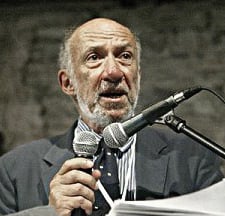
Israel-Palestine: Beyond the liberal imaginary

Prefatory Note:
What follows is a letter to the NY Times responding to their editorial of June 6, 2014, which was not accepted for publication. I publish it here as a post because I believe it identifies some of the continuing ways in which public opinion on the relationship between Israel and Palestine continues to be distorted on Israel’s behalf in American media sources that have the undeserved reputation of being objective and trustworthy. The New York Times has long ranked high on this list, if not at its top!

This letter is particularly concerned with the misleading characterizations of Hamas, and the failure to pass judgment on the Netanyahu leadership as ‘extremist.’

*****************

To the Editor, New York Time

Re “Israeli-Palestinian Collision Course” (editorial, June 6, text reproduced below):

You are correct that this is an opportune time to take account of Israel-Palestine peace prospects in light of failed direct negotiations and subsequent developments. It is misleading, however, to equate Israel’s accelerated expansion of settlements with the formation of the Fatah-Hamas unity government. Israeli action continues a pattern of flagrant violation of the 4th Geneva Convention while the Palestinian action is a constructive move that could finally make diplomacy on behalf of all Palestinians legitimate and effective.

Even more regrettable is the editorial treatment of Hamas as “a violent, extremist organization committed to Israel’s destruction” and responsible for the violence on the border because “militants regularly fire rockets into Israel; in 2012 Hamas fought an eight-day war with Israel.” This kind of unqualified language distorts the realities of the last several years, and irresponsibly blocks any path to peace.

It is prudent to be wary of Hamas, but not without some recognition that the situation is more nuanced. It is worth remembering that it was the United States that urged Hamas to compete politically in the 2006 elections, and when it unexpectedly won, reverted immediately to treating Hamas as a terrorist organization.

Its administration of Gaza since 2007 has been orderly, despite intense difficulties caused by the Israeli blockade, an illegal form of collective punishment. During this period Israel itself negotiated several ceasefire arrangements with Hamas, relying on the good offices of Egypt, that reduced violence almost to zero; these ceasefires were broken by Israel.

Let us recall that the Israeli attack on Gaza in November 2012 was initiated by the targeted assassination of Ahmed Jaberi, who was at that moment in the process of delivering a truce agreement to an Israeli interlocutor and had been the Hamas official leading the effort to suppress non-Hamas militias operating in Gaza that were firing many of the rockets into Israeli territory.

In every conflict of this kind, when the dominant side is interested in peace it signals such an intention by abandoning its earlier refusal to deal with ‘terrorists’ and accepts its adversary as a political actor with genuine grievances and goals. This was true in Ireland in relation to the IRA, and indeed earlier when Israel decided to talk with Arafat and the Palestine Liberation Organization. It was true also in South Africa when the apartheid government released Nelson Mandela, whom we should remember was at the time a convicted and imprisoned terrorist leader.

It is not necessary to overlook Hamas’ past, but to move forward it would certainly be more responsible to take account of its leaders recent statements that call for long-term coexistence with Israel within its 1967 borders, up to 50 years rather than repeating sterile condemnations. Surely there are better diplomatic alternatives than for both sides to engage in the demonization of their opponent.

Richard Falk

June 9, 2014

The author served as UN Special Rapporteur for Human Rights in Occupied Palestine on behalf of the Human Rights Council, 2008-1014

*****************
Israeli-Palestinian Collision Course

By THE EDITORIAL BOARD
June 6, 2014

The recent collapse of Israeli-Palestinian peace talks has sharpened tensions and put the two sides on a collision course. The feuding Palestinian factions, Fatah and Hamas, formed a government this week, prompting Israel to retaliate with plans for hundreds of new housing units in the West Bank and East Jerusalem. The Palestinians threatened unspecified countermeasures. It is clearly time for all sides to think hard about where this is headed.

Israel’s prime minister, Benjamin Netanyahu, has condemned the Fatah-Hamas reconciliation, at one point accusing the Palestinian president, Mahmoud Abbas, of saying “yes to terrorism and no to peace” and insisting that Israel will never negotiate with a government backed by Hamas.

Mr. Netanyahu is correct that Hamas, the Iran-backed group that took control of the Gaza Strip in 2007, is a violent, extremist organization committed to Israel’s destruction. Gaza militants regularly fire rockets into Israel; in 2012, Hamas fought an eight-day war with Israel.

It is also true that Fatah has renounced violence, recognized Israel and cooperated for years in administering the West Bank through the Palestinian Authority. Mr. Abbas has promised that the new government will abide by those principles, set out in 2006 by the United States and other major powers. To make it more palatable to Israel and the West, the new government, which is supposed to organize elections within six months, is composed of technocrats not affiliated with Hamas or other partisans.

Mr. Netanyahu has scoffed at that distinction — and some skepticism is warranted. While Hamas cannot simply be wished away, the United States and other countries that consider Hamas a terrorist group may find it impossible to continue aiding the Palestinians if Hamas plays a more pronounced role.

The reconciliation between Fatah and Hamas is risky for Fatah, but Mr. Abbas apparently felt he had nothing to lose. Nine months of American-mediated peace talks with Israel produced no progress. Nearing retirement, at age 79, he saw value in trying to reunite the West Bank and the Gaza Strip after seven years of bitter division.

This is a long shot, since previous reconciliation efforts have quickly collapsed, and there are the inescapable facts of Hamas’s hatred of Israel and its heavily armed militia. Given that Mr. Abbas’s call for Palestinian elections in the West Bank and Gaza within six months could bring Hamas to power, this new government could also be Mr. Abbas’s way to make trouble for Mr. Netanyahu.

Israel’s position is not so clear-cut. Even as Mr. Netanyahu demanded that the United States cut off aid to the new government, Israel continued to send tax remittances to the Palestinian Authority. And Mr. Netanyahu is not above negotiating with Hamas himself. In 2011, he traded more than 1,000 Palestinian prisoners for Gilad Shalit, the Israeli soldier held by Hamas for five years. In 2012, working through the United States and Egypt, he negotiated a cease-fire with Hamas that ended a brief war.

Mr. Netanyahu’s failure to persuade the international community not to recognize the new government reflects a growing breach between Israel and its most important allies. On Monday, the United States announced plans to work with and fund the unity government; it typically gives the Palestinians about $500 million annually.

The European Union, another major donor, and the United Nations secretary general, Ban Ki-moon, also declared their support. China, India and Russia welcomed the unity government, despite Israel’s efforts to build closer ties with all three.

Many experts say that if there is ever to be an Israeli-Palestinian peace agreement, admittedly a distant dream at this point, the Palestinians must be united. But the United States has to be careful to somehow distinguish between its support for the new government and an endorsement of Hamas and its violent, hateful behavior. To have some hope of doing that, the United States and Europe must continue to insist that Mr. Abbas stick to his promises and not allow Hamas to get the upper hand.
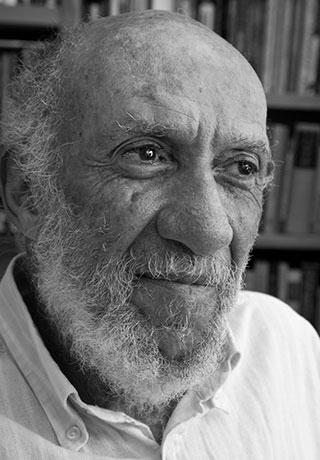

Professor Falk became an adviser to TFF when it was established in 1985.

Related Posts

It’s a matter of principles, courage, vision and pulling together – while the militarist world is falling apart… Peter Langille October 3, 2026 “Here, then, is the problem which we present to you, stark and dreadful and inescapable: Shall we put an end to the human race; or shall mankind renounce war?”The Bertrand Russell—Albert Einstein Manifesto, July 9, 1955 ⁕ The forecast for what’s ahead is worrisome. The sharp rise in armed conflicts over the past three years is adding to what was already the highest level in over seventy years. Genocides, which should be prevented are supported. A shared climate emergency that jeopardises survival is ignored. Diverse polls now suggest that people are war-weary, worried and interested in a more effective United Nations. And, there are viable policy options for a more secure world! Yet governments are doubling-down, betting on more war and investing heavily. If current trends persist,...
The agreement is catastrophic both because of what it says and what it doesn’t mention. It reduces further the major asset of security policies: Freedom of action. Jan Oberg TFF director September 25, 2026 A couple of hours before the agreement was signed on September 22, 2026, I published the following 13 hypotheses about what it would most likely contain on TFF Substack (in English). I was wrong on only the first point. Contrary to what Trump had written on his Truth Social platform, it does not appear to come into force immediately. In fact, it turned out to be worse than even I had anticipated. After these hypotheses now come a number of reflections in light of what the agreement actually contains, and does not contain, as well as the way in which it has generally been presented by major media outlets and by the public-service broadcaster DR. My...
Below are TFF-related media mentions, comments, videos and social media posts published elsewhere but not on this homepage. We happen to catch and list only a fraction. Regarding video comments and debates, we recommend that you go to the TFF Video Channel on Substack where many of them are reproduced. Jan Oberg is a contributor to China Daily – 52 million daily clicks – and Global Times, CGTN and CCTV (the national television), China Investment, Xinhua News Agency and several others. Articles and videos on these media very often multiply into countless Chinese (and Western media) that re-post them from these main media. Thanks to The China Academy, his analyses, interviews and comments are frequently posted on YouTube channels such as Thinkers Forum and Wave Media. These videos are often re-posted on Bilibili (China’s YouTube), the China Content Center on TikTok, and on the Chinese edition of TikTok, Douyin.com. This means reaching hundreds of millions of viewers worldwide over a year. While there are too many to catch on all these...

Recent Articles

Tony Robinson October 4, 2026 Violence is easy to recognise when someone is being beaten, shot or killed. It becomes more difficult when nobody is holding a weapon. Poverty, discrimination, exploitation and repression can restrict a human life just as effectively, although they do so in very different ways and with very different consequences. Simply adding more categories to an ever-growing list of forms of violence does not really solve the problem. The more interesting question is what all these different situations have in common and why it makes sense to describe them using the same word. Human beings do not simply react to what happens around them. They remember the past, imagine things that do not yet exist, make plans and undertake projects. Workers organise because they imagine different working conditions; people migrate because they imagine another life somewhere else; social movements emerge because people refuse to accept the...
It’s a matter of principles, courage, vision and pulling together – while the militarist world is falling apart… Peter Langille October 3, 2026 “Here, then, is the problem which we present to you, stark and dreadful and inescapable: Shall we put an end to the human race; or shall mankind renounce war?”The Bertrand Russell—Albert Einstein Manifesto, July 9, 1955 ⁕ The forecast for what’s ahead is worrisome. The sharp rise in armed conflicts over the past three years is adding to what was already the highest level in over seventy years. Genocides, which should be prevented are supported. A shared climate emergency that jeopardises survival is ignored. Diverse polls now suggest that people are war-weary, worried and interested in a more effective United Nations. And, there are viable policy options for a more secure world! Yet governments are doubling-down, betting on more war and investing heavily. If current trends persist,...
Johan Galtung 1930-2024October 2015 Published here on October 3, 2026 Let us focus on Civilization for conflict analysis and remedies. Major forms of disorder use violence; war is state organized violence. The most belligerent states are the United States of America and Israel, both with civilization roots. National Evangelism, the US Protestant Christian civilization– more national than evangelical–justifies US warfare as exceptionalism of a people chosen by God, with a manifest destiny to run the world. Orthodox Judaism justifies Israeli warfare to conquer and expand from Nile to Euphrates as a religious right and duty to the Eternal One. The third most belligerent country, the UK, no longer believes it is God-chosen but chosen by the USA; not quite the same but something. But the root cause of global disorder lies in the Occident–with Islam–seeing itself as the single, universal civilization valid for all at all times, all others being...

TFF on Substack

Discover and subscribe to more peace materials on TFF Substack

Most Popular

Tony Robinson October 4, 2026 Violence is easy to recognise when someone is being beaten, shot or killed. It becomes more difficult when nobody is holding a weapon. Poverty, discrimination, exploitation and repression can restrict a human life just as effectively, although they do so in very different ways and with very different consequences. Simply adding more categories to an ever-growing list of forms of violence does not really solve the problem. The more interesting question is what all these different situations have in common and why it makes sense to describe them using the same word. Human beings do not simply react to what happens around them. They remember the past, imagine things that do not yet exist, make plans and undertake projects. Workers organise because they imagine different working conditions; people migrate because they imagine another life somewhere else; social movements emerge because people refuse to accept the...
It’s a matter of principles, courage, vision and pulling together – while the militarist world is falling apart… Peter Langille October 3, 2026 “Here, then, is the problem which we present to you, stark and dreadful and inescapable: Shall we put an end to the human race; or shall mankind renounce war?”The Bertrand Russell—Albert Einstein Manifesto, July 9, 1955 ⁕ The forecast for what’s ahead is worrisome. The sharp rise in armed conflicts over the past three years is adding to what was already the highest level in over seventy years. Genocides, which should be prevented are supported. A shared climate emergency that jeopardises survival is ignored. Diverse polls now suggest that people are war-weary, worried and interested in a more effective United Nations. And, there are viable policy options for a more secure world! Yet governments are doubling-down, betting on more war and investing heavily. If current trends persist,...
Johan Galtung 1930-2024October 2015 Published here on October 3, 2026 Let us focus on Civilization for conflict analysis and remedies. Major forms of disorder use violence; war is state organized violence. The most belligerent states are the United States of America and Israel, both with civilization roots. National Evangelism, the US Protestant Christian civilization– more national than evangelical–justifies US warfare as exceptionalism of a people chosen by God, with a manifest destiny to run the world. Orthodox Judaism justifies Israeli warfare to conquer and expand from Nile to Euphrates as a religious right and duty to the Eternal One. The third most belligerent country, the UK, no longer believes it is God-chosen but chosen by the USA; not quite the same but something. But the root cause of global disorder lies in the Occident–with Islam–seeing itself as the single, universal civilization valid for all at all times, all others being...
Read More
Living-Peace-Sign-Budapest-copy
Tony Robinson October 4, 2026 Violence is easy to recognise when someone is being beaten, shot or killed. It becomes more difficult when nobody is holding a weapon. Poverty, discrimination, exploitation and repression can restrict a human life just as effectively, although they do so in very different ways and with very different consequences. Simply adding more categories to an ever-growing list of forms of violence does not really solve the problem. The more interesting question is what all these different situations have in common and why it makes sense to describe them using the same word. Human beings do not simply react to what happens around them. They remember the past, imagine things that do not yet exist, make plans and undertake projects. Workers organise because they imagine different working conditions; people migrate because they imagine another life somewhere else; social movements emerge because people refuse to accept the...
b54a1f10-8c65-4f0b-9dd5-4abc0a7d04cc_2659x2659
It’s a matter of principles, courage, vision and pulling together – while the militarist world is falling apart… Peter Langille October 3, 2026 “Here, then, is the problem which we present to you, stark and dreadful and inescapable: Shall we put an end to the human race; or shall mankind renounce war?”The Bertrand Russell—Albert Einstein Manifesto, July 9, 1955 ⁕ The forecast for what’s ahead is worrisome. The sharp rise in armed conflicts over the past three years is adding to what was already the highest level in over seventy years. Genocides, which should be prevented are supported. A shared climate emergency that jeopardises survival is ignored. Diverse polls now suggest that people are war-weary, worried and interested in a more effective United Nations. And, there are viable policy options for a more secure world! Yet governments are doubling-down, betting on more war and investing heavily. If current trends persist,...
010
Johan Galtung 1930-2024October 2015 Published here on October 3, 2026 Let us focus on Civilization for conflict analysis and remedies. Major forms of disorder use violence; war is state organized violence. The most belligerent states are the United States of America and Israel, both with civilization roots. National Evangelism, the US Protestant Christian civilization– more national than evangelical–justifies US warfare as exceptionalism of a people chosen by God, with a manifest destiny to run the world. Orthodox Judaism justifies Israeli warfare to conquer and expand from Nile to Euphrates as a religious right and duty to the Eternal One. The third most belligerent country, the UK, no longer believes it is God-chosen but chosen by the USA; not quite the same but something. But the root cause of global disorder lies in the Occident–with Islam–seeing itself as the single, universal civilization valid for all at all times, all others being...
Screenshot 2026-10-02 011738
Jan ObergPhD, director, The Transnational Foundation for Peace and Future Research, TFFLund, Sweden October 2, 2026 This is my full original manuscript. The Chinese Academy of Social Science, CASS, makes two publications out if it. 1. China’s Five-year plan emphasized the capabilities of basic research and original innovation. It is regarded as the goal of the future social development, which, as required, should be significantly enhanced. Can you comment on the importance of original innovation in research and academic study? I believe it is easier to define “original innovation” in the natural sciences than in social sciences. The breaking points of what constitutes something new, or innovative, are not quite as sharp in the latter. But in both fields it is about opening up something that was closed, unseen, unexplored before – making manifest what was earlier latent. Innovations come in many forms and shapes – naming something that was not...
arctic-circle-map
The agreement is catastrophic both because of what it says and what it doesn’t mention. It reduces further the major asset of security policies: Freedom of action. Jan Oberg TFF director September 25, 2026 A couple of hours before the agreement was signed on September 22, 2026, I published the following 13 hypotheses about what it would most likely contain on TFF Substack (in English). I was wrong on only the first point. Contrary to what Trump had written on his Truth Social platform, it does not appear to come into force immediately. In fact, it turned out to be worse than even I had anticipated. After these hypotheses now come a number of reflections in light of what the agreement actually contains, and does not contain, as well as the way in which it has generally been presented by major media outlets and by the public-service broadcaster DR. My...
girl-5894831_1280
Below are TFF-related media mentions, comments, videos and social media posts published elsewhere but not on this homepage. We happen to catch and list only a fraction. Regarding video comments and debates, we recommend that you go to the TFF Video Channel on Substack where many of them are reproduced. Jan Oberg is a contributor to China Daily – 52 million daily clicks – and Global Times, CGTN and CCTV (the national television), China Investment, Xinhua News Agency and several others. Articles and videos on these media very often multiply into countless Chinese (and Western media) that re-post them from these main media. Thanks to The China Academy, his analyses, interviews and comments are frequently posted on YouTube channels such as Thinkers Forum and Wave Media. These videos are often re-posted on Bilibili (China’s YouTube), the China Content Center on TikTok, and on the Chinese edition of TikTok, Douyin.com. This means reaching hundreds of millions of viewers worldwide over a year. While there are too many to catch on all these...




