
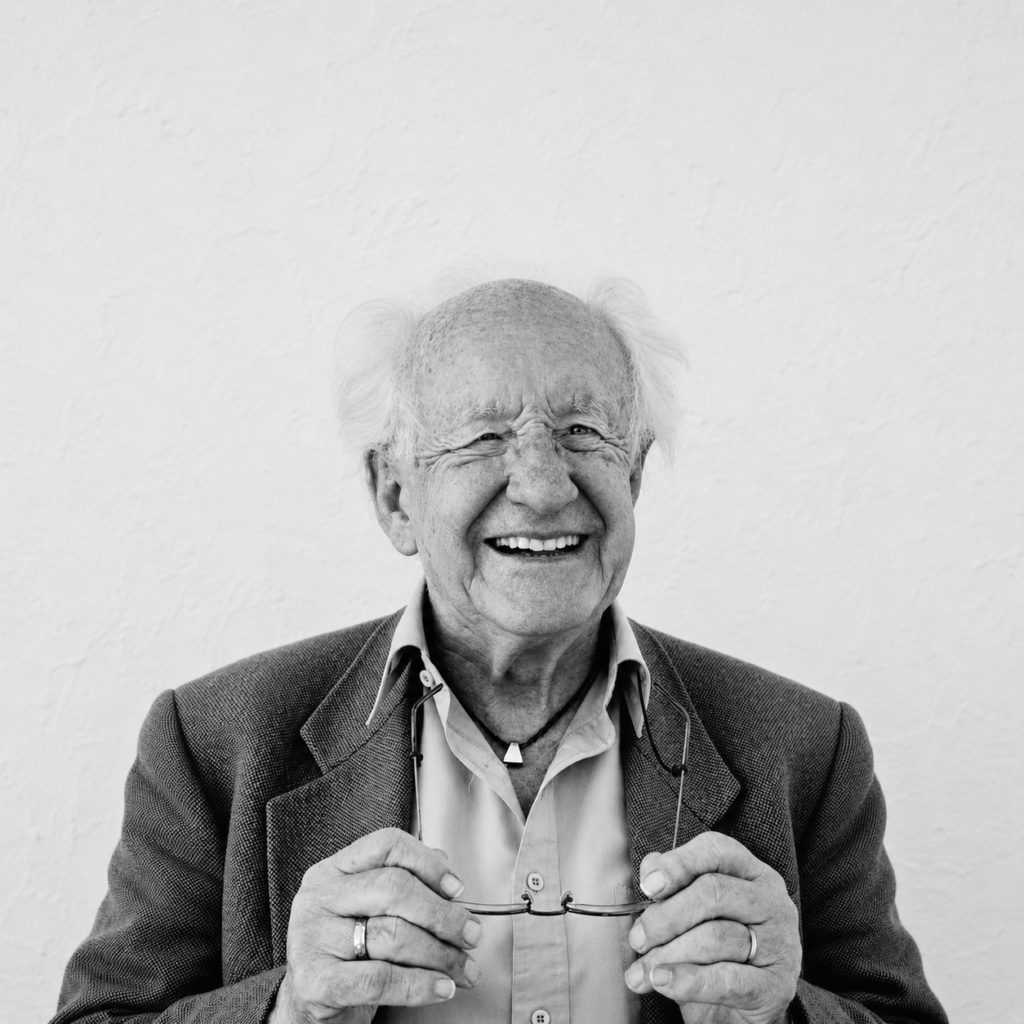
johangaltung


Islamabad, Ministry of Foreign Affairs

Your Excellencies,

The basic point is that Pakistan will not get that commodity called “peace” in Kashmir, Afghanistan and Central Asia by pursuing the ends and means of Washington and some local elites only. For peace to blossom the goals of other parties also have to be considered; and they are many. The logic of the political games pursued today presupposes some kind of victory or domination of “our side”: neither feasible nor desirable for peace. Hence, the need for some visions for peace politics is Kashmir, Afghanistan and Central Asia for tomorrow or the day after, with the hope that they can be useful when you have come to the end of the road with current policies. Nothing of this is easy; and without visions even impossible.

The fairly detailed, non-dogmatic vision appended (below) was my acceptance speech of the 2011 Abdul Ghaffar Khan International Peace-Builder Award by the Pakistan-American Muslim Association.

However, why do present policies so often seem to be non-starters?

The British empire drew three lines with disastrous effects for Pakistan: the Durand line in 1893, a 1,600-mile wound defining the border with Afghanistan, dividing the Pashtun nation – the biggest nation in the world without a state – into two parts; the McMahon line of 1914 defining the border with China in ways unacceptable to the Chinese; and the Mountbatten line of 1947 leading to the catastrophic violence of the partition. These lines have to be negated, liberating Pakistan from that past.

Thus, there is no natural law saying that Punjab cannot be an entity with an open border and free traffic of people and ideas, goods and services, even if the two parts belong to separate countries. Lahore and Amritsar are two sides of the same coin, like the two parts of the Pashtun nation and the parts of Kashmir. Let the twain (or more) meet, e.g. as envisioned below.

And yet little or nothing is heard about these key parameters constraining Pak policies. What is heard is the term “terrorist”, the US vocabulary from the 1980s putting an end to understanding the other side by defining them as evil with no other project than evildoing. We hear about the illegitimacy of all the non-state entities fighting “asymmetrically” legitimate states.

As NGO mediator talking with many of them – like Taliban people close to Al Qaeda – was very useful. They talk about US-Pak state terrorism, the lack of US legitimacy in killing on other states’ territory, the lack of legitimacy of the Pakistani state on who is winning these asymmetric wars when you have space, time and masses of people on your side. No doubt there is room for “dialogues” exchanging the illegitimacies, heaping dirt on each other’s head. But no peace will come out of that.

Nor of the new “security document” (Dawn, February 27-28, 2014) “to target the source of terrorism in response to acts of militant violence anywhere in the country”. Yes, “militant violence” is bad; the question is how to reduce it. “100 terrorists reported killed by air strikes in tribal areas”. The basic question is how many new ones were produced? The German magazine Der Spiegel estimated once about 30 for each killed. Maybe 5. How many bereaved significant others–nearest family, extended family, neighbors, friends–did the killed “terrorist” have? Say, 100. 5% may act upon it. That gives us 5:1.

To strike the “source of terrorism” sounds rational. Some may be in poor, marginalized “tribal areas” (note the implicit contempt and social distance from the Anglophiles among the Pak elites). But some source may also be in the politics of those elites. Hitting them sounds suicidal. So does continuing past policies unabated.

The goal is a National Counter Terrorism Authority (Nacta) “with a rapid response force and an air wing to include helicopters and fixed wing aircraft”. More toys for the boys. They will get them.

But there is more to the new security policy.

“It intends to integrate mosques and madressahs to the national education system in one year“. Subordinate Islam to the Education Ministry? Sounds against the first of the five pillars of Islam, the Shahadah, “there is no God but–”. Not the ministry, not the state. Considerably more of Pakistan would be on the Islam than the State side of that equation. The teeming masses, not the well-dressed top.

“Construct a national narrative against extremist mindset in six months”. How will they deal with the military coups, also somewhat extremist? – but see themselves as purely rational. Will anyone take that kind of construction for anything else than governmental propaganda? Or worse, for US propaganda, the sentence reeks of Washington, concocted in rooms far from the ground realities of Pashtuns, Baluchis, Punjabis, “tribals” and others in Pak complexity.

“Improve intelligence-sharing and strengthen coordination between the Inter-Services Intelligence and civilian agencies”. Sounds like a soft way of reining in the ISI? Good luck, they run much of the country (with the Anglophile elites and the landowners).

Dawn writes that the opposition party PTI -Pakistan Tehreek-e-Insaf – ends the four-month blockade of NATO supplies to Afghanistan (by road): the Peshawar High Court judged stopping and checking of vehicles carrying goods to Afghanistan illegal. Free traffic of arms OK? How about free traffic of women sex slaves, infants, kidneys and other human organs?

Traveling this old, tired, paranoid road of security and counter-terrorism with some new slogans is not what Pakistan needs.

How about a National Peace Authority instead? Working on how to combine Common Law and Sharia, for instance? On how a huge Central Asian Community could relate to its huge neighbors, Russia, China, India? Making visions compelling by filling in details, gaps? The past did not produce peace, present policies will not. The future may.

Kashmir-Afghanistan-Central Asia

Johan Galtung
21 Nov 2011

Your Excellencies: I am deeply honored and grateful for the Abdul Ghaffar Khan International Peace-Builder Award; named after the Frontier Gandhi, the Muslim Gandhi, Badshah Khan, a hero of the anti-colonial struggle from 1930. He saw nonviolence as “a weapon from the Prophet”, rooted in the Qur’an. I met him once – a giant in more than one sense – viewing with sharp eyes an inconsequential peace conference unfolding in New Delhi, in 1970. A model for us all, like Gandhi.[i]

We are addressing in this AMA – American Muslim Association – Foundation Quarterly Policy Forum “Kashmir and the Regional Jigsaw Puzzle for Peace”, and I have added Afghanistan to the puzzle, and Central Asia for a “regional solution”. Deeply impressed with the preceding speakers on Kashmir, Ambassadors Howard B. Schaffer and Yusuf Buch, and by Dr. Ghulam-Nabi Fai’s book on the Kashmir Conflict, let me present some TRANSCEND – a mediation NGO – perspectives on the issues, based on a high number (in the hundreds) of one-on-one dialogues with all kinds of parties to the conflicts.[ii]

These mediation dialogues start with the same opening question:

* What does the Kashmir look like that you would like to see/live in?

* What does the Afghanistan look like that you would like to see/live in?

* What does the Central Asia look like that you would like to see/live in?

In other words, we anchor the dialogue in a future-constructive dream- vision, idealist, and then proceed to make it as concrete as possible. We work backwards, starting with goals as they come out of the mutual search typical of a dialogue, as opposed to debates-negotiations.

It is not our experience that the sum of the narratives of the parties’ grievances and sufferings constitutes a solution. It may lead to more mutual understanding, but also to apathy, hopelessness, and fear of revenge. If you want peace, start with their images, relate them to what really happens, search for something positive in the past, open for their worst fears for the future. Idealism and realism, dreams, nightmares, nostalgia, should all go together in a mature process.

Cutting down to the essence, here are three images of solutions:

For Kashmir: Today a three-sided dispute Kashmir(is)-India-Pakistan:

* Jammu and Ladakh become parts of the Indian Union, and Assad-Kashmir becomes part of Pakistan if the populations themselves so determine;

* The Valley becomes an Indo-Pak condominium with increasing autonomy possibly aiming at independence;

* These parts of Kashmir are then tied together in a confederation with open borders, under a political body with all parts represented, and SAARC-South Asian Association for Regional Cooperation, with a Kashmir Area Free Trade Association–KAFTA. Identity cards and passports would all include the name “Kashmir” on the cover.

India-Pakistan constitutions amended to accommodate the doubleness of those parts, but no border is changed. However, passport cover texts are.

For Afghanistan: Today a favored invasion area for the West-Russia:

* A coalition government including what the West calls “Taliban”;

* A federation with local autonomy for the 25,000 village communities and the 6-8 nations; with capital in a small place, not Kabul;

* A confederation or community with the neighboring countries: Iran, the five Central Asian republics, Assad-Kashmir, Pakistan;

* Food-water-clothing-housing-health-education-nation-gender neutral;

* Peace-keeping by United Nations Security Council-Organization of Islamic Cooperation-OIC, also to prevent attacks on third parties, and internationally guaranteed neutrality; no bases-foreign troops.

For a country as reminiscent of Switzerland as Afghanistan, Swiss solutions, like federation and neutrality, should be appropriate. Swiss direct democracy is also compatible with the jirga tradition.

For Central Asia: Today fragmented by the West-Russia:

* A Conference on Security and Cooperation in Central Asia-CSCCA, modeled on the Helsinki Conference 1972-75, also a peace conference;

* Aiming at a Central Asian Community-CAC, a family of Afghanistan with Muslim neighboring countries, modeled on the European Community;

* Transcending the Durand line (from 1893) dividing the Pashtun nation by making the border between Afghanistan and Pakistan less important;

* Transcending the McMahon line (from 1914) between India and China by rejecting it, developing good relations with China, using SCO-Shanghai Cooperation Organization;

* Transcending the Mountbatten line (from 1947) between Pakistan and India by developing good relations with India (water!), using SAARC.

Located on an axis from Turkey and China both countries would be involved, as well the big neighbors Russia and India.

The Kashmir solution would be welcomed by the peoples involved, but it would be strongly resisted by military-diplomatic elites, in both countries, hoping for the other to collapse. The solution calls for people to people diplomacy and for strong like-minded leaders in both sides, (like Mandela-de Klerk, maybe also Singh-Musharraf?), ending the brutal Indian occupation with 700.000 troops on the ground.

The Saichin glacier could become a world memorial for peace.

TRANSCEND has a similar proposal for Kurdistan: a confederation of four autonomies with human rights in Iraq, Iran, Syria and Turkey. No border moved, but also with “Kurdistan” on all passports.

The solution for Afghanistan should respect the reality of the country: it is not a unitary state controlled from Kabul. The struggle against the US-led coalition is not only against secularization, but also against Kabul rule and above all against being invaded-occupied.

The solution for Central Asia should end the Western idea of controlling the world from Central Asia (MacKinder, 1904), undoing much of the harm inflicted on the area by English colonial policy and let countries that belong together, like a family, grow together; pooling people and resources. Like in Europe, they might be encased in an Organization for Security and Cooperation in Asia-Pacific, OSCAP, modeled on the OSCE that came out of the Helsinki conference.

And the US-led coalition? They are not Central Asian countries, should not impose “solutions” insensitive to the region, but withdraw militarily and help rebuild what they have destroyed. Alternative: to become fully irrelevant. There is no victory at the end of any tunnel.

Let me end with the Arab Spring that may also lead to a community and a family. Since 1971 TRANSCEND stands for a post-zionist Israel by and large with 1967 borders as a member of that family, bringing to an end the occupation of Palestine. Two French statesmen, Monnet-Schuman once proposed the same for former Nazi Germany. It worked, the EC-European Community/EU-European Union came out of that. One day two Arab statesmen may do the same, I hope.

Notes

[i]. See the excellent article by Lester R. Kurtz, “Peace Profile: Abdul Ghaffar Khan’s Nonviolent jihad”, Peace Review, 23:245-251.

[ii]. For more details, see Johan Galtung, 50 Years 100 Peace & Conflict Perspectives, TRANSCEND University Press-TUP, 2008 www.transcend.org/tup.

First published at Transcend Media Service here.
Related Posts

The agreement is catastrophic both because of what it says and what it doesn’t mention. It reduces further the major asset of security policies: Freedom of action. Jan Oberg TFF director September 25, 2026 A couple of hours before the agreement was signed on September 22, 2026, I published the following 13 hypotheses about what it would most likely contain on TFF Substack (in English). I was wrong on only the first point. Contrary to what Trump had written on his Truth Social platform, it does not appear to come into force immediately. In fact, it turned out to be worse than even I had anticipated. After these hypotheses now come a number of reflections in light of what the agreement actually contains, and does not contain, as well as the way in which it has generally been presented by major media outlets and by the public-service broadcaster DR. My...
Jan Oberg, TFF director April 28, 2026 In this third TFF Peace Pulse, I make the important distinction between the violence and the conflict that violence is a symptom of. If you want peace, focus on the underlying conflict because that is the key to resolution, peacemaking, and a better future for the parties. The West is obsessed with violence, just look around you – and 90+ per cent of the public debate is about military issues and other violence – totally wasted for peace. These Peace Pulses will only be published here a few times. You will also not find them on YouTube and Vimeo because both platforms have blocked TFF and me; you know, peace is dangerous these days. Most TFF’s videos since 2007 are now on Rumble.
This is not another geopolitical commentary on the Arctic. It is a visionary peace proposal that can save the region from militarised rivalry and ecological ruin. A blueprint for shared security, sustainable development, and human dignity — benefitting Greenland, the Arctic, and the rest of us. Jan Oberg TFF director Lund, Sweden, February 17, 2026 I. Four Principles for a New Arctic Vision The Arctic is often framed as a cold arena of rivalry — a place where great powers test each other’s resolve. But this worldview is outdated, unimaginative, and ultimately self‑defeating. The Arctic is not a vacuum waiting to be militarised; it is a living region, a climate stabiliser, and a cultural homeland whose future will shape the future of humanity. If we begin from that understanding, a far more rational Arctic order becomes possible — one that is peaceful, cooperative, and centred on the people who actually live there. This vision rests...

Recent Articles

Tony Robinson October 4, 2026 Violence is easy to recognise when someone is being beaten, shot or killed. It becomes more difficult when nobody is holding a weapon. Poverty, discrimination, exploitation and repression can restrict a human life just as effectively, although they do so in very different ways and with very different consequences. Simply adding more categories to an ever-growing list of forms of violence does not really solve the problem. The more interesting question is what all these different situations have in common and why it makes sense to describe them using the same word. Human beings do not simply react to what happens around them. They remember the past, imagine things that do not yet exist, make plans and undertake projects. Workers organise because they imagine different working conditions; people migrate because they imagine another life somewhere else; social movements emerge because people refuse to accept the...
It’s a matter of principles, courage, vision and pulling together – while the militarist world is falling apart… Peter Langille October 3, 2026 “Here, then, is the problem which we present to you, stark and dreadful and inescapable: Shall we put an end to the human race; or shall mankind renounce war?”The Bertrand Russell—Albert Einstein Manifesto, July 9, 1955 ⁕ The forecast for what’s ahead is worrisome. The sharp rise in armed conflicts over the past three years is adding to what was already the highest level in over seventy years. Genocides, which should be prevented are supported. A shared climate emergency that jeopardises survival is ignored. Diverse polls now suggest that people are war-weary, worried and interested in a more effective United Nations. And, there are viable policy options for a more secure world! Yet governments are doubling-down, betting on more war and investing heavily. If current trends persist,...
Johan Galtung 1930-2024October 2015 Published here on October 3, 2026 Let us focus on Civilization for conflict analysis and remedies. Major forms of disorder use violence; war is state organized violence. The most belligerent states are the United States of America and Israel, both with civilization roots. National Evangelism, the US Protestant Christian civilization– more national than evangelical–justifies US warfare as exceptionalism of a people chosen by God, with a manifest destiny to run the world. Orthodox Judaism justifies Israeli warfare to conquer and expand from Nile to Euphrates as a religious right and duty to the Eternal One. The third most belligerent country, the UK, no longer believes it is God-chosen but chosen by the USA; not quite the same but something. But the root cause of global disorder lies in the Occident–with Islam–seeing itself as the single, universal civilization valid for all at all times, all others being...

TFF on Substack

Discover and subscribe to more peace materials on TFF Substack

Most Popular

Tony Robinson October 4, 2026 Violence is easy to recognise when someone is being beaten, shot or killed. It becomes more difficult when nobody is holding a weapon. Poverty, discrimination, exploitation and repression can restrict a human life just as effectively, although they do so in very different ways and with very different consequences. Simply adding more categories to an ever-growing list of forms of violence does not really solve the problem. The more interesting question is what all these different situations have in common and why it makes sense to describe them using the same word. Human beings do not simply react to what happens around them. They remember the past, imagine things that do not yet exist, make plans and undertake projects. Workers organise because they imagine different working conditions; people migrate because they imagine another life somewhere else; social movements emerge because people refuse to accept the...
It’s a matter of principles, courage, vision and pulling together – while the militarist world is falling apart… Peter Langille October 3, 2026 “Here, then, is the problem which we present to you, stark and dreadful and inescapable: Shall we put an end to the human race; or shall mankind renounce war?”The Bertrand Russell—Albert Einstein Manifesto, July 9, 1955 ⁕ The forecast for what’s ahead is worrisome. The sharp rise in armed conflicts over the past three years is adding to what was already the highest level in over seventy years. Genocides, which should be prevented are supported. A shared climate emergency that jeopardises survival is ignored. Diverse polls now suggest that people are war-weary, worried and interested in a more effective United Nations. And, there are viable policy options for a more secure world! Yet governments are doubling-down, betting on more war and investing heavily. If current trends persist,...
Johan Galtung 1930-2024October 2015 Published here on October 3, 2026 Let us focus on Civilization for conflict analysis and remedies. Major forms of disorder use violence; war is state organized violence. The most belligerent states are the United States of America and Israel, both with civilization roots. National Evangelism, the US Protestant Christian civilization– more national than evangelical–justifies US warfare as exceptionalism of a people chosen by God, with a manifest destiny to run the world. Orthodox Judaism justifies Israeli warfare to conquer and expand from Nile to Euphrates as a religious right and duty to the Eternal One. The third most belligerent country, the UK, no longer believes it is God-chosen but chosen by the USA; not quite the same but something. But the root cause of global disorder lies in the Occident–with Islam–seeing itself as the single, universal civilization valid for all at all times, all others being...
Read More
Living-Peace-Sign-Budapest-copy
Tony Robinson October 4, 2026 Violence is easy to recognise when someone is being beaten, shot or killed. It becomes more difficult when nobody is holding a weapon. Poverty, discrimination, exploitation and repression can restrict a human life just as effectively, although they do so in very different ways and with very different consequences. Simply adding more categories to an ever-growing list of forms of violence does not really solve the problem. The more interesting question is what all these different situations have in common and why it makes sense to describe them using the same word. Human beings do not simply react to what happens around them. They remember the past, imagine things that do not yet exist, make plans and undertake projects. Workers organise because they imagine different working conditions; people migrate because they imagine another life somewhere else; social movements emerge because people refuse to accept the...
b54a1f10-8c65-4f0b-9dd5-4abc0a7d04cc_2659x2659
It’s a matter of principles, courage, vision and pulling together – while the militarist world is falling apart… Peter Langille October 3, 2026 “Here, then, is the problem which we present to you, stark and dreadful and inescapable: Shall we put an end to the human race; or shall mankind renounce war?”The Bertrand Russell—Albert Einstein Manifesto, July 9, 1955 ⁕ The forecast for what’s ahead is worrisome. The sharp rise in armed conflicts over the past three years is adding to what was already the highest level in over seventy years. Genocides, which should be prevented are supported. A shared climate emergency that jeopardises survival is ignored. Diverse polls now suggest that people are war-weary, worried and interested in a more effective United Nations. And, there are viable policy options for a more secure world! Yet governments are doubling-down, betting on more war and investing heavily. If current trends persist,...
010
Johan Galtung 1930-2024October 2015 Published here on October 3, 2026 Let us focus on Civilization for conflict analysis and remedies. Major forms of disorder use violence; war is state organized violence. The most belligerent states are the United States of America and Israel, both with civilization roots. National Evangelism, the US Protestant Christian civilization– more national than evangelical–justifies US warfare as exceptionalism of a people chosen by God, with a manifest destiny to run the world. Orthodox Judaism justifies Israeli warfare to conquer and expand from Nile to Euphrates as a religious right and duty to the Eternal One. The third most belligerent country, the UK, no longer believes it is God-chosen but chosen by the USA; not quite the same but something. But the root cause of global disorder lies in the Occident–with Islam–seeing itself as the single, universal civilization valid for all at all times, all others being...
Screenshot 2026-10-02 011738
Jan ObergPhD, director, The Transnational Foundation for Peace and Future Research, TFFLund, Sweden October 2, 2026 This is my full original manuscript. The Chinese Academy of Social Science, CASS, makes two publications out if it. 1. China’s Five-year plan emphasized the capabilities of basic research and original innovation. It is regarded as the goal of the future social development, which, as required, should be significantly enhanced. Can you comment on the importance of original innovation in research and academic study? I believe it is easier to define “original innovation” in the natural sciences than in social sciences. The breaking points of what constitutes something new, or innovative, are not quite as sharp in the latter. But in both fields it is about opening up something that was closed, unseen, unexplored before – making manifest what was earlier latent. Innovations come in many forms and shapes – naming something that was not...
arctic-circle-map
The agreement is catastrophic both because of what it says and what it doesn’t mention. It reduces further the major asset of security policies: Freedom of action. Jan Oberg TFF director September 25, 2026 A couple of hours before the agreement was signed on September 22, 2026, I published the following 13 hypotheses about what it would most likely contain on TFF Substack (in English). I was wrong on only the first point. Contrary to what Trump had written on his Truth Social platform, it does not appear to come into force immediately. In fact, it turned out to be worse than even I had anticipated. After these hypotheses now come a number of reflections in light of what the agreement actually contains, and does not contain, as well as the way in which it has generally been presented by major media outlets and by the public-service broadcaster DR. My...
girl-5894831_1280
Below are TFF-related media mentions, comments, videos and social media posts published elsewhere but not on this homepage. We happen to catch and list only a fraction. Regarding video comments and debates, we recommend that you go to the TFF Video Channel on Substack where many of them are reproduced. Jan Oberg is a contributor to China Daily – 52 million daily clicks – and Global Times, CGTN and CCTV (the national television), China Investment, Xinhua News Agency and several others. Articles and videos on these media very often multiply into countless Chinese (and Western media) that re-post them from these main media. Thanks to The China Academy, his analyses, interviews and comments are frequently posted on YouTube channels such as Thinkers Forum and Wave Media. These videos are often re-posted on Bilibili (China’s YouTube), the China Content Center on TikTok, and on the Chinese edition of TikTok, Douyin.com. This means reaching hundreds of millions of viewers worldwide over a year. While there are too many to catch on all these...





