
2013 was not a happy year in the chronicles of human history, yet there were a few moves in the directions of peace and justice.

What follows are some notes that respond to the mingling of light and shadows that are flickering on the global stage, with a spotlight placed on the main war zone of the 21st century – the Middle East, recalling that Europe had this negative honor for most of the modern era except for the long 19th century, and that the several killing fields of sub-Saharan Africa are located at the periphery of political vision, and thus their reality remains blurred for distant observers.

Also relevant are the flaring tensions in the waters around China in relation to territorial disputes about island ownership, especially Diaoyu/Senkaku pitting China against Japan, and reminding us that some old wounds remain unhealed.

Many persons in many places suffered greatly, and often with no better prospects in 2014, although our capacity to project a dismal present into the future is so modest as to make dramatic changes in direction quite plausible.

While highlighting some particularly troubled countries, we should not overlook those tens of millions throughout the world living in dire poverty, without healthy drinking water, sufficient food, adequate medical facilities, lacking proper housing, and deprived of education and employment opportunities. These chronic conditions of acute suffering generate migration flows, and underscore the terrible ordeal worldwide of economic migrants and refugees, always at risk, often living ‘unlawful’ lives of unbearable vulnerability.

Such a general reflection on the human condition is meant to encourage serious reflections and commentary about whether the current state-centric structures of global governance deserve to be considered legitimate, and if not, what sorts of alternative arrangements can be envisioned to raise hopes for a better future.

What follows is a brief look at some of those situations of conflict that generate particular concern at this time:

The Syrian plight has been situated in the realm of the unspeakable for almost three years, and although punitive bombing was avoided in 2013 and chemical weapons arsenals destroyed, the killing (now far in excess of 100,000; some speculate 73,000 in 2013 alone), refugee exodus (2.3 million out of a population of 22.4 million), massive internal displacement (with estimates running as high as 6.3 million), and extreme material hardships are increasingly prevalent (with latest estimates that basic needs are unmet for as many as 9.6 million).

What is also illuminating in a negative way is the incapacity of the UN and external actors to bring the political violence to an end, much less to find a solution to the conflict that protects minorities and enhances more generally the lives of the Syrian people; perhaps proxy antagonist states will act less irresponsibly in 2014, perhaps international relief efforts will increase; perhaps, the prospects of some kind of accountability for endless crimes against humanity will have some bearing on how the various participants work toward a just peace.

At least, we must not avert our gaze from the slaughterhouse that Syria has become, and at least do what can be done to mitigate the humanitarian catastrophe that continues to unfold there and inhibit its already disastrous spillover effects in such countries as Lebanon, Jordan, Iraq, and Turkey.

The Palestinian plight persists in Gaza most disturbingly where underlying political and environmental challenges of viability involving water, food, and medical supplies have been cruelly aggravated by disastrous storms, polluted waters, fuel shortages, power failures, political antagonisms creating a humanitarian emergency that persists virtually unnoticed, and threatens to become even more horrendous.

Palestinians throughout Palestine are also enduring a continuous process of encroachment upon their most basic rights in relation to land, residence, water, settlements, wall, Jerusalem, refugees; the persistence of belligerent occupation for more than 45 years should not be tolerated, especially if the wellbeing of the civilian population is being continuously undermined, but under present circumstances this unfortunate set conditions cannot be effectively challenged directly; more promising is the widening Legitimacy War being waged to mobilize civil society and win the battle to sway the public mind by the imagery of Palestinian victimization and peaceful struggle, as well as the degree to which both sides fare in the underlying debate about who is right and who is wrong.

It is important that in a Legitimacy War the target is definitely not the state of israel, but rather the policies and practices of the Israeli government; the end sought in this Legitimacy War is a just, inclusive, and sustainable peace for both peoples, but with the contours of peace fixed more by rights than by interplay of hard power capabilities.

The Egyptian people who had so illuminated the darkness three years ago by their remarkable rising in Tahrir Square and elsewhere in the country, now face a darker future than even during the bleak Mubarak years. As grim as this unfinished revolutionary process is in Egypt, not less discouraging has been the silence, or worse, of neighboring governments who poured in funds after a military coup, undeterred by subsequent bloody massacres that exhibit the features of crimes against humanity, and have now been outrageously extended by declaring a civic organization that fairly won democratic elections to be ‘a terrorist organization’ despite its long sustained pledge of nonviolent political engagement, implying that mere membership in the Muslim Brotherhood is itself a serious form of criminality.

That such extreme behavior by the el-Sisi post-coup leadership can pass beneath the geopolitical radar screen of the liberal democracies in Europe and North America is also cause for lament, and further proof that 21st century global governance is afflicted with double standards, hypocritical condemnations, malign neglect, and a multitude of unholy alliances.

The Arab Spring that brought such hope and joy three years ago to many peoples entrapped in the cramped political space provided by authoritarian regimes now seems entrapped anew, whether in atrocity-laden civil strife as in Syria or in militia-dominated chaos as in Libya or in reworking of the non-accountable oppressive state as in Egypt or in the sectarian strife that still daily torments the people of Iraq; these regional patterns are not yet firm, and there remains a plausible basis for not renouncing all hopes that made the upheavals so promising in 2011.

The Turkish domestic downward spiral is also a cause for deep concern as 2013 draws to a close: the lethal dynamics of polarization took an unexpected turn, swerving from the apparent confrontations of the summer in Gezi Park that pitted the forces of a severely alienated secularist opposition, including new youth elements, against the entrenched AKP establishment that reacted with excessive force and political insensitivity.

Now attention has turned to the split between two leading forces previously united but newly warring: the Fetullah Gulen hizmet movement versus the Erdogan-led AKP now fighting it out in relation to corruption charges, but also each seeking to gain the upper hand in a nasty struggle to sway public opinion to their side; the Kemalist old order embodied in the CHP is presently sidelined, but likely waiting in a mood of excited anticipation for the principal gladiators to exhaust themselves on the field of battle, creating a political vacuum that could then be filled.

In the background is the ‘zero problems’ approach to foreign policy so ingeniously constructed a few years ago by the energy and brilliance of Ahmet Davutoglu, the great Turkish Foreign Minister, which showed the world how soft power can gain ascendancy, then moved into a shadowland of disillusionment after a series of Syrian miscalculations, and now seems to be reemerging in more selective and principled form in improving relations with Iran, Iraq, Israel, and the United States, although the situation remains precarious so long as the Turkish currency sinks to new lows against the dollar and the domestic confrontation remains far from resolved.

Europe should not be forgotten. The economic downturn of recent years as well as the uneven recovery of the various EU members has exposed the follies of premature enlargement after the end of the Cold War and the problems associated with proceeding too quickly on the economic track of integration and too slowly on the political track.

Also, at risk, is the European reorientation of its global engagement by way of soft power geopolitics; despite the difficulties, the EU undertaking remains the most ambitious world order innovation since the birth of the modern state system in the middle of the 17th century, and its success in establishing ‘a culture of peace’ in Europe that had been for centuries the cockpit of warring states is an extraordinary achievement; at the same time, without a renewed commitment to going forward, risks of regression, even collapse, remain cause for worry.

And then there is the United States, which has had a somewhat mixed year, finally ending its combat relationship to Iraq, overriding the Israel’s objections to dealing constructively with the new leadership and mood in Iran through interim arrangements relating to Iran’s nuclear program, and winding down its military operations in Afghanistan.

But there were many problematic sides of America’s global role: drones; chasing Snowden; abusing Chelsea Manning, threatening Assange, and not facing up to the foreboding consequences of totalizing the global security state in the 12 years since 9/11 – the new formula for democracy in the United States: making the lives of the citizenry as transparent as possible while keeping key government operations and policies shrouded in layers of secrecy.

This is why the ‘crimes’ of WikiLeaks, Snowden, and Manning are seen as so subversive of public order by the new security entrepreneurs that unfortunately seem to include the top elected leaders. We the people are asked to throw caution aside, and despite acknowledged governmental lying and doctrines of deniability, put our trust in governmental prudence, integrity, and self-restraint.

At the same time, the leaders, starting with Barack Obama, act as if this new dystopia of drones and the NSA panopticon is nothing other than business as usual, branding those who express doubts as suspicious characters, forcing brave journalists to behave like spies or Mafia operatives to get the truth out, as in the case of Glenn Greenwald.

There is also the disappointing abandonment by the supposedly less constrained second term Obama presidency of the first term visionary commitments to work toward a world without nuclear weaponry and to turn a new page toward reconciliation in addressing the grievances of the Muslim world, with especial attention to the Palestinian struggle to achieve self-determination and end the cardinal ordeal of prolonged occupation.

Looking ahead, there are several salient, although contradictory, realities that should help direct political energies and shape hopes for the future:

• the inability of existing problem-solving mechanisms to find satisfactory responses to collective action challenges: climate change, nuclear weaponry, drone warfare, economic migration;

• the failures of military intervention as a protective approach to humanitarian catastrophe in tension with the futility of relying on diplomacy;

• the growing importance of global civil society activism in promoting global justice, nonviolence, and sustainable development;

• the increasing promise of soft power geopolitics in overcoming realist skepticism about compliance with international law and reliance on international cooperation.
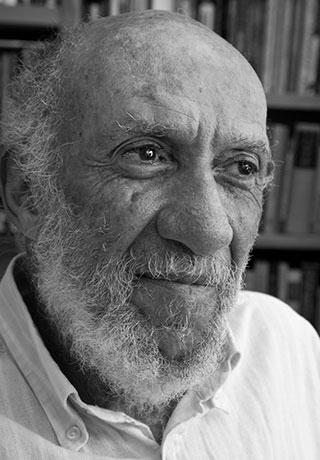

Professor Falk became an adviser to TFF when it was established in 1985.

Related Posts

Photos © TFF 2000 Read PressInfo 90 “Lift the Sanctions and Bring More Aid to Yugoslavia” See Pictures from Belgrade © TFF 2000 Please reprint, copy, archive, quote or re-post this item, but please retain the source.
PART 2 — Diplomacy, Law and Nonviolent Power By Jan ObergTFF co-founder and director January 26, 2026 This is the second of four TFF-created idea portfolios designed to curb the global reach of the United States and, in both the short and long term, help catalyse a worldwide nonviolent resistance to what many observers describe as the Trump administration’s uniquely confrontational, destructive and world-threatening policies. These portfolios outline what governments and citizens across the world can do through dynamic diplomacy, creative initiatives, and strictly nonviolent means. They are typical TFF works in that we do not only tell what the problem is and how bad it will go – as 90+% of all commentators, experts and scholars do – we tell what we think can be done, inviting you to think of what you think you can do. It seems painfully clear to me that the current political dynamics in Washington increasingly resemble the most dangerous...
TFF’s comprehensive proposal for dialogue about true peace in Ukraine is due in a day or two Jan Oberg November 20, 2025 What is being whispered through diplomatic corridors today is not peace, but quackery. The alleged 28‑point plan drafted in Washington and Moscow is mentioned as a solution to the Ukraine war. It is being negotiated by US businessman, real estate developer and Trump ally, Steve Witkoff, and by Kirill Dmitriev, who is CEO of the Russian Direct Investment Fund and a close ally of Putin, according to India’s Economic Times. For presumably good reasons, their education, qualifications and experience in international conflict analysis and peace-making remain untold. They look like surgeons who have never opened a medical textbook. It is nothing more than a mirage: a framework of concessions imposed on Ukraine’s citizens, negotiated without Kyiv, and excluding Europe. Like Gaza, it promises “peace” while institutionalising injustice. If half of what is available about...

Recent Articles

Tony Robinson October 4, 2026 Violence is easy to recognise when someone is being beaten, shot or killed. It becomes more difficult when nobody is holding a weapon. Poverty, discrimination, exploitation and repression can restrict a human life just as effectively, although they do so in very different ways and with very different consequences. Simply adding more categories to an ever-growing list of forms of violence does not really solve the problem. The more interesting question is what all these different situations have in common and why it makes sense to describe them using the same word. Human beings do not simply react to what happens around them. They remember the past, imagine things that do not yet exist, make plans and undertake projects. Workers organise because they imagine different working conditions; people migrate because they imagine another life somewhere else; social movements emerge because people refuse to accept the...
It’s a matter of principles, courage, vision and pulling together – while the militarist world is falling apart… Peter Langille October 3, 2026 “Here, then, is the problem which we present to you, stark and dreadful and inescapable: Shall we put an end to the human race; or shall mankind renounce war?”The Bertrand Russell—Albert Einstein Manifesto, July 9, 1955 ⁕ The forecast for what’s ahead is worrisome. The sharp rise in armed conflicts over the past three years is adding to what was already the highest level in over seventy years. Genocides, which should be prevented are supported. A shared climate emergency that jeopardises survival is ignored. Diverse polls now suggest that people are war-weary, worried and interested in a more effective United Nations. And, there are viable policy options for a more secure world! Yet governments are doubling-down, betting on more war and investing heavily. If current trends persist,...
Johan Galtung 1930-2024October 2015 Published here on October 3, 2026 Let us focus on Civilization for conflict analysis and remedies. Major forms of disorder use violence; war is state organized violence. The most belligerent states are the United States of America and Israel, both with civilization roots. National Evangelism, the US Protestant Christian civilization– more national than evangelical–justifies US warfare as exceptionalism of a people chosen by God, with a manifest destiny to run the world. Orthodox Judaism justifies Israeli warfare to conquer and expand from Nile to Euphrates as a religious right and duty to the Eternal One. The third most belligerent country, the UK, no longer believes it is God-chosen but chosen by the USA; not quite the same but something. But the root cause of global disorder lies in the Occident–with Islam–seeing itself as the single, universal civilization valid for all at all times, all others being...

TFF on Substack

Discover and subscribe to more peace materials on TFF Substack

Most Popular

Tony Robinson October 4, 2026 Violence is easy to recognise when someone is being beaten, shot or killed. It becomes more difficult when nobody is holding a weapon. Poverty, discrimination, exploitation and repression can restrict a human life just as effectively, although they do so in very different ways and with very different consequences. Simply adding more categories to an ever-growing list of forms of violence does not really solve the problem. The more interesting question is what all these different situations have in common and why it makes sense to describe them using the same word. Human beings do not simply react to what happens around them. They remember the past, imagine things that do not yet exist, make plans and undertake projects. Workers organise because they imagine different working conditions; people migrate because they imagine another life somewhere else; social movements emerge because people refuse to accept the...
It’s a matter of principles, courage, vision and pulling together – while the militarist world is falling apart… Peter Langille October 3, 2026 “Here, then, is the problem which we present to you, stark and dreadful and inescapable: Shall we put an end to the human race; or shall mankind renounce war?”The Bertrand Russell—Albert Einstein Manifesto, July 9, 1955 ⁕ The forecast for what’s ahead is worrisome. The sharp rise in armed conflicts over the past three years is adding to what was already the highest level in over seventy years. Genocides, which should be prevented are supported. A shared climate emergency that jeopardises survival is ignored. Diverse polls now suggest that people are war-weary, worried and interested in a more effective United Nations. And, there are viable policy options for a more secure world! Yet governments are doubling-down, betting on more war and investing heavily. If current trends persist,...
Johan Galtung 1930-2024October 2015 Published here on October 3, 2026 Let us focus on Civilization for conflict analysis and remedies. Major forms of disorder use violence; war is state organized violence. The most belligerent states are the United States of America and Israel, both with civilization roots. National Evangelism, the US Protestant Christian civilization– more national than evangelical–justifies US warfare as exceptionalism of a people chosen by God, with a manifest destiny to run the world. Orthodox Judaism justifies Israeli warfare to conquer and expand from Nile to Euphrates as a religious right and duty to the Eternal One. The third most belligerent country, the UK, no longer believes it is God-chosen but chosen by the USA; not quite the same but something. But the root cause of global disorder lies in the Occident–with Islam–seeing itself as the single, universal civilization valid for all at all times, all others being...
Read More
Living-Peace-Sign-Budapest-copy
Tony Robinson October 4, 2026 Violence is easy to recognise when someone is being beaten, shot or killed. It becomes more difficult when nobody is holding a weapon. Poverty, discrimination, exploitation and repression can restrict a human life just as effectively, although they do so in very different ways and with very different consequences. Simply adding more categories to an ever-growing list of forms of violence does not really solve the problem. The more interesting question is what all these different situations have in common and why it makes sense to describe them using the same word. Human beings do not simply react to what happens around them. They remember the past, imagine things that do not yet exist, make plans and undertake projects. Workers organise because they imagine different working conditions; people migrate because they imagine another life somewhere else; social movements emerge because people refuse to accept the...
b54a1f10-8c65-4f0b-9dd5-4abc0a7d04cc_2659x2659
It’s a matter of principles, courage, vision and pulling together – while the militarist world is falling apart… Peter Langille October 3, 2026 “Here, then, is the problem which we present to you, stark and dreadful and inescapable: Shall we put an end to the human race; or shall mankind renounce war?”The Bertrand Russell—Albert Einstein Manifesto, July 9, 1955 ⁕ The forecast for what’s ahead is worrisome. The sharp rise in armed conflicts over the past three years is adding to what was already the highest level in over seventy years. Genocides, which should be prevented are supported. A shared climate emergency that jeopardises survival is ignored. Diverse polls now suggest that people are war-weary, worried and interested in a more effective United Nations. And, there are viable policy options for a more secure world! Yet governments are doubling-down, betting on more war and investing heavily. If current trends persist,...
010
Johan Galtung 1930-2024October 2015 Published here on October 3, 2026 Let us focus on Civilization for conflict analysis and remedies. Major forms of disorder use violence; war is state organized violence. The most belligerent states are the United States of America and Israel, both with civilization roots. National Evangelism, the US Protestant Christian civilization– more national than evangelical–justifies US warfare as exceptionalism of a people chosen by God, with a manifest destiny to run the world. Orthodox Judaism justifies Israeli warfare to conquer and expand from Nile to Euphrates as a religious right and duty to the Eternal One. The third most belligerent country, the UK, no longer believes it is God-chosen but chosen by the USA; not quite the same but something. But the root cause of global disorder lies in the Occident–with Islam–seeing itself as the single, universal civilization valid for all at all times, all others being...
Screenshot 2026-10-02 011738
Jan ObergPhD, director, The Transnational Foundation for Peace and Future Research, TFFLund, Sweden October 2, 2026 This is my full original manuscript. The Chinese Academy of Social Science, CASS, makes two publications out if it. 1. China’s Five-year plan emphasized the capabilities of basic research and original innovation. It is regarded as the goal of the future social development, which, as required, should be significantly enhanced. Can you comment on the importance of original innovation in research and academic study? I believe it is easier to define “original innovation” in the natural sciences than in social sciences. The breaking points of what constitutes something new, or innovative, are not quite as sharp in the latter. But in both fields it is about opening up something that was closed, unseen, unexplored before – making manifest what was earlier latent. Innovations come in many forms and shapes – naming something that was not...
arctic-circle-map
The agreement is catastrophic both because of what it says and what it doesn’t mention. It reduces further the major asset of security policies: Freedom of action. Jan Oberg TFF director September 25, 2026 A couple of hours before the agreement was signed on September 22, 2026, I published the following 13 hypotheses about what it would most likely contain on TFF Substack (in English). I was wrong on only the first point. Contrary to what Trump had written on his Truth Social platform, it does not appear to come into force immediately. In fact, it turned out to be worse than even I had anticipated. After these hypotheses now come a number of reflections in light of what the agreement actually contains, and does not contain, as well as the way in which it has generally been presented by major media outlets and by the public-service broadcaster DR. My...
girl-5894831_1280
Below are TFF-related media mentions, comments, videos and social media posts published elsewhere but not on this homepage. We happen to catch and list only a fraction. Regarding video comments and debates, we recommend that you go to the TFF Video Channel on Substack where many of them are reproduced. Jan Oberg is a contributor to China Daily – 52 million daily clicks – and Global Times, CGTN and CCTV (the national television), China Investment, Xinhua News Agency and several others. Articles and videos on these media very often multiply into countless Chinese (and Western media) that re-post them from these main media. Thanks to The China Academy, his analyses, interviews and comments are frequently posted on YouTube channels such as Thinkers Forum and Wave Media. These videos are often re-posted on Bilibili (China’s YouTube), the China Content Center on TikTok, and on the Chinese edition of TikTok, Douyin.com. This means reaching hundreds of millions of viewers worldwide over a year. While there are too many to catch on all these...




