
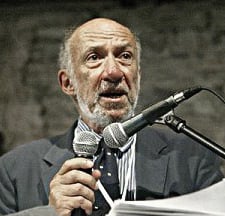
2014 International Year of Solidarity with the Palestinian People

In a little noted initiative the General Assembly on November 26, 2013 voted to proclaim 2014 the International Year of Solidarity with the Palestinian People. The UN Committee on the Exercise of the Inalienable Rights of the Palestinian People was requested to organize relevant activities in cooperation with governments, the UN system, intergovernmental organizations, and significantly, civil society.

The vote was 110-7, with 56 abstentions, which is more or less reflective of the sentiments now present in international society. Among the seven opponents of the initiative, in addition to Israel, were unsurprisingly its three staunchest supporters, each once a British colony: the United States, Canada, Australia, with the addition of such international heavyweight states as Micronesia, Palau, and the Marshall Islands. Europe and assorted states around the world were among the 56 abstentions, with virtually the entire non-West solidly behind the idea of highlighting solidarity with the Palestinian people in their struggle for peace with justice based on rights under international law.

Three initial observations:

• Those governments that are willing to stand unabashedly with Israel in opposition to the tide of world public opinion are increasingly isolated, and these governments are under mounting public pressure from their own civil societies that seeks a balanced approach that is rights based rather than power dominated.

• The West, in general, is dominated by the abstaining governments that seek the lowest possible profile of being seen as neither for or against, and in those countries where civil society should now be capable of mobilizing more support for the Palestinian struggle.

• The non-West that is, as has long been the case, rhetorically in solidarity with the Palestinian people, but have yet to match their words with deeds, and seem ready to be pushed.

What is also revealing is the argumentation of UN Watch, and others, that denounce this latest UN initiative because it unfairly singles out Israel and ignores those countries that have worse human rights records. Always forgotten here are two elements of the Israel/Palestine conflict that justify singling it out among others:

A) Israel owes its existence, to a significant degree, to the organized international community, starting with the League of Nations, continuing throughout the British Mandate, and culminating with the Partition Plan of 1947, as set forth in Un General Assembly Resolution 181. The latter overrode the decolonizing principle of self-determination with a solution devised and imposed from without; such antecedents to the current Israel/Palestine situation also expose the colonialist foundations of the current struggle as well as call attention to the settler colonial elements that are associated with Israel’s continuous expansion of territorial, resource, and ethnocratic claims far beyond what the Western dominated international community had proposed, and then approved of, after the end of World War II.

To be sure there were delicate and complex issues all along that make this problematic role of the international community somewhat more understandable. Up to 1945 there was a generalized acceptance of European colonial administration, although in the Middle East, colonial legitimacy was balanced for the first time against an obligation by the colonial powers to prepare a dependent people to stand eventually on its own, an ambivalent acknowledgement of the ethos of self-determination if not yet in the form of a legal norm. This affirmation of self-determination, as an alternative to colonial rule, was the special project of the American president, Woodrow Wilson, who insisted that such an approach was a moral imperative, especially in dealing with the regional aftermath of the Ottoman Empire that had long ruled over many diverse ethnicities.

B) Beyond this, the Jewish experience during the reign of fascist regimes throughout Europe, culminating in the Holocaust, created a strong empathetic urge in Europe to endorse the Zionist project for a Jewish Homeland in Palestine. As is known, this empathy although genuine in many quarters, also exhibited a deferred sense of guilt on the part of the Western liberal democracies that had done so little to challenge the genocidal policies of Hitler and the Nazis, refusing to act at all until their national interests were directly engaged by German aggression.

European support was also forthcoming because the Zionist proposed solution for the Jewish Problem, which has long been present in Europe, could be enacted elsewhere, that is, at the expense of non-Europeans. This elsewhere was far from empty and was coveted by others for various reasons.

Palestine was a land long lived in mainly by Arabs, but also by some Jews and Christians, and associated centrally with the sacred traditions of all three monotheistic religions. Normally in the modern world, the demographics of residence trump biblical or other claims based on claims of national tradition, ethnic identity, and ancient historical presence.

Yet despite these factors, there were ethical reasons in the aftermath of such extreme victimization of the Jewish people to lend support to a reasonable version of the Zionist project as it had evolved in the years since the Balfour Declaration, even if from a variety of other perspectives it was deeply unfair to others and disruptive of peaceful relations, and throughout its implementation, produced an unfolding catastrophe for most non-Jewish Palestinians.

Taking account of this historical and moral complexity what seems evident is the failure of the UN to carry out its responsibility in a manner that was effective and responsive to the human circumstances prevailing in Palestine. The UN overall record is quite disappointing if considered from the perspective of accommodating these contradictory clusters of consideration in a manner that was reflective of international law and global justice.

The military prowess of Zionist forces in Israel inflicted a major defeat on the Palestinian people and neighboring Arab governments, and in the process expanded the territorial dominion of Israel from the 55% decreed by the UN in its partition plan to 78% where the green line established an armistice arrangement in 1948. Such an outcome was gradually endorsed by a geopolitical consensus, exhibited through the admission of Israel to the UN without any solution to the underlying conflict, leaving the Palestinians out in the cold and allowing Israel to constitute itself within borders much larger than what the UN had a mere year earlier decreed as fair.

This situation was further aggravated by the 1967 War in which Israel occupied all of the remaining territory of historic Palestine, purporting even to annex East Jerusalem while greatly enlarging the area of municipal Jerusalem by incorporating land belonging to the West Bank.

Since 1967 this Palestinian territorial remnant has been further decreased by the massive settlement phenomenon, including its network of settler only roads, carried out in flagrant violation of international humanitarian law, by the separation wall constructed and maintained in defiance of the Advisory Opinion of the International Court of Justice, and by a variety of moves to change the demography of East Jerusalem.

In other words, Israeli forces on the ground in what had been Palestine have undermined the vision set forth in the partition plan which was itself a controversial UN solution to the conflict that was rejected by Palestinians and by neighboring countries.

Despite much propaganda to the contrary, the Palestinian leadership has over most of the period of their struggle, shown an unusual readiness to abandon maximal goals, and put forward forthcoming proposals in recognition of the realities of a situation that had become unfavorable for the realization of their earlier hopes. Palestinian willingness, expressed formally since 1988, to accept Israel as a legitimate state within the green line borders of 1967 remains more than twenty-five years after its articulation an unacknowledged and unreciprocated major initiative for peace.

That such a proposal has been ignored and continuously undermined by Israel with de facto Western acquiescence, and in the face of feeble UN rhetorical objections, displays the inability of the UN to fulfill its responsibilities to the people of Palestine.

As might be expected, Palestinians have long become disillusioned about the benefits of having UN authority and international law on their side. Over the years the backing of international authority has failed to bring about an improvement in the life circumstances and political position of the Palestinian people.

The UN is helpless, and designed to be helpless, whenever a UN position is effectively resisted by a combination of military force and geopolitical alignment. Israel’s military capabilities and American geopolitical leverage have completely nullified the expressed will of the United Nations, but have not overcome the sense of frustration or excused the Organization from its failure to act responsibly toward the Palestinian people.

In light of this background, the wonder is that the UN has done so little to repair the damage, not that it has done so much, or more than it should in relation to Israel/Palestine. Arguably, yes, there are a variety of other situations in which the abuse of human rights has been worse than what is being attributed to Israel, but the rationale for focusing on Palestine is not only a question of the denial of rights, it is also an issue of fundamental justice, of the seemingly permanent subjugation of a people, partly due to arrangements that were devised and endorsed over a long period of time by the organized international community.

Yet, witnessing the dire current emergency plight of the people of Gaza, makes it perverse to contend that the human rights challenges facing this large and vulnerable Palestinian community is not among the worst human rights abuses in the entire world, and makes us wonder anew why the UN seems unwilling and unable to do more!

We can hope at the dawn of 2014 that the UN will be vigorous in giving the International Year of Solidarity with the Palestinian People a political meaning that goes beyond words of empathy and support. There is an opportunity to do more. The UN resolution calls for working with civil society. Recent moves in America to join boycotts of Israeli academic institutions and in Europe to hold corporations responsible under international law for dealing commercially with Israeli settlements are major successes of civil society activism, being led by the BDS Campaign that has the important legitimating virtue of Palestinian leadership and backing. The UN can help build a momentum in the global solidarity movement that encourages nonviolent militant forms of coercive action that alone will give ‘solidarity’ a good name.

Palestinians are starting to win the Legitimacy War that is being waged against unlawful Israeli policies and on behalf of the attainment of Palestinian rights. The turning point in world public opinion can probably be traced back to the way Israel waged the Lebanon War of 1982, especially the avowed reliance on disproportionate force directed at residential neighborhoods, especially in south Beirut, a tactic that became known as the Dahiya Doctrine.

The tipping point in shifting the Israeli collective identity from that of victims and heroic underdogs to that lawless perpetrators of oppressive warfare against a totally vulnerable people came in Operation Cast Lead, the sustained assault with high technology weaponry on the people of Gaza for three weeks at the end of 2008. After these developments, the Palestinians were understood more widely to be a victimized people, engaged in a just struggle to gain their rights under international law, and needing and deserving an international movement of support to offset the Israeli hard power and geopolitical dominance.

Israeli leaders and think tanks try their hardest to discredit this Palestinian Legitimacy War by falsely claiming that it is directed against the legitimacy of Israel as a state rather than is the case, against the unlawful policies of the Israeli state.

This is a crucial difference, and the distinction seems deliberately obscured by Israeli propaganda that inflated what Palestinians are seeking so as to make their activism appear hyperbolic, with unreasonable and unacceptable demands, which makes it easier to dismiss than by addressing critically the Palestinian grievances in their actual form.

It is to be hoped that the International Year of Solidarity in its work clarifies this distinction between Israel as a state and Israeli policies. Within such a framework the UN will deserve credit for contributing to victories throughout the world that advance the agenda of the Legitimacy War being waged by and on behalf of the Palestinian people, and by so doing, move the debate somewhat closer to the realization of a just and sustainable peace for both peoples.
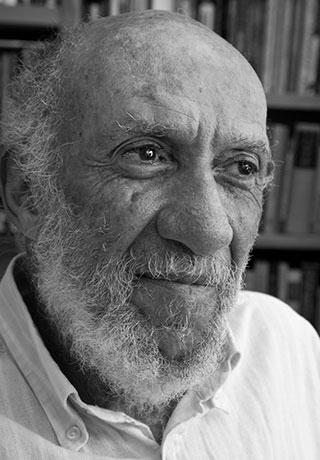

Professor Falk became an adviser to TFF when it was established in 1985.

Related Posts

The agreement is catastrophic both because of what it says and what it doesn’t mention. It reduces further the major asset of security policies: Freedom of action. Jan Oberg TFF director September 25, 2026 A couple of hours before the agreement was signed on September 22, 2026, I published the following 13 hypotheses about what it would most likely contain on TFF Substack (in English). I was wrong on only the first point. Contrary to what Trump had written on his Truth Social platform, it does not appear to come into force immediately. In fact, it turned out to be worse than even I had anticipated. After these hypotheses now come a number of reflections in light of what the agreement actually contains, and does not contain, as well as the way in which it has generally been presented by major media outlets and by the public-service broadcaster DR. My...
This is not another geopolitical commentary on the Arctic. It is a visionary peace proposal that can save the region from militarised rivalry and ecological ruin. A blueprint for shared security, sustainable development, and human dignity — benefitting Greenland, the Arctic, and the rest of us. Jan Oberg TFF director Lund, Sweden, February 17, 2026 I. Four Principles for a New Arctic Vision The Arctic is often framed as a cold arena of rivalry — a place where great powers test each other’s resolve. But this worldview is outdated, unimaginative, and ultimately self‑defeating. The Arctic is not a vacuum waiting to be militarised; it is a living region, a climate stabiliser, and a cultural homeland whose future will shape the future of humanity. If we begin from that understanding, a far more rational Arctic order becomes possible — one that is peaceful, cooperative, and centred on the people who actually live there. This vision rests...
Photos © TFF 2000 Read PressInfo 90 “Lift the Sanctions and Bring More Aid to Yugoslavia” See Pictures from Belgrade © TFF 2000 Please reprint, copy, archive, quote or re-post this item, but please retain the source.

Recent Articles

Tony Robinson October 4, 2026 Violence is easy to recognise when someone is being beaten, shot or killed. It becomes more difficult when nobody is holding a weapon. Poverty, discrimination, exploitation and repression can restrict a human life just as effectively, although they do so in very different ways and with very different consequences. Simply adding more categories to an ever-growing list of forms of violence does not really solve the problem. The more interesting question is what all these different situations have in common and why it makes sense to describe them using the same word. Human beings do not simply react to what happens around them. They remember the past, imagine things that do not yet exist, make plans and undertake projects. Workers organise because they imagine different working conditions; people migrate because they imagine another life somewhere else; social movements emerge because people refuse to accept the...
It’s a matter of principles, courage, vision and pulling together – while the militarist world is falling apart… Peter Langille October 3, 2026 “Here, then, is the problem which we present to you, stark and dreadful and inescapable: Shall we put an end to the human race; or shall mankind renounce war?”The Bertrand Russell—Albert Einstein Manifesto, July 9, 1955 ⁕ The forecast for what’s ahead is worrisome. The sharp rise in armed conflicts over the past three years is adding to what was already the highest level in over seventy years. Genocides, which should be prevented are supported. A shared climate emergency that jeopardises survival is ignored. Diverse polls now suggest that people are war-weary, worried and interested in a more effective United Nations. And, there are viable policy options for a more secure world! Yet governments are doubling-down, betting on more war and investing heavily. If current trends persist,...
Johan Galtung 1930-2024October 2015 Published here on October 3, 2026 Let us focus on Civilization for conflict analysis and remedies. Major forms of disorder use violence; war is state organized violence. The most belligerent states are the United States of America and Israel, both with civilization roots. National Evangelism, the US Protestant Christian civilization– more national than evangelical–justifies US warfare as exceptionalism of a people chosen by God, with a manifest destiny to run the world. Orthodox Judaism justifies Israeli warfare to conquer and expand from Nile to Euphrates as a religious right and duty to the Eternal One. The third most belligerent country, the UK, no longer believes it is God-chosen but chosen by the USA; not quite the same but something. But the root cause of global disorder lies in the Occident–with Islam–seeing itself as the single, universal civilization valid for all at all times, all others being...

TFF on Substack

Discover and subscribe to more peace materials on TFF Substack

Most Popular

Tony Robinson October 4, 2026 Violence is easy to recognise when someone is being beaten, shot or killed. It becomes more difficult when nobody is holding a weapon. Poverty, discrimination, exploitation and repression can restrict a human life just as effectively, although they do so in very different ways and with very different consequences. Simply adding more categories to an ever-growing list of forms of violence does not really solve the problem. The more interesting question is what all these different situations have in common and why it makes sense to describe them using the same word. Human beings do not simply react to what happens around them. They remember the past, imagine things that do not yet exist, make plans and undertake projects. Workers organise because they imagine different working conditions; people migrate because they imagine another life somewhere else; social movements emerge because people refuse to accept the...
It’s a matter of principles, courage, vision and pulling together – while the militarist world is falling apart… Peter Langille October 3, 2026 “Here, then, is the problem which we present to you, stark and dreadful and inescapable: Shall we put an end to the human race; or shall mankind renounce war?”The Bertrand Russell—Albert Einstein Manifesto, July 9, 1955 ⁕ The forecast for what’s ahead is worrisome. The sharp rise in armed conflicts over the past three years is adding to what was already the highest level in over seventy years. Genocides, which should be prevented are supported. A shared climate emergency that jeopardises survival is ignored. Diverse polls now suggest that people are war-weary, worried and interested in a more effective United Nations. And, there are viable policy options for a more secure world! Yet governments are doubling-down, betting on more war and investing heavily. If current trends persist,...
Johan Galtung 1930-2024October 2015 Published here on October 3, 2026 Let us focus on Civilization for conflict analysis and remedies. Major forms of disorder use violence; war is state organized violence. The most belligerent states are the United States of America and Israel, both with civilization roots. National Evangelism, the US Protestant Christian civilization– more national than evangelical–justifies US warfare as exceptionalism of a people chosen by God, with a manifest destiny to run the world. Orthodox Judaism justifies Israeli warfare to conquer and expand from Nile to Euphrates as a religious right and duty to the Eternal One. The third most belligerent country, the UK, no longer believes it is God-chosen but chosen by the USA; not quite the same but something. But the root cause of global disorder lies in the Occident–with Islam–seeing itself as the single, universal civilization valid for all at all times, all others being...
Read More
Living-Peace-Sign-Budapest-copy
Tony Robinson October 4, 2026 Violence is easy to recognise when someone is being beaten, shot or killed. It becomes more difficult when nobody is holding a weapon. Poverty, discrimination, exploitation and repression can restrict a human life just as effectively, although they do so in very different ways and with very different consequences. Simply adding more categories to an ever-growing list of forms of violence does not really solve the problem. The more interesting question is what all these different situations have in common and why it makes sense to describe them using the same word. Human beings do not simply react to what happens around them. They remember the past, imagine things that do not yet exist, make plans and undertake projects. Workers organise because they imagine different working conditions; people migrate because they imagine another life somewhere else; social movements emerge because people refuse to accept the...
b54a1f10-8c65-4f0b-9dd5-4abc0a7d04cc_2659x2659
It’s a matter of principles, courage, vision and pulling together – while the militarist world is falling apart… Peter Langille October 3, 2026 “Here, then, is the problem which we present to you, stark and dreadful and inescapable: Shall we put an end to the human race; or shall mankind renounce war?”The Bertrand Russell—Albert Einstein Manifesto, July 9, 1955 ⁕ The forecast for what’s ahead is worrisome. The sharp rise in armed conflicts over the past three years is adding to what was already the highest level in over seventy years. Genocides, which should be prevented are supported. A shared climate emergency that jeopardises survival is ignored. Diverse polls now suggest that people are war-weary, worried and interested in a more effective United Nations. And, there are viable policy options for a more secure world! Yet governments are doubling-down, betting on more war and investing heavily. If current trends persist,...
010
Johan Galtung 1930-2024October 2015 Published here on October 3, 2026 Let us focus on Civilization for conflict analysis and remedies. Major forms of disorder use violence; war is state organized violence. The most belligerent states are the United States of America and Israel, both with civilization roots. National Evangelism, the US Protestant Christian civilization– more national than evangelical–justifies US warfare as exceptionalism of a people chosen by God, with a manifest destiny to run the world. Orthodox Judaism justifies Israeli warfare to conquer and expand from Nile to Euphrates as a religious right and duty to the Eternal One. The third most belligerent country, the UK, no longer believes it is God-chosen but chosen by the USA; not quite the same but something. But the root cause of global disorder lies in the Occident–with Islam–seeing itself as the single, universal civilization valid for all at all times, all others being...
Screenshot 2026-10-02 011738
Jan ObergPhD, director, The Transnational Foundation for Peace and Future Research, TFFLund, Sweden October 2, 2026 This is my full original manuscript. The Chinese Academy of Social Science, CASS, makes two publications out if it. 1. China’s Five-year plan emphasized the capabilities of basic research and original innovation. It is regarded as the goal of the future social development, which, as required, should be significantly enhanced. Can you comment on the importance of original innovation in research and academic study? I believe it is easier to define “original innovation” in the natural sciences than in social sciences. The breaking points of what constitutes something new, or innovative, are not quite as sharp in the latter. But in both fields it is about opening up something that was closed, unseen, unexplored before – making manifest what was earlier latent. Innovations come in many forms and shapes – naming something that was not...
arctic-circle-map
The agreement is catastrophic both because of what it says and what it doesn’t mention. It reduces further the major asset of security policies: Freedom of action. Jan Oberg TFF director September 25, 2026 A couple of hours before the agreement was signed on September 22, 2026, I published the following 13 hypotheses about what it would most likely contain on TFF Substack (in English). I was wrong on only the first point. Contrary to what Trump had written on his Truth Social platform, it does not appear to come into force immediately. In fact, it turned out to be worse than even I had anticipated. After these hypotheses now come a number of reflections in light of what the agreement actually contains, and does not contain, as well as the way in which it has generally been presented by major media outlets and by the public-service broadcaster DR. My...
girl-5894831_1280
Below are TFF-related media mentions, comments, videos and social media posts published elsewhere but not on this homepage. We happen to catch and list only a fraction. Regarding video comments and debates, we recommend that you go to the TFF Video Channel on Substack where many of them are reproduced. Jan Oberg is a contributor to China Daily – 52 million daily clicks – and Global Times, CGTN and CCTV (the national television), China Investment, Xinhua News Agency and several others. Articles and videos on these media very often multiply into countless Chinese (and Western media) that re-post them from these main media. Thanks to The China Academy, his analyses, interviews and comments are frequently posted on YouTube channels such as Thinkers Forum and Wave Media. These videos are often re-posted on Bilibili (China’s YouTube), the China Content Center on TikTok, and on the Chinese edition of TikTok, Douyin.com. This means reaching hundreds of millions of viewers worldwide over a year. While there are too many to catch on all these...




