/10/jonathanpower2.jpg”>

The military’s crackdown in Egypt was foolish. Democracy is not. Without democracy there is no way of arbitrating the clash of interests, the demands and beliefs in this gravely disturbed society.

The military/civilian government, instead of resolving to break the back of the Muslim Brotherhood and thus, counter-productively, drive it underground, should speed ahead with a fast re-write of those clauses of the constitution that offend liberals and secularists – on the role of women and the place of shari’a law – and then immediately call an election open to all.

All this could and should be done within three months at the most. It is highly unlikely that the Brotherhood would win this time but if they did they should be allowed their victory – as long as they promise the present interim government not to use their position to re-create the kind of rule that was the undoing of the deposed president, Muhammad Morsi.

Democracy was a Greek idea. It did not last even there and it was forgotten for two thousand years. Some of the thinkers of the European Enlightenment resurrected the idea, blending their classical knowledge with a romanticised idea of ancient Athens.

Not all of them were so taken by these new thoughts. De Tocqueville wrote about “the tyranny of the majority”. Edmund Burke called the democracy of the French Revolution, “the most shameless thing in the world”.

Democracy returned to the world stage during the struggle for American independence and the founding of the American republic, although at first the Greek idea was anathema to its leaders. Next it appeared in France, born amid the struggles of the French Revolution and its turbulent aftermath.

At the end of the Second World War there were only six practising democracies in the whole world. Before the war democracy was never the norm and only became more widespread in Europe because of the resurgence of liberal values that tried to make sense out of the carnage of two horrific world wars, and because of the creation of the precursor of the European Union.

Later, in the 1960s, there was the birth of the human rights movement, led by the founding of Amnesty International, now one of the world’s most influential lobbies. The American presidency of Jimmy Carter pushed the idea of democracy to the fore, especially in Latin America and Africa with significant success.

Modern day democracy is in many ways a poor shadow of the Greeks’. The Greeks made everyone equal before the law and enacted a meritocracy. As Pericles said, Greece’s greatest orator, democracy is also about taste, responsiveness to beauty, sobriety of judgement and respect for wisdom, discretion and generosity. The Greeks’ code of ethics, as the philosopher Bernard Williams has argued, was enforced not by the sense of sin but of shame, and often shame at not living up to these high values.

Plato, who didn’t approve of democracy’s commitment to the transfer of wealth from the rich to the poor, strongly disapproved of democracy. He believed that in the best form of government philosophers would rule.

In newly liberated America democracy had its detractors too. The most influential was James Madison who believed that America was too big for effective democracy. Over the centuries, democracy has continued on its onward path, giving America a strong sense of self-esteem. But in France the early ideas on democracy ended with the dictatorship of Napoleon and before too long the restoration of the dynastic monarchy. Only later did democracy slowly emerge in practice.

Today, there are many examples of the weaknesses of democracy. In Asia, Africa, Latin America and Russia where democracy has advanced in recent years, there are side by side in the same country serious abuses of human rights and widespread corruption. In the U.S. of President George W. Bush Jr. torture was carried out in secret.

If we want democracy to continue we will have to fight for its integrity – we always have to remember Churchill’s argument that democracy is the worst system, apart from all the others.

“Democracy”, wrote historian Norman Davies, “has few values of its own: it is as good or bad as the principles of the people who operate it. In the hands of liberal and tolerant people it will produce a liberal and tolerant government. In the hands of cannibals it will produce cannibals.”

Real democracy will not come easily to Egypt and we know that already. It won’t solve every problem but if there is a fair and liberal constitution to underpin it and if parliament can behave with maturity, self-discipline and both it and the president respect the constitution then it has a chance of working.

What other course can hope to resolve the present bloody situation and save Egypt from a dark and despairing future with a declining economy, human rights abuses and overwhelming violence?

Copyright: Jonathan Power 2013
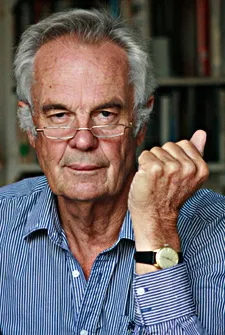
Foreign affairs columnist, film-maker and author

Related Posts

Photos © TFF 2000 Read PressInfo 90 “Lift the Sanctions and Bring More Aid to Yugoslavia” See Pictures from Belgrade © TFF 2000 Please reprint, copy, archive, quote or re-post this item, but please retain the source.
LONDON – So far so good, at least on the wider level. While internally Iraq seems on the edge of chaos, the much heralded clash of civilizations between the Muslim and Judaeo-Christian worlds has yet to become apparent. We have anger and despair aplenty in the Arab and Muslim worlds. But very little rushing to the standard and there was no great pilgrimage of warriors to join the fight, as happened when the Soviet Union invaded Afghanistan twenty years ago, and then, having driven the Red Army out, were left to ferment in that mountainous redoubt. With the armaments supplied by the CIA the mujahidin were transformed into Al Qaeda that became, for a relatively brief moment as these things go, ‘the greatest threat to the homeland that America has ever known.’ Nevertheless a ‘Cold War’ between much of the Muslim world and the West is certainly in full swing. Winston...
) My friend and solidarity colleague, Biljana Vankovska, has been dismissed as director of the Center of the Global Changes Center where she is a full Professor at Ss. Cyril and Methodius University in Skopje, Macedonia, in a chilling encroachment on academic freedom. The Center was conceived and brought to life by Biljana a year and a half ago and had already built a reputation for academic excellence mainly on the basis of a stimulating conference devoted to “the emerging cooperative multipolar system” and due to her ability to attract world-class scholars to join the Center’s Board and take part in this inaugural event. As the eloquent explanatory essay below indicates, this action by an educational administrator in her university was based on trumped-up charges. Biljana’s explanation that this punitive action in response to a development that undoubtedly enhanced the academic reputation of this Macedonian rings true—namely, that the government...

Recent Articles

Tony Robinson October 4, 2026 Violence is easy to recognise when someone is being beaten, shot or killed. It becomes more difficult when nobody is holding a weapon. Poverty, discrimination, exploitation and repression can restrict a human life just as effectively, although they do so in very different ways and with very different consequences. Simply adding more categories to an ever-growing list of forms of violence does not really solve the problem. The more interesting question is what all these different situations have in common and why it makes sense to describe them using the same word. Human beings do not simply react to what happens around them. They remember the past, imagine things that do not yet exist, make plans and undertake projects. Workers organise because they imagine different working conditions; people migrate because they imagine another life somewhere else; social movements emerge because people refuse to accept the...
It’s a matter of principles, courage, vision and pulling together – while the militarist world is falling apart… Peter Langille October 3, 2026 “Here, then, is the problem which we present to you, stark and dreadful and inescapable: Shall we put an end to the human race; or shall mankind renounce war?”The Bertrand Russell—Albert Einstein Manifesto, July 9, 1955 ⁕ The forecast for what’s ahead is worrisome. The sharp rise in armed conflicts over the past three years is adding to what was already the highest level in over seventy years. Genocides, which should be prevented are supported. A shared climate emergency that jeopardises survival is ignored. Diverse polls now suggest that people are war-weary, worried and interested in a more effective United Nations. And, there are viable policy options for a more secure world! Yet governments are doubling-down, betting on more war and investing heavily. If current trends persist,...
Johan Galtung 1930-2024October 2015 Published here on October 3, 2026 Let us focus on Civilization for conflict analysis and remedies. Major forms of disorder use violence; war is state organized violence. The most belligerent states are the United States of America and Israel, both with civilization roots. National Evangelism, the US Protestant Christian civilization– more national than evangelical–justifies US warfare as exceptionalism of a people chosen by God, with a manifest destiny to run the world. Orthodox Judaism justifies Israeli warfare to conquer and expand from Nile to Euphrates as a religious right and duty to the Eternal One. The third most belligerent country, the UK, no longer believes it is God-chosen but chosen by the USA; not quite the same but something. But the root cause of global disorder lies in the Occident–with Islam–seeing itself as the single, universal civilization valid for all at all times, all others being...

TFF on Substack

Discover and subscribe to more peace materials on TFF Substack

Most Popular

Tony Robinson October 4, 2026 Violence is easy to recognise when someone is being beaten, shot or killed. It becomes more difficult when nobody is holding a weapon. Poverty, discrimination, exploitation and repression can restrict a human life just as effectively, although they do so in very different ways and with very different consequences. Simply adding more categories to an ever-growing list of forms of violence does not really solve the problem. The more interesting question is what all these different situations have in common and why it makes sense to describe them using the same word. Human beings do not simply react to what happens around them. They remember the past, imagine things that do not yet exist, make plans and undertake projects. Workers organise because they imagine different working conditions; people migrate because they imagine another life somewhere else; social movements emerge because people refuse to accept the...
It’s a matter of principles, courage, vision and pulling together – while the militarist world is falling apart… Peter Langille October 3, 2026 “Here, then, is the problem which we present to you, stark and dreadful and inescapable: Shall we put an end to the human race; or shall mankind renounce war?”The Bertrand Russell—Albert Einstein Manifesto, July 9, 1955 ⁕ The forecast for what’s ahead is worrisome. The sharp rise in armed conflicts over the past three years is adding to what was already the highest level in over seventy years. Genocides, which should be prevented are supported. A shared climate emergency that jeopardises survival is ignored. Diverse polls now suggest that people are war-weary, worried and interested in a more effective United Nations. And, there are viable policy options for a more secure world! Yet governments are doubling-down, betting on more war and investing heavily. If current trends persist,...
Johan Galtung 1930-2024October 2015 Published here on October 3, 2026 Let us focus on Civilization for conflict analysis and remedies. Major forms of disorder use violence; war is state organized violence. The most belligerent states are the United States of America and Israel, both with civilization roots. National Evangelism, the US Protestant Christian civilization– more national than evangelical–justifies US warfare as exceptionalism of a people chosen by God, with a manifest destiny to run the world. Orthodox Judaism justifies Israeli warfare to conquer and expand from Nile to Euphrates as a religious right and duty to the Eternal One. The third most belligerent country, the UK, no longer believes it is God-chosen but chosen by the USA; not quite the same but something. But the root cause of global disorder lies in the Occident–with Islam–seeing itself as the single, universal civilization valid for all at all times, all others being...
Read More
Living-Peace-Sign-Budapest-copy
Tony Robinson October 4, 2026 Violence is easy to recognise when someone is being beaten, shot or killed. It becomes more difficult when nobody is holding a weapon. Poverty, discrimination, exploitation and repression can restrict a human life just as effectively, although they do so in very different ways and with very different consequences. Simply adding more categories to an ever-growing list of forms of violence does not really solve the problem. The more interesting question is what all these different situations have in common and why it makes sense to describe them using the same word. Human beings do not simply react to what happens around them. They remember the past, imagine things that do not yet exist, make plans and undertake projects. Workers organise because they imagine different working conditions; people migrate because they imagine another life somewhere else; social movements emerge because people refuse to accept the...
b54a1f10-8c65-4f0b-9dd5-4abc0a7d04cc_2659x2659
It’s a matter of principles, courage, vision and pulling together – while the militarist world is falling apart… Peter Langille October 3, 2026 “Here, then, is the problem which we present to you, stark and dreadful and inescapable: Shall we put an end to the human race; or shall mankind renounce war?”The Bertrand Russell—Albert Einstein Manifesto, July 9, 1955 ⁕ The forecast for what’s ahead is worrisome. The sharp rise in armed conflicts over the past three years is adding to what was already the highest level in over seventy years. Genocides, which should be prevented are supported. A shared climate emergency that jeopardises survival is ignored. Diverse polls now suggest that people are war-weary, worried and interested in a more effective United Nations. And, there are viable policy options for a more secure world! Yet governments are doubling-down, betting on more war and investing heavily. If current trends persist,...
010
Johan Galtung 1930-2024October 2015 Published here on October 3, 2026 Let us focus on Civilization for conflict analysis and remedies. Major forms of disorder use violence; war is state organized violence. The most belligerent states are the United States of America and Israel, both with civilization roots. National Evangelism, the US Protestant Christian civilization– more national than evangelical–justifies US warfare as exceptionalism of a people chosen by God, with a manifest destiny to run the world. Orthodox Judaism justifies Israeli warfare to conquer and expand from Nile to Euphrates as a religious right and duty to the Eternal One. The third most belligerent country, the UK, no longer believes it is God-chosen but chosen by the USA; not quite the same but something. But the root cause of global disorder lies in the Occident–with Islam–seeing itself as the single, universal civilization valid for all at all times, all others being...
Screenshot 2026-10-02 011738
Jan ObergPhD, director, The Transnational Foundation for Peace and Future Research, TFFLund, Sweden October 2, 2026 This is my full original manuscript. The Chinese Academy of Social Science, CASS, makes two publications out if it. 1. China’s Five-year plan emphasized the capabilities of basic research and original innovation. It is regarded as the goal of the future social development, which, as required, should be significantly enhanced. Can you comment on the importance of original innovation in research and academic study? I believe it is easier to define “original innovation” in the natural sciences than in social sciences. The breaking points of what constitutes something new, or innovative, are not quite as sharp in the latter. But in both fields it is about opening up something that was closed, unseen, unexplored before – making manifest what was earlier latent. Innovations come in many forms and shapes – naming something that was not...
arctic-circle-map
The agreement is catastrophic both because of what it says and what it doesn’t mention. It reduces further the major asset of security policies: Freedom of action. Jan Oberg TFF director September 25, 2026 A couple of hours before the agreement was signed on September 22, 2026, I published the following 13 hypotheses about what it would most likely contain on TFF Substack (in English). I was wrong on only the first point. Contrary to what Trump had written on his Truth Social platform, it does not appear to come into force immediately. In fact, it turned out to be worse than even I had anticipated. After these hypotheses now come a number of reflections in light of what the agreement actually contains, and does not contain, as well as the way in which it has generally been presented by major media outlets and by the public-service broadcaster DR. My...
girl-5894831_1280
Below are TFF-related media mentions, comments, videos and social media posts published elsewhere but not on this homepage. We happen to catch and list only a fraction. Regarding video comments and debates, we recommend that you go to the TFF Video Channel on Substack where many of them are reproduced. Jan Oberg is a contributor to China Daily – 52 million daily clicks – and Global Times, CGTN and CCTV (the national television), China Investment, Xinhua News Agency and several others. Articles and videos on these media very often multiply into countless Chinese (and Western media) that re-post them from these main media. Thanks to The China Academy, his analyses, interviews and comments are frequently posted on YouTube channels such as Thinkers Forum and Wave Media. These videos are often re-posted on Bilibili (China’s YouTube), the China Content Center on TikTok, and on the Chinese edition of TikTok, Douyin.com. This means reaching hundreds of millions of viewers worldwide over a year. While there are too many to catch on all these...