Professor & TFF Board member Biljana Vankovska dismissed from the Global Changes Centre in Macedonia

)

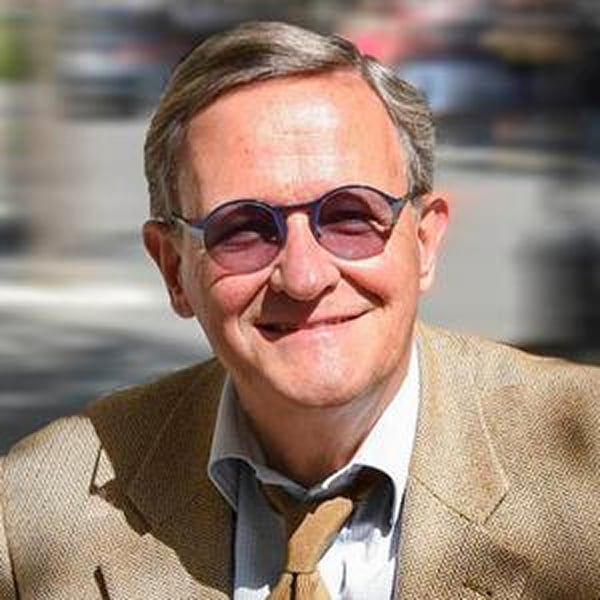
My friend and solidarity colleague, Biljana Vankovska, has been dismissed as director of the Center of the Global Changes Center where she is a full Professor at Ss. Cyril and Methodius University in Skopje, Macedonia, in a chilling encroachment on academic freedom.

The Center was conceived and brought to life by Biljana a year and a half ago and had already built a reputation for academic excellence mainly on the basis of a stimulating conference devoted to “the emerging cooperative multipolar system” and due to her ability to attract world-class scholars to join the Center’s Board and take part in this inaugural event.

As the eloquent explanatory essay below indicates, this action by an educational administrator in her university was based on trumped-up charges. Biljana’s explanation that this punitive action in response to a development that undoubtedly enhanced the academic reputation of this Macedonian rings true—namely, that the government and economic elites in Macedonia were gaining profits and prestige by being a water carrier for NATO and the EU, and her Center did explore a less West-centric model for a more peaceful and equitable world that looked with favour on China and did not despair of a constructive future for Russia.

Whether right or wrong, such issues urgently need the considerations of more inclusive and imaginative approaches to global security and war prevention than are emanating from Western capitals.

On the basis of close friendship and intellectual collaboration, I regard Biljana Vankovska as a woman of honor, a dedicated scholar, and a voice of global conscience that deserves our trust and support.

The Velvet Grip of Western Censorship: The Death of the Global  Changes Center in Macedonia

Biljana Vankovska, professor, TFF Board member

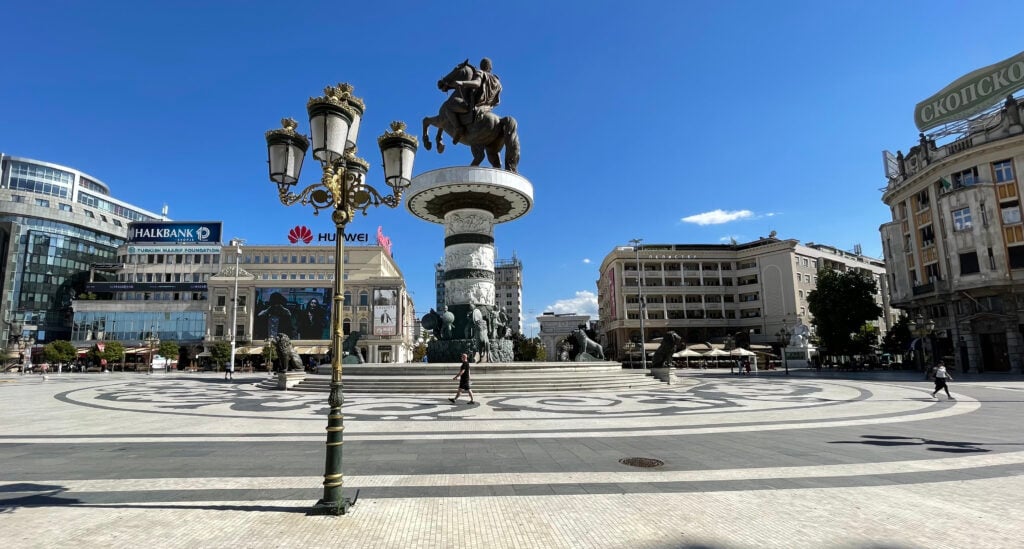
What initially appeared to be a subtle and gradual militarization of academic spaces in Macedonia has now become glaringly evident. The 1.5-year-old Center for Global Changes, established at the Faculty of Philosophy, is seemingly on its deathbed. Was it unsuccessful? Passive? Ineffective? Quite the opposite. Just two months after hosting an extraordinary international conference on the emerging cooperative multipolar system in Skopje, Macedonia’s capital, I have been dismissed as the head of the Center and now face accusations of alleged procedural violations—whatever that might mean. Paradoxically, the decision to remove me was made first, while its justification and final “verdict” are being crafted afterward to legitimize the absurdity.

My position as head of the Center was entirely unpaid, voluntary, and, to be honest, a demanding responsibility for a full professor. One might dismiss this as no great loss—personally, that might hold true. But in a broader context, this situation is emblematic of how a velvet glove can swiftly turn into an iron fist for those who dare to step outside the mainstream and challenge official narratives.

Almost two years ago, as a group of enthusiasts, we believed it was both possible and necessary to open new academic horizons beyond the increasingly restrictive geopolitical narratives that frame NATO and the EU as the ultimate and unquestionable goals for any initiative. The imposition of invisible barriers to global cooperation and the creeping censorship in public discourse and academia have been difficult to accept—especially for my generation, which once enjoyed freedom of thought and internationalism in former Yugoslavia. The same sentiment resonates with progressive younger generations who have grown up amidst the barren landscape of a neoliberal transition.

In the name of so-called Westernization—and under the banner of “our main strategic goals,” as the prevailing narrative puts it—academia in Macedonia has donned an invisible military uniform, embracing a militarized mindset. This shift has proven to be a highly profitable endeavor, securing project grants and facilitating rapid academic promotions. Within the paradigm of the military-industrial-media-academia complex, Macedonia may lack significant contributions to the first two dimensions, but its media and academic sectors tell a different story.

Financially dependent media outlets have aligned themselves with Western donors, willingly assuming the role of “watchdogs” against any perceived “undesirable influence” from countries in the Global South. The rise of “fact-checkers” merely represents a rebranding of censorship mechanisms reminiscent of earlier times. Meanwhile, academia has increasingly focused on militarizing the minds of young people—not to prepare them as soldiers, but as loyal promoters of Western narratives.

At the same time, peace studies—once established with the generous intellectual contributions of Nordic peace researchers such as Johan Galtung, Håkan Wiberg, and Jan Øberg—have gradually been marginalized, deemed “unpopular” in the current academic climate. In a broader context, the proliferation of NGOs and think tanks dedicated to identifying “fake news, disinformation, and malign foreign influence” reflects this shift. Unsurprisingly, these projects overwhelmingly point to Russia and China as the culprits, perpetuating a narrow and ideologically driven agenda.

In retrospect, the decision to establish the Global Changes Center and bring together scholars from across the globe was not only courageous and ambitious but, as perceived by Western power centers, profoundly subversive. The International Board included a distinguished group of thinkers—among them Richard Falk, Zhang Weiwei, Jeffrey Sachs, Mohammad Marandi, Jan Øberg, Alejandro Bendaña, Radhika Desai, Richard Sakwa, and many others.

The conference agenda was equally impressive, featuring scholars from Canada to South Africa, Russia, China, Iran, Germany, and beyond—many of whom participated either in person or virtually. The Thinkers Forum shared a selection of these presentations on its YouTube channel, while the Global Changes Center posted the entire proceedings, offering open access to our discussions, visions, and goals.
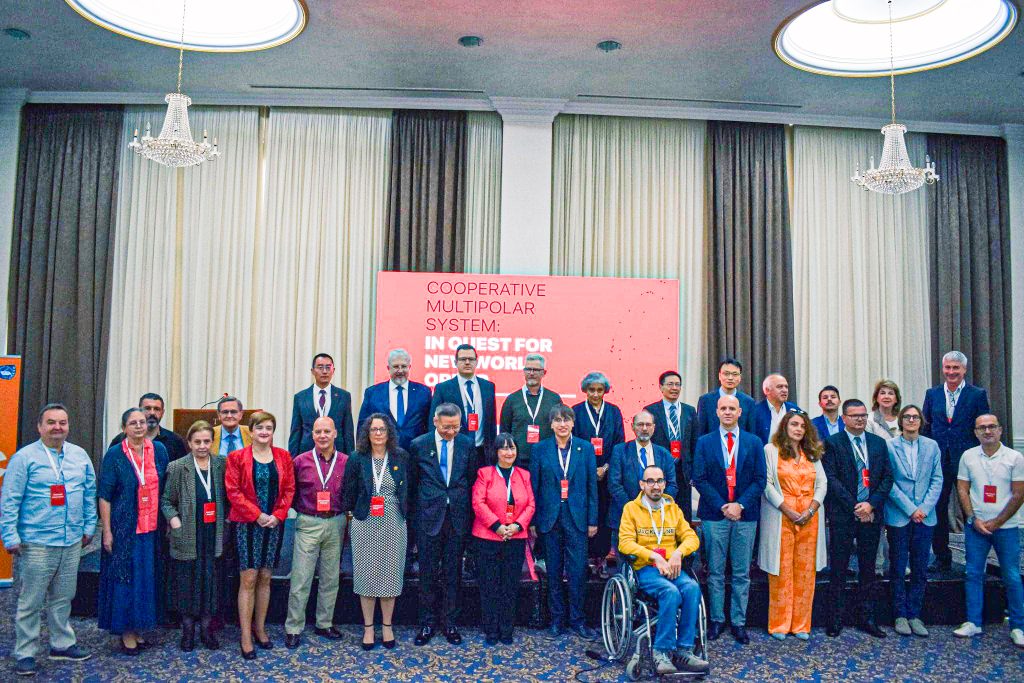
Far from being a routine academic event filled with superficial rhetoric, this was a groundbreaking forum. As Prof. Richard Sakwa remarked, “It was one of the most stimulating and intellectually exciting events I had been to for a long time.” Prof. Zhang Weiwei’s reaction was even more poignant: “Very shocked to hear this, but on the other hand, it’s a testimony to what you’ve done right and to your contribution to the cause of peace and multi-polarity, which are deeply appreciated by all of us. Please count on our support in your continuous intellectual and political endeavor for a better and more peaceful and humane world.”

These endorsements speak to the profound impact and unique value of the Center and its work, highlighting why it has become a target of attempts to suppress alternative narratives and visions of global cooperation.

While I struggle to make sense of the absurdity of being punished for organizing a successful international event in a small and largely overlooked country, the deafening silence from my colleagues at the university speaks volumes. Their fear is palpable, and their silence tells a story of its own. Perhaps my “fault” lies in breaking unwritten rules by fostering unconventional academic connections over the past few months—connections deemed “unpopular” by the prevailing narrative.

My travels to China, twice, and Russia, once, may have been enough to raise eyebrows, but attending and speaking at the Valdai Club likely tipped the scales. It seems the proverbial call for a witch hunt has been issued by Western mentors who seek to enforce rigid boundaries of acceptable academic discourse.

This is not to suggest that I, personally, am of such great significance. Rather, with my background, I make a convenient target—a cautionary tale to deter others from even considering stepping outside the prescribed lines. The message is clear: dissent, or even curiosity about alternative perspectives, will not be tolerated.

In my public response, I send a clear message: you may succeed in shutting down the Center, but the momentum of global changes is unstoppable. The multipolarity conference, a testament to the power of collective will, was made possible through crowdfunding—small yet meaningful contributions from ordinary citizens who instinctively recognize the reality of the West’s decline. These citizens, burdened by the consequences of this decline in their daily lives, yearn for someone to be a voice for the voiceless.

The Political West, in its hubris, is accelerating its own implosion. What we are witnessing now is far worse than the tensions of Cold War I. While I await my final verdict—not just regarding my dismissal but the potential fate of the Center itself—my message to those orchestrating this campaign is resolute. To paraphrase Rosa Luxemburg: I was, I am, I shall be.

Freedom is always the freedom of the dissenter, and I will not be silenced. My commitment to international solidarity with all those oppressed and massacred remains unwavering. At the same time, I will continue working to lay the foundations for a new, more just, and humane world built on the ideals of true human brotherhood. Whether within small or broader networks, it is crucial not to be paralyzed or deterred. The future of humanity is worth any personal effort or sacrifice.

Jan Oberg’s letter of resignation

Dear Professor Oliver Bakreski

Dear Professor Alma Tasevska


Dear Professor Biljana Angelova


Lund, Sweden, December 13, 2024

For the past 35 years, I have travelled to Macedonia, engaging with many individuals, including repeatedly your former President Kiro Gligorov, ministers and party leader, and conducting numerous interviews with Macedonians and Albanians of all walks of life for TFF’s fact-finding efforts.

I started my education in Yugoslavia in 1974 at the Inter-University Centre in Dubrovnik under the direction of Dr. Johan Galtung. Both he and Dr. Hakan Wiberg significantly advanced peace research at your faculty, where I have had the privilege of guest lecturing several times without encountering any censorship.

Despite some censorship during the Tito era, Yugoslavia had a rich intellectual landscape, producing distinguished philosophers and social scientists, e.g. from the (dissident) Praxis Group and notable social studies, particularly in Skopje and Belgrade.

•

I have had the privilege of knowing Professor Vankovska for nearly 40 years, and she has been a TFF Associate since 1999. She is undoubtedly one of your faculty’s most distinguished scholars, having pioneered peace research across the former Yugoslavia and extended her studies also to military and security affairs. Her hard work has placed your faculty and Macedonia on the global map of peace and future studies.

It is, therefore, shocking to learn of your decision to remove Dr Vankovska from her role as the director of the Global Changes Center, an urgently important initiative given the rapid world order changes (and dangers) that also NATO Macedonia will have to navigate. I know how dedicated to the Centre she has been, brain and heart. The Centre’s recent conference drew participants from around the world who admired the Centre’s work and her visionary efforts.

I see this decision as a violation of every academic principle and as a deplorable example of political interference – even as a decay from Yugoslav standards. 

Given this unjust, unwise and un-academic decision, I must withdraw from any future engagement with your faculty.


Sincerely

Jan Oberg, Dr HC, professor

TFF Research director

https://transnational.live/
Peace & future researcher + ‌Art Photographer

Professor Falk became an adviser to TFF when it was established in 1985.

Related Posts

Tony Robinson October 4, 2026 Violence is easy to recognise when someone is being beaten, shot or killed. It becomes more difficult when nobody is holding a weapon. Poverty, discrimination, exploitation and repression can restrict a human life just as effectively, although they do so in very different ways and with very different consequences. Simply adding more categories to an ever-growing list of forms of violence does not really solve the problem. The more interesting question is what all these different situations have in common and why it makes sense to describe them using the same word. Human beings do not simply react to what happens around them. They remember the past, imagine things that do not yet exist, make plans and undertake projects. Workers organise because they imagine different working conditions; people migrate because they imagine another life somewhere else; social movements emerge because people refuse to accept the...
It’s a matter of principles, courage, vision and pulling together – while the militarist world is falling apart… Peter Langille October 3, 2026 “Here, then, is the problem which we present to you, stark and dreadful and inescapable: Shall we put an end to the human race; or shall mankind renounce war?”The Bertrand Russell—Albert Einstein Manifesto, July 9, 1955 ⁕ The forecast for what’s ahead is worrisome. The sharp rise in armed conflicts over the past three years is adding to what was already the highest level in over seventy years. Genocides, which should be prevented are supported. A shared climate emergency that jeopardises survival is ignored. Diverse polls now suggest that people are war-weary, worried and interested in a more effective United Nations. And, there are viable policy options for a more secure world! Yet governments are doubling-down, betting on more war and investing heavily. If current trends persist,...
Johan Galtung 1930-2024October 2015 Published here on October 3, 2026 Let us focus on Civilization for conflict analysis and remedies. Major forms of disorder use violence; war is state organized violence. The most belligerent states are the United States of America and Israel, both with civilization roots. National Evangelism, the US Protestant Christian civilization– more national than evangelical–justifies US warfare as exceptionalism of a people chosen by God, with a manifest destiny to run the world. Orthodox Judaism justifies Israeli warfare to conquer and expand from Nile to Euphrates as a religious right and duty to the Eternal One. The third most belligerent country, the UK, no longer believes it is God-chosen but chosen by the USA; not quite the same but something. But the root cause of global disorder lies in the Occident–with Islam–seeing itself as the single, universal civilization valid for all at all times, all others being...

Recent Articles

Tony Robinson October 4, 2026 Violence is easy to recognise when someone is being beaten, shot or killed. It becomes more difficult when nobody is holding a weapon. Poverty, discrimination, exploitation and repression can restrict a human life just as effectively, although they do so in very different ways and with very different consequences. Simply adding more categories to an ever-growing list of forms of violence does not really solve the problem. The more interesting question is what all these different situations have in common and why it makes sense to describe them using the same word. Human beings do not simply react to what happens around them. They remember the past, imagine things that do not yet exist, make plans and undertake projects. Workers organise because they imagine different working conditions; people migrate because they imagine another life somewhere else; social movements emerge because people refuse to accept the...
It’s a matter of principles, courage, vision and pulling together – while the militarist world is falling apart… Peter Langille October 3, 2026 “Here, then, is the problem which we present to you, stark and dreadful and inescapable: Shall we put an end to the human race; or shall mankind renounce war?”The Bertrand Russell—Albert Einstein Manifesto, July 9, 1955 ⁕ The forecast for what’s ahead is worrisome. The sharp rise in armed conflicts over the past three years is adding to what was already the highest level in over seventy years. Genocides, which should be prevented are supported. A shared climate emergency that jeopardises survival is ignored. Diverse polls now suggest that people are war-weary, worried and interested in a more effective United Nations. And, there are viable policy options for a more secure world! Yet governments are doubling-down, betting on more war and investing heavily. If current trends persist,...
Johan Galtung 1930-2024October 2015 Published here on October 3, 2026 Let us focus on Civilization for conflict analysis and remedies. Major forms of disorder use violence; war is state organized violence. The most belligerent states are the United States of America and Israel, both with civilization roots. National Evangelism, the US Protestant Christian civilization– more national than evangelical–justifies US warfare as exceptionalism of a people chosen by God, with a manifest destiny to run the world. Orthodox Judaism justifies Israeli warfare to conquer and expand from Nile to Euphrates as a religious right and duty to the Eternal One. The third most belligerent country, the UK, no longer believes it is God-chosen but chosen by the USA; not quite the same but something. But the root cause of global disorder lies in the Occident–with Islam–seeing itself as the single, universal civilization valid for all at all times, all others being...

TFF on Substack

Discover and subscribe to more peace materials on TFF Substack

Most Popular

Tony Robinson October 4, 2026 Violence is easy to recognise when someone is being beaten, shot or killed. It becomes more difficult when nobody is holding a weapon. Poverty, discrimination, exploitation and repression can restrict a human life just as effectively, although they do so in very different ways and with very different consequences. Simply adding more categories to an ever-growing list of forms of violence does not really solve the problem. The more interesting question is what all these different situations have in common and why it makes sense to describe them using the same word. Human beings do not simply react to what happens around them. They remember the past, imagine things that do not yet exist, make plans and undertake projects. Workers organise because they imagine different working conditions; people migrate because they imagine another life somewhere else; social movements emerge because people refuse to accept the...
It’s a matter of principles, courage, vision and pulling together – while the militarist world is falling apart… Peter Langille October 3, 2026 “Here, then, is the problem which we present to you, stark and dreadful and inescapable: Shall we put an end to the human race; or shall mankind renounce war?”The Bertrand Russell—Albert Einstein Manifesto, July 9, 1955 ⁕ The forecast for what’s ahead is worrisome. The sharp rise in armed conflicts over the past three years is adding to what was already the highest level in over seventy years. Genocides, which should be prevented are supported. A shared climate emergency that jeopardises survival is ignored. Diverse polls now suggest that people are war-weary, worried and interested in a more effective United Nations. And, there are viable policy options for a more secure world! Yet governments are doubling-down, betting on more war and investing heavily. If current trends persist,...
Johan Galtung 1930-2024October 2015 Published here on October 3, 2026 Let us focus on Civilization for conflict analysis and remedies. Major forms of disorder use violence; war is state organized violence. The most belligerent states are the United States of America and Israel, both with civilization roots. National Evangelism, the US Protestant Christian civilization– more national than evangelical–justifies US warfare as exceptionalism of a people chosen by God, with a manifest destiny to run the world. Orthodox Judaism justifies Israeli warfare to conquer and expand from Nile to Euphrates as a religious right and duty to the Eternal One. The third most belligerent country, the UK, no longer believes it is God-chosen but chosen by the USA; not quite the same but something. But the root cause of global disorder lies in the Occident–with Islam–seeing itself as the single, universal civilization valid for all at all times, all others being...
Read More
Living-Peace-Sign-Budapest-copy
Tony Robinson October 4, 2026 Violence is easy to recognise when someone is being beaten, shot or killed. It becomes more difficult when nobody is holding a weapon. Poverty, discrimination, exploitation and repression can restrict a human life just as effectively, although they do so in very different ways and with very different consequences. Simply adding more categories to an ever-growing list of forms of violence does not really solve the problem. The more interesting question is what all these different situations have in common and why it makes sense to describe them using the same word. Human beings do not simply react to what happens around them. They remember the past, imagine things that do not yet exist, make plans and undertake projects. Workers organise because they imagine different working conditions; people migrate because they imagine another life somewhere else; social movements emerge because people refuse to accept the...
b54a1f10-8c65-4f0b-9dd5-4abc0a7d04cc_2659x2659
It’s a matter of principles, courage, vision and pulling together – while the militarist world is falling apart… Peter Langille October 3, 2026 “Here, then, is the problem which we present to you, stark and dreadful and inescapable: Shall we put an end to the human race; or shall mankind renounce war?”The Bertrand Russell—Albert Einstein Manifesto, July 9, 1955 ⁕ The forecast for what’s ahead is worrisome. The sharp rise in armed conflicts over the past three years is adding to what was already the highest level in over seventy years. Genocides, which should be prevented are supported. A shared climate emergency that jeopardises survival is ignored. Diverse polls now suggest that people are war-weary, worried and interested in a more effective United Nations. And, there are viable policy options for a more secure world! Yet governments are doubling-down, betting on more war and investing heavily. If current trends persist,...
010
Johan Galtung 1930-2024October 2015 Published here on October 3, 2026 Let us focus on Civilization for conflict analysis and remedies. Major forms of disorder use violence; war is state organized violence. The most belligerent states are the United States of America and Israel, both with civilization roots. National Evangelism, the US Protestant Christian civilization– more national than evangelical–justifies US warfare as exceptionalism of a people chosen by God, with a manifest destiny to run the world. Orthodox Judaism justifies Israeli warfare to conquer and expand from Nile to Euphrates as a religious right and duty to the Eternal One. The third most belligerent country, the UK, no longer believes it is God-chosen but chosen by the USA; not quite the same but something. But the root cause of global disorder lies in the Occident–with Islam–seeing itself as the single, universal civilization valid for all at all times, all others being...
Screenshot 2026-10-02 011738
Jan ObergPhD, director, The Transnational Foundation for Peace and Future Research, TFFLund, Sweden October 2, 2026 This is my full original manuscript. The Chinese Academy of Social Science, CASS, makes two publications out if it. 1. China’s Five-year plan emphasized the capabilities of basic research and original innovation. It is regarded as the goal of the future social development, which, as required, should be significantly enhanced. Can you comment on the importance of original innovation in research and academic study? I believe it is easier to define “original innovation” in the natural sciences than in social sciences. The breaking points of what constitutes something new, or innovative, are not quite as sharp in the latter. But in both fields it is about opening up something that was closed, unseen, unexplored before – making manifest what was earlier latent. Innovations come in many forms and shapes – naming something that was not...
arctic-circle-map
The agreement is catastrophic both because of what it says and what it doesn’t mention. It reduces further the major asset of security policies: Freedom of action. Jan Oberg TFF director September 25, 2026 A couple of hours before the agreement was signed on September 22, 2026, I published the following 13 hypotheses about what it would most likely contain on TFF Substack (in English). I was wrong on only the first point. Contrary to what Trump had written on his Truth Social platform, it does not appear to come into force immediately. In fact, it turned out to be worse than even I had anticipated. After these hypotheses now come a number of reflections in light of what the agreement actually contains, and does not contain, as well as the way in which it has generally been presented by major media outlets and by the public-service broadcaster DR. My...
girl-5894831_1280
Below are TFF-related media mentions, comments, videos and social media posts published elsewhere but not on this homepage. We happen to catch and list only a fraction. Regarding video comments and debates, we recommend that you go to the TFF Video Channel on Substack where many of them are reproduced. Jan Oberg is a contributor to China Daily – 52 million daily clicks – and Global Times, CGTN and CCTV (the national television), China Investment, Xinhua News Agency and several others. Articles and videos on these media very often multiply into countless Chinese (and Western media) that re-post them from these main media. Thanks to The China Academy, his analyses, interviews and comments are frequently posted on YouTube channels such as Thinkers Forum and Wave Media. These videos are often re-posted on Bilibili (China’s YouTube), the China Content Center on TikTok, and on the Chinese edition of TikTok, Douyin.com. This means reaching hundreds of millions of viewers worldwide over a year. While there are too many to catch on all these...