
Now that Snowden has been given temporary asylum in Russia for a year, attention in the drama has shifted in two directions, although overshadowed at the present by the horrific happenings in Egypt and Syria. The Snowden issues remain important, and it is too soon to turn aside as if the only question was whether the U.S. Government would in the end, through guile and muscle, gain control of Snowden. The issues that should continue to occupy us are as follows:

• interpreting the negative impact on U.S.-Russia relations;

• the claim that if Edward Snowden is a sincere whistle-blower he will now, despite asylum, voluntarily return to the United States to tell his story in open court so as to answer charges that he is guilty of criminal espionage and conversion of government property.

As before, to grasp this post-asylum phase of the Snowden drama a few aspects of the background need to be appreciated:

• right thing, but the structure of power that exist are working to their own ends to extend their capability at the expense of the freedom of all publics.”

• Russia (and China) never had an obligation: legal, moral, and political, to transfer Snowden in response to the extradition request of the United States Government. Even if there had been an extradition treaty, ‘political crimes’ are not subject to extradition for good reasons. In a plural international order, it is highly desirable to provide foreign sanctuary to those who act peacefully in opposition to an established national political order. The United States itself has engaged repeatedly in such practice, shielding even political fugitives who have engaged in terrorist acts, provided only that the target government was viewed as hostile by Washington at the time of the alleged crimes, e.g. Cuba, Nicaragua, Venezuela;

• the rationale for refusing to extradite Snowden is particularly strong given

the nature of his disclosures, the substance of which have evoked strong denunciations from a range of foreign governments, including such friends of the U.S. as Brazil and the United Kingdom; although espionage has long been routine in international relations, the deliberate and comprehensive spying on foreign citizens and confidential governmental undertakings is treated as unacceptable when exposed, and would be viewed as such if Russia (or any country) was detected as having established such a comparably broad surveillance program in the United States; there is an admitted schizophrenia present, making their spies criminals, ours heroes, and vice versa; such are the games played by states, whether friends or enemies;

• the United States angered a number of countries by its tactics designed to gain custody over Snowden, especially in Latin America. Its hegemonic style was most crudely displayed when it succeeded in persuading several European governments to deny airspace to the presidential plane carrying the Bolivian president, Evo Morales. It is almost certain that the United States would treat such behavior as an act of war if the situation were reversed; more privately, it evidently cajoled and threatened foreign leaders via diplomatic hard ball to withhold asylum from Snowden. Such an effort, in effect, attempted to subvert sovereign discretion in relation to asylum as a respected human rights practice entirely appropriate in the context of Snowden’s plight, which included, it should be remembered, the voiding of his U.S. passport;

• Obama has finally admitted at a press conference of August 11th that negative reactions even in Washington to what was widely perceived as surveillance far in excess of what could be reasonably justified by invoking post 9/11 security, was prompting the government to take steps to protect privacy and roll back the program. Whether these planned reforms will amount to more than gestures to quiet the present public uproar remains to be seen. Obama did acknowledge, what everyone knew in any event, that it was the Snowden disclosures that prompted such official action at this time, but even with this show of recognition, the president still called on Snowden to return to the United States to tell his story to a criminal court if he seeks vindication. In his words, if Snowden thought he had done the right thing, “then, like every American citizen, he can come here, appear before the court with a lawyer and make his case.” Really!

In the aftermath of the Bradley Manning saga, the treatment of Guantanamo detainees, the acquittal of Zimmerman in the Trayvon Martin case, and the denial of ‘compassionate release’ to Lynne Stewart a brave and admired lawyer with a reputation for defending unpopular clients, who lies shackled in a Texas jail while dying of terminal cancer.

It could only be a naïve fool who would risk their future on a scale of justice offered to Snowden by the American criminal law system in light of these judicial and governmental outrages.

It seems rather perverse for Snowden’s father, Lou Snowden, to be reported as planning to visit his son in Moscow with the intention of urging his return to face charges, although only if the government provides appropriate reassurances. It should by now be obvious that such reassurances to Snowden would be meaningless even if made in good faith by the Attorney General.

Normally, the judge and jury in any criminal trial involving alleged breaches of national security defers to the government’s view of the situation and would be unlikely to allow Snowden the option of introducing evidence as to his motivation, which is normally excluded, especially if classified material is at stake. In a trial of this sort the government only needs to show criminal intent, that is, the deliberate flouting by Snowden of relevant American law.

Since this is uncontested, it would mean that Snowden would have to claim ‘necessity,’ a defense rarely entertained by American courts, and here would also require that Snowden be able to depict the surveillance system and why it was a threat to American democracy and the rights of American citizens, which could not be done without declassifying the very documents that Snowden is accused of wrongfully disclosing.

A Tale of Two Texts

Without dwelling on their detailed character, it is worth noting two texts that illustrate the range of reaction to the Snowden controversy. The first is by Thomas Friedman, the NY Times columnist, with a flair for pithy supercilious commentary on the passing scene, and an arrogance rarely exceeded even in Washington. The second is by Antonio Patriota, the foreign minister of Brazil, a country that has rarely seldom its voice to question even the most questionable behavior of its hegemonic neighbor to the North.

Friedman’s column, published on August 13, is entitled “Obama, Snowden and Putin,” and its theme is that Snowden and Putin have an opportunity to overcome their bad behavior by seizing the opportunity for a second chance. Snowden is supposed to come home, face trial, and show the country by so doing allow American courts to make the judgment as to whether to view him as ‘whistle-blower’ or ‘traitor.’

As for Putin, even before angering the United States by giving asylum to Snowden, he gave up the ‘reset’ opportunity given by Obama for good relations with the United States. According to Friedman, Putin’s failure was not repression at home, but his failure to follow the American lead in foreign policy, whether on Syria, Iran, cyber security.

And from this outlook, Putin is seen as staking his domestic political future in Russia through an alleged adoption of an anti-American set of policies. Friedman never pauses to wonder whether American policies in the Middle East and elsewhere in the world are worthy of support. He never asks whether Putin was right or wrong in defying Obama in the Snowden context. He never notes that Moscow was very forthcoming in cooperative law enforcement in the aftermath of the Boston Marathon bombing last April, or that Putin expressed his hope that the Snowden incident would not harm relations between Russia and the United States. Friedman did not even pause to wonder about the provocative nature of American joint military exercise with Georgia a hostile presence on the border of the Russian heartland or the way in which NATO has been given a second life after the Cold War that includes the deployment of defensive missile systems threatening to Russia.

What is most astonishing is that Friedman exempts Obama from any blame, presumably because he doesn’t need a second chance. It seems Friedman conveniently forgets the heavy handed abuse of Manning, the refusal to look into the substance of the war crimes disclosed by the WikiLeaks documents, and the belated admission that the surveillance network had overreached legitimate security requirements.

It would seem that with Guantanamo still open, and engaged in the force-feeding of hunger-striking detainees, most of whom are deemed innocent by their captors, would be a gaping wound in the body politic that might call for presidential remedial intervention! And nowhere does Friedman note that Obama’s handling of the Snowden case needlessly damaged America’s relations in the Western Hemisphere. But do not hold your breath until Friedman makes such comments that would surely be unwelcome in the White House.

In contrast, hampered in rhetoric by traditions of diplomatic courtesy, Foreign Minister Patriota, made the following statement on the Snowden disclosures at the UN Security Council on August 6th: “..the interception of telecommunications and acts of espionage, practices that are in defiance of the sovereignty and in detriment to the relations among nation. They constitute a violation of our citizen’ human rights and the right to privacy.”

The minister then goes to say that several leading states in Latin America, including Brazil, intend to pursue their grievance in other venues of the UN, including the Security Council. He explains that this “is a serious issue, with a profound impact on the international order. Brazil has been coordinating with countries that share similar concerns to uphold an international order that is respectful of sovereignty of States and of human rights.” Also, Mr. Patriota welcomed the statement of the UN High Commissioner for Human Rights, Navi Pillay, who called attention to the Snowden disclosures as revealing forms of surveillance that violate Article 12 of the Universal Declaration of Human Rights and Article 17 of the International Covenant on Civil and Political Rights.

These two texts illuminate the inside/outside nature of international relations brought to the attention of scholars a decade ago in the work of R.B.J Walker. Inside of America, the problems are seen as relating to Snowden,and his culpability combined with a superpower’s frustrations resulting from an inability to swallow him whole.

Outside America, especially in Latin America, the domain of gunboat diplomacy and the Monroe Doctrine, the focus is on the fundamental logic of reciprocity upon which peaceful and friendly relations among sovereign states depends. Nothing better shows the hegemonic nature of the United States presence in the world than its unyielding refusal to grasp, let alone accept, this logic of reciprocity even in dealing with friends and neighbors.
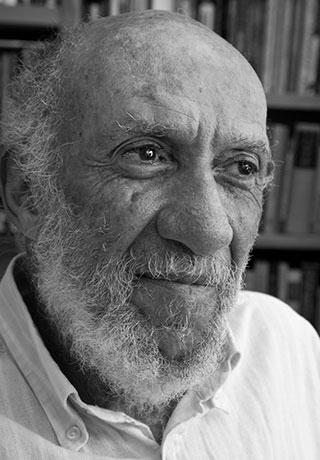

Professor Falk became an adviser to TFF when it was established in 1985.

Related Posts

The agreement is catastrophic both because of what it says and what it doesn’t mention. It reduces further the major asset of security policies: Freedom of action. Jan Oberg TFF director September 25, 2026 A couple of hours before the agreement was signed on September 22, 2026, I published the following 13 hypotheses about what it would most likely contain on TFF Substack (in English). I was wrong on only the first point. Contrary to what Trump had written on his Truth Social platform, it does not appear to come into force immediately. In fact, it turned out to be worse than even I had anticipated. After these hypotheses now come a number of reflections in light of what the agreement actually contains, and does not contain, as well as the way in which it has generally been presented by major media outlets and by the public-service broadcaster DR. My...
This is not another geopolitical commentary on the Arctic. It is a visionary peace proposal that can save the region from militarised rivalry and ecological ruin. A blueprint for shared security, sustainable development, and human dignity — benefitting Greenland, the Arctic, and the rest of us. Jan Oberg TFF director Lund, Sweden, February 17, 2026 I. Four Principles for a New Arctic Vision The Arctic is often framed as a cold arena of rivalry — a place where great powers test each other’s resolve. But this worldview is outdated, unimaginative, and ultimately self‑defeating. The Arctic is not a vacuum waiting to be militarised; it is a living region, a climate stabiliser, and a cultural homeland whose future will shape the future of humanity. If we begin from that understanding, a far more rational Arctic order becomes possible — one that is peaceful, cooperative, and centred on the people who actually live there. This vision rests...
Photos © TFF 2000 Read PressInfo 90 “Lift the Sanctions and Bring More Aid to Yugoslavia” See Pictures from Belgrade © TFF 2000 Please reprint, copy, archive, quote or re-post this item, but please retain the source.

Recent Articles

Tony Robinson October 4, 2026 Violence is easy to recognise when someone is being beaten, shot or killed. It becomes more difficult when nobody is holding a weapon. Poverty, discrimination, exploitation and repression can restrict a human life just as effectively, although they do so in very different ways and with very different consequences. Simply adding more categories to an ever-growing list of forms of violence does not really solve the problem. The more interesting question is what all these different situations have in common and why it makes sense to describe them using the same word. Human beings do not simply react to what happens around them. They remember the past, imagine things that do not yet exist, make plans and undertake projects. Workers organise because they imagine different working conditions; people migrate because they imagine another life somewhere else; social movements emerge because people refuse to accept the...
It’s a matter of principles, courage, vision and pulling together – while the militarist world is falling apart… Peter Langille October 3, 2026 “Here, then, is the problem which we present to you, stark and dreadful and inescapable: Shall we put an end to the human race; or shall mankind renounce war?”The Bertrand Russell—Albert Einstein Manifesto, July 9, 1955 ⁕ The forecast for what’s ahead is worrisome. The sharp rise in armed conflicts over the past three years is adding to what was already the highest level in over seventy years. Genocides, which should be prevented are supported. A shared climate emergency that jeopardises survival is ignored. Diverse polls now suggest that people are war-weary, worried and interested in a more effective United Nations. And, there are viable policy options for a more secure world! Yet governments are doubling-down, betting on more war and investing heavily. If current trends persist,...
Johan Galtung 1930-2024October 2015 Published here on October 3, 2026 Let us focus on Civilization for conflict analysis and remedies. Major forms of disorder use violence; war is state organized violence. The most belligerent states are the United States of America and Israel, both with civilization roots. National Evangelism, the US Protestant Christian civilization– more national than evangelical–justifies US warfare as exceptionalism of a people chosen by God, with a manifest destiny to run the world. Orthodox Judaism justifies Israeli warfare to conquer and expand from Nile to Euphrates as a religious right and duty to the Eternal One. The third most belligerent country, the UK, no longer believes it is God-chosen but chosen by the USA; not quite the same but something. But the root cause of global disorder lies in the Occident–with Islam–seeing itself as the single, universal civilization valid for all at all times, all others being...

TFF on Substack

Discover and subscribe to more peace materials on TFF Substack

Most Popular

Tony Robinson October 4, 2026 Violence is easy to recognise when someone is being beaten, shot or killed. It becomes more difficult when nobody is holding a weapon. Poverty, discrimination, exploitation and repression can restrict a human life just as effectively, although they do so in very different ways and with very different consequences. Simply adding more categories to an ever-growing list of forms of violence does not really solve the problem. The more interesting question is what all these different situations have in common and why it makes sense to describe them using the same word. Human beings do not simply react to what happens around them. They remember the past, imagine things that do not yet exist, make plans and undertake projects. Workers organise because they imagine different working conditions; people migrate because they imagine another life somewhere else; social movements emerge because people refuse to accept the...
It’s a matter of principles, courage, vision and pulling together – while the militarist world is falling apart… Peter Langille October 3, 2026 “Here, then, is the problem which we present to you, stark and dreadful and inescapable: Shall we put an end to the human race; or shall mankind renounce war?”The Bertrand Russell—Albert Einstein Manifesto, July 9, 1955 ⁕ The forecast for what’s ahead is worrisome. The sharp rise in armed conflicts over the past three years is adding to what was already the highest level in over seventy years. Genocides, which should be prevented are supported. A shared climate emergency that jeopardises survival is ignored. Diverse polls now suggest that people are war-weary, worried and interested in a more effective United Nations. And, there are viable policy options for a more secure world! Yet governments are doubling-down, betting on more war and investing heavily. If current trends persist,...
Johan Galtung 1930-2024October 2015 Published here on October 3, 2026 Let us focus on Civilization for conflict analysis and remedies. Major forms of disorder use violence; war is state organized violence. The most belligerent states are the United States of America and Israel, both with civilization roots. National Evangelism, the US Protestant Christian civilization– more national than evangelical–justifies US warfare as exceptionalism of a people chosen by God, with a manifest destiny to run the world. Orthodox Judaism justifies Israeli warfare to conquer and expand from Nile to Euphrates as a religious right and duty to the Eternal One. The third most belligerent country, the UK, no longer believes it is God-chosen but chosen by the USA; not quite the same but something. But the root cause of global disorder lies in the Occident–with Islam–seeing itself as the single, universal civilization valid for all at all times, all others being...
Read More
Living-Peace-Sign-Budapest-copy
Tony Robinson October 4, 2026 Violence is easy to recognise when someone is being beaten, shot or killed. It becomes more difficult when nobody is holding a weapon. Poverty, discrimination, exploitation and repression can restrict a human life just as effectively, although they do so in very different ways and with very different consequences. Simply adding more categories to an ever-growing list of forms of violence does not really solve the problem. The more interesting question is what all these different situations have in common and why it makes sense to describe them using the same word. Human beings do not simply react to what happens around them. They remember the past, imagine things that do not yet exist, make plans and undertake projects. Workers organise because they imagine different working conditions; people migrate because they imagine another life somewhere else; social movements emerge because people refuse to accept the...
b54a1f10-8c65-4f0b-9dd5-4abc0a7d04cc_2659x2659
It’s a matter of principles, courage, vision and pulling together – while the militarist world is falling apart… Peter Langille October 3, 2026 “Here, then, is the problem which we present to you, stark and dreadful and inescapable: Shall we put an end to the human race; or shall mankind renounce war?”The Bertrand Russell—Albert Einstein Manifesto, July 9, 1955 ⁕ The forecast for what’s ahead is worrisome. The sharp rise in armed conflicts over the past three years is adding to what was already the highest level in over seventy years. Genocides, which should be prevented are supported. A shared climate emergency that jeopardises survival is ignored. Diverse polls now suggest that people are war-weary, worried and interested in a more effective United Nations. And, there are viable policy options for a more secure world! Yet governments are doubling-down, betting on more war and investing heavily. If current trends persist,...
010
Johan Galtung 1930-2024October 2015 Published here on October 3, 2026 Let us focus on Civilization for conflict analysis and remedies. Major forms of disorder use violence; war is state organized violence. The most belligerent states are the United States of America and Israel, both with civilization roots. National Evangelism, the US Protestant Christian civilization– more national than evangelical–justifies US warfare as exceptionalism of a people chosen by God, with a manifest destiny to run the world. Orthodox Judaism justifies Israeli warfare to conquer and expand from Nile to Euphrates as a religious right and duty to the Eternal One. The third most belligerent country, the UK, no longer believes it is God-chosen but chosen by the USA; not quite the same but something. But the root cause of global disorder lies in the Occident–with Islam–seeing itself as the single, universal civilization valid for all at all times, all others being...
Screenshot 2026-10-02 011738
Jan ObergPhD, director, The Transnational Foundation for Peace and Future Research, TFFLund, Sweden October 2, 2026 This is my full original manuscript. The Chinese Academy of Social Science, CASS, makes two publications out if it. 1. China’s Five-year plan emphasized the capabilities of basic research and original innovation. It is regarded as the goal of the future social development, which, as required, should be significantly enhanced. Can you comment on the importance of original innovation in research and academic study? I believe it is easier to define “original innovation” in the natural sciences than in social sciences. The breaking points of what constitutes something new, or innovative, are not quite as sharp in the latter. But in both fields it is about opening up something that was closed, unseen, unexplored before – making manifest what was earlier latent. Innovations come in many forms and shapes – naming something that was not...
arctic-circle-map
The agreement is catastrophic both because of what it says and what it doesn’t mention. It reduces further the major asset of security policies: Freedom of action. Jan Oberg TFF director September 25, 2026 A couple of hours before the agreement was signed on September 22, 2026, I published the following 13 hypotheses about what it would most likely contain on TFF Substack (in English). I was wrong on only the first point. Contrary to what Trump had written on his Truth Social platform, it does not appear to come into force immediately. In fact, it turned out to be worse than even I had anticipated. After these hypotheses now come a number of reflections in light of what the agreement actually contains, and does not contain, as well as the way in which it has generally been presented by major media outlets and by the public-service broadcaster DR. My...
girl-5894831_1280
Below are TFF-related media mentions, comments, videos and social media posts published elsewhere but not on this homepage. We happen to catch and list only a fraction. Regarding video comments and debates, we recommend that you go to the TFF Video Channel on Substack where many of them are reproduced. Jan Oberg is a contributor to China Daily – 52 million daily clicks – and Global Times, CGTN and CCTV (the national television), China Investment, Xinhua News Agency and several others. Articles and videos on these media very often multiply into countless Chinese (and Western media) that re-post them from these main media. Thanks to The China Academy, his analyses, interviews and comments are frequently posted on YouTube channels such as Thinkers Forum and Wave Media. These videos are often re-posted on Bilibili (China’s YouTube), the China Content Center on TikTok, and on the Chinese edition of TikTok, Douyin.com. This means reaching hundreds of millions of viewers worldwide over a year. While there are too many to catch on all these...




