
When I started this blog a couple of years ago, the thought never entered my mind that I would need to defend the terrain. Although I knew my views were controversial on some issues, I assumed that those who disagreed strongly would stay away, losing interest, or express their disagreements in a spirit of civility.

To a large extent this has been true, with the glaring exception of Israel/Palestine. Here my problems are two-fold: (1) very nasty personal attacks that challenge the integrity, balance, judgment, and overall demeanor of myself and those that agree with me; (2) very insistent and determined requests to engage my views from highly divergent standpoints, so divergent that I can find no useful meeting ground or value in such exchanges.

By and large, I have excluded defamatory comments from the first group to the extent I have taken the time to monitor the comments section of the blog. I neither feel any obligation to give space on the blog to those who wish me ill, nor do I wish to respond to such allegations unless it seems absolutely necessary to do so. My recent Open Letter to CRIF was an illustration of such a necessity. I have refrained from responding to the UN Watch campaign despite a strong temptation to explain their distortions and deny their falsehoods, which are clearly intended to bring me harm.

The second cluster of responses has been more troublesome for me: as someone who has enjoyed classroom teaching for almost 60 years I have always welcomed the challenge of divergent viewpoints that differ dramatically from my own, and the valuable sort of dialogic conversations that have so often enlivened my academic career. At the same time, I do not think that by posting interpretations of events and issues, I am committing myself to debate with those who disagree to an extent that ensures that the interaction of our viewpoints will result in an argument incapable of resolution, and essentially going nowhere. I have always found debate between those with sharply antagonistic views to be, at best, a species of performance art or a theater of ideas that may be useful in some instances to clarify disagreements or to entertain an audience.

In my experience debates almost never succeed in finding common ground or even in leading one side or the other to modify their position in significant ways. I raise this issue because some of those who defend Israel most passionately seem to feel that I have a responsibility to enter detailed and frequent discussion with them to consider our points of difference.

I am sympathetic with the view that because I have this position as UN Special Rapporteur on human rights violation in the Palestinian territories occupied since 1967 that I have a duty to engage with those who are concerned with these issues. In some ways I wish that my schedule was less crowded and my energies were more extensive, but I have to make choices. It should be remembered that my UN appointment is not a UN staff position. I am in effect an unpaid volunteer, and accept the burden of considerable added work because I believe that the Palestinian people deserve an independent and honest voice to express their grievances on the global stage, and I do this in a manner that tries to take account of Israeli claims relating to its occupation policies.

I would also insist that due to my independent position within the UN System, it is entirely appropriate to maintain a blog of this sort that expresses my views as a citizen of a democratic society, which I regard as falling within the sphere of conscience and reflection. I do make an effort to avoid public partisan stands in activist contexts that could create ambiguities as to my commitment to speak the truth as best I can.

I draw a distinction between those who share some core commitments, for instance, respect for rights under international law or commitments to seek peaceful resolution of disputes, and those that seem to be taunts rather than serious efforts to gain mutual understanding of difficult and complicated issues. Interpretations of the issues that are so completely tilted toward legitimizing the positions and claims of Israel, which occupies the dominant position in the conflict, fall outside the boundaries of useful discussion so far as I am concerned.

My sense of fairness is always conditioned by the structure of the underlying relationships, placing me on the side of those social and political forces that are struggling for emancipation from situations of oppression and rightlessness. Given this perspective, siding with the Palestinians is partly a matter of identifying with the party that has for decades been victimized by the cruel play of hard power reinforced by geopolitics. Let me be clear: my underlying commitment is to a sustainable and just peace for both peoples, but I believe this can only happen if ‘facts on the ground’ give way to a full-fledged diplomatic appreciation of ‘Palestinian rights under international law.’

Even if I was inclined to devote more time to responding to hostile and divergent comments on Israel/Palestine I would disappoint other readers of the blog, who are already offended by the degree to which this one conflict sucks up all the oxygen. I have received many emails, that is, a cyber path that avoids direct comments the blog, which have strongly recommended that I not respond to comments at all and that I take steps to avoid this disproportionate concentration of energy on this one conflict.

There is, I have discovered, an analogue in the blogosphere to the crude version of Gresham’s Law (‘bad money drives out good money’) so beloved by economists: It is ‘bad comments drive out good comments.’

Some of my correspondents have even gently suggested in response to the uncivil tone of many comments that I abandon the blog altogether and instead create a mailing list that serves as an alternative outlet for my views, which would have the advantage of limiting posts to a community of likeminded persons.

Supposedly, this would protect my bruised ego. But I remain foolish enough to sustain the blog a bit longer, and see what happens. I will continue to struggle with balance on a tightrope that keeps the blog open to strangers, including those who disagree and disapprove, while working on behalf of an identity and level of discourse that accords with my values, and is faithful to my initial motivation to engage in the hard work of writing posts on a variety of topics to address some public issues in a manner that seems at variance with mainstream media interpretations. I do this partly because self-expression has always been a satisfying form of self-discovery, somewhat similar in this manner to teaching and scholarly writing. And partly because there might be a few others on the planet that share my worries about the present and future, and seek a community brave enough to hope when there is no hope!

It is strange that I should also receive complaints as to why I do not discuss wrongdoing in the world other than that of Israel. One of the sharpest criticisms that I receive is that I must be an ‘Israel-hater,’ or worse, ‘a Jew hater,’ because I do not denounce instances of human suffering other than that of the Palestinians with the same vehemence that I accord to Israel’s wrongdoing. It is a strange line of attack for two reasons: firstly, to my knowledge, those who make such an allegation are themselves single-minded defenders of Israel, and exhibit no interest in other issues beyond the rhetorical point that there are other humanitarian ordeals that from their standpoint are far worse than what the Palestinians have endured; and secondly, I have devoted my research and teaching skills to many other international concerns other than those associated with the Israel/Palestine conflict.

Even a superficial glance at my CV would show a career emphasis on general international law and world order issues, and far more criticism devoted over the years to American foreign policy than to Israel’s behavior.

I am prepared to entertain other ideas about my claim to have a right to control the tone and substance of the comments section of my blog. In effect, I have been reflecting on the presumed basis that I have a proprietary right to exercise control according to my discretion. There are a huge variety of other sites enabling those who wish to denounce me or my views, so why must I make this space available for uncongenial ventures? And why should I have to depend on friends and allies coming to my rescue when the going gets too tough. Hilary Clinton in the 2008 presidential campaign taunted Obama by saying “if you can’t stand the heat, stay out of the kitchen.” But I ask myself, ‘what is the point of such discomfort if the heat sheds no light,’ mixing metaphors inexcusably.

Another response to this kind of squabble is to adopt the ethos of my younger son, who likes to say ‘chill!’ whenever emotions rise above his comfort level. His intention is to encourage ‘letting go,’ ‘backing off’’, ‘allowing a hundred flowers to bloom,’ and the like. But there are deep feelings at stake when these blog issues are being discussed, and little willingness to grant respect to those who defend positions that seem abhorrent.

I include myself in this indictment, often feeling too engaged with the abuse of Palestinian rights to treat controversy as mere differences of opinion, but this is a reflection of my understanding of the relevant facts and law, and not a matter of blind passion or blinkered vision.
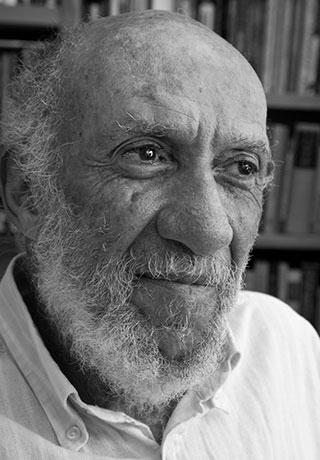

Professor Falk became an adviser to TFF when it was established in 1985.

Related Posts

PART 2 — Diplomacy, Law and Nonviolent Power By Jan ObergTFF co-founder and director January 26, 2026 This is the second of four TFF-created idea portfolios designed to curb the global reach of the United States and, in both the short and long term, help catalyse a worldwide nonviolent resistance to what many observers describe as the Trump administration’s uniquely confrontational, destructive and world-threatening policies. These portfolios outline what governments and citizens across the world can do through dynamic diplomacy, creative initiatives, and strictly nonviolent means. They are typical TFF works in that we do not only tell what the problem is and how bad it will go – as 90+% of all commentators, experts and scholars do – we tell what we think can be done, inviting you to think of what you think you can do. It seems painfully clear to me that the current political dynamics in Washington increasingly resemble the most dangerous...
TFF’s comprehensive proposal for dialogue about true peace in Ukraine is due in a day or two Jan Oberg November 20, 2025 What is being whispered through diplomatic corridors today is not peace, but quackery. The alleged 28‑point plan drafted in Washington and Moscow is mentioned as a solution to the Ukraine war. It is being negotiated by US businessman, real estate developer and Trump ally, Steve Witkoff, and by Kirill Dmitriev, who is CEO of the Russian Direct Investment Fund and a close ally of Putin, according to India’s Economic Times. For presumably good reasons, their education, qualifications and experience in international conflict analysis and peace-making remain untold. They look like surgeons who have never opened a medical textbook. It is nothing more than a mirage: a framework of concessions imposed on Ukraine’s citizens, negotiated without Kyiv, and excluding Europe. Like Gaza, it promises “peace” while institutionalising injustice. If half of what is available about...
PRESS RELEASE – 6 OCTOBER 2025 LAY DOWN YOUR ARMSPEACE PRIZE FOR 2025 is awarded Francesca Albanese The United Nations Special Rapporteur on the occupied Palestinian territories – as the person who, in accordance with Alfred Nobel’s will, has “done the most or the best work for fraternity between nations and for the abolition or reduction of standing armies as well as for the holding and promotion of peace congresses.” Francesca Albanese has forcefully and unwaveringly worked against Israel’s full-scale war on the occupied Palestinian territories, in particular Israel´s ongoing genocide against the Palestinian people. She has confronted Israel’s systematic war crimes and crimes against humanity in a truly global outreach. Further, she has brought governments, international organisations and people’s groups together to underline the responsibility of the world at large to act and to stop arming, enabling, and profiting from Israel’s ongoing criminal actions. But first of all, Albanese...

Recent Articles

Tony Robinson October 4, 2026 Violence is easy to recognise when someone is being beaten, shot or killed. It becomes more difficult when nobody is holding a weapon. Poverty, discrimination, exploitation and repression can restrict a human life just as effectively, although they do so in very different ways and with very different consequences. Simply adding more categories to an ever-growing list of forms of violence does not really solve the problem. The more interesting question is what all these different situations have in common and why it makes sense to describe them using the same word. Human beings do not simply react to what happens around them. They remember the past, imagine things that do not yet exist, make plans and undertake projects. Workers organise because they imagine different working conditions; people migrate because they imagine another life somewhere else; social movements emerge because people refuse to accept the...
It’s a matter of principles, courage, vision and pulling together – while the militarist world is falling apart… Peter Langille October 3, 2026 “Here, then, is the problem which we present to you, stark and dreadful and inescapable: Shall we put an end to the human race; or shall mankind renounce war?”The Bertrand Russell—Albert Einstein Manifesto, July 9, 1955 ⁕ The forecast for what’s ahead is worrisome. The sharp rise in armed conflicts over the past three years is adding to what was already the highest level in over seventy years. Genocides, which should be prevented are supported. A shared climate emergency that jeopardises survival is ignored. Diverse polls now suggest that people are war-weary, worried and interested in a more effective United Nations. And, there are viable policy options for a more secure world! Yet governments are doubling-down, betting on more war and investing heavily. If current trends persist,...
Johan Galtung 1930-2024October 2015 Published here on October 3, 2026 Let us focus on Civilization for conflict analysis and remedies. Major forms of disorder use violence; war is state organized violence. The most belligerent states are the United States of America and Israel, both with civilization roots. National Evangelism, the US Protestant Christian civilization– more national than evangelical–justifies US warfare as exceptionalism of a people chosen by God, with a manifest destiny to run the world. Orthodox Judaism justifies Israeli warfare to conquer and expand from Nile to Euphrates as a religious right and duty to the Eternal One. The third most belligerent country, the UK, no longer believes it is God-chosen but chosen by the USA; not quite the same but something. But the root cause of global disorder lies in the Occident–with Islam–seeing itself as the single, universal civilization valid for all at all times, all others being...

TFF on Substack

Discover and subscribe to more peace materials on TFF Substack

Most Popular

Tony Robinson October 4, 2026 Violence is easy to recognise when someone is being beaten, shot or killed. It becomes more difficult when nobody is holding a weapon. Poverty, discrimination, exploitation and repression can restrict a human life just as effectively, although they do so in very different ways and with very different consequences. Simply adding more categories to an ever-growing list of forms of violence does not really solve the problem. The more interesting question is what all these different situations have in common and why it makes sense to describe them using the same word. Human beings do not simply react to what happens around them. They remember the past, imagine things that do not yet exist, make plans and undertake projects. Workers organise because they imagine different working conditions; people migrate because they imagine another life somewhere else; social movements emerge because people refuse to accept the...
It’s a matter of principles, courage, vision and pulling together – while the militarist world is falling apart… Peter Langille October 3, 2026 “Here, then, is the problem which we present to you, stark and dreadful and inescapable: Shall we put an end to the human race; or shall mankind renounce war?”The Bertrand Russell—Albert Einstein Manifesto, July 9, 1955 ⁕ The forecast for what’s ahead is worrisome. The sharp rise in armed conflicts over the past three years is adding to what was already the highest level in over seventy years. Genocides, which should be prevented are supported. A shared climate emergency that jeopardises survival is ignored. Diverse polls now suggest that people are war-weary, worried and interested in a more effective United Nations. And, there are viable policy options for a more secure world! Yet governments are doubling-down, betting on more war and investing heavily. If current trends persist,...
Johan Galtung 1930-2024October 2015 Published here on October 3, 2026 Let us focus on Civilization for conflict analysis and remedies. Major forms of disorder use violence; war is state organized violence. The most belligerent states are the United States of America and Israel, both with civilization roots. National Evangelism, the US Protestant Christian civilization– more national than evangelical–justifies US warfare as exceptionalism of a people chosen by God, with a manifest destiny to run the world. Orthodox Judaism justifies Israeli warfare to conquer and expand from Nile to Euphrates as a religious right and duty to the Eternal One. The third most belligerent country, the UK, no longer believes it is God-chosen but chosen by the USA; not quite the same but something. But the root cause of global disorder lies in the Occident–with Islam–seeing itself as the single, universal civilization valid for all at all times, all others being...
Read More
Living-Peace-Sign-Budapest-copy
Tony Robinson October 4, 2026 Violence is easy to recognise when someone is being beaten, shot or killed. It becomes more difficult when nobody is holding a weapon. Poverty, discrimination, exploitation and repression can restrict a human life just as effectively, although they do so in very different ways and with very different consequences. Simply adding more categories to an ever-growing list of forms of violence does not really solve the problem. The more interesting question is what all these different situations have in common and why it makes sense to describe them using the same word. Human beings do not simply react to what happens around them. They remember the past, imagine things that do not yet exist, make plans and undertake projects. Workers organise because they imagine different working conditions; people migrate because they imagine another life somewhere else; social movements emerge because people refuse to accept the...
b54a1f10-8c65-4f0b-9dd5-4abc0a7d04cc_2659x2659
It’s a matter of principles, courage, vision and pulling together – while the militarist world is falling apart… Peter Langille October 3, 2026 “Here, then, is the problem which we present to you, stark and dreadful and inescapable: Shall we put an end to the human race; or shall mankind renounce war?”The Bertrand Russell—Albert Einstein Manifesto, July 9, 1955 ⁕ The forecast for what’s ahead is worrisome. The sharp rise in armed conflicts over the past three years is adding to what was already the highest level in over seventy years. Genocides, which should be prevented are supported. A shared climate emergency that jeopardises survival is ignored. Diverse polls now suggest that people are war-weary, worried and interested in a more effective United Nations. And, there are viable policy options for a more secure world! Yet governments are doubling-down, betting on more war and investing heavily. If current trends persist,...
010
Johan Galtung 1930-2024October 2015 Published here on October 3, 2026 Let us focus on Civilization for conflict analysis and remedies. Major forms of disorder use violence; war is state organized violence. The most belligerent states are the United States of America and Israel, both with civilization roots. National Evangelism, the US Protestant Christian civilization– more national than evangelical–justifies US warfare as exceptionalism of a people chosen by God, with a manifest destiny to run the world. Orthodox Judaism justifies Israeli warfare to conquer and expand from Nile to Euphrates as a religious right and duty to the Eternal One. The third most belligerent country, the UK, no longer believes it is God-chosen but chosen by the USA; not quite the same but something. But the root cause of global disorder lies in the Occident–with Islam–seeing itself as the single, universal civilization valid for all at all times, all others being...
Screenshot 2026-10-02 011738
Jan ObergPhD, director, The Transnational Foundation for Peace and Future Research, TFFLund, Sweden October 2, 2026 This is my full original manuscript. The Chinese Academy of Social Science, CASS, makes two publications out if it. 1. China’s Five-year plan emphasized the capabilities of basic research and original innovation. It is regarded as the goal of the future social development, which, as required, should be significantly enhanced. Can you comment on the importance of original innovation in research and academic study? I believe it is easier to define “original innovation” in the natural sciences than in social sciences. The breaking points of what constitutes something new, or innovative, are not quite as sharp in the latter. But in both fields it is about opening up something that was closed, unseen, unexplored before – making manifest what was earlier latent. Innovations come in many forms and shapes – naming something that was not...
arctic-circle-map
The agreement is catastrophic both because of what it says and what it doesn’t mention. It reduces further the major asset of security policies: Freedom of action. Jan Oberg TFF director September 25, 2026 A couple of hours before the agreement was signed on September 22, 2026, I published the following 13 hypotheses about what it would most likely contain on TFF Substack (in English). I was wrong on only the first point. Contrary to what Trump had written on his Truth Social platform, it does not appear to come into force immediately. In fact, it turned out to be worse than even I had anticipated. After these hypotheses now come a number of reflections in light of what the agreement actually contains, and does not contain, as well as the way in which it has generally been presented by major media outlets and by the public-service broadcaster DR. My...
girl-5894831_1280
Below are TFF-related media mentions, comments, videos and social media posts published elsewhere but not on this homepage. We happen to catch and list only a fraction. Regarding video comments and debates, we recommend that you go to the TFF Video Channel on Substack where many of them are reproduced. Jan Oberg is a contributor to China Daily – 52 million daily clicks – and Global Times, CGTN and CCTV (the national television), China Investment, Xinhua News Agency and several others. Articles and videos on these media very often multiply into countless Chinese (and Western media) that re-post them from these main media. Thanks to The China Academy, his analyses, interviews and comments are frequently posted on YouTube channels such as Thinkers Forum and Wave Media. These videos are often re-posted on Bilibili (China’s YouTube), the China Content Center on TikTok, and on the Chinese edition of TikTok, Douyin.com. This means reaching hundreds of millions of viewers worldwide over a year. While there are too many to catch on all these...




