
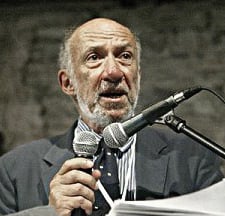
Passenger information: Open letter to my blog – with addendum

I have been disturbed by the recent exchanges of personal attacks in the comments section of my blog. I realize that the subject-matter, and my views, are controversial, and attract strong responses for and against. I have tried to be broadly receptive to this broad range of opinions, and have excluded only those that have no substantive serious content. From my perspective some of these views are quite extreme, and as such provocative and deeply objectionable to those who see things differently. This tension among readers of the posts, not surprisingly, is mainly in relation to the Israel/Palestine conflict, and relates to both my views and to those of some of those who take the trouble to submit comments.

I had the hope that the comment section could serve as a dialogic channel for the exchange of views, but I increasingly realize that this was an unrealistic wish. In my long academic experience I have found that dialogue is only mutually beneficial if there is a minimum of shared underlying understanding. If such an understanding is absent, the discussion quickly deteriorates, and becomes an exchange of angry views, and accusatory claims directed at the opinions of those who views are rejected. To be more concrete references to ‘Jew-hater’ and the like, or merging criticisms of the Zionist project with Judaism as religion or Jews as a people, create an atmosphere of discussion that I find unacceptable.

In the interests of full disclosure, I acknowledge that I am deeply critical of many aspects of Israeli behavior, especially in relation to the Palestinians, and strongly supportive of lawful Palestinian resistance to a prolonged occupation (that, incidentally, has become an increasingly transparent cover for annexation and apartheid) and to the overall Palestinian struggle to realize their inalienable right of self-determination, as well as other rights under international law, including those pertaining to Palestinian refugees.

My main motivation to write posts for this blog, a considerable investment of time and energy, is to have a self-monitored outlet for my views on a wide range of issues having long ago realized that the mainstream media in the West would generally not publish what I have to say. This conclusion was not fanciful, but is substantiated by a pile of rejection slips and equally frustrating experiences of having submissions accepted on condition that I soften my views if I was to be permitted to pass through various gates of informal censorship maintained, with great arrogance, by the NY Times and other august media establishments.

Some comments are critical of posts in view of my position as Special Rapporteur on Occupied Palestine for the UN Human Rights Council, and my failure to repudiate certain comments due to this affiliation. It should be understood that my UN appointment is an unpaid position that has certain guidelines in terms of the conduct of the mandate to which I adhere. I have done my best to fulfill my fundamental duty to the UN by doing my being truthful, accurate, and comprehensive in reporting on Israeli violations of international humanitarian law and human rights law. I do not claim a UN credential in composing this personal blog, and consider it to be an exercise of my rights of free expression as a citizen of a constitutional democracy. At the same time, the implications that I am anti-Semitic or a covert self-hating Jew are deeply offensive, and seem to me consistent with many other efforts to confuse the domain of criticisms of Israel and Zionism with various forms of hate speech and racist emotions so as to insulate Israel and Zionism from various lines of criticism. It is also the case that certain pro-Israeli NGOs have consistently harassed me by issuing a variety of defamatory allegations, including pulling excerpts from the blog out of context and elaborating on their meaning in an inflammatory manner.

On this basis, I have decided to become much stricter about approving comments dealing with the Israel-Palestine conflict. There are many influential outlets for those with strong pro-Israeli, pro-Zionist viewpoints, and my modest blog is not needed to get such positions into the public domain. Consider the positions on the Israel/Palestine conflict adopted by the two main political parties in the United States to get a sense of the extent to which extremist pro-Israeli sentiments dominate the dissemination of views about the conflict.

Of course, there are other spheres of sharp controversy that overlap with my posts, for instance, the assessment of Turkish governance and foreign policy in recent years. Here, too, there are ultra-critical voices of current AKP governance that I find too ‘extreme’ and so far from my perceptions as to produce, at best, merely recurrent arguments, that is, various recycling of respective viewpoints, and not an engagement with substance within a framework of shared fundamental perceptions and presuppositions. In effect, one litmus test of a polarized society is that the abyss separating the essential worldviews are not reconcilable, and discussion excites emotions but it does not foster deeper understanding of the policy conflicts, but rather at best clarify the factual and normative foundation of the respective contradictory interpretation of current patterns of Turkish governance. I do not deny that many people enjoys such debates, but I am not one, and do not intend to allow this blog to become such a vehicle for polarized debate. I will, however, continue to publish comments that responsibly express even extreme viewpoints if they do not engage in personal polemics.

I hope that those with substantive interests will continue to submit comments, including harsh criticisms directed at my interpretations and analyses. I am interested in the connections between knowledge and policy, but not in argument or debate with those whose standpoint is radically different than from own, especially on the Israel/Palestine conflict. In relation to this conflict, I am deeply interested in an exchange of views with those that share my basic suppositions, and even within this constrained framework of inquiry, there are sharp disagreements, for instance, as between various one-state and two-state solutions, and their nature. My blog ethos can be summed up: Let many flowers bloom, but recognize that on this particular soil certain flowers will not flourish.

Short Addendum to the Open Letter to My Blog

As I should have anticipated the responses to my effort to set some rules of the road for my blog produced considerable feedback, which was equally divided between those who welcomed such monitoring to sustain a civility of tone and useful substantive debate and those who believed that debate should go forth without such constraints, and that it was my moral failure, even alleged cowardice, to control the comment section in this way. Some contended that there were benefits from even uncivil exchanges, a position I understand, but do not share. Several of the responses were, as earlier, accusatory toward my character, repeating old charges, some demeaned the character of others who submitted comments, and some derisive in their attitude toward the Palestinian and/or Arab or the Jewish people.

I want to restate ever so briefly that I will not in the future give my approval to comments that dwell on character failings of myself or other contributors to the blog or show no respect for the dignity of the Palestinian or Jewish people. Ethnic hatred and prejudice is the source of much suffering in our world and throughout history, and never heals wounds.

I acknowledge a special interest in the quest for a sustainable peace in relation to the Palestine/Israel conflict, however remote its achievement currently appears to be. Let me also be forthright in admitting that I feel no responsibility to respond to comments that do not accept as a political premise the relevance of the structure of oppression and disparity of circumstance that separates the Israeli reality from that of Palestinians living under occupation, in refugee camps, in exile, or as second-class citizens in Israel. As well, I am not inclined to respond to those comment writers who question the inalienable and elemental Palestinian right of self-determination in the West Bank, Jerusalem, and Gaza, claiming that sovereignty is either ‘disputed’ or inheres by biblical or historical claim to Israel. Those who hold such position have many outlets for such views within the blogosphere and elsewhere, but for my purposes, such positions are outside the boundaries of responsible debate.

Finally, I realize that many blogs and online media comment sections operate with much more permissive rules of the road, or virtually none. I tried this, but feel it engendered, especially recently, an atmosphere of acrimony. Such a tone and spirit of intemperance is the very opposite of my goal in establishing and continuing the blog. This new more constrictive approach is one more experiment of mine undertaken in the hope of finding a workable arrangement consistent with my values.

With thanks and feelings of gratitude for all those who have participated in these discussions of my posts over the past couple of years in good faith whether in agreement or not with the positions being set forth. I hope to continue to discuss sensitive issues in ways that will undoubtedly infuriate some of those who visit the blog, but I hope if you choose to participate actively you will embrace this ethos of civility, which in my mind is inseparable from an affirmation of the dignity and sacredness of every person, as well as being a show of respect for the diversities of race, ethnicity, religion, nationality, and gender that currently constitute the human species.
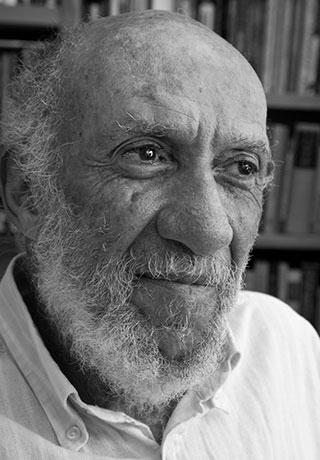

Professor Falk became an adviser to TFF when it was established in 1985.

Related Posts

The agreement is catastrophic both because of what it says and what it doesn’t mention. It reduces further the major asset of security policies: Freedom of action. Jan Oberg TFF director September 25, 2026 A couple of hours before the agreement was signed on September 22, 2026, I published the following 13 hypotheses about what it would most likely contain on TFF Substack (in English). I was wrong on only the first point. Contrary to what Trump had written on his Truth Social platform, it does not appear to come into force immediately. In fact, it turned out to be worse than even I had anticipated. After these hypotheses now come a number of reflections in light of what the agreement actually contains, and does not contain, as well as the way in which it has generally been presented by major media outlets and by the public-service broadcaster DR. My...
Below are TFF-related media mentions, comments, videos and social media posts published elsewhere but not on this homepage. We happen to catch and list only a fraction. Regarding video comments and debates, we recommend that you go to the TFF Video Channel on Substack where many of them are reproduced. Jan Oberg is a contributor to China Daily – 52 million daily clicks – and Global Times, CGTN and CCTV (the national television), China Investment, Xinhua News Agency and several others. Articles and videos on these media very often multiply into countless Chinese (and Western media) that re-post them from these main media. Thanks to The China Academy, his analyses, interviews and comments are frequently posted on YouTube channels such as Thinkers Forum and Wave Media. These videos are often re-posted on Bilibili (China’s YouTube), the China Content Center on TikTok, and on the Chinese edition of TikTok, Douyin.com. This means reaching hundreds of millions of viewers worldwide over a year. While there are too many to catch on all these...
Jan Oberg May 15, 2026 Go to this Fox News page and scroll the whole way down: President Donald Trump tells the world that his meeting with President Xi Jinping yielded a lot of very concrete political and economic results – of course, only where the Chinese side, according to him, agreed with him. He does not mention the Taiwan issue, but Secretary of State, Marco Rubio, says that it did not feature prominently in their talks and that the US policy on Taiwan has not changed. Then go to China Daily – or Global Times – and you will see that for the Chinese it is framework, principles, structure of cooperation etc. that matters – all embedded in the overall idea of “constructive bilateral relationship of strategic stability.” Nowhere is any concrete agreement or deal – all that Trump refers to – mentioned. At the general level, this gives you insights into the very different social...

Recent Articles

Tony Robinson October 4, 2026 Violence is easy to recognise when someone is being beaten, shot or killed. It becomes more difficult when nobody is holding a weapon. Poverty, discrimination, exploitation and repression can restrict a human life just as effectively, although they do so in very different ways and with very different consequences. Simply adding more categories to an ever-growing list of forms of violence does not really solve the problem. The more interesting question is what all these different situations have in common and why it makes sense to describe them using the same word. Human beings do not simply react to what happens around them. They remember the past, imagine things that do not yet exist, make plans and undertake projects. Workers organise because they imagine different working conditions; people migrate because they imagine another life somewhere else; social movements emerge because people refuse to accept the...
It’s a matter of principles, courage, vision and pulling together – while the militarist world is falling apart… Peter Langille October 3, 2026 “Here, then, is the problem which we present to you, stark and dreadful and inescapable: Shall we put an end to the human race; or shall mankind renounce war?”The Bertrand Russell—Albert Einstein Manifesto, July 9, 1955 ⁕ The forecast for what’s ahead is worrisome. The sharp rise in armed conflicts over the past three years is adding to what was already the highest level in over seventy years. Genocides, which should be prevented are supported. A shared climate emergency that jeopardises survival is ignored. Diverse polls now suggest that people are war-weary, worried and interested in a more effective United Nations. And, there are viable policy options for a more secure world! Yet governments are doubling-down, betting on more war and investing heavily. If current trends persist,...
Johan Galtung 1930-2024October 2015 Published here on October 3, 2026 Let us focus on Civilization for conflict analysis and remedies. Major forms of disorder use violence; war is state organized violence. The most belligerent states are the United States of America and Israel, both with civilization roots. National Evangelism, the US Protestant Christian civilization– more national than evangelical–justifies US warfare as exceptionalism of a people chosen by God, with a manifest destiny to run the world. Orthodox Judaism justifies Israeli warfare to conquer and expand from Nile to Euphrates as a religious right and duty to the Eternal One. The third most belligerent country, the UK, no longer believes it is God-chosen but chosen by the USA; not quite the same but something. But the root cause of global disorder lies in the Occident–with Islam–seeing itself as the single, universal civilization valid for all at all times, all others being...

TFF on Substack

Discover and subscribe to more peace materials on TFF Substack

Most Popular

Tony Robinson October 4, 2026 Violence is easy to recognise when someone is being beaten, shot or killed. It becomes more difficult when nobody is holding a weapon. Poverty, discrimination, exploitation and repression can restrict a human life just as effectively, although they do so in very different ways and with very different consequences. Simply adding more categories to an ever-growing list of forms of violence does not really solve the problem. The more interesting question is what all these different situations have in common and why it makes sense to describe them using the same word. Human beings do not simply react to what happens around them. They remember the past, imagine things that do not yet exist, make plans and undertake projects. Workers organise because they imagine different working conditions; people migrate because they imagine another life somewhere else; social movements emerge because people refuse to accept the...
It’s a matter of principles, courage, vision and pulling together – while the militarist world is falling apart… Peter Langille October 3, 2026 “Here, then, is the problem which we present to you, stark and dreadful and inescapable: Shall we put an end to the human race; or shall mankind renounce war?”The Bertrand Russell—Albert Einstein Manifesto, July 9, 1955 ⁕ The forecast for what’s ahead is worrisome. The sharp rise in armed conflicts over the past three years is adding to what was already the highest level in over seventy years. Genocides, which should be prevented are supported. A shared climate emergency that jeopardises survival is ignored. Diverse polls now suggest that people are war-weary, worried and interested in a more effective United Nations. And, there are viable policy options for a more secure world! Yet governments are doubling-down, betting on more war and investing heavily. If current trends persist,...
Johan Galtung 1930-2024October 2015 Published here on October 3, 2026 Let us focus on Civilization for conflict analysis and remedies. Major forms of disorder use violence; war is state organized violence. The most belligerent states are the United States of America and Israel, both with civilization roots. National Evangelism, the US Protestant Christian civilization– more national than evangelical–justifies US warfare as exceptionalism of a people chosen by God, with a manifest destiny to run the world. Orthodox Judaism justifies Israeli warfare to conquer and expand from Nile to Euphrates as a religious right and duty to the Eternal One. The third most belligerent country, the UK, no longer believes it is God-chosen but chosen by the USA; not quite the same but something. But the root cause of global disorder lies in the Occident–with Islam–seeing itself as the single, universal civilization valid for all at all times, all others being...
Read More
Living-Peace-Sign-Budapest-copy
Tony Robinson October 4, 2026 Violence is easy to recognise when someone is being beaten, shot or killed. It becomes more difficult when nobody is holding a weapon. Poverty, discrimination, exploitation and repression can restrict a human life just as effectively, although they do so in very different ways and with very different consequences. Simply adding more categories to an ever-growing list of forms of violence does not really solve the problem. The more interesting question is what all these different situations have in common and why it makes sense to describe them using the same word. Human beings do not simply react to what happens around them. They remember the past, imagine things that do not yet exist, make plans and undertake projects. Workers organise because they imagine different working conditions; people migrate because they imagine another life somewhere else; social movements emerge because people refuse to accept the...
b54a1f10-8c65-4f0b-9dd5-4abc0a7d04cc_2659x2659
It’s a matter of principles, courage, vision and pulling together – while the militarist world is falling apart… Peter Langille October 3, 2026 “Here, then, is the problem which we present to you, stark and dreadful and inescapable: Shall we put an end to the human race; or shall mankind renounce war?”The Bertrand Russell—Albert Einstein Manifesto, July 9, 1955 ⁕ The forecast for what’s ahead is worrisome. The sharp rise in armed conflicts over the past three years is adding to what was already the highest level in over seventy years. Genocides, which should be prevented are supported. A shared climate emergency that jeopardises survival is ignored. Diverse polls now suggest that people are war-weary, worried and interested in a more effective United Nations. And, there are viable policy options for a more secure world! Yet governments are doubling-down, betting on more war and investing heavily. If current trends persist,...
010
Johan Galtung 1930-2024October 2015 Published here on October 3, 2026 Let us focus on Civilization for conflict analysis and remedies. Major forms of disorder use violence; war is state organized violence. The most belligerent states are the United States of America and Israel, both with civilization roots. National Evangelism, the US Protestant Christian civilization– more national than evangelical–justifies US warfare as exceptionalism of a people chosen by God, with a manifest destiny to run the world. Orthodox Judaism justifies Israeli warfare to conquer and expand from Nile to Euphrates as a religious right and duty to the Eternal One. The third most belligerent country, the UK, no longer believes it is God-chosen but chosen by the USA; not quite the same but something. But the root cause of global disorder lies in the Occident–with Islam–seeing itself as the single, universal civilization valid for all at all times, all others being...
Screenshot 2026-10-02 011738
Jan ObergPhD, director, The Transnational Foundation for Peace and Future Research, TFFLund, Sweden October 2, 2026 This is my full original manuscript. The Chinese Academy of Social Science, CASS, makes two publications out if it. 1. China’s Five-year plan emphasized the capabilities of basic research and original innovation. It is regarded as the goal of the future social development, which, as required, should be significantly enhanced. Can you comment on the importance of original innovation in research and academic study? I believe it is easier to define “original innovation” in the natural sciences than in social sciences. The breaking points of what constitutes something new, or innovative, are not quite as sharp in the latter. But in both fields it is about opening up something that was closed, unseen, unexplored before – making manifest what was earlier latent. Innovations come in many forms and shapes – naming something that was not...
arctic-circle-map
The agreement is catastrophic both because of what it says and what it doesn’t mention. It reduces further the major asset of security policies: Freedom of action. Jan Oberg TFF director September 25, 2026 A couple of hours before the agreement was signed on September 22, 2026, I published the following 13 hypotheses about what it would most likely contain on TFF Substack (in English). I was wrong on only the first point. Contrary to what Trump had written on his Truth Social platform, it does not appear to come into force immediately. In fact, it turned out to be worse than even I had anticipated. After these hypotheses now come a number of reflections in light of what the agreement actually contains, and does not contain, as well as the way in which it has generally been presented by major media outlets and by the public-service broadcaster DR. My...
girl-5894831_1280
Below are TFF-related media mentions, comments, videos and social media posts published elsewhere but not on this homepage. We happen to catch and list only a fraction. Regarding video comments and debates, we recommend that you go to the TFF Video Channel on Substack where many of them are reproduced. Jan Oberg is a contributor to China Daily – 52 million daily clicks – and Global Times, CGTN and CCTV (the national television), China Investment, Xinhua News Agency and several others. Articles and videos on these media very often multiply into countless Chinese (and Western media) that re-post them from these main media. Thanks to The China Academy, his analyses, interviews and comments are frequently posted on YouTube channels such as Thinkers Forum and Wave Media. These videos are often re-posted on Bilibili (China’s YouTube), the China Content Center on TikTok, and on the Chinese edition of TikTok, Douyin.com. This means reaching hundreds of millions of viewers worldwide over a year. While there are too many to catch on all these...




