
Being disinclined to look in mirrors, not only to avoid evidences of aging, but also because of an autobiographical deficit, I have recently started to question the vectors of my motivation. Not to raise doubts but to seek some understanding of ‘for what?’ I am especially wondering the reasons behind my solidarity with the struggles of distant strangers, why such solidarity is not more widely shared with likeminded friends, and why the inevitable priorities as to what is emphasized and what is ignored have the shape they do.

Most pointedly, why am I giving the Palestinians so much more attention and psychic energy than the Kurds, Tibetans, or Kashmiris, and a host of other worthy causes? And how do I explain to myself a preoccupation with the unlawful, immoral, and imprudent foreign policy of the U.S. Government, the sovereign state of my residence upon whose governmental resources I depend upon for security and a range of rights?

There are rational answers that tell part of the story, but only a part, and probably the least illuminating part. I was drawn to the Palestinian struggle as a result of friendship with prominent Palestinian exiles while still a student. I formed a well-evidence belief that the U.S. Government and the organized Jewish community were responsible for the massive and enduring confiscation of Palestinian land and rights. And with this awareness came some added sense of responsibility. ‘Just don’t sit and stare, do something.’

And with this modest kind of engagement came pressures to do more by way of public identification and witnessing, which led to a somewhat deeper awareness, greater familiarity, and of course, a dumpster full of harsh criticism. After many years of speaking and writing, the opportunity and challenge to do more in relation to Palestine/Israel conflict came my way unexpectedly in the form of an unsolicited invitation in 2008 to become the next Special Rapporteur for Occupied Palestine on behalf of the UN Human Rights Council.

I never sought such a position, and realized that it would expose me to an escalating onslaught of vicious personal attacks and threats, an expectation that has been amply fulfilled. It is always uncomfortable to be the target of toxic language, and it is even more scary and disturbing to expose my closest partner in life and love to such calumny.

Besides the hotly contested terrain that exists whenever Israeli policies are subject to objective scrutiny and criticism, a position within the UN hierarchy is both burdensome and often frustrating. True, being a Special Rapporteur is essentially a voluntary post, without salary or civil service affiliations, although ‘compensated’ to some degree by institutional independence within the UN, which I have discovered in my four years, can be a considerable blessing. There is little doubt in my mind that if I had been a paid employee I would long ago have been handed a pink slip. As it is I have merely endured a barrage of slanderous insults, including from the Secretary General and Susan Rice, the American ambassador to the UN in New York.

Lest I protest and complain too much, I hasten to add that there are also deep and moving satisfactions. I find particularly satisfying the extent to which my two reports each year on the Israeli occupation of Palestine provides a truthful witnessing to the unspeakable ordeal of this prolonged and harsh occupation.

Actually, it is less and less an occupation and more and more an apartheid style form of annexation, aggravated by continuous land grabs, various instruments of ethnic cleansing, and a range of gratuitous cruelties most recently dramatized by a series of heroic hunger strikes by Palestinians protesting those aspects of their plight resulting from violent arrest procedures, administrative detention, and deplorable prison conditions falling far below accepted international standards.

Bearing witness, giving the Palestinians an authentic voice with which to formulate their grievances, and having the means to issue press releases calling attention to particular incidents of abuse, makes me feel as though my time is well spent even if the bodies keep piling up on the Palestinian side of the border. Part of the challenge in such a role is to realize the discouraging constraints on what can be achieved. Governments mainly don’t listen, and even when they do, their actions and policies are rarely informed by moral imperatives, and so nothing changes however much the evidence is present.

The devastating impact of the Gaza blockade has been known and lamented for years by political leaders, and yet the costs of doing anything about it have seemed so great that even those who complain most loudly in the chambers of the UN are silent or worse when it comes to doing something. Someone at my level is shouting to be heard amid the clamor that prevails in the diplomatic discotheques of New York and Geneva, and even when heard, must learn to expect nothing to be done or else despair, even madness, will soon follow.

Beyond this rational balance sheet of gains and losses, is a deeper less accessible convergence of feelings and impulses, which cannot be explained, but only acknowledged. I am not sure why direct exposure to victimization has such a powerful animating effect on my behavior, but it does. I do feel that a sense of responsibility emerges with such knowledge, especially that derived from direct contact with the suffering of victims caught in some historical trap not of their own making.

Also, whether visiting North Vietnam as a peace activist during the Vietnam War or seeking to understand the Iranian Revolution by talking with its leaders as the extraordinary process was unfolding in Tehran, I felt a meta-professional obligation to share this privileged exposure by talking and writing about it, however inadequately, particularly, as seemed generally to be the case, that the mainstream media distorted and manipulated their presentations of such historic happenings as misleadingly seen through their Western optic of (mis)perception.

Somewhere in this agonizingly slow formation of my character there was being constructed a self that took the shape of ‘engaged scholar’ and ‘citizen pilgrim.’

In retrospect, I think I was reacting somewhat dialectically to my academic colleagues who mostly felt it inappropriate to speak out on controversial issues although they viewed it as entirely professional to consult with the government and quite all right to avoid the public sphere altogether by packaging themselves as experts who should not be expected to take public stands on partisan issues that divided the polity. I felt, increasingly with age, the opposite.

I came to believe that it was an organic part of my integrity as teacher/scholar to create a seamless interface between classroom and sites of political struggle. In truth, not entirely seamless as the classroom must always be treated as a sacred space by a faculty member. It should be maintained as a sanctuary for the uninhibited exchange of views however diverse and antagonistic in an atmosphere of disciplined civility.

I have always felt that it is a primary duty of a teacher is to establish sufficient trust with students, that is, permission and encouragement of openness of expression with a clear understanding that performance will be objectively assessed, and not affected by agreement or disagreement with what the teacher happens to believe. This is a delicate balance yet far more conducive to learning than a sterile and journeyman insistence that what people beyond the campus are dying for can be usefully addressed with sanitary dispassion.

In the end, this vital domain of conscious pedagogy and unconscious morality, is spiritually validated by an unmediated and uninterrogated sense that this or that is ‘the right thing to do.’ It certainly helps to remain as free as possible of vested interests and career ambitions that tend to crush an implicit pledge of truthfulness that authentic witnessing depends upon.

And beyond witnessing there exists an iron wall of moral obligation: caring about the future, doing what I can to make the world a better place for human habitation and co-evolution with nature, which I have understood as a species obligation that has been made historically urgent ever since an atomic bomb was exploded over the Japanese city of Hiroshima and is now also deeply connected with protecting the planet from the multiple hazards of global warming hopelessly embedded in our carbon-dependent life styles as promiscuously promoted in disastrous directions by the greed of superrich fossil fuel billionaires and their far too powerful corporate allies.

I have not rested these life commitments on the teachings of any particular religious tradition or institution, although I have long found the great world religions, East and West, despite their menacing contradictions and multiple readings, as providing me with the most profound sources of wisdom and guidance.

It is the basis of my ecumenical longing for human solidarity, along with my feelings of awe produced by contact with cosmic and natural wonders, and deeply informs my sense of the spiritual ground of the human adventure.

These sentiments are reinforced in my case by a commitment to an emergent form of cosmopolitan citizenship that owes allegiance to the ethics and praxis of human sustainability, the individual and collective dignity of all human beings, and a respectful kinship with and love of our non-human co-inhabitants of the planet. Such perspectives, I believe, respond to our historically precarious situation as a species, and here in America, this concern is accentuated.

For this is a country with a surfeit of moral and political pretensions. It exhibits hubris to an alarming degree, and in extravagant ways, and is endangering itself along with the rest of the world by a refusal to heed what the geopolitical mirror of reflection warns about.
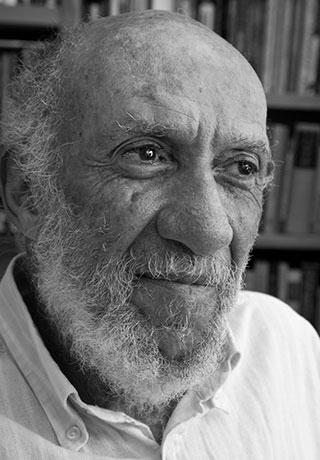

Professor Falk became an adviser to TFF when it was established in 1985.

Related Posts

Photos © TFF 2000 Read PressInfo 90 “Lift the Sanctions and Bring More Aid to Yugoslavia” See Pictures from Belgrade © TFF 2000 Please reprint, copy, archive, quote or re-post this item, but please retain the source.
PART 2 — Diplomacy, Law and Nonviolent Power By Jan ObergTFF co-founder and director January 26, 2026 This is the second of four TFF-created idea portfolios designed to curb the global reach of the United States and, in both the short and long term, help catalyse a worldwide nonviolent resistance to what many observers describe as the Trump administration’s uniquely confrontational, destructive and world-threatening policies. These portfolios outline what governments and citizens across the world can do through dynamic diplomacy, creative initiatives, and strictly nonviolent means. They are typical TFF works in that we do not only tell what the problem is and how bad it will go – as 90+% of all commentators, experts and scholars do – we tell what we think can be done, inviting you to think of what you think you can do. It seems painfully clear to me that the current political dynamics in Washington increasingly resemble the most dangerous...
TFF’s comprehensive proposal for dialogue about true peace in Ukraine is due in a day or two Jan Oberg November 20, 2025 What is being whispered through diplomatic corridors today is not peace, but quackery. The alleged 28‑point plan drafted in Washington and Moscow is mentioned as a solution to the Ukraine war. It is being negotiated by US businessman, real estate developer and Trump ally, Steve Witkoff, and by Kirill Dmitriev, who is CEO of the Russian Direct Investment Fund and a close ally of Putin, according to India’s Economic Times. For presumably good reasons, their education, qualifications and experience in international conflict analysis and peace-making remain untold. They look like surgeons who have never opened a medical textbook. It is nothing more than a mirage: a framework of concessions imposed on Ukraine’s citizens, negotiated without Kyiv, and excluding Europe. Like Gaza, it promises “peace” while institutionalising injustice. If half of what is available about...

Recent Articles

Tony Robinson October 4, 2026 Violence is easy to recognise when someone is being beaten, shot or killed. It becomes more difficult when nobody is holding a weapon. Poverty, discrimination, exploitation and repression can restrict a human life just as effectively, although they do so in very different ways and with very different consequences. Simply adding more categories to an ever-growing list of forms of violence does not really solve the problem. The more interesting question is what all these different situations have in common and why it makes sense to describe them using the same word. Human beings do not simply react to what happens around them. They remember the past, imagine things that do not yet exist, make plans and undertake projects. Workers organise because they imagine different working conditions; people migrate because they imagine another life somewhere else; social movements emerge because people refuse to accept the...
It’s a matter of principles, courage, vision and pulling together – while the militarist world is falling apart… Peter Langille October 3, 2026 “Here, then, is the problem which we present to you, stark and dreadful and inescapable: Shall we put an end to the human race; or shall mankind renounce war?”The Bertrand Russell—Albert Einstein Manifesto, July 9, 1955 ⁕ The forecast for what’s ahead is worrisome. The sharp rise in armed conflicts over the past three years is adding to what was already the highest level in over seventy years. Genocides, which should be prevented are supported. A shared climate emergency that jeopardises survival is ignored. Diverse polls now suggest that people are war-weary, worried and interested in a more effective United Nations. And, there are viable policy options for a more secure world! Yet governments are doubling-down, betting on more war and investing heavily. If current trends persist,...
Johan Galtung 1930-2024October 2015 Published here on October 3, 2026 Let us focus on Civilization for conflict analysis and remedies. Major forms of disorder use violence; war is state organized violence. The most belligerent states are the United States of America and Israel, both with civilization roots. National Evangelism, the US Protestant Christian civilization– more national than evangelical–justifies US warfare as exceptionalism of a people chosen by God, with a manifest destiny to run the world. Orthodox Judaism justifies Israeli warfare to conquer and expand from Nile to Euphrates as a religious right and duty to the Eternal One. The third most belligerent country, the UK, no longer believes it is God-chosen but chosen by the USA; not quite the same but something. But the root cause of global disorder lies in the Occident–with Islam–seeing itself as the single, universal civilization valid for all at all times, all others being...

TFF on Substack

Discover and subscribe to more peace materials on TFF Substack

Most Popular

Tony Robinson October 4, 2026 Violence is easy to recognise when someone is being beaten, shot or killed. It becomes more difficult when nobody is holding a weapon. Poverty, discrimination, exploitation and repression can restrict a human life just as effectively, although they do so in very different ways and with very different consequences. Simply adding more categories to an ever-growing list of forms of violence does not really solve the problem. The more interesting question is what all these different situations have in common and why it makes sense to describe them using the same word. Human beings do not simply react to what happens around them. They remember the past, imagine things that do not yet exist, make plans and undertake projects. Workers organise because they imagine different working conditions; people migrate because they imagine another life somewhere else; social movements emerge because people refuse to accept the...
It’s a matter of principles, courage, vision and pulling together – while the militarist world is falling apart… Peter Langille October 3, 2026 “Here, then, is the problem which we present to you, stark and dreadful and inescapable: Shall we put an end to the human race; or shall mankind renounce war?”The Bertrand Russell—Albert Einstein Manifesto, July 9, 1955 ⁕ The forecast for what’s ahead is worrisome. The sharp rise in armed conflicts over the past three years is adding to what was already the highest level in over seventy years. Genocides, which should be prevented are supported. A shared climate emergency that jeopardises survival is ignored. Diverse polls now suggest that people are war-weary, worried and interested in a more effective United Nations. And, there are viable policy options for a more secure world! Yet governments are doubling-down, betting on more war and investing heavily. If current trends persist,...
Johan Galtung 1930-2024October 2015 Published here on October 3, 2026 Let us focus on Civilization for conflict analysis and remedies. Major forms of disorder use violence; war is state organized violence. The most belligerent states are the United States of America and Israel, both with civilization roots. National Evangelism, the US Protestant Christian civilization– more national than evangelical–justifies US warfare as exceptionalism of a people chosen by God, with a manifest destiny to run the world. Orthodox Judaism justifies Israeli warfare to conquer and expand from Nile to Euphrates as a religious right and duty to the Eternal One. The third most belligerent country, the UK, no longer believes it is God-chosen but chosen by the USA; not quite the same but something. But the root cause of global disorder lies in the Occident–with Islam–seeing itself as the single, universal civilization valid for all at all times, all others being...
Read More
Living-Peace-Sign-Budapest-copy
Tony Robinson October 4, 2026 Violence is easy to recognise when someone is being beaten, shot or killed. It becomes more difficult when nobody is holding a weapon. Poverty, discrimination, exploitation and repression can restrict a human life just as effectively, although they do so in very different ways and with very different consequences. Simply adding more categories to an ever-growing list of forms of violence does not really solve the problem. The more interesting question is what all these different situations have in common and why it makes sense to describe them using the same word. Human beings do not simply react to what happens around them. They remember the past, imagine things that do not yet exist, make plans and undertake projects. Workers organise because they imagine different working conditions; people migrate because they imagine another life somewhere else; social movements emerge because people refuse to accept the...
b54a1f10-8c65-4f0b-9dd5-4abc0a7d04cc_2659x2659
It’s a matter of principles, courage, vision and pulling together – while the militarist world is falling apart… Peter Langille October 3, 2026 “Here, then, is the problem which we present to you, stark and dreadful and inescapable: Shall we put an end to the human race; or shall mankind renounce war?”The Bertrand Russell—Albert Einstein Manifesto, July 9, 1955 ⁕ The forecast for what’s ahead is worrisome. The sharp rise in armed conflicts over the past three years is adding to what was already the highest level in over seventy years. Genocides, which should be prevented are supported. A shared climate emergency that jeopardises survival is ignored. Diverse polls now suggest that people are war-weary, worried and interested in a more effective United Nations. And, there are viable policy options for a more secure world! Yet governments are doubling-down, betting on more war and investing heavily. If current trends persist,...
010
Johan Galtung 1930-2024October 2015 Published here on October 3, 2026 Let us focus on Civilization for conflict analysis and remedies. Major forms of disorder use violence; war is state organized violence. The most belligerent states are the United States of America and Israel, both with civilization roots. National Evangelism, the US Protestant Christian civilization– more national than evangelical–justifies US warfare as exceptionalism of a people chosen by God, with a manifest destiny to run the world. Orthodox Judaism justifies Israeli warfare to conquer and expand from Nile to Euphrates as a religious right and duty to the Eternal One. The third most belligerent country, the UK, no longer believes it is God-chosen but chosen by the USA; not quite the same but something. But the root cause of global disorder lies in the Occident–with Islam–seeing itself as the single, universal civilization valid for all at all times, all others being...
Screenshot 2026-10-02 011738
Jan ObergPhD, director, The Transnational Foundation for Peace and Future Research, TFFLund, Sweden October 2, 2026 This is my full original manuscript. The Chinese Academy of Social Science, CASS, makes two publications out if it. 1. China’s Five-year plan emphasized the capabilities of basic research and original innovation. It is regarded as the goal of the future social development, which, as required, should be significantly enhanced. Can you comment on the importance of original innovation in research and academic study? I believe it is easier to define “original innovation” in the natural sciences than in social sciences. The breaking points of what constitutes something new, or innovative, are not quite as sharp in the latter. But in both fields it is about opening up something that was closed, unseen, unexplored before – making manifest what was earlier latent. Innovations come in many forms and shapes – naming something that was not...
arctic-circle-map
The agreement is catastrophic both because of what it says and what it doesn’t mention. It reduces further the major asset of security policies: Freedom of action. Jan Oberg TFF director September 25, 2026 A couple of hours before the agreement was signed on September 22, 2026, I published the following 13 hypotheses about what it would most likely contain on TFF Substack (in English). I was wrong on only the first point. Contrary to what Trump had written on his Truth Social platform, it does not appear to come into force immediately. In fact, it turned out to be worse than even I had anticipated. After these hypotheses now come a number of reflections in light of what the agreement actually contains, and does not contain, as well as the way in which it has generally been presented by major media outlets and by the public-service broadcaster DR. My...
girl-5894831_1280
Below are TFF-related media mentions, comments, videos and social media posts published elsewhere but not on this homepage. We happen to catch and list only a fraction. Regarding video comments and debates, we recommend that you go to the TFF Video Channel on Substack where many of them are reproduced. Jan Oberg is a contributor to China Daily – 52 million daily clicks – and Global Times, CGTN and CCTV (the national television), China Investment, Xinhua News Agency and several others. Articles and videos on these media very often multiply into countless Chinese (and Western media) that re-post them from these main media. Thanks to The China Academy, his analyses, interviews and comments are frequently posted on YouTube channels such as Thinkers Forum and Wave Media. These videos are often re-posted on Bilibili (China’s YouTube), the China Content Center on TikTok, and on the Chinese edition of TikTok, Douyin.com. This means reaching hundreds of millions of viewers worldwide over a year. While there are too many to catch on all these...




