
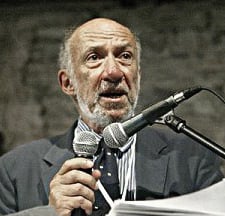
The recent parallel hunger strikes in Israeli prisons reignited the political imagination of Palestinians around the world, strengthening bonds of ‘solidarity’ and reinforcing the trend toward grassroots reliance on nonviolent resistance Israeli abuses.

The crisis produced by these strikes made this year’s observance of Nakba Day a moral imperative for all those concerned with attaining justice and peace for the long oppressed Palestinian people whether they be living under occupation or in exile. The Palestinian mood on this May 14th, inflamed by abuse and frustration, but also inspired by and justly proud of exemplary expressions of courage, discipline, and nonviolent resistance on the part of imprisoned Palestinians who are mounting the greatest challenge of organized resistance that Israel has faced since the Second Intifada.

The agreements ending the strikes were reached as a result of Israeli concessions, pledges to reduce reliance on administrative detention, abandon solitary confinement, and allow family visits, including from Gaza. Whether these pledges will be honored remains to be seen. Past Israeli behavior whether with respect to Israeli settlement activity or with respect to softening the impact of the blockade on Gaza that has been maintained for five years suggest that only careful monitoring will determine whether Israel abides by its commitments.

The experience of Hana Shalabi is not encouraging. In an agreement that ended her hunger strike after 40 days in exchange for her release from administrative detention, she was not allowed to return to her West Bank home but sent to Gaza and ordered to remain there for three years.

Whether she was told about this condition at the time of her release has not been satisfactorily clarified, but it does strongly suggest that it is important to remember that there are two devils: one hangs out in the details, the other in the degree to which behavior corresponds with the pledges.

As of now, the outcome of these hunger strikes have been justly celebrated as a victory for Palestinian resistance, and a further demonstration that at this stage the political struggle against Israeli occupation depends on the will and creativity of the people, and not on the diplomatic skill of the leadership.

Inter-governmental diplomacy of the sort associated with ‘the Oslo peace process’ and ‘the Quartet’s road map’ have provided a smokescreen to divert attention from Israeli expansionist ambitions for the past twenty years without moving the two sides one inch closer to a sustainable and just peace.

Perhaps, the other good news for the Palestinians is the further decline of Israel’s global reputation. According to a BBC poll only Iran and Pakistan are viewed more unfavorably than Israel among the 22 countries ranked, suggesting the utter failure of the expensive Israeli propaganda campaign. Even in Europe the unfavorable ratings associated with Israel are strikingly high: 74% Spain, 65%, France, 69% Germany, 68% Britain. What calls for explanation is why these European governments and the European Union ignore such a mandate from their own citizens, and continue to pursue policies that are unconditionally pro-Israeli.

There are other signals of a shift in the diplomatic balance of forces. According to another new poll 61% of Egyptians want to cancel the 1979 Treaty with Israel. This is reinforced by the resentment of Egyptians toward the United States’ role in their country in the Middle East generally. 79% of the 1000 Egyptians interviewed expressed their unfavorable view of the United States.

Where are the Israeli ‘realists’ hiding? Instead of loose talk about attacking Iran isn’t time to give weight to such recent developments? The writing is on the wall. Military superiority and political violence do not ensure security in the early 21st century. Legality and legitimacy matter more than ever. It is Turkey that exerts regional influence, not because it throws its weight around, but because it has, despite some serious flaws, pursued a path that has brought greater prosperity at home, acted independently and effectively in fashioning its foreign policy, and achieved a governing style reflective of its cultural identity. These achievements generate a Turkish Model that is attractive, overlooking unresolved acute problems with minorities and a clumsy kind of unwillingness to respect dissenting voices.

Reverting to the Palestinian epic hunger strikes that continue to deserve our attention and admiration. It all started when a lone prisoner, Khader Adnan initiated a hunger strike to protest his abusive arrest and administrative detention on December 17th, which happens to be the exact anniversary of the day that the Tunisian vendor, Mohammed Bouazizi, set himself on fire, his death leading directly to a wave of uprisings across the region that became known throughout the world as the Arab Spring.

Adnan gave up his strike after 66 days when Israel relented somewhat on his terms of detention, and this was the same length of time that Bobby Sands maintained his hunger strike unto death so as to dramatize IRA prison grievances in North Ireland. It is not surprising that the survivors of the 1981 Irish protest should now be sending bonding messages of empathy and solidarity to their Palestinian brothers locked up in Israeli jails.

What Adnan did prompted other Palestinians to take a similar stand. Hana Shalabi, like Adnan a few weeks later experienced a horrible arrest experience that included sexual harassment and was sent to prison without charges or trial four months after she had been ‘released’ in the Shalit prisoner exchange in October 2011. She too seemed ready to die rather than endure further humiliation, and was also eventually released, but punitively, being ‘deported’ to Gaza away from her West Bank village and family for a period of three years. Others hunger strikes followed, and now two types of hunger strike under way, each influenced by the other.

The longer of the strike involves six protesting Palestinians who are in critical condition, with their lives at risk for at least the past week. Bilal Diab and Thaer Halahleh who have now refused food for an incredible 76 days, a sacrificial form of nonviolent resistance that can only be properly appreciated as a scream of anguish and despair on behalf of those who have been suffering so unjustly and mutely for far too long. It is a sign of Western indifference that even these screams seem to have fallen on deaf ears.

The second closely related hunger strike that has lasted almost a month is an equally an extraordinary display of disciplined nonviolence, initiated on April 17th Palestinian Prisoners Day. By now there are reported to be as many as 2000 prisoners who are refusing all food until a set of grievances associated with deplorable prison conditions are satisfactorily. The two strikes are linked because the longer hunger strike inspired the mass strike, and the remaining several thousand non-striking Palestinian prisoners in Israel jails are already pledged to join the strike if there are any deaths among the strikers. This heightened prisoner consciousness has already been effective in mobilizing the wider community of Palestinians living under occupation, and beyond.

This heroic activism gives an edge to the 2012 Nakba observance, and contrasts with the apparent futility of traditional diplomacy. The Quartet tasked with providing a roadmap to achieve a peaceful resolution of the Israel/Palestine conflict seems completely at a loss, and has long been irrelevant to the quest for a sustainable peace, let alone the realization of Palestinian rights. The much publicized efforts of a year ago to put forward a statehood bid at the United Nations seems stalled indefinitely due to the crafty backroom maneuvers of the United States.

Even the widely supported and reasonable recommendations of the Goldstone Report to seek accountability for Israeli leaders who seemed guilty of war crimes associated with the three weeks of attacks on Gaza at the end of 2008 has been permanently consigned to limbo. And actually the situation is even worse for the Palestinians than this summary depiction suggest. While nothing happens on the diplomatic level other clocks are ticking at a fast pace.

Several developments adverse to Palestinian interests and aspirations are taking place at an accelerating pace: 40,000 additional settlers are living in the West Bank since the temporary freeze on settlement expansion ended in September 2010, bringing the overall West Bank settler population to about 365,000, and well over 500,000 if East Jerusalem settlers are added on.

Is it any wonder then that Palestinians increasingly view the Nabka not as an event frozen in time back in 1947 when as many as 700,000 fled from their homeland, but as descriptive of an historical process that has been going on ever since Palestinians began being displaced by Israeli immigration and victimized by the ambitions and tactics of the Zionist Project?

It is this understanding of the Nakba as a living reality with deep historical roots that gives the hunger strikes such value. Nothing may be happening when it comes to the peace process, but at least, with heightened irony, it is possible to say that a lot is happening in Israeli jails. And the resolve of these hunger strikers is so great as to convey to anyone that is attentive that the Palestinians will not be disappeared from history.

And merely by saying this there is a renewed sense of engagement on the part of Palestinians the world over and of their growing number of friends and comrades, that this Palestinian courage and sacrifice and fearlessness will bring eventual success and, in contrast, it is the governmental search for deals and bargains built to reflect power relations not claims of rights that seems so irrelevant that its disappearance would hardly be noticed.

By and large, the Western media, especially in the United States, has taken virtually no notice of these hunger strikes, as if there was no news angle until the possibility of martyrdom for the strikers began at last to stir fears in Israeli hearts and minds of a Palestinian backlash and a public relations setback on the international level.

Then and only then has there been speculation that maybe Israel could and should make some concessions, promising to improve prison conditions and limit reliance on administrative detention to situations where a credible security threat existed. Beyond this frantic quest by Israel to find a last minute pragmatic escape from this volatile situation posed by both hunger strikers on the brink of death and a massive show of solidarity by the larger prison population, is this sense that the real message of the Nakba is to underscore the imperative of self-reliance and nonviolence and ongoing struggle.

The Palestinian future will be shaped by the people of Palestine or nothing. And it is up to us in the world, whether Palestinian or not, to join in their struggle to achieve justice from below, sufficiently shaking the foundations of oppressive structures of occupation and the exclusions of exile to create tremors of doubt in the Israeli colonial mindset. And as doubts grow, new possibilities suddenly emerge.

For this reason, the Nakba should become important for all persons of good will, whether Palestinian or not, whether in Israel or outside, as an occasion for displays of solidarity.

This might mean a global sympathy hunger strike as is being urged for May 17th or an added commitment to the BDS Campaign (Boycott, Divestment, and Sanctions) or signing up to join the next voyage of the Freedom Flotilla.

Certainly the Nakba is a time of remembrance for the historic tragedy of expulsion, but it is equally a time of reflection on what might be done to stop the bleeding and to acknowledge and celebrate those who are brave enough to say “this far, and no further.”
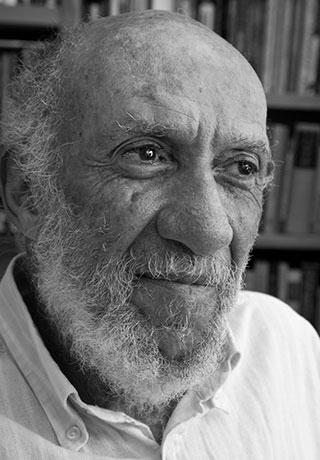

Professor Falk became an adviser to TFF when it was established in 1985.

Related Posts

The agreement is catastrophic both because of what it says and what it doesn’t mention. It reduces further the major asset of security policies: Freedom of action. Jan Oberg TFF director September 25, 2026 A couple of hours before the agreement was signed on September 22, 2026, I published the following 13 hypotheses about what it would most likely contain on TFF Substack (in English). I was wrong on only the first point. Contrary to what Trump had written on his Truth Social platform, it does not appear to come into force immediately. In fact, it turned out to be worse than even I had anticipated. After these hypotheses now come a number of reflections in light of what the agreement actually contains, and does not contain, as well as the way in which it has generally been presented by major media outlets and by the public-service broadcaster DR. My...
Below are TFF-related media mentions, comments, videos and social media posts published elsewhere but not on this homepage. We happen to catch and list only a fraction. Regarding video comments and debates, we recommend that you go to the TFF Video Channel on Substack where many of them are reproduced. Jan Oberg is a contributor to China Daily – 52 million daily clicks – and Global Times, CGTN and CCTV (the national television), China Investment, Xinhua News Agency and several others. Articles and videos on these media very often multiply into countless Chinese (and Western media) that re-post them from these main media. Thanks to The China Academy, his analyses, interviews and comments are frequently posted on YouTube channels such as Thinkers Forum and Wave Media. These videos are often re-posted on Bilibili (China’s YouTube), the China Content Center on TikTok, and on the Chinese edition of TikTok, Douyin.com. This means reaching hundreds of millions of viewers worldwide over a year. While there are too many to catch on all these...
Jan Oberg May 15, 2026 Go to this Fox News page and scroll the whole way down: President Donald Trump tells the world that his meeting with President Xi Jinping yielded a lot of very concrete political and economic results – of course, only where the Chinese side, according to him, agreed with him. He does not mention the Taiwan issue, but Secretary of State, Marco Rubio, says that it did not feature prominently in their talks and that the US policy on Taiwan has not changed. Then go to China Daily – or Global Times – and you will see that for the Chinese it is framework, principles, structure of cooperation etc. that matters – all embedded in the overall idea of “constructive bilateral relationship of strategic stability.” Nowhere is any concrete agreement or deal – all that Trump refers to – mentioned. At the general level, this gives you insights into the very different social...

Recent Articles

Tony Robinson October 4, 2026 Violence is easy to recognise when someone is being beaten, shot or killed. It becomes more difficult when nobody is holding a weapon. Poverty, discrimination, exploitation and repression can restrict a human life just as effectively, although they do so in very different ways and with very different consequences. Simply adding more categories to an ever-growing list of forms of violence does not really solve the problem. The more interesting question is what all these different situations have in common and why it makes sense to describe them using the same word. Human beings do not simply react to what happens around them. They remember the past, imagine things that do not yet exist, make plans and undertake projects. Workers organise because they imagine different working conditions; people migrate because they imagine another life somewhere else; social movements emerge because people refuse to accept the...
It’s a matter of principles, courage, vision and pulling together – while the militarist world is falling apart… Peter Langille October 3, 2026 “Here, then, is the problem which we present to you, stark and dreadful and inescapable: Shall we put an end to the human race; or shall mankind renounce war?”The Bertrand Russell—Albert Einstein Manifesto, July 9, 1955 ⁕ The forecast for what’s ahead is worrisome. The sharp rise in armed conflicts over the past three years is adding to what was already the highest level in over seventy years. Genocides, which should be prevented are supported. A shared climate emergency that jeopardises survival is ignored. Diverse polls now suggest that people are war-weary, worried and interested in a more effective United Nations. And, there are viable policy options for a more secure world! Yet governments are doubling-down, betting on more war and investing heavily. If current trends persist,...
Johan Galtung 1930-2024October 2015 Published here on October 3, 2026 Let us focus on Civilization for conflict analysis and remedies. Major forms of disorder use violence; war is state organized violence. The most belligerent states are the United States of America and Israel, both with civilization roots. National Evangelism, the US Protestant Christian civilization– more national than evangelical–justifies US warfare as exceptionalism of a people chosen by God, with a manifest destiny to run the world. Orthodox Judaism justifies Israeli warfare to conquer and expand from Nile to Euphrates as a religious right and duty to the Eternal One. The third most belligerent country, the UK, no longer believes it is God-chosen but chosen by the USA; not quite the same but something. But the root cause of global disorder lies in the Occident–with Islam–seeing itself as the single, universal civilization valid for all at all times, all others being...

TFF on Substack

Discover and subscribe to more peace materials on TFF Substack

Most Popular

Tony Robinson October 4, 2026 Violence is easy to recognise when someone is being beaten, shot or killed. It becomes more difficult when nobody is holding a weapon. Poverty, discrimination, exploitation and repression can restrict a human life just as effectively, although they do so in very different ways and with very different consequences. Simply adding more categories to an ever-growing list of forms of violence does not really solve the problem. The more interesting question is what all these different situations have in common and why it makes sense to describe them using the same word. Human beings do not simply react to what happens around them. They remember the past, imagine things that do not yet exist, make plans and undertake projects. Workers organise because they imagine different working conditions; people migrate because they imagine another life somewhere else; social movements emerge because people refuse to accept the...
It’s a matter of principles, courage, vision and pulling together – while the militarist world is falling apart… Peter Langille October 3, 2026 “Here, then, is the problem which we present to you, stark and dreadful and inescapable: Shall we put an end to the human race; or shall mankind renounce war?”The Bertrand Russell—Albert Einstein Manifesto, July 9, 1955 ⁕ The forecast for what’s ahead is worrisome. The sharp rise in armed conflicts over the past three years is adding to what was already the highest level in over seventy years. Genocides, which should be prevented are supported. A shared climate emergency that jeopardises survival is ignored. Diverse polls now suggest that people are war-weary, worried and interested in a more effective United Nations. And, there are viable policy options for a more secure world! Yet governments are doubling-down, betting on more war and investing heavily. If current trends persist,...
Johan Galtung 1930-2024October 2015 Published here on October 3, 2026 Let us focus on Civilization for conflict analysis and remedies. Major forms of disorder use violence; war is state organized violence. The most belligerent states are the United States of America and Israel, both with civilization roots. National Evangelism, the US Protestant Christian civilization– more national than evangelical–justifies US warfare as exceptionalism of a people chosen by God, with a manifest destiny to run the world. Orthodox Judaism justifies Israeli warfare to conquer and expand from Nile to Euphrates as a religious right and duty to the Eternal One. The third most belligerent country, the UK, no longer believes it is God-chosen but chosen by the USA; not quite the same but something. But the root cause of global disorder lies in the Occident–with Islam–seeing itself as the single, universal civilization valid for all at all times, all others being...
Read More
Living-Peace-Sign-Budapest-copy
Tony Robinson October 4, 2026 Violence is easy to recognise when someone is being beaten, shot or killed. It becomes more difficult when nobody is holding a weapon. Poverty, discrimination, exploitation and repression can restrict a human life just as effectively, although they do so in very different ways and with very different consequences. Simply adding more categories to an ever-growing list of forms of violence does not really solve the problem. The more interesting question is what all these different situations have in common and why it makes sense to describe them using the same word. Human beings do not simply react to what happens around them. They remember the past, imagine things that do not yet exist, make plans and undertake projects. Workers organise because they imagine different working conditions; people migrate because they imagine another life somewhere else; social movements emerge because people refuse to accept the...
b54a1f10-8c65-4f0b-9dd5-4abc0a7d04cc_2659x2659
It’s a matter of principles, courage, vision and pulling together – while the militarist world is falling apart… Peter Langille October 3, 2026 “Here, then, is the problem which we present to you, stark and dreadful and inescapable: Shall we put an end to the human race; or shall mankind renounce war?”The Bertrand Russell—Albert Einstein Manifesto, July 9, 1955 ⁕ The forecast for what’s ahead is worrisome. The sharp rise in armed conflicts over the past three years is adding to what was already the highest level in over seventy years. Genocides, which should be prevented are supported. A shared climate emergency that jeopardises survival is ignored. Diverse polls now suggest that people are war-weary, worried and interested in a more effective United Nations. And, there are viable policy options for a more secure world! Yet governments are doubling-down, betting on more war and investing heavily. If current trends persist,...
010
Johan Galtung 1930-2024October 2015 Published here on October 3, 2026 Let us focus on Civilization for conflict analysis and remedies. Major forms of disorder use violence; war is state organized violence. The most belligerent states are the United States of America and Israel, both with civilization roots. National Evangelism, the US Protestant Christian civilization– more national than evangelical–justifies US warfare as exceptionalism of a people chosen by God, with a manifest destiny to run the world. Orthodox Judaism justifies Israeli warfare to conquer and expand from Nile to Euphrates as a religious right and duty to the Eternal One. The third most belligerent country, the UK, no longer believes it is God-chosen but chosen by the USA; not quite the same but something. But the root cause of global disorder lies in the Occident–with Islam–seeing itself as the single, universal civilization valid for all at all times, all others being...
Screenshot 2026-10-02 011738
Jan ObergPhD, director, The Transnational Foundation for Peace and Future Research, TFFLund, Sweden October 2, 2026 This is my full original manuscript. The Chinese Academy of Social Science, CASS, makes two publications out if it. 1. China’s Five-year plan emphasized the capabilities of basic research and original innovation. It is regarded as the goal of the future social development, which, as required, should be significantly enhanced. Can you comment on the importance of original innovation in research and academic study? I believe it is easier to define “original innovation” in the natural sciences than in social sciences. The breaking points of what constitutes something new, or innovative, are not quite as sharp in the latter. But in both fields it is about opening up something that was closed, unseen, unexplored before – making manifest what was earlier latent. Innovations come in many forms and shapes – naming something that was not...
arctic-circle-map
The agreement is catastrophic both because of what it says and what it doesn’t mention. It reduces further the major asset of security policies: Freedom of action. Jan Oberg TFF director September 25, 2026 A couple of hours before the agreement was signed on September 22, 2026, I published the following 13 hypotheses about what it would most likely contain on TFF Substack (in English). I was wrong on only the first point. Contrary to what Trump had written on his Truth Social platform, it does not appear to come into force immediately. In fact, it turned out to be worse than even I had anticipated. After these hypotheses now come a number of reflections in light of what the agreement actually contains, and does not contain, as well as the way in which it has generally been presented by major media outlets and by the public-service broadcaster DR. My...
girl-5894831_1280
Below are TFF-related media mentions, comments, videos and social media posts published elsewhere but not on this homepage. We happen to catch and list only a fraction. Regarding video comments and debates, we recommend that you go to the TFF Video Channel on Substack where many of them are reproduced. Jan Oberg is a contributor to China Daily – 52 million daily clicks – and Global Times, CGTN and CCTV (the national television), China Investment, Xinhua News Agency and several others. Articles and videos on these media very often multiply into countless Chinese (and Western media) that re-post them from these main media. Thanks to The China Academy, his analyses, interviews and comments are frequently posted on YouTube channels such as Thinkers Forum and Wave Media. These videos are often re-posted on Bilibili (China’s YouTube), the China Content Center on TikTok, and on the Chinese edition of TikTok, Douyin.com. This means reaching hundreds of millions of viewers worldwide over a year. While there are too many to catch on all these...




