
New media report confirms violence to be much more important than peace

A new report /02/idazidore.jpg”>
We all have a feeling of what peace is. Yet, defining it more precisely is not so easy. It belongs to the category that philosophers have called ‘essentially contested concepts’ – also used about freedom, justice and, say, democracy. Being somehow elusive, perhaps the best we can hope to achieve is intelligent discussions about how to approach peace, rather than defining it precisely.

There are those who jump the philosophy, conceptuality and definitions and go directly to quantifying peace. By means of some “indicators” readily available in data bases they put together a composite measure that enables them to rank-order countries. Developing such hit lists – for happiness, development, corruption, etc.- has become a kind of industry in recent years.

The Global Peace Index

The Global Peace Index, GPI, produced by the Institute for Economics & Peace is an example of that approach. Its mission is expressed as “Quantifying Peace and its Benefits” and it newly published a comprehensive report, Measuring Peace in the Media 2011, which is “an analysis of global TV networks coverage of peace and violence issues using a fact-based approach which compares various measures from the Global Peace Index against Media Tenor’s database of global media.”

The aim of the study is “to better understand the texture of new coverage and its accuracy. This was achieved by analysing Media Tenor’s extensive database consisting of 164,000 news items. These news items have been compiled from 31 news and current affairs programs that air on four continents. The data was further analysed and broken down by country coverage with news stories from 101 different countries. The aggregated country data was then compared to the Global Peace Index (GPI) so as to rate the accuracy of the coverage.”

This is a very valuable and much needed research endeavour. Many of us working in the field of peace – research, activism, journalism or otherwise – have long felt that the media are interested in violence to the point of obsession, while ignoring to a large extent news, events and trends that point in the direction of peace and, hence, offer citizens hope.

Typically, journalists do not turn up at a hot spot while a conflict is unfolding but they gather there once violence has been introduced. Thus, we have too much war reporting and too little conflict journalism. And as soon as there is a cease-fire agreement of some publicized peace accord, whether real or fake, they leave for another war theatre.

Key findings of the study

• The only two networks which were either 50% accurate or more were SABC News @ One and ABC World News with 56% and 50% accuracy, respectively.
• War, conflict and violence are the most widely covered events.
• The number violence reports aligned in direct proportion to the actual level of violence on the country being reported.
• The Arab Spring countries saw a rise in the number of reports, especially on topics such as ‘the functioning of government’ as well as war and violence.
• Based on the Structures of Peace taxonomy, critical topics such as the ‘Distribution of Resources’ received almost no coverage.
• On average, the number of negative reports far exceeds news reports which are positive in tone.
• Countries which have most declined in peacefulness received approximately thirteen times the level of coverage than countries which have most improved in peacefulness.
• Consistent with the data and observations, relatively peaceful countries tend to receive the majority of their international coverage due to exceptional violence or disaster related news stories.

It’s a delight, of course, to see these conclusions supporting what has been known intuitively for years. Some of us have referred repeatedly to the MIMAC – the Military-Industrial-MEDIA-Academic Complex to emphasize that media, grosso modo, are closer to war and war preparations than to peace, indeed that there are direct links between them, illustrated for instance by military corporations being large shareholders in privately-run media or the access the military has – in comparison to other expertise – to their prime time media in virtually all countries.

Reasons to be critical

Yet, something seems wrong with the Global Peace Study when you see that for the year 2011 Japan is ranked as the 3rd most peaceful country in the world; it happens to also be the world’s fifth largest military spender and hosting huge US bases and systematically violating its own peace constitution. Or take the 4th most peaceful country, Denmark, that has been involved in warfare in former Yugoslavia and Afghanistan, been an occupying power for 4 years in Iraq and, precisely in 2011, was a major bomber nation in Libya. There are other intuitively rather odd examples over the years with other countries. For instance, one would spontaneously wonder why Rwanda – involved in war and with a highly authoritarian leadership (but, yes, stable) is ranked as number 99 while Burundi which has gone through a remarkable peace and reconciliation process since 2000 is number 132.

Since the GPI – and thus this report – is based on data sets already available and coordinated by the Economist Intelligence Unit, there is rather little innovation possible. What the Global Peace Index measures in the best of cases is the relative absence of direct violence – while it has nothing to say about, say, gender violence, cultural violence, structural violence, or violence against nature or – for that matter – anything related to positive peace, such as e.g. the existence of peace education, academies, non-violent behaviour patterns and events, mediation potentials, and actual peace policies and, say, mediation initiatives of countries.

It is difficult to see what exactly steered the selection of 23 indicators and not, say, 15 or 74. The conceptual basis for measuring the essentially contested concept of peace, is hard to find. An easily accessible overview of the 23 indicators the IEP uses can be found here.

It would be cheap in this noble case to refer to the computer principle of “garbage in, garbage out”. But it is true that the index ranking can only be as accurate as the quantitative data and their composite measures allow. And it may simply not be enough to really grasp peace – while it does seem to catch some of the violence, high or low.

In effect, perhaps, it might be more accurate to turn the index on its head and call it the Global Violence Index. Because, what it measures (to some extent) is peace understood as the absence (or low level) of violence.

TV: reactive and violence-oriented

The former British broadcast reporter Martin Bell puts it well when he says that “television gets warfare wrong. So do newspapers, but they lack the same power to shape impressions and responses. It is predominantly the TV networks who, by the contamination of their reporting, make it easier for the politicians to resort to it”. Bell also points out that, at worst, the media can contaminate the political environment to such a degree they may end up causing the wars on which they report. This is significant coming from a leading media professional, it’s a key fact of the overall situation (to which, of course, there are always exception) and it’s something that should be discussed more.

The TV media are perhaps the most vivid, powerful, authentic and emotionally alluring of all media types. Considering that they often distort the truth is therefore of deep concern. The Western TV media tend to report in a simplifying and dehumanising manner – particularly when reporting on political enemies – rather than to seek causes and transparency. The GPI report confirms the assumption that a violence-oriented practice still dominates the TV media and it shows that the reporting is reactive rather than proactive. It waits for violence to happen before reporting and then focuses on that, rather than the underlying conflicts.

What sort of impact does this violence-oriented practice of reporting have on its audience? Evidently, it gives people the impression that the world is much more violent than it actually is and, consequently, this miscommunication is likely to affect decision-makers at various levels of society. Conversely, if the media would were to cover better the key elements that create peace, either positively or negatively, then the audience – and, consequently, the society – is more likely to improve on those aspects.

Accuracy and over-reporting

The report uses the term accuracy in a rather confusing manner. Contrary to what one may think, it refers to neither factuality nor neutrality, but to the coherence between GPI and level of violence in the reporting. The report concludes that SABC News @ One and ABC World News were the only two TV networks with accuracy ranging higher than 50%. This means that even the two most accurate TV programs did not truly represent a country’s level of peacefulness for half of the countries they covered.

Egypt, Morocco and Tunisia saw an increase in violence during 2011 in relation to the wave of protests – the “Arab Spring” – in the region. According to the report, however, the violence in Egypt was over-reported compared to the actual level of violence in the country at the time (measured by GPI). The same can be said about Ireland and Sweden. Topics of politically motivated crime like terrorism saw an increase with around 135 violence-related reports out of a total of 343 reports. As for Denmark, 7 out of 9 programs over reported violence, primarily due to the attempted assassination of the Danish cartoonist who drew Mohammed.

As mentioned, the report’s method of measuring peace or violence is questionable. Gender violence, cultural violence and structural violence are not considered at all and the level of over-reporting should therefore be understood with considerable care.

Recommendations

Angela and John Powers wrote a great piece about the lessons learned by the media from the first Gulf War (often referred to as the greatest journalistic failure of all times). They pose the question: “What can be reasonably expected from reporters so that the Gulf War, or any future conflict, can be comprehended and acted upon accordingly?”

They then come up with a set of recommendations, which could be used in extension of the GPI report. Firstly, they attack the journalistic race to be “first” when reporting on violent conflicts because this type of coverage often results in too much speculation. Immediacy should instead be used to explore prospects for peace. Powers moreover recommend that, in the Middle East, the media must forthrightly analyze such topics as the relationships between the governing and the governed in the region, as well as the equitableness in the control and distribution of oil. It was exactly these types of news stories that never appeared on the TV networks according to the GPI report. The two structures “Acceptance of the rights of other” and the “Equitable distribution of resources” received little to no attention.

How to use the report

In recent weeks, the debate and rumours of an upcoming war against Iran and intervention in Syria have been escalating. Somehow, we should be happy that the GPI report is released simultaneously because, at best, it could raise awareness that TV reporting needs to be reconsidered by viewers as well as journalists. Simply put, we need to be much more critical.

As an example, some of the main headlines on Iran in the Danish media within the past weeks have been: Iran develops suicide boats; Iran increases internet censorship; Iran reveals new nuclear projects. It takes no thorough analysis to understand that the country is linguistically placed as the active, violence-oriented aggressor. It comes to appear destructive and dangerous by virtue of a one-sided “us versus them” discourse.

Read it!

In spite of all, we recommend reading “Measuring Peace in the Media 2011” because it reminds us that at least the mainstream media are mere reflections of society and its power structures. It confirms suspicions that propaganda-oriented war/violence journalism still outrules truth-oriented and peace/conflict-oriented journalism in quantity – and this matters; as the authors of the report note, “if there is no coverage of the issues, as in the case of the equitable distribution of resources, then it is unlikely these will be addressed.”

War and violence is extremely destructive for the world economy and also stands in the way of solving humanity’s major problems. In other words, the GPI and now its media report can help us raise an intelligent debate about something else than the index itself – namely, how on earth can we go on spending humanity’s and nature’s resources so perversely violence-oriented instead of reaping the – obvious – benefits of shaping more stable and peaceful societies for the common good.

Perhaps one explanation is that the media do far too little, if anything at all, to raise such a debate, indirectly by the way they cover violence and violence much more than war and through their utter ignorance of positive stories about peace and people making peace. We all know the names of the few war lords in war zones, but few can mention a single name among the millions around our globe who ought to be featured and highlighted as unsung heros, namely all the peace lords – and even more so the peace ladies the peace intellectuals and those who shape a culture of peace.
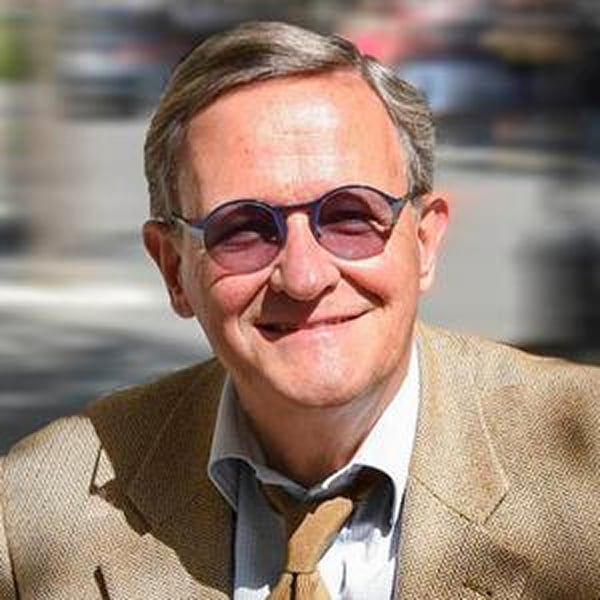

Peace & future researcher + ‌Art Photographer

Related Posts

Tony Robinson October 4, 2026 Violence is easy to recognise when someone is being beaten, shot or killed. It becomes more difficult when nobody is holding a weapon. Poverty, discrimination, exploitation and repression can restrict a human life just as effectively, although they do so in very different ways and with very different consequences. Simply adding more categories to an ever-growing list of forms of violence does not really solve the problem. The more interesting question is what all these different situations have in common and why it makes sense to describe them using the same word. Human beings do not simply react to what happens around them. They remember the past, imagine things that do not yet exist, make plans and undertake projects. Workers organise because they imagine different working conditions; people migrate because they imagine another life somewhere else; social movements emerge because people refuse to accept the...
It’s a matter of principles, courage, vision and pulling together – while the militarist world is falling apart… Peter Langille October 3, 2026 “Here, then, is the problem which we present to you, stark and dreadful and inescapable: Shall we put an end to the human race; or shall mankind renounce war?”The Bertrand Russell—Albert Einstein Manifesto, July 9, 1955 ⁕ The forecast for what’s ahead is worrisome. The sharp rise in armed conflicts over the past three years is adding to what was already the highest level in over seventy years. Genocides, which should be prevented are supported. A shared climate emergency that jeopardises survival is ignored. Diverse polls now suggest that people are war-weary, worried and interested in a more effective United Nations. And, there are viable policy options for a more secure world! Yet governments are doubling-down, betting on more war and investing heavily. If current trends persist,...
Johan Galtung 1930-2024October 2015 Published here on October 3, 2026 Let us focus on Civilization for conflict analysis and remedies. Major forms of disorder use violence; war is state organized violence. The most belligerent states are the United States of America and Israel, both with civilization roots. National Evangelism, the US Protestant Christian civilization– more national than evangelical–justifies US warfare as exceptionalism of a people chosen by God, with a manifest destiny to run the world. Orthodox Judaism justifies Israeli warfare to conquer and expand from Nile to Euphrates as a religious right and duty to the Eternal One. The third most belligerent country, the UK, no longer believes it is God-chosen but chosen by the USA; not quite the same but something. But the root cause of global disorder lies in the Occident–with Islam–seeing itself as the single, universal civilization valid for all at all times, all others being...

Recent Articles

Tony Robinson October 4, 2026 Violence is easy to recognise when someone is being beaten, shot or killed. It becomes more difficult when nobody is holding a weapon. Poverty, discrimination, exploitation and repression can restrict a human life just as effectively, although they do so in very different ways and with very different consequences. Simply adding more categories to an ever-growing list of forms of violence does not really solve the problem. The more interesting question is what all these different situations have in common and why it makes sense to describe them using the same word. Human beings do not simply react to what happens around them. They remember the past, imagine things that do not yet exist, make plans and undertake projects. Workers organise because they imagine different working conditions; people migrate because they imagine another life somewhere else; social movements emerge because people refuse to accept the...
It’s a matter of principles, courage, vision and pulling together – while the militarist world is falling apart… Peter Langille October 3, 2026 “Here, then, is the problem which we present to you, stark and dreadful and inescapable: Shall we put an end to the human race; or shall mankind renounce war?”The Bertrand Russell—Albert Einstein Manifesto, July 9, 1955 ⁕ The forecast for what’s ahead is worrisome. The sharp rise in armed conflicts over the past three years is adding to what was already the highest level in over seventy years. Genocides, which should be prevented are supported. A shared climate emergency that jeopardises survival is ignored. Diverse polls now suggest that people are war-weary, worried and interested in a more effective United Nations. And, there are viable policy options for a more secure world! Yet governments are doubling-down, betting on more war and investing heavily. If current trends persist,...
Johan Galtung 1930-2024October 2015 Published here on October 3, 2026 Let us focus on Civilization for conflict analysis and remedies. Major forms of disorder use violence; war is state organized violence. The most belligerent states are the United States of America and Israel, both with civilization roots. National Evangelism, the US Protestant Christian civilization– more national than evangelical–justifies US warfare as exceptionalism of a people chosen by God, with a manifest destiny to run the world. Orthodox Judaism justifies Israeli warfare to conquer and expand from Nile to Euphrates as a religious right and duty to the Eternal One. The third most belligerent country, the UK, no longer believes it is God-chosen but chosen by the USA; not quite the same but something. But the root cause of global disorder lies in the Occident–with Islam–seeing itself as the single, universal civilization valid for all at all times, all others being...

TFF on Substack

Discover and subscribe to more peace materials on TFF Substack

Most Popular

Tony Robinson October 4, 2026 Violence is easy to recognise when someone is being beaten, shot or killed. It becomes more difficult when nobody is holding a weapon. Poverty, discrimination, exploitation and repression can restrict a human life just as effectively, although they do so in very different ways and with very different consequences. Simply adding more categories to an ever-growing list of forms of violence does not really solve the problem. The more interesting question is what all these different situations have in common and why it makes sense to describe them using the same word. Human beings do not simply react to what happens around them. They remember the past, imagine things that do not yet exist, make plans and undertake projects. Workers organise because they imagine different working conditions; people migrate because they imagine another life somewhere else; social movements emerge because people refuse to accept the...
It’s a matter of principles, courage, vision and pulling together – while the militarist world is falling apart… Peter Langille October 3, 2026 “Here, then, is the problem which we present to you, stark and dreadful and inescapable: Shall we put an end to the human race; or shall mankind renounce war?”The Bertrand Russell—Albert Einstein Manifesto, July 9, 1955 ⁕ The forecast for what’s ahead is worrisome. The sharp rise in armed conflicts over the past three years is adding to what was already the highest level in over seventy years. Genocides, which should be prevented are supported. A shared climate emergency that jeopardises survival is ignored. Diverse polls now suggest that people are war-weary, worried and interested in a more effective United Nations. And, there are viable policy options for a more secure world! Yet governments are doubling-down, betting on more war and investing heavily. If current trends persist,...
Johan Galtung 1930-2024October 2015 Published here on October 3, 2026 Let us focus on Civilization for conflict analysis and remedies. Major forms of disorder use violence; war is state organized violence. The most belligerent states are the United States of America and Israel, both with civilization roots. National Evangelism, the US Protestant Christian civilization– more national than evangelical–justifies US warfare as exceptionalism of a people chosen by God, with a manifest destiny to run the world. Orthodox Judaism justifies Israeli warfare to conquer and expand from Nile to Euphrates as a religious right and duty to the Eternal One. The third most belligerent country, the UK, no longer believes it is God-chosen but chosen by the USA; not quite the same but something. But the root cause of global disorder lies in the Occident–with Islam–seeing itself as the single, universal civilization valid for all at all times, all others being...
Read More
Living-Peace-Sign-Budapest-copy
Tony Robinson October 4, 2026 Violence is easy to recognise when someone is being beaten, shot or killed. It becomes more difficult when nobody is holding a weapon. Poverty, discrimination, exploitation and repression can restrict a human life just as effectively, although they do so in very different ways and with very different consequences. Simply adding more categories to an ever-growing list of forms of violence does not really solve the problem. The more interesting question is what all these different situations have in common and why it makes sense to describe them using the same word. Human beings do not simply react to what happens around them. They remember the past, imagine things that do not yet exist, make plans and undertake projects. Workers organise because they imagine different working conditions; people migrate because they imagine another life somewhere else; social movements emerge because people refuse to accept the...
b54a1f10-8c65-4f0b-9dd5-4abc0a7d04cc_2659x2659
It’s a matter of principles, courage, vision and pulling together – while the militarist world is falling apart… Peter Langille October 3, 2026 “Here, then, is the problem which we present to you, stark and dreadful and inescapable: Shall we put an end to the human race; or shall mankind renounce war?”The Bertrand Russell—Albert Einstein Manifesto, July 9, 1955 ⁕ The forecast for what’s ahead is worrisome. The sharp rise in armed conflicts over the past three years is adding to what was already the highest level in over seventy years. Genocides, which should be prevented are supported. A shared climate emergency that jeopardises survival is ignored. Diverse polls now suggest that people are war-weary, worried and interested in a more effective United Nations. And, there are viable policy options for a more secure world! Yet governments are doubling-down, betting on more war and investing heavily. If current trends persist,...
010
Johan Galtung 1930-2024October 2015 Published here on October 3, 2026 Let us focus on Civilization for conflict analysis and remedies. Major forms of disorder use violence; war is state organized violence. The most belligerent states are the United States of America and Israel, both with civilization roots. National Evangelism, the US Protestant Christian civilization– more national than evangelical–justifies US warfare as exceptionalism of a people chosen by God, with a manifest destiny to run the world. Orthodox Judaism justifies Israeli warfare to conquer and expand from Nile to Euphrates as a religious right and duty to the Eternal One. The third most belligerent country, the UK, no longer believes it is God-chosen but chosen by the USA; not quite the same but something. But the root cause of global disorder lies in the Occident–with Islam–seeing itself as the single, universal civilization valid for all at all times, all others being...
Screenshot 2026-10-02 011738
Jan ObergPhD, director, The Transnational Foundation for Peace and Future Research, TFFLund, Sweden October 2, 2026 This is my full original manuscript. The Chinese Academy of Social Science, CASS, makes two publications out if it. 1. China’s Five-year plan emphasized the capabilities of basic research and original innovation. It is regarded as the goal of the future social development, which, as required, should be significantly enhanced. Can you comment on the importance of original innovation in research and academic study? I believe it is easier to define “original innovation” in the natural sciences than in social sciences. The breaking points of what constitutes something new, or innovative, are not quite as sharp in the latter. But in both fields it is about opening up something that was closed, unseen, unexplored before – making manifest what was earlier latent. Innovations come in many forms and shapes – naming something that was not...
arctic-circle-map
The agreement is catastrophic both because of what it says and what it doesn’t mention. It reduces further the major asset of security policies: Freedom of action. Jan Oberg TFF director September 25, 2026 A couple of hours before the agreement was signed on September 22, 2026, I published the following 13 hypotheses about what it would most likely contain on TFF Substack (in English). I was wrong on only the first point. Contrary to what Trump had written on his Truth Social platform, it does not appear to come into force immediately. In fact, it turned out to be worse than even I had anticipated. After these hypotheses now come a number of reflections in light of what the agreement actually contains, and does not contain, as well as the way in which it has generally been presented by major media outlets and by the public-service broadcaster DR. My...
girl-5894831_1280
Below are TFF-related media mentions, comments, videos and social media posts published elsewhere but not on this homepage. We happen to catch and list only a fraction. Regarding video comments and debates, we recommend that you go to the TFF Video Channel on Substack where many of them are reproduced. Jan Oberg is a contributor to China Daily – 52 million daily clicks – and Global Times, CGTN and CCTV (the national television), China Investment, Xinhua News Agency and several others. Articles and videos on these media very often multiply into countless Chinese (and Western media) that re-post them from these main media. Thanks to The China Academy, his analyses, interviews and comments are frequently posted on YouTube channels such as Thinkers Forum and Wave Media. These videos are often re-posted on Bilibili (China’s YouTube), the China Content Center on TikTok, and on the Chinese edition of TikTok, Douyin.com. This means reaching hundreds of millions of viewers worldwide over a year. While there are too many to catch on all these...




