

Arab revolutions and the power of nonviolent action

By Stephen Zunes

While sitting in a Cairo café just a couple blocks from Tahrir Square recently, I couldn’t help but notice the television in the corner broadcasting the evening news. Traditionally, TV news in Egypt and other Arab countries has consisted of the president (or king) giving a speech, greeting a foreign visitor, visiting a factory, or engaging in some other official function. This evening, however, the news was about a labor strike in Alexandria, relatives of those killed during the February revolution protesting outside the Interior Ministry, and ongoing developments in the pro-democracy struggles in Yemen and Syria.

Nothing could better illustrate the profound change in the Arab world over the past year: It is no longer simply the leaders who were the newsmakers. It is Arab peoples themselves.

The initial optimism that unarmed civil insurrections, like those that ousted the Tunisian and Egyptian dictators earlier this year, would soon sweep the Arab world in a manner that brought down Eastern Europe’s communist regimes in 1989 has faded. The ongoing repression by the U.S.-backed military junta in Egypt serves as a reminder that overthrowing a dictator is only the first step a transition to democracy. And the NATO-backed armed revolution in Libya and subsequent extrajudicial killings of Muammar al-Qaddafi and his supporters has cast a pall on what had been a largely nonviolent regional phenomenon.

However, there are still reasons to be hopeful that the so-called “Arab Spring” will transform the Middle East for the better.

Major political change takes time. It took nearly a decade between the first strikes in the Gdansk Shipyard and the fall of communism in Poland. Chile’s democratic struggle against the Pinochet regime took three years between the first major protests and the referendum that forced the dictator from power. The 1986 People Power movement that overthrew Ferdinand Marcos in the Philippines was a culmination of several years of popular struggle against the martial law regime. Even reform movements within industrialized democracies can take years of struggle, such as the civil rights movement in the U.S. South.

Indeed, being right and having the majority of the population on your side is not enough. There needs to be long-range strategic planning, a logical sequencing of tactics, and an ability to take advantage of one’s strengths and target the opponent’s weaknesses. In countries where civil society has traditionally been weak and the repressive apparatus of the state is strong, quick victories are rare.

Yet the dramatic events of this past year have served as a reminder of where power ultimately rests: Even if a government has a monopoly of military force and the support of the world’s one remaining superpower, it is still ultimately powerless if the people refuse to recognize its authority. Through general strikes, filling the streets, mass refusal to obey official orders, and other forms of nonviolent resistance, even the most autocratic regime cannot survive.

Freedom House, in its 2005 study “How Freedom Is Won: From Civic Resistance to Durable Democracy,” observed that, of the nearly 70 countries that had made the transition from dictatorship to varying degrees of democracy in the previous 30 years, only a small minority did so through armed struggle from below or reform instigated from above. Hardly any new democracies resulted from foreign invasion. In nearly three-quarters of the transitions, change was rooted in democratic civil-society organizations that employed nonviolent methods.

Similarly, in the recently released book Why Civil Resistance Works: The Strategic Logic of Nonviolent Conflict, authors Erica Chenoweth and Maria Stephan use an expanded database analyzing 323 major insurrections in support of self-determination and democratic rule since 1900. They found that violent resistance was successful only 26 percent of the time, whereas nonviolent campaigns had a 53 percent rate of success.

From the poorest nations of Africa to the relatively affluent countries of Eastern Europe; from communist regimes to right-wing military dictatorships; from across the cultural, geographic and ideological spectrum, democratic and progressive forces have recognized the power of nonviolent action to free them from oppression. This has not come, in most cases, from a moral or spiritual commitment to nonviolence per se, but simply because it works.

There is a long history of nonviolent resistance in the Middle East, from Egypt’s 1919 independence struggle against the British to the 2006 Cedar Revolution in Lebanon that ended years of Syrian domination of that country. Iran has a long history of such uprisings, including the Tobacco Strike of the 1890s, the Constitutional Revolution of 1906, the overthrow of the Shah in 1979, and the aborted Green Revolution of 2009. Palestine has witnessed the general strike of the 1930s, the first intifada in the late 1980s, and more recent campaigns against Israel’s separation wall and settlement expansion in the West Bank. In Sudan, unarmed insurrections ousted military dictatorships in both 1964 and 1985 (though the democratic governments that followed were eventually overthrown in military coups). There has also been an ongoing nonviolent resistance campaign in the nation of Western Sahara against the illegal Moroccan occupation.

The dramatic events of the past year mark a new and exciting escalation of a phenomenon that has been growing throughout the region and across the globe in recent decades. It is a reminder that, for democracy to come to the Arab world, it will not be through armed struggle, foreign intervention or sanctimonious statements from Washington, but from Arab peoples utilizing the power of strategic nonviolent action.

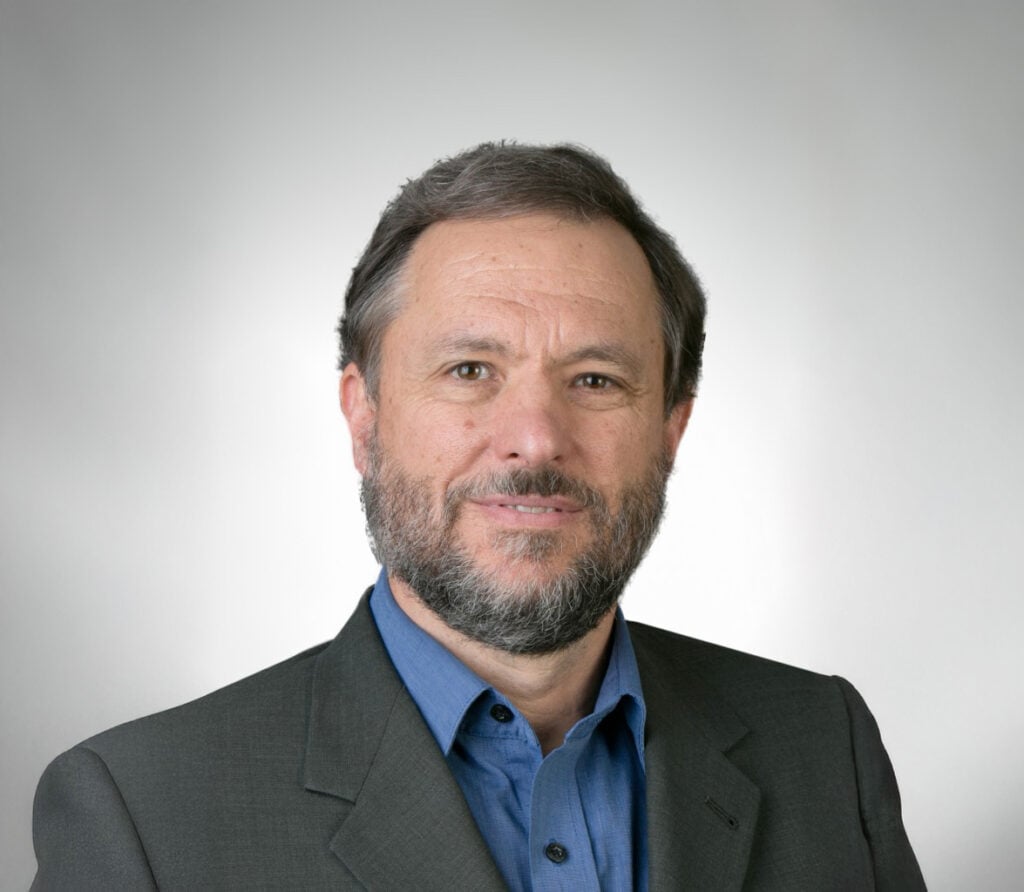
[Stephen Zunes is a professor of politics and coordinator of the Middle Eastern studies program at the University of San Francisco.]

Related Posts

Photos © TFF 2000 Read PressInfo 90 “Lift the Sanctions and Bring More Aid to Yugoslavia” See Pictures from Belgrade © TFF 2000 Please reprint, copy, archive, quote or re-post this item, but please retain the source.
By Jan ObergTFF co-founder and director February 11, 2026 PART 3 — ECONOMICS, TRADE & FINANCIAL SOVEREIGNTY A. Trade Measures & Market Signaling Economic pressure can be applied instantly and scaled without violence. Immediate Measures (within a week) Government boycott US goods and services  A very powerful signal which over time will be felt. Targeted tariffs on selected U.S. goods Symbolic but high-visibility sectors send a clear message. Suspend trade facilitation talks A peaceful pause that signals deep concern. Freeze U.S. participation in public procurement – military procurement in particular A nonviolent way to reduce influence. Competition law review of U.S. corporations A legal tool to scrutinise market dominance. Longer-Term Measures EU–Asia–Africa trade corridors Reducing reliance on U.S. markets. European supply chains for critical minerals Strategic autonomy in resource access. European Strategic Trade Authority Monitoring coercive practices globally. Euro-denominated commodity markets Weakening the dollar’s pricing monopoly. The EU must resume contacts and negotiations with Russia, focusing on energy cooperation To...
PART 2 — Diplomacy, Law and Nonviolent Power By Jan ObergTFF co-founder and director January 26, 2026 This is the second of four TFF-created idea portfolios designed to curb the global reach of the United States and, in both the short and long term, help catalyse a worldwide nonviolent resistance to what many observers describe as the Trump administration’s uniquely confrontational, destructive and world-threatening policies. These portfolios outline what governments and citizens across the world can do through dynamic diplomacy, creative initiatives, and strictly nonviolent means. They are typical TFF works in that we do not only tell what the problem is and how bad it will go – as 90+% of all commentators, experts and scholars do – we tell what we think can be done, inviting you to think of what you think you can do. It seems painfully clear to me that the current political dynamics in Washington increasingly resemble the most dangerous...

Recent Articles

Tony Robinson October 4, 2026 Violence is easy to recognise when someone is being beaten, shot or killed. It becomes more difficult when nobody is holding a weapon. Poverty, discrimination, exploitation and repression can restrict a human life just as effectively, although they do so in very different ways and with very different consequences. Simply adding more categories to an ever-growing list of forms of violence does not really solve the problem. The more interesting question is what all these different situations have in common and why it makes sense to describe them using the same word. Human beings do not simply react to what happens around them. They remember the past, imagine things that do not yet exist, make plans and undertake projects. Workers organise because they imagine different working conditions; people migrate because they imagine another life somewhere else; social movements emerge because people refuse to accept the...
It’s a matter of principles, courage, vision and pulling together – while the militarist world is falling apart… Peter Langille October 3, 2026 “Here, then, is the problem which we present to you, stark and dreadful and inescapable: Shall we put an end to the human race; or shall mankind renounce war?”The Bertrand Russell—Albert Einstein Manifesto, July 9, 1955 ⁕ The forecast for what’s ahead is worrisome. The sharp rise in armed conflicts over the past three years is adding to what was already the highest level in over seventy years. Genocides, which should be prevented are supported. A shared climate emergency that jeopardises survival is ignored. Diverse polls now suggest that people are war-weary, worried and interested in a more effective United Nations. And, there are viable policy options for a more secure world! Yet governments are doubling-down, betting on more war and investing heavily. If current trends persist,...
Johan Galtung 1930-2024October 2015 Published here on October 3, 2026 Let us focus on Civilization for conflict analysis and remedies. Major forms of disorder use violence; war is state organized violence. The most belligerent states are the United States of America and Israel, both with civilization roots. National Evangelism, the US Protestant Christian civilization– more national than evangelical–justifies US warfare as exceptionalism of a people chosen by God, with a manifest destiny to run the world. Orthodox Judaism justifies Israeli warfare to conquer and expand from Nile to Euphrates as a religious right and duty to the Eternal One. The third most belligerent country, the UK, no longer believes it is God-chosen but chosen by the USA; not quite the same but something. But the root cause of global disorder lies in the Occident–with Islam–seeing itself as the single, universal civilization valid for all at all times, all others being...

TFF on Substack

Discover and subscribe to more peace materials on TFF Substack

Most Popular

Tony Robinson October 4, 2026 Violence is easy to recognise when someone is being beaten, shot or killed. It becomes more difficult when nobody is holding a weapon. Poverty, discrimination, exploitation and repression can restrict a human life just as effectively, although they do so in very different ways and with very different consequences. Simply adding more categories to an ever-growing list of forms of violence does not really solve the problem. The more interesting question is what all these different situations have in common and why it makes sense to describe them using the same word. Human beings do not simply react to what happens around them. They remember the past, imagine things that do not yet exist, make plans and undertake projects. Workers organise because they imagine different working conditions; people migrate because they imagine another life somewhere else; social movements emerge because people refuse to accept the...
It’s a matter of principles, courage, vision and pulling together – while the militarist world is falling apart… Peter Langille October 3, 2026 “Here, then, is the problem which we present to you, stark and dreadful and inescapable: Shall we put an end to the human race; or shall mankind renounce war?”The Bertrand Russell—Albert Einstein Manifesto, July 9, 1955 ⁕ The forecast for what’s ahead is worrisome. The sharp rise in armed conflicts over the past three years is adding to what was already the highest level in over seventy years. Genocides, which should be prevented are supported. A shared climate emergency that jeopardises survival is ignored. Diverse polls now suggest that people are war-weary, worried and interested in a more effective United Nations. And, there are viable policy options for a more secure world! Yet governments are doubling-down, betting on more war and investing heavily. If current trends persist,...
Johan Galtung 1930-2024October 2015 Published here on October 3, 2026 Let us focus on Civilization for conflict analysis and remedies. Major forms of disorder use violence; war is state organized violence. The most belligerent states are the United States of America and Israel, both with civilization roots. National Evangelism, the US Protestant Christian civilization– more national than evangelical–justifies US warfare as exceptionalism of a people chosen by God, with a manifest destiny to run the world. Orthodox Judaism justifies Israeli warfare to conquer and expand from Nile to Euphrates as a religious right and duty to the Eternal One. The third most belligerent country, the UK, no longer believes it is God-chosen but chosen by the USA; not quite the same but something. But the root cause of global disorder lies in the Occident–with Islam–seeing itself as the single, universal civilization valid for all at all times, all others being...
Read More
Living-Peace-Sign-Budapest-copy
Tony Robinson October 4, 2026 Violence is easy to recognise when someone is being beaten, shot or killed. It becomes more difficult when nobody is holding a weapon. Poverty, discrimination, exploitation and repression can restrict a human life just as effectively, although they do so in very different ways and with very different consequences. Simply adding more categories to an ever-growing list of forms of violence does not really solve the problem. The more interesting question is what all these different situations have in common and why it makes sense to describe them using the same word. Human beings do not simply react to what happens around them. They remember the past, imagine things that do not yet exist, make plans and undertake projects. Workers organise because they imagine different working conditions; people migrate because they imagine another life somewhere else; social movements emerge because people refuse to accept the...
b54a1f10-8c65-4f0b-9dd5-4abc0a7d04cc_2659x2659
It’s a matter of principles, courage, vision and pulling together – while the militarist world is falling apart… Peter Langille October 3, 2026 “Here, then, is the problem which we present to you, stark and dreadful and inescapable: Shall we put an end to the human race; or shall mankind renounce war?”The Bertrand Russell—Albert Einstein Manifesto, July 9, 1955 ⁕ The forecast for what’s ahead is worrisome. The sharp rise in armed conflicts over the past three years is adding to what was already the highest level in over seventy years. Genocides, which should be prevented are supported. A shared climate emergency that jeopardises survival is ignored. Diverse polls now suggest that people are war-weary, worried and interested in a more effective United Nations. And, there are viable policy options for a more secure world! Yet governments are doubling-down, betting on more war and investing heavily. If current trends persist,...
010
Johan Galtung 1930-2024October 2015 Published here on October 3, 2026 Let us focus on Civilization for conflict analysis and remedies. Major forms of disorder use violence; war is state organized violence. The most belligerent states are the United States of America and Israel, both with civilization roots. National Evangelism, the US Protestant Christian civilization– more national than evangelical–justifies US warfare as exceptionalism of a people chosen by God, with a manifest destiny to run the world. Orthodox Judaism justifies Israeli warfare to conquer and expand from Nile to Euphrates as a religious right and duty to the Eternal One. The third most belligerent country, the UK, no longer believes it is God-chosen but chosen by the USA; not quite the same but something. But the root cause of global disorder lies in the Occident–with Islam–seeing itself as the single, universal civilization valid for all at all times, all others being...
Screenshot 2026-10-02 011738
Jan ObergPhD, director, The Transnational Foundation for Peace and Future Research, TFFLund, Sweden October 2, 2026 This is my full original manuscript. The Chinese Academy of Social Science, CASS, makes two publications out if it. 1. China’s Five-year plan emphasized the capabilities of basic research and original innovation. It is regarded as the goal of the future social development, which, as required, should be significantly enhanced. Can you comment on the importance of original innovation in research and academic study? I believe it is easier to define “original innovation” in the natural sciences than in social sciences. The breaking points of what constitutes something new, or innovative, are not quite as sharp in the latter. But in both fields it is about opening up something that was closed, unseen, unexplored before – making manifest what was earlier latent. Innovations come in many forms and shapes – naming something that was not...
arctic-circle-map
The agreement is catastrophic both because of what it says and what it doesn’t mention. It reduces further the major asset of security policies: Freedom of action. Jan Oberg TFF director September 25, 2026 A couple of hours before the agreement was signed on September 22, 2026, I published the following 13 hypotheses about what it would most likely contain on TFF Substack (in English). I was wrong on only the first point. Contrary to what Trump had written on his Truth Social platform, it does not appear to come into force immediately. In fact, it turned out to be worse than even I had anticipated. After these hypotheses now come a number of reflections in light of what the agreement actually contains, and does not contain, as well as the way in which it has generally been presented by major media outlets and by the public-service broadcaster DR. My...
girl-5894831_1280
Below are TFF-related media mentions, comments, videos and social media posts published elsewhere but not on this homepage. We happen to catch and list only a fraction. Regarding video comments and debates, we recommend that you go to the TFF Video Channel on Substack where many of them are reproduced. Jan Oberg is a contributor to China Daily – 52 million daily clicks – and Global Times, CGTN and CCTV (the national television), China Investment, Xinhua News Agency and several others. Articles and videos on these media very often multiply into countless Chinese (and Western media) that re-post them from these main media. Thanks to The China Academy, his analyses, interviews and comments are frequently posted on YouTube channels such as Thinkers Forum and Wave Media. These videos are often re-posted on Bilibili (China’s YouTube), the China Content Center on TikTok, and on the Chinese edition of TikTok, Douyin.com. This means reaching hundreds of millions of viewers worldwide over a year. While there are too many to catch on all these...




