Political scientist specialised in peace and conflict research. Professor and Head of the Global Changes Center at the Faculty of Philosophy, Ss. Cyril and Methodius University in Skopje, Macedonia – and TFF Associate

Here I am, back from China—or more precisely, back from another planet, another dimension of space and time. For days, and even now as I write these words, I remind myself not to fall under the influence of those first powerful impressions from my initial encounter with such a magnificent country.

China is too vast and too complex to grasp or understand through reading or just one visit. Even during my stay, impressions were rushing in so fast that I thought I was gathering material for many columns. Now, knowing that my next column coincides with the October 7th—the beginning of the bloody drama that turned into a genocide, which the sacred watches with eyes wide shut—I must shorten the story.

Those who have read Pearl S. Buck will recall that the title of this column is borrowed from her first book about China (a family saga influenced by the intertwining of Eastern and Western influences). But the China of Pearl S. Buck and the China of today are countries difficult to connect. Today’s China deserves a completely different approach and a deep respect for all that it has achieved through the strength and will of its hardworking people.

It’s difficult to capture everything in one column, as the numerous impressions are still fermenting. I’ll try to briefly summarize the most important things I observed and learned.

Let me start from the end: as we were leaving, a Chinese colleague saw us off in front of the hotel. Everyone thanked him for the flawless international conference on peace in the 21st century (with representatives from over 80 countries and 140 institutions). I personally told him that the most touching thing I would take with me was the respect and care for the elderly, which I saw at every turn (perhaps because I’m ageing, and it has become a personal preoccupation of mine). His response was: “You see, we are communists, and the name of our ideology comes from ‘commune’ (community). The community is what matters to every individual. It is in the community that young people grow up and are raised in a way that they later give back to the elderly, and thus the cycle continues.”

I almost cried again (yes, there were moments there when I found myself in a deep emotional state, as if memories were returning from times when we, too, respected and loved ourselves and the world). Then I consoled myself: I’m a communist too, even though my commune (Yugoslavia) was destroyed, and now they promise me individualism. The point is that China is building a society/community with the belief that the community is the foundation from which good and happy people grow—not the other way around. The West believes in the individual and his primacy; perhaps the virtuous and brave will fight to create a community, but the individual remains an individual.

This strongest impression of mine comes from visiting residential complexes (both urban and rural), where you can see how closely knit people are. Next to kindergartens and schoolyards, there are facilities for the elderly to socialize and spend their day. I haven’t seen such lively and smiling faces in decades. In one room, they were making decorative items (the Chinese aesthetic and love for beauty is indescribable), in another they were practicing calligraphy, in a third they were singing, the fourth housed a library, and in the fifth, they were playing cards, and so on.

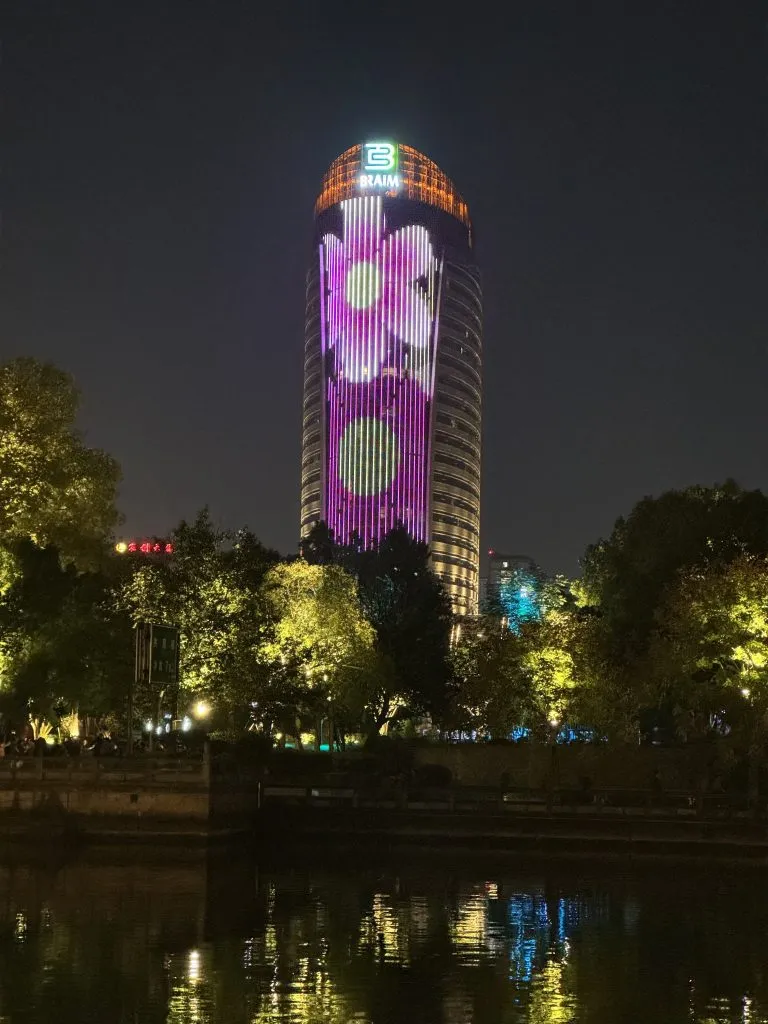
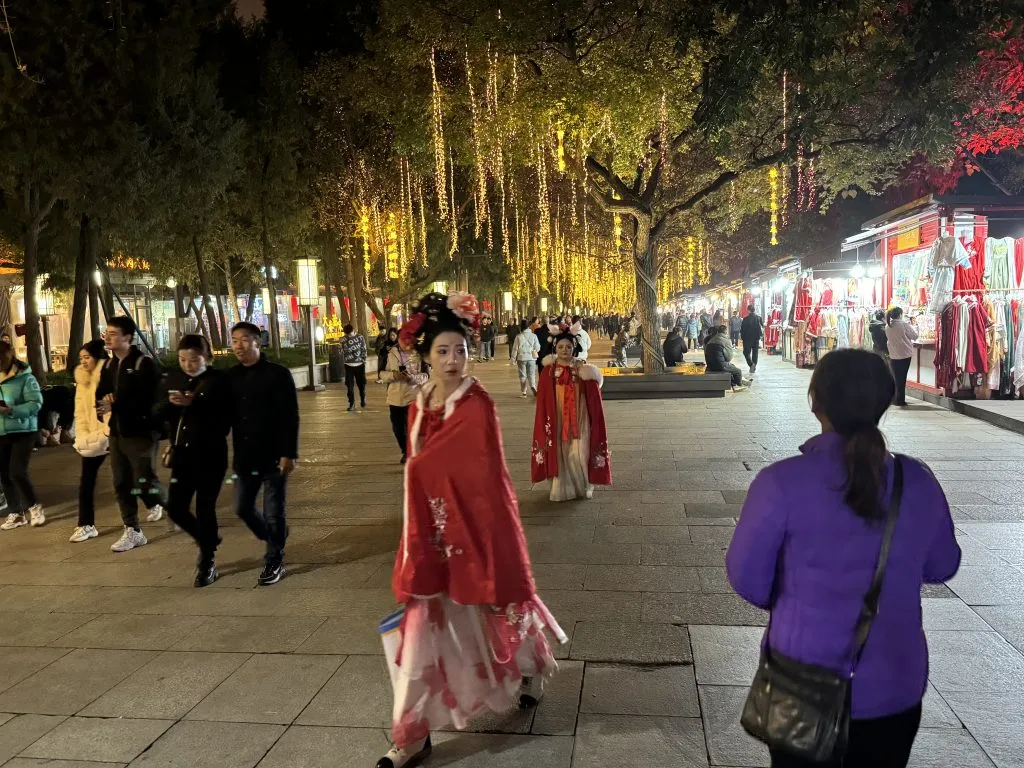
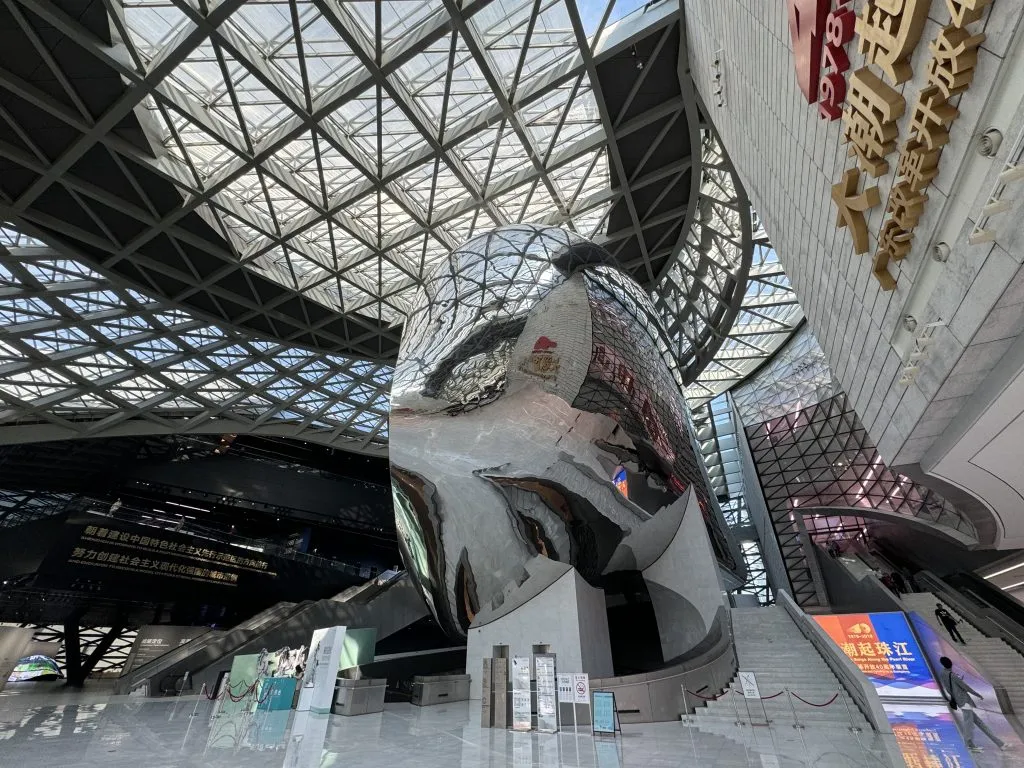
The Chinese cities I visited (three “smaller” ones, each with a population equivalent to five Macedonias) have enormous boulevards and skyscrapers similar to those in Dubai, yet they feel like a collection of small botanical gardens. If you thought Switzerland or Germany were the cleanest places in the world, then you haven’t been to China. Every single detail is interwoven with care for nature and respect for aesthetics. People are always smiling and ready to help, even if you’re a stranger (as if you’ve fallen from Mars).

That attitude of modesty, unobtrusiveness, kindness, and calmness both surprises and “unsettles” you, especially if you come from a disorganized country where everyone is a wolf to everyone else, where hate and distrust run deep.

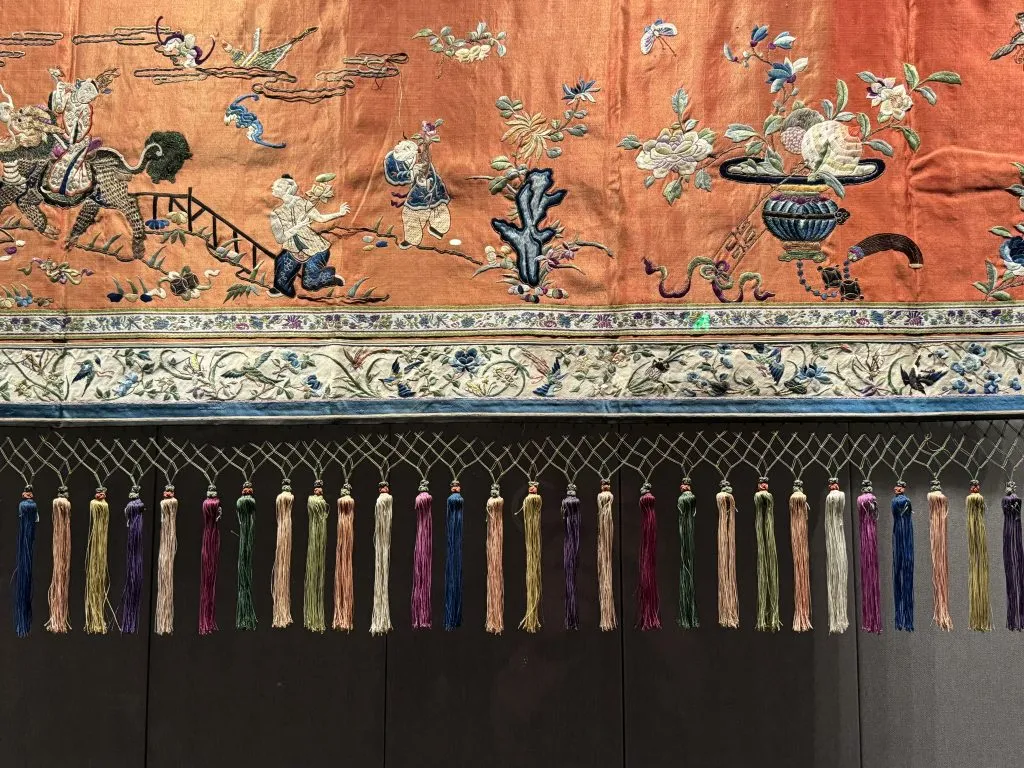
The conference addressed the serious questions of global peace, but through their actions, the Chinese hosts showed us how they understand and cultivate inner, or as we might say, positive peace: through hard work, development, care for one another, opportunities for youth, and respect for the elderly. This country has found a magical formula blending ancient civilizations, philosophies (of peace), and architecture with cutting-edge technology that is truly mind-blowing.

As a leftist, the second (and most important) thing that moved me was their attitude toward the recent past, which they celebrate as a 75-year struggle to build a modern Chinese state. There’s no hiding the fact that they started from dire poverty, hunger, underdevelopment, and post-war suffering. On the contrary, each new achievement, successful company, or factory (where workers only oversee hyper-modern robotic machines) highlights the period of hard work. It’s difficult to understand such respect for labor if you live in a country where the “cool” and successful people are outlaws, illiterates, scammers, and smugglers.

As someone older, it felt as if I could hear the echoes of an old song from “that time when we were China (or America)”: Long Live Labor (from the original “da nam živi, živi rad”). Companies in China also serve as small museums, where people are reminded daily of where they started, where they have arrived, and what they are striving toward.

There is a wealthy upper class in China—it’s not a classless society—but the fact that in less than 30 years, they have created a middle class and prosperity for over 400 million people (roughly the entire population of the EU, rich and poor included) is an achievement in itself. Yet, China doesn’t impose its wisdom, doesn’t blackmail, and doesn’t demand that others adopt its model. However, I read a slogan somewhere: “We hold the key to realizing the Chinese dream.” I understood that as a counterpart to the story, we’re still spinning about the “American dream”: you know, from those comic books where we learned about Disney’s Uncle Scrooge, who became a millionaire from a quarter—and a miser who revelled in his success.

The article continues below.

I’ve reached the end of the column, and I haven’t even scratched the surface of what I saw and experienced. China is a country that deserves to be studied, yet we lack strategic or cultural centres to research the multipolar world, other civilizations, and their worldviews. We behave like experimental mice, convinced that the Western cage is the ultimate happiness. And China? Even if we choose to ignore it, China is already in another time dimension—one we don’t even know how to dream about.

What I do know, however, is that we have friends there, with smiling faces and open hands for cooperation. All those phrases about “malign and malicious influences” that fact-checkers will inevitably slap onto my column are, in fact, deeply malicious—toward China, which is being wrongfully cast as an enemy.

On a personal level, my encounter with China broke open the hardened shell around my heart and memories of a bygone era, one where we too were good people, who desired peace at home and abroad, who knew what poverty was, who fought for a better tomorrow, and who stood in solidarity with Palestine and the oppressed, rather than siding with imperialists. This encounter with communist China took me back decades and reopened a reservoir of emotions for a country that once marched forward. A country that once was—and now is no more. On its remains, we are building a selfish world based on idleness, with no respect for the young or the old, and least for ourselves.

Happy Birthday, PR China! You have arrived “where no one has gone before”, to borrow a phrase from the famous series Star Trek, which takes place in the 24th century—a time with no wars, no hunger, no money, and no poverty of spirit or body.
One Response

Related Posts

Johan Galtung 1930-2024October 2015 Published here on October 3, 2026 Let us focus on Civilization for conflict analysis and remedies. Major forms of disorder use violence; war is state organized violence. The most belligerent states are the United States of America and Israel, both with civilization roots. National Evangelism, the US Protestant Christian civilization– more national than evangelical–justifies US warfare as exceptionalism of a people chosen by God, with a manifest destiny to run the world. Orthodox Judaism justifies Israeli warfare to conquer and expand from Nile to Euphrates as a religious right and duty to the Eternal One. The third most belligerent country, the UK, no longer believes it is God-chosen but chosen by the USA; not quite the same but something. But the root cause of global disorder lies in the Occident–with Islam–seeing itself as the single, universal civilization valid for all at all times, all others being...
Jan ObergPhD, director, The Transnational Foundation for Peace and Future Research, TFFLund, Sweden October 2, 2026 This is my full original manuscript. The Chinese Academy of Social Science, CASS, makes two publications out if it. 1. China’s Five-year plan emphasized the capabilities of basic research and original innovation. It is regarded as the goal of the future social development, which, as required, should be significantly enhanced. Can you comment on the importance of original innovation in research and academic study? I believe it is easier to define “original innovation” in the natural sciences than in social sciences. The breaking points of what constitutes something new, or innovative, are not quite as sharp in the latter. But in both fields it is about opening up something that was closed, unseen, unexplored before – making manifest what was earlier latent. Innovations come in many forms and shapes – naming something that was not...
The agreement is catastrophic both because of what it says and what it doesn’t mention. It reduces further the major asset of security policies: Freedom of action. Jan Oberg TFF director September 25, 2026 A couple of hours before the agreement was signed on September 22, 2026, I published the following 13 hypotheses about what it would most likely contain on TFF Substack (in English). I was wrong on only the first point. Contrary to what Trump had written on his Truth Social platform, it does not appear to come into force immediately. In fact, it turned out to be worse than even I had anticipated. After these hypotheses now come a number of reflections in light of what the agreement actually contains, and does not contain, as well as the way in which it has generally been presented by major media outlets and by the public-service broadcaster DR. My...

Recent Articles

Tony Robinson October 4, 2026 Violence is easy to recognise when someone is being beaten, shot or killed. It becomes more difficult when nobody is holding a weapon. Poverty, discrimination, exploitation and repression can restrict a human life just as effectively, although they do so in very different ways and with very different consequences. Simply adding more categories to an ever-growing list of forms of violence does not really solve the problem. The more interesting question is what all these different situations have in common and why it makes sense to describe them using the same word. Human beings do not simply react to what happens around them. They remember the past, imagine things that do not yet exist, make plans and undertake projects. Workers organise because they imagine different working conditions; people migrate because they imagine another life somewhere else; social movements emerge because people refuse to accept the...
It’s a matter of principles, courage, vision and pulling together – while the militarist world is falling apart… Peter Langille October 3, 2026 “Here, then, is the problem which we present to you, stark and dreadful and inescapable: Shall we put an end to the human race; or shall mankind renounce war?”The Bertrand Russell—Albert Einstein Manifesto, July 9, 1955 ⁕ The forecast for what’s ahead is worrisome. The sharp rise in armed conflicts over the past three years is adding to what was already the highest level in over seventy years. Genocides, which should be prevented are supported. A shared climate emergency that jeopardises survival is ignored. Diverse polls now suggest that people are war-weary, worried and interested in a more effective United Nations. And, there are viable policy options for a more secure world! Yet governments are doubling-down, betting on more war and investing heavily. If current trends persist,...
Johan Galtung 1930-2024October 2015 Published here on October 3, 2026 Let us focus on Civilization for conflict analysis and remedies. Major forms of disorder use violence; war is state organized violence. The most belligerent states are the United States of America and Israel, both with civilization roots. National Evangelism, the US Protestant Christian civilization– more national than evangelical–justifies US warfare as exceptionalism of a people chosen by God, with a manifest destiny to run the world. Orthodox Judaism justifies Israeli warfare to conquer and expand from Nile to Euphrates as a religious right and duty to the Eternal One. The third most belligerent country, the UK, no longer believes it is God-chosen but chosen by the USA; not quite the same but something. But the root cause of global disorder lies in the Occident–with Islam–seeing itself as the single, universal civilization valid for all at all times, all others being...

TFF on Substack

Discover and subscribe to more peace materials on TFF Substack

Most Popular

Tony Robinson October 4, 2026 Violence is easy to recognise when someone is being beaten, shot or killed. It becomes more difficult when nobody is holding a weapon. Poverty, discrimination, exploitation and repression can restrict a human life just as effectively, although they do so in very different ways and with very different consequences. Simply adding more categories to an ever-growing list of forms of violence does not really solve the problem. The more interesting question is what all these different situations have in common and why it makes sense to describe them using the same word. Human beings do not simply react to what happens around them. They remember the past, imagine things that do not yet exist, make plans and undertake projects. Workers organise because they imagine different working conditions; people migrate because they imagine another life somewhere else; social movements emerge because people refuse to accept the...
It’s a matter of principles, courage, vision and pulling together – while the militarist world is falling apart… Peter Langille October 3, 2026 “Here, then, is the problem which we present to you, stark and dreadful and inescapable: Shall we put an end to the human race; or shall mankind renounce war?”The Bertrand Russell—Albert Einstein Manifesto, July 9, 1955 ⁕ The forecast for what’s ahead is worrisome. The sharp rise in armed conflicts over the past three years is adding to what was already the highest level in over seventy years. Genocides, which should be prevented are supported. A shared climate emergency that jeopardises survival is ignored. Diverse polls now suggest that people are war-weary, worried and interested in a more effective United Nations. And, there are viable policy options for a more secure world! Yet governments are doubling-down, betting on more war and investing heavily. If current trends persist,...
Johan Galtung 1930-2024October 2015 Published here on October 3, 2026 Let us focus on Civilization for conflict analysis and remedies. Major forms of disorder use violence; war is state organized violence. The most belligerent states are the United States of America and Israel, both with civilization roots. National Evangelism, the US Protestant Christian civilization– more national than evangelical–justifies US warfare as exceptionalism of a people chosen by God, with a manifest destiny to run the world. Orthodox Judaism justifies Israeli warfare to conquer and expand from Nile to Euphrates as a religious right and duty to the Eternal One. The third most belligerent country, the UK, no longer believes it is God-chosen but chosen by the USA; not quite the same but something. But the root cause of global disorder lies in the Occident–with Islam–seeing itself as the single, universal civilization valid for all at all times, all others being...
Read More
Living-Peace-Sign-Budapest-copy
Tony Robinson October 4, 2026 Violence is easy to recognise when someone is being beaten, shot or killed. It becomes more difficult when nobody is holding a weapon. Poverty, discrimination, exploitation and repression can restrict a human life just as effectively, although they do so in very different ways and with very different consequences. Simply adding more categories to an ever-growing list of forms of violence does not really solve the problem. The more interesting question is what all these different situations have in common and why it makes sense to describe them using the same word. Human beings do not simply react to what happens around them. They remember the past, imagine things that do not yet exist, make plans and undertake projects. Workers organise because they imagine different working conditions; people migrate because they imagine another life somewhere else; social movements emerge because people refuse to accept the...
b54a1f10-8c65-4f0b-9dd5-4abc0a7d04cc_2659x2659
It’s a matter of principles, courage, vision and pulling together – while the militarist world is falling apart… Peter Langille October 3, 2026 “Here, then, is the problem which we present to you, stark and dreadful and inescapable: Shall we put an end to the human race; or shall mankind renounce war?”The Bertrand Russell—Albert Einstein Manifesto, July 9, 1955 ⁕ The forecast for what’s ahead is worrisome. The sharp rise in armed conflicts over the past three years is adding to what was already the highest level in over seventy years. Genocides, which should be prevented are supported. A shared climate emergency that jeopardises survival is ignored. Diverse polls now suggest that people are war-weary, worried and interested in a more effective United Nations. And, there are viable policy options for a more secure world! Yet governments are doubling-down, betting on more war and investing heavily. If current trends persist,...
010
Johan Galtung 1930-2024October 2015 Published here on October 3, 2026 Let us focus on Civilization for conflict analysis and remedies. Major forms of disorder use violence; war is state organized violence. The most belligerent states are the United States of America and Israel, both with civilization roots. National Evangelism, the US Protestant Christian civilization– more national than evangelical–justifies US warfare as exceptionalism of a people chosen by God, with a manifest destiny to run the world. Orthodox Judaism justifies Israeli warfare to conquer and expand from Nile to Euphrates as a religious right and duty to the Eternal One. The third most belligerent country, the UK, no longer believes it is God-chosen but chosen by the USA; not quite the same but something. But the root cause of global disorder lies in the Occident–with Islam–seeing itself as the single, universal civilization valid for all at all times, all others being...
Screenshot 2026-10-02 011738
Jan ObergPhD, director, The Transnational Foundation for Peace and Future Research, TFFLund, Sweden October 2, 2026 This is my full original manuscript. The Chinese Academy of Social Science, CASS, makes two publications out if it. 1. China’s Five-year plan emphasized the capabilities of basic research and original innovation. It is regarded as the goal of the future social development, which, as required, should be significantly enhanced. Can you comment on the importance of original innovation in research and academic study? I believe it is easier to define “original innovation” in the natural sciences than in social sciences. The breaking points of what constitutes something new, or innovative, are not quite as sharp in the latter. But in both fields it is about opening up something that was closed, unseen, unexplored before – making manifest what was earlier latent. Innovations come in many forms and shapes – naming something that was not...
arctic-circle-map
The agreement is catastrophic both because of what it says and what it doesn’t mention. It reduces further the major asset of security policies: Freedom of action. Jan Oberg TFF director September 25, 2026 A couple of hours before the agreement was signed on September 22, 2026, I published the following 13 hypotheses about what it would most likely contain on TFF Substack (in English). I was wrong on only the first point. Contrary to what Trump had written on his Truth Social platform, it does not appear to come into force immediately. In fact, it turned out to be worse than even I had anticipated. After these hypotheses now come a number of reflections in light of what the agreement actually contains, and does not contain, as well as the way in which it has generally been presented by major media outlets and by the public-service broadcaster DR. My...
girl-5894831_1280
Below are TFF-related media mentions, comments, videos and social media posts published elsewhere but not on this homepage. We happen to catch and list only a fraction. Regarding video comments and debates, we recommend that you go to the TFF Video Channel on Substack where many of them are reproduced. Jan Oberg is a contributor to China Daily – 52 million daily clicks – and Global Times, CGTN and CCTV (the national television), China Investment, Xinhua News Agency and several others. Articles and videos on these media very often multiply into countless Chinese (and Western media) that re-post them from these main media. Thanks to The China Academy, his analyses, interviews and comments are frequently posted on YouTube channels such as Thinkers Forum and Wave Media. These videos are often re-posted on Bilibili (China’s YouTube), the China Content Center on TikTok, and on the Chinese edition of TikTok, Douyin.com. This means reaching hundreds of millions of viewers worldwide over a year. While there are too many to catch on all these...