Easter Island Rapa Nui

“Best wishes for the Season,” we easily write and read these days. So let us reflect on religare, reconnect between that out there and that in here, in us, for globalizing truths.

A few years ago, these unpublished lines for the Season were written in the Pacific, under a cloudless sky, with waves peaking, with white foam at the top.

Rapa Nui, Easter Island was on the horizon, one of these places where the creation of humans looks about as old as God himself and human beings have not yet been able to pollute (deplete, yes!) everything.  Gratitude is seeping in, attaching itself to good emotions in body, mind and spirit. Happiness is the word, some kind of release. Sukha is the word in the Hindu-Buddhist tradition. Further out is nirvana, the dissolution at the end of the pilgrim’s journey.

First published on Transcend Media Service, TMS, on July 8, 2024.
Presumably written in 2007. Thoughts like these are developed further in Galtung and MacQueen, Globalizing God – Religion, Spirituality and Peace, Transcend University Press 2008.

I was sitting in a little niche of happiness, PeaceBoat, a Japanese NGO endeavor to combine cruises around the world with efforts to understand the countless conflicts so as to bring in peace. In the wake of those conflicts follow violence and traumas on the body and on the mind, suffering, dukkha in the hindu-buddhist tradition.

Right now, we witness one of the worst habits of humanity, revenge and retaliation, with September 11, 2001, as retaliation for the injustice to the Arabs; and the Oct 7, 2001, war in Afghanistan as retaliation for that retaliation. Coming up is, of course, the retaliation for that retaliation, with nuclear weapons under the surface, possibly on both sides. Both have Armageddon as part of their religious tradition; the Day of Judgment. Both think they have the mandate of God/Alla’h in order to exercise that judgment over others. Where is hope?

Religion can be hard and soft and gentle, and any religion is a tissue with hard and soft strands, where the fundamentalists are playing on the hard. Religare sounds fine. But how?

Any Only One “out there” is also a carrier of the tissue woven by hard and soft strands. Good News: there are several of them. Religious texts are depositories of human release and suffering, efforts to make sense of the human condition, with many answers. I am approaching them all, and with humility.

My interest in peace steers me towards the soft answers, and finding soft, gentle wisdom, for the Season, all over. More precisely:

In Hinduism a trinity between creation, preservation and destruction, as a will to create more of that which brings sukha in its wake, preserve that which can be proven to have sukha in it, and destroy that which has mainly dukkha in its wake.

In Buddhism a strong belief in ahimsa, non-violence, as the method to obtain all of this. And a faith in engi, that everything is related, that we are in the same boat, that we share responsibility for everything that happens through what we do, and equally importantly, through what we fail to do, the acts of commission as well as the acts of omission.

In Daoism the deep, dialectic insight that good and evil do not come in two clearly divided packages but that the good can contain something evil, and the evil something good.

In Christianity two important sources of inspiration – the hope that there is a glitter of light out there, and the focus on personal responsibility, that what counts is you and your own decisions; do not blame others.

In Islam the faith in solidarity, to submit together to the collective yearning for peace and Sura 8:61: when your adversary inclines toward peace, you shall do the same.

And from Judaism I fetch the faith in dialogue, that truth is not available in a ready-made text but in the process, in the words we create together, and then together, again. And again.

All of this can flow together into a higher unity, together with soft humanism – not the hard humanism of neo-liberal capitalism or Marxist, state socialism.

I can identify with all of this, and more. And feel not only happy but also immensely rich and enriched.

Poor is he who denies himself access to the wisdom of others, constrained to the meager diet of the hard variety of his own faith only.

Glory to Mother Earth. Glory to the rich human spirit.
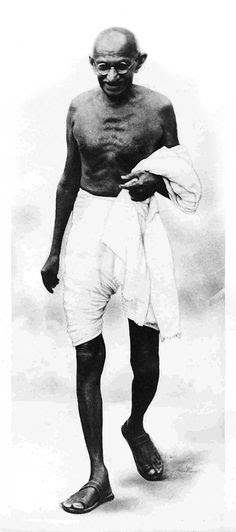
And glory to that little brown man in the loincloth, Gandhi, who practiced all these gems of wisdom in one miraculous life.

Why do we as humankind accept this miserable killing match between dictatorships with very hard, fundamentalist faiths and oil deep down in the guts of their soil and an oil-addicted democracy with a crumbling empire, equally fundamentalist, both invoking their gods as if they were given a divine mandate? In the name of Alla’h, in the name of God, in the name of Oil.

I do not think any creator of the world and human beings did so for us to kill each other and together kill Mother Earth. Both could have learnt a lesson from that small brown man to whom God = Love = Truth: the truth of a more modest, more just economy, more equity with respect to the environment, and the truth of non-violent struggle.

Gandhi, an Indian, a Hindu, a Buddhist; often a better Christian than many Christians and better Muslim than many Muslims and a better Jew, Hindu, Daoist, Buddhist. How? Why?

Because he let himself be inspired by them all. And became a guiding light for us all – in one person.

If only his light could also shine inside us, not only for us.
Related Posts

A Message from Jan Oberg November 6, 2026 Over the past fifty years, I have devoted roughly 175,000 hours to research and public education for a more peaceful world: thinking, researching, writing, organising, publishing, debating, maintaining websites, corresponding, reaching out, leading a foundation, work in conflict and war zones, professorships, teaching courses and giving public lectures and doing media work. In short, ten hours a day, seven days a week, for half a century. The focus was on international political peace – analysing and trying to stop wars, address underlying conflicts and making alternative peace plans – at the desk and on the ground. Important as that has been and remains, it is only one kind of peace and it is now in a tragic militarist state compared with what it could have been.  Lately, however, I have found myself thinking about a concept from economics as well as everyday...
Photo above: Carl Fredrik Reuterswärd’s Non-Violence outside UN Headquarters in New York. Kirill Levin, CC BY-NC-SA 2. Jan Oberg November 3, 2026 I am happy to be published in Horizons which is produced by the Center for International Relations and Sustainable Development, CIRSD, in Belgrade. My contribution brings out a radical re-thinking of what concepts such as defence, security, deterrence – and peace – may mean if we want to create a more peaceful world. It also summarises a few things I have been working with the last few decades. Please read it here Og her er den på dansk, takket være Johnny Baltzersens lynhurtige oversættelse
UNITE-tillid, DREAM-velstand og andre konstruktive komponenter Normally we publish articles in English here. But this is a translation of a very important TFF document that should reach as many as possible in Denmark since this country’s government has been one of the most hardline in Europe and, up till now at least, has refused to use diplomacy and, instead, spent tremendous sums on arming Ukraine with the express goal of defeating Russia. Thus this – unique – article is in Danish. Vi er Johnny Baltzersen og hans Fælles Sikkerhed – Fælles Fremtid på Substack overmåde taknemmelige for at have oversat og publiceret TFF’s 2025-portfølje for fredsidéer med henblik på Ukraines fremtid. Vi håber den nu kan nå mange flere danskere – som også vil sprede den og skabe debat – nu den danske regerings og folketingspartiernes politik på dette område siden 2022 står nu – forudsigeligt – ved vejs ende....

Recent Articles

Serious but also a lot of laughs and positive energy. Because peace is also about conviviality and enchantment… Jan Oberg, TFF director November 16, 2026 This is a long (129 minutes) conversation with me. We cover very many, also personal, issues that makes a somewhat unusual media event. I am very grateful to Flemming Blicher for giving me this opportunity. I can’t remember any channel or editor who spent as much time as he did preparing it – including also asking me to answer a series of pre-interview questions, which are now posted under the conversation. If you sympathise with its content, please share it. Watch it here
A Message from Jan Oberg November 6, 2026 Over the past fifty years, I have devoted roughly 175,000 hours to research and public education for a more peaceful world: thinking, researching, writing, organising, publishing, debating, maintaining websites, corresponding, reaching out, leading a foundation, work in conflict and war zones, professorships, teaching courses and giving public lectures and doing media work. In short, ten hours a day, seven days a week, for half a century. The focus was on international political peace – analysing and trying to stop wars, address underlying conflicts and making alternative peace plans – at the desk and on the ground. Important as that has been and remains, it is only one kind of peace and it is now in a tragic militarist state compared with what it could have been.  Lately, however, I have found myself thinking about a concept from economics as well as everyday...
Photo above: Carl Fredrik Reuterswärd’s Non-Violence outside UN Headquarters in New York. Kirill Levin, CC BY-NC-SA 2. Jan Oberg November 3, 2026 I am happy to be published in Horizons which is produced by the Center for International Relations and Sustainable Development, CIRSD, in Belgrade. My contribution brings out a radical re-thinking of what concepts such as defence, security, deterrence – and peace – may mean if we want to create a more peaceful world. It also summarises a few things I have been working with the last few decades. Please read it here Og her er den på dansk, takket være Johnny Baltzersens lynhurtige oversættelse

TFF on Substack

Discover and subscribe to more peace materials on TFF Substack

Most Popular

Serious but also a lot of laughs and positive energy. Because peace is also about conviviality and enchantment… Jan Oberg, TFF director November 16, 2026 This is a long (129 minutes) conversation with me. We cover very many, also personal, issues that makes a somewhat unusual media event. I am very grateful to Flemming Blicher for giving me this opportunity. I can’t remember any channel or editor who spent as much time as he did preparing it – including also asking me to answer a series of pre-interview questions, which are now posted under the conversation. If you sympathise with its content, please share it. Watch it here
A Message from Jan Oberg November 6, 2026 Over the past fifty years, I have devoted roughly 175,000 hours to research and public education for a more peaceful world: thinking, researching, writing, organising, publishing, debating, maintaining websites, corresponding, reaching out, leading a foundation, work in conflict and war zones, professorships, teaching courses and giving public lectures and doing media work. In short, ten hours a day, seven days a week, for half a century. The focus was on international political peace – analysing and trying to stop wars, address underlying conflicts and making alternative peace plans – at the desk and on the ground. Important as that has been and remains, it is only one kind of peace and it is now in a tragic militarist state compared with what it could have been.  Lately, however, I have found myself thinking about a concept from economics as well as everyday...
Photo above: Carl Fredrik Reuterswärd’s Non-Violence outside UN Headquarters in New York. Kirill Levin, CC BY-NC-SA 2. Jan Oberg November 3, 2026 I am happy to be published in Horizons which is produced by the Center for International Relations and Sustainable Development, CIRSD, in Belgrade. My contribution brings out a radical re-thinking of what concepts such as defence, security, deterrence – and peace – may mean if we want to create a more peaceful world. It also summarises a few things I have been working with the last few decades. Please read it here Og her er den på dansk, takket være Johnny Baltzersens lynhurtige oversættelse
Read More
Screenshot 2026-11-10 174455
Serious but also a lot of laughs and positive energy. Because peace is also about conviviality and enchantment… Jan Oberg, TFF director November 16, 2026 This is a long (129 minutes) conversation with me. We cover very many, also personal, issues that makes a somewhat unusual media event. I am very grateful to Flemming Blicher for giving me this opportunity. I can’t remember any channel or editor who spent as much time as he did preparing it – including also asking me to answer a series of pre-interview questions, which are now posted under the conversation. If you sympathise with its content, please share it. Watch it here
AbstractVision_2017_#1_800 (kopia)
A Message from Jan Oberg November 6, 2026 Over the past fifty years, I have devoted roughly 175,000 hours to research and public education for a more peaceful world: thinking, researching, writing, organising, publishing, debating, maintaining websites, corresponding, reaching out, leading a foundation, work in conflict and war zones, professorships, teaching courses and giving public lectures and doing media work. In short, ten hours a day, seven days a week, for half a century. The focus was on international political peace – analysing and trying to stop wars, address underlying conflicts and making alternative peace plans – at the desk and on the ground. Important as that has been and remains, it is only one kind of peace and it is now in a tragic militarist state compared with what it could have been.  Lately, however, I have found myself thinking about a concept from economics as well as everyday...
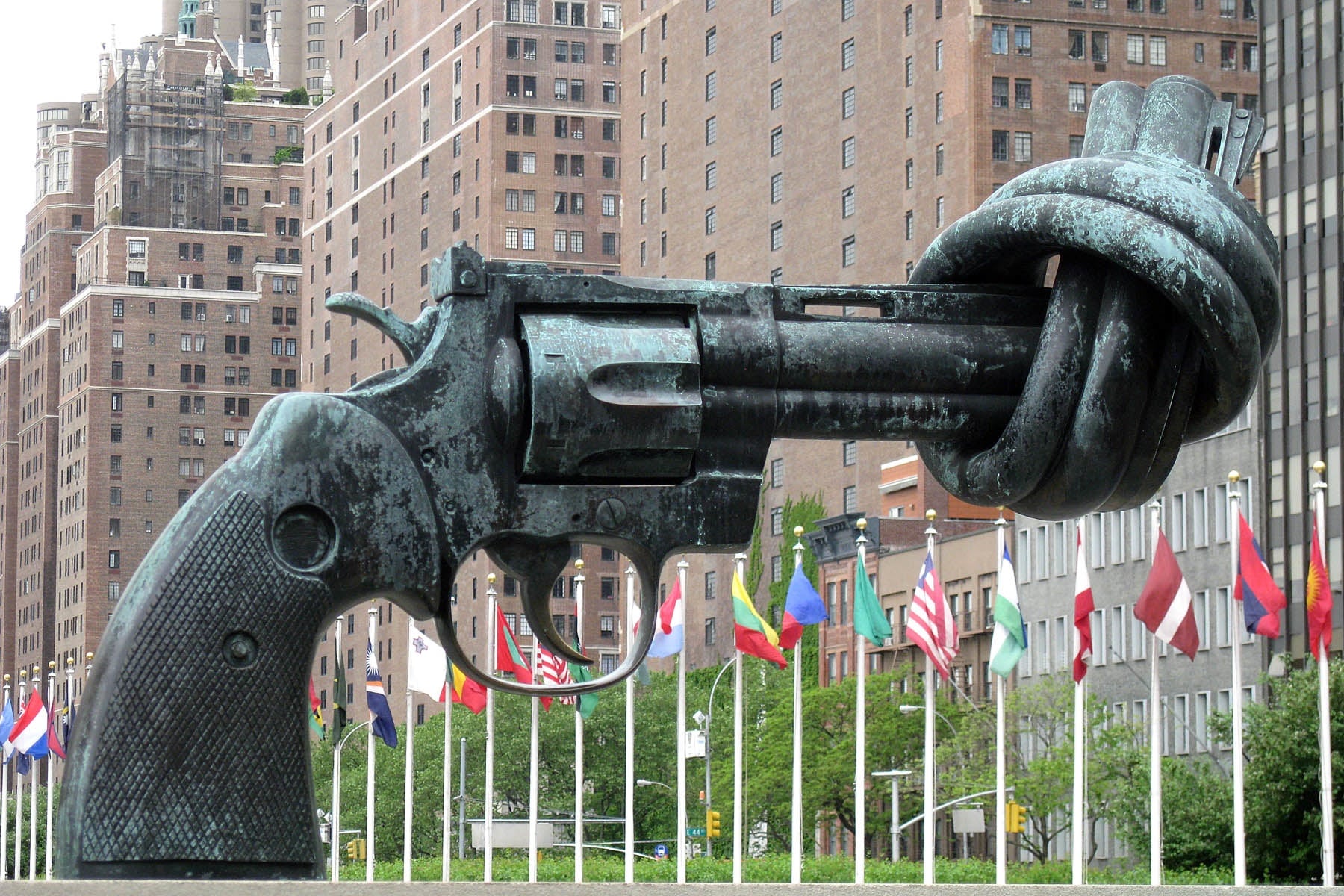
knotted gun
Photo above: Carl Fredrik Reuterswärd’s Non-Violence outside UN Headquarters in New York. Kirill Levin, CC BY-NC-SA 2. Jan Oberg November 3, 2026 I am happy to be published in Horizons which is produced by the Center for International Relations and Sustainable Development, CIRSD, in Belgrade. My contribution brings out a radical re-thinking of what concepts such as defence, security, deterrence – and peace – may mean if we want to create a more peaceful world. It also summarises a few things I have been working with the last few decades. Please read it here Og her er den på dansk, takket være Johnny Baltzersens lynhurtige oversættelse
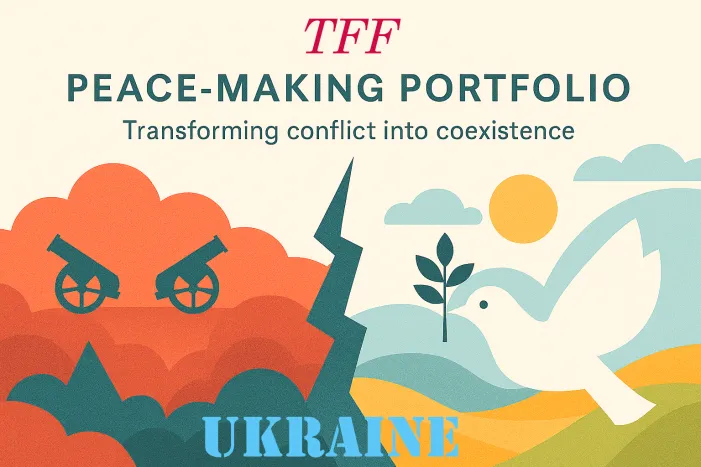
TFFPortfolioVign
UNITE-tillid, DREAM-velstand og andre konstruktive komponenter Normally we publish articles in English here. But this is a translation of a very important TFF document that should reach as many as possible in Denmark since this country’s government has been one of the most hardline in Europe and, up till now at least, has refused to use diplomacy and, instead, spent tremendous sums on arming Ukraine with the express goal of defeating Russia. Thus this – unique – article is in Danish. Vi er Johnny Baltzersen og hans Fælles Sikkerhed – Fælles Fremtid på Substack overmåde taknemmelige for at have oversat og publiceret TFF’s 2025-portfølje for fredsidéer med henblik på Ukraines fremtid. Vi håber den nu kan nå mange flere danskere – som også vil sprede den og skabe debat – nu den danske regerings og folketingspartiernes politik på dette område siden 2022 står nu – forudsigeligt – ved vejs ende....
JoGSS-Silent
Jan Oberg TFF director October 28, 2026 Exactly one month has now passed since I published my criticism of the introduction to the special issue on Johan Galtung published by the Journal of Global Security Studies, JoGSS, and of Tor Egil Førland’s chapter about Galtung which serves as a preview to his forthcoming biography of Galtung to be published by PRIO. See the original on The Transnational here and the same article on TFF Substack with many general and critical comments and, in particular, the people who decided to withdraw from the biography project in protest. The special issue itself was extraordinary. It was devoted to the intellectual legacy of one of the founders of peace research and contained a number of strong assessments of his personality, scholarship, intellectual trajectory, and public role. Such assessments are, of course, entirely legitimate. No scholar is beyond criticism, and neither was Johan Galtung....
Screenshot 2026-10-26 115647
An aspect of Iran’s culture and civilisation you’ve probably never heard about. Don’t be surprised if the US and Israel also try to bomb them. Jan ObergTFF director October 26, 2026 Today – under the “USraeli” threat of new “annihilating” bombings – opens the 7th International Conference on Peace and Conflict Resolution at Tehran’s University. As far as I can tell, this is the only permanent, advanced peace research institution in West Asia/the Middle East. Perhaps more countries in that region could be inspired? I mean, how many military “security” institutes and military academies do they have? Many peace research institutes and university departments have been established since the 1950s in the West. They are now all under attack; some have closed down, some have gone mainstream, yet others kept the name but do nothing to research peace and disseminate results or advice; instead, they cooperate with militarism’s platforms such...