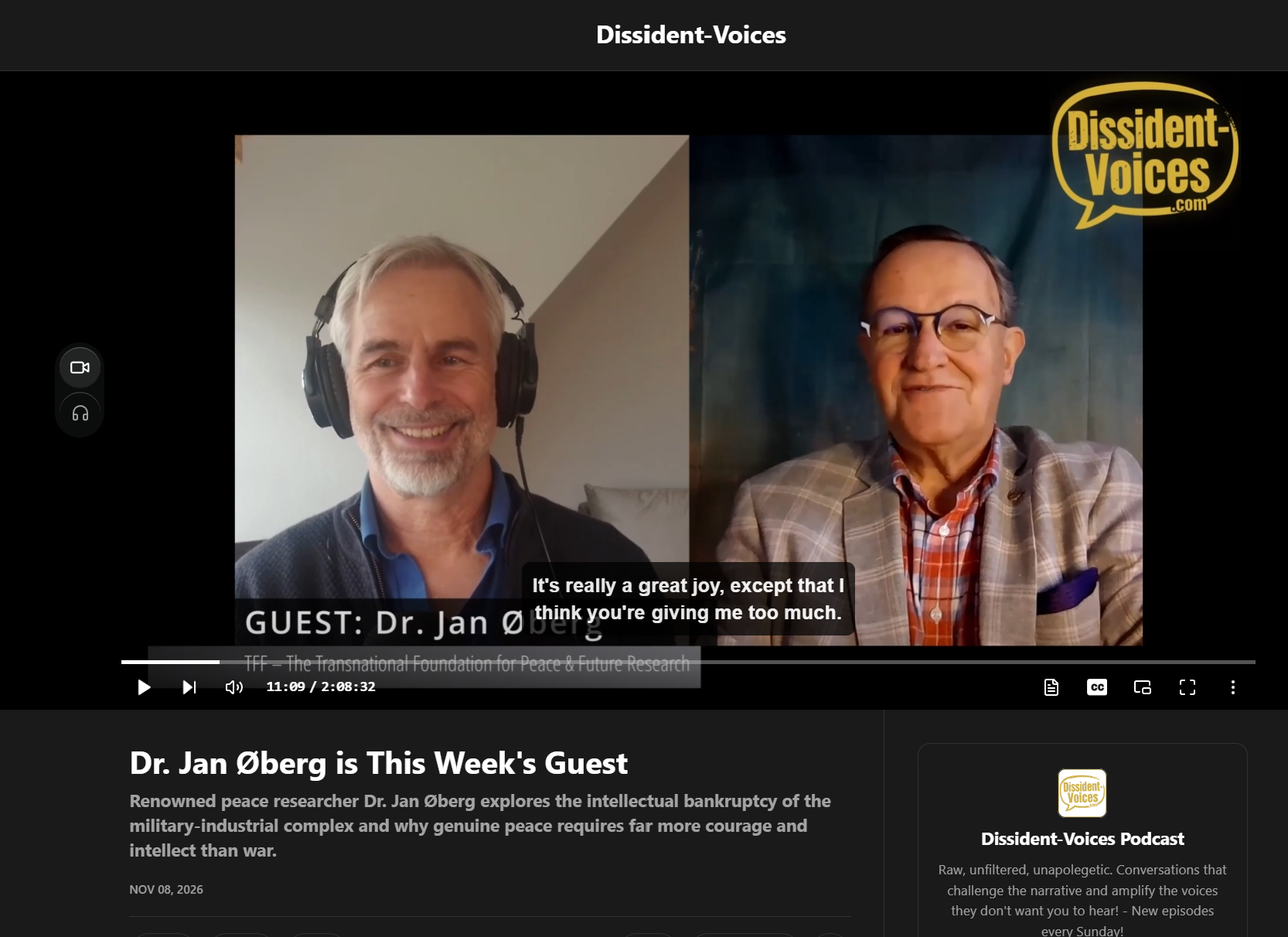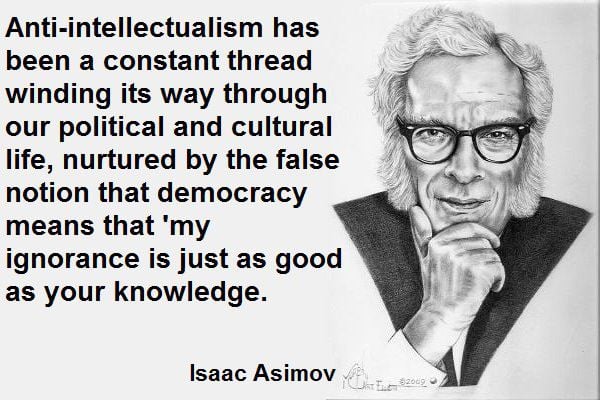
Jan Oberg: Listen to Kissinger and CIA’s Burns and compare with populist platitudes

Jan Oberg

May 19, 2022

This short article aims to merely illustrate – not prove – the difference between security political intellectualism and ignorance. It does not focus on peace – theories, ideas, concept or policies – simply because none of the personalities appearing below are in the business of peace.

By means of some videos, I aim to illustrate the differences between security political intellectualism and the kind of populist rhetorics that has become so widespread. Weapons have been around for decades but mostly managed by elites who operated within some kind of intellectual framework – agreeing or not agreeing with its characteristics is not the point here.

Most people who conducted security politics decades ago were well-educated and experienced compared with most of today’s security political decision-makers.

This overall intellectual disarmament coupled to ever-higher levels of military armament and the recent talk about the use of nuclear weapons creates a new and extremely dangerous reality for us all.

Recently, the Financial Times published two important interviews – one with Dr Henry Kissinger and one with the CIA’s present director, William J Burns. The conversations circle around the NATO-Russia conflict and the war in Ukraine – but certainly also the image of China and what role China plays – or should play – in the US foreign policy thinking

Here is Henry Kissinger, born in 1923 and, thus, almost 99 years old when speaking here:

You may also like to see this short one where Kissinger talks about what must be done to avoid armed conflict with China:

And here is William Burns, born in 1956 and with a very diverse career in US foreign policy; – he is a tremendous improvement from his fundamentalist Christian charlatan predecessor, Mike Pompeo:

And here Burns gives a 30 min lecture without manuscript or notes, covering US relations with Asia/China, Russia and the Middle East – a delightful geo-political grasp of the bigger picture. It’s from 2018.

It is not that he has one word of criticism of the US itself – except when it comes to Trump, the president at the time he spoke. But there is a knowledge and clarity that makes one wish to debate with him.

Regrettably, with most of today’s European leaders, one would hardly feel it meaningful.

Given what they stand for, neither Kissinger nor Burns is – so to speak – my cup of tea. However, in an era in which every discourse of peace has disappeared – or, been disappeared – perhaps some people might listen to people like Kissinger and Burns whose profession has always been more war than peace – but on a solid intellectual foundation?

Their cohesive way of reasoning in a low voice – Kissinger in particular with his world perspective and geo-political professionalism and both with a larger perspective – contrasts most of those who make security political decisions today who often display a frightening lack of knowledge, conceptual foundation and ability to look at things in a larger perspective – time as well as space.

There is a clarity of mind growing out of a reservoir of comprehensive knowledge and personal experience. There is no manuscript, no uhs, ums or likes, no pauses or contradictions. What is said is integrated, consolidated.

These two foreign policy experts never sink to the level of populist rhetorics and know-nothingism.

•

Sadly, that is what we’ve just witnessed several European politicians, including NATO S-G Jens Stoltenberg and Sweden’s and Finland’s prime ministers at their decision to join the alliance, do. The same applies to most of those who have shaped the EU/NATO response to Russia’s war on Ukraine. Some of it is close to embarrassing, offensive to the intelligence of the average citizens.

When the Swedish government had decided to apply, prime minister Magdalena Andersson argued on May 16, 2022, that “while there might be things we Swedes disagree about, there is one thing we all share: We want to live in this free and democratic Sweden that we all love so much. That is a Sweden that is worth defending, and Sweden is best defended inside NATO.”

In other words and quite absurdly: Since the Swedes love their country, the government wants to join NATO to protect it. Why on earth Sweden that has been non-aligned for more than 200 years suddenly joins NATO cannot possibly be explained by such irrelevant marketing gibberish.

Here is a video from about three weeks before the two countries joined under the two female PMs leadership. It seems difficult to find a sentence which is based on some kind of intellectual substance. Most of it comes closer to a middle school essay.

Such populist rhetorics defies every sense of analyses and serious arguments pro et contra. Platitutes can hardly be disputed and, so, every intellectualism has disappeared.

Why is that, by and large, European politicians can’t do it better than this?

This type of superficiality, the lack of grounding in a rational analysis and a principled policy, makes it possible – if not likely – that standpoints can easily be changed.

For instance, as late as in January the Finnish PM, Sanna Marin, said it would be “very unlikely” Finland would apply for a NATO membership during her term in office. (While Russia’s invasion of Ukraine took place on February 24, it was still a very tense situation in which she stated that). Euractive adds that “It is also widely accepted in Finland that a referendum should precede a NATO application. For the first time, fewer than half (42%) oppose NATO membership, while 28% have said they are ready to join.”

Compare that with her harsh, almost Russophobic rhetorics in this interview in May 2022.

•

Back to both Burns and Kissinger. They both seem keenly aware of the dangers humanity is facing – while of course not stating that the present situation, to a high degree, has been caused by their own country and by NATO.

Note also that both consider China the by far most serious adversary of the United States. And, therefore, that there is a larger perspective on the war in Ukraine. I believe Burns is getting it wrong when it comes to President Xi Jinping’s/China’s perception of the Ukraine war – and wrongly leaves out its much stronger opposition to NATO’s expansion and what conclusions China will draw from that concerning Taiwan and other issues.

Interesting is also Kissinger’s emphasis on how counterproductive it would be – actually, is – for the United States to behave in a way that makes Russia and China come more strongly together against the US. One does not get the impression that there are any NATO or EU decision-makers who have looked that far in time and space while meting out the punishment of Russia right after its invasion of Ukraine.

Neither does it seem that the US itself has the faintest idea that its consistent Cold War policy – which TFF has documented in “Behind the Smokescreen. An Analysis of the West’s Destructive Cold War Agenda and Why It Must Stop” (2021) – now coupled with its attempt to make Ukraine a full NATO member could have that effect and tying a series of countries such as Russia, India, Iran, China as well as the larger part of the Middle East and Africa closer together.

In summary, let’s not forget that the most important division these years is hardly between different informed opinions but between those who know and those who are ignorant. In my view, the latter have the upper hand at this phase of the West’s decline.

And that is dangerous. Dangerous as hell.

An associated bonus video

If this article gave you food for thought and even action,
please show your gratitude by donating a small sum, like a cup of coffee.

Go here – It is extremely simple, quick and secure. Many thanks!

PhD, Peace & future researcher + ‌Art Photographer, Professor Emeritus and media commentator

One Response

  1. I suggest that Swedens present NATO application only can be the result of a puppet-led prime minister. I mean, Sweden (and Finland) have survived as neutral states “against USSR and Russia” since the creation of NATO in 1948. The 60ies and 70ies were “much more dangerous times” than now where Russia is no threat. The power elites (MIMAC) are puppet-leading the “US-government”, which again is puppet-leading the West European governments. Possible because of intellectual disarmament;-)

Related Posts

A Message from Jan Oberg November 6, 2026 Over the past fifty years, I have devoted roughly 175,000 hours to research and public education for a more peaceful world: thinking, researching, writing, organising, publishing, debating, maintaining websites, corresponding, reaching out, leading a foundation, work in conflict and war zones, professorships, teaching courses and giving public lectures and doing media work. In short, ten hours a day, seven days a week, for half a century. The focus was on international political peace – analysing and trying to stop wars, address underlying conflicts and making alternative peace plans – at the desk and on the ground. Important as that has been and remains, it is only one kind of peace and it is now in a tragic militarist state compared with what it could have been.  Lately, however, I have found myself thinking about a concept from economics as well as everyday...
Photo above: Carl Fredrik Reuterswärd’s Non-Violence outside UN Headquarters in New York. Kirill Levin, CC BY-NC-SA 2. Jan Oberg November 3, 2026 I am happy to be published in Horizons which is produced by the Center for International Relations and Sustainable Development, CIRSD, in Belgrade. My contribution brings out a radical re-thinking of what concepts such as defence, security, deterrence – and peace – may mean if we want to create a more peaceful world. It also summarises a few things I have been working with the last few decades. Please read it here Og her er den på dansk, takket være Johnny Baltzersens lynhurtige oversættelse
UNITE-tillid, DREAM-velstand og andre konstruktive komponenter Normally we publish articles in English here. But this is a translation of a very important TFF document that should reach as many as possible in Denmark since this country’s government has been one of the most hardline in Europe and, up till now at least, has refused to use diplomacy and, instead, spent tremendous sums on arming Ukraine with the express goal of defeating Russia. Thus this – unique – article is in Danish. Vi er Johnny Baltzersen og hans Fælles Sikkerhed – Fælles Fremtid på Substack overmåde taknemmelige for at have oversat og publiceret TFF’s 2025-portfølje for fredsidéer med henblik på Ukraines fremtid. Vi håber den nu kan nå mange flere danskere – som også vil sprede den og skabe debat – nu den danske regerings og folketingspartiernes politik på dette område siden 2022 står nu – forudsigeligt – ved vejs ende....

Recent Articles

Serious but also a lot of laughs and positive energy. Because peace is also about conviviality and enchantment… Jan Oberg, TFF director November 16, 2026 This is a long (129 minutes) conversation with me. We cover very many, also personal, issues that makes a somewhat unusual media event. I am very grateful to Flemming Blicher for giving me this opportunity. I can’t remember any channel or editor who spent as much time as he did preparing it – including also asking me to answer a series of pre-interview questions, which are now posted under the conversation. If you sympathise with its content, please share it. Watch it here
A Message from Jan Oberg November 6, 2026 Over the past fifty years, I have devoted roughly 175,000 hours to research and public education for a more peaceful world: thinking, researching, writing, organising, publishing, debating, maintaining websites, corresponding, reaching out, leading a foundation, work in conflict and war zones, professorships, teaching courses and giving public lectures and doing media work. In short, ten hours a day, seven days a week, for half a century. The focus was on international political peace – analysing and trying to stop wars, address underlying conflicts and making alternative peace plans – at the desk and on the ground. Important as that has been and remains, it is only one kind of peace and it is now in a tragic militarist state compared with what it could have been.  Lately, however, I have found myself thinking about a concept from economics as well as everyday...
Photo above: Carl Fredrik Reuterswärd’s Non-Violence outside UN Headquarters in New York. Kirill Levin, CC BY-NC-SA 2. Jan Oberg November 3, 2026 I am happy to be published in Horizons which is produced by the Center for International Relations and Sustainable Development, CIRSD, in Belgrade. My contribution brings out a radical re-thinking of what concepts such as defence, security, deterrence – and peace – may mean if we want to create a more peaceful world. It also summarises a few things I have been working with the last few decades. Please read it here Og her er den på dansk, takket være Johnny Baltzersens lynhurtige oversættelse

TFF on Substack

Discover and subscribe to more peace materials on TFF Substack

Most Popular

Serious but also a lot of laughs and positive energy. Because peace is also about conviviality and enchantment… Jan Oberg, TFF director November 16, 2026 This is a long (129 minutes) conversation with me. We cover very many, also personal, issues that makes a somewhat unusual media event. I am very grateful to Flemming Blicher for giving me this opportunity. I can’t remember any channel or editor who spent as much time as he did preparing it – including also asking me to answer a series of pre-interview questions, which are now posted under the conversation. If you sympathise with its content, please share it. Watch it here
A Message from Jan Oberg November 6, 2026 Over the past fifty years, I have devoted roughly 175,000 hours to research and public education for a more peaceful world: thinking, researching, writing, organising, publishing, debating, maintaining websites, corresponding, reaching out, leading a foundation, work in conflict and war zones, professorships, teaching courses and giving public lectures and doing media work. In short, ten hours a day, seven days a week, for half a century. The focus was on international political peace – analysing and trying to stop wars, address underlying conflicts and making alternative peace plans – at the desk and on the ground. Important as that has been and remains, it is only one kind of peace and it is now in a tragic militarist state compared with what it could have been.  Lately, however, I have found myself thinking about a concept from economics as well as everyday...
Photo above: Carl Fredrik Reuterswärd’s Non-Violence outside UN Headquarters in New York. Kirill Levin, CC BY-NC-SA 2. Jan Oberg November 3, 2026 I am happy to be published in Horizons which is produced by the Center for International Relations and Sustainable Development, CIRSD, in Belgrade. My contribution brings out a radical re-thinking of what concepts such as defence, security, deterrence – and peace – may mean if we want to create a more peaceful world. It also summarises a few things I have been working with the last few decades. Please read it here Og her er den på dansk, takket være Johnny Baltzersens lynhurtige oversættelse
Read More
Screenshot 2026-11-10 174455
Serious but also a lot of laughs and positive energy. Because peace is also about conviviality and enchantment… Jan Oberg, TFF director November 16, 2026 This is a long (129 minutes) conversation with me. We cover very many, also personal, issues that makes a somewhat unusual media event. I am very grateful to Flemming Blicher for giving me this opportunity. I can’t remember any channel or editor who spent as much time as he did preparing it – including also asking me to answer a series of pre-interview questions, which are now posted under the conversation. If you sympathise with its content, please share it. Watch it here
AbstractVision_2017_#1_800 (kopia)
A Message from Jan Oberg November 6, 2026 Over the past fifty years, I have devoted roughly 175,000 hours to research and public education for a more peaceful world: thinking, researching, writing, organising, publishing, debating, maintaining websites, corresponding, reaching out, leading a foundation, work in conflict and war zones, professorships, teaching courses and giving public lectures and doing media work. In short, ten hours a day, seven days a week, for half a century. The focus was on international political peace – analysing and trying to stop wars, address underlying conflicts and making alternative peace plans – at the desk and on the ground. Important as that has been and remains, it is only one kind of peace and it is now in a tragic militarist state compared with what it could have been.  Lately, however, I have found myself thinking about a concept from economics as well as everyday...
knotted gun
Photo above: Carl Fredrik Reuterswärd’s Non-Violence outside UN Headquarters in New York. Kirill Levin, CC BY-NC-SA 2. Jan Oberg November 3, 2026 I am happy to be published in Horizons which is produced by the Center for International Relations and Sustainable Development, CIRSD, in Belgrade. My contribution brings out a radical re-thinking of what concepts such as defence, security, deterrence – and peace – may mean if we want to create a more peaceful world. It also summarises a few things I have been working with the last few decades. Please read it here Og her er den på dansk, takket være Johnny Baltzersens lynhurtige oversættelse
TFFPortfolioVign
UNITE-tillid, DREAM-velstand og andre konstruktive komponenter Normally we publish articles in English here. But this is a translation of a very important TFF document that should reach as many as possible in Denmark since this country’s government has been one of the most hardline in Europe and, up till now at least, has refused to use diplomacy and, instead, spent tremendous sums on arming Ukraine with the express goal of defeating Russia. Thus this – unique – article is in Danish. Vi er Johnny Baltzersen og hans Fælles Sikkerhed – Fælles Fremtid på Substack overmåde taknemmelige for at have oversat og publiceret TFF’s 2025-portfølje for fredsidéer med henblik på Ukraines fremtid. Vi håber den nu kan nå mange flere danskere – som også vil sprede den og skabe debat – nu den danske regerings og folketingspartiernes politik på dette område siden 2022 står nu – forudsigeligt – ved vejs ende....
JoGSS-Silent
Jan Oberg TFF director October 28, 2026 Exactly one month has now passed since I published my criticism of the introduction to the special issue on Johan Galtung published by the Journal of Global Security Studies, JoGSS, and of Tor Egil Førland’s chapter about Galtung which serves as a preview to his forthcoming biography of Galtung to be published by PRIO. See the original on The Transnational here and the same article on TFF Substack with many general and critical comments and, in particular, the people who decided to withdraw from the biography project in protest. The special issue itself was extraordinary. It was devoted to the intellectual legacy of one of the founders of peace research and contained a number of strong assessments of his personality, scholarship, intellectual trajectory, and public role. Such assessments are, of course, entirely legitimate. No scholar is beyond criticism, and neither was Johan Galtung....
Screenshot 2026-10-26 115647
An aspect of Iran’s culture and civilisation you’ve probably never heard about. Don’t be surprised if the US and Israel also try to bomb them. Jan ObergTFF director October 26, 2026 Today – under the “USraeli” threat of new “annihilating” bombings – opens the 7th International Conference on Peace and Conflict Resolution at Tehran’s University. As far as I can tell, this is the only permanent, advanced peace research institution in West Asia/the Middle East. Perhaps more countries in that region could be inspired? I mean, how many military “security” institutes and military academies do they have? Many peace research institutes and university departments have been established since the 1950s in the West. They are now all under attack; some have closed down, some have gone mainstream, yet others kept the name but do nothing to research peace and disseminate results or advice; instead, they cooperate with militarism’s platforms such...