
Baher Kamal: All Humans Are Born Equal in Rights? That’s Still Far from Being True

By Baher Kamal

December 25, 2021

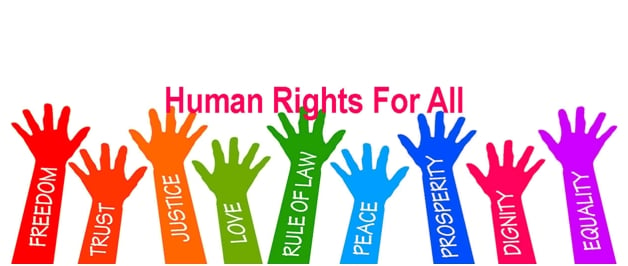
MADRID, Dec 6 2021 (IPS) – ”All human beings are born free and equal in dignity and rights.” These words are a sound introduction to the transcendental issue of human rights and equalities, as stated by the 1948 Universal Declaration of Human Rights (UDHR).

The Declaration proclaims the “inalienable rights that everyone is entitled to as a human being – regardless of race, colour, religion, sex, language, political or other opinion, national or social origin, property, birth or other status.”

“All Human, All Equal” is the slogan for the 2021 Human Rights Day, marked 10 December. Its theme relates to equality: “The principles of equality and non-discrimination are at the heart of human rights.”According to the UN, “equality, inclusion and non-discrimination, in other words – a human rights-based approach to development  – is the best way to reduce inequalities and resume the path towards realising the 2030 Agenda”

“Equality includes addressing and finding solutions for deep-rooted forms of discrimination that have affected the most vulnerable people in societies, including women and girls, indigenous peoples, people of African descent, LGBTI people, migrants and people with disabilities, among others.”

According to the UN, “equality, inclusion and non-discrimination, in other words – a human rights-based approach to development – is the best way to reduce inequalities and resume the path towards realising the 2030 Agenda,” which principle is leaving no one behind.

Shamefully, this is not the case. In spite of all well-intentioned words, declarations, statements and appeals, the grave spread of inequalities all over the world remains prevailing and expanding.

The numerous and severe aspects of inequality are manifested in rampant poverty, pervasive inequalities and structural discrimination are human rights violations and among the greatest global challenges of the current time.

A new social contract urgent

Human rights, including economic, social and cultural rights as well as the right to development and the right to a safe, clean, healthy and sustainable environment, are central to building a new human rights-based economy that supports better, fairer and more sustainable societies for present and future generations. A human rights-based economy should be the foundation of a new social contract, according to World Day.

Here are just some examples of the prevailing violation of the most basic freedom, equality and human rights.

Racism

Racism is just one of the various severe forms of inequality.

In fact, racism, xenophobia and related discrimination and intolerance exist in all societies, everywhere. Racism harms not just the lives of those who endure it, but also society as a whole.

“We all lose in a society characterised by discrimination, division, distrust, intolerance, and hate. The fight against racism is everyone’s fight. We all have a part to play in building a world beyond racism,” the UN urges.

The COVID generation

Successive financial and health crises have had long-lasting and multidimensional impacts on millions of young people, according to this year’s World Day.

Unless their rights are protected, including through decent jobs and social protection, the “COVID generation” runs the risk of falling prey to the detrimental effects of mounting inequality and poverty.

Vaccine inequality

Vaccine injustice through unfair vaccine distribution and hoarding contravenes international legal and human rights norms and the spirit of global solidarity.

In fact, while rich societies have reached between 70 and 80 per cent of vaccination, only 1 per cent of the population of some countries in Africa has been vaccinated.

Climate injustice

Environmental degradation, including climate change, pollution and nature loss, disproportionately impacts persons, groups and peoples in vulnerable situations. These impacts exacerbate existing inequalities and negatively affect the human rights of present and future generations.

In a follow-up to the Human Rights Council’s recognition of the human right to a clean, healthy and sustainable environment, urgent action must be taken to respect, protect and fulfil this right.

“Such action should be the cornerstone of a new human rights-based economy that will produce a green recovery from COVID-19 and a just transition.”

According to recent estimates, the number of climate migrants and refugees could rise to up to one billion in the coming few years.

They would proceed from continents and countries that are the least polluting and the least responsible for the ongoing climate emergency.

For example, Africa has generated around four per cent of the causes of the climate crisis, while bearing the brunt of 80 per cent of its consequences.

Conflicts inequality

Human rights have the power to tackle the root causes of conflict and crisis, by addressing grievances, eliminating inequalities and exclusion and allowing people to participate in decision-making that affects their lives, says the UN.

“Equality and non-discrimination are key to prevention: all human rights for all ensure everyone has access to the preventive benefits of human rights but, when certain people or groups are excluded or face discrimination, the inequality will drive the cycle of conflict and crisis.”

Women, girls

Such an abhorrent abuse against women and girls is carried out all over the world. In fact, one-third of all women and girls have been subjected to physical or sexual violation in their lifetime.

And it is estimated that 800 million girls are being pushed into early marriage and forced to become child-mothers.

Child forced labour

Meanwhile, it has been reported that more than 160 million boys and girls are subjected to the abuse of forced child labour.

Many of them are recruited as child soldiers in armed conflicts. Others are being smuggled and trafficked for sexual exploitation, begging, and organs removals, among other forms of cruelty.

‘Modern’ slavery

It is estimated that one billion humans are victims of the so-called ‘modern’ slavery, including forced labour, migrants smuggling, sexual exploitation, youth sold and bought in public squares, migrants and refugees stranded in borders behind barbed walls, millions of displaced due to violence and armed conflicts they did not launch.

Smuggling, trafficking

“Human trafficking and migrant smuggling have evolved a lot since I first took over this job. They have become more severe, in the sense of what the criminals involved inflict on people. There is more violence, victims are younger and there are more child victims,” said Ilias Chatzis who heads up a global team of more than 60 experts at the UN Office on Drugs and Crime (UNODC), committed to countering Human Trafficking and Migrant Smuggling.

“It is a crime that can sometimes happen in front of our eyes, as we go to work, do our shopping, drive our children to school or meet friends for dinner. There are industries that we come into contact within our everyday lives, like hospitality, agriculture, construction, and others where trafficking victims are exploited.”

Traffickers in Europe take groups of children from country to country and force them to beg. Then they take all the money and often let them starve. For criminals, it is all about the money, and people are just a way to make a profit, the expert warned.

Poverty, hunger

The number of the poor and poorest and hungry is steadily rising. It is estimated that the figure is now approaching one billion, in a world that produces enough food for the global population. And that rich societies waste up to one-third of purchased food.

”All human beings are born free and equal in dignity and rights.” Nice words. But the dramatic reality shows all the opposite.

*Source: IPS. Go to the original.

2021 Human Wrongs Watch

Originally published at Human Wrongs Watch

About the author

Baher Kamal is Senior Advisor to IPS Director General on Africa & the Middle East. He is an Egyptian-born, Spanish-national, secular journalist, with over 43 years of experience. Since the late 70s, he specialised in all development related issues, as well as international politics. He also worked as Senior Information Expert for the Euro-Mediterranean Partnership at the European Commission in Brussels, and as the first-ever Information Officer and Spokesperson at UNEP’s Mediterranean Action Plan in Athens. Kamal speaks Spanish, Arabic, English and Italian. And he is the editor of the excellent Human Wrongs Watch.

Please help TFF remain truly independent by contributing if you benefited from this article

Related Posts

PART 2 — Diplomacy, Law and Nonviolent Power By Jan ObergTFF co-founder and director January 26, 2026 This is the second of four TFF-created idea portfolios designed to curb the global reach of the United States and, in both the short and long term, help catalyse a worldwide nonviolent resistance to what many observers describe as the Trump administration’s uniquely confrontational, destructive and world-threatening policies. These portfolios outline what governments and citizens across the world can do through dynamic diplomacy, creative initiatives, and strictly nonviolent means. They are typical TFF works in that we do not only tell what the problem is and how bad it will go – as 90+% of all commentators, experts and scholars do – we tell what we think can be done, inviting you to think of what you think you can do. It seems painfully clear to me that the current political dynamics in Washington increasingly resemble the most dangerous...
TFF’s comprehensive proposal for dialogue about true peace in Ukraine is due in a day or two Jan Oberg November 20, 2025 What is being whispered through diplomatic corridors today is not peace, but quackery. The alleged 28‑point plan drafted in Washington and Moscow is mentioned as a solution to the Ukraine war. It is being negotiated by US businessman, real estate developer and Trump ally, Steve Witkoff, and by Kirill Dmitriev, who is CEO of the Russian Direct Investment Fund and a close ally of Putin, according to India’s Economic Times. For presumably good reasons, their education, qualifications and experience in international conflict analysis and peace-making remain untold. They look like surgeons who have never opened a medical textbook. It is nothing more than a mirage: a framework of concessions imposed on Ukraine’s citizens, negotiated without Kyiv, and excluding Europe. Like Gaza, it promises “peace” while institutionalising injustice. If half of what is available about...
PRESS RELEASE – 6 OCTOBER 2025 LAY DOWN YOUR ARMSPEACE PRIZE FOR 2025 is awarded Francesca Albanese The United Nations Special Rapporteur on the occupied Palestinian territories – as the person who, in accordance with Alfred Nobel’s will, has “done the most or the best work for fraternity between nations and for the abolition or reduction of standing armies as well as for the holding and promotion of peace congresses.” Francesca Albanese has forcefully and unwaveringly worked against Israel’s full-scale war on the occupied Palestinian territories, in particular Israel´s ongoing genocide against the Palestinian people. She has confronted Israel’s systematic war crimes and crimes against humanity in a truly global outreach. Further, she has brought governments, international organisations and people’s groups together to underline the responsibility of the world at large to act and to stop arming, enabling, and profiting from Israel’s ongoing criminal actions. But first of all, Albanese...

Recent Articles

Tony Robinson October 4, 2026 Violence is easy to recognise when someone is being beaten, shot or killed. It becomes more difficult when nobody is holding a weapon. Poverty, discrimination, exploitation and repression can restrict a human life just as effectively, although they do so in very different ways and with very different consequences. Simply adding more categories to an ever-growing list of forms of violence does not really solve the problem. The more interesting question is what all these different situations have in common and why it makes sense to describe them using the same word. Human beings do not simply react to what happens around them. They remember the past, imagine things that do not yet exist, make plans and undertake projects. Workers organise because they imagine different working conditions; people migrate because they imagine another life somewhere else; social movements emerge because people refuse to accept the...
It’s a matter of principles, courage, vision and pulling together – while the militarist world is falling apart… Peter Langille October 3, 2026 “Here, then, is the problem which we present to you, stark and dreadful and inescapable: Shall we put an end to the human race; or shall mankind renounce war?”The Bertrand Russell—Albert Einstein Manifesto, July 9, 1955 ⁕ The forecast for what’s ahead is worrisome. The sharp rise in armed conflicts over the past three years is adding to what was already the highest level in over seventy years. Genocides, which should be prevented are supported. A shared climate emergency that jeopardises survival is ignored. Diverse polls now suggest that people are war-weary, worried and interested in a more effective United Nations. And, there are viable policy options for a more secure world! Yet governments are doubling-down, betting on more war and investing heavily. If current trends persist,...
Johan Galtung 1930-2024October 2015 Published here on October 3, 2026 Let us focus on Civilization for conflict analysis and remedies. Major forms of disorder use violence; war is state organized violence. The most belligerent states are the United States of America and Israel, both with civilization roots. National Evangelism, the US Protestant Christian civilization– more national than evangelical–justifies US warfare as exceptionalism of a people chosen by God, with a manifest destiny to run the world. Orthodox Judaism justifies Israeli warfare to conquer and expand from Nile to Euphrates as a religious right and duty to the Eternal One. The third most belligerent country, the UK, no longer believes it is God-chosen but chosen by the USA; not quite the same but something. But the root cause of global disorder lies in the Occident–with Islam–seeing itself as the single, universal civilization valid for all at all times, all others being...

TFF on Substack

Discover and subscribe to more peace materials on TFF Substack

Most Popular

Tony Robinson October 4, 2026 Violence is easy to recognise when someone is being beaten, shot or killed. It becomes more difficult when nobody is holding a weapon. Poverty, discrimination, exploitation and repression can restrict a human life just as effectively, although they do so in very different ways and with very different consequences. Simply adding more categories to an ever-growing list of forms of violence does not really solve the problem. The more interesting question is what all these different situations have in common and why it makes sense to describe them using the same word. Human beings do not simply react to what happens around them. They remember the past, imagine things that do not yet exist, make plans and undertake projects. Workers organise because they imagine different working conditions; people migrate because they imagine another life somewhere else; social movements emerge because people refuse to accept the...
It’s a matter of principles, courage, vision and pulling together – while the militarist world is falling apart… Peter Langille October 3, 2026 “Here, then, is the problem which we present to you, stark and dreadful and inescapable: Shall we put an end to the human race; or shall mankind renounce war?”The Bertrand Russell—Albert Einstein Manifesto, July 9, 1955 ⁕ The forecast for what’s ahead is worrisome. The sharp rise in armed conflicts over the past three years is adding to what was already the highest level in over seventy years. Genocides, which should be prevented are supported. A shared climate emergency that jeopardises survival is ignored. Diverse polls now suggest that people are war-weary, worried and interested in a more effective United Nations. And, there are viable policy options for a more secure world! Yet governments are doubling-down, betting on more war and investing heavily. If current trends persist,...
Johan Galtung 1930-2024October 2015 Published here on October 3, 2026 Let us focus on Civilization for conflict analysis and remedies. Major forms of disorder use violence; war is state organized violence. The most belligerent states are the United States of America and Israel, both with civilization roots. National Evangelism, the US Protestant Christian civilization– more national than evangelical–justifies US warfare as exceptionalism of a people chosen by God, with a manifest destiny to run the world. Orthodox Judaism justifies Israeli warfare to conquer and expand from Nile to Euphrates as a religious right and duty to the Eternal One. The third most belligerent country, the UK, no longer believes it is God-chosen but chosen by the USA; not quite the same but something. But the root cause of global disorder lies in the Occident–with Islam–seeing itself as the single, universal civilization valid for all at all times, all others being...
Read More
Living-Peace-Sign-Budapest-copy
Tony Robinson October 4, 2026 Violence is easy to recognise when someone is being beaten, shot or killed. It becomes more difficult when nobody is holding a weapon. Poverty, discrimination, exploitation and repression can restrict a human life just as effectively, although they do so in very different ways and with very different consequences. Simply adding more categories to an ever-growing list of forms of violence does not really solve the problem. The more interesting question is what all these different situations have in common and why it makes sense to describe them using the same word. Human beings do not simply react to what happens around them. They remember the past, imagine things that do not yet exist, make plans and undertake projects. Workers organise because they imagine different working conditions; people migrate because they imagine another life somewhere else; social movements emerge because people refuse to accept the...
b54a1f10-8c65-4f0b-9dd5-4abc0a7d04cc_2659x2659
It’s a matter of principles, courage, vision and pulling together – while the militarist world is falling apart… Peter Langille October 3, 2026 “Here, then, is the problem which we present to you, stark and dreadful and inescapable: Shall we put an end to the human race; or shall mankind renounce war?”The Bertrand Russell—Albert Einstein Manifesto, July 9, 1955 ⁕ The forecast for what’s ahead is worrisome. The sharp rise in armed conflicts over the past three years is adding to what was already the highest level in over seventy years. Genocides, which should be prevented are supported. A shared climate emergency that jeopardises survival is ignored. Diverse polls now suggest that people are war-weary, worried and interested in a more effective United Nations. And, there are viable policy options for a more secure world! Yet governments are doubling-down, betting on more war and investing heavily. If current trends persist,...
010
Johan Galtung 1930-2024October 2015 Published here on October 3, 2026 Let us focus on Civilization for conflict analysis and remedies. Major forms of disorder use violence; war is state organized violence. The most belligerent states are the United States of America and Israel, both with civilization roots. National Evangelism, the US Protestant Christian civilization– more national than evangelical–justifies US warfare as exceptionalism of a people chosen by God, with a manifest destiny to run the world. Orthodox Judaism justifies Israeli warfare to conquer and expand from Nile to Euphrates as a religious right and duty to the Eternal One. The third most belligerent country, the UK, no longer believes it is God-chosen but chosen by the USA; not quite the same but something. But the root cause of global disorder lies in the Occident–with Islam–seeing itself as the single, universal civilization valid for all at all times, all others being...
Screenshot 2026-10-02 011738
Jan ObergPhD, director, The Transnational Foundation for Peace and Future Research, TFFLund, Sweden October 2, 2026 This is my full original manuscript. The Chinese Academy of Social Science, CASS, makes two publications out if it. 1. China’s Five-year plan emphasized the capabilities of basic research and original innovation. It is regarded as the goal of the future social development, which, as required, should be significantly enhanced. Can you comment on the importance of original innovation in research and academic study? I believe it is easier to define “original innovation” in the natural sciences than in social sciences. The breaking points of what constitutes something new, or innovative, are not quite as sharp in the latter. But in both fields it is about opening up something that was closed, unseen, unexplored before – making manifest what was earlier latent. Innovations come in many forms and shapes – naming something that was not...
arctic-circle-map
The agreement is catastrophic both because of what it says and what it doesn’t mention. It reduces further the major asset of security policies: Freedom of action. Jan Oberg TFF director September 25, 2026 A couple of hours before the agreement was signed on September 22, 2026, I published the following 13 hypotheses about what it would most likely contain on TFF Substack (in English). I was wrong on only the first point. Contrary to what Trump had written on his Truth Social platform, it does not appear to come into force immediately. In fact, it turned out to be worse than even I had anticipated. After these hypotheses now come a number of reflections in light of what the agreement actually contains, and does not contain, as well as the way in which it has generally been presented by major media outlets and by the public-service broadcaster DR. My...
girl-5894831_1280
Below are TFF-related media mentions, comments, videos and social media posts published elsewhere but not on this homepage. We happen to catch and list only a fraction. Regarding video comments and debates, we recommend that you go to the TFF Video Channel on Substack where many of them are reproduced. Jan Oberg is a contributor to China Daily – 52 million daily clicks – and Global Times, CGTN and CCTV (the national television), China Investment, Xinhua News Agency and several others. Articles and videos on these media very often multiply into countless Chinese (and Western media) that re-post them from these main media. Thanks to The China Academy, his analyses, interviews and comments are frequently posted on YouTube channels such as Thinkers Forum and Wave Media. These videos are often re-posted on Bilibili (China’s YouTube), the China Content Center on TikTok, and on the Chinese edition of TikTok, Douyin.com. This means reaching hundreds of millions of viewers worldwide over a year. While there are too many to catch on all these...




