
Tom Engelhardt: The Decline and Fall of the Roman… Whoops!… American Empire

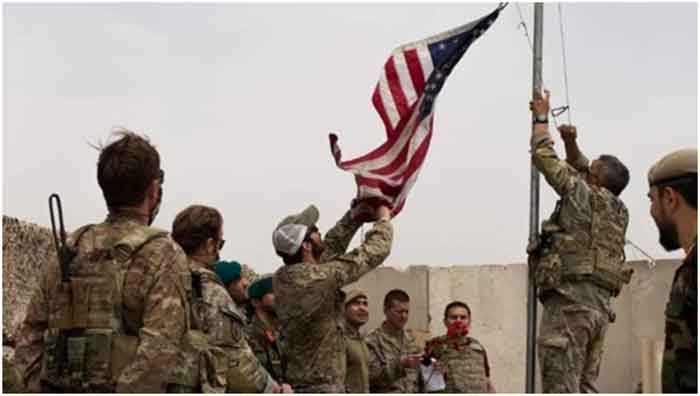
Handover ceremony at Camp Anthonic, from US Army to Afghan Special Forces, Helmand province, Afghanistan, May 2, 2021.

Tom Engelhardt

October 27, 2021

They weren’t kidding when they called Afghanistan the “graveyard of empires.” Indeed, that cemetery has just taken another imperial body. And it wasn’t pretty, was it? Not that anyone should be surprised. Even after 20 years of preparation, a burial never is.

In fact, the shock and awe(fulness) in Kabul and Washington over these last weeks shouldn’t have been surprising, given our history. After all, we were the ones who prepared the ground and dug the grave for the previous interment in that very cemetery.

Originally published at Countercurrents

That, of course, took place between 1979 and 1989 when Washington had no hesitation about using the most extreme Islamists — arming, funding, training, and advising them — to ensure that one more imperial carcass, that of the Soviet Union, would be buried there.

When, on February 15, 1989, the Red Army finally left Afghanistan, crossing the Friendship Bridge into Uzbekistan, Soviet commander General Boris Gromov, the last man out, said, “That’s it. Not one Soviet soldier or officer is behind my back.” It was his way of saying so long, farewell, good riddance to the endless war that the leader of the Soviet Union had by then taken to calling “the bleeding wound.”

Yet, in its own strange fashion, that “graveyard” would come home with them. After all, they returned to a bankrupt land, sucked dry by that failed war against those American- and Saudi-backed Islamist extremists.

Two years later, the Soviet Union would implode, leaving just one truly great power on Planet Earth — along with, of course, those very extremists Washington had built into a USSR-destroying force. Only a decade later, in response to an “air force” manned by 19 mostly Saudi hijackers dispatched by Osama bin Laden, a rich Saudi prince who had been part of our anti-Soviet effort in Afghanistan, the world’s “sole superpower” would head directly for that graveyard (as bin Laden desired).

Despite the American experience in Vietnam during the previous century — the Afghan effort of the 1980s was meant to give the USSR its own “Vietnam” — key Bush administration officials were so sure of themselves that, as the New York Times recently reported, they wouldn’t even consider letting the leaders of the Taliban negotiate a surrender once our invasion began.

On September 11, 2001, in the ruins of the Pentagon, Secretary of Defense Donald Rumsfeld had already given an aide these instructions, referring not just to Bin Laden but Iraqi ruler Saddam Hussein: “Go massive. Sweep it up, all up. Things related and not.” Now, he insisted, “The United States is not inclined to negotiate surrenders.” (Of course, had you read war reporter Anand Gopal’s 2014 book, No Good Men Among the Living, you would have long known just how fruitlessly Taliban leaders tried to surrender to a power intent on war and nothing but war.)

Allow a surrender and have everything grind to a disappointing halt? Not a chance, not when the Afghan War was the beginning of what was to be an American triumph of global proportions.

After all, the future invasion of Iraq and the domination of the oil-rich Greater Middle East by the one and only power on the planet were already on the agenda. How could the leaders of such a confident land with a military funded at levels the next most powerful countries combined couldn’t match have imagined its own 2021 version of surrender?

And yet, once again, 20 years later, Afghanistan has quite visibly and horrifyingly become a graveyard of empire (as well, of course, as a graveyard for Afghans). Perhaps it’s only fitting that the secretary of defense who refused the surrender of the enemy in 2001 was recently buried in Arlington National Cemetery with full honors.

In fact, the present secretary of defense and the head of the joint chiefs of staff both reportedly “knelt before Mr. Rumsfeld’s widow, Joyce, who was in a wheelchair, and presented her with the flag from her husband’s coffin.”

Meanwhile, Joe Biden was the third president since George W. Bush and crew launched this country’s forever wars to find himself floundering haplessly in that same graveyard of empires.

If the Soviet example didn’t come to mind, it should have as Democrats and Republicans, President Biden and former President Trump flailed at each other over their supposedly deep feelings for the poor Afghans being left behind, while this country withdrew its troops from Kabul airport in a land where “rest in peace” has long had no meaning.

America’s True Infrastructure Spending

Here’s the thing, though: don’t assume that Afghanistan is the only imperial graveyard around or that the U.S. can simply withdraw, however ineptly, chaotically, and bloodily, leaving that country to history — and the Taliban.

Put another way, even though events in Kabul and its surroundings took over the mainstream news recently, the Soviet example should remind us that, when it comes to empires, imperial graveyards are hardly restricted to Afghanistan.

In fact, it might be worth taking a step back to look at the big picture. For decades, the U.S. has been involved in a global project that’s come to be called “nation building,” even if, from Vietnam, Laos, and Cambodia to Afghanistan and Iraq, it often seemed an endless exercise in nation (un)building.

An imperial power of the first order, the United States long ago largely rejected the idea of straightforward colonies. In the years of the Cold War and then of the war on terror, its leaders were instead remarkably focused on setting up an unparalleled empire of military bases and garrisons on a global scale. This and the wars that went with it have been the unsettling American imperial project since World War II.

And that unsettling should be taken quite literally. Even before recent events in Afghanistan, Brown University’s invaluable Costs of War Project estimated that this country’s conflicts of the last two decades across the Greater Middle East and Africa had displaced at least 38 million people, which should be considered nation (un)building of the first order.

Since the Cold War began, Washington has engaged in an endless series of interventions around the planet from Iran to the Congo, Chile to Guatemala, as well as in conflicts, large and small. Now, with Joe Biden having withdrawn from America’s disastrous Afghan War, you might wonder whether it’s all finally coming to an end, even if the U.S. still insists on maintaining 750 sizeable military bases globally.

Count on this, though: the politicians of the great power that hasn’t won a significant war since 1945 will agree on one thing — that the Pentagon and the military-industrial complex deserve yet more funding (no matter what else doesn’t).

In truth, those institutions have been the major recipients of actual infrastructure spending over much of what might still be thought of as the American century. They’ve been the true winners in this society, along with the billionaires who, even in the midst of a grotesque pandemic, raked in profits in a historic fashion. In the process, those tycoons created possibly the largest inequality gap on the planet, one that could destabilize a democracy even if nothing else were going on. The losers? Don’t even get me started.

Or think of it this way: yes, in August 2021, it was Kabul, not Washington, D.C., that fell to the enemy, but the nation (un)building project in which this country has been involved over these last decades hasn’t remained thousands of miles away.

Only half-noticed here, it’s been coming home, big time. Donald Trump’s rise to the presidency, amid election promises to end America’s “endless wars,” should really be seen as part of that war-induced (un)building project at home.

In his own strange fashion, The Donald was Kabul before its time and his rise to power unimaginable without those distant conflicts and the spending that went with them, all of which, however unnoticed, unsettled significant parts of this society.

Climate War in a Graveyard of Empires?

You can tell a lot about a country if you know where its politicians unanimously agree to invest taxpayer dollars.

At this very moment, the U.S. is in a series of crises, none worse than the heat, fire, and flood “season” that’s hit not just the megadrought-ridden West, or inundated Tennessee, or hurricane-whacked Louisiana, or the tropical-storm-tossed Northeast, but the whole country.

Unbearable warmth, humidity, fires, smoke, storms, and power outages, that’s us. Fortunately, as always, Congress stands in remarkable unanimity when it comes to investing money where it truly matters.

And no, you knew perfectly well that I wasn’t referring to the creation of a green-energy economy. In fact, Republicans wouldn’t hear of it and the Biden administration, while officially backing the idea, has already issued more than 2,000 permits to fossil-fuel companies for new drilling and fracking on federal lands.

In August, the president even called on OPEC — the Saudis, in particular — to produce significantly more oil to halt a further rise in gas prices at the pump.

As America’s eternally losing generals come home from Kabul, what I actually had in mind was the one thing just about everyone in Washington seems to agree on: funding the military-industrial complex beyond their wildest dreams.

Congress has recently spent months trying to pass a bill that would, over a number of years, invest an extra $550 billion in this country’s badly tattered infrastructure, but never needs time like that to pass Pentagon and other national security budgets that, for years now, have added up to well over a trillion dollars annually.

In another world, with the Afghan War ending and U.S. forces (at least theoretically) coming home, it might seem logical to radically cut back on the money invested in the military-industrial complex and its ever more expensive weaponry.

In another American world on an increasingly endangered planet, significantly scaling back American forces in every way and investing our tax dollars in a very different kind of “defense” would seem logical indeed. And yet, as of this moment, as Greg Jaffe writes at the Washington Post, the Pentagon continues to suck up “a larger share of discretionary spending than any other government agency.”

Fortunately for those who want to keep funding the U.S. military in the usual fashion, there’s a new enemy out there with which to replace the Taliban, one that the Biden foreign-policy team and a “pivoting” military is already remarkably eager to confront: China.

At least when the latest infrastructure money is spent, if that compromise bill ever really makes it through a Congress that can’t tie its own shoelaces, something will be accomplished. Bridges and roads will be repaired, new electric-vehicle-charging stations set up, and so on.

When, however, the Pentagon spends the money just about everyone in Washington agrees it should have, we’re guaranteed yet more weaponry this country doesn’t need, poorly produced for thoroughly exorbitant sums, if not more failed wars as well.

I mean, just think about what the American taxpayer “invested” in the losing wars of this century. According to Brown University’s Costs of War Project, $2.313 trillion went into that disastrous Afghan War alone and at least $6.4 trillion by 2020 into the full-scale war on terror. And that doesn’t even include the estimated future costs of caring for American veterans of those conflicts.

In the end, the total may prove to be in the $8 trillion range. Hey, at least $88 billion just went into supplying and training the Afghan military, most of which didn’t even exist by August 2021 and the rest of which melted away when the Taliban advanced.

Just imagine for a minute where we might really be today if Congress had spent close to $8 trillion rebuilding this society, rather than (un)building and wrecking distant ones.

Rest assured, this is not the country that ended World War II in triumph or even the one that outlasted the Soviet Union and whose politicians then declared it the most exceptional, indispensable nation ever. This is a land that’s crumbling before our eyes, being (un)built month by month, year by year.

Its political system is on the verge of dissolving into who knows what amid a raft of voter suppression laws, wild claims about the most recent presidential election, an assault on the Capitol itself, and conspiracy theories galore.

Its political parties seem ever more hostile, disturbed, and disparate. Its economy is a gem of inequality, its infrastructure crumbling, its society seemingly coming apart at the seams.

And on a planet that could be turning into a genuine graveyard of empires (and of so much else), keep in mind that, if you’re losing your war with climate change, you can’t withdraw from it. You can’t declare defeat and go home. You’re already home in the increasingly dysfunctional, increasingly (un)built U.S. of A.

Originally published by TomDispatch

Copyright 2021 Tom Engelhardt

Originally published at Countercurrents

About the author

Follow TomDispatch on Twitter and join us on Facebook. Check out the newest Dispatch Books, John Feffer’s new dystopian novel, Songlands (the final one in his Splinterlands series), Beverly Gologorsky’s novel Every Body Has a Story, and Tom Engelhardt’s A Nation Unmade by War, as well as Alfred McCoy’s In the Shadows of the American Century: The Rise and Decline of U.S. Global Power and John Dower’s The Violent American Century: War and Terror Since World War II.

Tom Engelhardt created and runs the website TomDispatch.com. He is also a co-founder of the American Empire Project and the author of a highly praised history of American triumphalism in the Cold War, The End of Victory Culture.  A fellow of the Type Media Center, his sixth and latest book is A Nation Unmade by War.

Please help TFF remain truly independent by contributing if you benefited from this article

Related Posts

Jan Oberg, TFF director April 9, 2026 I was recently invited to have a good, long talk about the world – and, of course, about peace too – with Boris Malagurski on his Weight of Chains Channel on YouTube. It was a real joy and seems to have been greatly appreciated by the viewers too. Mr Malagurski and I shall of course be grateful if you share this conversation in your circles – of course, only if you like what you see and hear 😉☮️ And remember that this one – like hundreds of others with TFF Associates – can be enjoyed at our TFF Video Collection.
A friendly quarrel while we agree that the US sanctions are a weapon of mass destruction and kill more people than wars do. And that we must talk much more about sanctions than we have so far. Jan Oberg, TFF director March 16, 2026 John Mearsheimer recently stated that U.S. sanctions murdered around 38 million people between 1971 and 2021 – see the video below. It is a dramatic figure, and it has spread quickly because it captures, in one sentence, the enormous human cost of modern sanctions. I share his concern about the destructive effects of economic coercion. But the specific number he cites — and the way he attributes it — deserves a friendly academic clarification. The figure comes from a 2023 Lancet Global Health article estimating the mortality effects of unilateral U.S. and EU sanctions over the past half‑century. This is the first point where Mearsheimer’s shorthand diverges from the text: the study...
This is not another geopolitical commentary on the Arctic. It is a visionary peace proposal that can save the region from militarised rivalry and ecological ruin. A blueprint for shared security, sustainable development, and human dignity — benefitting Greenland, the Arctic, and the rest of us. Jan Oberg TFF director Lund, Sweden, February 17, 2026 I. Four Principles for a New Arctic Vision The Arctic is often framed as a cold arena of rivalry — a place where great powers test each other’s resolve. But this worldview is outdated, unimaginative, and ultimately self‑defeating. The Arctic is not a vacuum waiting to be militarised; it is a living region, a climate stabiliser, and a cultural homeland whose future will shape the future of humanity. If we begin from that understanding, a far more rational Arctic order becomes possible — one that is peaceful, cooperative, and centred on the people who actually live there. This vision rests...

Recent Articles

Tony Robinson October 4, 2026 Violence is easy to recognise when someone is being beaten, shot or killed. It becomes more difficult when nobody is holding a weapon. Poverty, discrimination, exploitation and repression can restrict a human life just as effectively, although they do so in very different ways and with very different consequences. Simply adding more categories to an ever-growing list of forms of violence does not really solve the problem. The more interesting question is what all these different situations have in common and why it makes sense to describe them using the same word. Human beings do not simply react to what happens around them. They remember the past, imagine things that do not yet exist, make plans and undertake projects. Workers organise because they imagine different working conditions; people migrate because they imagine another life somewhere else; social movements emerge because people refuse to accept the...
It’s a matter of principles, courage, vision and pulling together – while the militarist world is falling apart… Peter Langille October 3, 2026 “Here, then, is the problem which we present to you, stark and dreadful and inescapable: Shall we put an end to the human race; or shall mankind renounce war?”The Bertrand Russell—Albert Einstein Manifesto, July 9, 1955 ⁕ The forecast for what’s ahead is worrisome. The sharp rise in armed conflicts over the past three years is adding to what was already the highest level in over seventy years. Genocides, which should be prevented are supported. A shared climate emergency that jeopardises survival is ignored. Diverse polls now suggest that people are war-weary, worried and interested in a more effective United Nations. And, there are viable policy options for a more secure world! Yet governments are doubling-down, betting on more war and investing heavily. If current trends persist,...
Johan Galtung 1930-2024October 2015 Published here on October 3, 2026 Let us focus on Civilization for conflict analysis and remedies. Major forms of disorder use violence; war is state organized violence. The most belligerent states are the United States of America and Israel, both with civilization roots. National Evangelism, the US Protestant Christian civilization– more national than evangelical–justifies US warfare as exceptionalism of a people chosen by God, with a manifest destiny to run the world. Orthodox Judaism justifies Israeli warfare to conquer and expand from Nile to Euphrates as a religious right and duty to the Eternal One. The third most belligerent country, the UK, no longer believes it is God-chosen but chosen by the USA; not quite the same but something. But the root cause of global disorder lies in the Occident–with Islam–seeing itself as the single, universal civilization valid for all at all times, all others being...

TFF on Substack

Discover and subscribe to more peace materials on TFF Substack

Most Popular

Tony Robinson October 4, 2026 Violence is easy to recognise when someone is being beaten, shot or killed. It becomes more difficult when nobody is holding a weapon. Poverty, discrimination, exploitation and repression can restrict a human life just as effectively, although they do so in very different ways and with very different consequences. Simply adding more categories to an ever-growing list of forms of violence does not really solve the problem. The more interesting question is what all these different situations have in common and why it makes sense to describe them using the same word. Human beings do not simply react to what happens around them. They remember the past, imagine things that do not yet exist, make plans and undertake projects. Workers organise because they imagine different working conditions; people migrate because they imagine another life somewhere else; social movements emerge because people refuse to accept the...
It’s a matter of principles, courage, vision and pulling together – while the militarist world is falling apart… Peter Langille October 3, 2026 “Here, then, is the problem which we present to you, stark and dreadful and inescapable: Shall we put an end to the human race; or shall mankind renounce war?”The Bertrand Russell—Albert Einstein Manifesto, July 9, 1955 ⁕ The forecast for what’s ahead is worrisome. The sharp rise in armed conflicts over the past three years is adding to what was already the highest level in over seventy years. Genocides, which should be prevented are supported. A shared climate emergency that jeopardises survival is ignored. Diverse polls now suggest that people are war-weary, worried and interested in a more effective United Nations. And, there are viable policy options for a more secure world! Yet governments are doubling-down, betting on more war and investing heavily. If current trends persist,...
Johan Galtung 1930-2024October 2015 Published here on October 3, 2026 Let us focus on Civilization for conflict analysis and remedies. Major forms of disorder use violence; war is state organized violence. The most belligerent states are the United States of America and Israel, both with civilization roots. National Evangelism, the US Protestant Christian civilization– more national than evangelical–justifies US warfare as exceptionalism of a people chosen by God, with a manifest destiny to run the world. Orthodox Judaism justifies Israeli warfare to conquer and expand from Nile to Euphrates as a religious right and duty to the Eternal One. The third most belligerent country, the UK, no longer believes it is God-chosen but chosen by the USA; not quite the same but something. But the root cause of global disorder lies in the Occident–with Islam–seeing itself as the single, universal civilization valid for all at all times, all others being...
Read More
Living-Peace-Sign-Budapest-copy
Tony Robinson October 4, 2026 Violence is easy to recognise when someone is being beaten, shot or killed. It becomes more difficult when nobody is holding a weapon. Poverty, discrimination, exploitation and repression can restrict a human life just as effectively, although they do so in very different ways and with very different consequences. Simply adding more categories to an ever-growing list of forms of violence does not really solve the problem. The more interesting question is what all these different situations have in common and why it makes sense to describe them using the same word. Human beings do not simply react to what happens around them. They remember the past, imagine things that do not yet exist, make plans and undertake projects. Workers organise because they imagine different working conditions; people migrate because they imagine another life somewhere else; social movements emerge because people refuse to accept the...
b54a1f10-8c65-4f0b-9dd5-4abc0a7d04cc_2659x2659
It’s a matter of principles, courage, vision and pulling together – while the militarist world is falling apart… Peter Langille October 3, 2026 “Here, then, is the problem which we present to you, stark and dreadful and inescapable: Shall we put an end to the human race; or shall mankind renounce war?”The Bertrand Russell—Albert Einstein Manifesto, July 9, 1955 ⁕ The forecast for what’s ahead is worrisome. The sharp rise in armed conflicts over the past three years is adding to what was already the highest level in over seventy years. Genocides, which should be prevented are supported. A shared climate emergency that jeopardises survival is ignored. Diverse polls now suggest that people are war-weary, worried and interested in a more effective United Nations. And, there are viable policy options for a more secure world! Yet governments are doubling-down, betting on more war and investing heavily. If current trends persist,...
010
Johan Galtung 1930-2024October 2015 Published here on October 3, 2026 Let us focus on Civilization for conflict analysis and remedies. Major forms of disorder use violence; war is state organized violence. The most belligerent states are the United States of America and Israel, both with civilization roots. National Evangelism, the US Protestant Christian civilization– more national than evangelical–justifies US warfare as exceptionalism of a people chosen by God, with a manifest destiny to run the world. Orthodox Judaism justifies Israeli warfare to conquer and expand from Nile to Euphrates as a religious right and duty to the Eternal One. The third most belligerent country, the UK, no longer believes it is God-chosen but chosen by the USA; not quite the same but something. But the root cause of global disorder lies in the Occident–with Islam–seeing itself as the single, universal civilization valid for all at all times, all others being...
Screenshot 2026-10-02 011738
Jan ObergPhD, director, The Transnational Foundation for Peace and Future Research, TFFLund, Sweden October 2, 2026 This is my full original manuscript. The Chinese Academy of Social Science, CASS, makes two publications out if it. 1. China’s Five-year plan emphasized the capabilities of basic research and original innovation. It is regarded as the goal of the future social development, which, as required, should be significantly enhanced. Can you comment on the importance of original innovation in research and academic study? I believe it is easier to define “original innovation” in the natural sciences than in social sciences. The breaking points of what constitutes something new, or innovative, are not quite as sharp in the latter. But in both fields it is about opening up something that was closed, unseen, unexplored before – making manifest what was earlier latent. Innovations come in many forms and shapes – naming something that was not...
arctic-circle-map
The agreement is catastrophic both because of what it says and what it doesn’t mention. It reduces further the major asset of security policies: Freedom of action. Jan Oberg TFF director September 25, 2026 A couple of hours before the agreement was signed on September 22, 2026, I published the following 13 hypotheses about what it would most likely contain on TFF Substack (in English). I was wrong on only the first point. Contrary to what Trump had written on his Truth Social platform, it does not appear to come into force immediately. In fact, it turned out to be worse than even I had anticipated. After these hypotheses now come a number of reflections in light of what the agreement actually contains, and does not contain, as well as the way in which it has generally been presented by major media outlets and by the public-service broadcaster DR. My...
girl-5894831_1280
Below are TFF-related media mentions, comments, videos and social media posts published elsewhere but not on this homepage. We happen to catch and list only a fraction. Regarding video comments and debates, we recommend that you go to the TFF Video Channel on Substack where many of them are reproduced. Jan Oberg is a contributor to China Daily – 52 million daily clicks – and Global Times, CGTN and CCTV (the national television), China Investment, Xinhua News Agency and several others. Articles and videos on these media very often multiply into countless Chinese (and Western media) that re-post them from these main media. Thanks to The China Academy, his analyses, interviews and comments are frequently posted on YouTube channels such as Thinkers Forum and Wave Media. These videos are often re-posted on Bilibili (China’s YouTube), the China Content Center on TikTok, and on the Chinese edition of TikTok, Douyin.com. This means reaching hundreds of millions of viewers worldwide over a year. While there are too many to catch on all these...




