“We’ve got to be as clear-headed about human beings as possible because we are still each other’s only hope.”

Maria Popova
April 23, 2020
NOTE: This is the first installment in a multi-part series covering Mead and Baldwin’s historic conversation. Part 2 focuses on identity, race, and the immigrant experience; part 3 on changing one’s destiny; part 4 on reimagining democracy for a post-consumerist culture.
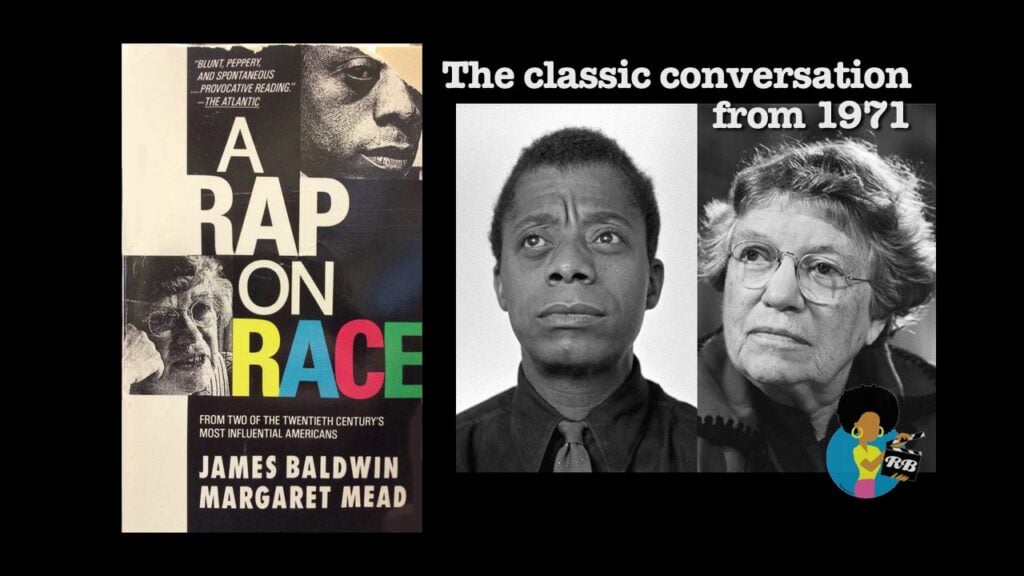
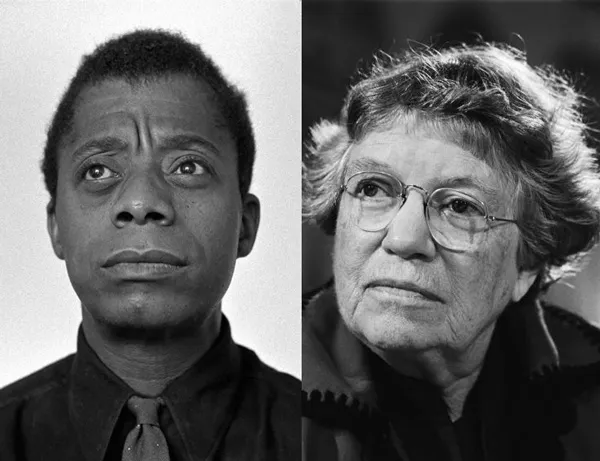
On the evening of August 25, 1970, Margaret Mead (December 16, 1901–November 15, 1978) and James Baldwin (August 2, 1924–December 1, 1987) sat together on a stage in New York City for a remarkable public conversation about such enduring concerns as identity, power and privilege, race and gender, beauty, religion, justice, and the relationship between the intellect and the imagination. By that point, Baldwin, forty-six and living in Paris, was arguably the world’s most famous living poet, and an enormously influential voice in the civil rights dialogue; Mead, who was about to turn seventy, had become the world’s first celebrity academic — a visionary anthropologist with groundbreaking field experience under her belt, who lectured at some of the best cultural institutions and had a popular advice column in Redbook magazine.
Originally posted on Brain Picking here
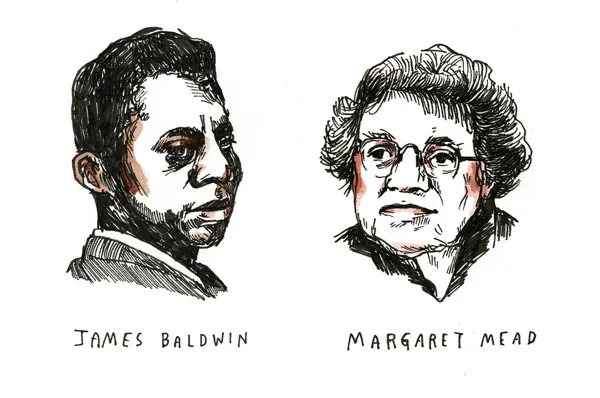
They talked for seven and a half hours of brilliance and bravery over the course of the weekend, bringing to the dialogue the perfect balance of similarity and difference to make it immensely simulating and deeply respectful. On the one hand, as a white woman and black man in the first half of the twentieth century, they had come of age through experiences worlds apart. On the other, they had worlds in common as intellectual titans, avid antidotes to the era’s cultural stereotypes, queer people half a century before marriage equality, and unflinching celebrators of the human spirit.
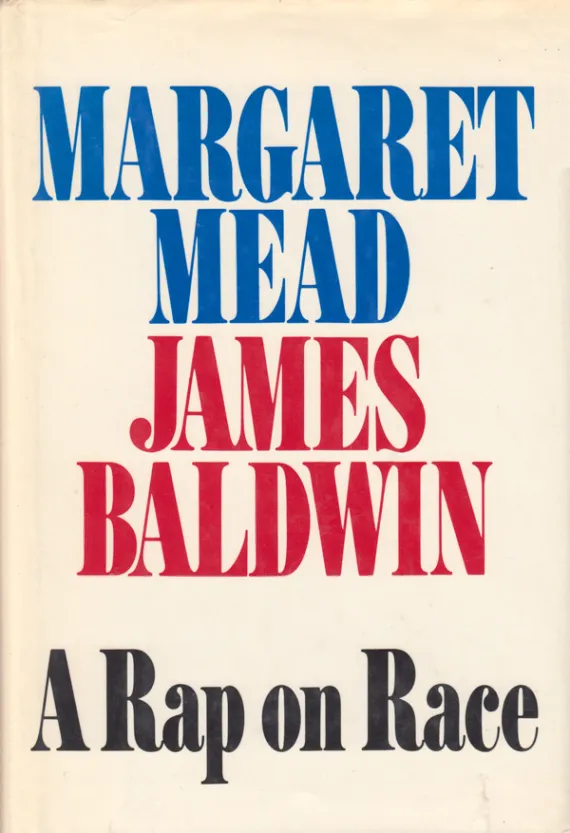
Besides being a remarkable and prescient piece of the cultural record, their conversation, the transcript of which was eventually published as A Rap on Race (public library), is also a bittersweet testament to one of the recurring themes in their dialogue — our tendency to sideline the past as impertinent to the present, only to rediscover how central it is in understanding the driving forces of our world and harnessing them toward a better future. This forgotten treasure, which I dusted off shortly after Ferguson and the Eric Garner tragedy, instantly stopped my breath with its extraordinary timeliness — the ideas with which these two remarkable minds tussled in 1970 had emerged, unsolved and unresolved, to haunt and taunt us four decades later with urgency that can no longer be evaded or denied.
Although some of what is said is so succinctly brilliant that it encapsulates the essence of the issue — at one point, Baldwin remarks: “We’ve got to be as clear-headed about human beings as possible, because we are still each other’s only hope.” — this is nonetheless a conversation so complex, so dimensional, so wide-ranging, that to synthesize it in a single article or highlight a single dominant theme would be to instantly flatten it and strip it of power. Instead, I am going to do something I’ve never done in nearly a decade of Brain Pickings — explore this immensely valuable cultural artifact in a multi-part series examining a specific viewpoint from this zoetrope of genius in each installment, beginning with Mead and Baldwin’s tapestry of perspectives on forgiveness, the difference between guilt and responsibility, and the role of the past in understanding the present and building a more dignified future.
As they bring up their shared heartbreak over the bombing in Birmingham that killed four black girls at Sunday school a month after Martin Luther King’s famous letter on justice and nonviolent resistance, Mead and Baldwin arrive at one of the most profound ongoing threads of this long conversation — the question of guilt, responsibility, and the crucial difference between the two in assuring a constructive rather than destructive path forward:
MEAD: There are different ways of looking at guilt. In the Eastern Orthodox faith, everybody shares the guilt of creatureliness and the guilt for anything they ever thought. Now, the Western Northern-European position and the North American position on the whole is that you’re guilty for things that you did yourself and not for things that other people did.
[…]
BALDWIN: The police in this country make no distinction between a Black Panther or a black lawyer or my brother or me. The cops aren’t going to ask me my name before they pull the trigger. I’m part of this society and I’m in exactly the same situation as anybody else — any other black person — in it. If I don’t know that, then I’m fairly self-deluded… What I’m trying to get at is the question of responsibility. I didn’t drop the bomb [that killed four black school girls in Birmingham]. And I never lynched anybody. Yet I am responsible not for what has happened but for what can happen.
MEAD: Yes, that’s different. I think the responsibility for what can happen, which in a sense is good guilt — which is sort of a nonsensical term —
BALDWIN: Yes, but I know what you mean. It’s useful guilt.
MEAD: Responsibility. It is saying I am going to make an effort to have things changed. But to take the responsibility for something that was done by others —
BALDWIN: Well, you can’t do that.
Mead illustrates the perils of confusing responsibility and guilt with an exquisite example from her own life as a mother, from the time in the mid-1940s when she was heading a university initiative to foster cross-racial and cross-ethnic relationships:
MEAD: I was walking across the Wellesley campus with my four-year-old, who was climbing pine trees instead of keeping up with me.
I said, “You come down out of that pine tree. You don’t have to eat pine needles like an Indian.” So she came down and she asked, “Why do the Indians have to eat pine needles?” I said, “To get their Vitamin C, because they don’t have any oranges.” She asked, “Why don’t they have any oranges?” Then I made a perfectly clear technical error; I said, “Because the white man took their land away from them.” She looked at me and she said, “Am I white?” I said, “Yes, you are white.” “But I didn’t took their land away from them, and I don’t like it to be tooken!” she shouted.
Now if I had said, “The early settlers took their land away,” she would have said, “Am I an early settler?” But I had made a blanket racial category: the white man. It was a noble sentiment, but it was still racial sentiment.
With an eye to this demand for responsibility in the present rather than guilt over the past, the conversation once again reveals its contemporary poignancy:
MEAD: The kids say — and they’re pretty clear about it — that the future is now. It’s no use predicting about the year 2000.
BALDWIN: No.
MEAD: It’s what we do this week that matters.
BALDWIN: Exactly.
MEAD: That’s the only thing there is; there isn’t any other time.
They revisit the subject of guilt, with its perilous religious roots, and the complexities of forgiveness in discussing the crime of slavery:
BALDWIN: I, at the risk of being entirely romantic, think that is the crime which is spoken in the Bible, the sin against the Holy Ghost which cannot be forgiven. And if that is true —
MEAD: Then we’ve nowhere to go.
BALDWIN: No, we have atonement.
MEAD: Not for the sin against the Holy Ghost.
BALDWIN: No?
MEAD: I mean, after all, you were once a theologian.
BALDWIN: I was once a preacher, yes indeed.
MEAD: And the point about the sin against the Holy Ghost is that —
BALDWIN: It is that it cannot be forgiven.
MEAD: So if you state a crime impossible of forgiveness you’ve doomed everyone.
[…]
Look, there have been millions of crimes committed against humanity. Millions! Now, why is one crime more important than another?
BALDWIN: No, my point precisely is that one crime is not more important than another and that all crimes must be atoned for.
MEAD: All right, all crimes… But when you talk about atonement you’re talking about people who weren’t born when this was committed.
BALDWIN: No, I mean the recognition of where one finds one’s self in time or history or now. I mean the recognition. After all, I’m not guiltless, either. I sold my brothers for my sisters —
[…]
MEAD: I will not accept any guilt for what anybody else did. I will accept guilt for what I did myself.
[…]
BALDWIN: We both have produced, all of us have produced, a system of reality which we cannot in any way whatever control; what we call history is perhaps a way of avoiding responsibility for what has happened, is happening, in time.
This is a conversation underpinned by a profound baseline mutual respect and punctuated by wonderfully sweet in-the-moment manifestations of it — Mead and Baldwin frequently repeat each other’s words in a gesture of validation, and even bicker amicably about not letting the other be too self-effacing (“If I’m bright at all, and that’s debatable,” Baldwin says in one aside, and Mead quickly interjects, “It’s not very debatable.” “It’s very debatable to me,” Baldwin counters. “Well, permit somebody else to do the debating,” she quips affably.) But they have no reservations about voicing, if courteously, ideological disagreement — which is what makes the conversation so rich, stimulating, and full of wisdom. One of the most moving instances of this dynamic emerges when they return to their divergent views on guilt and responsibility, only to discover under the surface divergence profound common ground:
MEAD: Did you bomb those little girls in Birmingham?
BALDWIN: I’m responsible for it. I didn’t stop it.
MEAD: Why are you responsible? Didn’t you try to stop it? Hadn’t you been working?
BALDWIN: It doesn’t make any difference what one’s tried.
MEAD: Of course it makes a difference what one’s tried.
BALDWIN: No, not really.
MEAD: This is the fundamental difference. You are talking like a member of the Russian Orthodox Church… “We are all guilty. Because some man suffers, we are all murderers.”
BALDWIN: No, no, no. We are all responsible.
MEAD: Look, you are not responsible.
BALDWIN: That blood is also on my hands.
MEAD: Why?
BALDWIN: Because I didn’t stop it.
MEAD: Is the blood of somebody who is dying in Burma today on your hands?
BALDWIN: Yes, yes.
MEAD: Because you didn’t stop that? That’s what I mean by the Russian Orthodox position, that all of us are guilty of all that has been done or thought —
BALDWIN: Yes.
MEAD: And I will not accept it. I will not.
BALDWIN: “For whom the bell tolls.” … It means everybody’s suffering is mine.
MEAD: Everybody’s suffering is mine but not everybody’s murdering, and that is a very different point. I would accept everybody’s sufferings. I do not distinguish for one moment whether my child is in danger or a child in Central Asia. But I will not accept responsibility for what other people do because I happen to belong to that nation or that race or that religion. I do not believe in guilt by association.
BALDWIN: But, Margaret, I have to accept it. I have to accept it because I am a black man in the world and I am not only in America… I have a green passport and I am an American citizen, and the crimes of this Republic, whether or not I am guilty of them, I am responsible for.
MEAD: But you see, I think there is a difference. I am glad I am an American because I think we can do more harm than any other country on this earth at the moment, so I would rather be inside the country that could do the most harm.
BALDWIN: In the eye of the hurricane.
MEAD: In the eye of the hurricane, because I think I may be able to do more good there.
[…]
We are responsible for that. That we are responsible for those unborn children, black, white, yellow, red-green, as the Seventh-Day Adventists say — all of them. We agree completely on that.
Now, is it necessary at this moment in history … for someone who is black to take a different stance in relation to the past although we take the same stance in relation to the future? Now it may be. You see, the question I was raising earlier is that maybe in order to act one has to take a different stance.
BALDWIN: … Now, a thousand years from now it will not matter; that is perfectly true. A thousand years ago it was worse; that is perfectly true. I am not responsible for that. I am responsible for now.
MEAD: Now.

Reflecting on “that peculiar chemistry which we call time,” Baldwin stresses “the necessity of the long view” — something triply necessary today, amid our epidemic of short-termism — and considers the relationship between the past and the present in making sense of responsibility:
BALDWIN: A man’s life doesn’t encompass even half a thousand years. And whether or not I like it, I am responsible for something which is happening now and fight as hard as I can for the life of everybody on this planet now.
[…]
MEAD: The more one wants to be an activist the narrower the time is.
BALDWIN: Precisely! Precisely!
MEAD: What the kids say … if you cut out all the past —
BALDWIN: You can’t.
[…]
They are acting in the past. They don’t know it. It takes a long time to realize that there is a past… It takes a long time to understand anything at all about what we call the past — and begin to be liberated from it. Those kids are romantic, not even revolutionaries. At least not yet. They don’t know what revolution entails. They think everything is happening in the present. They think they are the present. They think that nothing ever happened before in the whole history of the world.
They return to this dance between past and present a few hours later:
BALDWIN: We are responsible —
MEAD: For the future. For the present and the future.
BALDWIN: If we don’t manage the present there will be no future.
As someone who thinks a great deal about the interplay of hope and cynicism, I was particularly moved by Baldwin’s de facto disclaimer to the whole question of demanding responsibility from others:
BALDWIN: A great deal of what I say just leaves me open, I suppose, to a vast amount of misunderstanding. A great deal of what I say is based on an assumption which I hold and don’t always state. You know my fury about people is based precisely on the fact that I consider them to be responsible, moral creatures who so often do not act that way. But I am not surprised when they do. I am not that wretched a pessimist, and I wouldn’t sound the way I sound if I did not expect what I expect from human beings, if I didn’t have some ultimate faith and love, faith in them and love for them. You see, I am a human being too, and I have no right to stand in judgment of the world as though I am not a part of it. What I am demanding of other people is what I am demanding of myself.
The enactment of this moral optimism, Baldwin argues and Mead agrees, is in the hands of the future generations — those generations to which, half a century later, you and I belong — which lends their conversation extraordinary poignancy:
BALDWIN: The world is scarcely habitable for the conscious young… There is a tremendous national, global, moral waste.
MEAD: I know.
BALDWIN: And the question is, How can it be arrested? That’s the enormous question. Look, you and I both are whatever we have become, and whatever happens to us now doesn’t really matter. We’re done. It’s a matter of the curtain coming down eventually. But what should we do about the children? We are responsible; so far as we are responsible at all, our responsibility lies there, toward them. We have to assume that we are responsible for the future of this world.
MEAD: That’s right.
BALDWIN: What shall we do? How shall we begin it? How can it be accomplished? How can one invest others with some hope?
MEAD: Then we come to a point where I would say it matters to know where we came from. That it matters to know the long, long road that we’ve come through. And this is the thing that gives me hope we can go further.
A Rap on Race is spectacular and pause-giving in its entirety — the kind of perspective-normalizing read that reminds us both how far we’ve come and how much further we have yet to go, equipping us with that delicate balance of outrage and hope that translates into the very moral courage necessary for building a more just and noble world. Complement it with Baldwin on the artist’s responsibility to society and Mead on the root of racism.
We bring you high-quality analyses and documents like this on a permanent basis. Why not appreciate TFF’s true independence and productivity by contributing if you benefited from this article? Thanks.

Maria Popova’s amazing homepage Brain Pickings was founded in 2006 as a weekly email to seven friends, eventually brought online and now included in the Library of Congress permanent web archive, it is a record of my own becoming as a person — intellectually, creatively, spiritually, poetically — drawn from my extended marginalia on the search for meaning across literature, science, art, philosophy, and the various other tentacles of human thought and feeling.
More here.