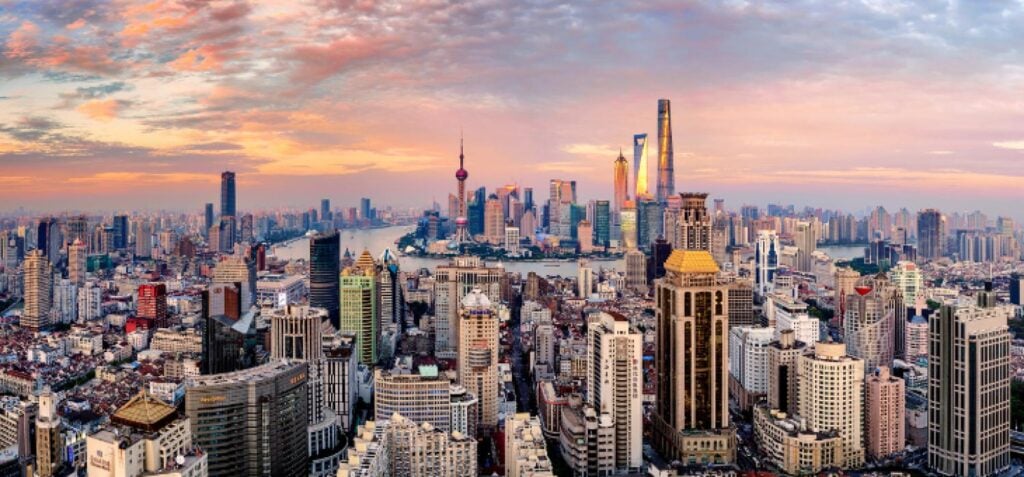

The world’s rising powerhouse

China, the largest economy measured in Purchasing Power Parity | Image from Wall Street International.

In 1986 on returning for my first 3-week visit to China, I wrote an article, “China: Key Player in a New World Game” in The Futurist, December 1986. I had been invited by China’s State Council at the recommendation of my good friends, Alvin and Heidi Toffler, best-selling authors of Future Shock (1970), who both had, and still, have a big following in China.

This surprise invitation was to speak at “The First International Conference on Creativity”, co-sponsored by the United Nations Education & Scientific Cooperation Organization (UNESCO), along with Edward de Bono of Britain and US psychologist/philosopher Jean Houston, author of The Possible Human (1982).

Mystified, I called the phone number in China of Professor Xu, the convenor at Shanghai-based Jiaotong University, and asked why I had been invited to this event, all expenses paid. Professor Xu replied in perfect English, “In China, you are a great scholar and your two books Creating Alternative Futures (1978) and The Politics of the Solar Age (1981) are widely-read in their Chinese translations”.

Naturally, I was intrigued and accepted. Even though I was not aware of these translations, I was thrilled to have my work read by Chinese people and I was excited to make a closer connection with some of China’s 1 billion citizens and their over 5,000-year-old culture.

Fast forward to today and China, the world’s rising powerhouse, already the largest economy measured in Purchasing Power Parity (PPP), which corrects for over and undervalued currencies, which The Economist measures as “The Big Mac Index”, a more inclusive index than the Western-oriented GDP which still dominates mass media.

China is the world’s largest goods-trading partner of 64 countries versus 38 for the USA | Image from Wall Street International.

Today, our 21st Century global economy is no longer dominated by the USA, but is again a multi-polar world. According to The Economist, March 20, 2021, China now makes 22% of global manufactured exports and 15 of China’s tech firms are worth over $50 billion each. China is the world’s largest goods-trading partner of 64 countries versus 38 for the USA.

Western-oriented multi-nationals, Apple, Morgan Stanley, Goldman Sachs, Siemens, Facebook, Starbucks and many others, boost China’s economy. Beijing-dominated Hong Kong, still managing $11 trillion of US dollar payments in 2020, is also still hosting its $10 trillion of cross-border investments.

Meanwhile, China’s mainland attracted $163 billion of multi-national investments in 2020 and opened its capital markets to $900 billion of foreign investments. China’s leadership in solar, wind and batteries, still growing from 2009 to 2020 and today, is documented in our Green Transition Scoreboard® reports.

Over 500 Chinese companies produce electric vehicles, competing with Tesla in mid-range and lower-priced cars selling to Chinese buyers and capturing markets abroad. China’s Belt and Road global expansion is building with its high-speed rail and port-building expertise links to all the countries adjacent to Eurasia’s historic Silk Road.

These connections create infrastructure linking China to Europe, Pakistan, Russia, Vietnam, Cambodia, Sri Lanka along with other South Asian countries and many in Africa and Latin America.

These massive infrastructure investments are China’s form of development assistance loans and diplomacy, criticized by some as creating unrepayable debt. These projects are much cheaper than military hardware, with China’s military budget still a fraction of the US military budget.
China’s mainland attracted $163 billion of multi-national investments in 2020 | Image from Wall Street International.

China’s vaccine diplomacy for Covid 19 is winning friends in many developing countries while its pharmaceuticals, medical supplies and key exports have made the USA dependent, along with other countries on importing millions of cheap consumer items. Continuation of the Trump administration’s tariff policies and sanctions will prove counter-productive, as are its efforts to ban other countries from buying Huawei 5G electronic components.

The European Union inked a trade deal with China, after US requests to delay this until the incoming Biden administration could review it. Even US efforts to sanction China for its human rights violations of Uyghurs in Xinjiang and in Hong Kong are proving ineffective.

China merely deflects these by pointing out that as of the past five years the US form of democracy is failing internally due to racism, voter suppression, minority rule, and is now judged by many former allies as unreliable, after Trump’s dismantling of federal agencies and withdrawals from many treaty obligations.

China’s new approach to development assistance for other countries contrasts with the Western model, as described by Kristen A. Cordell of the Carnegie Endowment for International Peace, March 23, 2021.

Chinese economists are also overhauling their statistics, for the greening of finance and their Green GDP, as well as the approach to steering the Belt and Road projects toward green infrastructure, as Simon Zadek and Ma Jun describe in their report, Decarbonizing the Belt and Road: A Green Finance Roadmap from Shanghai’s Xinhua University, 2020.

China’s robust approach to impact and ethical investing is active in Syntao, headed by co-founders Guo Peiyuan and US asset manager Wayne Silby. Such more granular assessments are welcome on China’s current 5-Year Plan; 2021-2025, its rise as a preeminent world power and its “socialism with Chinese characteristics “displaying its pragmatic mix of markets, government, state-owned enterprises, digital entrepreneurs and monetary politics.
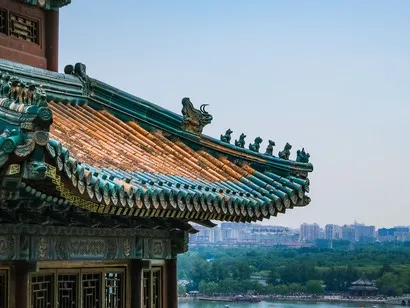
China now makes 22% of global manufactured exports | Image from Wall Street International.

These analyses, including Thomas Orlik’s China: The Bubble That Never Pops (2020), are based on lived experience in China and largely conform to my own. Of course, I share many of the more positive approaches to engaging China now coming from President Biden’s Press Conference of March 25th, based on his long experience and personal meetings with China’s more autocratic President Xi Jinping.

We can expect a careful, honest calibration on many issues between the USA and China, as Biden reknits all US relations with its allies ruptured so carelessly by Trump.

China’s rise is fundamentally different than that of the USA during the 20th Century, with emphasis since the 1980s of both Reagan in the USA and Margaret Thatcher in Britain, based on restoring open markets and prices to guide development and globalization with privatization, open capital markets, free trade and de-regulation.

These money and price-based policies and metrics are still prevalent, as in GDP and still pursued until recently by the World Bank, the International Monetary Fund (IMF) and the World Trade Organization (WTO), under the banner of the “Washington Consensus”.

GDP‘s money and price based cash flow measure was never intended by its inventor Simon Kuznets, to be an overall model of a country’s progress, as emphasized by the European Commission’s Beyond GDP conference in 2007, on which I served as an advisor, presenting the Calvert-Henderson Quality of Life Indicators.

GDP still does not have a separate asset account, as in double-entry book-keeping, to balance all governments’ investments in public goods and services: the vital roads, rails, ports, sewage treatment, public health and education that underpin all markets in all countries, including China and its massive expertise at providing China’s vast domestic infrastructure.

This means that all countries’ debt-to-GDP ratios are over-stated since these investments are recorded in GDP only as “debt”, and not balanced by the valuable public assets they created, along with all the private sector contracts let to private companies to provide them. This much-needed correction means that for 30 years these over-stated “debt-to-GDP ratios” could be cut by up to 50%, with a few keystrokes!
China opened its capital markets to $900 billion of foreign investments | Image from Wall Street International.

Western economists, the international financial institutions (IFIs), including the Bank for International Settlements (BIS) still focus on China’s “debt-to-GDP ratio” as equivalent to 254.4% of its GDP; Bloomberg’s estimate is 276.2 % and others’ estimates reach as high as 328 percent.

Thus, most fears of China’s “bubble” are still based on such faulty metrics. Today, as in most countries, notably in the EU, Canada, the USA and Brazil, politicians have shifted 180 degrees away from austerity, fears of debt, inflation and burdens of interest on our children toward the stimulus and the massive government investments needed to staunch the economic losses due to the pandemic.

Many are finally embracing the new paradigm of Modern Monetary Theory (MMT) which fully recognizes that deficits matter, but so do all these public assets, goods, services and infrastructure which underpin markets and private-sector production.

Prof. Stephanie Kelton, a former economist for the US Senate Budget Committee explains how these ideologies shifted in her The Deficit Myth (2020). Economic advisor to EU governments Mariana Mazzucato makes similar points in her The Entrepreneurial State (2015) and “The Value of Everything (2020). However, her recent view of China seems to reflect a lack of actual experience within China and with its leaders.

This new pragmatism is embraced after the failures of “market fundamentalism “and its misapplication of markets and money in social domains requiring collective government initiatives, where they create all the obvious “market-failures”. I describe these failures in Texas to provide water supplies and electricity in Faith in Electricity, as well as those in climate change, seen as the world’s biggest market failure.

Today, central banks admit that they create their sovereign nations’ money supply directly, issued by buying dud mortgages and other bonds for their asset accounts, as computer entries in their “Quantitative Easing” (Q.E). They also admit that they can create money directly, issuing currencies through their national Treasuries, rather than continuing to cede this immense privilege to their private banks.

These private commercial banks then create new money as loans to their customers, as new computer entries into their accounts. Amazingly, they also additionally impose interest on these loans and rely on the generous government allowances of holding only 10% of their fractional reserves on their books.

Economists, including John Kenneth Galbraith and many others, have described this kind of money creation as politics, with little transparency or effort to distribute this new money fairly, which citizens would find scandalous. In truth, as I point out in Fixing the Money Meme, governments can spend their sovereign currencies directly into their economies, not needing to “borrow” it at interest from private investors through bond dealers.

15 of China’s tech firms are worth over $50 billion each | Image from Wall Street International.

The constitutional authority to coin money is with governments, as in the USA, where Congress has the power of the purse, as described by many critics openly, including our monetary expert, lawyer Ellen Brown, in her many books and founder/president of the Public Banking Institute. In her Engine of Inequality: The Fed and the Future of Wealth in America (2021) monetary expert Karen Petrou spells out the shocking details.

This has always been true in China, where its currency the renminbi (RMB) or “yuan” is issued and controlled by the central Peoples Bank of China and all its government-directed investment banks. This is a reason why Western economists do not understand that Chinese banks will not fail, as Wall Street finance did in the 2008 collapse and 2009 government bailouts.

The diligence, creativity and intellectual achievements I witnessed in my many further trips to China after 1986 are now in full flower. There is already such deep interpenetration between the US and Chinese economies, as with many others in today’s globalization, that fomenting conflicts by any would be a “win-lose” for all, as I described in Building a Win-Win-World: Life Beyond Economic Warfare (1996, 2004 e-book).

Opportunities for mutual cooperation abound: building on and continuing the Paris climate agreements in 2015, in accelerating the growing greener, cleaner, renewable technologies and circular economies and their massive energy efficiency gains for all societies.

China has demonstrated ways of distributing the gains of smarter development internally, by bringing more of its people out of poverty than any other society in the world. China is now focusing on more domestic consumption by its own now affluent consumers, and its leadership in online finance, payments and fintech systems.

There is room for competition, cooperation and creativity in all relationships now demanded on our endangered planet: restoring biodiversity and re-directing assets stranded in fossilized sectors to the Solar Age economies now becoming mainstream investing.

Yet the money-meme and its narrow statistics and fundamentalist market economics still seem to rule the mainstream thinking, even in today’s Mediocracies and Attention Economies.

Yet we also witness both the USA and China joining the 193 signers of the United Nations’ Sustainable Development Goals (SDGs) and both countries still operating with the global rules generated by all the other UN treaties they have ratified. Therefore, like many other recent commentators, I see no need for any new “Cold War” between the USA and China.

There are so many deep connections and frank interchanges on internet access, regulation of harmful social media disinformation, research on pandemics, vaccines and sharing in global governance standards and bodies in UN treaties and all its agencies. This vision is spelled out by Prof. Zhouying Jin, of China’s prestigious Chinese Academy of Social Sciences in Beijing in her masterful The Future of Humanity: Global Civilization and China’s Rejuvenation (2018) in which I was honored to write a Preface.

As I wrote in 1996 of the global shifts to attention economies, we are seeing that consumers are now seeking experience and expanding their horizons, rather than ever more consumption of planet-destroying material goods. We are Steering our Powers of Persuasion Toward Human Goals on this planet, together!

One Response

  1. Thanks to Hazel. I well remember her earlier books. She still seems to have the Western conceit and believes in the alleged Chinese human rights violations, as if the USA∕UK etc are in a position to criticise as they invade, occupy, destroy and sanction “enemies” while China cooperates in win-win projects. I hope she is correct about Biden, but so far his record is not very positive.

Related Posts

Jan Oberg, TFF director April 9, 2026 I was recently invited to have a good, long talk about the world – and, of course, about peace too – with Boris Malagurski on his Weight of Chains Channel on YouTube. It was a real joy and seems to have been greatly appreciated by the viewers too. Mr Malagurski and I shall of course be grateful if you share this conversation in your circles – of course, only if you like what you see and hear 😉☮️ And remember that this one – like hundreds of others with TFF Associates – can be enjoyed at our TFF Video Collection.
A friendly quarrel while we agree that the US sanctions are a weapon of mass destruction and kill more people than wars do. And that we must talk much more about sanctions than we have so far. Jan Oberg, TFF director March 16, 2026 John Mearsheimer recently stated that U.S. sanctions murdered around 38 million people between 1971 and 2021 – see the video below. It is a dramatic figure, and it has spread quickly because it captures, in one sentence, the enormous human cost of modern sanctions. I share his concern about the destructive effects of economic coercion. But the specific number he cites — and the way he attributes it — deserves a friendly academic clarification. The figure comes from a 2023 Lancet Global Health article estimating the mortality effects of unilateral U.S. and EU sanctions over the past half‑century. This is the first point where Mearsheimer’s shorthand diverges from the text: the study...
This is not another geopolitical commentary on the Arctic. It is a visionary peace proposal that can save the region from militarised rivalry and ecological ruin. A blueprint for shared security, sustainable development, and human dignity — benefitting Greenland, the Arctic, and the rest of us. Jan Oberg TFF director Lund, Sweden, February 17, 2026 I. Four Principles for a New Arctic Vision The Arctic is often framed as a cold arena of rivalry — a place where great powers test each other’s resolve. But this worldview is outdated, unimaginative, and ultimately self‑defeating. The Arctic is not a vacuum waiting to be militarised; it is a living region, a climate stabiliser, and a cultural homeland whose future will shape the future of humanity. If we begin from that understanding, a far more rational Arctic order becomes possible — one that is peaceful, cooperative, and centred on the people who actually live there. This vision rests...

Recent Articles

Tony Robinson October 4, 2026 Violence is easy to recognise when someone is being beaten, shot or killed. It becomes more difficult when nobody is holding a weapon. Poverty, discrimination, exploitation and repression can restrict a human life just as effectively, although they do so in very different ways and with very different consequences. Simply adding more categories to an ever-growing list of forms of violence does not really solve the problem. The more interesting question is what all these different situations have in common and why it makes sense to describe them using the same word. Human beings do not simply react to what happens around them. They remember the past, imagine things that do not yet exist, make plans and undertake projects. Workers organise because they imagine different working conditions; people migrate because they imagine another life somewhere else; social movements emerge because people refuse to accept the...
It’s a matter of principles, courage, vision and pulling together – while the militarist world is falling apart… Peter Langille October 3, 2026 “Here, then, is the problem which we present to you, stark and dreadful and inescapable: Shall we put an end to the human race; or shall mankind renounce war?”The Bertrand Russell—Albert Einstein Manifesto, July 9, 1955 ⁕ The forecast for what’s ahead is worrisome. The sharp rise in armed conflicts over the past three years is adding to what was already the highest level in over seventy years. Genocides, which should be prevented are supported. A shared climate emergency that jeopardises survival is ignored. Diverse polls now suggest that people are war-weary, worried and interested in a more effective United Nations. And, there are viable policy options for a more secure world! Yet governments are doubling-down, betting on more war and investing heavily. If current trends persist,...
Johan Galtung 1930-2024October 2015 Published here on October 3, 2026 Let us focus on Civilization for conflict analysis and remedies. Major forms of disorder use violence; war is state organized violence. The most belligerent states are the United States of America and Israel, both with civilization roots. National Evangelism, the US Protestant Christian civilization– more national than evangelical–justifies US warfare as exceptionalism of a people chosen by God, with a manifest destiny to run the world. Orthodox Judaism justifies Israeli warfare to conquer and expand from Nile to Euphrates as a religious right and duty to the Eternal One. The third most belligerent country, the UK, no longer believes it is God-chosen but chosen by the USA; not quite the same but something. But the root cause of global disorder lies in the Occident–with Islam–seeing itself as the single, universal civilization valid for all at all times, all others being...

TFF on Substack

Discover and subscribe to more peace materials on TFF Substack

Most Popular

Tony Robinson October 4, 2026 Violence is easy to recognise when someone is being beaten, shot or killed. It becomes more difficult when nobody is holding a weapon. Poverty, discrimination, exploitation and repression can restrict a human life just as effectively, although they do so in very different ways and with very different consequences. Simply adding more categories to an ever-growing list of forms of violence does not really solve the problem. The more interesting question is what all these different situations have in common and why it makes sense to describe them using the same word. Human beings do not simply react to what happens around them. They remember the past, imagine things that do not yet exist, make plans and undertake projects. Workers organise because they imagine different working conditions; people migrate because they imagine another life somewhere else; social movements emerge because people refuse to accept the...
It’s a matter of principles, courage, vision and pulling together – while the militarist world is falling apart… Peter Langille October 3, 2026 “Here, then, is the problem which we present to you, stark and dreadful and inescapable: Shall we put an end to the human race; or shall mankind renounce war?”The Bertrand Russell—Albert Einstein Manifesto, July 9, 1955 ⁕ The forecast for what’s ahead is worrisome. The sharp rise in armed conflicts over the past three years is adding to what was already the highest level in over seventy years. Genocides, which should be prevented are supported. A shared climate emergency that jeopardises survival is ignored. Diverse polls now suggest that people are war-weary, worried and interested in a more effective United Nations. And, there are viable policy options for a more secure world! Yet governments are doubling-down, betting on more war and investing heavily. If current trends persist,...
Johan Galtung 1930-2024October 2015 Published here on October 3, 2026 Let us focus on Civilization for conflict analysis and remedies. Major forms of disorder use violence; war is state organized violence. The most belligerent states are the United States of America and Israel, both with civilization roots. National Evangelism, the US Protestant Christian civilization– more national than evangelical–justifies US warfare as exceptionalism of a people chosen by God, with a manifest destiny to run the world. Orthodox Judaism justifies Israeli warfare to conquer and expand from Nile to Euphrates as a religious right and duty to the Eternal One. The third most belligerent country, the UK, no longer believes it is God-chosen but chosen by the USA; not quite the same but something. But the root cause of global disorder lies in the Occident–with Islam–seeing itself as the single, universal civilization valid for all at all times, all others being...
Read More
Living-Peace-Sign-Budapest-copy
Tony Robinson October 4, 2026 Violence is easy to recognise when someone is being beaten, shot or killed. It becomes more difficult when nobody is holding a weapon. Poverty, discrimination, exploitation and repression can restrict a human life just as effectively, although they do so in very different ways and with very different consequences. Simply adding more categories to an ever-growing list of forms of violence does not really solve the problem. The more interesting question is what all these different situations have in common and why it makes sense to describe them using the same word. Human beings do not simply react to what happens around them. They remember the past, imagine things that do not yet exist, make plans and undertake projects. Workers organise because they imagine different working conditions; people migrate because they imagine another life somewhere else; social movements emerge because people refuse to accept the...
b54a1f10-8c65-4f0b-9dd5-4abc0a7d04cc_2659x2659
It’s a matter of principles, courage, vision and pulling together – while the militarist world is falling apart… Peter Langille October 3, 2026 “Here, then, is the problem which we present to you, stark and dreadful and inescapable: Shall we put an end to the human race; or shall mankind renounce war?”The Bertrand Russell—Albert Einstein Manifesto, July 9, 1955 ⁕ The forecast for what’s ahead is worrisome. The sharp rise in armed conflicts over the past three years is adding to what was already the highest level in over seventy years. Genocides, which should be prevented are supported. A shared climate emergency that jeopardises survival is ignored. Diverse polls now suggest that people are war-weary, worried and interested in a more effective United Nations. And, there are viable policy options for a more secure world! Yet governments are doubling-down, betting on more war and investing heavily. If current trends persist,...
010
Johan Galtung 1930-2024October 2015 Published here on October 3, 2026 Let us focus on Civilization for conflict analysis and remedies. Major forms of disorder use violence; war is state organized violence. The most belligerent states are the United States of America and Israel, both with civilization roots. National Evangelism, the US Protestant Christian civilization– more national than evangelical–justifies US warfare as exceptionalism of a people chosen by God, with a manifest destiny to run the world. Orthodox Judaism justifies Israeli warfare to conquer and expand from Nile to Euphrates as a religious right and duty to the Eternal One. The third most belligerent country, the UK, no longer believes it is God-chosen but chosen by the USA; not quite the same but something. But the root cause of global disorder lies in the Occident–with Islam–seeing itself as the single, universal civilization valid for all at all times, all others being...
Screenshot 2026-10-02 011738
Jan ObergPhD, director, The Transnational Foundation for Peace and Future Research, TFFLund, Sweden October 2, 2026 This is my full original manuscript. The Chinese Academy of Social Science, CASS, makes two publications out if it. 1. China’s Five-year plan emphasized the capabilities of basic research and original innovation. It is regarded as the goal of the future social development, which, as required, should be significantly enhanced. Can you comment on the importance of original innovation in research and academic study? I believe it is easier to define “original innovation” in the natural sciences than in social sciences. The breaking points of what constitutes something new, or innovative, are not quite as sharp in the latter. But in both fields it is about opening up something that was closed, unseen, unexplored before – making manifest what was earlier latent. Innovations come in many forms and shapes – naming something that was not...
arctic-circle-map
The agreement is catastrophic both because of what it says and what it doesn’t mention. It reduces further the major asset of security policies: Freedom of action. Jan Oberg TFF director September 25, 2026 A couple of hours before the agreement was signed on September 22, 2026, I published the following 13 hypotheses about what it would most likely contain on TFF Substack (in English). I was wrong on only the first point. Contrary to what Trump had written on his Truth Social platform, it does not appear to come into force immediately. In fact, it turned out to be worse than even I had anticipated. After these hypotheses now come a number of reflections in light of what the agreement actually contains, and does not contain, as well as the way in which it has generally been presented by major media outlets and by the public-service broadcaster DR. My...
girl-5894831_1280
Below are TFF-related media mentions, comments, videos and social media posts published elsewhere but not on this homepage. We happen to catch and list only a fraction. Regarding video comments and debates, we recommend that you go to the TFF Video Channel on Substack where many of them are reproduced. Jan Oberg is a contributor to China Daily – 52 million daily clicks – and Global Times, CGTN and CCTV (the national television), China Investment, Xinhua News Agency and several others. Articles and videos on these media very often multiply into countless Chinese (and Western media) that re-post them from these main media. Thanks to The China Academy, his analyses, interviews and comments are frequently posted on YouTube channels such as Thinkers Forum and Wave Media. These videos are often re-posted on Bilibili (China’s YouTube), the China Content Center on TikTok, and on the Chinese edition of TikTok, Douyin.com. This means reaching hundreds of millions of viewers worldwide over a year. While there are too many to catch on all these...