

Why we need to move closer to King’s understanding of nonviolence

Kazu Haga

February 9, 2021

Nonviolence is not simply the absence of violence, but about taking a proactive stand against violence and injustice, and working to repair the harm.

Originally posted on Waging NonViolence on January 16, 2020

The following is an edited version of a chapter from Kazu Haga’s new book, “Healing Resistance: A Radically Different Response to Harm,” published with permission from Parallax Press.

In Kingian Nonviolence, a philosophy developed out of the teachings of Martin Luther King Jr., there is a distinction made between nonviolence spelled with a hyphen, and nonviolence spelled without a hyphen. “Non-violence” is essentially two words: “without” “violence.” When spelled this way, it only describes the absence of violence. As long as I am “not being violent,” I am practicing non-violence. And that is the biggest misunderstanding of nonviolence that exists.

I live in one of the most diverse neighborhoods in Oakland, with an equal mix of black, Latino and Asian residents. One day, I was taking a nap in my apartment when I was woken up by a couple yelling at each other below my second-story window. I decided to get out of bed and look, and I saw a woman on the ground being beaten, crying and screaming for help. I jumped up, put on my shoes and ran downstairs. By the time I arrived, about 15 of my neighbors had also come outside, but they were just watching this woman get beat, doing nothing to help. I managed to break up the fight and get the two to walk away from each other, one fuming with anger and the other in tears.

My neighbors who were just watching this were practicing “non hyphen violence.” They weren’t throwing punches or kicks. They were explicitly being “not violent.” So, you see how, from a Kingian perspective, what a difference that little hyphen makes. You see how big of a misunderstanding it can create if we think that nonviolence is simply about the absence of violence. If we define nonviolence as “not violent,” then we can hide behind the veil of nonviolence while still condoning violence.

It’s easy to be a bystander. We see rising homelessness, and we turn the other way. We see unarmed black folks being killed by police, and we blame the victim. We hear about high suicide rates among LGBTQ youth, and we do little or nothing about it. We read reports on the climate crisis but leave it to the next generation to deal with. We watch our communities and the earth being assaulted every day, and we just gather around and watch.

Nonviolence is not about what not to do. It is about what you are going to do about the violence and injustice we see in our own hearts, our homes, our neighborhoods and society at large. It is about taking a proactive stand against violence and injustice. Nonviolence is about action, not inaction.

Negative peace

This misunderstanding of nonviolence leads to a dangerous misunderstanding of peace. Similar to the misunderstandings of nonviolence, calling for a misunderstood peace can be an act of violence. On February 3, 1956, a woman named Autherine Lucy became the first black student to attend classes at the University of Alabama. Within days of her arrival, riots broke out. A mob of more than a thousand people surrounded the car she was travelling in, and rioters climbed on top.

In response, the university expelled Lucy. They claimed that her presence was causing a threat to the safety of the school. The following day, the riots stopped. The local newspaper ran a headline that read, “Things are quiet in Tuscaloosa today. There is peace on the campus of the University of Alabama.”

There is peace. What kind of peace was the paper talking about?

One month later, King gave a sermon in response to this titled, “When Peace Becomes Obnoxious.” In it, he said the peace the newspapers described was not a real peace. He said that this is “the type of peace that all men of goodwill hate. It is the type of peace that is obnoxious. It is the type of peace that stinks in the nostrils of the Almighty God.” Strong words from the man who would go on to win the Nobel Peace Prize. When King spoke of a “peace boiled down to stagnant complacency,” he was talking about what peace educator Johan Galtung calls “negative peace,” a peace that describes the absence of tension at the expense of justice. King went on to say that, “peace is not merely the absence of tension, but the presence of justice.”

Oftentimes, we think of peace as calm and quiet. We conjure up images of watching the sunset on a tropical beach, meditating in the forest by a creek, incense and scented candles. That can be as problematic as thinking that nonviolence is about not being violent. I guarantee you that the moment after the atomic bomb was dropped on Hiroshima, things were really quiet. So did we create peace? If someone is screaming in my face, and I stop them by knocking them unconscious, did I just create peace?

It is easier in the short term to sweep issues under the rug and settle for a cheap yet ultimately unsustainable negative peace.

As ridiculous as that sounds, this is how our society tries to create peace, because we have such a gross misunderstanding of it. This is what allows us to justify going to war to create peace. If we just kill all the terrorists, we’ll have peace. It justifies the militarization of the police. If we just lock up all the protesters, then our streets will be quiet and peaceful. It justifies mass incarceration. If we just lock up all the bad people, we’ll have peaceful neighborhoods.

Negative peace is prevalent in many of our relationships, homes, workplaces, faith communities and institutions. This is often the type of negative peace created and maintained by a ubiquitous, unspoken understanding that surfacing conflict is not welcome. My home country of Japan deals with this type of negative peace on a national level. As a culture, we tend to be conflict-averse. We are taught that the honorable thing is to hold it in, keep our heads down and endure. It is considered rude to bring up difficult topics that could create tension because we would be placing a burden on others. It’s impolite. So we endure.

Japan may be one of the safest nations on Earth in terms of violent crime, and from the outside looking in, it looks peaceful. But we also have one of the highest suicide rates in the world. To learn to endure life’s challenges with dignity can absolutely be a positive trait, but when it results in a nation of people trying to simply endure trauma, isolation and living a life without purpose — when people are taught not to speak out about injustice and oppression and to “stay in their place” — that’s repression. It is negative peace.

I once heard someone describe this phenomenon as the “tyranny of civility.” We’re told in corporate workplaces not to speak out about sexual harassment because it would “create conflict.” We’re told in our churches not to question the use of church funds because “it’s improper.” So we go on pretending there’s no problem. Enduring.

We see this everywhere in our society today. Racism? Not a problem anymore; the only people still talking about racism are the racists! Patriarchy? Look at all the women leading major corporations now! Poverty? The economy has never been better! Look at the stock market!

It is easier in the short term to sweep issues under the rug and settle for a cheap yet ultimately unsustainable negative peace. It is an entirely different conversation to proactively work against violence and build toward a positive peace that includes justice for all. It requires us to lift the veil off injustice and work to repair the harm.

Disturbing complacency

When we associate peace with only the absence of tension, we actually move farther away from the positive peace that King called for. In his “Letter from a Birmingham Jail,” he wrote, “My citing the creation of tension as part of the work of the nonviolent resister may sound rather shocking. But I must confess that I am not afraid of the word ‘tension.’ I have earnestly opposed violent tension, but there is a type of constructive, nonviolent tension which is necessary for growth.”

In 2015, in response to the police killing of Freddie Gray, the city of Baltimore erupted into an uprising. This included some members of the Baltimore community engaging in acts of violence. Buildings were burned. Car windows were smashed. Former Baltimore Ravens star Ray Lewis implored the protesters to “stop the violence.”

When we use nonviolence to confront violence and injustice, we are not disturbing the peace, we are disturbing complacency.

As a nonviolence trainer, I don’t necessarily think that burning buildings is the most effective tactic to creating lasting change. And at the same time, I was disappointed at Lewis’s statement. There is great irony in his call for protesters to “stop the violence.” Because that is exactly what the protesters were trying to do. The uprising in Baltimore wasn’t only about the killing of Freddie Gray. It was a response to 500 years of violence against people of African descent in this country. People were out in the streets because they were the ones sick of the violence perpetrated in their communities for so long.

King once said, “A riot is the language of the unheard.” Riots are ultimately a cry for peace from communities who have never had it. To condemn oppressed people for lashing out against centuries of violence is to ignore the larger context of violence they are lashing out against. It is the inevitable response from a community whose pain had gone unacknowledged for centuries.

Calls for Black Lives Matter protesters to be peaceful following the latest police killing can be a form of repression. It is a call for peace that acts as a euphemism for “stop complaining” and “stay in your place.” Peace is messy. Justice is loud. If we expect that creating peace in a society as violent as the United States will be a neat, calm and quiet process, we will be in for a rude awakening.

Real peace-building requires us to learn to have the conversations we don’t want to have with our families and with society. It may require us to hold interventions, shut down highways or perform other acts of resistance. When we do those things, we are not creating the conflict. We are simply surfacing the conflict that already exists so that it can be addressed.

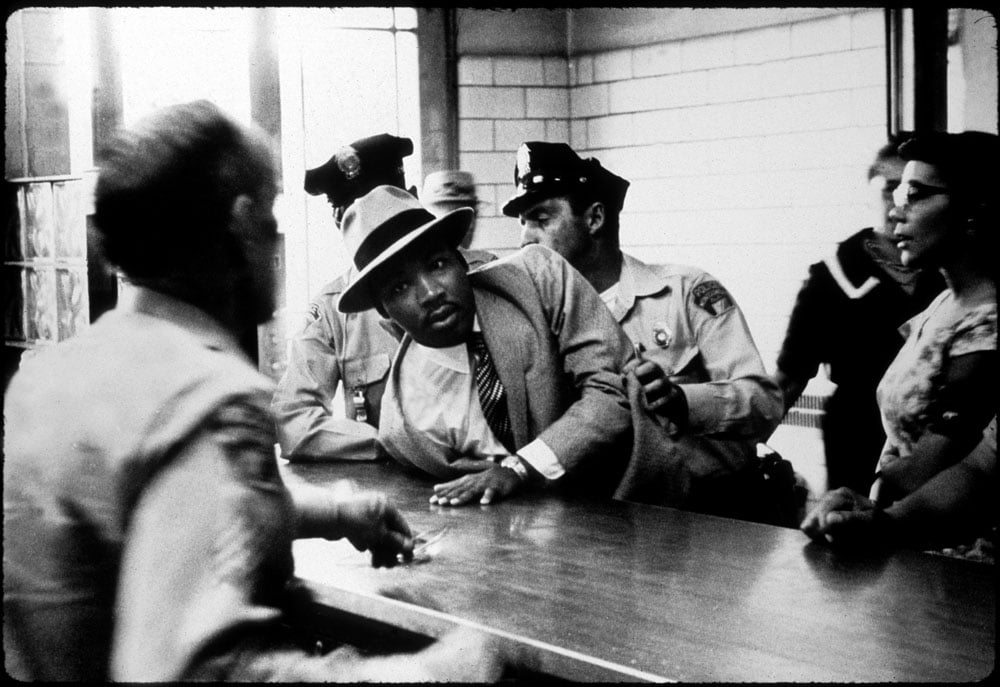
King was arrested 29 times in his short life. Many of those times, he was charged with “disturbing the peace.” Think about that for a moment. Let that sink in.

This still happens today to many activists. When we use nonviolence to confront violence and injustice, we are not disturbing the peace, we are disturbing complacency. We are disturbing the normalization of violence. We are disturbing negative peace. When massive homeless encampments become normalized, we need to disturb that. When we accept a 50 percent dropout rate from urban high schools, we need to disturb that. When we invest in a prison system that produces an 83 percent recidivism rate, we need to disturb that. When corporate interests are destroying our planet and endangering the livelihoods of future generations, we need to disturb that.

The charge of “disturbing the peace” should be stricken from the criminal codes of this country until we finally learn to live in real, positive peace. We cannot disturb something that doesn’t exist in the first place. When we engage in the hard work of nonviolence and social change, we are not disturbing peace. We are fighting for it.

Please help TFF remain truly independent and highly productive by contributing if you benefited from this article
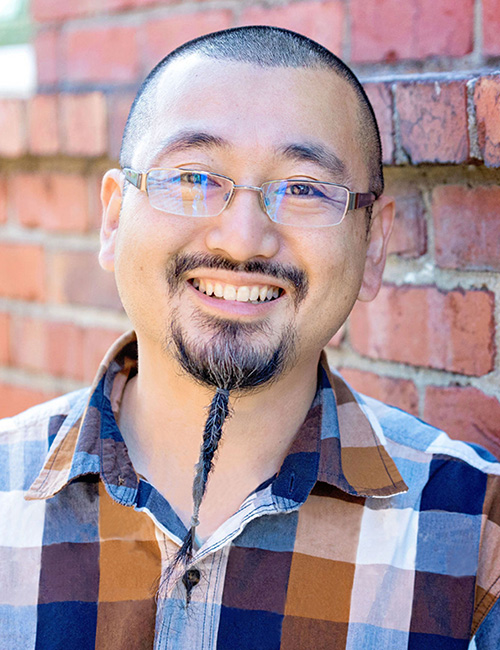
Kazu Haga is the founder of the East Point Peace Academy, a core member of the Ahimsa Collective and the Yet-To-Be-Named Network, and the author of the book, “Healing Resistance: A Radically Different Response to Harm.” He has been active in social change movements since the age of 17, and facilitates nonviolence, restorative justice, mindfulness and organizing workshops in prisons and communities across the country.


Related Posts

Tony Robinson October 4, 2026 Violence is easy to recognise when someone is being beaten, shot or killed. It becomes more difficult when nobody is holding a weapon. Poverty, discrimination, exploitation and repression can restrict a human life just as effectively, although they do so in very different ways and with very different consequences. Simply adding more categories to an ever-growing list of forms of violence does not really solve the problem. The more interesting question is what all these different situations have in common and why it makes sense to describe them using the same word. Human beings do not simply react to what happens around them. They remember the past, imagine things that do not yet exist, make plans and undertake projects. Workers organise because they imagine different working conditions; people migrate because they imagine another life somewhere else; social movements emerge because people refuse to accept the...
It’s a matter of principles, courage, vision and pulling together – while the militarist world is falling apart… Peter Langille October 3, 2026 “Here, then, is the problem which we present to you, stark and dreadful and inescapable: Shall we put an end to the human race; or shall mankind renounce war?”The Bertrand Russell—Albert Einstein Manifesto, July 9, 1955 ⁕ The forecast for what’s ahead is worrisome. The sharp rise in armed conflicts over the past three years is adding to what was already the highest level in over seventy years. Genocides, which should be prevented are supported. A shared climate emergency that jeopardises survival is ignored. Diverse polls now suggest that people are war-weary, worried and interested in a more effective United Nations. And, there are viable policy options for a more secure world! Yet governments are doubling-down, betting on more war and investing heavily. If current trends persist,...
Johan Galtung 1930-2024October 2015 Published here on October 3, 2026 Let us focus on Civilization for conflict analysis and remedies. Major forms of disorder use violence; war is state organized violence. The most belligerent states are the United States of America and Israel, both with civilization roots. National Evangelism, the US Protestant Christian civilization– more national than evangelical–justifies US warfare as exceptionalism of a people chosen by God, with a manifest destiny to run the world. Orthodox Judaism justifies Israeli warfare to conquer and expand from Nile to Euphrates as a religious right and duty to the Eternal One. The third most belligerent country, the UK, no longer believes it is God-chosen but chosen by the USA; not quite the same but something. But the root cause of global disorder lies in the Occident–with Islam–seeing itself as the single, universal civilization valid for all at all times, all others being...

Recent Articles

Tony Robinson October 4, 2026 Violence is easy to recognise when someone is being beaten, shot or killed. It becomes more difficult when nobody is holding a weapon. Poverty, discrimination, exploitation and repression can restrict a human life just as effectively, although they do so in very different ways and with very different consequences. Simply adding more categories to an ever-growing list of forms of violence does not really solve the problem. The more interesting question is what all these different situations have in common and why it makes sense to describe them using the same word. Human beings do not simply react to what happens around them. They remember the past, imagine things that do not yet exist, make plans and undertake projects. Workers organise because they imagine different working conditions; people migrate because they imagine another life somewhere else; social movements emerge because people refuse to accept the...
It’s a matter of principles, courage, vision and pulling together – while the militarist world is falling apart… Peter Langille October 3, 2026 “Here, then, is the problem which we present to you, stark and dreadful and inescapable: Shall we put an end to the human race; or shall mankind renounce war?”The Bertrand Russell—Albert Einstein Manifesto, July 9, 1955 ⁕ The forecast for what’s ahead is worrisome. The sharp rise in armed conflicts over the past three years is adding to what was already the highest level in over seventy years. Genocides, which should be prevented are supported. A shared climate emergency that jeopardises survival is ignored. Diverse polls now suggest that people are war-weary, worried and interested in a more effective United Nations. And, there are viable policy options for a more secure world! Yet governments are doubling-down, betting on more war and investing heavily. If current trends persist,...
Johan Galtung 1930-2024October 2015 Published here on October 3, 2026 Let us focus on Civilization for conflict analysis and remedies. Major forms of disorder use violence; war is state organized violence. The most belligerent states are the United States of America and Israel, both with civilization roots. National Evangelism, the US Protestant Christian civilization– more national than evangelical–justifies US warfare as exceptionalism of a people chosen by God, with a manifest destiny to run the world. Orthodox Judaism justifies Israeli warfare to conquer and expand from Nile to Euphrates as a religious right and duty to the Eternal One. The third most belligerent country, the UK, no longer believes it is God-chosen but chosen by the USA; not quite the same but something. But the root cause of global disorder lies in the Occident–with Islam–seeing itself as the single, universal civilization valid for all at all times, all others being...

TFF on Substack

Discover and subscribe to more peace materials on TFF Substack

Most Popular

Tony Robinson October 4, 2026 Violence is easy to recognise when someone is being beaten, shot or killed. It becomes more difficult when nobody is holding a weapon. Poverty, discrimination, exploitation and repression can restrict a human life just as effectively, although they do so in very different ways and with very different consequences. Simply adding more categories to an ever-growing list of forms of violence does not really solve the problem. The more interesting question is what all these different situations have in common and why it makes sense to describe them using the same word. Human beings do not simply react to what happens around them. They remember the past, imagine things that do not yet exist, make plans and undertake projects. Workers organise because they imagine different working conditions; people migrate because they imagine another life somewhere else; social movements emerge because people refuse to accept the...
It’s a matter of principles, courage, vision and pulling together – while the militarist world is falling apart… Peter Langille October 3, 2026 “Here, then, is the problem which we present to you, stark and dreadful and inescapable: Shall we put an end to the human race; or shall mankind renounce war?”The Bertrand Russell—Albert Einstein Manifesto, July 9, 1955 ⁕ The forecast for what’s ahead is worrisome. The sharp rise in armed conflicts over the past three years is adding to what was already the highest level in over seventy years. Genocides, which should be prevented are supported. A shared climate emergency that jeopardises survival is ignored. Diverse polls now suggest that people are war-weary, worried and interested in a more effective United Nations. And, there are viable policy options for a more secure world! Yet governments are doubling-down, betting on more war and investing heavily. If current trends persist,...
Johan Galtung 1930-2024October 2015 Published here on October 3, 2026 Let us focus on Civilization for conflict analysis and remedies. Major forms of disorder use violence; war is state organized violence. The most belligerent states are the United States of America and Israel, both with civilization roots. National Evangelism, the US Protestant Christian civilization– more national than evangelical–justifies US warfare as exceptionalism of a people chosen by God, with a manifest destiny to run the world. Orthodox Judaism justifies Israeli warfare to conquer and expand from Nile to Euphrates as a religious right and duty to the Eternal One. The third most belligerent country, the UK, no longer believes it is God-chosen but chosen by the USA; not quite the same but something. But the root cause of global disorder lies in the Occident–with Islam–seeing itself as the single, universal civilization valid for all at all times, all others being...
Read More
Living-Peace-Sign-Budapest-copy
Tony Robinson October 4, 2026 Violence is easy to recognise when someone is being beaten, shot or killed. It becomes more difficult when nobody is holding a weapon. Poverty, discrimination, exploitation and repression can restrict a human life just as effectively, although they do so in very different ways and with very different consequences. Simply adding more categories to an ever-growing list of forms of violence does not really solve the problem. The more interesting question is what all these different situations have in common and why it makes sense to describe them using the same word. Human beings do not simply react to what happens around them. They remember the past, imagine things that do not yet exist, make plans and undertake projects. Workers organise because they imagine different working conditions; people migrate because they imagine another life somewhere else; social movements emerge because people refuse to accept the...
b54a1f10-8c65-4f0b-9dd5-4abc0a7d04cc_2659x2659
It’s a matter of principles, courage, vision and pulling together – while the militarist world is falling apart… Peter Langille October 3, 2026 “Here, then, is the problem which we present to you, stark and dreadful and inescapable: Shall we put an end to the human race; or shall mankind renounce war?”The Bertrand Russell—Albert Einstein Manifesto, July 9, 1955 ⁕ The forecast for what’s ahead is worrisome. The sharp rise in armed conflicts over the past three years is adding to what was already the highest level in over seventy years. Genocides, which should be prevented are supported. A shared climate emergency that jeopardises survival is ignored. Diverse polls now suggest that people are war-weary, worried and interested in a more effective United Nations. And, there are viable policy options for a more secure world! Yet governments are doubling-down, betting on more war and investing heavily. If current trends persist,...
010
Johan Galtung 1930-2024October 2015 Published here on October 3, 2026 Let us focus on Civilization for conflict analysis and remedies. Major forms of disorder use violence; war is state organized violence. The most belligerent states are the United States of America and Israel, both with civilization roots. National Evangelism, the US Protestant Christian civilization– more national than evangelical–justifies US warfare as exceptionalism of a people chosen by God, with a manifest destiny to run the world. Orthodox Judaism justifies Israeli warfare to conquer and expand from Nile to Euphrates as a religious right and duty to the Eternal One. The third most belligerent country, the UK, no longer believes it is God-chosen but chosen by the USA; not quite the same but something. But the root cause of global disorder lies in the Occident–with Islam–seeing itself as the single, universal civilization valid for all at all times, all others being...
Screenshot 2026-10-02 011738
Jan ObergPhD, director, The Transnational Foundation for Peace and Future Research, TFFLund, Sweden October 2, 2026 This is my full original manuscript. The Chinese Academy of Social Science, CASS, makes two publications out if it. 1. China’s Five-year plan emphasized the capabilities of basic research and original innovation. It is regarded as the goal of the future social development, which, as required, should be significantly enhanced. Can you comment on the importance of original innovation in research and academic study? I believe it is easier to define “original innovation” in the natural sciences than in social sciences. The breaking points of what constitutes something new, or innovative, are not quite as sharp in the latter. But in both fields it is about opening up something that was closed, unseen, unexplored before – making manifest what was earlier latent. Innovations come in many forms and shapes – naming something that was not...
arctic-circle-map
The agreement is catastrophic both because of what it says and what it doesn’t mention. It reduces further the major asset of security policies: Freedom of action. Jan Oberg TFF director September 25, 2026 A couple of hours before the agreement was signed on September 22, 2026, I published the following 13 hypotheses about what it would most likely contain on TFF Substack (in English). I was wrong on only the first point. Contrary to what Trump had written on his Truth Social platform, it does not appear to come into force immediately. In fact, it turned out to be worse than even I had anticipated. After these hypotheses now come a number of reflections in light of what the agreement actually contains, and does not contain, as well as the way in which it has generally been presented by major media outlets and by the public-service broadcaster DR. My...
girl-5894831_1280
Below are TFF-related media mentions, comments, videos and social media posts published elsewhere but not on this homepage. We happen to catch and list only a fraction. Regarding video comments and debates, we recommend that you go to the TFF Video Channel on Substack where many of them are reproduced. Jan Oberg is a contributor to China Daily – 52 million daily clicks – and Global Times, CGTN and CCTV (the national television), China Investment, Xinhua News Agency and several others. Articles and videos on these media very often multiply into countless Chinese (and Western media) that re-post them from these main media. Thanks to The China Academy, his analyses, interviews and comments are frequently posted on YouTube channels such as Thinkers Forum and Wave Media. These videos are often re-posted on Bilibili (China’s YouTube), the China Content Center on TikTok, and on the Chinese edition of TikTok, Douyin.com. This means reaching hundreds of millions of viewers worldwide over a year. While there are too many to catch on all these...



