
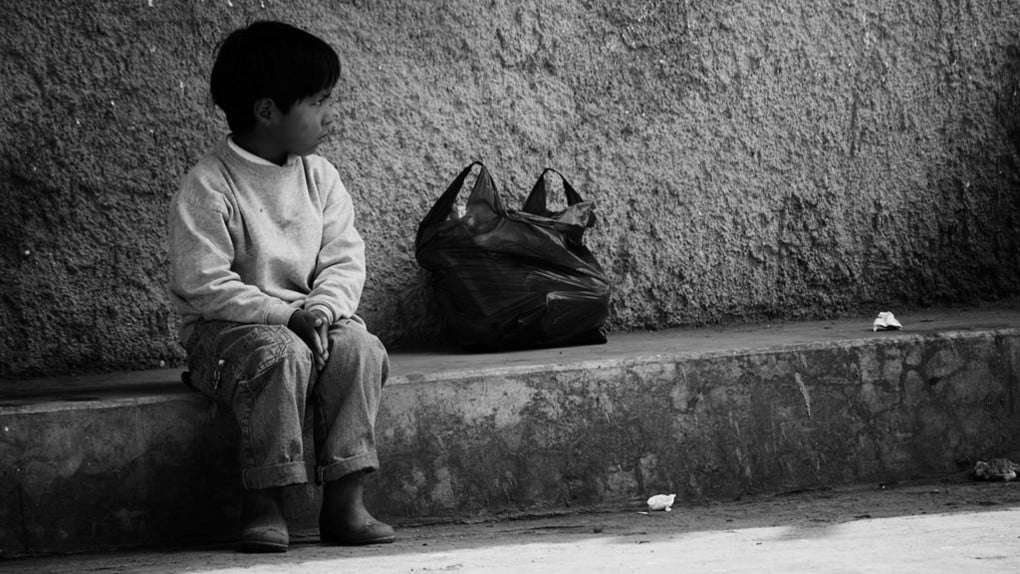
Millions of new poor are on the way – Who cares?

Photo credit: wsimag.com

By Roberto Savio

December 5, 2020

The recent meeting of the G20 – scheduled to take place in Riyadh but held virtually due to the Coronavirus pandemic – has been an eloquent example of how the world is drifting, in a crisis of leadership. It was, in a sense, a showcase.

Everybody had to accept the view that the host of the meeting, the ailing King Salman of Saudi Arabia, was accompanied on TV screens by his apparent heir, Prince Mohamed bin Salman, who is clearly the mastermind of the brutal assassination, dismembering and disappearance of the body of dissident Saudi journalist Jamal Khashoggi.

Originally published at the Wall Street International

Mohamed bin Salman got away with it, also because of the support of Donald Trump who, in his video intervention said, among other pearls, that nobody in US history had done as much as he had for the environment (like when he said that nobody since Abraham Lincoln had done as much as he had for black Americans). After that, Trump promptly left for his golf course, and ignored the debate.

Raison d’état, realpolitik, diplomatic constraints have always been part of history. The fact that the G20 was virtual, can partly hide a fact: that politicians now accept the most preposterous statements without blinking, because everything has become acceptable and legitimate.

In Saudi Arabia, Prince bin Salman is highly popular and in the US, those who live in the parallel world of Trumpland follow blindly.

Biden will have a very difficult life. At least one-third of Americans believe that a massive fraud has deprived their idol of the presidency. He has a Supreme Court staffed by his nominee.

And unless the Democrats win the two seats for the Senate in Georgia on January 5th, it will remain in the hands of Mitch McConnell, who will block every single Biden project that needs Senate approval. Add to this a Trump permanent electoral campaign during the next four years, probably with his own TV channel, and it is difficult to predict that Biden’s vice-president, a woman and black, will repeat his feat in 2024.

I apologise for this diversion. The real goal of this article is to show the stunning lack of responsibility of the leaders who met virtually, and besides making totally ritual declarations about the pandemic and climate change, when faced with the issue of the impact of Covid-19 on the poor of the world, simply decided to extend the moratorium on the interest of the external debt of the poorest countries for another year.

This is a debt which, in many cases, has been amply repaid with the payment of cumulative interests.

Now, it is certainly difficult to believe that the leaders of France, Germany, Italy, Japan, Russia, the UK, India, China and Canada, and the President of the European Council, and the President of the European Union – leaving aside the United States – ignore the impacting data on the increase of poverty provided by all the international organisations.

The creation of the G7 and the G20 has been the most visible attempt of the great powers to displace substantial debates and decisions from the United Nations.

It was certainly not due to lack of information that they ignored the appeal of the Secretary General of the United Nations, Antonio Gutierres, who implored action in his intervention against the unfolding drama of the poor of all over the world, which is nullifying all progress achieved in the last two decades.

The data that the G20 ignored all converge on two conclusions: the impact of the Covid-19 virus is stronger than expected, and it will bring about a global social imbalance that will have a lasting impact on several millions of people – in fact, about 300 million people.

This comes on top of an already dire situation. According to the World Bank, 720 million people will be living in extreme poverty (i.e. on less than 1.90 dollars a day). Of those, 114 million are the direct result of Covid-19.

According to the UN World Food Programme, more than 265 million are already starving, and many will die. And according to the International Labour Organization 200 million will lose their job.

Let us not forget that half of the world’s population – 3.2 billion people – live on less than 5.50 dollars a day. These are in the global South, as well as those in rich countries who are close to the conditions of the poor countries. The scale of this condition is much greater than we normally think.

In the United States, according to the US Census Bureau, 11.1% of the population (49 million people) can be classified as poor; but Covid-19 will probably add another 8 million people. A staggering 16.1 million children live in food precarity, while more than 47 million citizens depend on food banks.

The National Center on Family Homelessness estimates that in 2013, 2.5 million US children experienced some form of homelessness. Finally, the US Health Affairs journal affirms that in 2016, the United States had the largest rate of children mortality in the 20 countries belonging to the OECD, while according to the US Census Bureau, life expectation has shrunk by three years.

In Europe thanks to a culture of welfare (absent in the US), things are going somewhat better. Eurostat estimates that in 2017, 11.8 million people lived in a household “at risk of poverty or social exclusion”.

And Save the Children estimates that 28% of those under 18 are at risk of poverty and social exclusion. We do not have estimates of the impact of Covid-19 in Europe, but the European Union estimates that poverty may increase by 47% if the pandemic lasts until next summer.

This excludes the impact of the expected third wave in the winter of 2021. Caritas Italy estimates that at the end of the year there will be at least one million more poor children.

The leaders of the G20 cannot ignore that in April, UNCTAD issued an alert: we need to find at least 2.5 billion dollars to attenuate the coming social crisis. They cannot ignore that the ILO has stated that in the poorest countries of the world, like Haiti, Ethiopia or Malawi, the average income of informal workers has fallen by 82%.

They cannot ignore the political consequences of this social crisis, and how Covid-19 is putting a brake on the world economy. But the poor, for many reasons, is not a priority in political choices. Suffice it to note that in the EU’s unprecedented and brilliant Recovery Plan for Europe there are no special provisions for the poor.

They are part of the general population, and of those who have suffered because of Covid-19: people working in the tourism sector, in restaurants bar, in shops, and so on. Yet, we have all the data to know that they suffer specific problems, problems that differ from those of who have lost their jobs.

Structural poverty is a cage which does not let out those who are inside it. We have no space here to analyse why poverty needs a specific action. There are tons of studies on the subject, on the relations between poverty and education, poverty and democracy, poverty and social movements, and the list goes on.

What we want to stress is that there are plenty of solutions if there was only political will.

For instance, Oxfam estimates that just an increase of 0.5% over ten years on the taxes paid by 1% of the richest (a negligible increase) would suffice to create 117 million jobs in strategic sectors like health, education, and assistance to the elderly.

Repatriating 10% of the capital hidden in fiscal paradises would obtain the same result. But we have been following Ronald Reagan’s mantra that the poor bring poverty and the rich bring wealth, so the rich should be left to create wealth.

This may seem like a joke, but the OECD indicates that the average taxation on companies fell from 28% in 2000 to 20.6% in 2020. This occurred despite the rise of the wealth of large companies, which has been accompanied by a notable decline of the middle class, not to speak of workers and the proliferation of precarious and informal jobs.

According to the Washington-based Institute for Policy Studies, between March 18 and June 4, the wealth of the richest Americans increased by 19.1% – a monumental 565 million dollars. Now, the richest Americans own 3.5 billion dollars. Just 10% of that would be enough to bail out the 46.2 million fellow citizens who ask for unemployment subsidies.

Another solution would be to reduce subsidies to the fossil industry, which the International Institute for Renewable Energy estimates at 3.1 trillion dollars – 19 times those for renewables – in spite of the imminent climatic tragedy.

The same imbalance is happening with the pandemic. It is clear that until vaccination becomes universal, Covid-19 is here to stay. It recognises no borders and global problems cannot have an assorted collection of local answers.

Yet, to date, pharmaceutical companies have received 13.1 billion dollars to develop a vaccine: a fantastic business, as they will now make more money on the market, with their costs already having been paid by governments.

A central discussion would be whether markets should make profit on common goods like water, air and humans, but we have no space for this debate. This aside, the situation today is that again according to Oxfam, the rich countries have 13.5% of the world population, Yet they have bought in advance 51% of the doses that pharmaceutical companies will produce – in 2021, 86.5 % of the world will have to make do with the remaining 49%.

A consortium of public and private enterprises, COVAX, has been established to deal with the most fragile parts of the world population. Over 185 countries are involved, but it is still very far from gathering the necessary funds.

What is the lesson we can draw from this incomplete analysis? That we are far from having a political class able to face global issues. On the contrary, nationalism and xenophobia are on their way back.

The attitude of nationalist leaders to Covid-19 has been similar to that for the threat of climate change: it is a left-wing idea from globalists. So, wearing a mask has become a political declaration.

Trump lost re-election in a great measure due to his attitude on the virus. We can only have a dim hope that this lesson will have some impact.

When it comes to the poor, the terms social justice and solidarity are out of fashion, but we are creating imbalances and tensions that we will probably pay dearly for.

The French Revolution was not done by a political party, but by an impoverished Third State, or the poor, who revolted against the nobility and the clergy.

That is a lesson that the richest 1% would do well not to forget.

Originally published at wsimag.com

About the author

Roberto Savio

Roberto Savio (born in Rome, Italy, but also holding Argentine nationality) is a journalist, communication expert, political commentator, activist for social and climate justice and advocate of global governance. He has spent most of his career with Inter Press Service (IPS), the news agency which he founded in 1964 along with Argentine journalist Pablo Piacentini.

Savio studied Economics at the University of Parma, followed by post-graduate courses in Development Economics under Gunnar Myrdal, History of Art and International Law in Rome. He started his professional career as a research assistant in International Law at the University of Parma.

Please help TFF remain truly independent by contributing if you benefited from this article

Related Posts

Jan ObergPhD, director, The Transnational Foundation for Peace and Future Research, TFFLund, Sweden October 2, 2026 This is my full original manuscript. The Chinese Academy of Social Science, CASS, makes two publications out if it. 1. China’s Five-year plan emphasized the capabilities of basic research and original innovation. It is regarded as the goal of the future social development, which, as required, should be significantly enhanced. Can you comment on the importance of original innovation in research and academic study? I believe it is easier to define “original innovation” in the natural sciences than in social sciences. The breaking points of what constitutes something new, or innovative, are not quite as sharp in the latter. But in both fields it is about opening up something that was closed, unseen, unexplored before – making manifest what was earlier latent. Innovations come in many forms and shapes – naming something that was not...
A friendly quarrel while we agree that the US sanctions are a weapon of mass destruction and kill more people than wars do. And that we must talk much more about sanctions than we have so far. Jan Oberg, TFF director March 16, 2026 John Mearsheimer recently stated that U.S. sanctions murdered around 38 million people between 1971 and 2021 – see the video below. It is a dramatic figure, and it has spread quickly because it captures, in one sentence, the enormous human cost of modern sanctions. I share his concern about the destructive effects of economic coercion. But the specific number he cites — and the way he attributes it — deserves a friendly academic clarification. The figure comes from a 2023 Lancet Global Health article estimating the mortality effects of unilateral U.S. and EU sanctions over the past half‑century. This is the first point where Mearsheimer’s shorthand diverges from the text: the study...
The MSC’s closed groupthink militarism offers only one prescription — more weapons — even as record military expenditures, squeezed from taxpayers in economic crisis, destroy diplomacy and drive escalation to the highest war risks in decades. Jan Oberg TFF director February 13, 2026 From Dialogue Forum to Militarised Ritual For decades, the Munich Security Conference (MSC) – which opened today and runs till Sunday – was one of the few places where adversaries could meet without theatrics. Founded in 1963 as the Wehrkundetagung, it served as a discreet Cold War dialogue forum between NATO and the Warsaw Pact. Even at moments of high tension, Soviet and later Russian representatives were present, and Munich allowed uncomfortable messages to be delivered directly rather than through press releases or military manoeuvres. That era has vanished. The MSC has become something entirely different: a €13–20 million annual gathering of a closed Western security elite, a polished meeting...

Recent Articles

Tony Robinson October 4, 2026 Violence is easy to recognise when someone is being beaten, shot or killed. It becomes more difficult when nobody is holding a weapon. Poverty, discrimination, exploitation and repression can restrict a human life just as effectively, although they do so in very different ways and with very different consequences. Simply adding more categories to an ever-growing list of forms of violence does not really solve the problem. The more interesting question is what all these different situations have in common and why it makes sense to describe them using the same word. Human beings do not simply react to what happens around them. They remember the past, imagine things that do not yet exist, make plans and undertake projects. Workers organise because they imagine different working conditions; people migrate because they imagine another life somewhere else; social movements emerge because people refuse to accept the...
It’s a matter of principles, courage, vision and pulling together – while the militarist world is falling apart… Peter Langille October 3, 2026 “Here, then, is the problem which we present to you, stark and dreadful and inescapable: Shall we put an end to the human race; or shall mankind renounce war?”The Bertrand Russell—Albert Einstein Manifesto, July 9, 1955 ⁕ The forecast for what’s ahead is worrisome. The sharp rise in armed conflicts over the past three years is adding to what was already the highest level in over seventy years. Genocides, which should be prevented are supported. A shared climate emergency that jeopardises survival is ignored. Diverse polls now suggest that people are war-weary, worried and interested in a more effective United Nations. And, there are viable policy options for a more secure world! Yet governments are doubling-down, betting on more war and investing heavily. If current trends persist,...
Johan Galtung 1930-2024October 2015 Published here on October 3, 2026 Let us focus on Civilization for conflict analysis and remedies. Major forms of disorder use violence; war is state organized violence. The most belligerent states are the United States of America and Israel, both with civilization roots. National Evangelism, the US Protestant Christian civilization– more national than evangelical–justifies US warfare as exceptionalism of a people chosen by God, with a manifest destiny to run the world. Orthodox Judaism justifies Israeli warfare to conquer and expand from Nile to Euphrates as a religious right and duty to the Eternal One. The third most belligerent country, the UK, no longer believes it is God-chosen but chosen by the USA; not quite the same but something. But the root cause of global disorder lies in the Occident–with Islam–seeing itself as the single, universal civilization valid for all at all times, all others being...

TFF on Substack

Discover and subscribe to more peace materials on TFF Substack

Most Popular

Tony Robinson October 4, 2026 Violence is easy to recognise when someone is being beaten, shot or killed. It becomes more difficult when nobody is holding a weapon. Poverty, discrimination, exploitation and repression can restrict a human life just as effectively, although they do so in very different ways and with very different consequences. Simply adding more categories to an ever-growing list of forms of violence does not really solve the problem. The more interesting question is what all these different situations have in common and why it makes sense to describe them using the same word. Human beings do not simply react to what happens around them. They remember the past, imagine things that do not yet exist, make plans and undertake projects. Workers organise because they imagine different working conditions; people migrate because they imagine another life somewhere else; social movements emerge because people refuse to accept the...
It’s a matter of principles, courage, vision and pulling together – while the militarist world is falling apart… Peter Langille October 3, 2026 “Here, then, is the problem which we present to you, stark and dreadful and inescapable: Shall we put an end to the human race; or shall mankind renounce war?”The Bertrand Russell—Albert Einstein Manifesto, July 9, 1955 ⁕ The forecast for what’s ahead is worrisome. The sharp rise in armed conflicts over the past three years is adding to what was already the highest level in over seventy years. Genocides, which should be prevented are supported. A shared climate emergency that jeopardises survival is ignored. Diverse polls now suggest that people are war-weary, worried and interested in a more effective United Nations. And, there are viable policy options for a more secure world! Yet governments are doubling-down, betting on more war and investing heavily. If current trends persist,...
Johan Galtung 1930-2024October 2015 Published here on October 3, 2026 Let us focus on Civilization for conflict analysis and remedies. Major forms of disorder use violence; war is state organized violence. The most belligerent states are the United States of America and Israel, both with civilization roots. National Evangelism, the US Protestant Christian civilization– more national than evangelical–justifies US warfare as exceptionalism of a people chosen by God, with a manifest destiny to run the world. Orthodox Judaism justifies Israeli warfare to conquer and expand from Nile to Euphrates as a religious right and duty to the Eternal One. The third most belligerent country, the UK, no longer believes it is God-chosen but chosen by the USA; not quite the same but something. But the root cause of global disorder lies in the Occident–with Islam–seeing itself as the single, universal civilization valid for all at all times, all others being...
Read More
Living-Peace-Sign-Budapest-copy
Tony Robinson October 4, 2026 Violence is easy to recognise when someone is being beaten, shot or killed. It becomes more difficult when nobody is holding a weapon. Poverty, discrimination, exploitation and repression can restrict a human life just as effectively, although they do so in very different ways and with very different consequences. Simply adding more categories to an ever-growing list of forms of violence does not really solve the problem. The more interesting question is what all these different situations have in common and why it makes sense to describe them using the same word. Human beings do not simply react to what happens around them. They remember the past, imagine things that do not yet exist, make plans and undertake projects. Workers organise because they imagine different working conditions; people migrate because they imagine another life somewhere else; social movements emerge because people refuse to accept the...
b54a1f10-8c65-4f0b-9dd5-4abc0a7d04cc_2659x2659
It’s a matter of principles, courage, vision and pulling together – while the militarist world is falling apart… Peter Langille October 3, 2026 “Here, then, is the problem which we present to you, stark and dreadful and inescapable: Shall we put an end to the human race; or shall mankind renounce war?”The Bertrand Russell—Albert Einstein Manifesto, July 9, 1955 ⁕ The forecast for what’s ahead is worrisome. The sharp rise in armed conflicts over the past three years is adding to what was already the highest level in over seventy years. Genocides, which should be prevented are supported. A shared climate emergency that jeopardises survival is ignored. Diverse polls now suggest that people are war-weary, worried and interested in a more effective United Nations. And, there are viable policy options for a more secure world! Yet governments are doubling-down, betting on more war and investing heavily. If current trends persist,...
010
Johan Galtung 1930-2024October 2015 Published here on October 3, 2026 Let us focus on Civilization for conflict analysis and remedies. Major forms of disorder use violence; war is state organized violence. The most belligerent states are the United States of America and Israel, both with civilization roots. National Evangelism, the US Protestant Christian civilization– more national than evangelical–justifies US warfare as exceptionalism of a people chosen by God, with a manifest destiny to run the world. Orthodox Judaism justifies Israeli warfare to conquer and expand from Nile to Euphrates as a religious right and duty to the Eternal One. The third most belligerent country, the UK, no longer believes it is God-chosen but chosen by the USA; not quite the same but something. But the root cause of global disorder lies in the Occident–with Islam–seeing itself as the single, universal civilization valid for all at all times, all others being...
Screenshot 2026-10-02 011738
Jan ObergPhD, director, The Transnational Foundation for Peace and Future Research, TFFLund, Sweden October 2, 2026 This is my full original manuscript. The Chinese Academy of Social Science, CASS, makes two publications out if it. 1. China’s Five-year plan emphasized the capabilities of basic research and original innovation. It is regarded as the goal of the future social development, which, as required, should be significantly enhanced. Can you comment on the importance of original innovation in research and academic study? I believe it is easier to define “original innovation” in the natural sciences than in social sciences. The breaking points of what constitutes something new, or innovative, are not quite as sharp in the latter. But in both fields it is about opening up something that was closed, unseen, unexplored before – making manifest what was earlier latent. Innovations come in many forms and shapes – naming something that was not...
arctic-circle-map
The agreement is catastrophic both because of what it says and what it doesn’t mention. It reduces further the major asset of security policies: Freedom of action. Jan Oberg TFF director September 25, 2026 A couple of hours before the agreement was signed on September 22, 2026, I published the following 13 hypotheses about what it would most likely contain on TFF Substack (in English). I was wrong on only the first point. Contrary to what Trump had written on his Truth Social platform, it does not appear to come into force immediately. In fact, it turned out to be worse than even I had anticipated. After these hypotheses now come a number of reflections in light of what the agreement actually contains, and does not contain, as well as the way in which it has generally been presented by major media outlets and by the public-service broadcaster DR. My...
girl-5894831_1280
Below are TFF-related media mentions, comments, videos and social media posts published elsewhere but not on this homepage. We happen to catch and list only a fraction. Regarding video comments and debates, we recommend that you go to the TFF Video Channel on Substack where many of them are reproduced. Jan Oberg is a contributor to China Daily – 52 million daily clicks – and Global Times, CGTN and CCTV (the national television), China Investment, Xinhua News Agency and several others. Articles and videos on these media very often multiply into countless Chinese (and Western media) that re-post them from these main media. Thanks to The China Academy, his analyses, interviews and comments are frequently posted on YouTube channels such as Thinkers Forum and Wave Media. These videos are often re-posted on Bilibili (China’s YouTube), the China Content Center on TikTok, and on the Chinese edition of TikTok, Douyin.com. This means reaching hundreds of millions of viewers worldwide over a year. While there are too many to catch on all these...




