
June 10, 2020

Jan Oberg

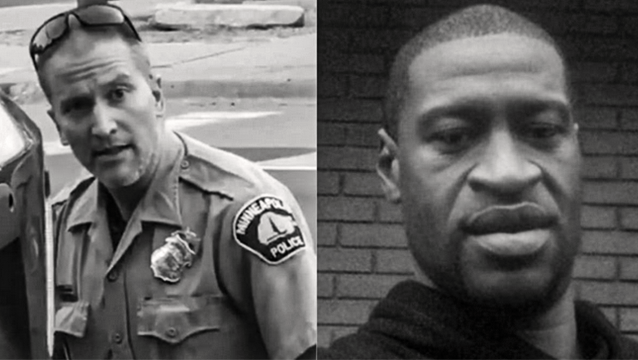
The horrific police murder of the black American George Floyd is, of course, not the first, neither will it be the last. Fortunately, it has set in motion significant protests not only in the United States but around the world – on top of the Corona Crisis.

And it has created an opportunity for people to do symbolic acts such as taking a knee, criticising President Trump’s Bible Show after he had – classical dictatorship-style – used violence on peaceful demonstrators, etc. And people posted black images on Instagram.

These are individual protests in response to an individual being killed in a single event.

They are very human, noble and understandable, indeed, necessary – as markers that enough is enough. But where will it go from that first reaction?

The comprehensive perspective

To approach and answer, read carefully this statement by Martin Luther King, Jr.:

“In these trying circumstances, the black revolution is much more than a struggle for the rights of Negroes. It is forcing America to face all its interrelated flaws – racism, poverty, militarism, and materialism.
It is exposing evils that are rooted deeply in the whole structure of our society. It reveals systemic rather than superficial flaws and suggests that radical reconstruction of society itself is the real issue to be faced.

It is time we stopped our blithe lipservice to the guarantees of life, and pursuit of happiness… It seems glaringly obvious to me that the development of a humanitarian means of dealing with some of the social problems of the world – and the correlative revolution in American values that this will entail – is a much better way of protecting ourselves against the threat of violence than the military means we have chosen.”

Luther King points here to the vital difference between, if you will, a psychological and a sociological approach, between the focus on the individual person and event and the larger structure out of which it grows.

I would say that he points to the invisible 90% of the iceberg where most others focus on the visible 10% over the waterline.

While the focus on the individual person and event is – as I said – honourable and understandable and necessary for human compassion and action, it is however far from sufficient.

Much more will be needed – also in terms of theory and analysis – if this is going to become a sustained movement and lead to a genuine, revolutionary – and by that I mean, nonviolent – change.

Root causes and analysis, not just anger

Every problem we experience and which surfaces in our consciousness and mind and in our media comes from somewhere deeper in society – from deep-lying and seldom-challenged thought structures, ways of normal everyday thinking, patterns having to do with the civilisation in which the event takes place, in this case in the Occident, Christian, capitalist United States of America that also – exceptionalistly – sees itself as a pioneer, world leader/policeman and as God’s chosen people.

Like in the case of 9/11, the focus is on how it was done: A policeman – hands in the pocket – holding him down by pressing his knee long enough on Floyd’s neck to suffocate him and on who did it (the single white policeman and the general police corps of which he is part).

Just seeing that short video of the slow killing, you can’t help feeling pain and express your anger. In fact, it would be impossible to react with indifference.

The fundamental questions of course is: Why? From where deep down does such behaviour grow and become possible – indeed, perceived as natural? What culture, education, and value system makes it acceptable, indeed possible as an act of a professional man. These questions – which would compel some soul-searching throughout society – are only addressed here and there and rather seldom in the mainstream reporting and discourse.

That’s exactly what Martin Luther King does above – mark his words about root causes, structures, interrelatedness, deep versus superficial, and the need for reconstruction of society itself.

This is the language of the revolutionary who seeks to understand the roots and not only responds emotionally to an event; s/he makes the deeper comprehensive diagnosis and demands a real change, a fundamental change of those (macro) structures that generate the event in the here and now, at the micro-level.

The language of those in power is more like this: This murder was a mistake, that type of police action should be prohibited in the future, this police was just one rotten apple among all the good ones, racism is a kind of separable problem in and of itself and not an indicator of a fundamentally sick society.

Ajamu Baraka brilliantly criticises this view in this analysis published on The Transnational.

Luther King connected the dots – racism, militarism, materialism, local-global, etc. He was a broad- and deep-thinking eclecticist. Just like Gandhi. Advancing systematically a holistic perspective and urging us: Think more deeply on where it comes from and what it means!

Such connecting of the dots – in macro time and space – is what we need much more of. Also – and most importantly – to devise strategies and policies that lead to solutions – and constructive discussions about strategies – rather than hateful speech. And what is a solution? Well, it is a re-structuring of perceptions, needs and visions that, when implemented in good faith, will secure that the same problem never turns up again.

A tall order? Yes! And nothing else will do when it comes to the problems of the West in general and the US in particular.

It is in such a perspective, Michael Chauvin the policeman with his hand in his pocket and knee on Floyd’s neck – may well be an object of our anger and even hate but he should not be the main object of our diagnosis.

Chauvin is the pain, so to speak, but only an indicator of the deeper and broader disease that is the United States – the United States that seems increasingly unable to deal with its own problems and decay and, instead, fights everybody and everything outside itself. Unable, like Titanic, to change course or even see how its society needs radical change to be saved.

Medgar Evers – and the earlier civil rights movement approach

What I just said above touches upon an age-old intellectual dialogue: How do we analyse and interpret the world? Both Gandhi and King were champions of the holistic thinking while simultaneously not leaving out the individual as the perpetrator (to be forgiven), as the responsible for his/her actions and as a change agent for the common good.

Educated as a sociologist, that’s where I stand too.

And having been devoted to the words and music of Bob Dylan since the 1960s – Blowing In The Wind, The Times They Are A-Changin’ and all those classics – I was reminded today of his song, Only A Pawn In Their Game.

Medgar Evers

He wrote it when Medgar Evers – a leading civil rights activist in Mississippi – was killed in June 1963 by Byron De La Beckwith, a member of both the White Citizens Council – white supremacist, extreme-right organisation working against racial integration and of the even more radical hate- and violence-based Ku Klux Klan.

Dylan seems to take the position that the perpetrator must be seen in a broader perspective, himself a victim of the policies of those in power, and thus only a pawn in their game.


Only A Pawn In Their Game

A bullet from the back of a bush took Medgar Evers’ blood
A finger fired the trigger to his name
A handle hid out in the dark
A hand set the spark
Two eyes took the aim
Behind a man’s brain
But he can’t be blamed
He’s only a pawn in their game

A South politician preaches to the poor white man
“You got more than the blacks, don’t complain
You’re better than them, you been born with white skin,” they explain.
And the Negro’s name
Is used it is plain
For the politician’s gain
As he rises to fame
And the poor white remains
On the caboose of the train
But it ain’t him to blame
He’s only a pawn in their game

The deputy sheriffs, the soldiers, the governors get paid
And the marshals and cops get the same
But the poor white man’s used in the hands of them all like a tool
He’s taught in his school
From the start by the rule
That the laws are with him
To protect his white skin
To keep up his hate
So he never thinks straight
’Bout the shape that he’s in
But it ain’t him to blame
He’s only a pawn in their game

From the poverty shacks, he looks from the cracks to the tracks
And the hoofbeats pound in his brain
And he’s taught how to walk in a pack
Shoot in the back
With his fist in a clinch
To hang and to lynch
To hide ’neath the hood
To kill with no pain
Like a dog on a chain
He ain’t got no name
But it ain’t him to blame
He’s only a pawn in their game.

Today, Medgar Evers was buried from the bullet he caught
They lowered him down as a king
But when the shadowy sun sets on the one
That fired the gun
He’ll see by his grave
On the stone that remains
Carved next to his name
His epitaph plain:
Only a pawn in their game

© 1963, 1964 by Warner Bros. Inc.; renewed 1991, 1992 by Special Rider Music


Only a pawn in their game?

Interestingly, Dylan – then only 22 years old – sang this controversial song at the famous March on Washington for Jobs and Freedom where Luther King gave his legendary “I Have A Dream” speech.

Perhaps, we should have learned by now to focus less on the perpetrator and more on those politically-connected social interest groups who populate the MIMAC – the Military-Industrial-Media-Academic Complex – and who permanently victimise other people and, from within their hidden power circles, turn many an individual into only a pawn in their game?

Chauvin certainly isn’t innocent but he may be seen as such a pawn in their game, in the MIMAC’s game. And in the much larger game: The acceptance of violence as an integral and dominating aspect of the United States society – from the mass killing of the indigenous people and exceptionalism, over gun policies, interventionism and war, nuclearism and racism (nuclear weapons would be an impossibility without the belief that “we” are higher than “they” are – in terms of morals, development, values, etc.

That is, violence as the fundamental connector between the many dimensions of the vertical “us” and “them” of which one, of course, is white and blacks.

Like everybody else, Chauvin is, of course, responsible for what he did and must be punished, but at some point, he should also be forgiven.

There are people who are much more criminal who should be re-educated or punished – and the cancerous structures they have built abolished. Once and for all. So they never come back.

And so the United States can – perhaps – heal before it’s too late.

Please help TFF remain truly independent here if you benefited from this article
The PRIO & ISA Effort to Excommunicate Johan Galtung from Peace Research – And Why It Failed

How Oxford University Press allowed …
Warm Peace: A Theory of Transition from Cold Peace

New pathbreaking theory-of-peace book by …
Militarist Absurd Theatre with Dead Horse Punditry? No. There Are Only Alternatives

Jan ObergTFF director ☮️ When …
The One West

A Civilizational Interpretation of the …

Peace & future researcher + ‌Art Photographer

3 Responses

  1. Well written piece. Like always. But I wished it would have included his criminal past in some way or another. 1998. 10 months prison armed robbery 2002. 5 months prison cocaine 2004. 5 months prison cocaine 2005. 10 months prison cocaine 2007. 5 years prison, armed robbery of pregnant woman in her home. On meth while resisting arrest. – This is by all means not a justification of the killing of George Floyd. Just adding critical objectivity.

  2. Well written piece. Like always. But I wished it would have included his criminal past in some way or another. 1998. 10 months prison armed robbery 2002. 5 months prison cocaine 2004. 5 months prison cocaine 2005. 10 months prison cocaine 2007. 5 years prison, armed robbery of pregnant woman in her home. On meth while resisting arrest. – This is by all means not a justification of the killing of George Floyd. Just adding critical objectivity.

  3. Thanks Jan Oberg for a deep analysis of the violent US society, a sick society that bullies the world and its own citizens. We need revolutionary change and Martin Luther Kings visionary words must be repeated again and again. Desperation and poverty and blocked possibilities for the young people in US creates depression and loneliness where the individual has to fight for himself and his family..something that also explains the problems with crime among the poor. The uprising we see now brings hope for the future.

Related Posts

Tony Robinson October 4, 2026 Violence is easy to recognise when someone is being beaten, shot or killed. It becomes more difficult when nobody is holding a weapon. Poverty, discrimination, exploitation and repression can restrict a human life just as effectively, although they do so in very different ways and with very different consequences. Simply adding more categories to an ever-growing list of forms of violence does not really solve the problem. The more interesting question is what all these different situations have in common and why it makes sense to describe them using the same word. Human beings do not simply react to what happens around them. They remember the past, imagine things that do not yet exist, make plans and undertake projects. Workers organise because they imagine different working conditions; people migrate because they imagine another life somewhere else; social movements emerge because people refuse to accept the...
Johan Galtung 1930-2024October 2015 Published here on October 3, 2026 Let us focus on Civilization for conflict analysis and remedies. Major forms of disorder use violence; war is state organized violence. The most belligerent states are the United States of America and Israel, both with civilization roots. National Evangelism, the US Protestant Christian civilization– more national than evangelical–justifies US warfare as exceptionalism of a people chosen by God, with a manifest destiny to run the world. Orthodox Judaism justifies Israeli warfare to conquer and expand from Nile to Euphrates as a religious right and duty to the Eternal One. The third most belligerent country, the UK, no longer believes it is God-chosen but chosen by the USA; not quite the same but something. But the root cause of global disorder lies in the Occident–with Islam–seeing itself as the single, universal civilization valid for all at all times, all others being...
Jan ObergPhD, director, The Transnational Foundation for Peace and Future Research, TFFLund, Sweden October 2, 2026 This is my full original manuscript. The Chinese Academy of Social Science, CASS, makes two publications out if it. 1. China’s Five-year plan emphasized the capabilities of basic research and original innovation. It is regarded as the goal of the future social development, which, as required, should be significantly enhanced. Can you comment on the importance of original innovation in research and academic study? I believe it is easier to define “original innovation” in the natural sciences than in social sciences. The breaking points of what constitutes something new, or innovative, are not quite as sharp in the latter. But in both fields it is about opening up something that was closed, unseen, unexplored before – making manifest what was earlier latent. Innovations come in many forms and shapes – naming something that was not...

Recent Articles

Tony Robinson October 4, 2026 Violence is easy to recognise when someone is being beaten, shot or killed. It becomes more difficult when nobody is holding a weapon. Poverty, discrimination, exploitation and repression can restrict a human life just as effectively, although they do so in very different ways and with very different consequences. Simply adding more categories to an ever-growing list of forms of violence does not really solve the problem. The more interesting question is what all these different situations have in common and why it makes sense to describe them using the same word. Human beings do not simply react to what happens around them. They remember the past, imagine things that do not yet exist, make plans and undertake projects. Workers organise because they imagine different working conditions; people migrate because they imagine another life somewhere else; social movements emerge because people refuse to accept the...
It’s a matter of principles, courage, vision and pulling together – while the militarist world is falling apart… Peter Langille October 3, 2026 “Here, then, is the problem which we present to you, stark and dreadful and inescapable: Shall we put an end to the human race; or shall mankind renounce war?”The Bertrand Russell—Albert Einstein Manifesto, July 9, 1955 ⁕ The forecast for what’s ahead is worrisome. The sharp rise in armed conflicts over the past three years is adding to what was already the highest level in over seventy years. Genocides, which should be prevented are supported. A shared climate emergency that jeopardises survival is ignored. Diverse polls now suggest that people are war-weary, worried and interested in a more effective United Nations. And, there are viable policy options for a more secure world! Yet governments are doubling-down, betting on more war and investing heavily. If current trends persist,...
Johan Galtung 1930-2024October 2015 Published here on October 3, 2026 Let us focus on Civilization for conflict analysis and remedies. Major forms of disorder use violence; war is state organized violence. The most belligerent states are the United States of America and Israel, both with civilization roots. National Evangelism, the US Protestant Christian civilization– more national than evangelical–justifies US warfare as exceptionalism of a people chosen by God, with a manifest destiny to run the world. Orthodox Judaism justifies Israeli warfare to conquer and expand from Nile to Euphrates as a religious right and duty to the Eternal One. The third most belligerent country, the UK, no longer believes it is God-chosen but chosen by the USA; not quite the same but something. But the root cause of global disorder lies in the Occident–with Islam–seeing itself as the single, universal civilization valid for all at all times, all others being...

TFF on Substack

Discover and subscribe to more peace materials on TFF Substack

Most Popular

Tony Robinson October 4, 2026 Violence is easy to recognise when someone is being beaten, shot or killed. It becomes more difficult when nobody is holding a weapon. Poverty, discrimination, exploitation and repression can restrict a human life just as effectively, although they do so in very different ways and with very different consequences. Simply adding more categories to an ever-growing list of forms of violence does not really solve the problem. The more interesting question is what all these different situations have in common and why it makes sense to describe them using the same word. Human beings do not simply react to what happens around them. They remember the past, imagine things that do not yet exist, make plans and undertake projects. Workers organise because they imagine different working conditions; people migrate because they imagine another life somewhere else; social movements emerge because people refuse to accept the...
It’s a matter of principles, courage, vision and pulling together – while the militarist world is falling apart… Peter Langille October 3, 2026 “Here, then, is the problem which we present to you, stark and dreadful and inescapable: Shall we put an end to the human race; or shall mankind renounce war?”The Bertrand Russell—Albert Einstein Manifesto, July 9, 1955 ⁕ The forecast for what’s ahead is worrisome. The sharp rise in armed conflicts over the past three years is adding to what was already the highest level in over seventy years. Genocides, which should be prevented are supported. A shared climate emergency that jeopardises survival is ignored. Diverse polls now suggest that people are war-weary, worried and interested in a more effective United Nations. And, there are viable policy options for a more secure world! Yet governments are doubling-down, betting on more war and investing heavily. If current trends persist,...
Johan Galtung 1930-2024October 2015 Published here on October 3, 2026 Let us focus on Civilization for conflict analysis and remedies. Major forms of disorder use violence; war is state organized violence. The most belligerent states are the United States of America and Israel, both with civilization roots. National Evangelism, the US Protestant Christian civilization– more national than evangelical–justifies US warfare as exceptionalism of a people chosen by God, with a manifest destiny to run the world. Orthodox Judaism justifies Israeli warfare to conquer and expand from Nile to Euphrates as a religious right and duty to the Eternal One. The third most belligerent country, the UK, no longer believes it is God-chosen but chosen by the USA; not quite the same but something. But the root cause of global disorder lies in the Occident–with Islam–seeing itself as the single, universal civilization valid for all at all times, all others being...
Read More
Living-Peace-Sign-Budapest-copy
Tony Robinson October 4, 2026 Violence is easy to recognise when someone is being beaten, shot or killed. It becomes more difficult when nobody is holding a weapon. Poverty, discrimination, exploitation and repression can restrict a human life just as effectively, although they do so in very different ways and with very different consequences. Simply adding more categories to an ever-growing list of forms of violence does not really solve the problem. The more interesting question is what all these different situations have in common and why it makes sense to describe them using the same word. Human beings do not simply react to what happens around them. They remember the past, imagine things that do not yet exist, make plans and undertake projects. Workers organise because they imagine different working conditions; people migrate because they imagine another life somewhere else; social movements emerge because people refuse to accept the...
b54a1f10-8c65-4f0b-9dd5-4abc0a7d04cc_2659x2659
It’s a matter of principles, courage, vision and pulling together – while the militarist world is falling apart… Peter Langille October 3, 2026 “Here, then, is the problem which we present to you, stark and dreadful and inescapable: Shall we put an end to the human race; or shall mankind renounce war?”The Bertrand Russell—Albert Einstein Manifesto, July 9, 1955 ⁕ The forecast for what’s ahead is worrisome. The sharp rise in armed conflicts over the past three years is adding to what was already the highest level in over seventy years. Genocides, which should be prevented are supported. A shared climate emergency that jeopardises survival is ignored. Diverse polls now suggest that people are war-weary, worried and interested in a more effective United Nations. And, there are viable policy options for a more secure world! Yet governments are doubling-down, betting on more war and investing heavily. If current trends persist,...
010
Johan Galtung 1930-2024October 2015 Published here on October 3, 2026 Let us focus on Civilization for conflict analysis and remedies. Major forms of disorder use violence; war is state organized violence. The most belligerent states are the United States of America and Israel, both with civilization roots. National Evangelism, the US Protestant Christian civilization– more national than evangelical–justifies US warfare as exceptionalism of a people chosen by God, with a manifest destiny to run the world. Orthodox Judaism justifies Israeli warfare to conquer and expand from Nile to Euphrates as a religious right and duty to the Eternal One. The third most belligerent country, the UK, no longer believes it is God-chosen but chosen by the USA; not quite the same but something. But the root cause of global disorder lies in the Occident–with Islam–seeing itself as the single, universal civilization valid for all at all times, all others being...
Screenshot 2026-10-02 011738
Jan ObergPhD, director, The Transnational Foundation for Peace and Future Research, TFFLund, Sweden October 2, 2026 This is my full original manuscript. The Chinese Academy of Social Science, CASS, makes two publications out if it. 1. China’s Five-year plan emphasized the capabilities of basic research and original innovation. It is regarded as the goal of the future social development, which, as required, should be significantly enhanced. Can you comment on the importance of original innovation in research and academic study? I believe it is easier to define “original innovation” in the natural sciences than in social sciences. The breaking points of what constitutes something new, or innovative, are not quite as sharp in the latter. But in both fields it is about opening up something that was closed, unseen, unexplored before – making manifest what was earlier latent. Innovations come in many forms and shapes – naming something that was not...
arctic-circle-map
The agreement is catastrophic both because of what it says and what it doesn’t mention. It reduces further the major asset of security policies: Freedom of action. Jan Oberg TFF director September 25, 2026 A couple of hours before the agreement was signed on September 22, 2026, I published the following 13 hypotheses about what it would most likely contain on TFF Substack (in English). I was wrong on only the first point. Contrary to what Trump had written on his Truth Social platform, it does not appear to come into force immediately. In fact, it turned out to be worse than even I had anticipated. After these hypotheses now come a number of reflections in light of what the agreement actually contains, and does not contain, as well as the way in which it has generally been presented by major media outlets and by the public-service broadcaster DR. My...
girl-5894831_1280
Below are TFF-related media mentions, comments, videos and social media posts published elsewhere but not on this homepage. We happen to catch and list only a fraction. Regarding video comments and debates, we recommend that you go to the TFF Video Channel on Substack where many of them are reproduced. Jan Oberg is a contributor to China Daily – 52 million daily clicks – and Global Times, CGTN and CCTV (the national television), China Investment, Xinhua News Agency and several others. Articles and videos on these media very often multiply into countless Chinese (and Western media) that re-post them from these main media. Thanks to The China Academy, his analyses, interviews and comments are frequently posted on YouTube channels such as Thinkers Forum and Wave Media. These videos are often re-posted on Bilibili (China’s YouTube), the China Content Center on TikTok, and on the Chinese edition of TikTok, Douyin.com. This means reaching hundreds of millions of viewers worldwide over a year. While there are too many to catch on all these...





