
Battle of the Ages to stop Eurasian integration

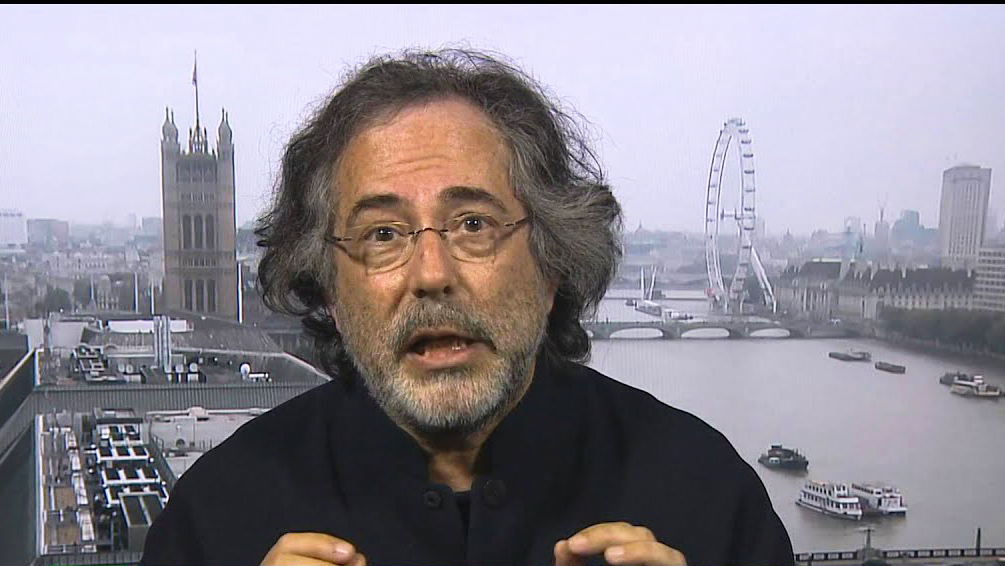
Photo: Pepe Escobar

The coming decade could see the US take on Russia, China and Iran over the New Silk Road connection

May 18, 2020

Pepe Escobar

The Raging Twenties started with a bang with the targeted assassination of Iran’s General Qasem Soleimani.

Yet a bigger bang awaits us throughout the decade: the myriad declinations of the New Great Game in Eurasia, which pits the US against Russia, China and Iran, the three major nodes of Eurasia integration.

Every game-changing act in geopolitics and geoeconomics in the coming decade will have to be analyzed in connection to this epic clash.

The Deep State and crucial sectors of the US ruling class are absolutely terrified that China is already outpacing the “indispensable nation” economically and that Russia has outpaced it militarily. The Pentagon officially designates the three Eurasian nodes as “threats.”

Originally published by AsiaTimes on January 16, 2020

Hybrid War techniques – carrying inbuilt 24/7 demonization – will proliferate with the aim of containing China’s “threat,” Russian “aggression” and Iran’s “sponsorship of terrorism.” The myth of the “free market” will continue to drown under the imposition of a barrage of illegal sanctions, euphemistically defined as new trade “rules.”

Yet that will be hardly enough to derail the Russia-China strategic partnership. To unlock the deeper meaning of this partnership, we need to understand that Beijing defines it as rolling towards a “new era.” That implies strategic long-term planning – with the key date being 2049, the centennial of New China.

The horizon for the multiple projects of the Belt and Road Initiative – as in the China-driven New Silk Roads – is indeed the 2040s, when Beijing expects to have fully woven a new, multipolar paradigm of sovereign nations/partners across Eurasia and beyond, all connected by an interlocking maze of belts and roads.

The Russian project – Greater Eurasia – somewhat mirrors Belt & Road and will be integrated with it. Belt & Road, the Eurasia Economic Union, the Shanghai Cooperation Organization and the Asia Infrastructure Investment Bank are all converging towards the same vision.

Realpolitik

So this “new era”, as defined by the Chinese, relies heavily on close Russia-China coordination, in every sector. Made in China 2025 is encompassing a series of techno/scientific breakthroughs. At the same time, Russia has established itself as an unparalleled technological resource for weapons and systems that the Chinese still cannot match.

At the latest BRICS summit in Brasilia, President Xi Jinping told Vladimir Putin that “the current international situation with rising instability and uncertainty urge China and Russia to establish closer strategic coordination.” Putin’s response: “Under the current situation, the two sides should continue to maintain close strategic communication.”

Russia is showing China how the West respects realpolitik power in any form, and Beijing is finally starting to use theirs. The result is that after five centuries of Western domination – which, incidentally, led to the decline of the Ancient Silk Roads – the Heartland is back, with a bang, asserting its preeminence.

On a personal note, my travels these past two years, from West Asia to Central Asia, and my conversations these past two months with analysts in Nur-Sultan, Moscow and Italy, have allowed me to get deeper into the intricacies of what sharp minds define as the Double Helix. We are all aware of the immense challenges ahead – while barely managing to track the stunning re-emergence of the Heartland in real-time.

In soft power terms, the sterling role of Russian diplomacy will become even more paramount – backed up by a Ministry of Defense led by Sergei Shoigu, a Tuvan from Siberia, and an intel arm that is capable of constructive dialogue with everybody: India/Pakistan, North/South Korea, Iran/Saudi Arabia, Afghanistan.

This apparatus does smooth (complex) geopolitical issues over in a manner that still eludes Beijing.

In parallel, virtually the whole Asia-Pacific – from the Eastern Mediterranean to the Indian Ocean – now takes into full consideration Russia-China as a counter-force to US naval and financial overreach.

Stakes in Southwest Asia

The targeted assassination of Soleimani, for all its long-term fallout, is just one move in the Southwest Asia chessboard. What’s ultimately at stake is a macro geoeconomic prize: a land bridge from the Persian Gulf to the Eastern Mediterranean.

Last summer, an Iran-Iraq-Syria trilateral established that “the goal of negotiations is to activate the Iranian-Iraqi-Syria load and transport corridor as part of a wider plan for reviving the Silk Road.”

There could not be a more strategic connectivity corridor, capable of simultaneously interlinking with the International North-South Transportation Corridor; the Iran-Central Asia-China connection all the way to the Pacific; and projecting Latakia towards the Mediterranean and the Atlantic.

What’s on the horizon is, in fact, a sub-sect of Belt & Road in Southwest Asia. Iran is a key node of Belt & Road; China will be heavily involved in the rebuilding of Syria; and Beijing-Baghdad signed multiple deals and set up an Iraqi-Chinese Reconstruction Fund (income from 300,000 barrels of oil a day in exchange for Chinese credit for Chinese companies rebuilding Iraqi infrastructure).

A quick look at the map reveals the “secret” of the US refusing to pack up and leave Iraq, as demanded by the Iraqi Parliament and Prime Minister: to prevent the emergence of this corridor by any means necessary. Especially when we see that all the roads that China is building across Central Asia – I navigated many of them in November and December – ultimately link China with Iran.

The final objective: to unite Shanghai to the Eastern Mediterranean – overland, across the Heartland.

As much as Gwadar port in the Arabian Sea is an essential node of the China-Pakistan Economic Corridor, and part of China’s multi-pronged “escape from Malacca” strategy, India also courted Iran to match Gwadar via the port of Chabahar in the Gulf of Oman.

So as much as Beijing wants to connect the Arabian Sea with Xinjiang, via the economic corridor, India wants to connect with Afghanistan and Central Asia via Iran.

Yet India’s investments in Chabahar may come to nothing, with New Delhi still mulling whether to become an active part of the US “Indo-Pacific” strategy, which would imply dropping Tehran.

The Russia-China-Iran joint naval exercise in late December, starting exactly from Chabahar, was a timely wake-up for New Delhi. India simply cannot afford to ignore Iran and end up losing its key connectivity node, Chabahar.

The immutable fact: everyone needs and wants Iran connectivity. For obvious reasons, since the Persian empire, this is the privileged hub for all Central Asian trade routes.

On top of it, Iran for China is a matter of national security. China is heavily invested in Iran’s energy industry. All bilateral trade will be settled in yuan or in a basket of currencies bypassing the US dollar.

US neocons, meanwhile, still dream of what the Cheney regime was aiming at in the past decade: regime change in Iran leading to the US dominating the Caspian Sea as a springboard to Central Asia, only one step away from Xinjiang and weaponization of anti-China sentiment.

It could be seen as a New Silk Road in reverse to disrupt the Chinese vision.

Battle of the Ages

A new book, The Impact of China’s Belt and Road Initiative, by Jeremy Garlick of the University of Economics in Prague, carries the merit of admitting that, “making sense” of Belt & Road “is extremely difficult.”

This is an extremely serious attempt to theorize Belt & Road’s immense complexity – especially considering China’s flexible, syncretic approach to policymaking, quite bewildering for Westerners.

To reach his goal, Garlick gets into Tang Shiping’s social evolution paradigm, delves into neo-Gramscian hegemony, and dissects the concept of “offensive mercantilism” – all that as part of an effort in “complex eclecticism.”

The contrast with the pedestrian Belt & Road demonization narrative emanating from US “analysts” is glaring. The book tackles in detail the multifaceted nature of Belt & Road’s trans-regionalism as an evolving, organic process.

Imperial policymakers won’t bother to understand how and why Belt & Road is setting a new global paradigm. The NATO summit in London last month offered a few pointers.

NATO uncritically adopted three US priorities: even more aggressive policy towards Russia; containment of China (including military surveillance); and militarization of space – a spin-off from the 2002 Full Spectrum Dominance doctrine.

So NATO will be drawn into the “Indo-Pacific” strategy – which means containment of China. And as NATO is the EU’s weaponized arm, that implies the US interfering on how Europe does business with China – at every level.

Retired US Army Colonel Lawrence Wilkerson, Colin Powell’s chief of staff from 2001 to 2005, cuts to the chase: “America exists today to make war. How else do we interpret 19 straight years of war and no end in sight? It’s part of who we are. It’s part of what the American Empire is. We are going to lie, cheat and steal, as Pompeo is doing right now, as Trump is doing right now, as Esper is doing right now … and a host of other members of my political party, the Republicans, are doing right now. We are going to lie, cheat and steal to do whatever it is we have to do to continue this war complex. That’s the truth of it. And that’s the agony of it.”

Moscow, Beijing and Tehran are fully aware of the stakes. Diplomats and analysts are working on the trend, for the trio, to evolve a concerted effort to protect one another from all forms of hybrid war – sanctions included – launched against each of them.

For the US, this is indeed an existential battle – against the whole Eurasia integration process, the New Silk Roads, the Russia-China strategic partnership, those Russian hypersonic weapons mixed with supple diplomacy, the profound disgust and revolt against US policies all across the Global South, the nearly inevitable collapse of the US dollar.

What’s certain is that the Empire won’t go quietly into the night. We should all be ready for the battle of the ages.

Originally published by AsiaTimes on January 16, 2020

About the author

Pepe Escobar is a Brazilian journalist who has written for Asia Times for many years, covering events throughout Asia and the Middle East. He has also been an analyst for RT and Sputnik News, and previously worked for Al Jazeera.

Related Posts

Jan Oberg May 15, 2026 Go to this Fox News page and scroll the whole way down: President Donald Trump tells the world that his meeting with President Xi Jinping yielded a lot of very concrete political and economic results – of course, only where the Chinese side, according to him, agreed with him. He does not mention the Taiwan issue, but Secretary of State, Marco Rubio, says that it did not feature prominently in their talks and that the US policy on Taiwan has not changed. Then go to China Daily – or Global Times – and you will see that for the Chinese it is framework, principles, structure of cooperation etc. that matters – all embedded in the overall idea of “constructive bilateral relationship of strategic stability.” Nowhere is any concrete agreement or deal – all that Trump refers to – mentioned. At the general level, this gives you insights into the very different social...
The MIMAC – Military-Industrial-Media-Academic Complex – drives the world’s rampant militarism and wars without end. Here is a short reflection of how it works against all interests of humanity. #5 deals with why there is no real enemy or threat images/analysis. It’s all ex-post constructions. And, btw, theTFF Peace Pulse is now on Rumble.
Jan Oberg, TFF director April 9, 2026 I was recently invited to have a good, long talk about the world – and, of course, about peace too – with Boris Malagurski on his Weight of Chains Channel on YouTube. It was a real joy and seems to have been greatly appreciated by the viewers too. Mr Malagurski and I shall of course be grateful if you share this conversation in your circles – of course, only if you like what you see and hear 😉☮️ And remember that this one – like hundreds of others with TFF Associates – can be enjoyed at our TFF Video Collection.

Recent Articles

Tony Robinson October 4, 2026 Violence is easy to recognise when someone is being beaten, shot or killed. It becomes more difficult when nobody is holding a weapon. Poverty, discrimination, exploitation and repression can restrict a human life just as effectively, although they do so in very different ways and with very different consequences. Simply adding more categories to an ever-growing list of forms of violence does not really solve the problem. The more interesting question is what all these different situations have in common and why it makes sense to describe them using the same word. Human beings do not simply react to what happens around them. They remember the past, imagine things that do not yet exist, make plans and undertake projects. Workers organise because they imagine different working conditions; people migrate because they imagine another life somewhere else; social movements emerge because people refuse to accept the...
It’s a matter of principles, courage, vision and pulling together – while the militarist world is falling apart… Peter Langille October 3, 2026 “Here, then, is the problem which we present to you, stark and dreadful and inescapable: Shall we put an end to the human race; or shall mankind renounce war?”The Bertrand Russell—Albert Einstein Manifesto, July 9, 1955 ⁕ The forecast for what’s ahead is worrisome. The sharp rise in armed conflicts over the past three years is adding to what was already the highest level in over seventy years. Genocides, which should be prevented are supported. A shared climate emergency that jeopardises survival is ignored. Diverse polls now suggest that people are war-weary, worried and interested in a more effective United Nations. And, there are viable policy options for a more secure world! Yet governments are doubling-down, betting on more war and investing heavily. If current trends persist,...
Johan Galtung 1930-2024October 2015 Published here on October 3, 2026 Let us focus on Civilization for conflict analysis and remedies. Major forms of disorder use violence; war is state organized violence. The most belligerent states are the United States of America and Israel, both with civilization roots. National Evangelism, the US Protestant Christian civilization– more national than evangelical–justifies US warfare as exceptionalism of a people chosen by God, with a manifest destiny to run the world. Orthodox Judaism justifies Israeli warfare to conquer and expand from Nile to Euphrates as a religious right and duty to the Eternal One. The third most belligerent country, the UK, no longer believes it is God-chosen but chosen by the USA; not quite the same but something. But the root cause of global disorder lies in the Occident–with Islam–seeing itself as the single, universal civilization valid for all at all times, all others being...

TFF on Substack

Discover and subscribe to more peace materials on TFF Substack

Most Popular

Tony Robinson October 4, 2026 Violence is easy to recognise when someone is being beaten, shot or killed. It becomes more difficult when nobody is holding a weapon. Poverty, discrimination, exploitation and repression can restrict a human life just as effectively, although they do so in very different ways and with very different consequences. Simply adding more categories to an ever-growing list of forms of violence does not really solve the problem. The more interesting question is what all these different situations have in common and why it makes sense to describe them using the same word. Human beings do not simply react to what happens around them. They remember the past, imagine things that do not yet exist, make plans and undertake projects. Workers organise because they imagine different working conditions; people migrate because they imagine another life somewhere else; social movements emerge because people refuse to accept the...
It’s a matter of principles, courage, vision and pulling together – while the militarist world is falling apart… Peter Langille October 3, 2026 “Here, then, is the problem which we present to you, stark and dreadful and inescapable: Shall we put an end to the human race; or shall mankind renounce war?”The Bertrand Russell—Albert Einstein Manifesto, July 9, 1955 ⁕ The forecast for what’s ahead is worrisome. The sharp rise in armed conflicts over the past three years is adding to what was already the highest level in over seventy years. Genocides, which should be prevented are supported. A shared climate emergency that jeopardises survival is ignored. Diverse polls now suggest that people are war-weary, worried and interested in a more effective United Nations. And, there are viable policy options for a more secure world! Yet governments are doubling-down, betting on more war and investing heavily. If current trends persist,...
Johan Galtung 1930-2024October 2015 Published here on October 3, 2026 Let us focus on Civilization for conflict analysis and remedies. Major forms of disorder use violence; war is state organized violence. The most belligerent states are the United States of America and Israel, both with civilization roots. National Evangelism, the US Protestant Christian civilization– more national than evangelical–justifies US warfare as exceptionalism of a people chosen by God, with a manifest destiny to run the world. Orthodox Judaism justifies Israeli warfare to conquer and expand from Nile to Euphrates as a religious right and duty to the Eternal One. The third most belligerent country, the UK, no longer believes it is God-chosen but chosen by the USA; not quite the same but something. But the root cause of global disorder lies in the Occident–with Islam–seeing itself as the single, universal civilization valid for all at all times, all others being...
Read More
Living-Peace-Sign-Budapest-copy
Tony Robinson October 4, 2026 Violence is easy to recognise when someone is being beaten, shot or killed. It becomes more difficult when nobody is holding a weapon. Poverty, discrimination, exploitation and repression can restrict a human life just as effectively, although they do so in very different ways and with very different consequences. Simply adding more categories to an ever-growing list of forms of violence does not really solve the problem. The more interesting question is what all these different situations have in common and why it makes sense to describe them using the same word. Human beings do not simply react to what happens around them. They remember the past, imagine things that do not yet exist, make plans and undertake projects. Workers organise because they imagine different working conditions; people migrate because they imagine another life somewhere else; social movements emerge because people refuse to accept the...
b54a1f10-8c65-4f0b-9dd5-4abc0a7d04cc_2659x2659
It’s a matter of principles, courage, vision and pulling together – while the militarist world is falling apart… Peter Langille October 3, 2026 “Here, then, is the problem which we present to you, stark and dreadful and inescapable: Shall we put an end to the human race; or shall mankind renounce war?”The Bertrand Russell—Albert Einstein Manifesto, July 9, 1955 ⁕ The forecast for what’s ahead is worrisome. The sharp rise in armed conflicts over the past three years is adding to what was already the highest level in over seventy years. Genocides, which should be prevented are supported. A shared climate emergency that jeopardises survival is ignored. Diverse polls now suggest that people are war-weary, worried and interested in a more effective United Nations. And, there are viable policy options for a more secure world! Yet governments are doubling-down, betting on more war and investing heavily. If current trends persist,...
010
Johan Galtung 1930-2024October 2015 Published here on October 3, 2026 Let us focus on Civilization for conflict analysis and remedies. Major forms of disorder use violence; war is state organized violence. The most belligerent states are the United States of America and Israel, both with civilization roots. National Evangelism, the US Protestant Christian civilization– more national than evangelical–justifies US warfare as exceptionalism of a people chosen by God, with a manifest destiny to run the world. Orthodox Judaism justifies Israeli warfare to conquer and expand from Nile to Euphrates as a religious right and duty to the Eternal One. The third most belligerent country, the UK, no longer believes it is God-chosen but chosen by the USA; not quite the same but something. But the root cause of global disorder lies in the Occident–with Islam–seeing itself as the single, universal civilization valid for all at all times, all others being...
Screenshot 2026-10-02 011738
Jan ObergPhD, director, The Transnational Foundation for Peace and Future Research, TFFLund, Sweden October 2, 2026 This is my full original manuscript. The Chinese Academy of Social Science, CASS, makes two publications out if it. 1. China’s Five-year plan emphasized the capabilities of basic research and original innovation. It is regarded as the goal of the future social development, which, as required, should be significantly enhanced. Can you comment on the importance of original innovation in research and academic study? I believe it is easier to define “original innovation” in the natural sciences than in social sciences. The breaking points of what constitutes something new, or innovative, are not quite as sharp in the latter. But in both fields it is about opening up something that was closed, unseen, unexplored before – making manifest what was earlier latent. Innovations come in many forms and shapes – naming something that was not...
arctic-circle-map
The agreement is catastrophic both because of what it says and what it doesn’t mention. It reduces further the major asset of security policies: Freedom of action. Jan Oberg TFF director September 25, 2026 A couple of hours before the agreement was signed on September 22, 2026, I published the following 13 hypotheses about what it would most likely contain on TFF Substack (in English). I was wrong on only the first point. Contrary to what Trump had written on his Truth Social platform, it does not appear to come into force immediately. In fact, it turned out to be worse than even I had anticipated. After these hypotheses now come a number of reflections in light of what the agreement actually contains, and does not contain, as well as the way in which it has generally been presented by major media outlets and by the public-service broadcaster DR. My...
girl-5894831_1280
Below are TFF-related media mentions, comments, videos and social media posts published elsewhere but not on this homepage. We happen to catch and list only a fraction. Regarding video comments and debates, we recommend that you go to the TFF Video Channel on Substack where many of them are reproduced. Jan Oberg is a contributor to China Daily – 52 million daily clicks – and Global Times, CGTN and CCTV (the national television), China Investment, Xinhua News Agency and several others. Articles and videos on these media very often multiply into countless Chinese (and Western media) that re-post them from these main media. Thanks to The China Academy, his analyses, interviews and comments are frequently posted on YouTube channels such as Thinkers Forum and Wave Media. These videos are often re-posted on Bilibili (China’s YouTube), the China Content Center on TikTok, and on the Chinese edition of TikTok, Douyin.com. This means reaching hundreds of millions of viewers worldwide over a year. While there are too many to catch on all these...




